CK5
Register an account today to become a member! Once signed in, you'll be able to participate on this site by adding your own topics and posts, as well as connect with other members.

2000 Buick Sleeper build - 2nd engine trashed!

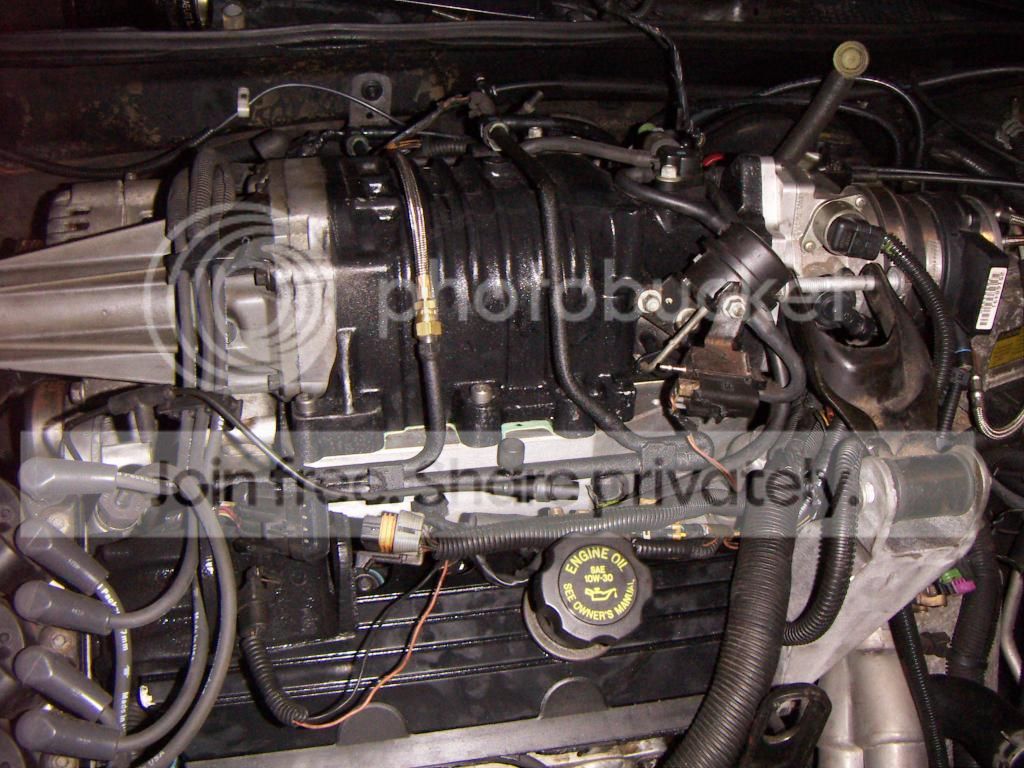
Since the fuel rail passes over the blower (3x! why?), they don't fit with an intercooler. At first, cutting the rails and splicing rubber in was the only option. A lot of people did this, but I think were also a few fires reported. Then the aftermarket came in with billet fuel logs and stainless hoses with AN fittings and such, for $500-$700.

I had been thinking of flaring the cut line ends and running double FI clamps just to get going - then keep my eyes open for something else. But when I started looking at them, I found too many issues. If there were no problems with leaks, why did somebody put epoxy or JB weld or something all over the FPR? Granted, the side with most of it would just be a vaccum leak, not fuel, but that will still cause issues. If the rubber lines never leaked, why did somebody put a screw clamp on one along with the FI clamp? Did somebody really try to flare the hose ends with some kind of hex tool? What other kind of hacks would said person have done as well?

I have another set of stock fuel rails, so I could have cut those and done a decent job. But I could sell those for something and there are other options now for modified fuel rails. Plus, they agreed to take my cut rails in as cores, so I went ahead and picked up a good solution:
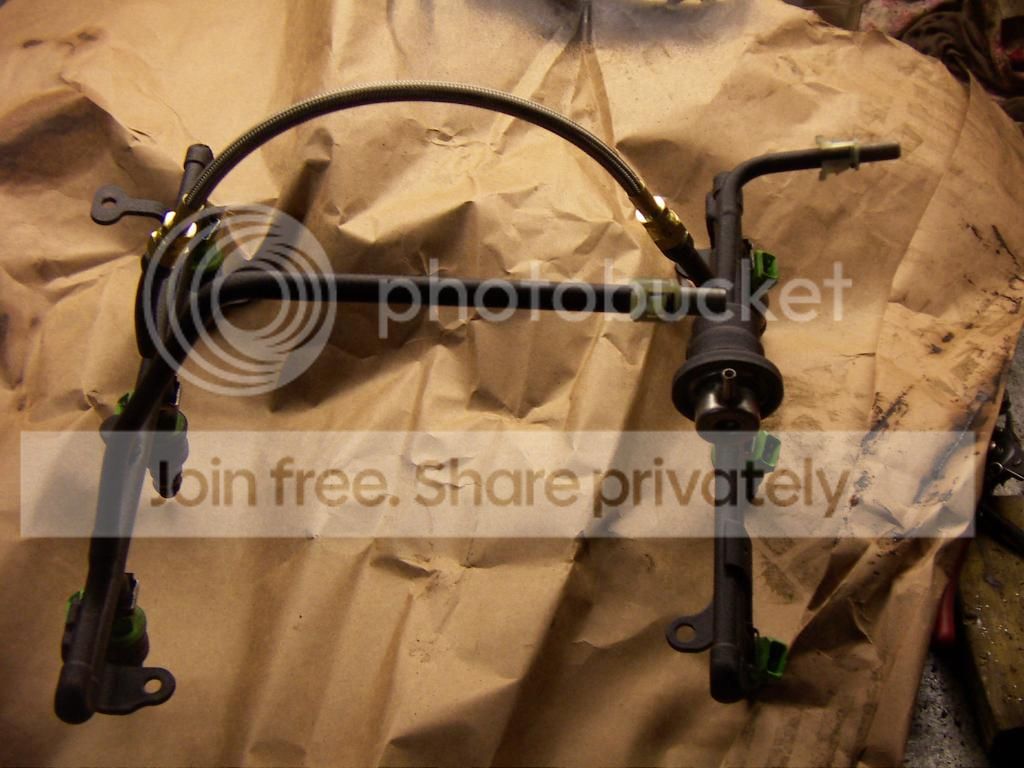
PICT0626.jpg


PICT0627.jpg
 
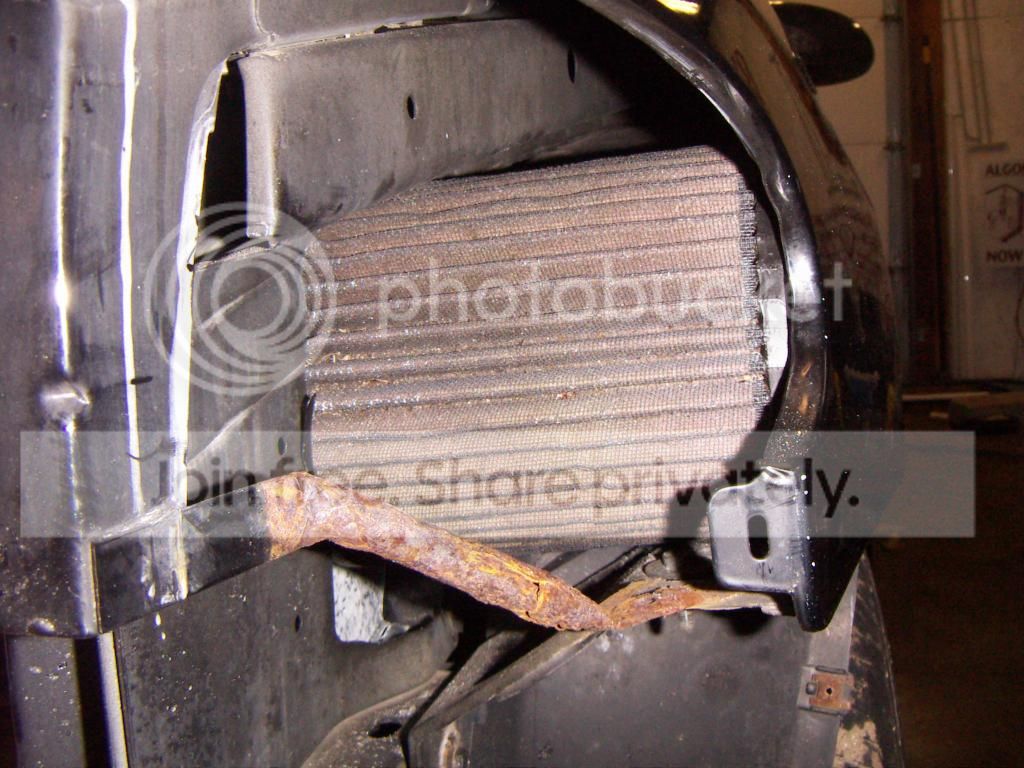
Built an air intake today. I had a K&N filter on-hand: it had previously been the HAI for this car. I made it fit in the fender:

PICT0628.jpg


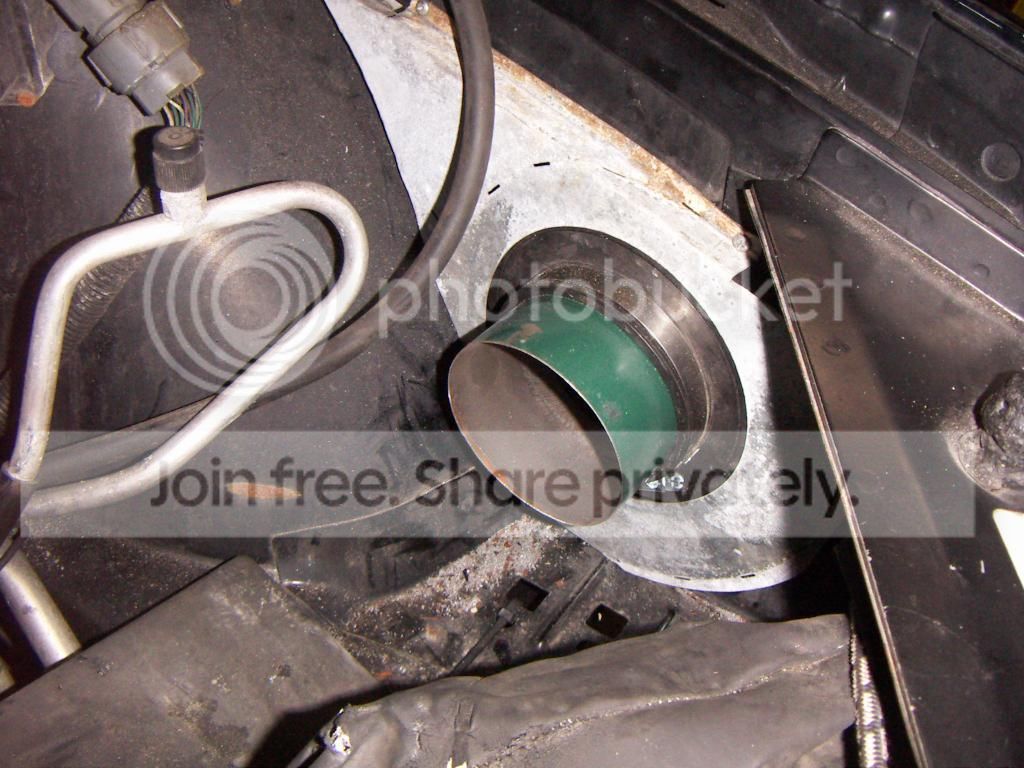
Then I broke out the tin snips and made a block-off plate from part of an old HVAC blower case (galvanized and also has a round hole already)

PICT0630.jpg


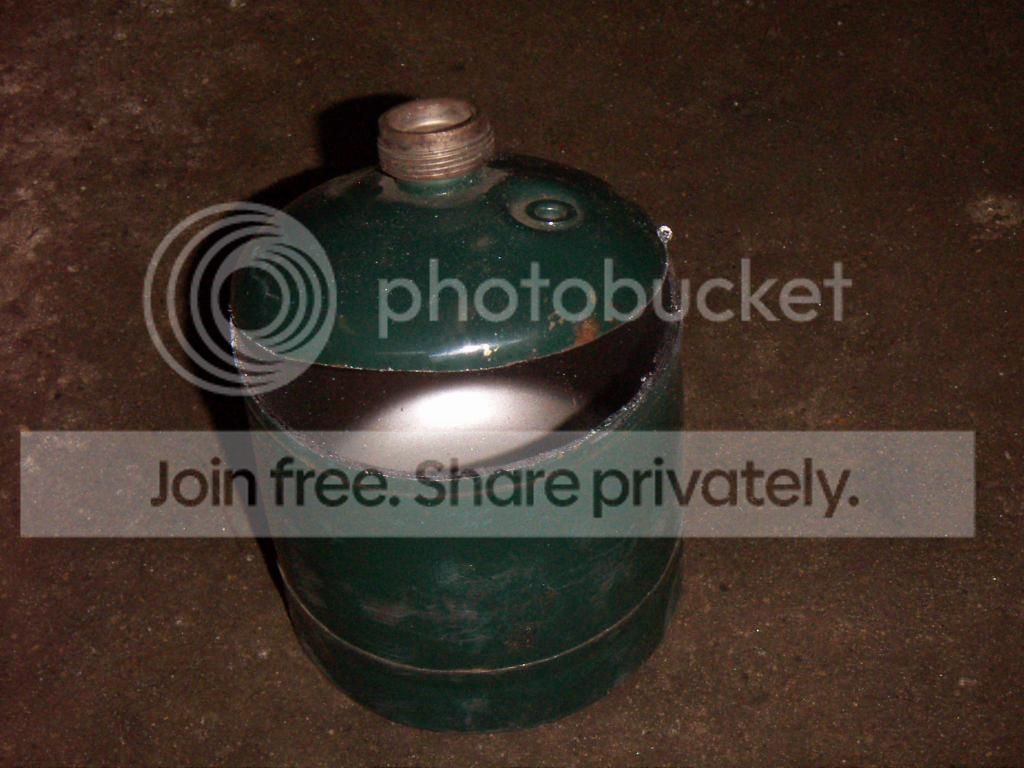
I asked a couple exhaust shops for a scrap piece of 4" pipe, but most actually don't deal with it. So I looked around the garage....

PICT0629.jpg


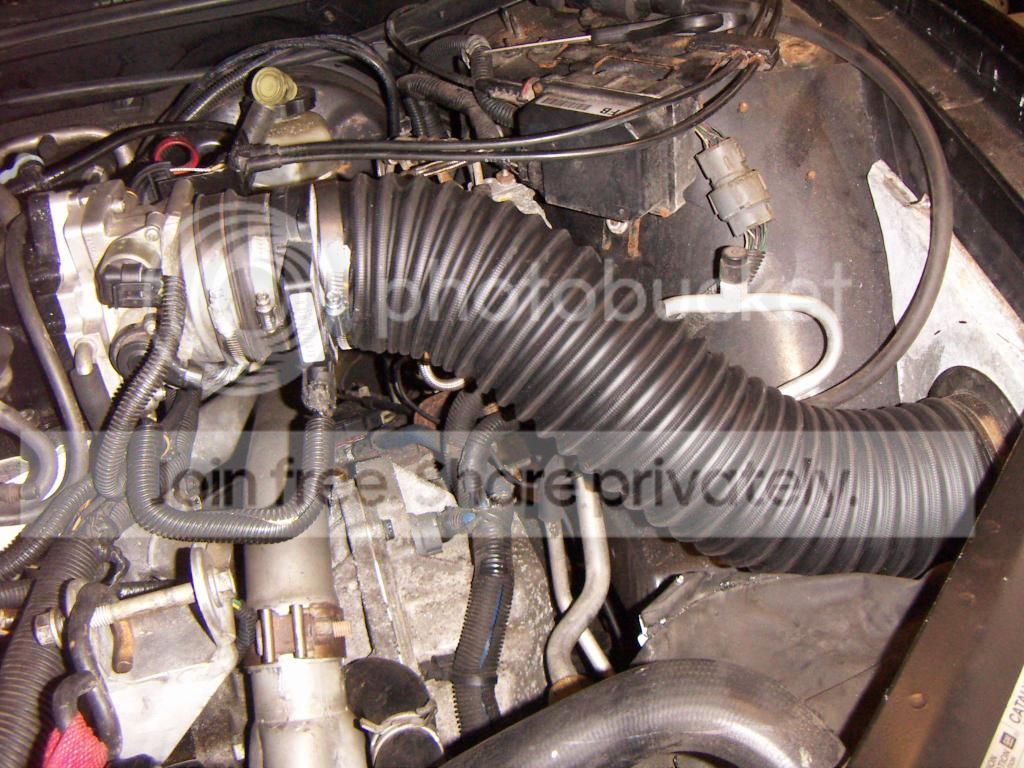
So the CAI looks like this:

PICT0631.jpg
 
Well I did run it tonight, if that counts as close. Tailpipe blew a load of corn.:doah: Exhaust leaks in at least 3 places. It seems too rich too start and then too lean after it starts. Headers are glowing a little. Too tired to mess with it anymore tonight, but at least I can say I started it.

PICT0634.jpg
 
I guess someone was playing corn hole with your tailpipe... :haha:
 
Now I feel obligated to open the exhaust up and make sure everything is free flowing. Of course that will mean breaking a bunch of clamps and bolts and probably never getting it sealed up again, but on the other hand it's leaking already.

I can check the timing and see if the measured matches what the PCM thinks. I know there is a "case learn" procedure you're supposed to do if you replace Cam, Balancer, timing chain, etc., but I always understood that to be a "fine tuning" sort of thing. And it's not throwing any codes. I can test and even swap the O2 to find out why that is stuck at 0.45V all the time. I always thought pulse width was adjusted up and down until transitions were happening, but it seems to be changing fuel trims at random.

I'm not sure I can do much more without a good scanner/tuner. I'm trying to get a used DHP powertuner.

I did fab mounts for the FMHE (front mounted heat exchanger) and will probably make a mount for the pump as well. Previously it was kind of floating by the hoses underneath the PS headlight.
 
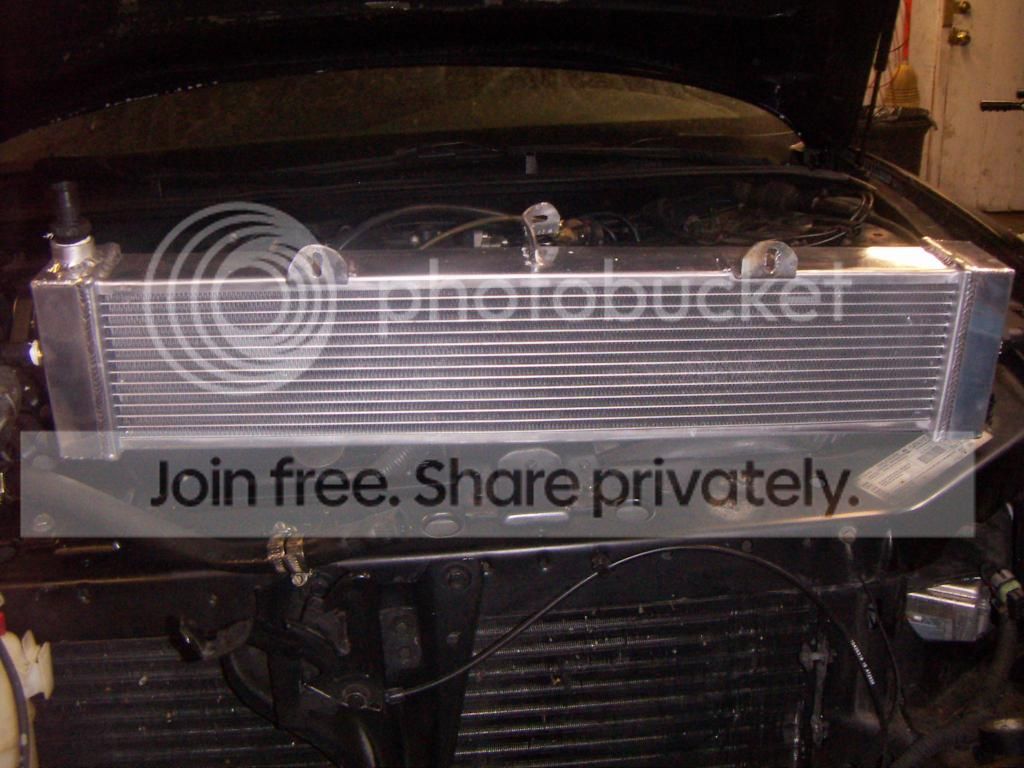
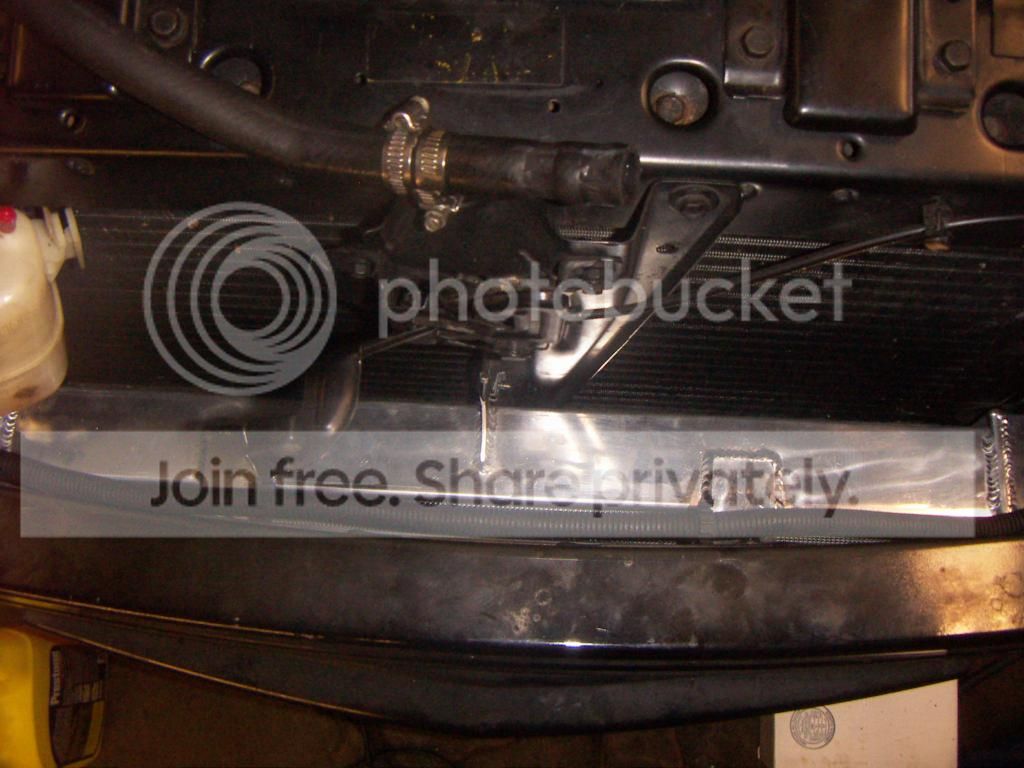
Working on the intercooler setup in the meantime. Here's the new heat exchanger - it's mounted up as high as I can get it, so the bottom is about level with the bottom of the A/C condensor. The way the vendor has you mount it is somewhat a zip tie affair and really designed for the Grand Prix, but IMO is too vulnerable to curbs, rocks and steep driveways. So I welded some nuts on the back of the steel bumper frame and modified the mounting tabs as seen.

PICT0116.jpg


PICT0117.jpg
 
Now I feel obligated to open the exhaust up and make sure everything is free flowing. Of course that will mean breaking a bunch of clamps and bolts and probably never getting it sealed up again, but on the other hand it's leaking already.

I can check the timing and see if the measured matches what the PCM thinks. I know there is a "case learn" procedure you're supposed to do if you replace Cam, Balancer, timing chain, etc., but I always understood that to be a "fine tuning" sort of thing. And it's not throwing any codes. I can test and even swap the O2 to find out why that is stuck at 0.45V all the time. I always thought pulse width was adjusted up and down until transitions were happening, but it seems to be changing fuel trims at random.

I'm not sure I can do much more without a good scanner/tuner. I'm trying to get a used DHP powertuner.

I did fab mounts for the FMHE (front mounted heat exchanger) and will probably make a mount for the pump as well. Previously it was kind of floating by the hoses underneath the PS headlight.

Looking Good :waytogo:

How are you reading data?
Yes, base settings/open loop should be middle of the road/runs fine but not as efficient as possible. also, if you unplug the MAS is should set a code and go into open loop.
 
I thought the setting would be close because all I've really changed since it was tuned before are the cam (advertised as good idle and stock MPG), the throttle and the TPS.

I pulled the exhaust off after the resonator and it still runs like crap, headers feel hot in seconds and it vacuum is only like 10.
 
vac should be 20 at idle. manifolds cherry would be firing order or really lean.....
 
Some progress. Found the MAP sensor signal stopped moving and swapped it for another (used) one. The one coming out was obviously some cheap off-brand. Pulled the O2 and found it dead (I test them on the bench with a propane torch). Tested another used one as good and then the PCM started getting high/low transitions. This caused the engine to smooth a little and the fuel trims to start changing. It's very weird to me that a dead sensor would be stuck at 0.45V, since the PCM can't do diagnostics on that. The "new" one does start at 0.455 when cold, then starts moving when it warms up (although not much - maybe 0.35-0.6). Headers still glowing.

With a little throttle, it idles smooth at 2000rpm with vacuum at 20 and wide swings on the O2, which is interesting. Even at standard idle speed, which is rough, the timing light flashes steady on all 6 wires. I can't figure out how to measure timing - I can't find any timing marks.

I keep thinking the valve timing is off, but I'm so sure I triple-checked the alignment of the dots when putting the timing chain on. I've even pulled out other used parts to look at and compare to pictures online.

Given all of this, I think the next thing to hunt down hard is vacuum leaks.
 
Global data or vehicle specific? Are your plug wires in the correct order on the coils? What is long term short term fuel trims doing? If you unplug the MAS the pcm goes to open loop/limp mode, vacuum leaks wont matter(the pcm assumes that the engine is getting normal/propper air and wont try to lean outor listen to the MAS) . That may help you determine if there are any vac leaks to trac.
 
I have 3 different programs, all of which just read basic OBDII data. One of them can get a few GM enhanced things, like misfire detection, but none can read knock.

MAS = Mass Air Sensor? I always called it MAF. I was thinking of unplugging it but just haven't done it yet. I know the PCM is also using MAP because removing (and plugging) vacuum from that affects the idle. If nothing else, it can calculate fuel pressure, as the FPR is referenced to manifold vacuum, and adjust fuel.

The fuel trims are moving up and down and don't seem to want to be high or low. It's only running like a minute at a time, as I don't want to mess up the ceramic coating on the headers.

I've verified the spark wires like 5 times now. The coils have the cylinder numbers printed on them and I've verified this with my spare ICM/coils and my running GTP. The fact it runs nice at 2000 rpm gives me some confidence in the firing order.
 
Sorry, yes mas air flow sensor . Different manufacturers different names. Not trying to insult, just trying to cover basics.
Fuel pressure reg. Should bring pressure up when rpm is up to help the injectors keep flow/volume. Just a simple diaphram(think you mentioned that before)
Global data is better, its raw data not processed by the ecm/pcm(computer). I've had scanners give me false data before(numbers arnt correct so the computer says it has to be X when actually its Y)
Any stored codes?
 
No codes, but I have no way to know how many have been disabled. There is no EGR and no 2nd O2 and no codes for those anyway. I thought once I saw a pending for air flow, but at that time it was just stumbling so who knows. I suppose I could go around unplugging sensors just to make sure the diagnostic still works.

The tough thing with relying on DTCs is that many of them require complicated conditions before they set, so I will never see them with just short idles.

Now that it can make some vacuum, I can see fuel pressure going up and down with manifold vac, so that seems fine.

UPDATE: unplugged the MAF, it logged a code and ran "different". I'm not really sure which way the fuel trims wanted to go. The crossover pipe is leaking and I want to address any exhaust leaks before the O2 before believing it much.
 
Last edited:
I'm just not sure what direction to go at this point. I found a small vacuum leak at one end of the supercharger gasket and fixed it. I can't find anymore vacuum leaks with my stethoscope, but it still runs just as bad. Also, the header glow seems worse when the engine is at 2000rpm than it does at idle. So it's hard for me to believe this is lean from a leak. Plus, the O2 sensor is happily transitioning up and down and the fumes aren't too bad. It seems like late spark timing or early valve timing.

I don't know how much difference there can be in timing from one balancer to another - maybe I mixed them up.

I don't know how much difference a CASE LEARN can make - all the way from idling really bad to running well?

Maybe the next step is compression test.
 
Checked the front 3 cylinders for compression - all about 165, which seems fine. I don't know how much it could change from the timing chain being off, but I have to believe it would change. So I'm going to focus on ignition timing now by pulling the balancer, comparing it to the other one I have, checking out the harness, etc.
 
I think a more accurate test if you're suspecting valve timing would be a cylinder leak down test. That will tell you if a valve is open when the piston is at tdc
 
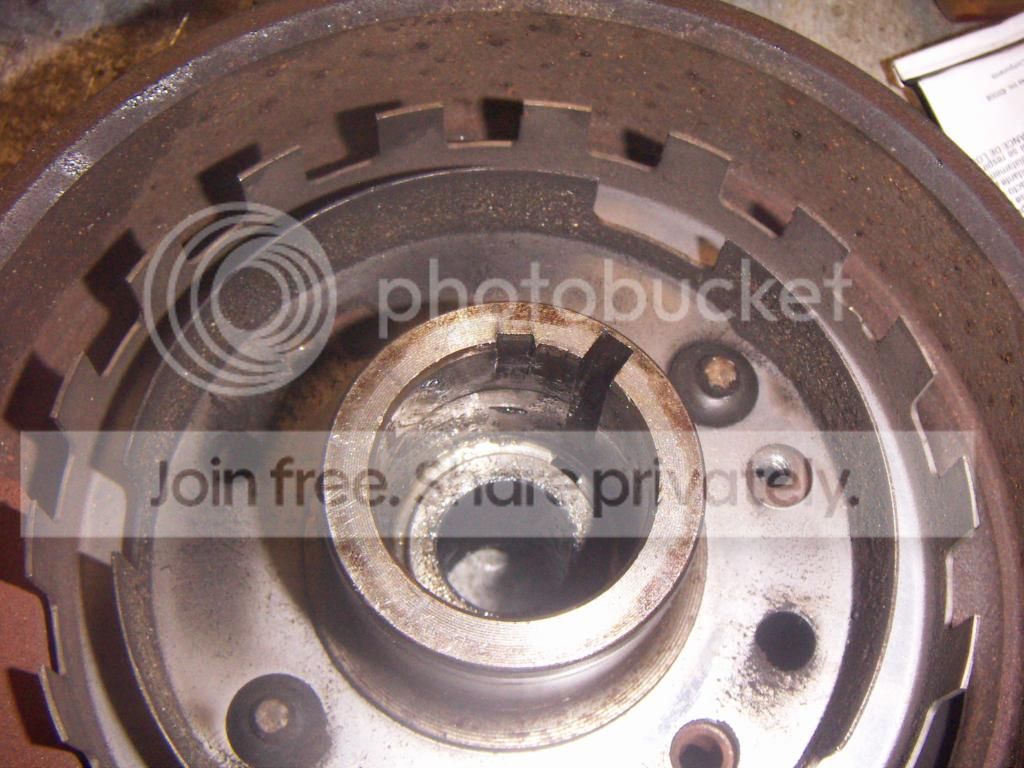
With good compression and considering that every tooth off would be 15 degrees of crank timing, I started to focus on spark timing today. Sadly, I can't measure it, as there are no timing marks. I don't know of any mechanical test to compare when the CPS senses TDC to actual TDC. The CPS is two magnetic sensors mounted under the balancer, sensing gaps in two tone rings you can't see. Since I have it apart I may add a groove or something.

Anyway, I found the problem. I don't know how I did this and I hate to admit to it, but my spark timing was indeed like 25 degrees retarded:

PICT0636.jpg


:doah::doah::doah::doah::doah:
 
Top Bottom