CK5
Register an account today to become a member! Once signed in, you'll be able to participate on this site by adding your own topics and posts, as well as connect with other members.

3/4 ton vs. 1 ton

makovai

1/2 ton status
Joined
Jun 6, 2006
Posts
847
Reaction score
0
Location
oregon city
Bout 2 years ago i was at work with my 2002 3/4 silverado. My co-worker pull next to me in his 2003 single axle 1 ton silverardo. Working in a machine shop we were out in the parking lot doing a full inspection on the rigs and the only difference we could find between the 1 ton and 3/4 ton was the leaf springs in the rear.

So what i want to know is with our older rig when guys say they have converted to a 1 ton, is it any different than my converted 3/4?

Aren't they still using the same 14ff as my 3/4 ton?
 
Quick answer yes.

I had a 2003 Dodge 3500 CTD single rear wheel short bed, My brother has the same thing but in a 2500. Same axles, engine, trans, etc....only difference is the over-load spring on my truck.
 
So if i start calling my blazer a 1 ton blazer, nobody would even think twice about it?
It just sounds better in a story :D
 
Newer stuff is different than the older stuff. With respect to pre-IFS, the distinction between a 3/4 ton and a 1 ton (4x4's of course), is a rather large one.... namely a Dana 60 front in a ton, 8-lug 10-bolt or D44 in a 3/4 ton (essentially the same strength wise as a 1/2 ton front). There is a significant strenth difference axle wise. There are other differences but that's the biggie. Also, depending on years and packages there are 2 different 14 bolts that came in 3/4 tons... a full-float version (same as ton) and a semi-float version.
 
ct85k10 said:
in sfa trucks 1 ton = d60 front 3/4 ton =10 bolt/d44 front

x2. there are some exceptions in newer trucks though. like my mom's 2500 '05 dodge, d60 front d80 rear just like the 1-tons. on our trucks though, 3/4ton and 1-ton uses different front axles and frames.
 
Off Road ---

Yes,the frames are different on a 1 ton--the rails are taller on 1 tons,they are about 8" high right behind the cab--3/4 and 1/2 ton's are the same,and are at least 2" shorter in height than the rails of a 1 ton's frame..

I have seen many trucks with "1 ton suspension" that were built on 1/2 or 3/4 ton frames...I've yet to see any of them bend or damage the frame,but I cringe when I see folks hauling loads that would tax a 1 ton frame, with a 1/2 or 3/4 ton one..just because you have 1 ton AXLES,and springs,does not mean you can carry what it would if it were in a true 1 ton frame!..:crazy:
 
diesel4me said:
Yes,the frames are different on a 1 ton--the rails are taller on 1 tons,they are about 8" high right behind the cab--3/4 and 1/2 ton's are the same,and are at least 2" shorter in height than the rails of a 1 ton's frame..

I have seen many trucks with "1 ton suspension" that were built on 1/2 or 3/4 ton frames...I've yet to see any of them bend or damage the frame,but I cringe when I see folks hauling loads that would tax a 1 ton frame, with a 1/2 or 3/4 ton one..just because you have 1 ton AXLES,and springs,does not mean you can carry what it would if it were in a true 1 ton frame!..:crazy:

Not to hijack but to a little bit.

So what can be done to the frame to strengthen it? I am building a suburban and want to get the max towing capacity I can out of it.
 
never thought about the frame. When we inspected those newer silverado's i dont think we ever looked at the frame. now i'm curious about that.
 
There are more difference between 3/4 ton and 1 ton trucks than axles and frames. All manufacturers do things different and depending on the year of the trucks there were different configurations. Some of the major differences are axles and frames, but there are also other differences, like transmissions, transfer cases etc. as well as suspension and one that people often overlook, especially when hauling, is brakes. It is really hard to generalize "3/4 vs 1ton".

But with the trucks mentioned in the original post, I believe that the 1 ton has a beefier IFS, and most likely it has a stiffer suspension and stronger brakes, I'm not sure if the frames are different on 3/4 and 1 ton IFS trucks. you should be able to tell by inspection if the motor, trans, and transfer case are the same of different.
 
beef it up!..

Suburbans have a pretty beefy frame to start with--dont quote me,but I think they are a bit thicker than your usual 1/2 ton pickup frame,due to the weight of the body and the fact GM realizes many use Suburbans as tow vehicles..

To beef the frame up,it could be boxed,or some channel iron could be bolted or welded to the vertical areas that are under the most stress..but if its not rusty or had cracks I'd say a stock frame will be just fine as long as your not towing a backhoe or something..stay within your GVW limits and it will be OK..

A class 3 hitch adds strength to the rails where it bolts on,and the Suburban's body actually acts as a "bridge" and reinforces it some also..few people realize the BODY helps carry the load too,thats why a rusted cab or body makes a truck feel "rubbery" as you go over bumps--the frame flexes a lot more if the body isn't doing its share of load carrying..:crazy:
 
stiffen the frame by boxing it in on your 3/4 ton and that will strenghten it imo more then a c chanel 1 ton frame. after that you can say you have a 1 ton
 
I thought the 1 ton 14 bolt had a slightly larger ring gear than the 3/4 ton. I remember that they do have two different sizes for the 14 bolt.

gmcorp-14bolt9.jpg
GM CORPORATE 14-BOLT
The "small" GM 14-bolt has a 9 1/2-inch ring gear diameter. It was used in the rear of 1964-and-later GM pickups, and in the rear of 1984-91 3/4-ton Suburbans.


gmcorp-14bolt10.jpg
GM CORPORATE 14-BOLT
With a 10 1/2-inch-diameter ring gear, the biggest 14-bolt GM rearend looks much like a Dana 70, and is but a few thousandths of an inch shorter in ring gear diameter. This axle is commonly used with big engines and/or overly large tires. It was used under 1973-87 3/4-tons.
 
gmcorp-14bolt9.jpg
GM CORPORATE 14-BOLT
The "small" GM 14-bolt has a 9 1/2-inch ring gear diameter. It was used in the rear of 1964-and-later GM pickups, and in the rear of 1984-91 3/4-ton Suburbans.


gmcorp-14bolt10.jpg
GM CORPORATE 14-BOLT
With a 10 1/2-inch-diameter ring gear, the biggest 14-bolt GM rearend looks much like a Dana 70, and is but a few thousandths of an inch shorter in ring gear diameter. This axle is commonly used with big engines and/or overly large tires. It was used under 1973-87 3/4-tons.
 
They're smoking something. The 14SF was out sooner than 1984, and they certainly weren't around in 1964. :rolleyes:

Yeah, yeah, off topic. :)
 
So lets talk any blazer from the 70's.
If a guy says he has a 1 ton K5, what would be your guys opinion other than axles her would have to mod?
 
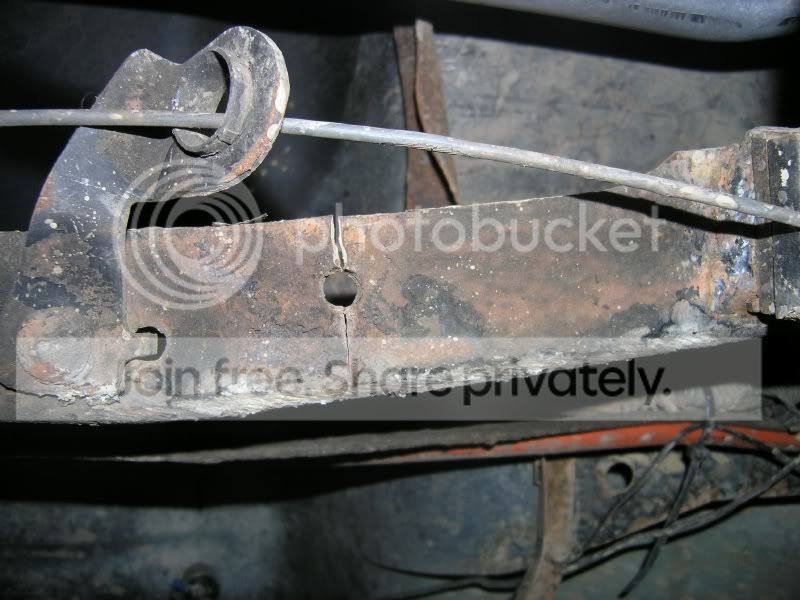
I have seen many trucks with "1 ton suspension" that were built on 1/2 or 3/4 ton frames...I've yet to see any of them bend or damage the frame,
Now you have...
7-062.jpg


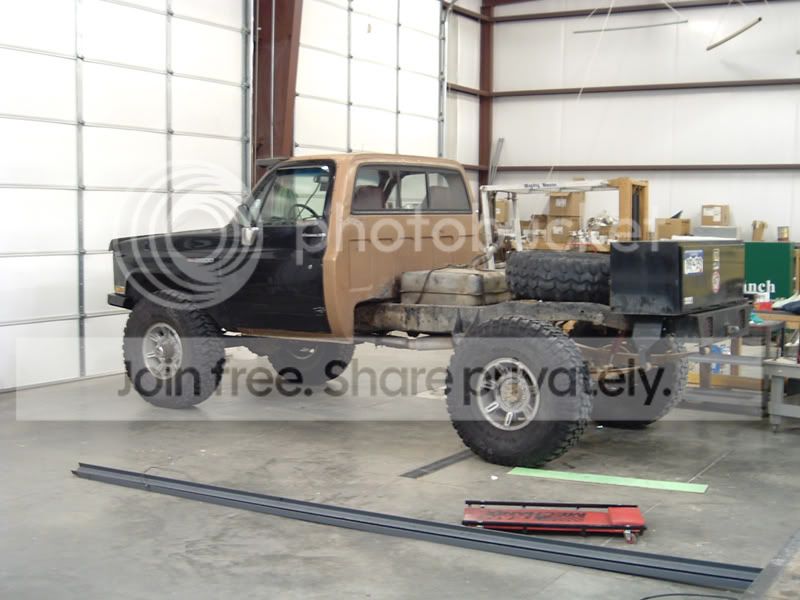
After that incident I upgraded to a one-ton frame. You can see in this pic how tall the frame rail is one my one-ton.

DSCF1484.jpg

I will never do another 1/2 or 3/4 ton frame again unless it was fully boxed.
 
Top Bottom