

maynardogle
1/2 ton status
Ok.. my new years resolution is to post technical articles to this site.
Rene.. if you deem it worthy, make it a sticky. If not...it can just lay
there and maybe pop up when some newbee does a search.
_____________________________________________________
This is a step by step procedure for how to swap out your old a 6.2 Liter
Diesel “C” Code intake manifold, with a non-EGR “J” code manifold.
Before you start you need the following tools:
Ratchet (1/2 drive preferred) with 13 mm and 15 mm deepwell sockets.
Socket extensions (6 inch and 3 inch)
13 mm box wrench
15 mm box wrench
Screwdriver/nut drivers for hose clamps
Magnetic part retriever (maybe)
Portable drill with ½ inch bit (maybe)
Masking tape (maybe)
Tube of GOOP
Vacuum port cap ¼ inch
18" of 1 inch hose
Step 1
Remove air filter including the ¼ inch hose that feeds through the grommet
on the bottom and connects to the EGR valve. Set the Air Cleaner aside
for reuse later.
Your old C code manifold (air filter removed) should now look like this.
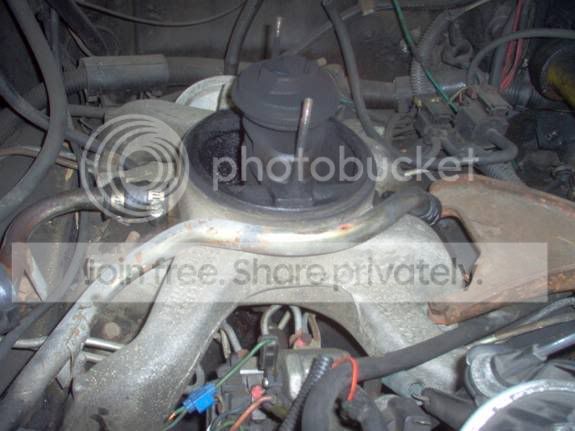
As you can see there are a few things in the way of its removal from
the engine, notably the AC compressor stop bracket and the input
pipes from the crankcase depression valve.
Step 2)
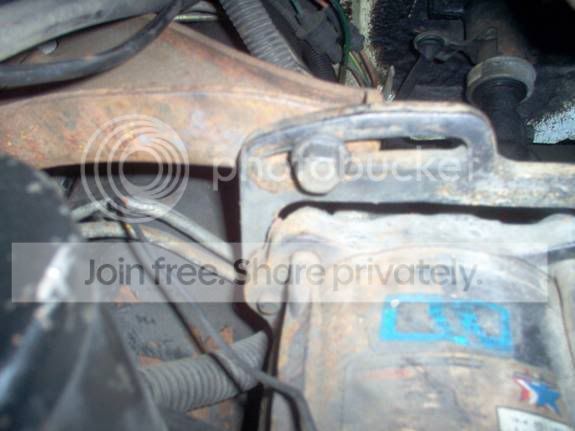
Loosen the AC compressor belt tension and get slack in the belt.
Remove the bolt that attaches the compressor to the top bracket.
Step 3)
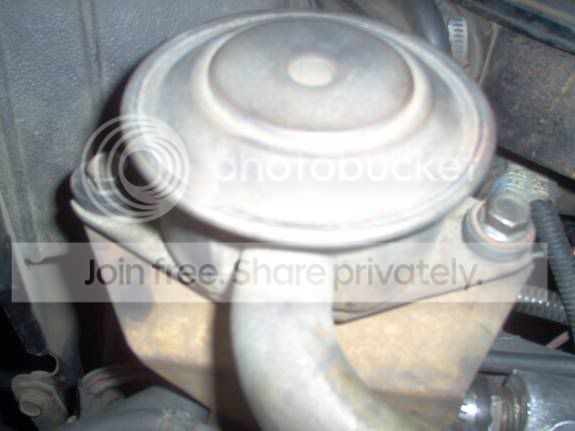
Remove the Crankcase Depression Valve and all associated
hoses and pipes. Set aside for later.
Step 4)
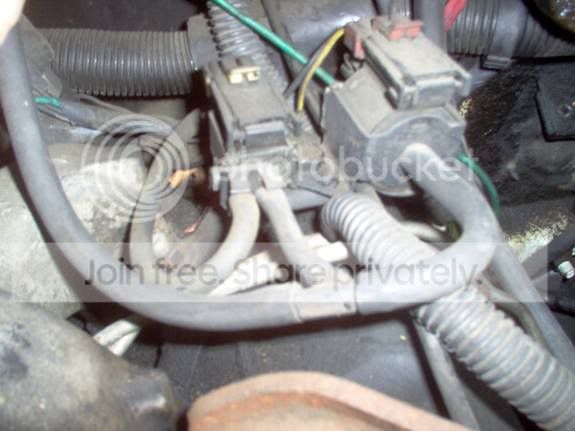
Remove the two solenoids that control the Exhaust Gas Recirculation
and Exhaust Pressure Valves
They are located on the drivers side rear of the engine.
The bolt that holds them down is visible between them next to the yellow wire.
Step 5)
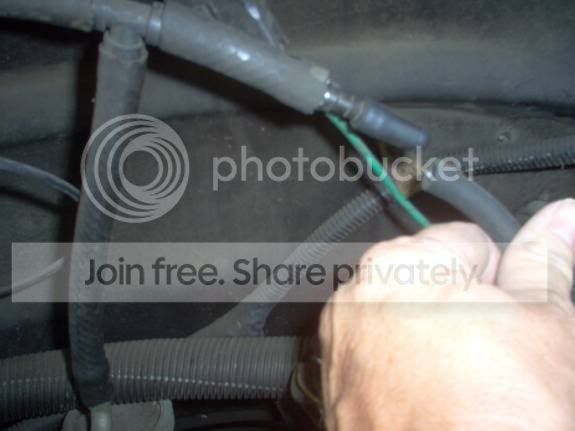
Remove the vacuum hose to the solenoids from the T fitting on the firewall and
plug off the T with a neoprene cap.
At this point, the old manifold should be ready to remove. Take out the
bolts, starting with the ones at the outside corners and working your
way towards the ones in the middle. Keep track of which bolts came
out of which holes. When you are finished, the old manifold should
be loose, unless it was previously installed with adhesive on the gaskets.
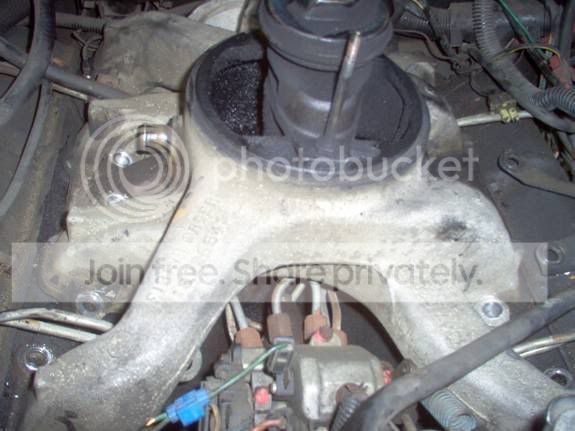
In the picture below, all bolts have been removed. This activity also
frees the old solenoid mounting bracket, which is seen resting on the
valve cover. There was also a ground strap over to the firewall under
one of the bolt/stud combinations in the back on the passenger’s side.
Step 6)
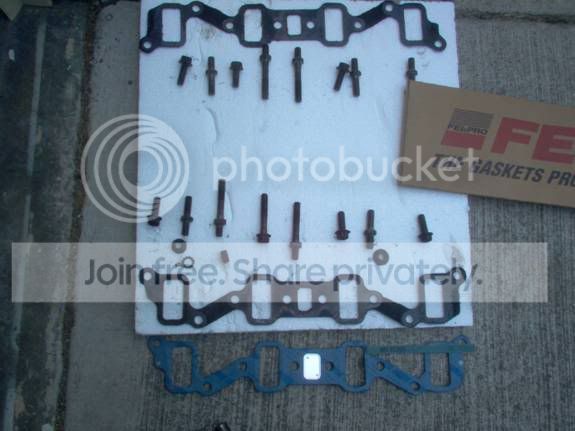
Pull the old manifold and view the valley. In this picture the old gaskets have also been removed.
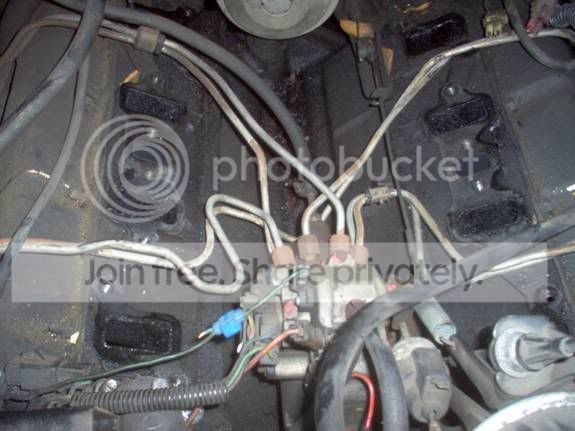
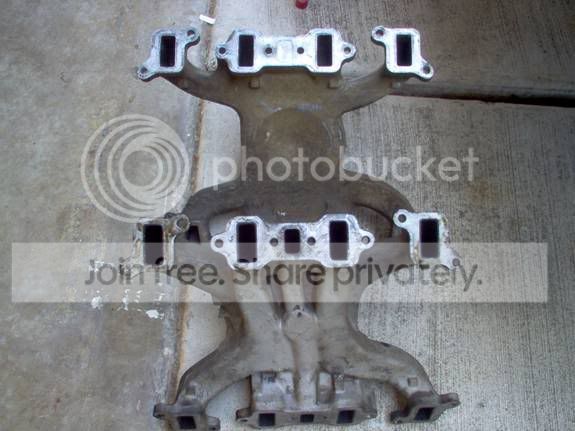
It is now time to inspect new parts vs. old parts. Note the old manifold
configuration next to the new one. Also the old gaskets vs. the new.
New gaskets should have a block over the port in the heads where exhaust
gas goes into old manifold.
Step 7)
If previous gaskets were glued in, you will need to carefully clean heads to
remove all old adhesive. Since diesels don’t develop high intake manifold
vacuum, there is no point in sealing small leaks between the heads and
the manifold. Install the new gaskets without adhesive. Be sure to note
the little plastic pins that fit into the guide holes in the heads. These holes
need to be cleaned of any crud.

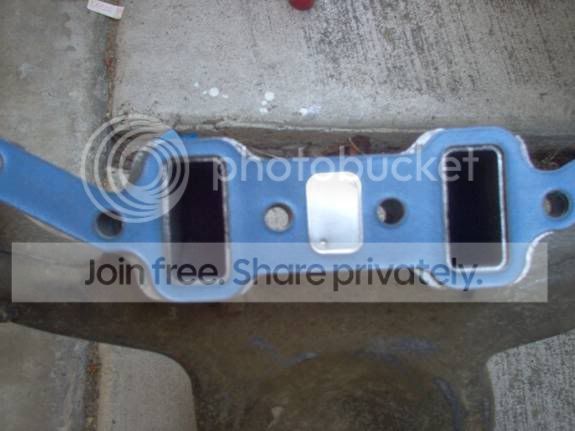
Lay new gaskets onto the new manifold to check fit. In this case, the
manifold ports are slightly smaller than the gasket. Optionally, you can
use a little grinder and port your manifold so the gaskets match the ports
more perfectly. I have heard this helps flow somewhat. I didn’t bother.
Step 8)
After you are satisfied that all parts are correct and fit is good, install
the gaskets and push guide pins into the holes. Set the new manifold i
n place, carefully. Especially, make sure fuel hose from filter to injector
pump is not pinched. The output nipple for the single hose connection
to the crankcase depression valve should be on the passenger’s side.
Starting with the middle two on each side, loosely install all the bolts.
In my case the new manifold would not sit on the heads in such a way
that it was possible to get the bolts on both sides to engage the threads.
After an hour of this frustration, it was clear that new manifold was
tweaked, warped or otherwise dimensionally incompatible with the holes
in the heads. To cure this problem, I decided to enlarge the holes in the manifold
slightly so as to allow the bolts more latitude to fit. Drill bit available
for this task was ½ inch, which is perfect. I practiced on the old manifold.
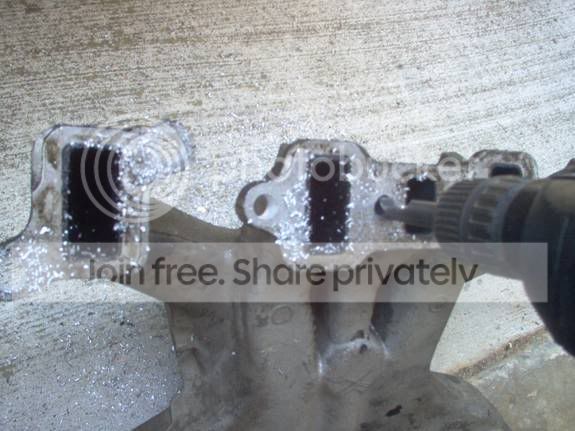
The shallow holes were easy to enlarge. The deep ones in the middle
were more difficult because the drill bit would bind as it got more
than 1 inch deep. Using the electric hand drill I was able to get
about half way through the two center holes. I couldn’t get in at
all from the top of the manifold because the body of the drill was too fat
and I couldn’t get the right angle. As it turned out, 1/2 way was e
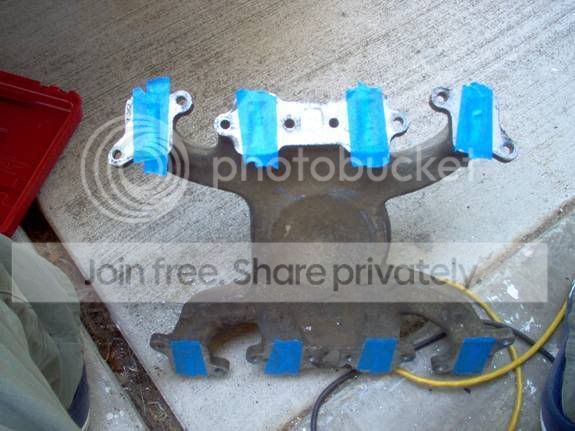
nough on the center holes. Before you start on the new manifold, t
ape off the ports to keep the aluminum chips out.
STEP 9)
After enlarging the holes, the new manifold fit perfectly. Starting with
the holes in the middle of the passenger’s side, tighten in five
foot-pound increments proceeding in a clockwise spiral.
Note…a spiral is not a circle! Final torque on each bolt is only
15 foot-pounds.
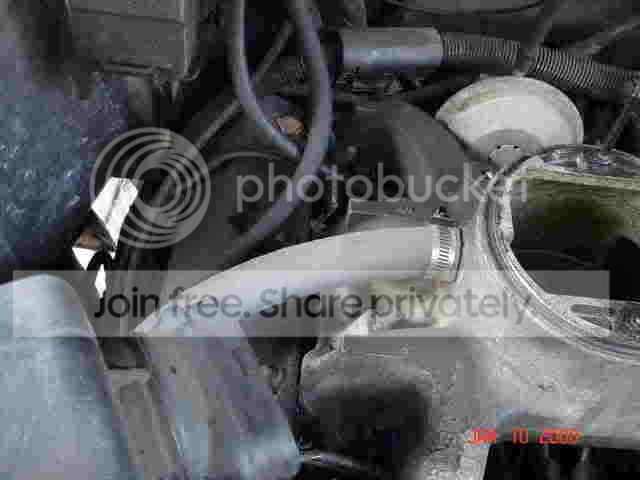
Reinstall all accessories, wires, grounding straps etc. I had to
modify the hose arrangement on my CDR valve because the new
manifold only had one port vs. two on the old one. I replaced the
dual metal pipes from the old arrangement with a single 1 inch
diameter hose from the bottom of the CDR valve to the single
port on the side of the manifold.
STEP 10)
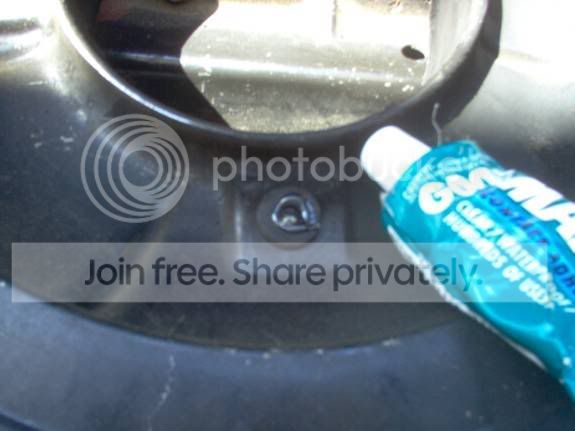
Finally …plug the little hole on the bottom of the air cleaner where
the ¼ inch hose used to go. I used GOOP which is a great material
because it is way tougher than simple RTV and sets up fast.
STEP 11)
Remount the AC compressor, retighten the belt, and that’s all there is.
I was amazed at the difference this manifold made, especially above 2000 RPM.
The engine even sounds better.
Rene.. if you deem it worthy, make it a sticky. If not...it can just lay
there and maybe pop up when some newbee does a search.
_____________________________________________________
This is a step by step procedure for how to swap out your old a 6.2 Liter
Diesel “C” Code intake manifold, with a non-EGR “J” code manifold.
Before you start you need the following tools:
Ratchet (1/2 drive preferred) with 13 mm and 15 mm deepwell sockets.
Socket extensions (6 inch and 3 inch)
13 mm box wrench
15 mm box wrench
Screwdriver/nut drivers for hose clamps
Magnetic part retriever (maybe)
Portable drill with ½ inch bit (maybe)
Masking tape (maybe)
Tube of GOOP
Vacuum port cap ¼ inch
18" of 1 inch hose
Step 1
Remove air filter including the ¼ inch hose that feeds through the grommet
on the bottom and connects to the EGR valve. Set the Air Cleaner aside
for reuse later.
Your old C code manifold (air filter removed) should now look like this.
As you can see there are a few things in the way of its removal from
the engine, notably the AC compressor stop bracket and the input
pipes from the crankcase depression valve.
Step 2)
Loosen the AC compressor belt tension and get slack in the belt.
Remove the bolt that attaches the compressor to the top bracket.
Step 3)
Remove the Crankcase Depression Valve and all associated
hoses and pipes. Set aside for later.
Step 4)
Remove the two solenoids that control the Exhaust Gas Recirculation
and Exhaust Pressure Valves
They are located on the drivers side rear of the engine.
The bolt that holds them down is visible between them next to the yellow wire.
Step 5)
Remove the vacuum hose to the solenoids from the T fitting on the firewall and
plug off the T with a neoprene cap.
At this point, the old manifold should be ready to remove. Take out the
bolts, starting with the ones at the outside corners and working your
way towards the ones in the middle. Keep track of which bolts came
out of which holes. When you are finished, the old manifold should
be loose, unless it was previously installed with adhesive on the gaskets.
In the picture below, all bolts have been removed. This activity also
frees the old solenoid mounting bracket, which is seen resting on the
valve cover. There was also a ground strap over to the firewall under
one of the bolt/stud combinations in the back on the passenger’s side.
Step 6)
Pull the old manifold and view the valley. In this picture the old gaskets have also been removed.
It is now time to inspect new parts vs. old parts. Note the old manifold
configuration next to the new one. Also the old gaskets vs. the new.
New gaskets should have a block over the port in the heads where exhaust
gas goes into old manifold.
Step 7)
If previous gaskets were glued in, you will need to carefully clean heads to
remove all old adhesive. Since diesels don’t develop high intake manifold
vacuum, there is no point in sealing small leaks between the heads and
the manifold. Install the new gaskets without adhesive. Be sure to note
the little plastic pins that fit into the guide holes in the heads. These holes
need to be cleaned of any crud.
Lay new gaskets onto the new manifold to check fit. In this case, the
manifold ports are slightly smaller than the gasket. Optionally, you can
use a little grinder and port your manifold so the gaskets match the ports
more perfectly. I have heard this helps flow somewhat. I didn’t bother.
Step 8)
After you are satisfied that all parts are correct and fit is good, install
the gaskets and push guide pins into the holes. Set the new manifold i
n place, carefully. Especially, make sure fuel hose from filter to injector
pump is not pinched. The output nipple for the single hose connection
to the crankcase depression valve should be on the passenger’s side.
Starting with the middle two on each side, loosely install all the bolts.
In my case the new manifold would not sit on the heads in such a way
that it was possible to get the bolts on both sides to engage the threads.
After an hour of this frustration, it was clear that new manifold was
tweaked, warped or otherwise dimensionally incompatible with the holes
in the heads. To cure this problem, I decided to enlarge the holes in the manifold
slightly so as to allow the bolts more latitude to fit. Drill bit available
for this task was ½ inch, which is perfect. I practiced on the old manifold.
The shallow holes were easy to enlarge. The deep ones in the middle
were more difficult because the drill bit would bind as it got more
than 1 inch deep. Using the electric hand drill I was able to get
about half way through the two center holes. I couldn’t get in at
all from the top of the manifold because the body of the drill was too fat
and I couldn’t get the right angle. As it turned out, 1/2 way was e
nough on the center holes. Before you start on the new manifold, t
ape off the ports to keep the aluminum chips out.
STEP 9)
After enlarging the holes, the new manifold fit perfectly. Starting with
the holes in the middle of the passenger’s side, tighten in five
foot-pound increments proceeding in a clockwise spiral.
Note…a spiral is not a circle! Final torque on each bolt is only
15 foot-pounds.
Reinstall all accessories, wires, grounding straps etc. I had to
modify the hose arrangement on my CDR valve because the new
manifold only had one port vs. two on the old one. I replaced the
dual metal pipes from the old arrangement with a single 1 inch
diameter hose from the bottom of the CDR valve to the single
port on the side of the manifold.
STEP 10)
Finally …plug the little hole on the bottom of the air cleaner where
the ¼ inch hose used to go. I used GOOP which is a great material
because it is way tougher than simple RTV and sets up fast.
STEP 11)
Remount the AC compressor, retighten the belt, and that’s all there is.
I was amazed at the difference this manifold made, especially above 2000 RPM.
The engine even sounds better.
Last edited:


