CK5
Register an account today to become a member! Once signed in, you'll be able to participate on this site by adding your own topics and posts, as well as connect with other members.

Diy Paint Work, Teach Me

You can do it under $500 easily. You can study all year, but at some point you just have to do it. The best learning is sometimes experience. I did a motorcycle gas tank with spray can and then clear coat, came out great, but LOTS of prep time, and LOTS of wet sanding.
I also did the front end of my infiniti with an HVLP. Like you, I was a bit nervous, and spent hours and hours watching videos and reading. The spray can is too ridiculous for a large size project because there is so much variation. I spent about $50 on a gun, bought strainers, an inline filter for the gun for like $10, a cheap pressure regulator. I went to an auto paint shop and bought a prep cleaner and the official Inifinit black paint (which was the most expensive item).

I'm no expert so I'm sure more experienced people will laugh at me, but I prime it, and then do a light sand with like 1200 or 800. Then re-clean it and then shoot base coat. I'm kind of a mess so I usually spray several coats with some cure time between coats. I am always worried about coverage so I tend to lay like 5 coats of color.

I know this is sometimes a no no, but then I wet sand the color/base (which is why I like to put extra base coats on) again with very fine grit...1200 or 2400 (because I usually end up with that orange peel ) then I reclean it and then sprayed clear coat on. Again, I do a few coats, since I am sloppy and I like to wet sand the clear coat as well.

Really, if you screw up, you can sand it back down and start over again... Again, the most expensive part of it for me was the actual paint, but if you aren't trying to color match the original manufacturer color, you don't have to worry about it. Prep work and finish work will make it look better, spraying the actual paint on isn't really too much rocket science.

seat view.jpg

20160126_162048.jpg

View attachment 255338

20160122_160601.jpg

20160129_161952.jpg
 
, but I prime it, and then do a light sand with like 1200 or 800. ]


looks good.....

for the future, that is WAY too fine for paint to stick to properly... most paint manufacturers want 320, to maybe 600 grit on the primer.. any single stage, I'm 320 to 400.. most base, or lacquer is 4, or 6... but never any finer than that, doesn't give it anything to grab.. not too mention, you get the prep job done way faster with grittier paper...

if for whatever reason i'm color-sanding between coats, it'll be 600, or 1000...

1000, 1200 and maybe 1500, are for cut/buff... heck, 1500 is like notebook paper...
 
Last edited:
I guess I didn't really answer your questions though... Yes, you can primer it, and then come back another day, but you'll want to scuff off the top layer of primer because it will have accumulated some road dirt and oil (yes, oil...even your finger prints have oil in them.....if you sand a fender down to base sheet metal, clean it, then put your fingers on it, come back in a day or two, and you will see a rust like stain of your finger prints on it...lol. ) You might even want to spray on another coat of primer before you actually paint.
The cleaner will evaporate almost immediately, but you can also use your compressed air to blow it off as well (there are some spots where it accumulates and if you start spraying your base and hit a corner where it collected, you'll blow out the liquid all over your paint surface and frack it up).
After I made sure that the surface was clean and dry, I shoot the color on and I think I made a second pass right away. Again, I have no ideas about how pros do it, but I let that sit for about 30 minutes and then shoot some more (I can already hear people telling me how wrong that is, but that's what I did).

If you are going to put clear coat on, you'll want to do that as soon as you can, because again, you don't want any dirt or oil getting on your base. I think someone suggested mixing clear into your last coat of color, which is a great idea.

I disassembled and cleaned my gun every time after I stopped...which means even between sitting between coats for the color. Something about the paint or the gun or whatever, made the paint left in the gun turn stringy, so it was coming out "funny" when I put more color in the gun.
All in all, it's wasn't show quality paint, but it's good enough, and that's for a black paint Infiniti, so...you should be able to do pretty good job with basic equipment and quite a bit of patience and elbow grease
 
looks good.....

for the future, that is WAY too fine for paint to stick to properly... most paint manufacturers want 320, to maybe 600 grit on the primer.. any single stage, I'm 320 to 400.. most base, or lacquer is 4, or 6... but never any finer than that, doesn't give it anything to grab.. not too mention, you get the prep job done way faster with grittier paper...

if for whatever reason i'm color-sanding between coats, it'll be 600, or 1000...

1000, 1200 and maybe 1500, are for cut/buff... heck, 1500 is like notebook paper...


Yeah, like I said... I'm not to great on being professional. I think that I tried grittier paper at some point but I end up cutting through the primer or the paint. It's easier to go grittier if you aren't taking enough off than it is to put it back on if you take too much off. :) That's what worked for me....not saying AT ALL that it's the 'right' way to do it. :)
 
I guess I didn't really answer your questions though... Yes, you can primer it, and then come back another day, but you'll want to scuff off the top layer of primer because it will have accumulated some road dirt and oil (yes, oil...even your finger prints have oil in them.....if you sand a fender down to base sheet metal, clean it, then put your fingers on it, come back in a day or two, and you will see a rust like stain of your finger prints on it...lol. ) You might even want to spray on another coat of primer before you actually paint.
The cleaner will evaporate almost immediately, but you can also use your compressed air to blow it off as well (there are some spots where it accumulates and if you start spraying your base and hit a corner where it collected, you'll blow out the liquid all over your paint surface and frack it up).
After I made sure that the surface was clean and dry, I shoot the color on and I think I made a second pass right away. Again, I have no ideas about how pros do it, but I let that sit for about 30 minutes and then shoot some more (I can already hear people telling me how wrong that is, but that's what I did).

If you are going to put clear coat on, you'll want to do that as soon as you can, because again, you don't want any dirt or oil getting on your base. I think someone suggested mixing clear into your last coat of color, which is a great idea.

I disassembled and cleaned my gun every time after I stopped...which means even between sitting between coats for the color. Something about the paint or the gun or whatever, made the paint left in the gun turn stringy, so it was coming out "funny" when I put more color in the gun.
All in all, it's wasn't show quality paint, but it's good enough, and that's for a black paint Infiniti, so...you should be able to do pretty good job with basic equipment and quite a bit of patience and elbow grease


all coatings have a flash time... manufacturers will give a "flash" time for the product, but that definitely can vary for various reasons...

the most tried and true oldschool method for determining flashtime is to tap your finger on the masking paper to see how tacky it is...

if you get a fair bit of paint on your finger, the coat isn't very flashed... whereas if it's sticky, but doesn't leave much paint on your finger, it is flashed, and ready for the next coat..

but there are lot's of variables to that depending on the situation... the earlier the coats, the faster the flashtime.. thus why most of the time on a full car paint job, by the time you finish the first coat (often referred to as the "tack" coat), they'll start the second coat right away..

as the paint gets wetter and wetter, the wait between coats gets longer...

but the smoother you want the final finish affects that too.. the wetter the prior coat, the more the next coat eats, and blends into it, to lay flat... but the less flashtime you give, the greater the chance of getting a sag/run... let it dry an hr between the coats? that peel ain't going nowhere till you sand and buff.... ;)

obviously orange peel is affected by paint thickness the most... but spray technique, and flashtimes play a role too...
 
GREAT info guys, thank you! I'm reading on the fly but will be back with questions. LOL
 
pay attention to your temps as well. let the vehicle/part get to a steady temp as well as your paint/reducer/etc. use the correct reducer for your temps and like Paul said, I like to overspray a bit onto the masked surface to be able to test for tack between coats. And surely wear organic respirator protection, and I use a paper towel inside the respirator to keep it from dripping onto the paint!
Seems I only paint once every couple years so I have to relearn myself! Good luck John.
 
let the vehicle/part get to a steady temp as well as your paint/reducer/etc. use the correct reducer for your temps


leave it to Dave to bring up my mantra..... :bow: substrate temp is so much more important than air temp...

the vast majority of people never think of that... hard to get runs when your sheetmetal is 85 degrees... ;)
 
leave it to Dave to bring up my mantra..... :bow: substrate temp is so much more important than air temp...

the vast majority of people never think of that... hard to get runs when your sheetmetal is 85 degrees... ;)

So, I’ve got to wait for summer? I thinking about building a hoop house in the driveway to keep particulates off. I guess I could pre-heat that fairly easy. Would you go as far as preheating panels with a heat gun?
 
it's just something to keep in mind... one of my tricks in colder seasons has always been to FULLY prep the vehicle one day, thru mask, all that... than nuke it all night, propane heater, whatever, get that sheet metal nice and warm.. come in early, turn the heat off..

let the room "rest" an hr or so.. dust particles and all that.. light hose mist on the floor for dust.. turn the fans on... one last damp/dry with denatured.. tack.. squirt joy...
 
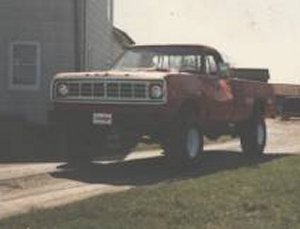
just for reference... about my 6th or 7th vehicle... I was like 20, 21, moved to the farm.... like 1985.. 78 power wagon


full


this was the first full paint job I did on any vehicle I owned..

sorry, no afters...

got 2 gals of free white Imron from work.. came home fri... 220 DA'd the whole rig fri night and sat with a rented tag-a-long compressor..... minor body work on the front, spot prime, left a couple big ole dents in the qrters... good soapy wash at the end of the day.. right where the pic is taken...

came out sun morn.. threw some tape and paper at it, hosed the drive down and squirted it.. came out damn good.. no cut, no buff.. not perfect bodywork, but a solid paint, well adhered to a well-prepped factory finish.. walk around, pull any preying mantis's out with some tweezers, drink neers.... send it....
 
I like doing a 320 to 400 wetsand (depending on sealer used) with
DAWN dishsoap as the final sanding step. It cleans very well and I like wetsanding better than dry.
 
I like doing a 320 to 400 wetsand (depending on sealer used) with
DAWN dishsoap as the final sanding step. It cleans very well and I like wetsanding better than dry.

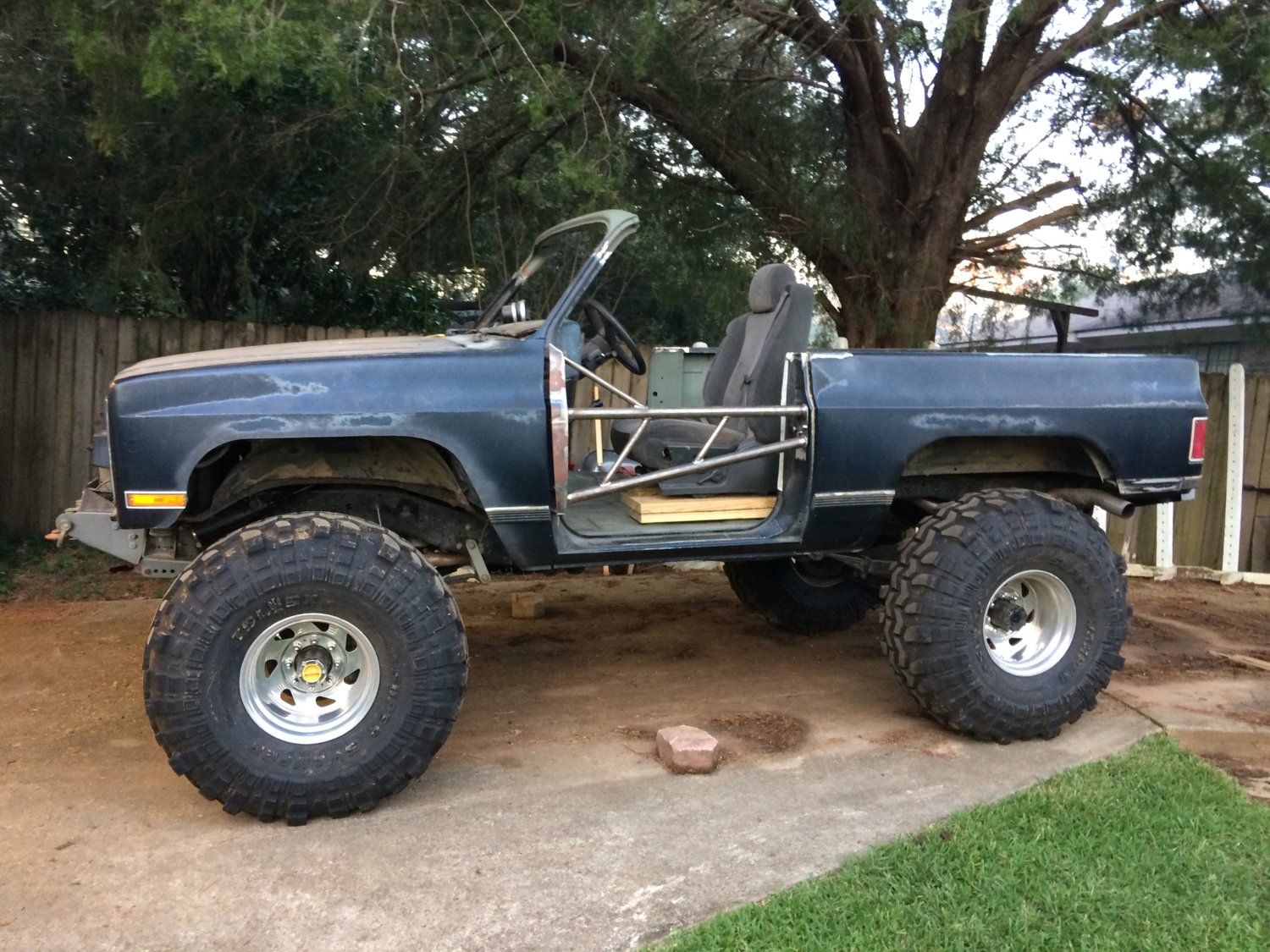
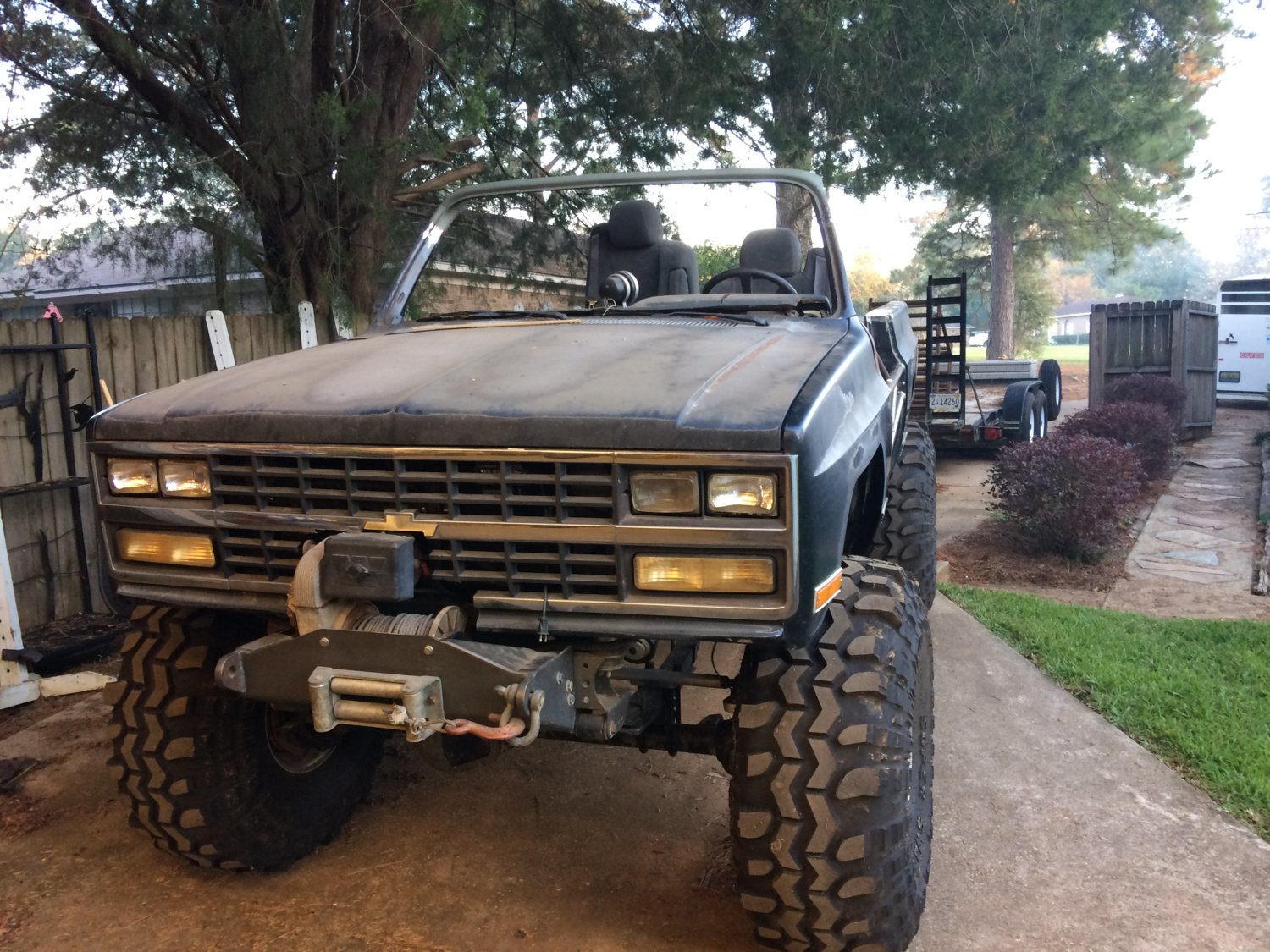
the dodge was more of a story of what can be done in 2 days with minimal prep and materials.... normally I'm wet crossblocking my prep to perfection with a bit finer..
 
First, I really appreciate all of the info here!

Now for some more specific stuff - My buddy (remember the show paint guy) is telling me NOT to use a DA and to wet crossblock, his reason is the DA will likely leave swirls and little dig marks in the paint. I'm inclined to wash the truck and go over it quickly with a DA to knock the dead clear and whatever other crud off of it and then go back and do the wet crossblocking afterwards. Good idea or no? Should I primer he whole truck (going back with similar color) or just the body work spots (assuming I don't sand to the metal)? If I need to prime it all, it would seem the sequence should be DA - prime - wet sand, correct?

I know I'm probably making this more complicated than it is but it's my nature to over think it before doing it.


Here are a couple of pics of the truck to show what I'm working on (dead clear).

full


full
 
it's all in your grits... welcome to my world.. you can certainly paint over DA, if you put enough material to cover whatever grit you used.. every boat I've ever painted was over DA cut...machine swirls just tend to run a bit deeper than blocking of the same grit.. that said, as someone that did 2000 cars, yes, your friend is somewhat right.. i would have never painted a car in the body shop over DA cut..

i would machine 280 to 320 that, just a quickie to knock the shine off and feather your bad areas.... spot prime.. than wetblock it all with 400... you'll see the swirls come out as you sand.. it's a time saver... or you can just wetsand the pee out of the whole rig..

actually i'd be a bit more aggressive, but that's my recommendation based on your pics... you really kinda have to determine what areas will end up with a bunch of raw steel and feather edging, thus needing primer... that way you can go after those areas with a grittier paper, as they'll be primed and resanded anyway... big section of clean factory paint? i'd literally take 30 seconds with some 320 on the machine, than wet block it with 4...
 
are you gonna use rattlecan primer?

LOL my next question!

I'm inclined to rattle can primer it mostly because it's quick, easy and I don't know any better. :D Deep down I feel like the right thing to do is to spray primer with a gun. Yes or no? WWRD (as if I didn't know)? This also leads to another question, if I should gun primer it, is it ok to rattle can the small repair spots as I bondo them (then gun primer the whole truck when I'm done with spots)? My buddy swears rattle can primer is junk but there's lots of humidity here, if I don't cover it somehow the bare metal will be orange in a week.
 
if you are willing to pop for a 2 part primer, i strongly suggest it.. when you paint, you'll know you have uniform substrate that is "known good" with no iffy featheredges, old enamel finishes, etc..

rattlecan primer is an air-dried resin, it's downfall... it can wreak havoc when sanding it, etc... sh*t stays soft forever. yes, it'll stop it from rusting, but you may go to prep it for the final primer, and have a balling up, or peeling, mess when you sand it...

if you were willing to buy a gal of fill primer, i would just use it to spot.... it's easy enough to figure out a couple small batches... i know, it's a bit more time consuming, but it easy enough to clean the guns up.. than run the same primer a bit thinner as a sealer and overcoat the whole rig...

is that solid or metallic you wanna shoot?
 
Top Bottom