CK5
Register an account today to become a member! Once signed in, you'll be able to participate on this site by adding your own topics and posts, as well as connect with other members.

1991 blazer evap question.

jesse james 1

Registered Member
Joined
Jan 25, 2025
Posts
14
Reaction score
10
Location
Minnesota
Fist time posting here so hope I'm doing this correctly.
The sending unit in my tank has never read correctly (1991 fullsize blazer 350tbi) so I finally put a new sending unit and pump in, it worked correctly for a couple weeks but soon quit reading again. Lived with it for a while but realized the tank was pulling a vacuum so I figured I'd replace all the fuel and evap lines but when I pulled the tank out again it was partially collapsed and smashed the sending unit. Anyone have this happen before? I've got all the lines in and replaced the charcoal canister and purge valve. Going to slap the new tank in soon. Anything else I can look at to prevent this from happening again? Thanks.
 
wow, that's a new one. 91 wasn't that complicated of system. Did you ever have an issue with gas cap being difficult to remove, or sucking noise when removing?
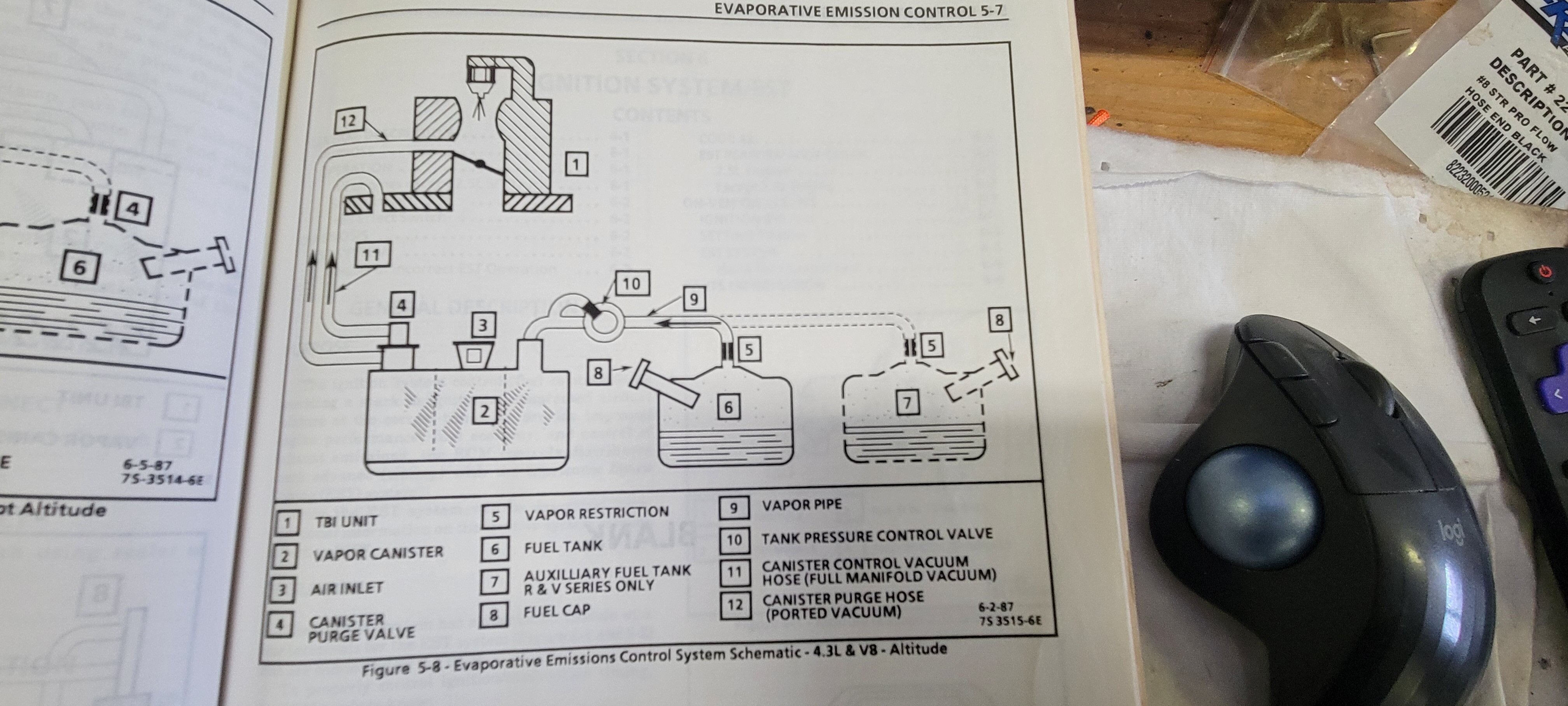
I'll look up the vacuum line routing tomorrow and post up what i find. Am guessing that it miss routed and full engine vacuum, with no vent and the fuel pump draining volume all contributed to the collapsed tank.
 
wow, that's a new one. 91 wasn't that complicated of system. Did you ever have an issue with gas cap being difficult to remove, or sucking noise when removing?
I'll look up the vacuum line routing tomorrow and post up what i find. Am guessing that it miss routed and full engine vacuum, with no vent and the fuel pump draining volume all contributed to the collapsed tank.
I tried a new fuel cap and it was still pulling a vacuum, would still get a hiss and hear the tank pop . I've got another new cap and new filler neck to put in aswell.
 
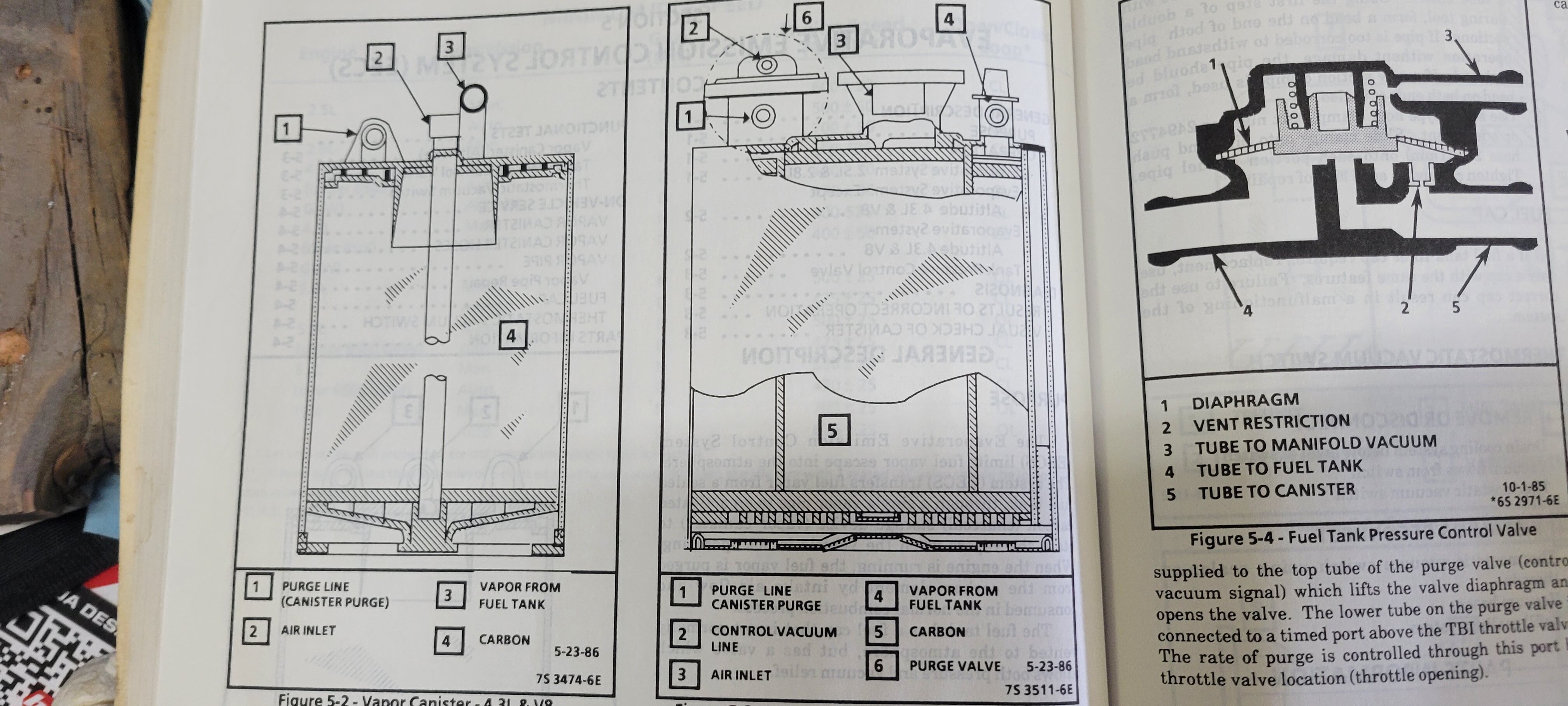
check the bottom of the canister there is a filter if it is plugged up this can cause some pressure issues
 
check the bottom of the canister there is a filter if it is plugged up this can cause some pressure issues
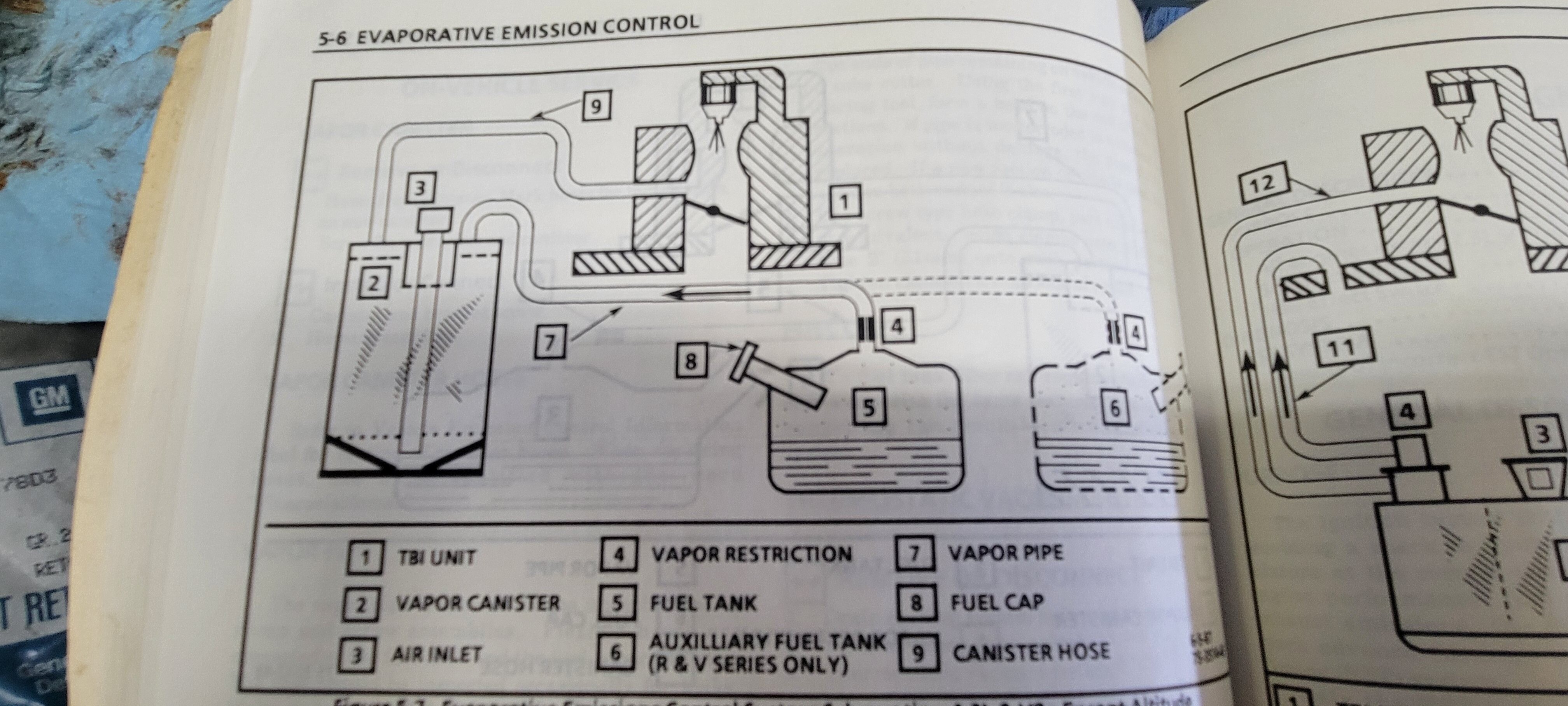
Couldn't see the filter you are taking about on this rockauto special canister. It has 3 ports on top labeled,
PURGE- line runs from canister to throttlebody.
CLEANER- has a non-airtight cap on it.
TANK- vapor line from valve located near fuel tank.

I still have all the old evap lines laying in the shop, I'll head out and see if they have any internal restrictions for the heck of it.
 
Cleaner would be air inlet that need to be open to atmosphere or plumed to filtered air in air cleaner assemby
 
Cleaner would be air inlet that need to be open to atmosphere or plumed to filtered air in air cleaner assemby
There is a spare port in the air cleaner that is plugged, I'll run a line to that.
Also found the steel evap line was blocked internaly near the fuel tank, after snacking it on the ground a few times I was able to blow through it finally and a bunch of rust came out. I'll finish slapping this thing back together and see what happens on a test drive to the gas station.
 
There is a spare port in the air cleaner that is plugged, I'll run a line to that.
Also found the steel evap line was blocked internaly near the fuel tank, after snacking it on the ground a few times I was able to blow through it finally and a bunch of rust came out. I'll finish slapping this thing back together and see what happens on a test drive to the gas station.
That plugged line is most likely the culprit
 
It will probably be a week or two untill I have a definite answer for yall, ran into an issue with connecting the fuel return line to the pump assembly, can't get it to seat and connect without leaking. Always something haha.
 
Probably needs a new o ring. That is a push on connection correct?
Tried a couple different o-rings, then I tried without an o- ring at all to see if i could even get it to fully seat that way but still couldn't get it.
It is a flared fitting on the pump assembly side , it's almost like the flare is too large to allow the hose to go over it properly, the threads are the correct size/pitch. Just not wanting to cooperate.
 
Well, I ended up taking some emery cloth to the flare on the pump side and after an hour and some hand cramps and swearing finally got the return line hooked up and no leaks, made it to town and everything seems to be good as new. Thanks for the info
 
Little update for you guys, the snow and salt is off the roads for now so finally went for about an hour drive and started collapsing the tank again, when unscrewing fuel cap and watching tank it expands about an inch, I'm over it, drilling a small hole in the gas cap tomorrow... not sure what else it could be, tried 3 different caps. I'm not familiar with the throttlebody itself, could it possibly be pulling an insane amount of vacuum through the evap system?? Thanks for all the input!
 
Little update for you guys, the snow and salt is off the roads for now so finally went for about an hour drive and started collapsing the tank again, when unscrewing fuel cap and watching tank it expands about an inch, I'm over it, drilling a small hole in the gas cap tomorrow... not sure what else it could be, tried 3 different caps. I'm not familiar with the throttlebody itself, could it possibly be pulling an insane amount of vacuum through the evap system?? Thanks for all the input!
You still have a restricted vent.
You should not need to have a vented cap.
That is a band aid for now but it's not the solution
 
Swapping caps would never have solved this as the caps are designed to vent to atmosphere, not prevent vacuum. Pre-EVAP they were, but you can't get those caps anywhere I've ever seen. I made my non-vented cap vented, and promptly realized filling the truck to full and getting it nose up meant I was dumping fuel, which amazingly is worse for gas mileage than burning it.

The only way the tank is collapsing is that it's not able to draw air as it should, which would be through the EVAP system.

Now that your cap is no longer functional, doing something simple like unplugging the EVAP canister after driving wont tell you anything. If unplugging the tank to EVAP line vented the tank, you'd know the canister isn't "breathing" properly.
 

Latest Posts

Top Bottom