CK5
Register an account today to become a member! Once signed in, you'll be able to participate on this site by adding your own topics and posts, as well as connect with other members.

ALDL cable-fixed (comp problem)

Well I figured it out. My buddy brought over his computer and it worked right away! He is a computer wiz and we set up my laptop serial port and it still didnt work. So the computer was at fault the entire time which is great to hear (free laptop). Gives me peace of mind to know my cables all work and I am not an idiot :D. Now I am going to either buy the USB cable or get an adapter. Or maybe fix the serial port on mine somehow.
 
I've heard the adapters are problemsome. I think you would be better off just buying the correct cable.
 
Parts I am using are from radioshack, using 10K ohm resistors and the 2n3904 transistor

Hopefully this isn't too old of a thread.....

I am going to build this cable and went to Radio Shack last night. The only thing we couldn't answer was the wattage.

Would I use a 1/2 watt or 1/4 watt resistor? Based on the pictures seen and the size relative to everything else, it looks to be a 1/4 watt, 10k resistor.

I bought both just in case ($1 for 5).

Thanks!
 
Here is the parts list from Radio Shack

List of parts needed from Radio Shack.
1. Cat no. 276-1513 Metalized Hood for 9 pin connector $1.99
2. Cat no. 276-1428 9 pin Female D-sub connector $1.49
3. Cat no. 276-2009 MPS2222A Transistor $.69
4. Cat no. 271-1126 pkg of 5 10k-ohm 1/2 watt resistors $.99
5. 6' of 14 or 16 gauge speaker wire $1
Total for cable parts $6.16

I used this list to build mine and it works great.

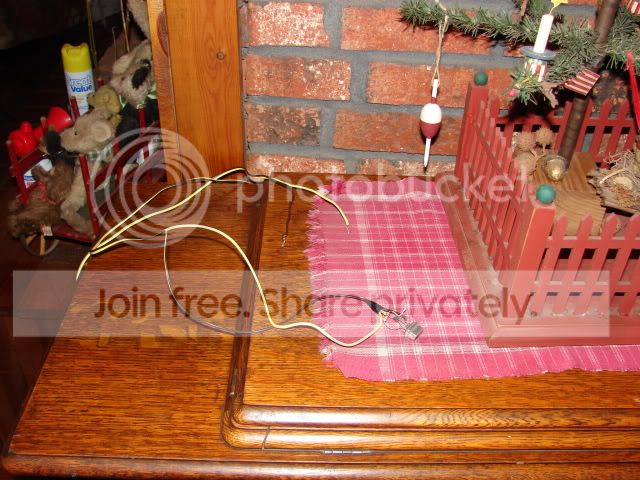
DSC01338.jpg


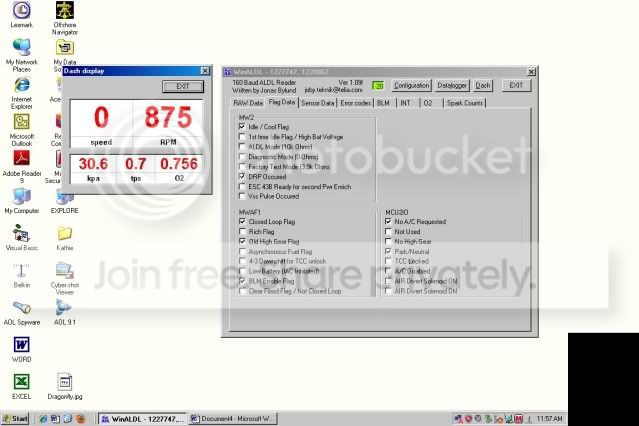
JiminyData1.jpg
 
10K is 10k no matter what the wattage.

When in doubt, go bigger.
The wattage rating is just how much power it can handle, the circuit does not care.
As long as it is a high enough wattage to handle the load, it does not matter how much bigger it is.

When dealing with resistors, there are a couple of other things that will sneak up and bite you.

In this case, they don't matter, this is just for future reference.

One is precision. Many cheap carbon resistors are +/- 20%.

But nowadays, most of them are like yours +/- 5%. Which means the resistor can be anywhere from 10,500 ohms to 9,500 and still be correct.
If the circuit is critical, you can buy 1% ones.

The other problem you can run into concerns wattage again.
1 Watt is as big as you can normally find in carbon resistors. There are some 5 watters out there, but they are rare and usually special order.
In general a resistor above 1 watt is wirewound.
A carbon resistor is made out of carbon. Its thickness determines the ohms.
When alternating current flows through a piece of carbon, in general it just sees a resistance.

But, a wirewound resistor uses resistance wire wound around a form.
DC does not notice, but when higher frequency current tries to go through a coil like that, you get into inductance. Which can cause all sorts of problems.

So, as long as you are working with DC, don't worry. But if you ever want to replace a resistor in an AC circuit, make sure to replace it with the same type resistor.
 
10K is 10k no matter what the wattage.

When in doubt, go bigger.
The wattage rating is just how much power it can handle, the circuit does not care.
As long as it is a high enough wattage to handle the load, it does not matter how much bigger it is.

When dealing with resistors, there are a couple of other things that will sneak up and bite you.

In this case, they don't matter, this is just for future reference.

One is precision. Many cheap carbon resistors are +/- 20%.

But nowadays, most of them are like yours +/- 5%. Which means the resistor can be anywhere from 10,500 ohms to 9,500 and still be correct.
If the circuit is critical, you can buy 1% ones.

The other problem you can run into concerns wattage again.
1 Watt is as big as you can normally find in carbon resistors. There are some 5 watters out there, but they are rare and usually special order.
In general a resistor above 1 watt is wirewound.
A carbon resistor is made out of carbon. Its thickness determines the ohms.
When alternating current flows through a piece of carbon, in general it just sees a resistance.

But, a wirewound resistor uses resistance wire wound around a form.
DC does not notice, but when higher frequency current tries to go through a coil like that, you get into inductance. Which can cause all sorts of problems.

So, as long as you are working with DC, don't worry. But if you ever want to replace a resistor in an AC circuit, make sure to replace it with the same type resistor.

Thanks for answering my other question (in my mind....:D). It's been 25+ years since my electronics class! I figured the tollerance was just that....how accurate/precise the resitor was. On the pics I've seen, I saw the silver band (10%) whereas the one at Radio Shack was gold (5%). I figured that this was no big deal. Just wish the Radio Shack guy could have confirmed this :rolleyes:. For an electronics place, he probably should have know that.

Anyways, thanks all for the answers. I'll stick with the 1/2 watt resistors then.

Hope this helps me find my high idle problem......
 

Latest Posts

Top Bottom