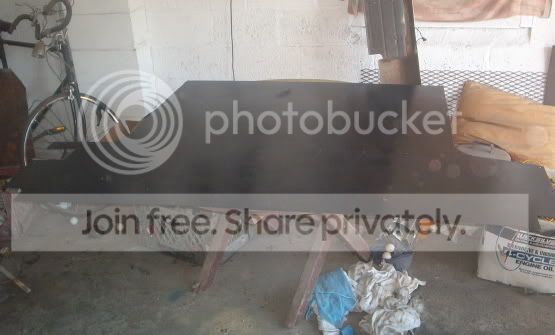
I'd be a little concerned with "popping" on the unsupported areas if you where walking around with 16g.. Just that slight up and down flex you may get.. It all depends on how you frame it out too... your going 1 1/2" vs my 1", so that may help out some..
I just mention it as, my 14 worked out awesome, but if anything, I would have went thicker, but wouldn't have done thinner if I was to do it again.. It would be plenty solid, but my fat-arse sleeps in the back of mine...

my thread should be kinda self explanatory, tho not tons of pics in how I went about it.. basically, I wanted to maintain the ability to replace qrters and w-wheels if need be.. so I bolted to those surfaces..
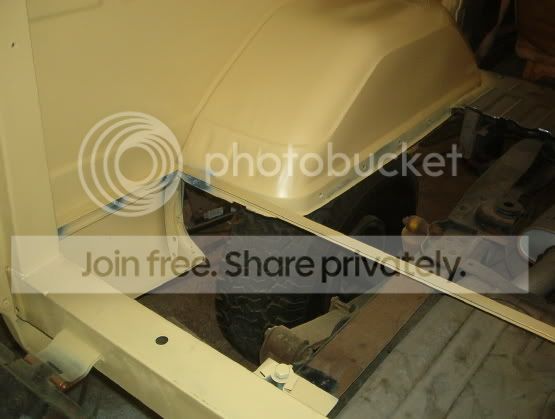
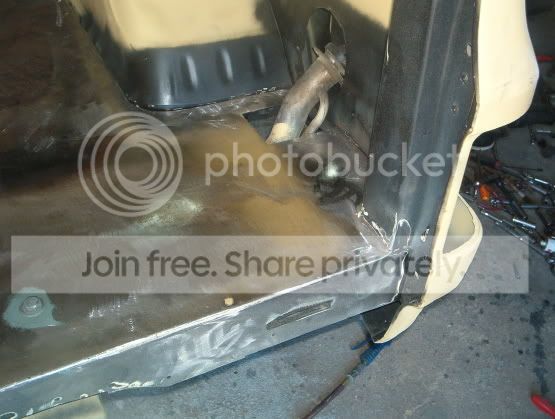
here, lets look at the pics.. the frame in place, well most of it..
the frame/angle iron is only welded to the other angle iron.. you could change this config, to have the piece runningdown the long side of the wheelwell (not shown in that pic) run all the way back to the tailpan, but I felt it was much stronger to add the side to side one off the back of the w-wheel.. there will be another at the front of the wheelwell..
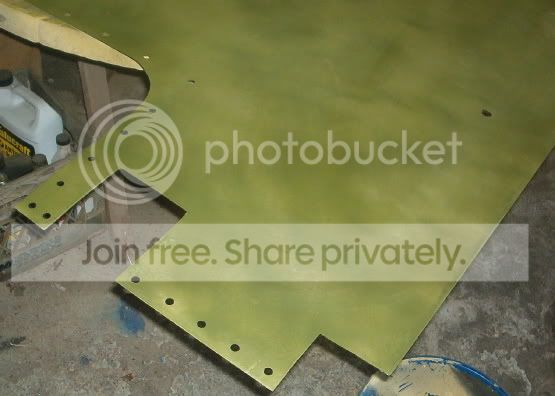
the sheet steel is then plugwelded to the top of the angle iron...
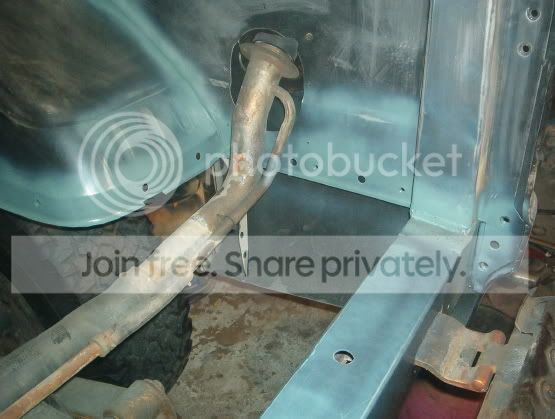
as you can see, I pre treated everything with zinc,
epoxy, then paint,
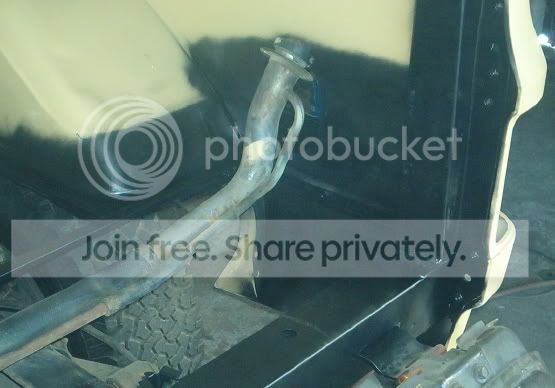
prior to laying the steel in...
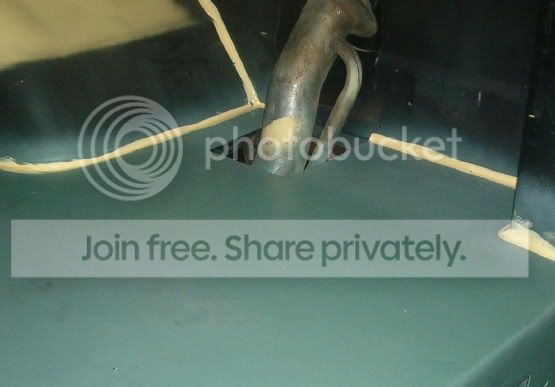
the sandwich joint I'm refering to is where the steel lays on the angle iron.. if you don't seal the joints on the bottom, you'll get water in there.. The only joint I seam sealed prioir to the floor, well, as I did the floor, was to lay a fat bead on the front edge of the tailpan. that way when I clamped it down, it would squeeze out the front.. wipe off.. that way the tailpan sandwich is sealed, caulk in the front, weld in back...
once the sheet was in, I just went in each predrilled sheet hole with a carbide burr on a die grinder and gave em a quick grind before I plugwelded em...