CK5
Register an account today to become a member! Once signed in, you'll be able to participate on this site by adding your own topics and posts, as well as connect with other members.

Best way to get 400hp+ out of a 350sbc?

GNEEnterprises

Registered Member
Joined
Dec 29, 2008
Posts
76
Reaction score
1
Location
colorado springs,co
I need more ponies in my short course race truck. I plan on building a 350 (or 383) that will put out 400+ hp. All of this on a budget, so most bang for the buck is the goal.

I would like to keep using a q-jet carb. No blowers/turbos/nitrous. It must use pump gas with some octane boost. It has headers going to a 3" open exhaust.

Which route would you guys take? Older 4-bolt block w/2pc rear main or a newer 1pc main block? Vortec heads or aftermarket aluminum? Newer roller cam or old school flat tappet? Which intake, single plane or dual?

This truck is not for the trail, it is racing only. I need an engine that runs like a spotted-butt ape!

Thanks

www.xscorr.com
 
Decent heads. And that is it. I would go with a 180CC iron. Something like the EQ lightning deals. Keep the compression between 9.4 and 9.8. Maybe press 10.0:1. You can go aluminum if you want to spend some more money. But then you need at least 1/2 point more compression. And can go as much as 1 full point more.
Definitely roller camshaft. Could be a solid or hydraulic. With the cam cores as poor as they are right now, and the problems with flat lifters, avoid them like the plauge. (Unless you are going to go with hard faced or fission welded stuff, and why if rollers are better and cheaper unless you form of racing mandates flat tappet.) If you are not running big RPM's, the standard hydraulics work great. If you are spinning stuff, then go with a solid roller.
Dual plane intake. Something like the air gap series. Pro comps make as good a power as the big names at less price. Single plane stuff doesn't help until after 6500 or 6800 and up. If you are going to live over that, then go with a single plane. The best of them so far is the EQ lightning single. I am not a big fan of q-jets for racing, but some guys know how to do it. But a 1/2 or 1" spacer with tapered bottom between the carb and the intake.
Decent crank and 6" rods, with simple file to fit ring package. (6" rod will NOT make any more power, but will be easier on the side of the cylinder wall, especially in a 383 application.) A two piece rear main block as you can get good aftermarket increased capacity pans for cheaper. Simple, reasonable price, wide power band and last a long time. Top the heads with a set of the ProComp shaft rockers and go. They take some time and babying to get right, but are great for almost no cost once they are right. (Probably weld them together to make a one piece stand. That is the best way to go.) Keep your bearing clearances from mid to high and let the thing fly.
Let us know how it goes.
 
Can you help us out by letting us know exactly what you are looking to do.
What is the opperating rpm of this engine? What percentage of time does it stay at what rpm? What transmission, split - gears - stall of converter (clutch)?
Because the last few small blocks that left my shop, one will never see under 7,000 rpm in it's life, and the next wont see over 6,500, but both are for all out racing. And we need to know this stuff before we can give you really good info. Becuase the stuff that works on one will not work on the other.
 
It has a T350 with a Np203 and 4.56 gears turning 35" tires. I will be putting a 2800~ stall converter in it. I dont think I will get over 5500 rpm because of the nature of the racing. It will be short sprints with jumps and corners. Since weight is critical things like aluminum heads would be nice, if not for the price tag.

I want an engine that scoots this K10 out of corners and over jumps. I will trade some horsepower for durability.

Look at http://www.youtube.com/watch?v=UPCrRPs5jCg. I would like to get as close to that as possible on a budget.
 
5500?! Wow!
Definitely go with more stroke. The 383 with a standard bore block or a 400+ with a big bore block. Don't even waste your time with a 350. If this thing is not going to see any rpm and turn that gear and tires, you need to build this thing for torque down low and a wide and flat band at that. Definitely a small cc runner head. Definitely a dual plane intake. Definitely a small roller camshaft. You can go aluminum if you wish, but make sure you don't get sucked into a 200cc or larger runner. You will never make the rpm to break even, much less advance.
Then find a converter manufacturer that has a clue. That will be the difference in running out front or wasting power and just burning fluid.
 
formula is simple, if youre not getting 400hp out of a 350 these days, youre not trying.

355, if youre gonna spend most of your time around 5500rpm, the added stroke is a pain on the engine. and frankly, you dont need it for the 400hp goal youve set.

Get a set of 062 vortec heads, have them ported and polished, machine them for 2.02/1.60 valves, dont worry about machining them for lift, get a set of comp cams beehive springs. allows up to .550 lift without any machine work. and will better control the valves and avoid valve float at higher rpms than typical performance springs with a spring inside a spring, and will be much easier on your valvetrain. get a good set of roller rocker arms. and bolt those suckers on.

For the cam, i personally have been impressed with the power curves of comp cams xtreme energy lineup, go with a newer 1 piece rear block and stick with the roller cam setup, modern hydrolic lifters dont "pump up" like the ones of the days of old.

intake, RPM air gap, spread bore for your q-jet. which i applaud you for sticking with. i love q-jets, the funny thing is, when you have to drive the truck around, it will still be quite "streetable" with this setup.

id aim for a compression around 10:1 for this application, which should be easy to do. stay away from domes, better to have a smaller chamber and dished pistons than a dome on the piston. it messes up the flame front travel and combustion efficiency of the engine. although the more surface area on the piston (domed or dished) the better.

psi = pounds per square inch.... the more square inches you have on the piston crown, the more pounds you have pressing on it.

a great starting point would be simply an "R" code 350 from the junkyard. modern 1 peice rear block, setup for hydrolic roller cam, and has the vortec heads. i think factory compression was 9.6:1 or something around there. which again, would be a great starting point. slightly decking the block or milling the heads would allow you to get easily to that 10:1 compression without spending money on pistons. and will provide better surfaces for gasket sealing anyway. heck, switching to steel shim gaskets might also get you very close to the 10:1 compression without costly machine work.
 
I have some small block 400 parts so I am considering going that route. Any truth to the siamese cyl/overheating reputation on these engines?
 
400 horsies is easy . Hell PHR had Project X running 11's on the old tire technology of the 60's .......... with a 283 block :bow:
 
I built a 74 350 .040 over (358) ...12.5 : 1 , bowtie heads 2.055 valves, domes .220 keith black, eagle crank, and some misc parts but im not sure it would run like it does with low compression...and also 105 octane, i had a 750 double pumper and now a truck avenger 670 thats not enuf over 5500. But needless to say the trucks an animal... Some guys here have real good advice, i should of got more instead of building one that high of compression.. But the motor itself wasnt expensive, the carb, intake and fuel pump killed that ..lol... anyway id ask alot here........paying for race gas sucks....the solid cam works good and cheap..
 
he said he has to run pump gas, and as far as putting 2.02/1.60 valves in the vortec heads, I've read that will actually hamper that head...gm states that alot of the performance from the vortecs is due to air velocity b/c of the smaller valves and the larger valves take away from this...also from what I've seen, the gmpp vortecs are better than the production line vortecs....the production vortecs are 1.94/1.5 valves while the gmpp vortecs come w/2.0/1.55 valves & they have hollow stem valves and the exhaust valve is sodium filled...i run a set and it will rev its butt off while still making good power. they do have 200cc runners though...actually they are 210cc raised runner, 62cc combustion chamber, D shaped 78cc exhaust port & runners, screw in 3/8'' rocker studs, gm claims they will out perform phase 2 bowtie heads straight out the box & will support in excess of 500hp.

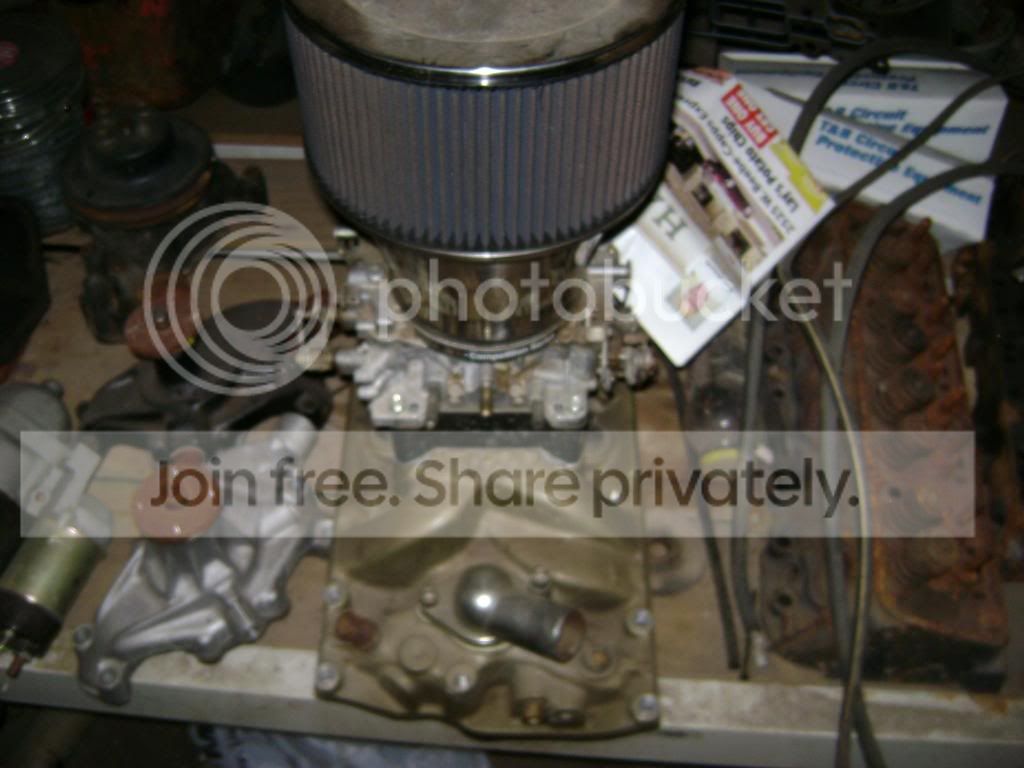
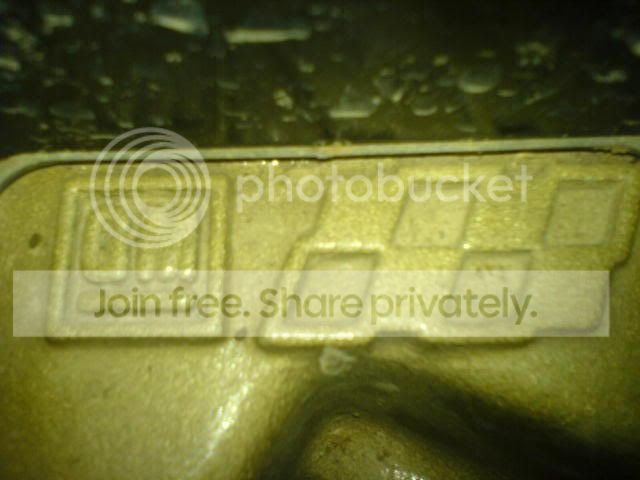
i run mine @ 9.8:1 compression w/the gmpp dual plane intake, 2'' phenolic spacer, carter afb carb, & k&n tunnel ram air cleaner. heres my induction when i had it torn down last time, if you'd like i can get the casting # off this intake:

DSC00494.jpg


DSC00313.jpg


heres the heads i run:
http://www.summitracing.com/search/?keyword=12464298&dds=1

it will turn 6500 rpm all day long! (it will turn more rpm's, but has a rev limiter at 6500) and still has power on the lowend!

i run this cam: http://www.summitracing.com/parts/LUN-07102LK/

w/comp cams 1.52 self aligning magnum roller rockers & the beehive valve springs.
and these headers: http://www.summitracing.com/parts/DOU-D300Y/

i have no idea my hp, if someone would plug those #'s into desktop dyno they could give us an idea of the hp it makes, i'm curious as to how much power this combo does make...i will say, it is 1 of the strongest sbc's i've ever had.
 
ill try and find the article in the hot rod magazine i read. They installed a set of the beehive springs (LS1 style) on a vortec and did in fact measure the coil bind and available lift from these springs. according to that article they were good to .550 lift.

I could look into it later tonight. got a busy busy day.
 
I hope beehives have come down in price, they were ridiculously expensive even compared to machining for earlier style springs last I looked.

As to roller cams, I would personally stay away from aftermarket if staying hydraulic. Aftermarket roller setups have pecularities that factory does not, which means a later factory block should be your choice, stock setup, but with an aftermarket cam. IMO. Aftermarket hydraulic retrofit roller setups are incredibly pricey compared to simply buying a new camshaft and using the rest of the stock roller parts. Plus one piece rear main advantages, etc.

Spring for good aftermarket heads. Negate the need for beehives, machining for screw in studs, heat cracking, etc. Compare the cost of "upgrading" a stock set of Vortecs with the above to the cost of even AFR's at $1000 and I bet you come pretty close.
 

Latest Posts

Top Bottom