CK5
Register an account today to become a member! Once signed in, you'll be able to participate on this site by adding your own topics and posts, as well as connect with other members.

Breakers to replace fusible links

handloader90

Building!
Joined
Sep 14, 2013
Posts
2,665
Reaction score
1,053
Location
Colorado
I ran across a thread here awhile back but I dont remember it having the specifics I'm gonna ask for.

Getting ready to go through the rats nest that the p.o. left for me and I want to update some things.

Looking to lose all the fusible links in favor of breakers.

I'm curious what amp breakers would be best.

Also, do I need 2 of them? 1 for the starter and one to replace that junction on the firewall?

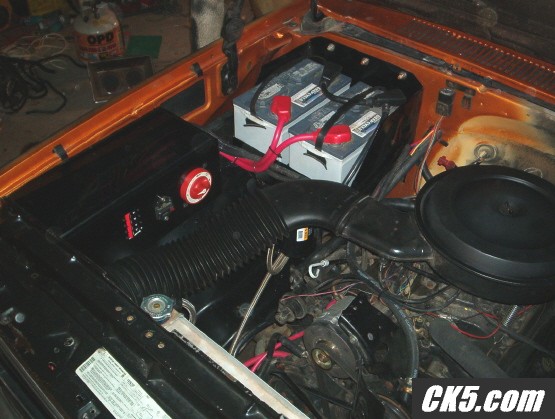
If anyone has pics of something like this I'd like to see.
 
I ran across a thread here awhile back but I dont remember it having the specifics I'm gonna ask for.

Getting ready to go through the rats nest that the p.o. left for me and I want to update some things.

Looking to lose all the fusible links in favor of breakers.

I'm curious what amp breakers would be best.

Also, do I need 2 of them? 1 for the starter and one to replace that junction on the firewall?

If anyone has pics of something like this I'd like to see.

Size of the breaker should be at least ~20% lower than the safe current capability of the wire used. Wire size should be capable of continuous handling of 20% more than the device it’s powering. So it all depends how much the power the circuit needs to handle and what wire gauge is there.

I understand removing the fusable links (I did too) but why use breakers over fuses? Fuses kinda make it easy to diagnose when something draws too much power. Circuit breaker just cuts power and restarts when the problem goes away.
 
Size of the breaker should be at least ~20% lower than the safe current capability of the wire used. Wire size should be capable of continuous handling of 20% more than the device it’s powering. So it all depends how much the power the circuit needs to handle and what wire gauge is there.

I understand removing the fusable links (I did too) but why use breakers over fuses? Fuses kinda make it easy to diagnose when something draws too much power. Circuit breaker just cuts power and restarts when the problem goes away.

I'm not even sure on how to go about figuring out the 20% part :dunno:

And fuses are an option. I just remember seeing a thread oh here where someone had replaced the fusible links with breakers.
 
There’s some charts floating around that tell you the max amps for different gauge wire.

Headlights consume 15 amps (for example):
15 amps + 20% = 18amps ( fuse rating)
18amps + 20% = 20amps (wire rating)

You can also just cheat and see what fuse rating the factory used along with the wire gauge and go by that. Maybe easier that way.
 
Size of the breaker should be at least ~20% lower than the safe current capability of the wire used. Wire size should be capable of continuous handling of 20% more than the device it’s powering. So it all depends how much the power the circuit needs to handle and what wire gauge is there.

I understand removing the fusable links (I did too) but why use breakers over fuses? Fuses kinda make it easy to diagnose when something draws too much power. Circuit breaker just cuts power and restarts when the problem goes away.


not all.... ;)


full
 
Last edited:
A fusible link should NEVER be replaced with a fuse or a circuit breaker. Fusible links are used for a reason, and that function can't be replicated with a fuse or a breaker.

Fuses and breakers are typically designed to blow quickly, whereas fusible links blow slowly, and thus can be used in situations where normal operation may involve high spikes in current that would blow a fuse or trip a breaker. Situations such as a battery going way low, and the alternator spikes high current for a short period of time after getting a jump. This goes along with the same reasons why you don't find fuses on the large cables going to the starter, or on the main power wires for electric winches.
 
A fusible link should NEVER be replaced with a fuse or a circuit breaker. Fusible links are used for a reason, and that function can't be replicated with a fuse or a breaker.

Fuses and breakers are typically designed to blow quickly, whereas fusible links blow slowly, and thus can be used in situations where normal operation may involve high spikes in current that would blow a fuse or trip a breaker. Situations such as a battery going way low, and the alternator spikes high current for a short period of time after getting a jump. This goes along with the same reasons why you don't find fuses on the large cables going to the starter, or on the main power wires for electric winches.

I disagree and think fusible links are a horrid way to solve the problem of temporary high current usage because they break or partially fail and then you can’t figure out where the problem is. They do let you use smaller wire than you otherwise should, but if something needs higher than “normal” current, even temporarily, the cable should be sized to handle it and a fuse should be used to protect it from short a circuit. Increasing the wire size is perfectly safe and much easier to troubleshoot and fuses are super easy to check if they are good/bad. My two cents...
 
A fusible link should NEVER be replaced with a fuse or a circuit breaker. Fusible links are used for a reason, and that function can't be replicated with a fuse or a breaker.

Fuses and breakers are typically designed to blow quickly, whereas fusible links blow slowly, and thus can be used in situations where normal operation may involve high spikes in current that would blow a fuse or trip a breaker. Situations such as a battery going way low, and the alternator spikes high current for a short period of time after getting a jump. This goes along with the same reasons why you don't find fuses on the large cables going to the starter, or on the main power wires for electric winches.


Yes, you can replace a fusable link with a fuse or a breaker. You just use a "slow blow" model. They allow a quick power surge without popping.
 
Had a 53 Willys with a 283 v8 in it.
Rewired it myself using circuit breakers instead of fuses.
Coming round a corner on San Jose Soquel road in the pitch black, tub shifted on the frame and cut into the headlight wires.
Circuit breaker went pop.
No lights in a 60 year old jeep with marginal steering and 9 inch brakes taking a corner propelled by a v8.
Longest 5 seconds of my life knowing the redwood trees were there. just beyond that invisible white line at the edge of tje road
I felt the center dots a few times.
Lights came back on just as I got her straightened out and applied the binders.
After surviving that, I rewired the parking lights on a seperate circuit, with a fuse.
So at least I had some type of light if one or other fails.
 
Well you don't want a breaker or a fuse holder mounted down by the starter due to the high heat (and inconvenience to access them). Even if you used high temp parts, anything bigger would need added support or protection. The fuse/breaker should be as close to the power source as possible for full protection of the wire. In the factory setup, the starter stud is the main power point for the vehicle, which is why the fusible links go there. So eliminating them means re-routing a lot of wiring in your truck, to some new electrical center. You have to route the battery and alternator there as well, or you're still doomed to have fusible links at the starter. Keep in mind you'll be splicing a lot of heavy gauge wire, so have the right tools for that. You might think that a lot of what Ryoken did there was for the sake of overkill, but some of what he incorporated is just essential.
 
A fusible link should NEVER be replaced with a fuse or a circuit breaker. Fusible links are used for a reason, and that function can't be replicated with a fuse or a breaker.

Fuses and breakers are typically designed to blow quickly, whereas fusible links blow slowly, and thus can be used in situations where normal operation may involve high spikes in current that would blow a fuse or trip a breaker. Situations such as a battery going way low, and the alternator spikes high current for a short period of time after getting a jump. This goes along with the same reasons why you don't find fuses on the large cables going to the starter, or on the main power wires for electric winches.


bunk... ;) look at boat systems.. fuses exist in certain situations, but far better systems exist beyond fusable links..

GM engineers aren't always correct.. :whistle:
 
Top Bottom