

This sent me down a rabbit hole.
Have you guys looked into inverters with their own built in transfer switch?
Have you guys looked into inverters with their own built in transfer switch?


One of my beefs with the cheaper batteries (like wattcycle) is that they don't pay attention to packaging. They just make a battery that is convenient to package, not understanding that most people that aren't look for loose cells are trying to stuff them in a BCI-standard compartment.
I haven't read all the responses, but you can get a pretty good idea of the electrical load using a voltmeter. Since all wires have resistance, if you measure the voltage drop from one end of the wire to the other you can divide that by the resistance of the wire and get the current. For example, if you have a 2AWG wire going from the battery to the starter that is 6 ft long the resistance of that wire will be 0.001518 ohms. The way you figure that out is to look up the resistance of the wire under test and it will tell you the ohms/foot (or ohms per 1000 feet). Then you multiply that number by the length of the wire to get your total resistance. Now measure the voltage drop from one end of the wire to the other. Say it's 0.1 volts. Knowing that voltage=current x resistance we can calculate the current. Let's rearrange that equation into the form we want so that current=voltage/resistance. So with a voltage drop of 0.1V divided by 0.001518 equals about 66 amps. Of course this will all depend on the accuracy of your meter when reading the voltage drop across the wire. Do this for all the wires coming off your battery and add the results together. If this is too confusing just post up all the voltage drops across the wires coming off your battery and the gauge and length of your wires and I'll do the calculations for you.


The mini usually uses a different type of cell. A standard will use cylindrical, like 18650, and mini will use a pouch. I would avoid mini unless it's the only way to fit what you need.There are some "mini" 100Ah batteries, but I don't know if they are made to conform to a specific form, or they just made the case smaller and called it good enough.
Inverter-wise, something along this route but 12V? https://www.dchousepower.com/products/48v-25a-lithium-battery-charger-2000w-pure-sine-wave-inverter
I used that one a bit, worked fine. I didn't stress it, but it worked as advertised in terms of charging, I didn't get close to trying to push the 2kw output, but 120V stuff worked fine that I did plug into it.
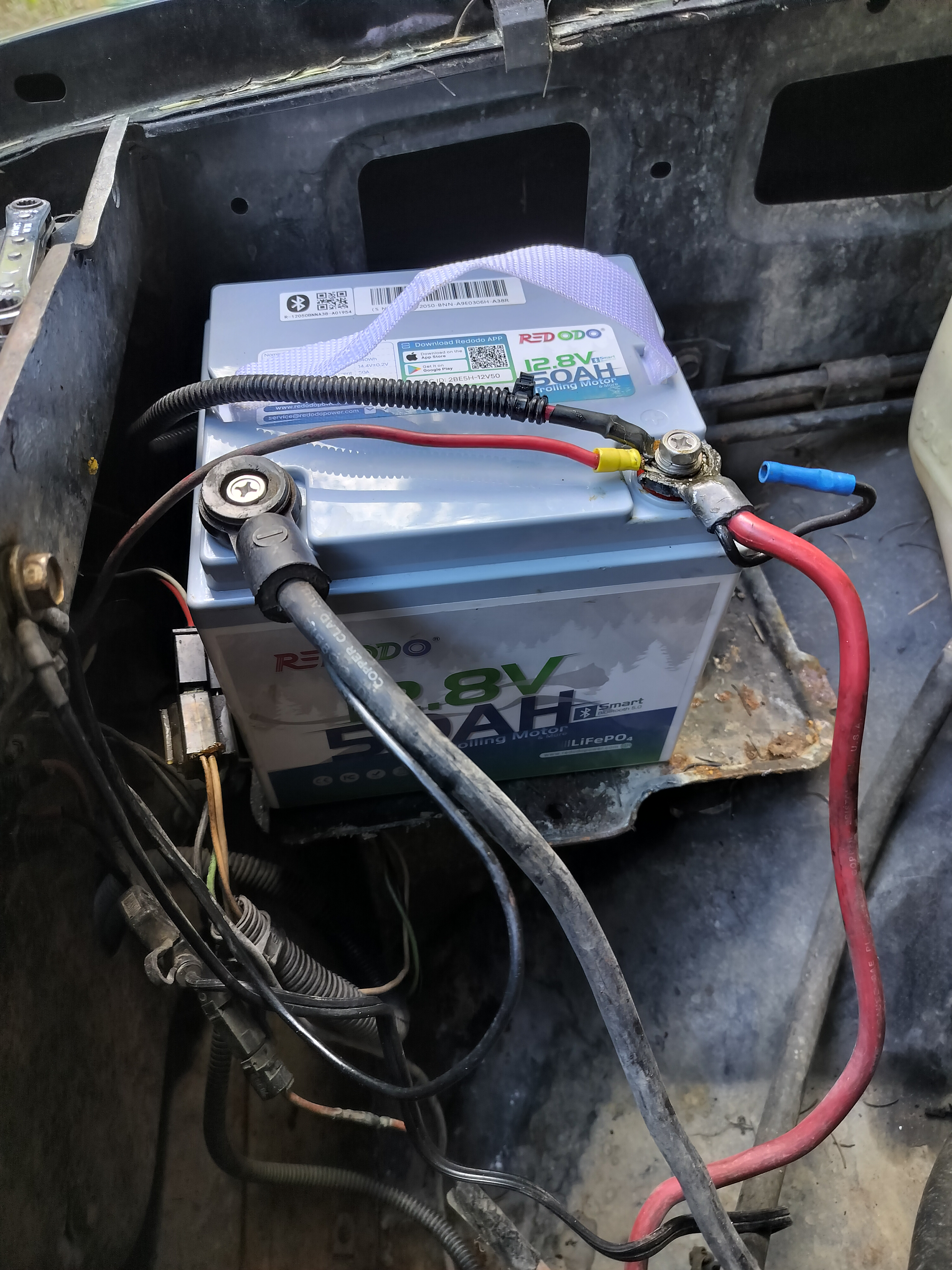
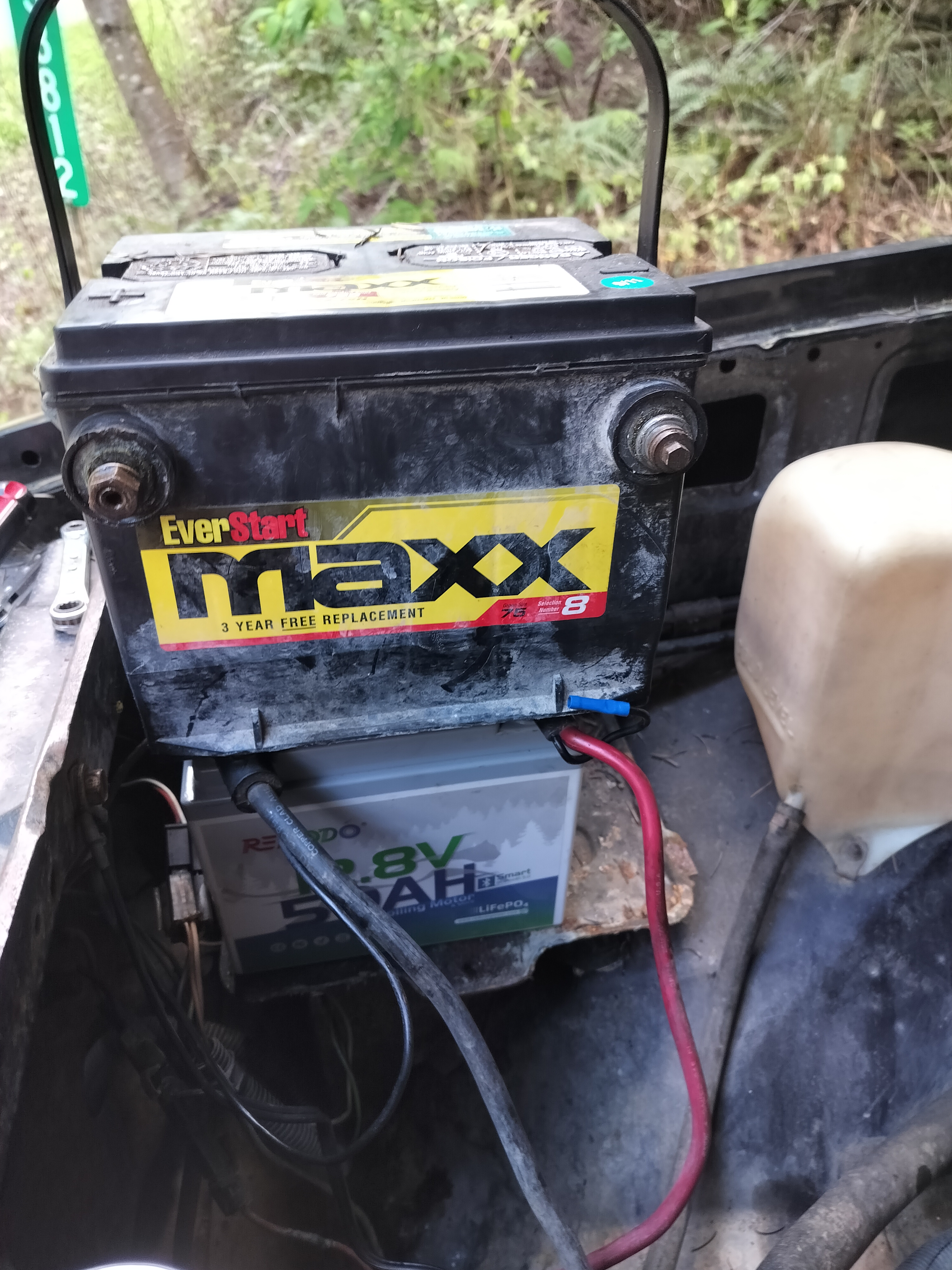


I have 2 of those but not the metal case.I've been eyeballing this for the motorhome but haven't been able to convince myself to hit the button:
They do make batteries rated at 12.8V that are supposed to be drop-in replacements for lead acid (i.e. 4C @ 3.2V). Knowing what a problem load dump can be in a car, the fact the BMS can disconnect the battery at will makes me nervous.
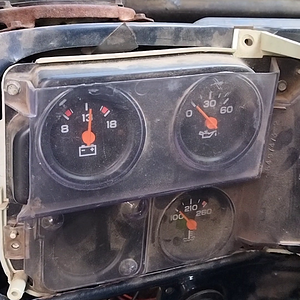
Yeah they were dropping big time.Yes, that IMO is still a question as to how hard this is on the alternator over time. There doesn't seem to be a spike when the BMS disconnects, so I *think* that indicates the "base" load on the electrical system is enough to ensure a spike isn't occurring.
I haven't driven it long enough to know if the BMS will reconnect once cells are balanced while the vehicle remains running. Balancing seems to be a rather long process (many hours) so I'm not sure it would ever get to that point driving in any case.
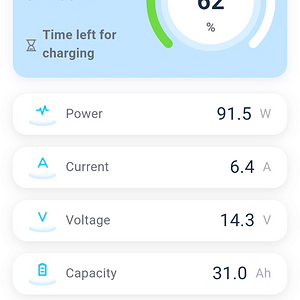
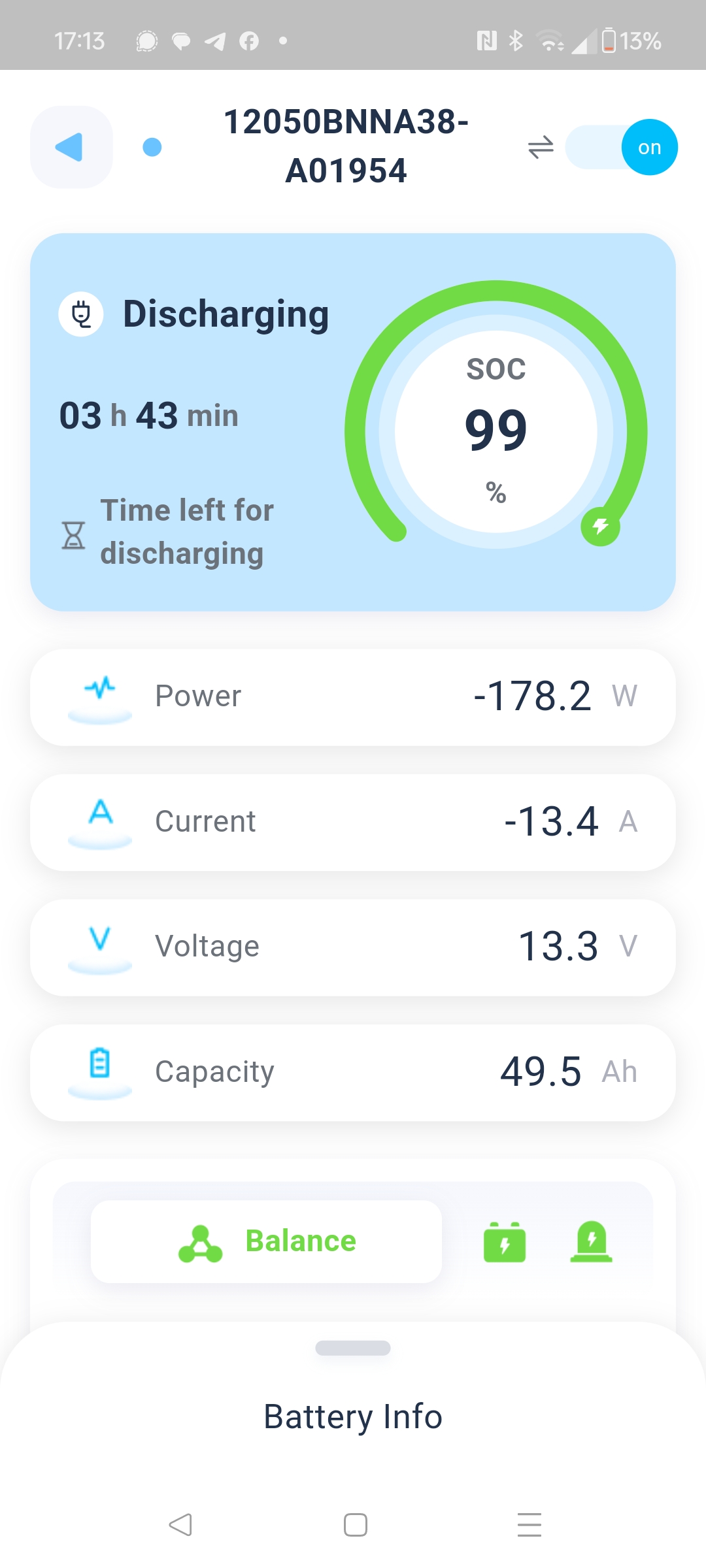
I still don't quite understand why this battery acts as it does. The BMS seems very slow to report it's actual SOC. I have run it on my mower for a few hours now, and it never disconnects, charging at about 2A/13.4V while running. Finished up yesterday, battery was showing 99% SOC. Let it sit a few minutes, and then it showed 3%. Hooked it up to a dedicated LFP charger, and while the battery showed ~1A charge current, with a 25 hour charge time, the charger showed a fault. I think that's just a "wake" function. Anyway, now, maybe 20 hours later, battery is at 100% SOC. As I've said before, I think having a BMS that will talk with the BAT-BMS is nearly a requirement when something seems wrong or odd, without seeing individual cell voltages you are unable to really know what is going on inside the battery.
If there are more cells in a larger battery, I would presume that IF the load and charge current stay the same, the load shared by each cell would decrease, maybe leading to less of this SOC/balancing concern. But I suspect that given a 50Ah battery will pull 40A in the truck, a 100Ah may pull 80-90A, which is way too much for my alternator, and is probably pretty unhealthy for the battery. I'll try it out if I find a 100Ah that is what I want for the price I want.
There are definitely both OEM and aftermarket LFP starters out there, but unless you knew you'd get 10 years of hard use out of one (like winching, where you could run one battery only?), the $4-500 price range I've seen still doesn't pencil out over the long haul. And I doubt the aftermarket LFP starters are any different on their heat tolerance or charge current safe limits, so using them in an old rig would still introduce issues IMO.
As mentioned, with new systems where you can adjust how the alternator performs, it would probably be possible to use one of these within their design parameters. While I find using this battery outside of its design parameters interesting, without resolving the quirks it introduces, I don't see it being a good replacement for a lead acid starter. It will be a good jumper though.
I'll need to use it to start the truck, turn it off, and let it balance itself for a day or so to see how much is really being pulled out of it in a typical start, just to get an idea. I suspect it's around 5% each time. But that's a guess based on the draw I've seen while it cranks.
On the storage side, I've had my 48V 100Ah battery in use for a few months now. Within their design parameters, lead of any sort has no chance of competing. I wish I had more use for it daily.
FWIW, from what I've seen lately, now is not the time to buy LFP. Prices had been falling consistently, but lately they seem to have reversed pretty hard. I know a decent (key: decent) 12V 100Ah LFP was getting into the $150 range, but now I can't even find refurbished units at that price. And Bluetooth adds another cost to it, as well as heated versions. But I think I'd figure heating out myself. Not sure if it's tariffs or something else that's hit the prices as it has, but Im not in a big enough hurry to pay more for something that should be dropping in price.


