CK5
Register an account today to become a member! Once signed in, you'll be able to participate on this site by adding your own topics and posts, as well as connect with other members.

Four Wire O2 Sensor ? (UPDATE)

1-ton

3/4 ton status
GMOTM Winner
Joined
Apr 17, 2004
Posts
5,752
Reaction score
3,161
Location
Las Vegas, Nevada
I have a 3-wire O2 sensor I am going to install on my 1991 V3500 TBI engine that originally came with a single wire O2 sensor. I bought a Denso PN# 234-3005 sensor that is the equivalent of an AC/Delco AFS-74 sensor. It has two black wires, and one blue wire. I am guessing that either one of the black wires can be connected to ground or power, and the blue one is the data wire to the OBD-I/ECM. Would this be correct?
 
Last edited:
I have a 3-wire O2 sensor I am going to install on my 1991 V3500 TBI engine that originally came with a single wire O2 sensor. I bought a Denso PN# 234-3005 sensor that is the equivalent of an AC/Delco AFS-74 sensor. I need to know the wiring diagram for it. It has two black wires, and one blue wire. I am guessing that either one of the black wires can be connected to ground or power, and the blue one is the data wire to the OBD-I/ECM. Would this be correct?
From what I found on google-fu, you are correct.
 
X2, correct. The two black ones are for the isolated heater circuit, and the blue is for the signal that grounds through the sensor body into the exhaust.

Personally, I prefer to ditch the 3 wire for a 4 wire every time. Then you also get an isolated ground for the signal side as well, rather than relying on a possible rusted/corroded connection through the exhaust manifold/header, and bolts into the head. I typically do the same on even the 1 wire sensors, as having the heater in the sensor means the sensor will start reporting much earlier, and typically accelerating the time it takes to get into closed loop operation.
 
From what I found on google-fu, you are correct.

Thanks. I finally got around to having Joe over at Performance Muffler install a new exhaust system on my truck. With the modifications to the exhaust system, in order to clear my front driveshaft, it moved the location of the O2-sensor back close to 3 feet from it's original location. As soon as it started to get cold in the mornings and evenings my truck started running real rich (even after 10 minutes or more of driving). I am thinking it is because the O2 sensors new location is back so far that the exhaust is not getting hot enough to go into closed loop. I do not know this for a fact, but the rich condition did not start until I had a new exhaust system, and it started getting cold in the mornings and evenings. The truck runs great in the heat of the day.
 
Last edited:
X2, correct. The two black ones are for the isolated heater circuit, and the blue is for the signal that grounds through the sensor body into the exhaust.

Personally, I prefer to ditch the 3 wire for a 4 wire every time. Then you also get an isolated ground for the signal side as well, rather than relying on a possible rusted/corroded connection through the exhaust manifold/header, and bolts into the head. I typically do the same on even the 1 wire sensors, as having the heater in the sensor means the sensor will start reporting much earlier, and typically accelerating the time it takes to get into closed loop operation.

Would you happen to have a part number, or year make and model for a 4-wire O2-sensor? I have not installed the 3-wire yet, so I could return it, and get a 4-wire.
 
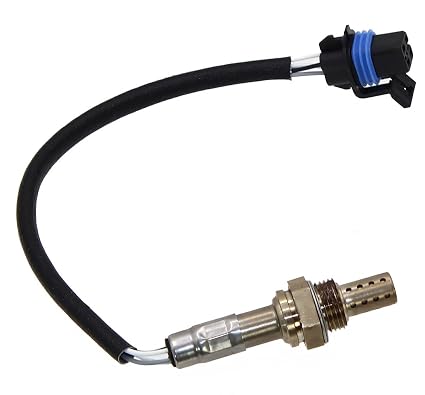
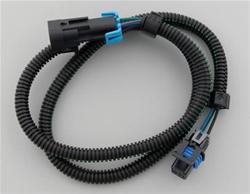
I think I may have found the 4-wire O2-sensor I need. The Bosh number for it is 13111. I interchanged it into a Denso part number. I also found a extension wire harness as well for the O2 sensor.

Denso part number 234-4087 4-wire O2 sensor.
61TCXpXkxUL._SX425_.jpg


4-wire O2 sensor wire harness 36" extension.
cei-109008_w_ml.jpg
 
It's been a long time since I played around with OEM EFI systems, but I'm fairly certain I was using ACDelco AFS138 sensors on those.

Oh, and make sure that whatever you, or anyone else, chooses to run, make sure that you get only a 4 wire sensor. The 5 wire sensors are wideband sensors, and OEM versions generally will not work with a ECM/PCM that expects a narrowband signal. The aftermarket wideband sensors typically do software emulation to provide the narrowband output for the PCM that wouldn't be present in a OEM sensor by itself.
 
It's been a long time since I played around with OEM EFI systems, but I'm fairly certain I was using ACDelco AFS138 sensors on those.

Oh, and make sure that whatever you, or anyone else, chooses to run, make sure that you get only a 4 wire sensor. The 5 wire sensors are wideband sensors, and OEM versions generally will not work with a ECM/PCM that expects a narrowband signal. The aftermarket wideband sensors typically do software emulation to provide the narrowband output for the PCM that wouldn't be present in a OEM sensor by itself.

I looked up the part number you mentioned, and it looks like the first I found and the one you mentioned are the same except for the connector ends. The first one I found has the square 4-pin connector, and the one you mentioned has the flat 4-pin connector. I am guessing they are the same O2 sensor...they just have different terminal ends.
 
I've found GM EFI systems can be very temperamental with O2 sensors, and my LT1s ran like absolute garbage if anything other than Delco sensors were used. Apparently not all O2 sensors are the same inside.. Don't really know for sure, but I've always stuck to just Delco sensors.

Just my experience..
 
I've found GM EFI systems can be very temperamental with O2 sensors, and my LT1s ran like absolute garbage if anything other than Delco sensors were used. Apparently not all O2 sensors are the same inside.. Don't really know for sure, but I've always stuck to just Delco sensors.

Just my experience..

The reason I am running Denso O2 sensors is because I can get them at a discount. Denso parts are considered an OEM part like Delphi is. I am currently running a Denso 1-wire sensor, and it seemed to work just fine, until I got the new exhaust system and the weather turned cold.
 
Last edited:
On these 4-wire O2 sensors I am guessing that the two black wires are for either the power or ground, the blue is the data wire, and the white wire is the ground for the data wire. Would this be correct?
 
I've found GM EFI systems can be very temperamental with O2 sensors, and my LT1s ran like absolute garbage if anything other than Delco sensors were used. Apparently not all O2 sensors are the same inside..

That is correct, and why not even all the one wires were the same. Bosch got a bad name for GM O2 sensors for quite some time as their replacements were documented to not work the same as the Delco's.

At least in some GM EFI applications within the programming there is an time offset for the distance from the head to the O2 sensor...this "tells" the ECM how much after the firing event the O2 sensor is reading the results from.

I ran my one wire with headers a good 2-3 feet further downstream and didn't notice any difference in how it ran, but every rig is different. Even at that distance, if in open loop at idle, any movement of the throttle was enough to heat the O2 immediately and go closed loop, at least watching the datastream. Now with a more noisy exhaust, I can hear the difference between open and closed loop, and even heated, it's at least a good 30+ seconds to go closed, which means the open loop tune is still required to be decent to get it to start, idle, and run unless you want to sit there and wait for it to go closed.
 
That is correct, and why not even all the one wires were the same. Bosch got a bad name for GM O2 sensors for quite some time as their replacements were documented to not work the same as the Delco's.

At least in some GM EFI applications within the programming there is an time offset for the distance from the head to the O2 sensor...this "tells" the ECM how much after the firing event the O2 sensor is reading the results from.

I ran my one wire with headers a good 2-3 feet further downstream and didn't notice any difference in how it ran, but every rig is different. Even at that distance, if in open loop at idle, any movement of the throttle was enough to heat the O2 immediately and go closed loop, at least watching the datastream. Now with a more noisy exhaust, I can hear the difference between open and closed loop, and even heated, it's at least a good 30+ seconds to go closed, which means the open loop tune is still required to be decent to get it to start, idle, and run unless you want to sit there and wait for it to go closed.


Since I already have all the parts together to do the job of installing a 4-wire O2 sensor. I am just going to do it because I have nothing to loose if I do. My truck has a problem with getting to much gas when accelerating from a dead stop and choking out (I have to feather the throttle to make it stop). This only happens early in the morning, or after the sun goes down when it is cold outside, and the engine is up to operating temperature (truck runs fine when started for the first time cold in open loop). The truck also runs just fine in the heat of the day. This all started only after installing my new exhaust system and the weather turned cold.
 
Done right, it certainly won't hurt. Just make sure you have no exhaust leaks while you are in there. They will wreak havoc if upstream of the O2. Even seemingly minor ones.

I'm not going to think I know what cold temps are up this way, coldest I've seen with this setup so far is mid 20's, but certainly have not experienced what you mention.
 
I installed the 4-wire O2 sensor, and it did not make a big difference. It comes off of open loop high idle a little faster, but that is all. I found that my TBI truck had a bad MAP sensor. It had major dead spots in it from 5-inches of vacuum all the way to 3-inches of vacuum. The new MAP sensor did a lot for my truck accelerating strongly and smoothly from idle to cruising speeding. I also bumped up the initial timing a little from 0-degrees to 4+ degrees. All this has definitely helped my truck to increase its performance some.

full
 

Latest Posts

Top Bottom