

FWIW, I've had 2.25 or 2.5" pipe between my frame and T-case for like 14 years. Stock carb fuel lines in the rail for a lot of that time and TBI/TPI lines since 2006. No heat shield and no problems.


FWIW, I've had 2.25 or 2.5" pipe between my frame and T-case for like 14 years. Stock carb fuel lines in the rail for a lot of that time and TBI/TPI lines since 2006. No heat shield and no problems.
I ran stock TBI lines from the tank up the inside of the frame rail. Then it transitions to teflon/braided flex line somewhere up front - don't remember exactly where, but if you used the whole TBI line it might be in the same place.


All truck factory lines were passenger side that I'm aware of.
Edit: Can't really find any good pics online of the routing of the lines. Pretty much mirrors the brake lines up to the rear spring mount though IIRC, which is about where it transitions to flex lines up to the block/TBI.
Can you explain or show a pic of how the lines route from the frame rail to the TB?
Also, do you know what year factory lines you used? IIRC, the last years ran the fuel on the driver's side. Hmm, maybe I'd be ahead to copy factory routing on that side. I ignorantly got a sending unit from 1991 and it aims toward the driver's side anyway.


I had true duals, then switched to a single muffler with dual in/out. So there is a pipe on both sides of the transfer case, then it crosses over behind the T-case. It is pretty tight between the NP208 and frame on the PS with the 2.5" pipe, so it is actually flattened just a little in that section.
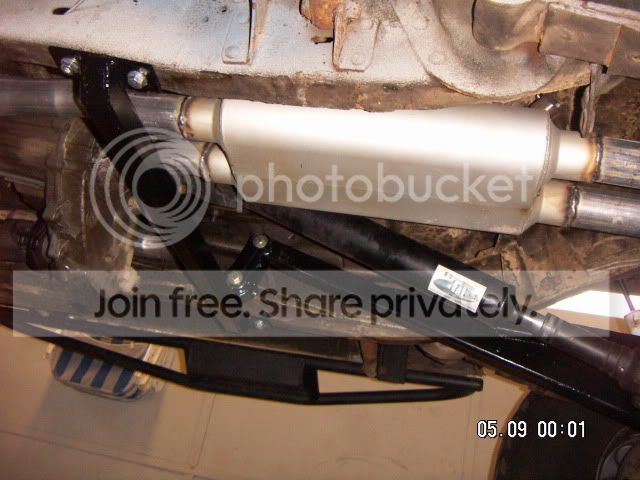
I switched from full dual to make room for the anti-wrap bar. Even with the full dual, there was always a crossover pipe under the T-case yoke. To pull the T-case, I just unbolt the exhaust at the header collectors and un-fasten some hangers and slide the whole tailpipe/muffler assembly backwards a few inches or whatever's needed.
Since the tcase mount drops down, why not route the exhaust outside of it, under the frame...
yeah, you would see it, but it wouldn't hang lower or be in the way of the front shaft.


