CK5
Register an account today to become a member! Once signed in, you'll be able to participate on this site by adding your own topics and posts, as well as connect with other members.

Heating your garage/shop

Pookster

1/2 ton status
Joined
Nov 21, 2000
Posts
3,197
Reaction score
6
Location
NYC, NY, USA
My garage is detached, and damned freezing. WE just got 2 feet of snow. I've got plenty of wood, so one Idea was to just do a make shift stove. THe other idea was to break out the torpedo heater again, but I hated the noise and smell. Final idea was to use electric heating, but I don't know how much that will cost. One Thought however, was to use an IR panel.

Thoughts?
 
I heat my garage and house with woodstoves. I like it because it's cheap and works really well. A few friends have the torpedo style heaters...they do ok. My biggest dislike about them is that they only heat the air. A wood stove or IR heater will heat the objects in the room. Plus you don't have the noise or smell.
 
i tried electricity when i lived in Idaho...it was expensive to heat a 2 car detached garage.
 
I have a wood stove in my 20x40,but, I only heat part of it. In my 55x60 I use a torpedo heater when I'm out there. I hope that by next year I will have an out-door wood burner in the back yard that will heat my house,garage and shed.
 
That was my other thought. I wasnt really happy with having a wood burning stove *inside* the garage- as there are always combustables and what not inside. So I thought outside is a good idea. I just didn't think it justified the 2g's for one of those units.

So I thought about building one- for my 25x20 garage (I know, its small) I was going to run hot air- by building a 2H 2W 3D box, line the side and bottom with bricks, insulate the outside with r19 unfaced fiberglass, then finish it with aluminum siding. Inside, I would run 8 2" iron pipes in parallel. Use forced air from inside the garage through an insulated sleeve pushing the air through the pipes, into another insulated sleeve that would duct it back in..

What I loose out on is the radient heating that a real fireplace would provide. Will have to think about that.
 
I heat my 24x36 insulated shop in Texas with a propane stove. ($!) I heat my 40x40 steel building in Ark (no insulation yet) with an old wood burning pot belly stove with an oscillating fan behind it. It takes a while sometimes and I wear flannel or a sweatshirt sometimes, but the wood is free.

That old stove cooks up the damndest pot of percolated coffee and reminds me of my Grampa's shop from wayback.
 
Insulation should be a second priority, because then what ever heat source you use will obviously work much better. I like my electric for trouble free turn the dial quick heat. I keep my shop about 45-50* and turn it up to about 55 for working in a sweatshirt. At 52y.o. I think its one of the best tools in my shop.
 
Wood burning stove in my shop, some day I plan to insulate the shop and run a gas line for a natural gas furnace.
 
Ya. I have r 40 on the roof, but the building is otherwise an uninsulated brick/cinder block, iron and concrete with a metal garage door.

I dont want to use precious square footage for insulatting the walls, when I cant insulate the door. (its a roll up, so I can't insulate with traditional means). So the best secondary approach is probably just styrafoam board.
 
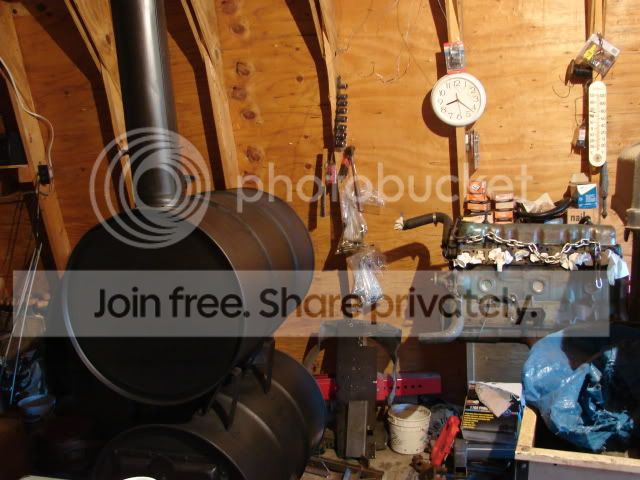
I have this in my work shop.

DSC01087.jpg


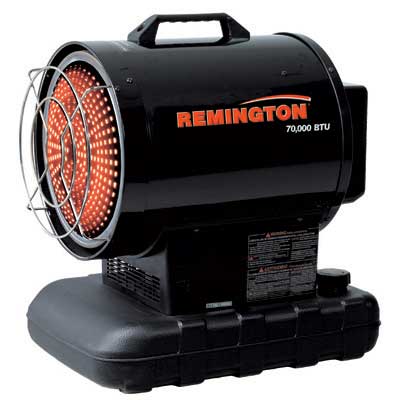
I use this in my garage.

hh-70-ss-400.jpg
 
I had been using a propane torpedo type

pros: heats air fast, distributes heat well

cons: uses a lot of propane, need electricity, loud

have switched to a tank top, two 'burner' catalytic type setup,

pros: quiet, highly efficient (gets very hot) does not need electricity

cons: localized heat, easy to burn things on 'burners'
 
DSC01087.jpg


I'd be putting some fire-rated gypsumboard behind that woodburner on the studs. At least 2 full sheets horizontally so you can get a good 8x8 shield to protect those studs.
 
I ran a natural gas line to a ceiling-mounted radiant heater and it really rocks. I use a programmable thermostat which is normally set to 45*. Then I push the "temporarily occupied" button to kick it up to 65 for 1 hour. It prevents me from wasting money after I leave the shop for hours or days without turning it back down.

Those heaters want a lot of spacing between the top of the heater and the ceiling, which put it too low for my taste. So I bent up a sheet metal heat shield above it, sitting a couple of inches below the ceiling. Whenever the heater is on, a small fan blows across the heat shield to keep it cool and circulate the hot air down from near the ceiling.
 
electric heating only would cost way to much to make it worth it. Try using electric only heat in your house for a week and see what happens to your electric bill.

wood heat is pretty effective and cheap if you dont mind the work.

I think that if you are going to go through the trouble to add a heat source you should look into some kind of insulation. Insulatioin greatly increases the effectiveness of the heat source. even that foam board around the walls is better than nothing.
 
I ran a natural gas line to a ceiling-mounted radiant heater and it really rocks. I use a programmable thermostat which is normally set to 45*. Then I push the "temporarily occupied" button to kick it up to 65 for 1 hour. It prevents me from wasting money after I leave the shop for hours or days without turning it back down.

Those heaters want a lot of spacing between the top of the heater and the ceiling, which put it too low for my taste. So I bent up a sheet metal heat shield above it, sitting a couple of inches below the ceiling. Whenever the heater is on, a small fan blows across the heat shield to keep it cool and circulate the hot air down from near the ceiling.

this is a pretty good idea too, if you're not into burning wood. a lot less time consuming and I dont think it would cost that much more to get it set up. wood stoves are pretty expensive.
 
We have a wood burner at the shop. Don't use it as much as we used to.

We made a exhaust tubing heat exchanger for it. 6 - 1.5" tubes that run the length of the burner, double back to the back and then back to the front again. There they dump into a box with a squirrel cage fan. Fan pulls air through the tubes which get crazy hot in the right fire. Fan pushes the air out into the room. Works really good.

Keep meaning to go back and put a "shroud" around the box itself and pull some air through it to take better advantage of the heat coming off the box.
 
electric heating only would cost way to much to make it worth it. Try using electric only heat in your house for a week and see what happens to your electric bill.

wood heat is pretty effective and cheap if you dont mind the work.

I think that if you are going to go through the trouble to add a heat source you should look into some kind of insulation. Insulatioin greatly increases the effectiveness of the heat source. even that foam board around the walls is better than nothing.
I have used propane, and then switched to electric, due to non vented propane unit creating moisture. I didn't compare bills for each, but I know my propane went down considerably, but don't think my electric went up more than the cost of the propane unit used.
 
I'd be putting some fire-rated gypsumboard behind that woodburner on the studs. At least 2 full sheets horizontally so you can get a good 8x8 shield to protect those studs.
The stove is 50" from the wall. Standard specifications recommend 36" from combustible surfaces.
 
I use two barrel stoves similar to the double barrell one shown in the post above,but I can only use one barrel,my chimmney inlet is too low to allow a second barrel to be placed on top of the lower one,but it still heats quite well--I made that stove by using a kit from a local hardware store that had a kit similar to the ones in Northern Tool catalogs,it gives you the door & legs and pipe outlet..only thing I dislike about the stove is the fact it can burn a whole tree in a day or so trying to keep an uninsulated 20x40 Quonset hut "liveable"..you spend a lot of time hunting for free wood,cutting and splitting it,and waste a lot of time getting the stove going and keeping it going and not let it go out..

I built the other barrel stove so it stands upright ,with a "hatch" on the top to load it,and I put three 2" pipes into the barrel ,one in the "bung" opening and two on the sides to let incoming air in,just like a Tempwood stove--it works very well and the flat top makes cooking or boiling water a lot easier than on the other stove..its appetite for wood is discouraging too though...

I tried a 150K BTU propane heater,but it would not run on a 20 lb cylinder,it would frost up the fuel hose and then it would stink and go out--it also made a lot of condensation on the steel roof arches and drops of water would freeze ,then drip all over you and everything inside when the room warmed up..propane is expensive and a pain to go get every time it ran out,so I decided to sell the heater--I still have a "china mans hat" propane one but it says it needs THREE 100lb cylinders in tandem to supply it with sufficent fuel,so that one will likely never be used again,and I'm missing the hose & regulator for it..

I have a 110K BTU and a 55K BTU torpedo heater that runs on fuel oil ,diesel,or kerosene,but at 3.30 cents a gallon for diesel,and 6+ bucks for kerosene,I dont use them much...but sometimes you want to get heat instantly and not wait an hour for a wood stove to get going good--and I tire of having backdrafts blow smoke back out of the stove when it is windy,which is about every day here,I feel like I am getting CO poisoning some days after I doze off in front of the stove and winds blow smoke back into the room it is in,which is fairly airtight...

There is no good way to heat a garage really,especially if its an uninsulated steel building,but being out of the wind and having it 40 degrees inside feels like Miami compared to this mornings 13 degrees,with 40+ mph wind gusts left over from the "blizzard"...One heater I liked was a Modine propane one that hung from the ceiling,it warmed a 150x150' warehouse a whole winter ,for 300 bucks worth of fuel...condensation was a bit of an issue though,it made tools get rusty and anything metal in the building was always "dewey"...no troubles with that with wood heat,its as dry as a bone!..

I'm having a hard time disposing of my wood stoveashes--the landfill wont accept them,they refused to let me dump them because they contain too many nails & staples from pallets I burnt,that I can score free at many places--I have tried a few ways to separate the nails and metal from the ash,but none work too good,and it is a real health hazard and pain in the butt--much as I hate too,I will likely have to just dump them way out in the woods behind the house--I hate too because I'm still getting flats on my tractor from nails my dad "buried" 25 years ago,that have resurfaced thanks to frost...scrapyards dont want ash either,one place said they would let me dump them in a junk car "once",but after that,tough luck...

I am tempted to buy some coal,and see how that will burn in my stoves,I think they would burn it ok ,and its fairly cheap,at 8 bucks per 100 lb bag...I was impressed by a friends pot belly coal stove,it was lit at 8 am one cold morning,and at 8 pm,he was afraid to leave,as it was still glowing like a neuclear reactor and the shop was about 80 degrees --with the door OPEN!...he claims it'll burn for 24 hours on two shovel fulls,about 25 lbs!...

Despite the ever present danger of having open flames in a garage when you could have gas fumes,paint or carb cleaner in the air,so far I've been lucky,no fires or explosions and I like using the wood stove to force dry things I paint with Rustoleum,it dries rock hard in a few hours,instead of months...
 
Top Bottom