CK5
Register an account today to become a member! Once signed in, you'll be able to participate on this site by adding your own topics and posts, as well as connect with other members.

How to reseal an R-4 A/C compressor

Blue85

Yooper
 Premium
GMOTM Winner
Joined
Jul 26, 2000
Posts
16,777
Reaction score
9,805
Location
Keweenaw
So do you have an R-4 compressor that works great, but leaks? Probably not because other than shaft seals, they pretty much just get to be noisy junkers. I happen to have one that runs really quiet, but leaks around the body, so I want to save it for $11 in seals instead of $250 for a new compressor. Let's see if it works...

Some would say to screw it and convert to Sanden, but I can't identify any Sanden that doesn't require massive fab to mount or rework of the hoses. Plus, the most common models have less capacity then the infamous R-4. I used my last r-4 for over a decade. It growled like a bear at idle, but always got the job done.

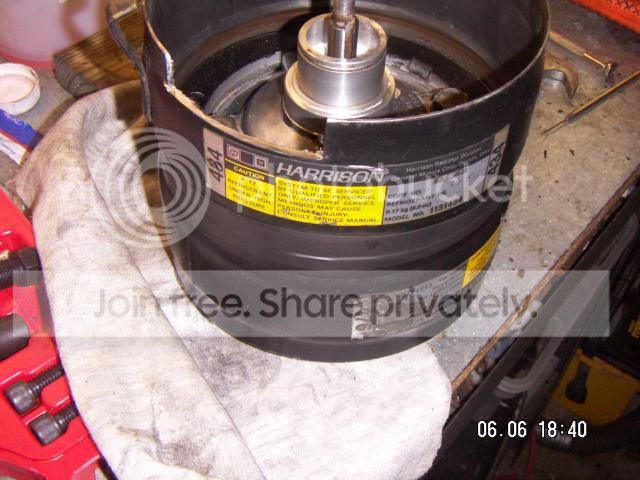
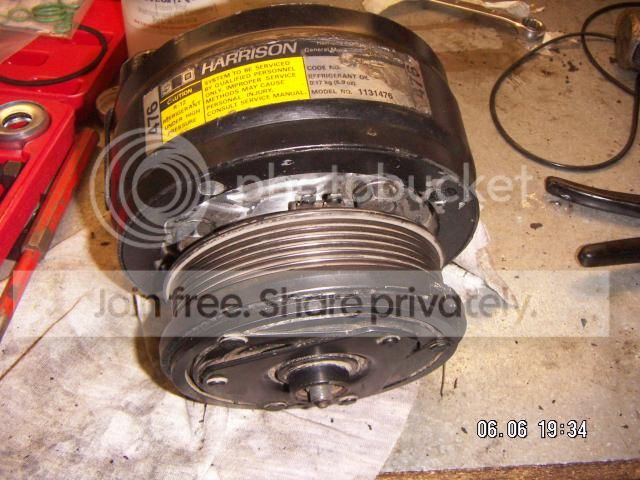
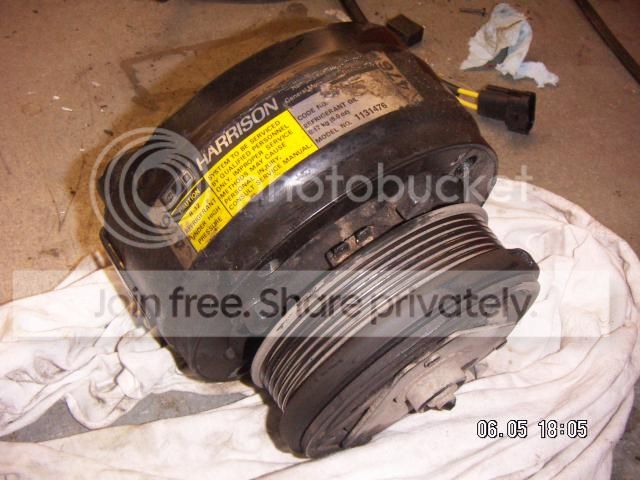
This is a later model with the serpentine pulley, probably just before the onset of R-134. It came out of a Corvette. Anybody know what 476 or 1131476 mean?
PICT0420.jpg


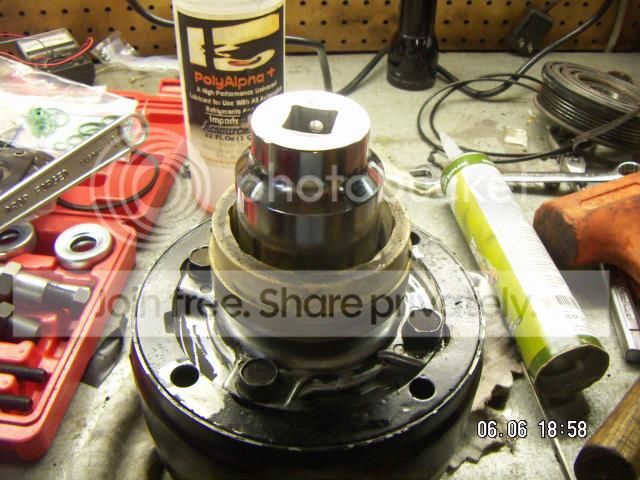
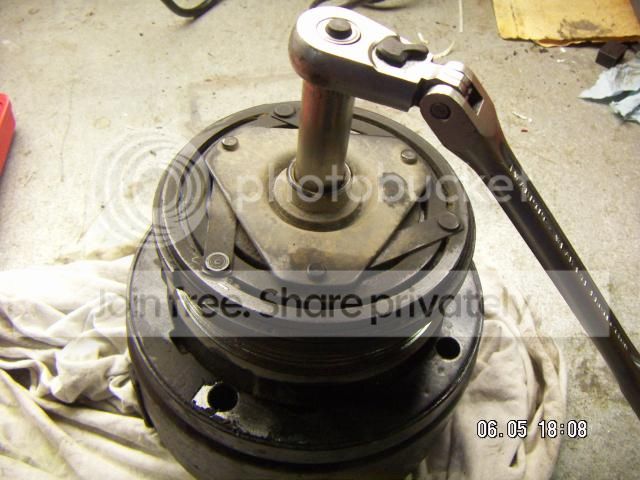
The body seals can be changed without removing the pulley or clutch at all, but I am planning to replace the shaft seal while I'm at it and at least the clutch hub has to come off for that. First remove the nut - it's easy with an impact.
PICT0423.jpg


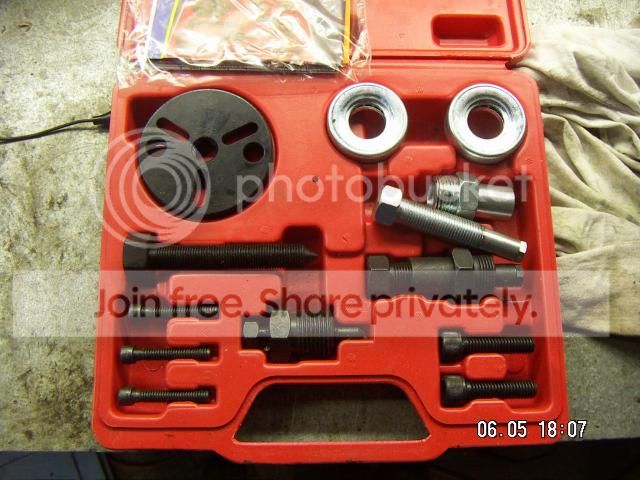
Now clean the snout and internal threads so you can use a puller tool. There is no way around this one. I used the "Astro Pneumatic 7886", which is less than $30 on Amazon. I tried all the pullers at Autozone and none fit. NAPA has one for about $65, but it only does that one job.
PICT0422.jpg


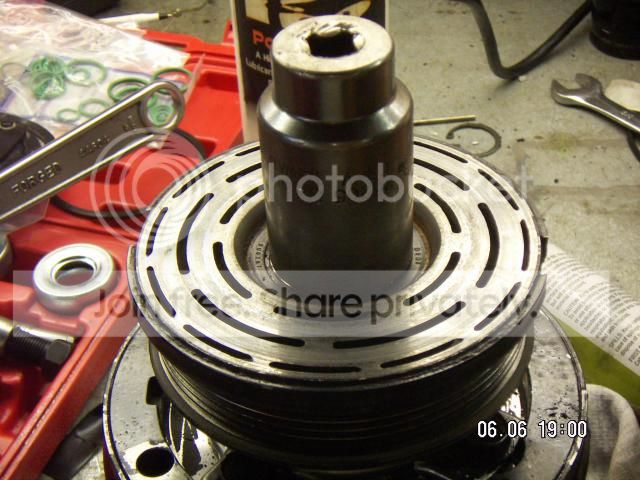
With the clutch plate removed, you can get to the pulley snap ring, or stop and pull the shaft seal from here. The coil and pulley don't block the shaft seal, but I plan to replace all the seals, which requires further tear-down and getting the old shaft seal out from the backside is soooo much easier.
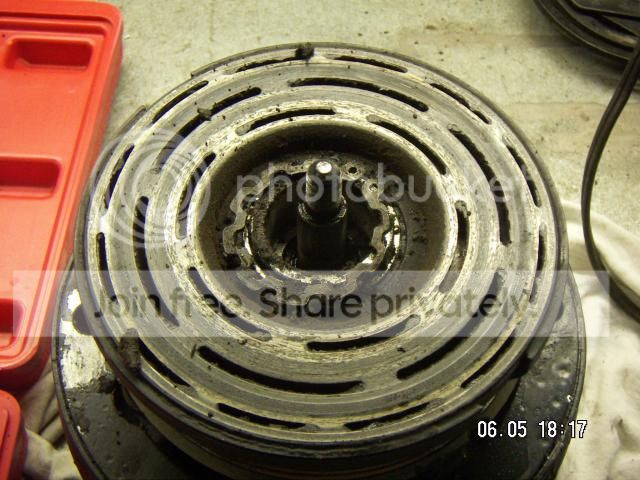
PICT0424.jpg


You can buy special tools to pull the pulley, but it comes off really easy, so a standard 2-jaw is fine. It also pulls the coil without damage.
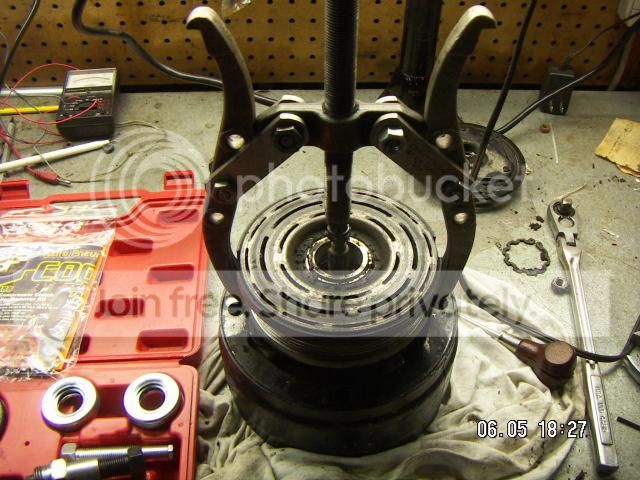
PICT0425.jpg


Now we get into the stuff that you don't see posted on the internet every day....
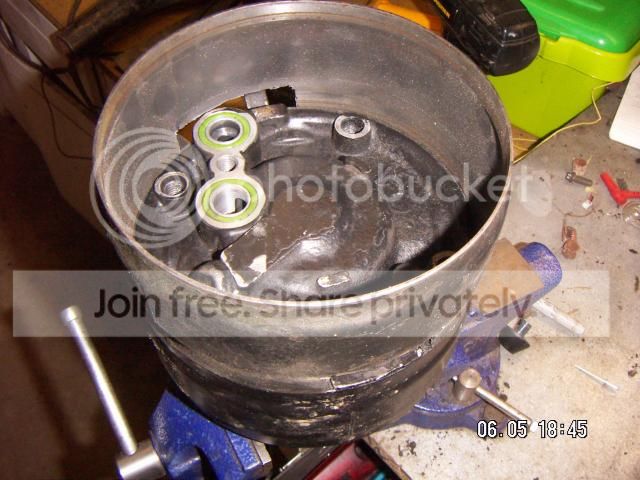
 
OK, now I cheat. I already tore down the "growling" unit, so I used that case to make a tool out of.

The case is like a steel sleeve, press fitted onto the aluminum compressor body. It's only held on by some small casting ears at one end and a little tab at the other (that you bend out). They can be separated by pounding with a drift, but some amount of damage will result. My tool is just the other case with some notches cut in it. This spreads the pounding force out on the thin case edge.

PICT0426.jpg


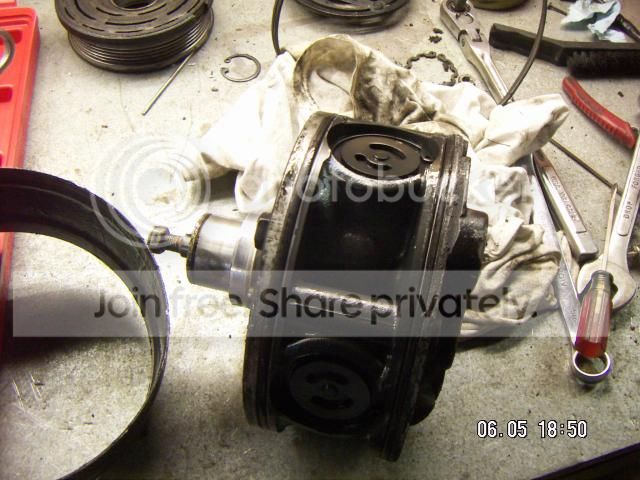
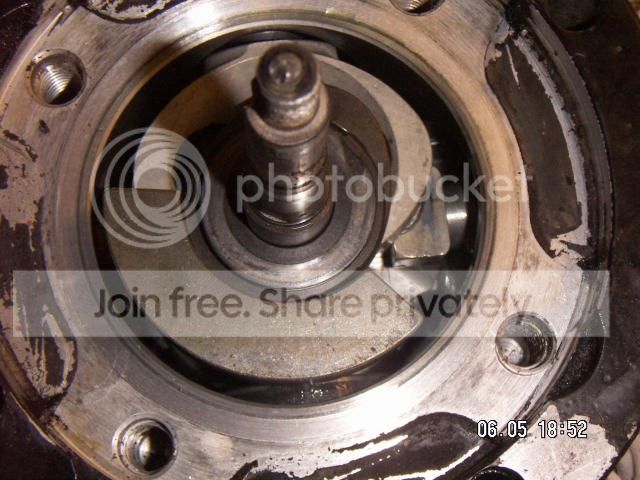
Here's what it looks like inside - "R" for radial and 4 for 4 cylinders. You can see the reed valves and giant O-rings that need replacing.

PICT0427.jpg


PICT0428.jpg


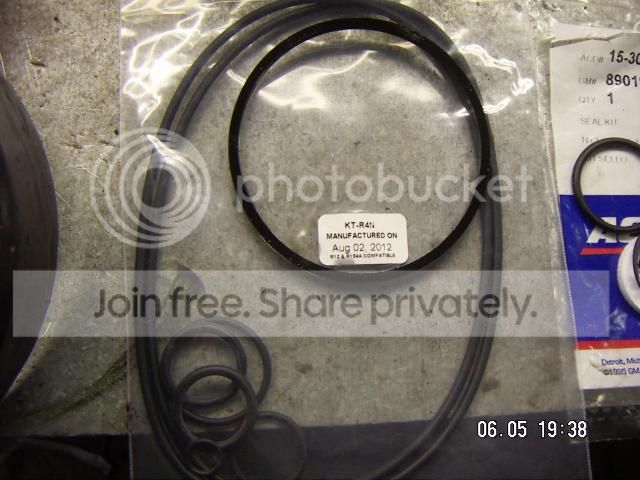
Here's the $11 kit from eBay with Sunair neoprene O-rings - nothing more:

PICT0436.jpg


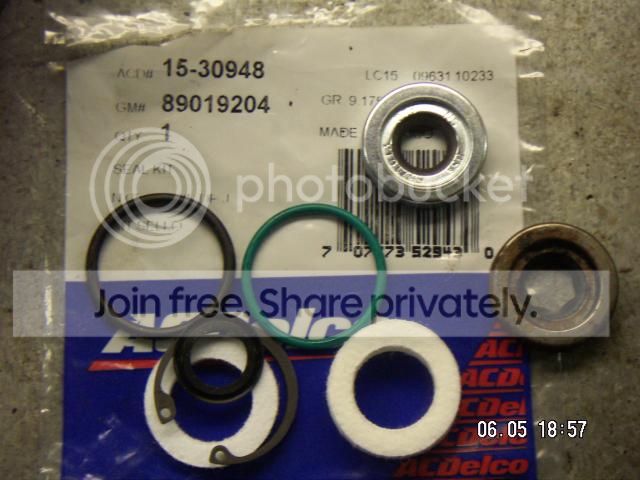
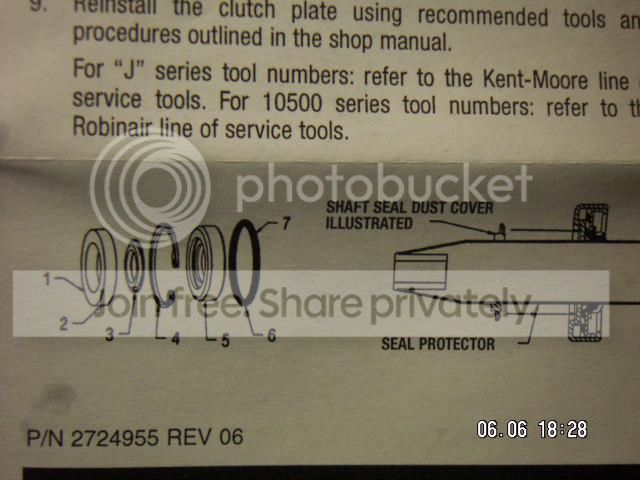
This is the shaft seal you want. The old ceramic ones require special seating procedures and the single-lip style doesn't seal as well (most old R-4s leak slowly around the shaft seal):

PICT0429.jpg


More to come later...
 
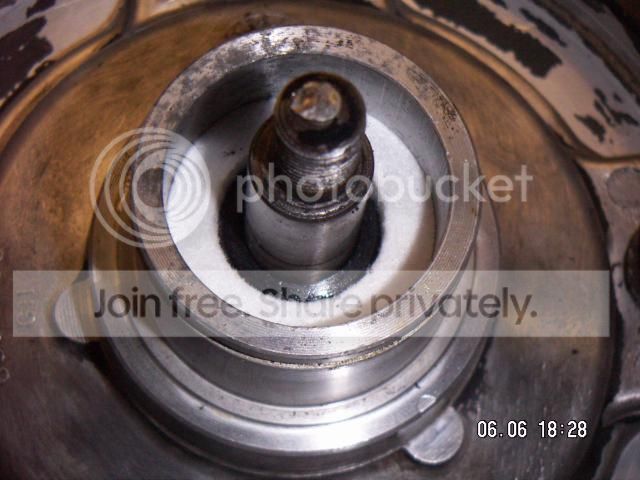
I replaced the shaft seal with the front housing removed, which makes it much easier. Then you have whole housing to push the seal over the shaft. You need to pre-stretch it and protect it from the shaft or that keyway cutout will tear it up. There is a special tool for installing this, but I don't want to go into details on how I worked around that. The old one was just the seal, an o-ring and the snap ring. The new one also contains a dust shield and this curious oil wick.

Naturally, all O-rings and seals are getting lubed before assembly.

PICT0443.jpg


PICT0444.jpg


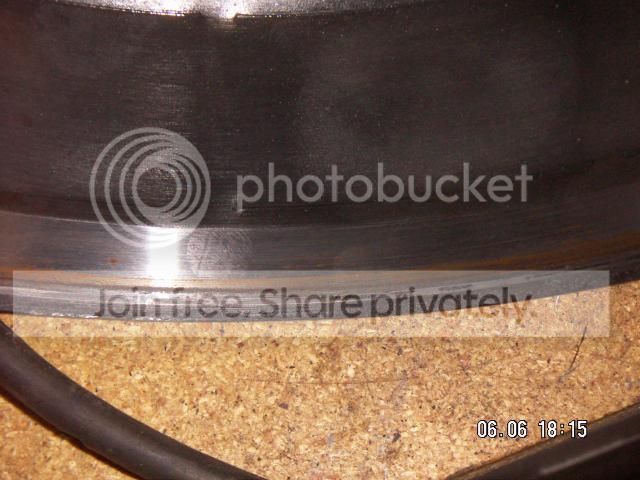
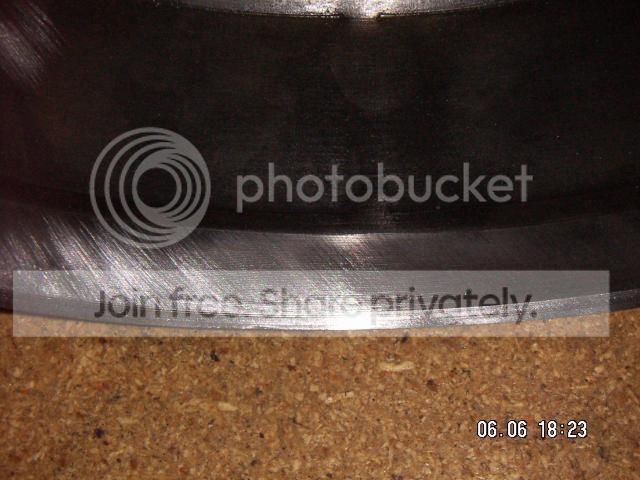
To get a good body seal, this rust has to go. This may be the reason it started leaking (or it could be the unknown history and mixture of lubricants and refrigerants it has seen).

PICT0441.jpg


I used the fine wire brush in the drill and then 300 grit sandpaper:

PICT0442.jpg


Getting the case back on is about as hard as getting it off. After taping the two housings together I tried standing on it and it wouldn't fit in the vise, so I had to pound it with the 3lb. Nothing got messed up. You can see here that the original 1985 truck compressor was a "434"

PICT0445.jpg


I happened to have a 1 7/8 socket for my Dana 80 pinion nut, which works great to re-install the coil. It just bottoms out on the housing.

PICT0446.jpg


A 34mm wheel nut socket gets the pulley 90% on. Then a little careful drift and hammer work lets the wavy snap-ring go on.

PICT0447.jpg


To get the clutch plate back on, you use the same puller tool, but flip it over and remove the plug on the inner bolt so it can thread onto the shaft. And it's just that easy:

PICT0448.jpg


Remember, if the women don't find you handsome...
 
So does it work? No leaks found during pressure testing and it held vacuum for an hour, so I went for it.

PICT0449.jpg
 
cool thread, thanks! :thumb:
 
I guess $62 for stop-leak is OK if you can keep the tap on it and use it for multiple systems. Those products are hit and miss, IMO, but definately worth it for something that holds a dozen pounds of R-22. In my case, it costs more than the refrigerant charge.

A full rebuild should include new bearing and piston rings, but I don't even know where to find those parts. To replace the rear bearing, the crank has to come out. To get the crank out, the pistons have to come out. Removing the reed valves covering the pistons is easy - just a snap ring - but then the piston is screwed onto the rod. Since the top of the piston is smooth, I have no idea how to get them out. I bet if you could find all the parts it would be $100. Remans start at $150, I think - although many fail early. So if you really knew what you were doing you could make something more reliable than a reman. AC Delco sells brand new ones for $225 and they are supposedly upgraded in a few ways to leak less, run quieter and last longer. Plus then you're into the range of converting to a Sanden or something.

So that's why I considered this a job for a compressor that is already working well, just leaking.
 
I have only torn apart one R4. They were notorious for locking up back in the day.
I actually had one lock up, break the belt, then go back to working when I replaced the belt.

Few days later, it locked up for good.
The one I tore apart, reveled why they tended to lock up. The pistons were pressed or snap fitted onto the pushrods.
I don't remember which.

But, if you held the piston out, and turned the shaft to turn the scotch yoke, the shaft would pull out of the piston.

Then, when it started back up, it would usually miss the hole and jam into the bottom of the piston.
Either low oil, or a restriction in the suction side could cause enough outward load on the piston to pull the piston rod out.

If the ones you looked at screwed in, then they probably made a change to prevent that after the one I tore down.
 
Top Bottom