CK5
Register an account today to become a member! Once signed in, you'll be able to participate on this site by adding your own topics and posts, as well as connect with other members.

lost rear flex?

Cajun4x4

1/2 ton status
Joined
Oct 17, 2005
Posts
889
Reaction score
1
Location
Lafayette, LA
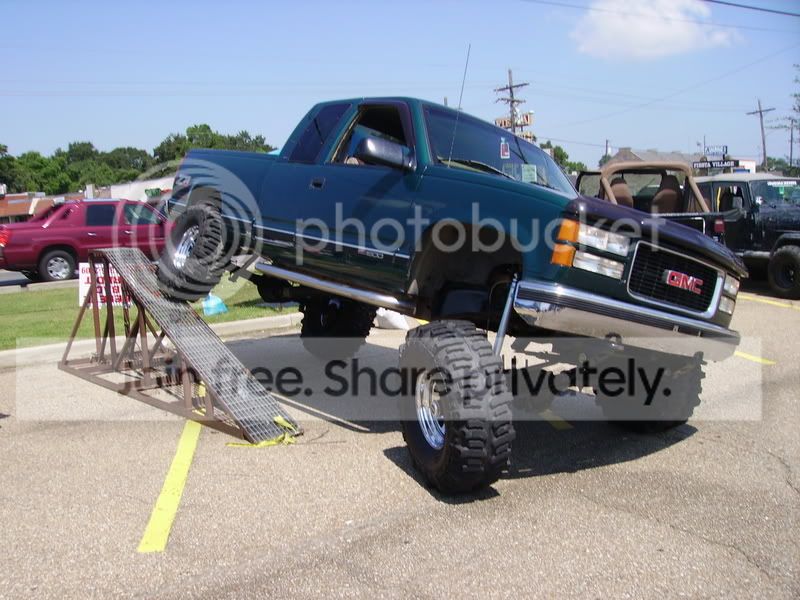
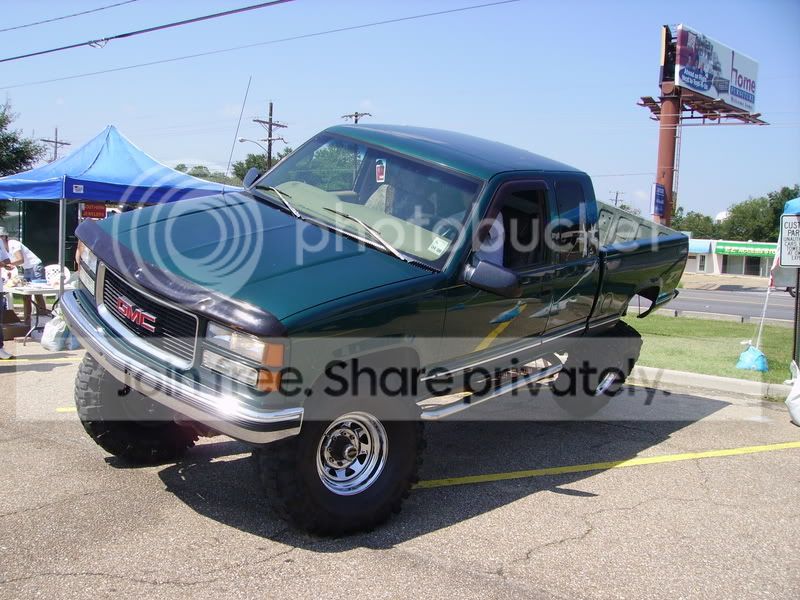
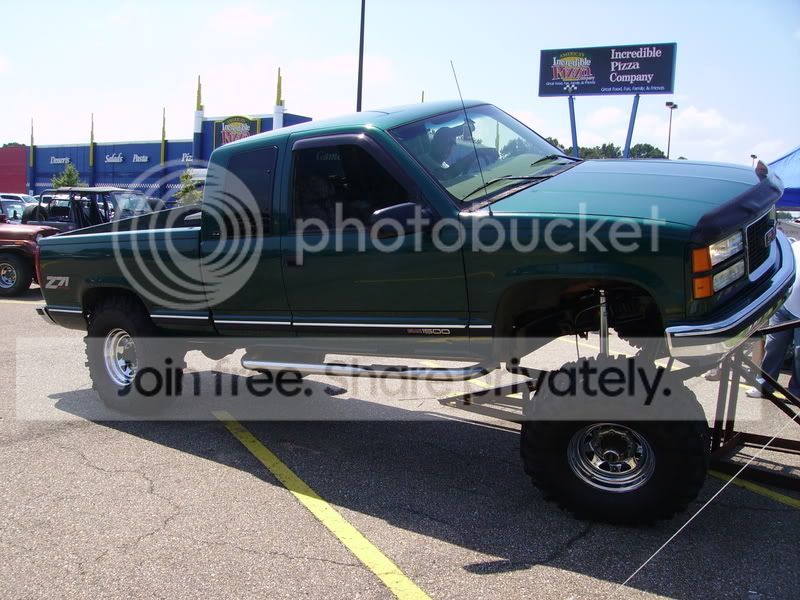
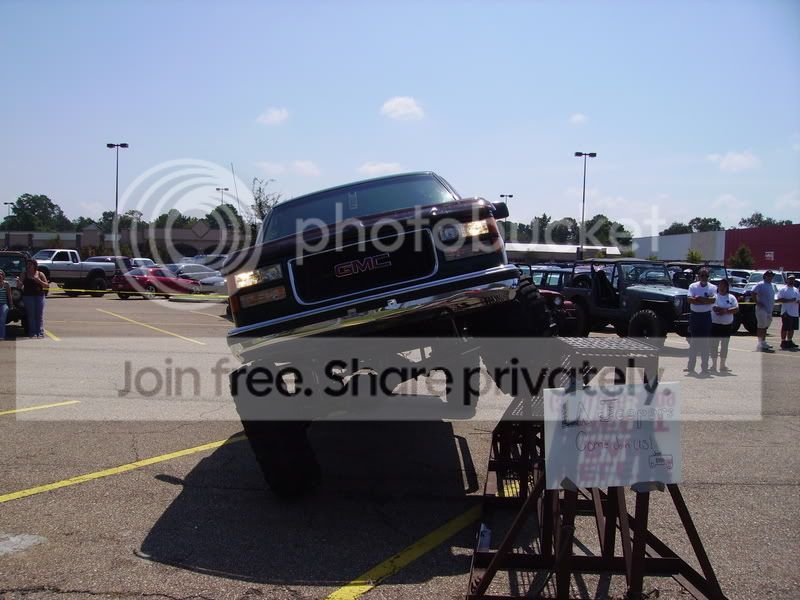
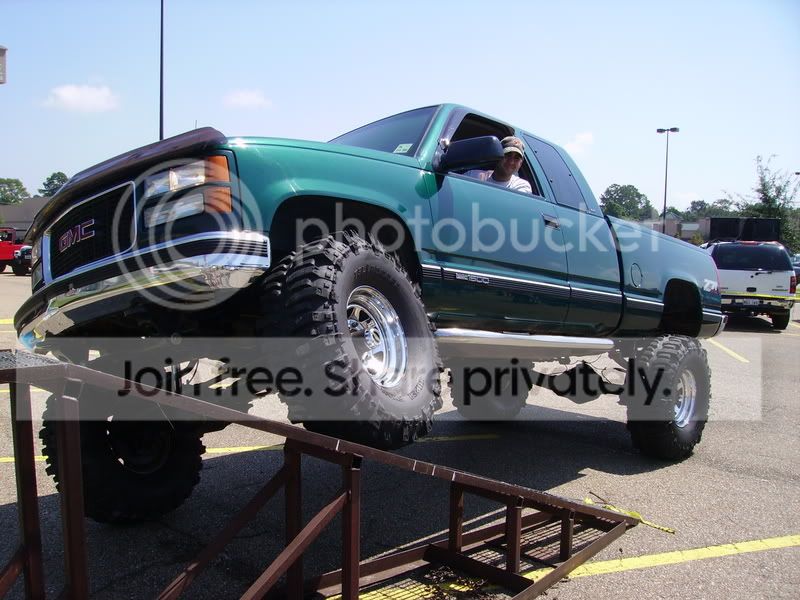
ok so when i SAS'd my truck i did a lil tinkering with the rear suspension. before i had a ORD shackle flip running stock 4.5" shackles with the flip bracket moved forward 1" this netted me a 30* shackle angle i also had a zero-rate and a 2" block all was good in the neighborhood rode awsome and flexed great as you will shortly see. upon SAS'age i stepped up to a 7" long DIY4x UDSR shackle and moved my flip bracket up an addition 1-3/8" a total of 2-3/8" from the stock shackle mount holes. this gave me ~1 of lift over the previous setup and i have an IDENTICAL 30* shackle angle and the same zero-rate/2" block combo also for reference the new tires are only 1" larger in radius than the previous ones. the truck still rides pretty good, maybe a touch rougher than before (don't really know how that would happen). but on to the point of the thread... i put my truck up on an rti ramp the other day and although i went further than all but one heep out there i was still extremely disappointed in the performance of my rear suspension, i know of ppl with 52s and 63s getting much more articulation than what im seeing. no measurements where taken so i dont know exactly how high i put a tire but the flat part of the ramp is 48" for referance... front set up is 50" alcans running a ~30* shackle angle with 7" shackles when i flexed it out my front shocks where limiting my up travel i only had about 2-3" of up travel i also have 14" 5100s at all four corners of the truck, xover steering... all the good stuff


on to the pics...

first pics are back with teh old setup back when i had IFS

1196125957_l.jpg

1196038454_l.jpg


next up is the new setup

PICT0034.jpg

PICT0035.jpg

PICT0033.jpg

PICT0032.jpg

PICT0031.jpg


so what do you guys think? because i am stumped
 
if i read that right, you moved the shackle mount forward, left the front spring mount in stock position, and gained 1" height. that would indicate the the springs are arched more than stock and also, with the mounts closer together, there isn't as much room for the spring to move. basically sounds like you've increased the spring rate.

on as side note, i like the truck. i still think that's the best looking truck body ever made. period. i'm biased, though, since my dd is a 94 chevy c1500 xcab.
 
if i read that right, you moved the shackle mount forward, left the front spring mount in stock position, and gained 1" height. that would indicate the the springs are arched more than stock and also, with the mounts closer together, there isn't as much room for the spring to move. basically sounds like you've increased the spring rate.

on as side note, i like the truck. i still think that's the best looking truck body ever made. period. i'm biased, though, since my dd is a 94 chevy c1500 xcab.

He moved the mount forward because he went with longer shackles. The spring arch did not change.

Dik
 
He moved the mount forward because he went with longer shackles. The spring arch did not change.

Dik


correct... front mount is still in the stock location, moved the rear shackle mount forward and went with a longer shackle. im still running the same stock rear springs that this truck has had for the last ~220k miles
 
But you did effectively change the angle of the springs. I don't know if it would make a huge difference, but it could cause your minor increase in ride roughness. :dunno: I'm thinking this because the axle isn't moving up in a 90° angle to the springs, or at least they are now further from that angle. Hope that makes sense, I can see it in my head but it's hard to verbalize.

You tire pressure can make a difference in RTI type testing. Also I'm thinking therefore so would tire stiffness. The new tires may be stiffer by both design and use and that's limiting your score.
 
Another thought, could it be that an IFS suspension will score better in an RTI ramp type situation? :thinking:
 
Another one. Your front springs are nice, new and not really broken in. I'll bet you get some more wheelin' time on them and they'll soften up a little more, therefore increase RTI score.

Okay I think I'm done now. :o
 
IFS forces the rear to flex to make up for the lack of front flex. Now with the SAS you have someplace else to give. You will notice the rear flexing "less" but its because it doesn't HAVE to flex as much. Previouslly the front was forcing the rear to flex a lot.

Thats my opinion on it.

You also need to realize something, the IFS rigs have a much wider spring spacing than K5s. So a K5 with the "exact" same 63" spring setup is going to flex a bunch more than an IFS pickup. The closer to the axle centerline the springs are, the more flex noted at the wheels, but also the farther out the springs are placed, the better stability will be.
 
You also need to realize something, the IFS rigs have a much wider spring spacing than K5s. So a K5 with the "exact" same 63" spring setup is going to flex a bunch more than an IFS pickup. The closer to the axle centerline the springs are, the more flex noted at the wheels, but also the farther out the springs are placed, the better stability will be.

that makes sense. you're talking simple leverage, there. putting the springs farther outboard (closer to the wheels) means you have less axle (shorter lever) outside of them.
 
I'm perplexed....

That second round of photos looks like much better flex than the first set. :dunno:

That dirt ramp doesn't look like your tire is more than about 2 feet up relative to the other one (which is also on the "ramp" so technically not valid)

As for your other comment about "out ramping" the Jeeps, keep in mind that the "I" in RTI stands for "Index" which means that you can't just use the distance up the ramp to validate how much awesome your truck has. You need to factor in your wheelbase and calculate your wheel height as a percentage of that.

A lot of those Jeeps with less distance up the ramp most assuredly "out scored" you.... You long wheelbase guys will never win an RTI contest. It's mathematically impossible.


:usaflag:
 
yea i don't really care about what my RTI score was, i am more interested in how high i put a tire. the rti ramp was just a way to get my truck flexed out you don't have to read too far into that. ill take my 145" wheelbase any day

i can see where you are coming from as far as the spring perch local on the rear axle. but as far as the theory of ifs making the rear work harder i dont really know if i believe that. yes a truck with a sfa flexes better than ifs but at some point the front axle will reach its flex limit and still force the rear to flex in the same way that the ifs did. thats just the way i see it in my head
 
This is hard to explain but I agree with the comment about the IFS made the rear flex more. the IFS system was more like solid mount so it would be simular to twisting the truck by the front bumper. You could then force the rear to flex more. But you put a flexy front suspention on there and twist the truck by lifting one front tire. That front tire is going to flex first. Also your SAS now transfers weight to the other front tire(lowside) witch in turn takes the weight off the rear suspention. Therefore the rear doesnt have the weight to force the maximum flex its capable of. Its simple in my head but I dont know if Im putting it in words very well. It all has to do with weight transfer and where that weight is going.

Basicaly your front now takes up some of the flex and some of the weight, that the rear was forced to do previously.

Now if you want to see the maximum amount of flex, try ramps at both ends and opposite sides. left front and right rear for example. That is going to FORCE both to flex to their maximum. The only problem with that is you have a body to get in the way of a rear ramp. Solution? Get your self 2 fork lifts and lift opposite tires that way.

Balzer
 
your rear doesn't flex as much cause it doesn't have to do it all now, with that IFS, only flex you got was from the rear so it took it all. now your front flexes nicely so your rear doesn't have to as much.

your front flex looks great, and quite an improvement from IFS!

oh and btw rear flex is for noobs
 
gotta agree with original balzer. same weight truck with a more supple front suspension then before will not push down on the rear as hard as it did before since the front is taking on some of the work you are asking the truck to do.


but overall the flex looks improved in the rear. look at where the top of your rear tires are in relation to the body in both pics. then take into account that you not only lifted it but also are running bigger tires.

this is why actually measuring for your ramp score is important. your baseline is memory and some photos taken on a dirt hill. you are comparing that to a rti ramp of what angle? go back, ramp the truck again and take some measurements. wanna get a higher score? lower your tire pressure. :D

then next time you change something you will have a definite number to compare it to.
 

Latest Posts

Top Bottom