CK5
Register an account today to become a member! Once signed in, you'll be able to participate on this site by adding your own topics and posts, as well as connect with other members.

Moving the TBI electronics to a waterproof box

I saw that the other day in the pcv/filters thread. It does appear to do what I was talking about... opening up the injectors to more air flow... I'll be considering this. I was also thinking that since I have a body lift on, I could just mount this stuff high up on the firewall, forget the box, because it'll all still be higher then the TB and I don't have a snorkel so if water is that high I'm screwed either way lol.
 
I have the coil-in-cap distributor. I believe the spark module is in there too. Did the factory setups always have external coil?
 
Mastiff said:
What's this coil you speak of? My TBI conversion has the ECM and relays all mounted in the cab, and I put them in a metal box between the seats for easy access when messing with stuff. The MAP is cable tied up high on the firewall someplace. I have an aftermarket open element air cleaner right on the throttle body.

The only problem I see here is that you have somewhat made your electrcal system water resistant but put an open air cleaner on that gives 0 protection from injesting water which is 100 times more dangerous to the longevity of your engine.
 
beater_k20 said:
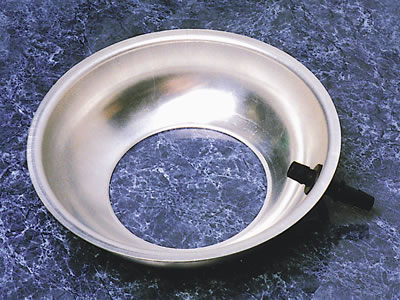
here's your solution....
http://store.summitracing.com/partdetail.asp?autofilter=1&part=HYP%2D4001&N=700+400318+4294925239+4294908216+115&autoview=sku
hyp-4001_cp.jpg


$44.00 at Summit, and it'll do exactly what you're looking to do with removint the spacer under your air cleaner, only it'll do a better job of it.
http://static.summitracing.com/global/images/prod/large/hyp-4001_cp.jpg

The BEST mod you could do for your TBI... noticable improvement... better than a tweaked tb, spacers, etc..

Tons of room for air cleaners on our trucks... Heck, I run one of these and I'm actually gonna mod the stock air cleaner to fit a taller element in... Also dual inlets, but thats another thread... :wink1:
 
JEBSR said:
The only problem I see here is that you have somewhat made your electrcal system water resistant but put an open air cleaner on that gives 0 protection from injesting water which is 100 times more dangerous to the longevity of your engine.

Water's got to be pretty high to get to the top of the engine. What are you suggesting instead?
 
Is there a site where I can order extensions for these plugs or do i have to solder and heat shrink? I picked up some small solder, heat shrink, and some 16 and 14 gauge wire yesterday, but I'd prefer to just buy extensions so i don't screw this up lol.
 
For some of this stuff there is probably enough wire in the loom to do what you want. Pull it out of the loom, and pull the wires out for the components you are going to move. Some stuff you might have problems with (grounds are a good example) but the other stuff you may get lucky and not need to solder OR try to get extensions.
 
Mastiff said:
Water's got to be pretty high to get to the top of the engine. What are you suggesting instead?

Anytime you hit a good sized mud puddle water can splash high enough to get into the air cleaner. On top of that the fan will sling it up there as well. If you think about it, water would have to already be that high to effect the electronics of the fuel injection. I have seen few vehicle die because of water in the electronics (other than mud bog trucks), but I have seen many due to water in the carb or t/b. Have also had to rebuild several engines due to running open air cleaners through deep water (not more than maybe 2 ft deep) due to splashing into the air intake.

With that said I have ran an open element cleaner when on the street but I have a factory air cleaner that I have sealed of all holes exept the main entrance and I run a tube out of the way to an air box to keep water out when on the trail. The extra 2-5 hp that you MIGHT gain with an open element isn't worth risking your engine on the trail.
 
And unless the air cleaner is out "in the wind", you're losing power. An open element air cleaner behind a radiator, between fenders, under the hood, is losing power to the heat. Thats why there is so much effort getting "cold air" to the intake. :doah:
 
roadnotca said:
And unless the air cleaner is out "in the wind", you're losing power. An open element air cleaner behind a radiator, between fenders, under the hood, is losing power to the heat. Thats why there is so much effort getting "cold air" to the intake. :doah:

So on the one hand you can suck cool air through a skinny tube from someplace susceptible to water ingestion (maybe). On the other hand, you can suck as much warm air from inside the engine compartment as you want. Which is better?

I was reading about some ram air setups on a diesel site, but the intakes are i n the grille, and all that plumbing is kind of a mess. I'd be lying if I said looks played no part in going open element.
 
I'd bet cold air is better.

It's funny that "common knowledge" says a 350 only needs 550-600CFM, yet that I am aware of GM carbed NONE of their truck motors this low. (maybe pre-'85, I dunno, making a point here lol)

Second, if 550CFM (roughly) is the "common sense" minimum, and GM ran a TBI that feeds just that, what makes people think that running an open element on TBI does a darn thing for power, heat or no? Has anyone actually calculated the flow possible from a TBI air cleaner tract? I've not seen it. Only setup I'd imagine to potentially cost power is the pre-cold air trucks that had the tiny little tube sticking off the air cleaner.

That being said, the cold air for the trucks is setup in a bad spot for people that like either deep mud and/or water, or those that like to go through those with speed. The core support easily pushes water up into the air cleaner intake in any water deep enough to hit the bumper.
 
I was thinking about a snorkel kit with inline fans... nothing high volume but enough to make the airflow more efficient through the piping... but once again that's another thread. Tonight I'll probably start on my little project.
 
Look at the latest drag car/doorslammers with that huge funnel right up front. Or all the "tuner" stuff out there with $300 worth of plumbing to get "cold air" from outside the engine compartment, into the TB.
And yeah, if you're gonna get wet, so will the inside of your engine unless it's breathing the same clean air that you are.
Pretty simple realization here, if you can't breathe it, neither can your motor. :haha:
 
One place to tap into for cold air is the cowl area. Water is less of a concern here, but still possible. As long as you don't come close to submerging the area where the wiper linkage lives you can pull air out of there. When MISF set up his system to pull air from this area on his Scout he was very careful to come in as high as possible and to not extend down to the bottom. That way any water that does get in that area is below the point where intake air is sucked in.

As a bonus, this area is slightly pressurized when on the road at speed, so you'll get a very mild forced induction benefit.
 
The more I think about this...(since others apparently have done some of this)

What do you do about the knock sensor, TPS, IAC, O2 sensor, and distributor components? It seems somewhat half a$$ed to only do the ones you CAN move, if those are ok to leave in place and possibly get wet, why aren't the rest of them? No offense, it just seems like a pointless mod if you've still got sensors where they will get wet.
 
A little silicone and some dielectric grease should help out... but have you priced an ESC? They are way more then any of those little sensors... and the MAP sensor is higher then any of those as well (with the exception of the distributor, can you silicone the cap?) But like I've said before I just want them off the manifold... not so much to waterproof... maybe i should change the thread title...
 
mr.smartass said:
Any pics of said cowl induction system?
None at this time. Not too difficult to fab if you can work with sheetmetal. What he did was use a wide oval type snorkle equipped enclosed filter can and modify it so that the snorkle points at the cowl. Then he built a flange with a wide lip on it that bolts to the cowl. Cut a hole thru to the wiper region the size & shape of the opening in the flange.
To bridge across btwn the snorkle and the lip (~6") he had a connector made from marine canvas. It has a velcro strap to tighten each end onto the snorkle and the lip on the cowl.
 
Top Bottom