

Not sure if we should cheer or ask what shoes you prefer?OK gentlemen... found the issue. It was the brakes locking up. Never noticed it when I was driving yesterday but damn! Fuel pressure fine and gas cap loose. My k5 won't even roll back on a hill in neutral. At least its not the engine or trans. Time to let it cool off... walking home once again....
CK5

You are using an out of date browser. It may not display this or other websites correctly.
You should upgrade or use an alternative browser.
You should upgrade or use an alternative browser.
No engine power after 20 minutes of driving- solved: brakes dragging
- Thread starter Shawn
- Start date

At least you found the issue.

No doubt! Got some good walking exercise the last 2 days! It just happens out of nowhere and you have to pull over quickly or you will stuck on the road until it cools.Not sure if we should cheer or ask what shoes you prefer?
Yes, its nice now I can start looking at the cause of this.At least you found the issue.
Now I just to figure out if I need a different shorter rod or a spacer between HB and master. Doing research now. Its a Wilwood master so that doesn't help. I may call Wilwood tomorrow and see what they say.

I'll give him a cookie next time he comes up.Any chance the brakes are dragging and locking it up when they get hot? Let it cool and it drives ok until they lock up again? I would think if it was a fuel delivery issue the engine would run lean, possibly pop and run like it's running out of fuel. Meaning the engine would not be smooth running.
Just throwing an idea out but it's worth checking.

Yep, not rolling in neutral at least pretty much rules out an engine problem
Now, this is going to sound stupid, but what symptoms did you see that showed it to be the brakes? I'm sure there were others, but all you posted was not rolling in neutral.
Don't misunderstand, I hope it is brakes, that is about the cheapest problem you could have with those symptoms. But, unless you felt heat, smelled them getting hot, or jacked up a wheel and found it locked, there is still the faint possibility of something else in the drivetrain causing the problem.
A bearing seizing in the rear end or transfer case, even a transmission problem is still possible. Either way, I don't want you chasing down a blind hole by working on brakes when its something else. But, I really hope its brakes.
Plus, it might not be the whole brake system.
If it was a front caliper, I would expect a pull to one side. But a rear problem might not pull, plus the rear has one common line going back there, and if it were stopping up due to a bad flex hose, that might cause the problem. However, a bad hose or even a dragging caliper should not appear until you hit the brakes. Then they just won't release right. But, hydroboost is a funny breed of cat. You would think that a vacuum booster would fail and apply brakes sometimes, but you almost never hear of it. Hydros do weird things.
Now, this is going to sound stupid, but what symptoms did you see that showed it to be the brakes? I'm sure there were others, but all you posted was not rolling in neutral.
Don't misunderstand, I hope it is brakes, that is about the cheapest problem you could have with those symptoms. But, unless you felt heat, smelled them getting hot, or jacked up a wheel and found it locked, there is still the faint possibility of something else in the drivetrain causing the problem.
A bearing seizing in the rear end or transfer case, even a transmission problem is still possible. Either way, I don't want you chasing down a blind hole by working on brakes when its something else. But, I really hope its brakes.
Plus, it might not be the whole brake system.
If it was a front caliper, I would expect a pull to one side. But a rear problem might not pull, plus the rear has one common line going back there, and if it were stopping up due to a bad flex hose, that might cause the problem. However, a bad hose or even a dragging caliper should not appear until you hit the brakes. Then they just won't release right. But, hydroboost is a funny breed of cat. You would think that a vacuum booster would fail and apply brakes sometimes, but you almost never hear of it. Hydros do weird things.
Yep, not rolling in neutral at least pretty much rules out an engine problem
Now, this is going to sound stupid, but what symptoms did you see that showed it to be the brakes? I'm sure there were others, but all you posted was not rolling in neutral.
Don't misunderstand, I hope it is brakes, that is about the cheapest problem you could have with those symptoms. But, unless you felt heat, smelled them getting hot, or jacked up a wheel and found it locked, there is still the faint possibility of something else in the drivetrain causing the problem.
A bearing seizing in the rear end or transfer case, even a transmission problem is still possible. Either way, I don't want you chasing down a blind hole by working on brakes when its something else. But, I really hope its brakes.
Plus, it might not be the whole brake system.
If it was a front caliper, I would expect a pull to one side. But a rear problem might not pull, plus the rear has one common line going back there, and if it were stopping up due to a bad flex hose, that might cause the problem. However, a bad hose or even a dragging caliper should not appear until you hit the brakes. Then they just won't release right. But, hydroboost is a funny breed of cat. You would think that a vacuum booster would fail and apply brakes sometimes, but you almost never hear of it. Hydros do weird things.
Soon as this problem came back, I was able drive up a hill in a parking lot which then slanted to the left going down hill. It struggled going up that hill in 1st but soon as I was able to roll it down a hill, I put it in neutral at about 10 mph and it had stopped quickly like i was applying the brakes and would not roll down the hill. Keep in mind the tires at 65 psi (flat spot issue) and it should roll pretty easily. Then it dawned on me its the bakes. I was able to roll it in the garage yesterday after I got home from the cool down. I figured they would have locked up then but it was not at that binding moment yet. I'm pretty sure its a master issue and not a single caliper issue so all 4 calipers are applying pressure. And yes, no pulling. It just STOPS and the engine feels like a slug against dragging brakes. Never had this happen to me so it never came to mind until today and what other people mentioned.
Something I found on the Wilwood master I'm using:
QUOTE-
ADVANCED TECH: We have observed that this Wilwood MC pushrod slug or spacer bullet has some mild innaccuracy to it from MC to MC, so double check that there is no MC piston preload by sliding this bullet into the MC, then placing the MC up against the face of the hydraulic brake assist unit. You should then experience a perfect MC casting to brake assist casting fit without any preload - if the MC seems to be floating off of the face of the brake unit casting (to where it would seem like you would want to draw the MC snug to the face of the brake unit by tightening down the MC mounting bolts), you should first double check that you do not have the brake pedal rod adjusted up to aggressively under the dash (back it off some if in doubt or disconnect the clevis at the brake pedal temporarily). If you still have the MC floating off of the face of the brake unit casting, coax the Wilwood spacer bullet back out of the MC (compressed air works well) and then grind the end of the spacer slug a few thou at a time and recheck. Continue to buzz the slug until you are confident that you have acheived a +/- .010" MC pushrod interface - essentially sneek right up to the point where you have just eliminated any MC piston preload when bolted up to the face of the hydraulic brake assist unit. If you had to err in either direction, you would be better off to have a slight air gap between the tip of the MC pushrod and the spacer slug - try to keep this at a .025" MAX. You can use some white lithium grease or suitable other material to see if / how the two interface for clearance (Plastigauge is going a bit into the splitting of hairs that isn't truly necessary). What we are really looking to do here is to insure that the MC pistons are allowed to go into a full definite state of release when the brakes are not applied. Excessive MC piston preload can cause delayed brake release in borderline cases, full on brake lockup when hot in sever cases (due to brake fluid thermal expansion just like engine coolant).
Note that the Wilwood 260 series MC's are essentially C3 Vette MC's by design (though of course much lighter and better looking):
Front port = front brakes / Rear port = rear brakes
This is good to know, as if you were out on the HRPT or elsewhere and this Wilwood MC was suspected of failure, you could pop in to a local autoparts store and source a shallow MC pushrod hole '77-'82 C3 Vette MC as a direct plug n play swap out for the Wilwood 260-8556P (with spacer bullet). If you are running the Wilwood 260-8556P without the spacer bullet on a long MC pushrod booster, note that the '68-'76 C3 Vette MC with the deep MC pushrod hole would be the unit to source...
__________________
Paul M. Clark
Hydratech Braking Systems
Last edited:

Soon as this problem came back, I was able drive up a hill in a parking lot which then slanted to the left going down hill. It struggled going up that hill in 1st but soon as I was able to roll it down a hill, I put it in neutral at about 10 mph and it had stopped quickly like i was applying the brakes and would not roll down the hill. Keep in mind the tires at 65 psi (flat spot issue) and it should roll pretty easily. Then it dawned on me its the bakes. I was able to roll it in the garage yesterday after I got home from the cool down. I figured they would have locked up then but it was not at that binding moment yet. I'm pretty sure its a master issue and not a single caliper issue so all 4 calipers are applying pressure. And yes, no pulling. It just STOPS and the engine feels like a slug against dragging brakes. Never had this happen to me so it never came to mind until today and what other people mentioned.
Something I found on the Wilwood master I'm using:
QUOTE-
ADVANCED TECH: We have observed that this Wilwood MC pushrod slug or spacer bullet has some mild innaccuracy to it from MC to MC, so double check that there is no MC piston preload by sliding this bullet into the MC, then placing the MC up against the face of the hydraulic brake assist unit. You should then experience a perfect MC casting to brake assist casting fit without any preload - if the MC seems to be floating off of the face of the brake unit casting (to where it would seem like you would want to draw the MC snug to the face of the brake unit by tightening down the MC mounting bolts), you should first double check that you do not have the brake pedal rod adjusted up to aggressively under the dash (back it off some if in doubt or disconnect the clevis at the brake pedal temporarily). If you still have the MC floating off of the face of the brake unit casting, coax the Wilwood spacer bullet back out of the MC (compressed air works well) and then grind the end of the spacer slug a few thou at a time and recheck. Continue to buzz the slug until you are confident that you have acheived a +/- .010" MC pushrod interface - essentially sneek right up to the point where you have just eliminated any MC piston preload when bolted up to the face of the hydraulic brake assist unit. If you had to err in either direction, you would be better off to have a slight air gap between the tip of the MC pushrod and the spacer slug - try to keep this at a .025" MAX. You can use some white lithium grease or suitable other material to see if / how the two interface for clearance (Plastigauge is going a bit into the splitting of hairs that isn't truly necessary). What we are really looking to do here is to insure that the MC pistons are allowed to go into a full definite state of release when the brakes are not applied. Excessive MC piston preload can cause delayed brake release in borderline cases, full on brake lockup when hot in sever cases (due to brake fluid thermal expansion just like engine coolant).
Note that the Wilwood 260 series MC's are essentially C3 Vette MC's by design (though of course much lighter and better looking):
Front port = front brakes / Rear port = rear brakes
This is good to know, as if you were out on the HRPT or elsewhere and this Wilwood MC was suspected of failure, you could pop in to a local autoparts store and source a shallow MC pushrod hole '77-'82 C3 Vette MC as a direct plug n play swap out for the Wilwood 260-8556P (with spacer bullet). If you are running the Wilwood 260-8556P without the spacer bullet on a long MC pushrod booster, note that the '68-'76 C3 Vette MC with the deep MC pushrod hole would be the unit to source...
__________________
Paul M. Clark
Hydratech Braking Systems
Hmmm, sounds promising. Worth checking out.

You did not smell the brakes? When I had this on my moms 34 Chevy I built, it was obviously the brakes as they stunk badly. Adjusted the pedal rod back 2 turns and was all good.
I wondered that too. But I suspect its a matter of degree. On your Mom's car, I imagine the brakes were fairly lightly applied. Which meant that you could drive a good distance with them dragging, so they got really hot.
In his case, it sounds like they were clamping down pretty good, and so he could not drive all that far.
Remember, you do not normally smell the brakes on a car even after a few good stops. Its only after a long cooking that they smell.
If what he read is the problem, it sounds like they ramp up fairly quickly. As the fluid gets hot enough to start the pads to scrubbing, the extra heat cause more expansion, and so on.
In his case, it sounds like they were clamping down pretty good, and so he could not drive all that far.
Remember, you do not normally smell the brakes on a car even after a few good stops. Its only after a long cooking that they smell.
If what he read is the problem, it sounds like they ramp up fairly quickly. As the fluid gets hot enough to start the pads to scrubbing, the extra heat cause more expansion, and so on.

I had one truck that the brakes locked up on after it was driven far enough to get the brake fluid hot enough..I had filled up the master cylinder to the very top,I learned quick you cant do that!.. ..
..
My older brother also had it happen before after a new master cylinder was installed on a chevy car he had..he loosened the two bolts holding the master cylinder to the booster and the brakes released,so it was not enough free play in the pedal and master to booster ,that was applying the brakes as the fluid expanded..
There was an adjustment on the brake pedal linkage to allow more free play,adjusting it fixed it..
The front caliper(s) on my pickup have decided to not retract fully most of the time,and the front brakes drag pretty bad after 5-10 miles sometimes,the truck will start "hopping" like it has egg shaped tires,and I can smell the pads cooking--have to hold the steering wheel slightly to the left to keep it straight ,but it doesn't pull if I let go of the wheel either....didn't do it this morning when I drove it 6 miles to get groceries and back,but its been 90+ degrees here lately,never dropped below 80 last night..
Maybe the hotter the calipers get the more the pistons in them can retract ?..at any rate it needs them replaced--might be the rubber brake hoses too,its been at least 10 years since I replaced them..
..My older brother also had it happen before after a new master cylinder was installed on a chevy car he had..he loosened the two bolts holding the master cylinder to the booster and the brakes released,so it was not enough free play in the pedal and master to booster ,that was applying the brakes as the fluid expanded..
There was an adjustment on the brake pedal linkage to allow more free play,adjusting it fixed it..
The front caliper(s) on my pickup have decided to not retract fully most of the time,and the front brakes drag pretty bad after 5-10 miles sometimes,the truck will start "hopping" like it has egg shaped tires,and I can smell the pads cooking--have to hold the steering wheel slightly to the left to keep it straight ,but it doesn't pull if I let go of the wheel either....didn't do it this morning when I drove it 6 miles to get groceries and back,but its been 90+ degrees here lately,never dropped below 80 last night..
Maybe the hotter the calipers get the more the pistons in them can retract ?..at any rate it needs them replaced--might be the rubber brake hoses too,its been at least 10 years since I replaced them..
I could not smell the brakes at all. Even when I got out to check on things I could not smell it. It never occurred to me it could be the brakes either. Just kept looking at the engine and why it was so LOW on power. LOL
Looks I need .020 between the hydroboost push rod and the master rod seat. I need to take this Wilwood alum pushrod spacer out and see who can machine it down for me after I make some measurements.
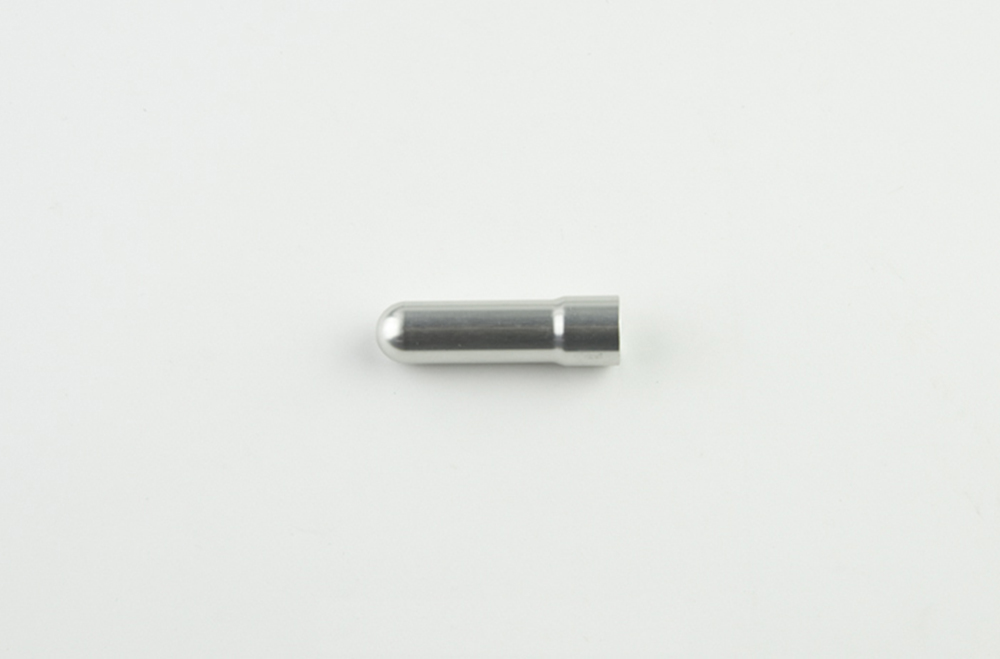
Looks I need .020 between the hydroboost push rod and the master rod seat. I need to take this Wilwood alum pushrod spacer out and see who can machine it down for me after I make some measurements.
At first I shrugged off the smell ,thought it was diesel fuel that drips from my fuel tank (slow weepy leak) that might have got blown onto the exhaust pipe,or just exhaust fumes from the old 6.2--it stinks like burning tar ,whatever it is they sell for diesel now..,but after I tried touching the front hubs,it was clearly evident the RF caliper was dragging,and the burnt pad smell was strong there..(I bet the wheel bearing grease is probably adversely affected by the heat now too)....
The outer pad is worn nearly down to the rivets,inner one is much thicker still...outer rotor surface is much thinner than the inner too,so its been dragging some for awhile probably..
I can drive the truck many miles on back roads that dont have stop signs every mile or less,and the bumpier roads probably help shove the caliper piston back in--its city driving where your applying the brakes nearly constantly they never get to release fully that they drag the most and start heating up..
I've pulled the caliper bolts off in the past and wire wheeled them in the past,applied never-seize,that stopped it for awhile,but I doubt I'll be so lucky this time--I think the caliper is just old and probably rusty inside,or a rubber hose is "check valving" the fluid..I did replace the calipers but it was back when I first got the truck on the road,around 2004..(they doubled in price since then too!--I paid $12 each exchanged at Autozone then,now they are $25)..
..The outer pad is worn nearly down to the rivets,inner one is much thicker still...outer rotor surface is much thinner than the inner too,so its been dragging some for awhile probably..
I can drive the truck many miles on back roads that dont have stop signs every mile or less,and the bumpier roads probably help shove the caliper piston back in--its city driving where your applying the brakes nearly constantly they never get to release fully that they drag the most and start heating up..
I've pulled the caliper bolts off in the past and wire wheeled them in the past,applied never-seize,that stopped it for awhile,but I doubt I'll be so lucky this time--I think the caliper is just old and probably rusty inside,or a rubber hose is "check valving" the fluid..I did replace the calipers but it was back when I first got the truck on the road,around 2004..(they doubled in price since then too!--I paid $12 each exchanged at Autozone then,now they are $25)..

.020 is nothing. put some Emory cloth\paper on a flat piece of glass or mirror, and rub the flat side in a figure 8 a few time and check length till you have what you need.
Wow thats crazy! You should see the price on my Audi S6 calipers and rotors. Don't want to replace those ever! Huge suckers barely clear 20" wheels.At first I shrugged off the smell ,thought it was diesel fuel that drips from my fuel tank (slow weepy leak) that might have got blown onto the exhaust pipe,or just exhaust fumes from the old 6.2--it stinks like burning tar ,whatever it is they sell for diesel now..,but after I tried touching the front hubs,it was clearly evident the RF caliper was dragging,and the burnt pad smell was strong there..(I bet the wheel bearing grease is probably adversely affected by the heat now too)..
The outer pad is worn nearly down to the rivets,inner one is much thicker still...outer rotor surface is much thinner than the inner too,so its been dragging some for awhile probably..
I can drive the truck many miles on back roads that dont have stop signs every mile or less,and the bumpier roads probably help shove the caliper piston back in--its city driving where your applying the brakes nearly constantly they never get to release fully that they drag the most and start heating up..
I've pulled the caliper bolts off in the past and wire wheeled them in the past,applied never-seize,that stopped it for awhile,but I doubt I'll be so lucky this time--I think the caliper is just old and probably rusty inside,or a rubber hose is "check valving" the fluid..I did replace the calipers but it was back when I first got the truck on the road,around 2004..(they doubled in price since then too!--I paid $12 each exchanged at Autozone then,now they are $25)..
Well I need .020 but keep in mind my current rod is already sticking in the master too far so probably much more than that. I need to take some measurements. I found one company that might make a new booster push rod the length I need or I can just take the alum piece to a machine shop or try myself. A master shim is another idea but not the best..020 is nothing. put some Emory cloth\paper on a flat piece of glass or mirror, and rub the flat side in a figure 8 a few time and check length till you have what you need.

Glad that you are making headway!
And I would bet that you didn't smell hot brakes because of the size of the brakes too. Bigger brakes do more before they get hot.
And I would bet that you didn't smell hot brakes because of the size of the brakes too. Bigger brakes do more before they get hot.
I'm glad you found it. Sometimes these things can drive you insane. Now just an adjustment to the bullet and it's back to the other issues.
Thanks! Looking forward to just driving the damn thing and getting back to the trail. So many setbacks.
I really need to buy a good set of measuring tools but I had a few that got some measurements. Not the prettiest way of measuring but seems to be accurate when I double check.
I need to either take off .134 off the Wilwood alum plunger (bullet) OR get a rod thats 4.796 (4.8" would work). My current rod and Wilwood plunger was 4.93". Thats with leaving a .020 gap.
I really need to buy a good set of measuring tools but I had a few that got some measurements. Not the prettiest way of measuring but seems to be accurate when I double check.
I need to either take off .134 off the Wilwood alum plunger (bullet) OR get a rod thats 4.796 (4.8" would work). My current rod and Wilwood plunger was 4.93". Thats with leaving a .020 gap.
Done 1 hour later! Decided to take off .134 off the plunger. Had an alum bit that matched the push rod profile and decided just to do it myself. I found a place that does custom booster push rods but that would take a week or two. Figured if I screw this up, they sell them on Summit for 8 bucks or do the longer push so I went for it.
I'll take it for another test drive tomorrow and hopefully it resolves the brake issue.

The flexible brake lines make it easy to work on this.

I'll take it for another test drive tomorrow and hopefully it resolves the brake issue.
The flexible brake lines make it easy to work on this.


