CK5
Register an account today to become a member! Once signed in, you'll be able to participate on this site by adding your own topics and posts, as well as connect with other members.

Relay Question?

1-ton

3/4 ton status
GMOTM Winner
Joined
Apr 17, 2004
Posts
5,752
Reaction score
3,161
Location
Las Vegas, Nevada
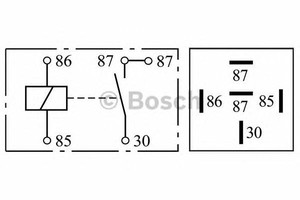
Supposedly a 5-pin relay that has two #87 (not #87a) relay exist, but I cannot find one. Does anybody have a part number for a 5-pin relay that has two #87 dual output terminals, and not the 87/87a single output terminal set up?

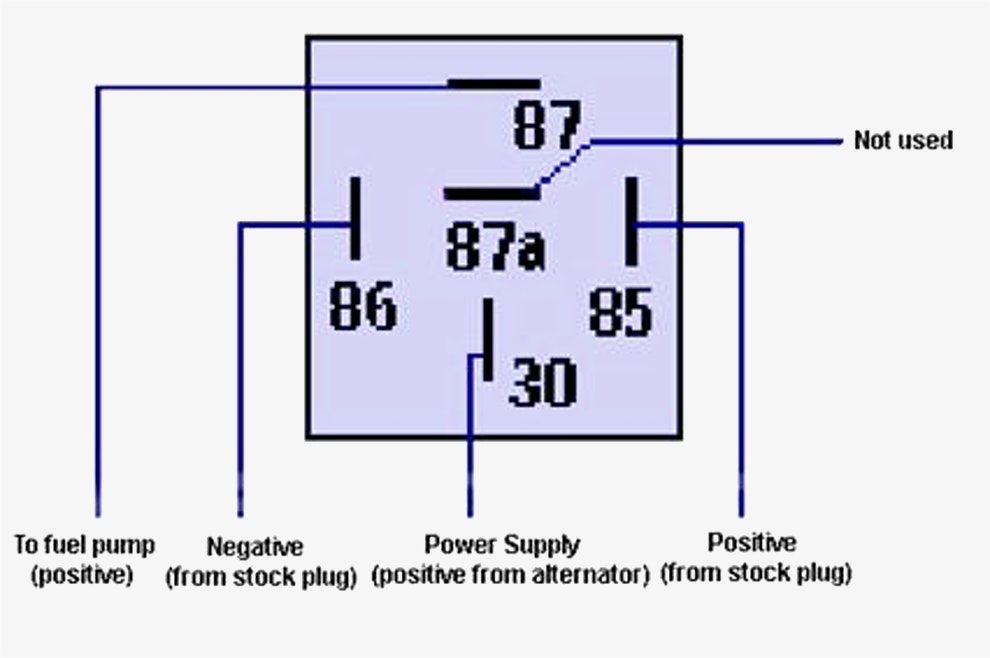
Here is a diagram of the most common 5-pin 87/87a type relay, but not the one I am looking for.
5ad87e388d3cbce09db266d41ddf5005.jpg
 
332 019 151

Cool...thanks. I was able to interchange the part number you posted to NAPA PN# AR6257. I am going to use these relays to do some modification to my headlights.

Diagram of the Bosh 332019151 relay with two #87 pins, and not the typical #87a pin
s-l300.jpg
 
Last edited:
I knew those relays were out there, not sure I have run into one in the wild.
But, I'm curious as to why one of these two connectors would not have worked on a "regular" relay.
And, I am genuinely interested, not just being a smart a**. I know there are situations where the special relay is better, and if this is one of them, I would like to learn the reason in case I run into a setup like it later.
Note: There are only two connectors, one has two views to make it clearer.

61rC3ZOcZhL._AC_SL1259_.jpg 51ooa8EKr8L._AC_SL1354_.jpg 710vNfLZbzL._AC_SL1500_.jpg
 
DANG, those turned out huge!
Sorry about that.
 
@Fordum having the two connectors with the one switch, helps control the resistance. While the two adapters you show as an example will do the job, they add resistance into the circuit. For a high amp draw, head lamp, those adapters can heat and loosen, adding resistance.
The relay allow each load it's own wiring, so the amp draw is split per connector. Looks cleaner, easily sealed against elements.
I hope I didn't ramble to much.
 
The reason I am looking for the relay that @Wes Harden found is because the the relay with two #87 terminals will output power to both #87 terminals at the same time, thus allowing for two hots wires to be run from that relay. The relay with one #87 and one #87a terminal will only power one 87 terminal at a time, thus allowing for only one hot wire to be run from that relay.
 
The reason I am looking for the relay that @Wes Harden found is because the the relay with two #87 terminals will output power to both #87 terminals at the same time, thus allowing for two hots wires to be run from that relay. The relay with one #87 and one #87a terminal will only power one 87 terminal at a time, thus allowing for only one hot wire to be run from that relay.

You could just crimp two wires to the same terminal, assuming you don't exceed the amp rating of the relay and you have a terminal that will accept the combined wire diameter. Based on the drawing, it's not like two relays inside of one housing, which would halve the load on each switched leg.

But if using sealed connectors, I can see why one wire per terminal would be beneficial. I'd only use an unsealed connector in the interior.
 
You could just crimp two wires to the same terminal, assuming you don't exceed the amp rating of the relay and you have a terminal that will accept the combined wire diameter. Based on the drawing, it's not like two relays inside of one housing, which would halve the load on each switched leg.

But if using sealed connectors, I can see why one wire per terminal would be beneficial. I'd only use an unsealed connector in the interior.

I was watching a youtube video on wiring up headlights with relays, and they used the double #87 5-spade terminal for the video, but discussed using the 87/87a 5-spade relay as well, and how you would have to combine wires on one terminal with that one.
 
I kinda figured I'd need two relays for that project, going with a four low/four high setup. Haven't worked out the draw yet, but I'm guessing 30A will be enough for each setting.

How are you going to wire them? Not sure if it's how GM ran it, but you could also run one wire of proper gauge to the first headlight, then run two wires off that connector to power the second headlight, then three and four (if four headlight), instead of two wires off the relay. Not sure which would be cleaner, although in a four headlight setup, I'd think a single power wire to the bottom light on drivers side, branch to the upper on that side, then branch a single wire across the core support to the other side?
 
This is a video of the modification I did on my crew cab. Normally only the outside or inside lights are supposed come on at one time, but not both. I have modified the wiring to turn on both at the same time. The problem I am having is that when both lights are on they are running through the same 30-AMP factory OE circuit breaker, and it was not designed for that. After about 10-minutes of running both headlights the stock circuit breaker starts to trip. I wired in the inside lights using an old style High/Low floor switch, and have the outside lights wired to the stock steering column High/Low switch. I would like to wire both the inside and outside lights on their own completely separate circuit, and completely bypass the steering column High/Low switch. I also have high beam lights installed in all four head light bezzle positions.

 
Last edited:
The solution (IMO) is to use the stock (column mounted) circuit to trigger the relays. Not sure I'm understanding what benefit there would be from wiring it up as below...

To keep it simple, say you want to run high/low lights in all four headlight positions. Obviously this can be tailored to how you want yours to work.

Assuming they are capable of the load (IIRC 55W/light for high beams, that's 18A total, well under a 30A relay rating), you need one relay for high and one for low beam. The OEM high/low wires that presently *power* the headlights will be used to switch the appropriate relay. That simple. 85 on one relay would be the OEM wire for low beams, on the other relay 85 would be the OEM wire for the high beams.

if you want ultra redundancy, you would use the oval relays that are identical to your fuel pump relay (maybe AC too on later trucks?) that way if anything dies, you'd have an option. I've been using them to power my LS1 electric fan(s) for years, so far haven't killed them even though I have no idea what the fans are drawing. Granted, I have a separate relay for each fan, but nonetheless, the oval relays seem to be up to the task.
 
Assuming they are capable of the load (IIRC 55W/light for high beams, that's 18A total, well under a 30A relay rating), you need one relay for high and one for low beam. The OEM high/low wires that presently *power* the headlights will be used to switch the appropriate relay. That simple. 85 on one relay would be the OEM wire for low beams, on the other relay 85 would be the OEM wire for the high beams.

Your reply is pretty close to what I am doing now, but when I installed my new Chevy crate engine I did rewire almost the whole engine compartment so the wiring for the head lights in the engine compartment is all new.

My plan is to use the hot wire from the head light switch to activate one relay for the outside lights, which are the lights I run under normal conditions. Then run one wire from the relay #87 terminal to one outside light, and then run another wire from the other #87 relay terminal to the other outside light.

Next I am going to run the same hot wire from the light switch to the floor switch, and then use the floor switch to activate a second relay. Then I will run the same two separate #87 relay terminal wire set up as the outside lights to run the inside lights, which I will only activate when I want all four lights on.

Of course I need to run a separate hot wire to both relays so that both the light switch and floor switches can activate them.
 
Ok I think I get it now. If you are set on using the floor switch, then probably not a help, but what about running one set of them as running lights?

Not thinking this through well, but ignition on, one set of lights come on, basically DRLs. Turn headlight switch on, that controls another set. Then the high beam switch triggers yet another set. I suppose you could get even more complex, but I had considered faux-DRLs, only thing I dont like about the idea is not being super easy to remove that draw if testing things with ignition on. Which I guess if you could access the relay to unplug it, wouldn't matter much.
 
Ok I think I get it now. If you are set on using the floor switch, then probably not a help, but what about running one set of them as running lights?

Not thinking this through well, but ignition on, one set of lights come on, basically DRLs. Turn headlight switch on, that controls another set. Then the high beam switch triggers yet another set. I suppose you could get even more complex, but I had considered faux-DRLs, only thing I dont like about the idea is not being super easy to remove that draw if testing things with ignition on. Which I guess if you could access the relay to unplug it, wouldn't matter much.

I already have a set of running lights as you can see from this picture. I have a set of KC 100-Watt lights in the grill. When I turn on all four lights that is my high beam.

full
 

Latest Posts

Top Bottom