CK5
Register an account today to become a member! Once signed in, you'll be able to participate on this site by adding your own topics and posts, as well as connect with other members.

Removing carbon coating from metal

crawdaddy

1/2 ton status
Joined
May 23, 2009
Posts
335
Reaction score
2
Location
Kansas City
This stuff sucks so bad..:doah: Has anyone had any luck removing this crap with anything other than a sandblaster? The only thing I have found so far is a grinder:crazy: I spent a good 30 min on this piece and didn't get very far.:dunno:

IMG_1967.JPG

IMG_1968.JPG
 
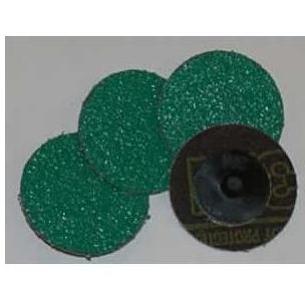
there isn't an easy way to get rid of mill scale. As mentioned, sandblast, Roloc, are probably your best bets.

Rene
 
Ya I have tried solvents, rolac wheels, wire wheels, sand flap disc on grinder. This stuff is tuff.
 
yup... i've been b*tching about it for a couple yrs now in here... best i've come up with is skim hit it with a 7" stone wheel on a big grinder to get some initial cut lines.. then i hit it with some 24 grit discs.. then i'll buzz over it at the end with a DA and 36... sh*t is a huge pain on sheet steel.... my WHOLE freakin floor, top and bottom...
 
when ever I have to clear something sticky like that I take a can or two of brake cleaner shoot the **** out of it, while it's still wet I light it up with the torch, then after it cools down I use the rolocs and its good as new! The brake cleaner and torch dries it out enough that way the rolocs don't booger up and smear the still dirty area to the clean spots
 
roloc-holders.jpg


e31398a71fb10e420752fe4ca7fec978.jpg
 
Why are you guys removing the mill scale?
 
Why are you guys removing the mill scale?

it'll eventually fail under a topcoat system... my welder/fab bud who's been doing this stuff for almost 50 yrs has seen it and when it comes to steel and fabrication, i trust nobody more... it may not happen for awhile, but it does.. also my background in proper bodywork coating procedures tells me the same thing.. sure you could slather some rustoleum on it, and it may last a long time, but it's not the proper way to do it...
 
when ever I have to clear something sticky like that I take a can or two of brake cleaner shoot the **** out of it, while it's still wet I light it up with the torch, then after it cools down I use the rolocs and its good as new! The brake cleaner and torch dries it out enough that way the rolocs don't booger up and smear the still dirty area to the clean spots

I hope you're using non-chlorinated! Chlorinated solvents will form phosgene gas when exposed to high heat. Phosgene is extremely toxic and will put you in the hospital if you're lucky and you make it there in the first place.

4 ppm is considered enough to be lethal.
 
it'll eventually fail under a topcoat system... my welder/fab bud who's been doing this stuff for almost 50 yrs has seen it and when it comes to steel and fabrication, i trust nobody more... it may not happen for awhile, but it does.. also my background in proper bodywork coating procedures tells me the same thing.. sure you could slather some rustoleum on it, and it may last a long time, but it's not the proper way to do it...


Ah, for coating purposes. That I can understand. I thought this was about welding and such. Some cases it should be removed for a welding process but I guess I've never seen anybody go after a whole sheet for that. Just where the welds would be.

Muriatic acid and there are some other mixes that are supposed to make it pretty easy to remove with a sander or what not.
 
I wonder how it would work if I just brushed it on and let it set. Most of the floor pieces are to big to dip. (Well at my house anyways) Going to give it a try for sure. Thanks for the tip

This was 2 hours worth of sh** work.:grind::crazy::doah:
IMG_1971.JPG

IMG_1971.JPG
 
not to mention your burning thru your consumables.... the stone wheels cut thru it immediately, but it's such a small area of cut..

the key would be to keep it wet..... a trick i use for glue, some paint finishes, etc is to soak a rag in lacquer thinner and lay it on the area.. then just come back every now and then and pour some on the rag to keep it wet... that may work with muriatic, but i have no clue how long the rag would last before it falls apart...


oh, as mentioned in that thread, DO NOT breath the fumes in from muriatic.. it'll suck the oxygen right out of your lungs... i use it in 5 gallon buckets down in boat bilges on the cooling systems, AC coils, etc and i always wear a respirator.. nasty stuff....
 
Was actually thinking of using vinegar, it said something about it working to. Don't really want the acid in the garage.
 
yep..muratic/hydrochloric is the ticket..i have found some liquid stuff once that was a high % of muratic, it would eat a gal bucket gone in a few hrs..actually i once put a pair of hood hinges on welding rods in original bucket of full strength stuff & in 3-4 hrs the springs was gone & hinges were worthless..i spray'd that stuff on parts w/pump sprayer..watched it bubble and turn yellow & stink!..then rinse it away & it looked fresh cast or clean steel
 
Top Bottom