CK5
Register an account today to become a member! Once signed in, you'll be able to participate on this site by adding your own topics and posts, as well as connect with other members.

Stereo Shop Battery Cable Ends

Sure looks pretty enough.

I would be hesitant to use that for a starter and winch. First, I don't like the bolt down cable connections for automotive wire.
Those type connections are OK for heavy cable when its powerline stuff. Those cables have a low number of strands that are very thick.

They handle the screw down pressure well. The fine strands of battery cable tend to shear and separate and will work loose due to vibration.

Plus, you only have one large wire connection. A winch will draw heavier current than a lot of starters.
So, you would need to use the one connection for the winch, which leaves the smaller one for the starter.

If you have room, this might be a better idea.

http://www.wiringproducts.com/contents/en-us/p920_copper_battery_terminals.html

That type is usually put in the middle of a cable. In this case, I suspect it would be best to put a cable in each end and soldered them in.

Which one you use, be sure to remember that most of them are different sizes for positive and negative.
 
I would also be leery of all that load connected to a single battery post. The amperage draw may overheat a single post rather than sharing the load between two batteries. Depending on the potential load the battery can handle.

Or if you are purchasing a new battery ( making sure the battery is sized correctly) do a dual top post and side post set up. One connection to the top post ( winch) and starter and other connection to side post. Then you are at least splitting the load between two separate post and not relying one the single top post.

Just my .02.
 
i have relocated my battery to the firewall so I only have the one, no dual battery option for me.

As for that cable end only having one hole big enough for battery cable, it's just an example of the cable end style. There are similar ends available that will accept 2 of the same size cable, that was the first I found to post for reference.

With respect to using a dual post battery, I always that the side post was a weak design and avoided if possible?
 
I have never liked the side posts, but when handled properly and kept clean, they seem to do the job.
The two main problems with them has always been corrosion that was hidden under the rubber wire terminal and not obvious plus hard to clean, and the amount of surface area of the contact compared to a post.

I never get calls on new cars or trucks, so when I run into one that is corroded and not making contact well, I usually whittle off all the insulation off the wire ends.
The result does not look pretty, but it lets me see the connection, get it good and clean, and add washers or make whatever adjustments needed to get a good solid contact.

And, while on the subject, I want to once again warn people who add cables to a side terminal battery by using a longer bolt to be sure and use a jam nut.

Put the nut on the bolt, tighten the bolt down in the terminal lightly hand tight with all the wires on, and then back it off a half turn or so.
Then hold the bolt and tighten the nut down to clamp the wires.

The back side of the connector in the battery is not very strong. If you tighten the bolt all the way down and it bottoms out, it will punch the back side out into the acid.

Then the acid will creep out around the bolt threads corroding the bolt and causing continuous corrosion of the terminal with no obvious reason.

Been there, Done that.
 
Many batteries when you read the whole warranty thing warn you not to connect high amperage devices to the side posts in a dual post battery.

Doing so will void the warranty.

I have seen many poeple use those types of connecters with great success.

I personally have used them and never had a single problem.

So while in the electrical world there may be better alternatives, in the real world those work just fine
 
that first clamp should be fine. The battery post is designed to handle ALL of the amps available from the battery its on. And that clamp will take more than any lead battery post will. Thats why they dont list a max amp rating on them. the set screw style lugs do fine on the thinner strand wire if installed right. Thats what their designed for. Car stereo wire is WAY finer than normal battery cable.
 
Yep, I would use the crimp/solder style connectors for any high amp pulling devices. I just recently redid my entire charging system and picked up a bunch and used them, they work great. Then screw types work OK for stereo stuff, but I never trusted it for powering anything more than my amp. And I have since relocated it to a top post capacitor style battery too.


And yes it is true that stereo wire is way thinner than regular battery cable for example, and if installed 100% right, they probably will work. But vibration can wear the screw through the copper strands and then it starts losing connection. Not saying this is a for sure event, just something to keep in mind in the future.

And a dual option is not a bad idea. A side post can handle the duties of the starter and powering the fusebox. And using the top post for the winch. Mine was hooked up that way for a long time, but instead of the winch I had 2200 watts of stereo amps, I just regularly pulled the ends and checked them and so on, but I do that to top posts as well.
 
A dual post battery is the easiest way if there is clearance above. A remote starter solenoid is a handy spot to make high current connections. Just get a premade battery cable (top post to ring) to connect the top post to it.

The drawback is that someday you will want a new battery and find no dual post units available.

If you are already top-post only, you could use the double-ended crimp terminals:

images


Or the crimp + stud style:

battopaddon__89132.1310332274.1280.1280.jpg
 
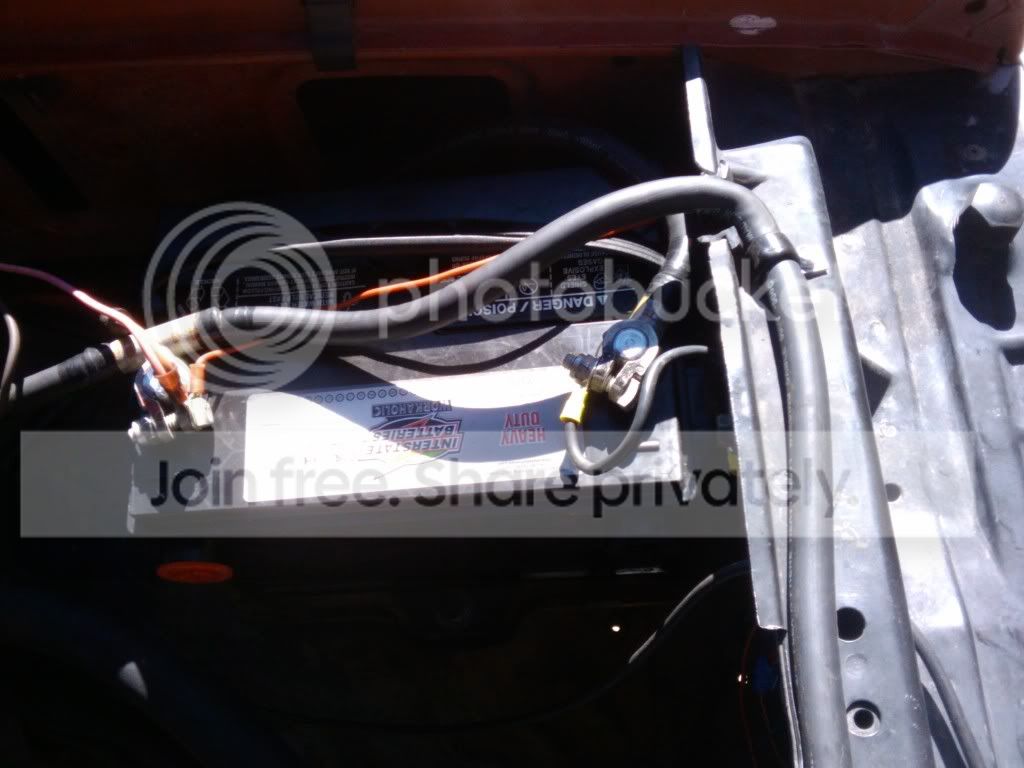
I used these but got the drop in solder plugs. Cable ends and solder plugs from Napa. Used 00 welding wire for the cables. Not cheap but worth it.
IMG_20111023_125131.jpg
 
Top Bottom