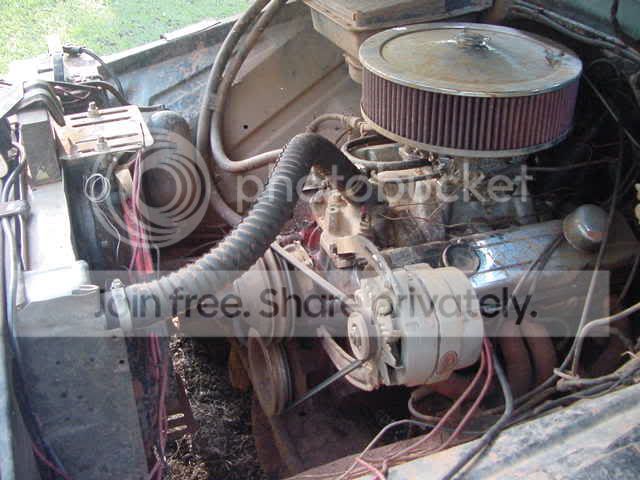
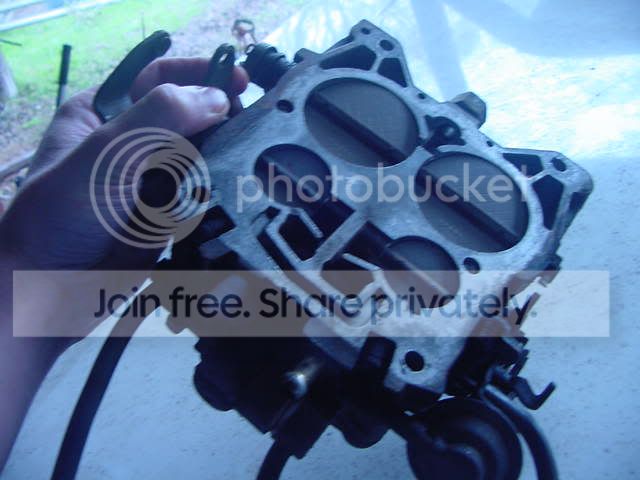
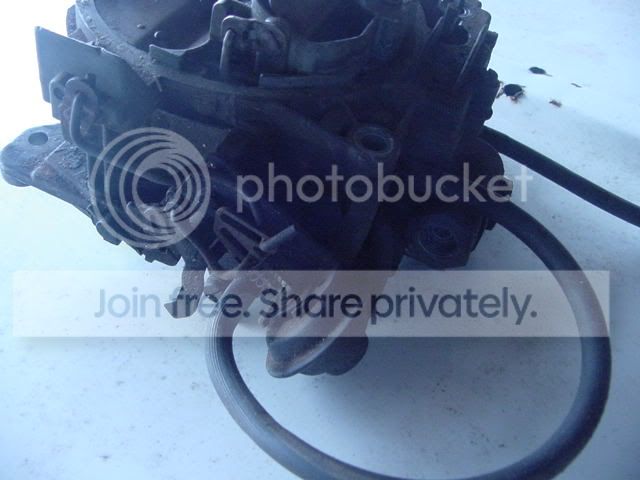
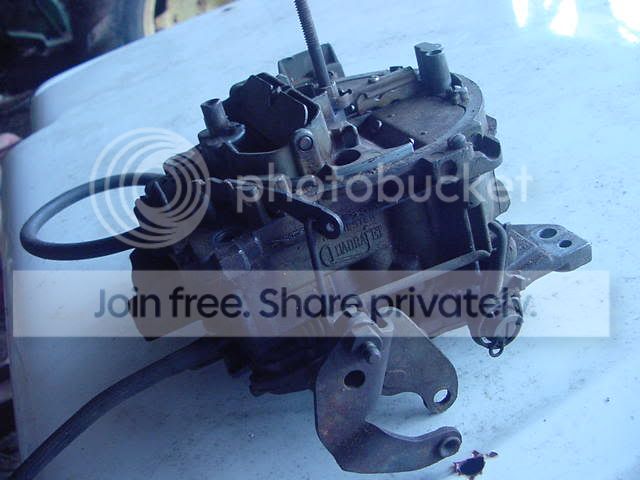
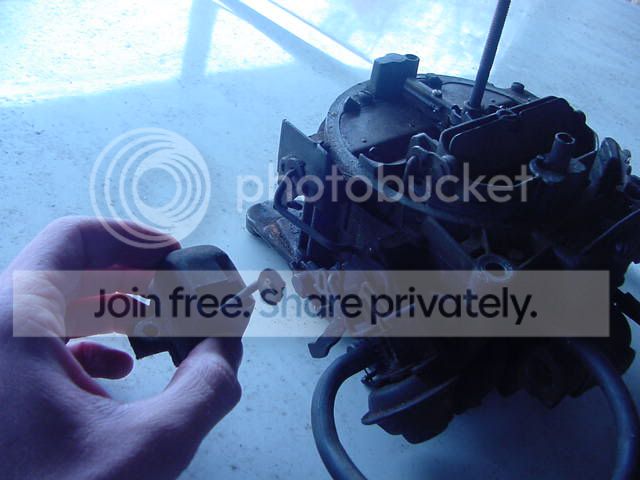
The coolest thing about working with these carbs is how much you can work on it on the truck and not spill gas all over. Take out the top screws, unhook a couple of linkage rods and you can reach the jets and adjust the floats . The metering rods load in from the top of the carb and are under the kidney shaped tin plates that are held in with one small screw each. No need to pull those screws all the way out, just loosen until you can swivel the plate over and remove the rods and step up springs. You can do a fair bit of tuning the primary main system with just the rods and springs.
If you look at the metering rods you will see how there tapered with a step in them. The higher the rod rises in the jet opening the more fuel available. The rods rising is controlled by the amount of vacuum and the spring rate on the step up springs. If you have a mid range driveability prob but it goes away as you give more pedel try a stronger ( higher vacuum ) step up spring to help get the fuel faster.Another part in that play is the linkage which controls the accelerator pump. It has three settings to control the rate and duration of the intial pump shot.
PARTS
1. off road needle and seat # 1465
2. step up spring kit # 1464
3. accelerator pump # 1470
4.calibration kit ( jets/rods ) # depends
The calibration kit part # depends on which model # carb you have. A 1406 calls for a kit # 1487. You can also order jets and rods in separate pairs.
To install your needle and seat the top of the carb has to come off and thats also the time to adjust the floats. The suggested float drop is 15/16" to 1" and the float level should be set to 7/16". Call Edelbrock and order the performer series carb owners manual. They can fax or email the pages to you. You want this manual as there is more to tuning these carbs then my basic over view here.
Now theres no need to sweat all this just to try her out, If your carb has the stock set up It will be damn close. Put her on and see how she goes.
I listed the accelerator pump cause if the carbs been sitting a long time they can leak out the top of the carb and there cheap.
Oh yeah, the idle air mix screws, almost forgot. It's nice to have a vacuum gauge and tach but you can do it by ear. Back the screws out 2 1/2 turns set your idle and one at a time slowly turn the screws in or out to achieve the fastest idle. Reset the idle screw ( on the throttle ) and repete with the air mix screws . It's best with a vacuum gauge, just adjust each side for the highest vacuum at the correct idle speed and thats done.
I test my mid throttle on a piece of road I can cruise in third gear (sm456 ) at about 35 mph then I floor it and see how she responds, If she kind of falls flat and then rips I change to stiffer Higher vacuum rate springs and that will often be the cure. For a general view of your jetting you want to be checking your plugs also.
Well, theres some basics, I hope I'ts helpfull to you.