CK5
Register an account today to become a member! Once signed in, you'll be able to participate on this site by adding your own topics and posts, as well as connect with other members.

Tire protectant

dyeager535

1 ton status
 Premium
Joined
Dec 13, 2000
Posts
31,561
Solutions
1
Reaction score
2,900
Location
Roy, Washington
I had run across this stuff awhile back. https://renew-pro.myshopify.com/

With tires as expensive as they are, and me getting maybe 15-20k out of a set before the rubber starts to obviously deteriorate, I wanted to see if I could do something to prolong their life. As I understand tire design, actually using them (instead of just sitting) is best. Mine sits a lot.

The D3 product linked above I believe is essentially Cerakote, which is pretty commonly used on things like black vehicle plastic that is sun faded.

I don't necessarily buy into marketing stuff, but for the price of trying the D3 product, and cost of tires, it seemed to be worth trying.

The truck is going to sit outside for the next 9 months or so, not driven. Not a ton of direct sun exposure but there will be some, plus lots of rain/humidity. I took pics so I can compare at the end of that time.

As you can see, I did minimal prep. Hosed the tires off, let them dry, then applied. More prep and more coats definitely darkens it up. Limited time, limited effort lol.

I painted the "stripe" to get some contrast against what the tire looked like to start. That had dried overnight. I had already done the tread which is why thats darker.
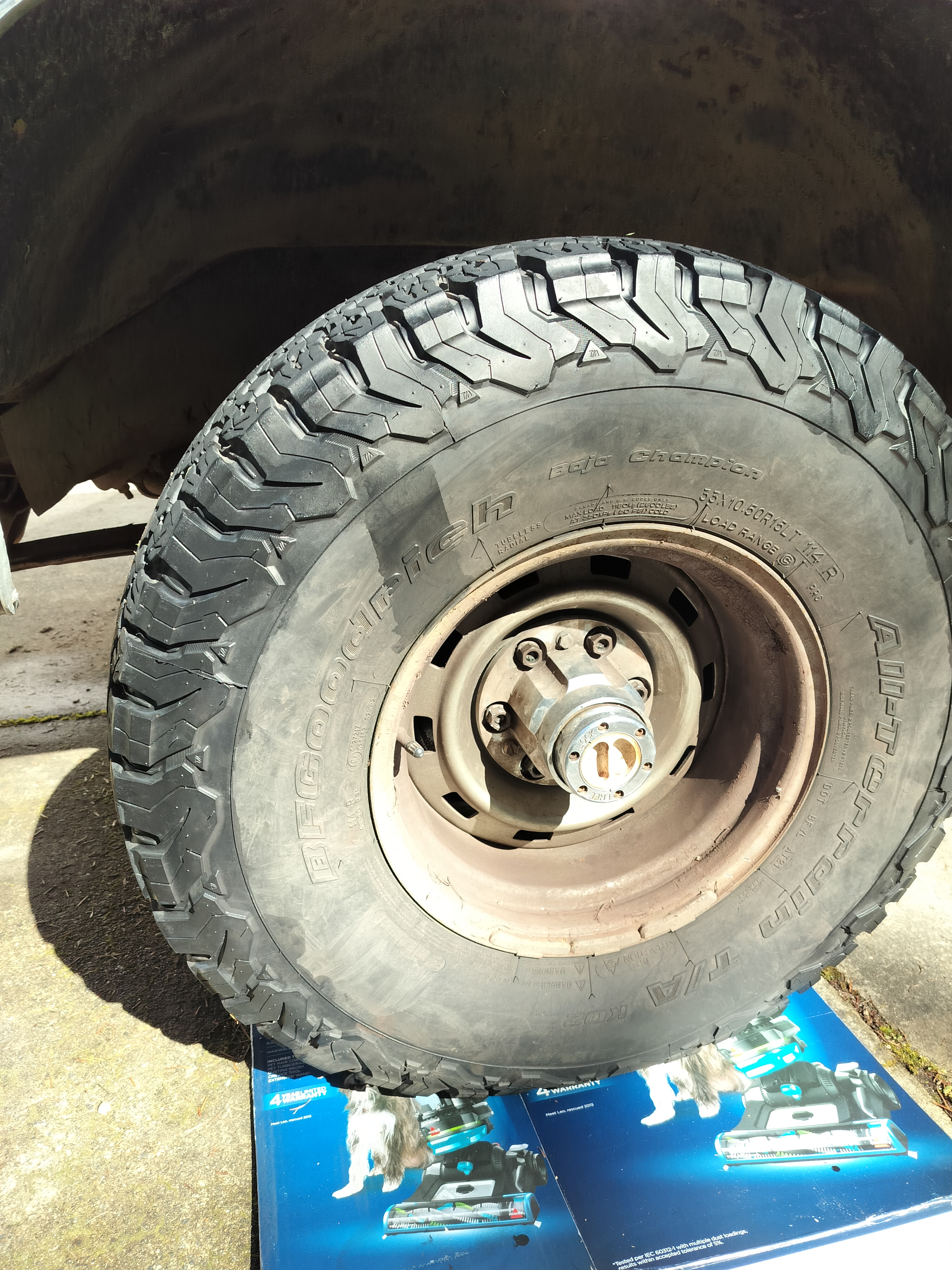
full


I think these tires are five years old, in person I didn't see any flaws in the application, pretty sure anything you can see that looks like a flaw is the tire itself. Again, I expect from lack of prep.
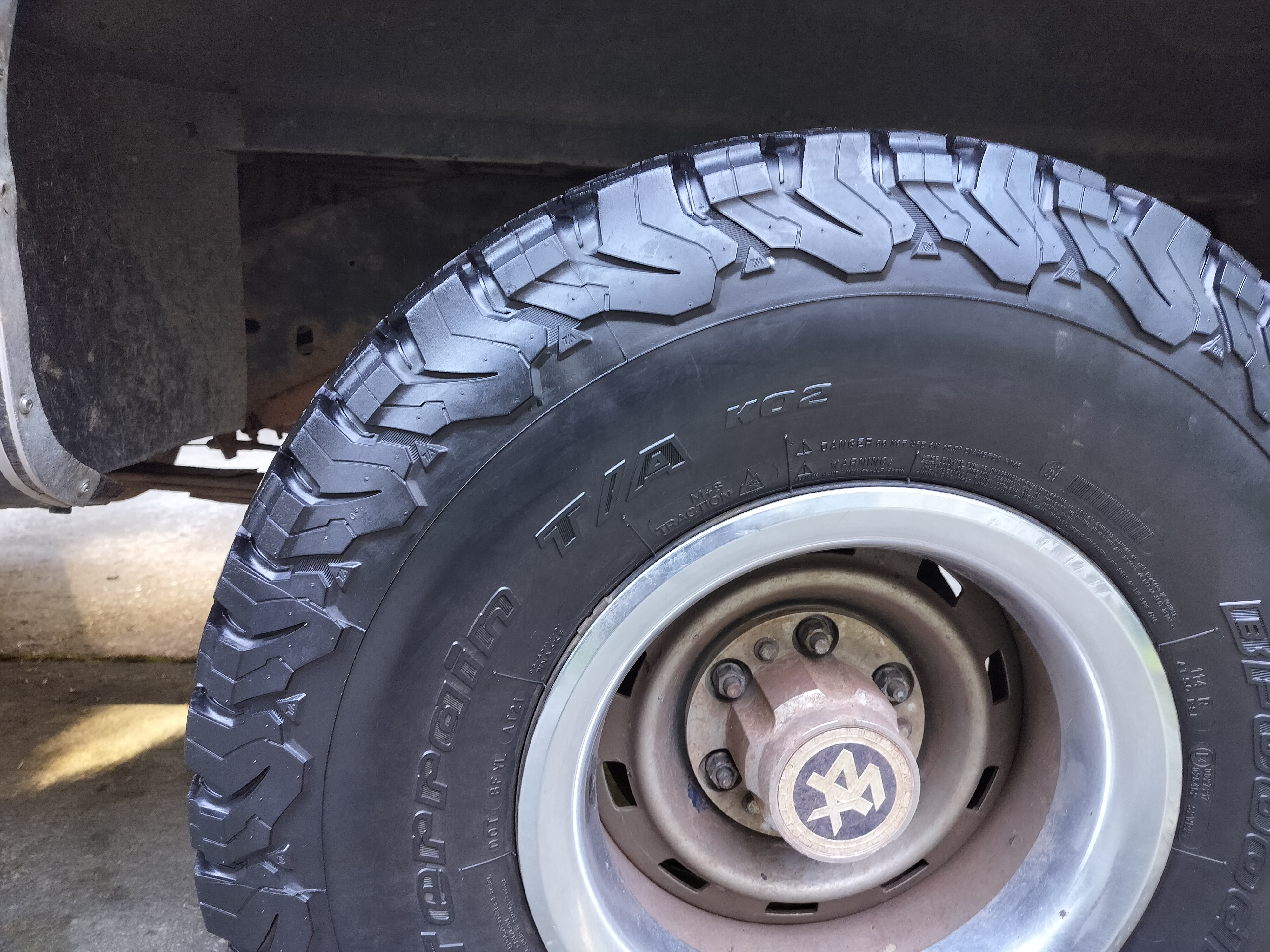
full


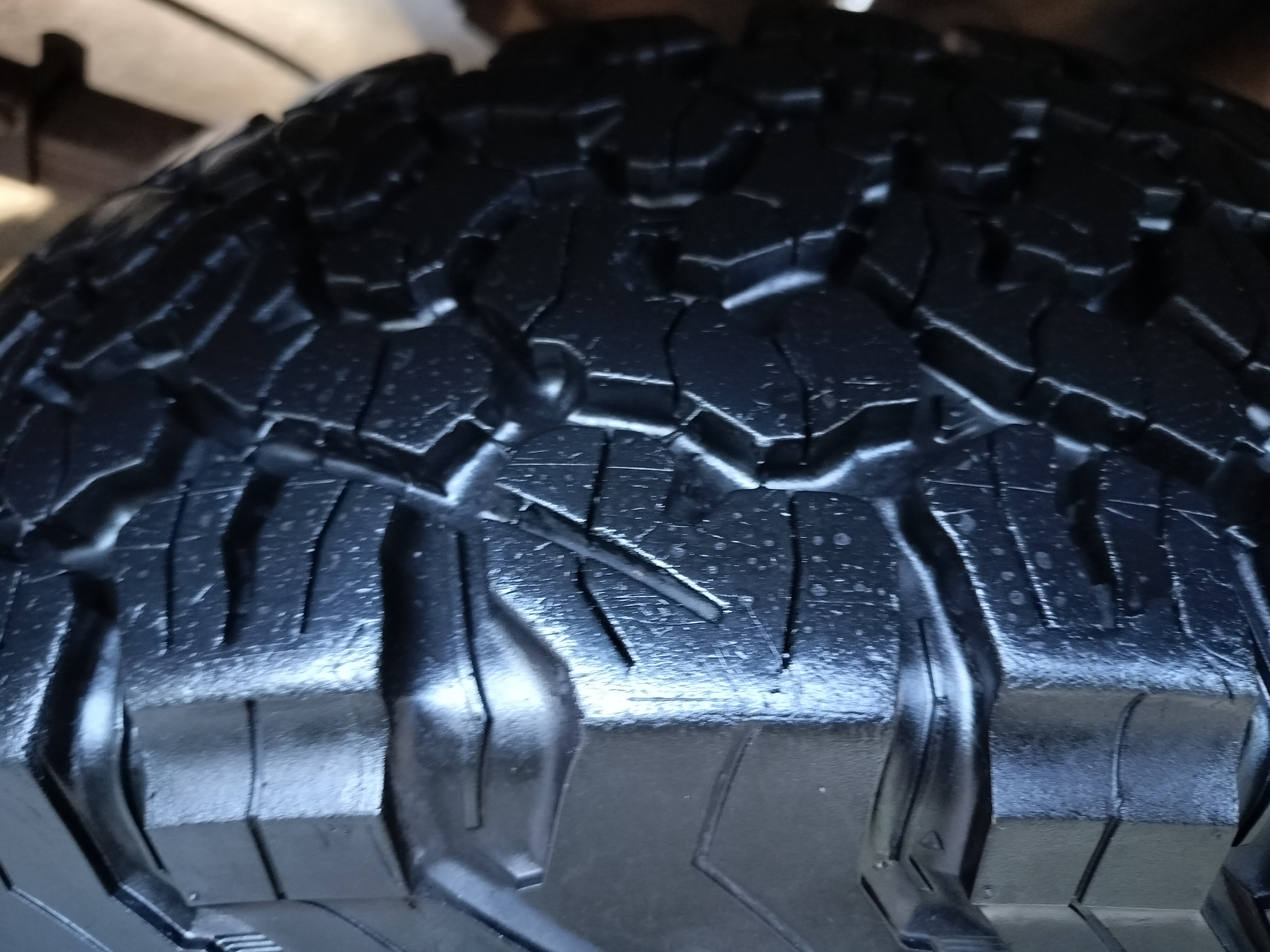
This is maybe 10 minutes after application. If I was going to do it again I think a spray bottle or a pan to rotate the tire through would have gone MUCH faster (and done a better job) than trying to dab it between the tread blocks with a paintbrush. Invariably you miss places since you can't see all of the nooks and crannies. Product has the consistency of water, flat surfaces (sidewalls) were super easy and fast with the foam applicators.
full


Does seem to stain. Not so much skin, but the cardboard I put under the tires turned dark black when I dropped some on it.

I got the "Blak" 16oz kit. Came with a foam brush, foam block, microfiber-ish covered foam applicator, and a baggie each of prep and vinyl protectant fluids.

I used maybe half of it on the 33x10.5's, so seems to go pretty far. Now if it just works. Not sure what I'd expect to see in that time, but I didn't see any cracking yet, so if none develops, I suppose that may be an indicator it works.
 
Did you look into tire covers like RVers use?
 
No, I didn't. Would be interesting to use them on one side, this stuff on the other I suppose.

Since its not sun that causes my tire deterioration, Im not sure how much covers would do?
 
I used tire protectant and the tires eventually dry rotted and cracked. So I don't use it any more.
 
What product did you use? I haven't dug into it for awhile, but I recall that some manufacturers years back didn't recommend using tire protectant or "tire black".

Cerakote in general is a relatively new technology (to the consumer at least) so I'm hoping it will buy some time that the older products apparently didn't.
 
What product did you use? I haven't dug into it for awhile, but I recall that some manufacturers years back didn't recommend using tire protectant or "tire black".

Cerakote in general is a relatively new technology (to the consumer at least) so I'm hoping it will buy some time that the older products apparently didn't.
Armor All
 
Hard to separate marketing hype from facts sometimes, but this stuff is definitely not armor-all.

Had some of this (or similar product) applied by a detailer to 9 year old exterior car trim which had turned gray. The black has held up for almost a year now. There is a bit of it starting to "fade" after a thorough car wash, but I consider it to be very successful in that role.
 
So I'm well over the 9 month mark I expected the truck to sit.

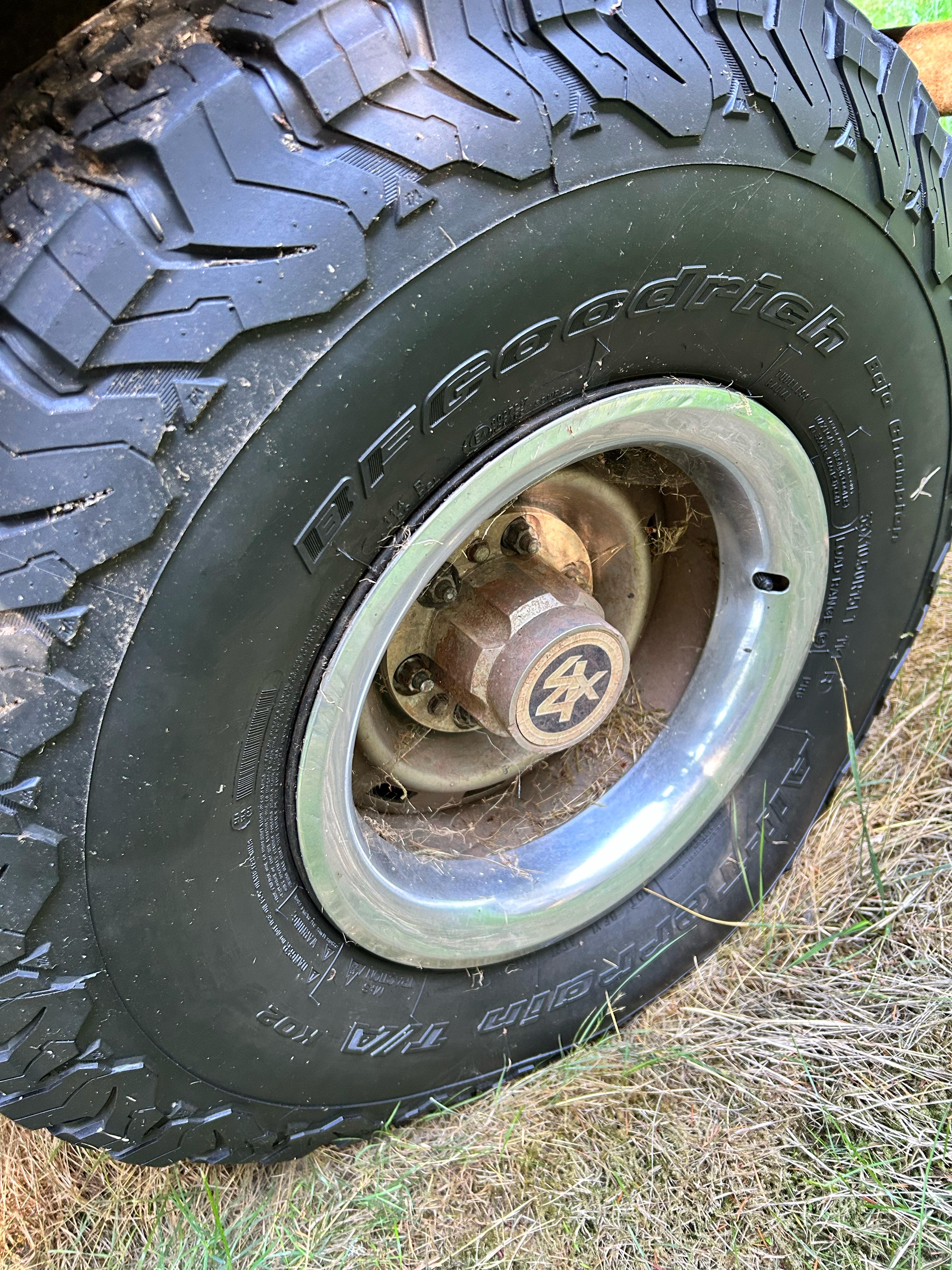
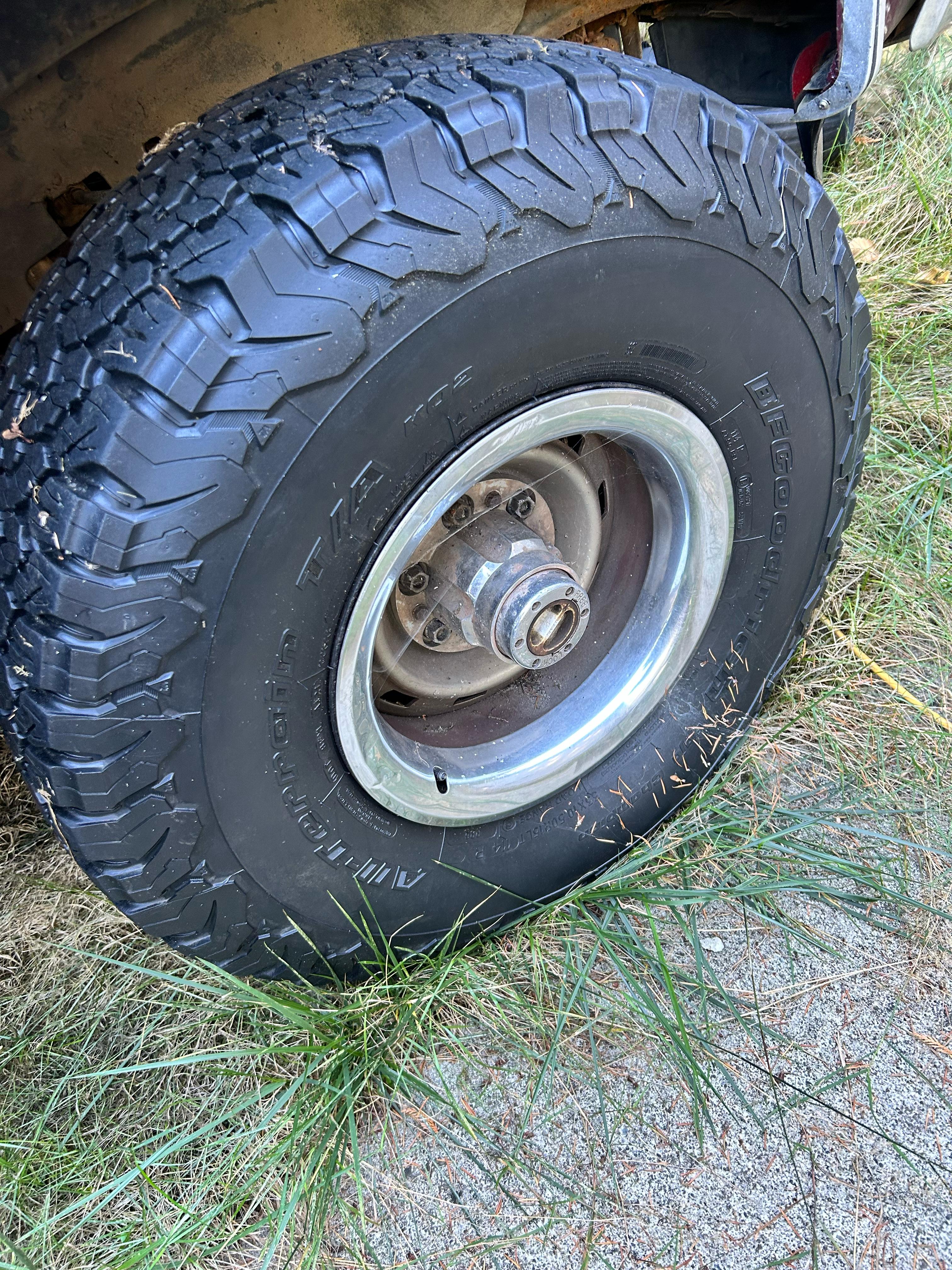
These are what the tires look like after sitting since March 2024, so 19 months of sitting. I think the truck has been moved once or twice in that time, maybe a couple hundred feet.
full


full


Just to keep comparison photos close for those on a big screen to more easily compare the before/after/long term (Both below pics taken March 2024). I wish I had taken one of the tread before coating, although I feel like the tread seems to stay black better than the sidewalls, perhaps as the tread wears down.
full


full


I'd say at least from the "looks" standpoint this stuff has held up very well. I could be biased, I'm open to opinion. My goal was to try and get the tires to last, not look nice however. If its not raining terribly in a couple weeks I'll look and see if I can find any evidence of cracking at the base of the lugs, which historically is where I've first started seeing the tires start to fail.
 
Last edited:
I use 303 Protectant which soaks into the rubber, rejuvenates, softens and protects from sun damage.

Heard about it from, "Sweet Project Cars" on You Tube.

Guy always has lots of tips and tricks to make things last longer and look better.

Seen some really sun damaged tires come back to life looking brand new again.

The softer the tire compound the more the sun dries them out.

My K30 with soft compound tires will bleach out in a matter of weeks.

My K5 has Toyo M/T tires that don't bleach out nearly as quick and my S10 with street tires only needs treated maybe once or twice a year just to insure they don't dry rot.
 
I don't know what sort of longevity the D3 product has when driven or in direct sun (they say apply once a year). My truck sits and is in the shade 90%+ of the time, so UV isn't that big a threat to the tires. If the color of the tire means anything though, it has certainly held up well under those conditions. Only information I have to go off of is their marketing hype and visual, I just did a search and I still can't find any tests or studies that seem to be independent and address effectiveness of these types of products. The entire field appears to be hearsay and marketing, and almost all of the articles are focused on looks, not tire health.

I see the 303 says to reapply within 45 days, so not really useful in my situation since I'm not able to reapply for long periods. Keeping the tire pliable is really what I'm trying to do, and it seems there are two (marketing) approaches to this...seal the rubber from the atmosphere so the chemicals added during tire production don't leach out as fast, or address the loss of those chemicals by coating the tire in "fresh" chemicals.

Just from a laypersons standpoint, assuming both approaches are actually effective at what they say they do, then both seem valid to address the root problem.

Unless someone tests these products under controlled conditions, I'm not sure my experience means a ton. The variables between peoples results are too great to glean useful information from IMO, it ends up just being anecdotal information vs authoritative. I'm always hesitant to believe marketing.
 
I tried a bunch of shit over the last 25 years.

Historically, I don't drive enough to wear out tires. They age out. I will often run tires well past their best by date because I'm cheap. I usually have at least two sets of tires for each of our daily drivers. Sometimes three. Winter tires get the most tread, when snow isn't a thing I switch to less tread remaining. If it's my truck and I'm going to be towing, I use a set that have decent tread but aren't old (which may be either one of two summer sets or a winter set).

Most tires these days seem to be good for about six years with little care, assuming you don't live in the desert. If it is a tire with a lot of agent in them that causes them to bloom (look rusty) then they usually last a little longer. Michelin and all their brands tend to be rusty, Falken also, but some companies like those operating under the Goodyear umbrella almost never bloom. They also usually crack between the tread long before the rest.

The best way to get them to last at least a decade is to get them out of direct sunlight in a moderately temperature stable environment... without ozone sources. If you want them to die a fast and endure horrible existence, put them in a room with an electric motor. They're better off stacked under a lean-to than sitting in a hot shed.

303 *seems* to mostly work by providing a layer to keep the tire from reacting with the air. I've been using it for about 20 years. Standard use for me means hosing it down with 303, waiting until it has almost flashed off, and then washing the remaining residue off with a garden hose. General driving in the rain and whatnot it seems to last about a month, or the first time your spouse skirts a curb. Get the tires out of the weather (tire covers or remove tires) and it seems to last forever. My trailers that sit outside in the weather... I spray them a couple times a year and because I don't care if they look splotchy from not hosing off the excess... even easier.

I'm not opposed to migrating away from 303 for something better, but it's really difficult to beat its simple application.
 
That's good info, thanks!

Have you been able to pin down roughly how much life a tire gains by using 303?

Clearly tons of variables, but as you say, 6 years seems to be about the mark where tread block base cracks start to appear, so if that can be prevented for a number of years beyond, then that is a good tidbit.

I probably toss mine with between 75-90% tread life remaining. I'd be better off renting tires if there was such a thing.
 
I'd say, on average, probably 4 years are bought by the application of 303 when the tire is "stored" outside on the vehicle.

The problem is that I am really just comparing what I buy which isn't always in the same vein as what my parents buy. My parents don't care for most of their tires, which is a habit my Dad had from his years of driving 150 miles round trip every day for work. Now (since my Dad's retirement in 2009 and my Mom's retirement in 2022) they might drive 10k between their three vehicles and the tires age out.

The exception is my parents' motorhome, which is not garaged but he does spray 303 on them after he washes the motorhome. And in the winter it gets tire covers.

I happen to have had the same exact tires on my motorhome (because they are the same exact chassis manufactured a couple weeks apart), with a date code 3 weeks different from my parents, and my tires were in a pole barn in Iowa when not on the road.

The tires from my motorhome show cracking, my parents' look like new. However, my parents' tires have 17,500 miles on them versus my 30,100. So again, not a super great comparison.

My parents have two 2003 Tahoes, both with the same "Deegan 38" 265x75r16 tires on them. One Tahoe sits outside with 303 on them, the other is inside. The one that sits outside gets 303 sprayed on them at least once in a while. The tires on the north side of the Tahoe show visibly less sun damage. So, I don't know if 303 prevents as much sun damage as some claim. However, I don't know if my Dad sprays them that often. I know I spray them when I visit, which isn't that often. I bought all 8 tires for them, so I have a vested interest in their success.

I tried to get him to spray the tires I bought for my Mom's TJ but I don't think he ever has (always in the garage). They're BFG AT KO2s with a date code from February 2024.
 
That really is the difficulty with this, eliminating the variables. Different tires, ages, exposure, driving habits, and application of whatever treatment doesn't clearly show what these products do. Something is better than nothing, but it would be nice to know for sure if the juice is worth the squeeze, and which products are best suited to each of our specific use cases.
 
Today is get ready for winter day for vehicles including swapping over tires on my wife's Equinox but I already put them summer tires away. I'll try to get pictures of tires I've known since new.

The Bridgestone tires on my trailer came off my Mom's S10 blazer and are circa 2012. They looked good until this summer. When I went to get the Rubicant in late February there were no cracks in the tires and sometime over the summer the cracks showed up... but I also noticed the tires didn't really bloom after I washed the salt off in March and re-applied 303. Those I know have had 303 on them their entire lives because the S10 blazer they were on was an outdoor storage vehicle. But again, since it's under the Michelin umbrella it has tons of shit that leaches out to form the rusty bloom.

I guess at this point is I'll say that the 303 does work, but it washes off with time and water. I'd say it washes off at the same rate as Rainx.

I happen to have a bunch of BFG ATs around. I know the ones on the YJ were stored in a shed with 303 on them and still no cracking on the ones I bought new... 15 years ago.
 
I was going to take a pic but got too focused on trying to fix all the problems that occur from sitting 19 months...flat tires, someone started the truck with the battery conditioner on it and melted the wiring to the headers, radiator was half full from the coolant leak, and then had the crimp fail for my auxiliary fuse panel, which took a bit to find. But better this all happens in the yard than on the road.

Anyway, has been raining here, and while I think water beading isn't indicative of much except how long a coating lasts, the rain was still beading up on the tires.

I'll need to get in close with a light and see if there are any cracks forming. Given they are ~5 years old now and I applied this so late in the game I can't say the product does or doesn't work unless no cracks form for a couple more years.

Wondering if I can maybe get a big aluminum tray and just pour this over the tires as I rotate them, reusing what collects. Small bottle so not enough to use to fill something up and rotate tires through it. I've got to find a faster way, I'm going to have even less time to re-coat them than when I originally applied it.
 
I was going to take a pic but got too focused on trying to fix all the problems that occur from sitting 19 months...flat tires, someone started the truck with the battery conditioner on it and melted the wiring to the headers, radiator was half full from the coolant leak, and then had the crimp fail for my auxiliary fuse panel, which took a bit to find. But better this all happens in the yard than on the road.

Anyway, has been raining here, and while I think water beading isn't indicative of much except how long a coating lasts, the rain was still beading up on the tires.

I'll need to get in close with a light and see if there are any cracks forming. Given they are ~5 years old now and I applied this so late in the game I can't say the product does or doesn't work unless no cracks form for a couple more years.

Wondering if I can maybe get a big aluminum tray and just pour this over the tires as I rotate them, reusing what collects. Small bottle so not enough to use to fill something up and rotate tires through it. I've got to find a faster way, I'm going to have even less time to re-coat them than when I originally applied it.
I would like to know in the end how much it cost for the protectant, how much time you spent applying it, and how much longer you end up extending the life.
To me, the cost of tires is not much compared to my time.
I haven't found yet anything that ends up saving me money
 

Latest Posts

Top Bottom