CK5
Register an account today to become a member! Once signed in, you'll be able to participate on this site by adding your own topics and posts, as well as connect with other members.

what is a good operating angle for drive shafts???

twoslo4five0

3/4 ton status
GMOTM Winner
Joined
Oct 5, 2006
Posts
6,616
Reaction score
73
Location
Living in a dump, VA
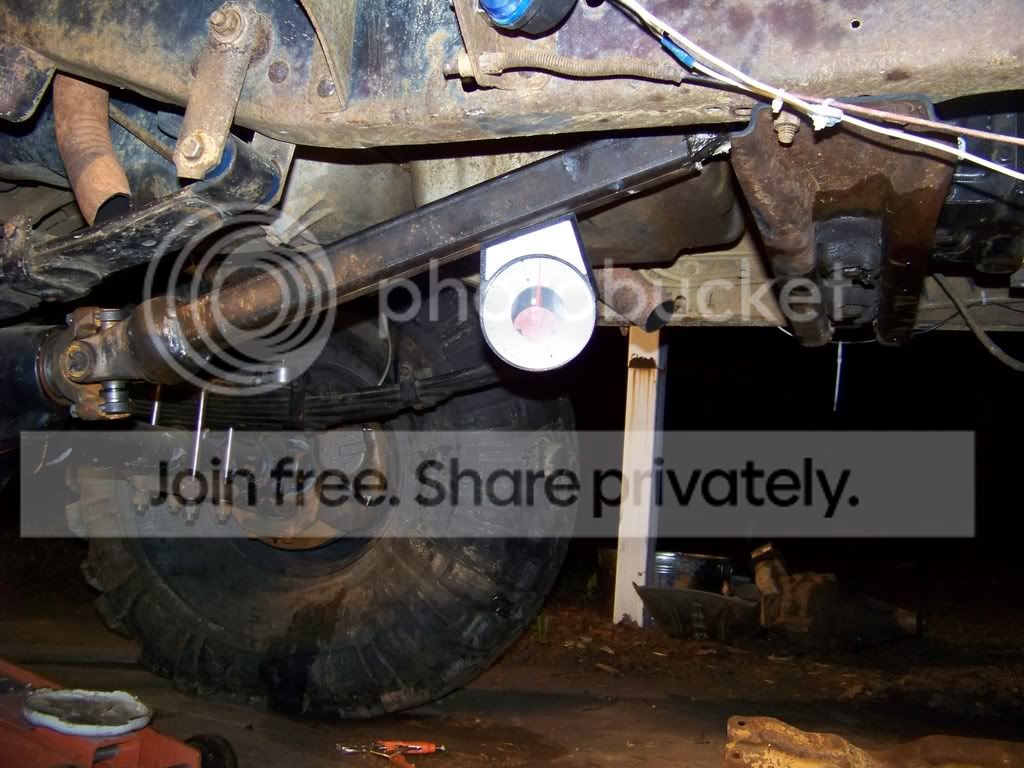
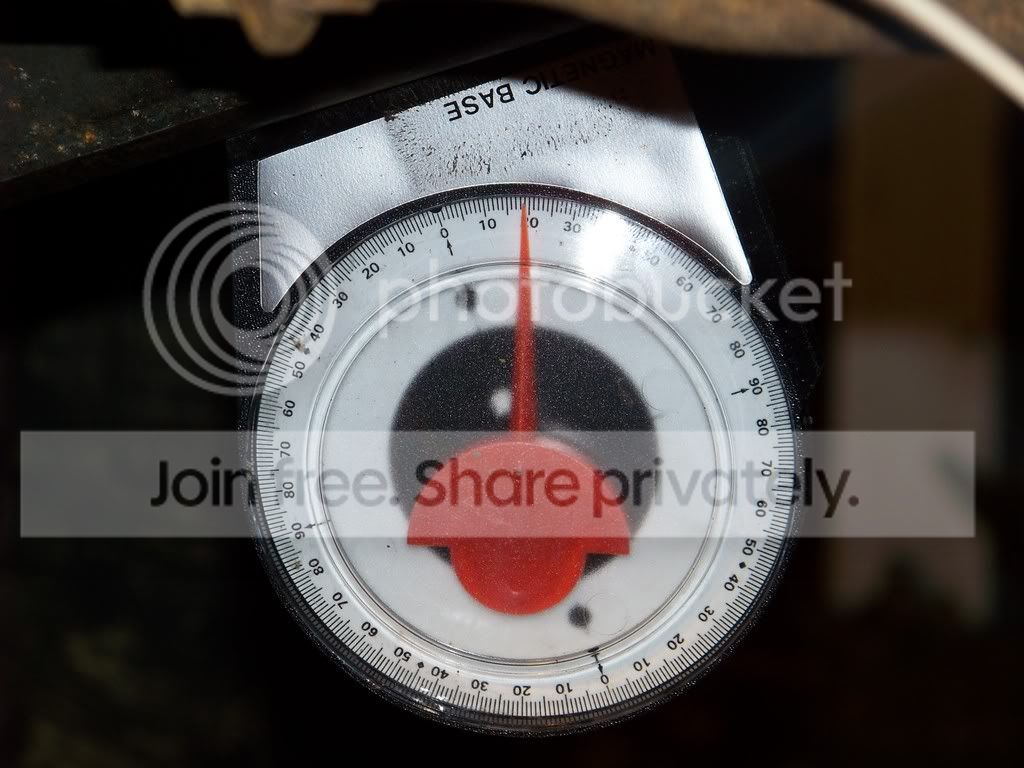
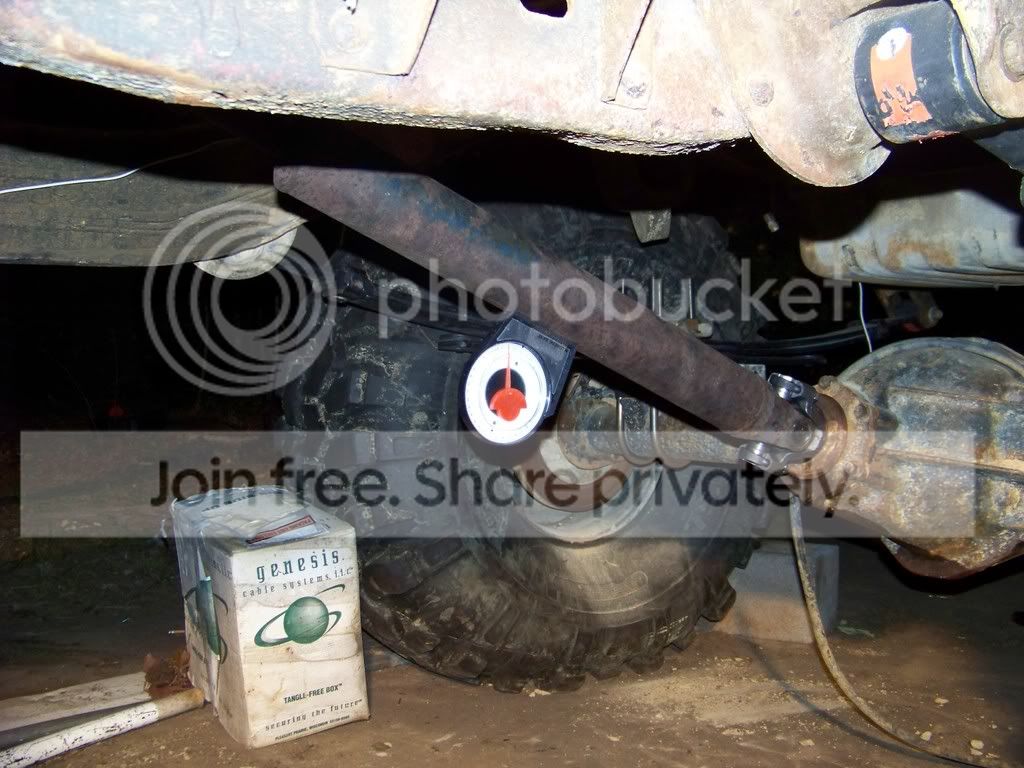
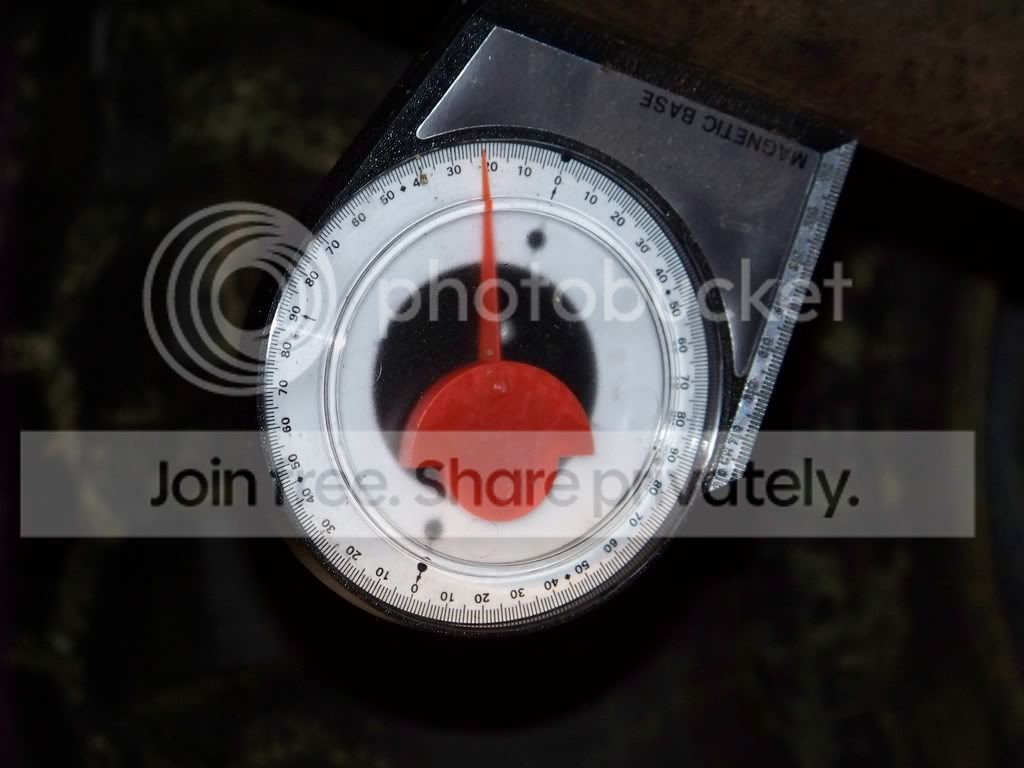
i got my doubler in and driveshafts installed...the front is right at about 19 degrees with the hi-pin and the rear is at about 22 degrees or so...im not running any cv's theese are just like regular driveshafts (square front)..not to bad considering i have mabye 200 bucks tied up in both shafts :D

004-5.jpg

005-4.jpg

006-5.jpg

007-5.jpg
 
Now put the angle finder on the yoke face and subtract the two numbers to get the actual driveline angle at both ends of each shaft. For example, the tipped up yoke on the rear is giving that particular U-joint a very slight running angle. I suspect the u-joint angle up top for the rear is quite a bit worse though. The angle of the shaft is pretty much irrelevant.

Rene
 
The best angle is zero. The joints are stronger, wear longer, and make less vibration when they are operating at smaller angles.

~20 degrees is pretty typical of a lifted truck IIRC.
 
The best angle is zero. The joints are stronger, wear longer, and make less vibration when they are operating at smaller angles.

~20 degrees is pretty typical of a lifted truck IIRC.

isnt 0* a bad thing because it will vibrate and junk? i think you want around like 3 to 5 right?
 
isnt 0* a bad thing because it will vibrate and junk? i think you want around like 3 to 5 right?

Having a zero degree operating angle at the pinion and a non-zero operating angle at the t-case can cause vibration.


I was stating that the less operating angle their is on a u-joint, the stronger it is, the longer it will last and the less vibration it will cause. If you could setup your driveshaft so that its completely horizontal the joints would be stronger, they would practically last forever and you would have no vibes. That's obviously not going to happen but the smaller you can keep your u-joint operating angles, the happier everything will be.


When u-joints operate at an angle, each individual cap speeds up and slows down through its motion and the caps follow something of an elliptical orbit. This causes them to vibrate.

Setting the two operating angles on a single cardan (non-cv) shaft equal to each other allows each u-joint to "cancel out" the other's vibration.

On a cv shaft, the two joints in the cv part cancel out each others vibration and hence you want the joint at the other end to have a zero degree operating angle.

IIRC Spicer specs 3 degrees as the maximum continuous angle on any of their joints, anyone with a lifted truck has far exceeded that. That's why people often still have vibration even if their angles are right.


More reading on u-joints and driveshafts here.
 
well i guess its good i went with 1410s then

1410's still vibrate when run outside of the acceptable operating range. my K5 has a pretty short rear shaft, and I tried to set it up with 1410's top and bottom. The best traditional set-up I could get was 22 and 23 degrees static. Bind occurs at 28-30 on a 1410. It was close enough to bind at rest I chose to not even drive it that way. I rotated the pinion up so the pinion joint was running at two degrees below the shaft angle, that got my upper joint down to 16-17 degrees.

Yes, it vibes...and I get wierd vibey driveline noises in the higher gears. I do have a CV head (32 degree) and the correct companion flange...but didn't get around to having the shaft modified. i'll run the CV stuff on the 6 pack build.

My front shaft is comparitively cool as far as angle goes. IIRC both ends are about 14-15 degrees. The front shaft is longer, and the front output is lower though. I have no prob's running 1410/1410 up front. My drivetrain is pretty long though.

Rene
 
I think 0* gets a bad rap because the caps in the joint might not rotate, which could prevent proper lubrication. It seems to me this is only a problem with 2-piece driveshafts or divorced T-case shafts because anything connected to an axle is going to move sometimes.

But like was stated above, the angle of the shaft doesn't matter. Only the angle in the joints.
 

Latest Posts

Top Bottom