CK5
Register an account today to become a member! Once signed in, you'll be able to participate on this site by adding your own topics and posts, as well as connect with other members.

What is Ethanol?

No, the reduced energy content means less MPG. You should get the same or MORE power on E85 since it has higher octane (like >100) and ethanol drops intake temps more than gas. Even if the FFV doesn't turn the timing way up when the ethanol content is high, it will at least get rid of the knock retard that most stock vehicles see under certain conditions.

All FFV have a fuel sensor to determine the current ratio of gas/alcohol and scales the injector pulsewidths to get the correct AFR. Ethanol needs about 9:1 while gasoline needs 14.7:1, so E85 is like 9.7. That's your reduced MPG right there. Same thing applies for E10 or E15 in a regular except that they don't have a fuel sensor, so the mixture is wrong until the ECM has time to trim the values to compensate.
 
Sorry wrote that last night. Yep ethanol is supposed to make more power. It's pretty hard to find real world testing. Lots of lab testing but not much real world.

I personally think there needs to be multiple fuels available at the pump. With my car I would run e 85 cause I could drop the supercharger pully a bunch with no problems or other mods.

But my closest e 85 station is a long ways away. Like 200 miles
 
FWIW I tested this in my 2004 Hyundai (10.5:1 CR, non-flex fuel) which pulled down an average of 40-42MPG on the freeway with ethanol laced fuel. I think we are at 10 or 15% based on the pump stickers. I had read an article from Car and Driver or the like about a road trip to Las Vegas, one way with Ethanol, one without, and they said their economy was better without ethanol, enough that it financially made sense to run non-ethanol.

My testing did not bear this out. The mileage was so close any difference could be attributed to variables such as temp, tire pressure, etc. About 325 miles each tank. At that time, and the place I got the non-ethanol, a 10% increase in mileage would have saved me money.

As stated before, all rubber in pre-ethanol vehicle fuel systems will fail, the higher pressure systems (fuel injection) are going to show failure before low pressure (carbed) systems, but it's going to ruin the rubber regardless.
 
Sorry wrote that last night. Yep ethanol is supposed to make more power. It's pretty hard to find real world testing. Lots of lab testing but not much real world.

I personally think there needs to be multiple fuels available at the pump. With my car I would run e 85 cause I could drop the supercharger pully a bunch with no problems or other mods.

But my closest e 85 station is a long ways away. Like 200 miles

There needs to be race gas at every pump. 110 octane at least.
 
FWIW I tested this in my 2004 Hyundai (10.5:1 CR, non-flex fuel) which pulled down an average of 40-42MPG on the freeway with ethanol laced fuel. I think we are at 10 or 15% based on the pump stickers. I had read an article from Car and Driver or the like about a road trip to Las Vegas, one way with Ethanol, one without, and they said their economy was better without ethanol, enough that it financially made sense to run non-ethanol.

My testing did not bear this out. The mileage was so close any difference could be attributed to variables such as temp, tire pressure, etc. About 325 miles each tank. At that time, and the place I got the non-ethanol, a 10% increase in mileage would have saved me money.

As stated before, all rubber in pre-ethanol vehicle fuel systems will fail, the higher pressure systems (fuel injection) are going to show failure before low pressure (carbed) systems, but it's going to ruin the rubber regardless.

Myself and several family members do similar tests sporadically (every few months). Some times, E10 is cheaper, sometimes not. This got a lot worse when I moved to Wisconsin. I often see a $1/gallon price increase between clean gas and E10. It's really, really hard to overcome that price premium with mileage. :doah:
 
I personally think there needs to be multiple fuels available at the pump. With my car I would run e 85 cause I could drop the supercharger pully a bunch with no problems or other mods.
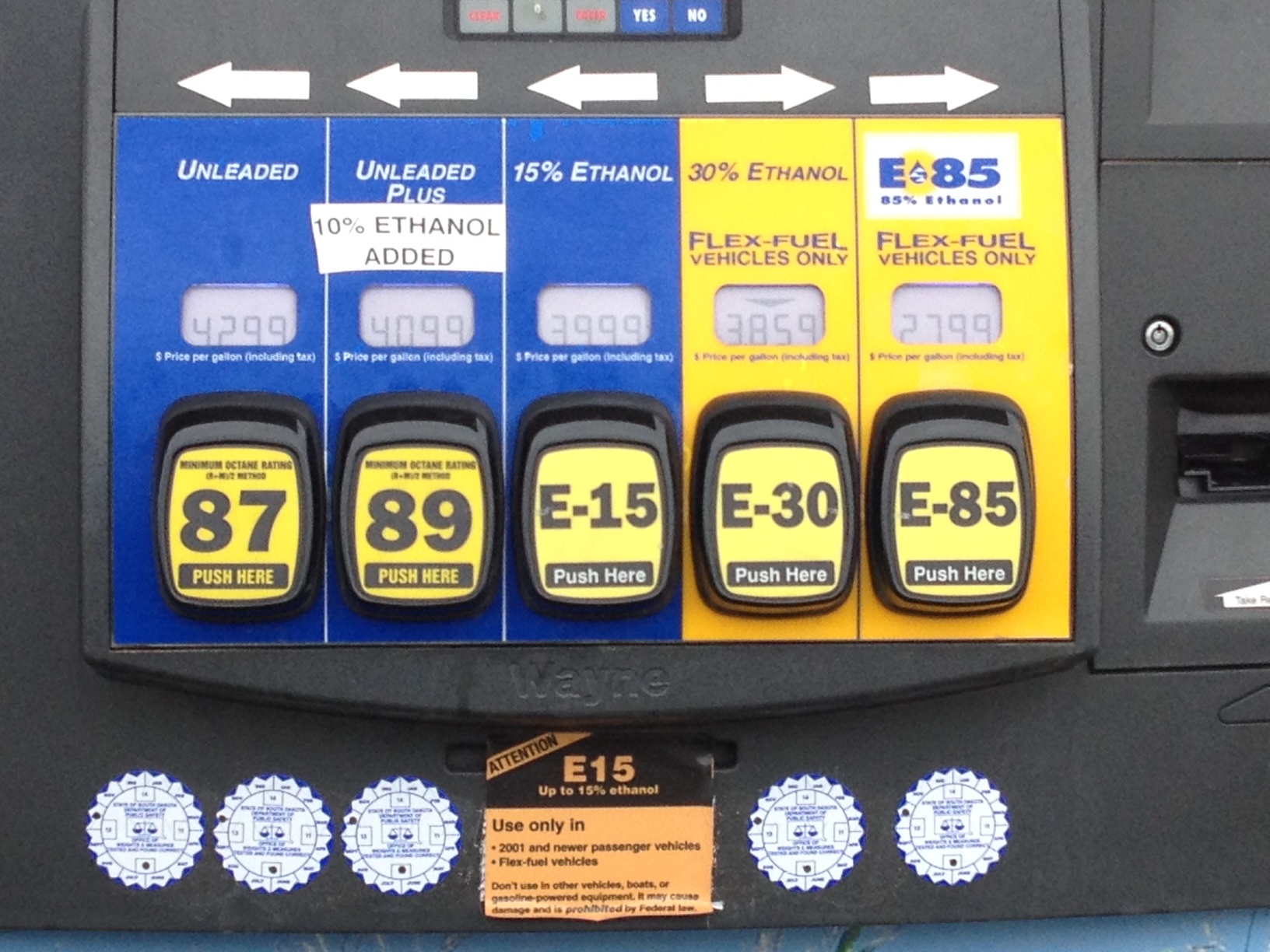
Around here, some stations that sell E85 offer several grades. I wish I had a picture, but there is one hose for Regular/Mid/Premium, which are probably all E10. Then the yellow hose will have E20, E(can't remember), E70, E85, each with it's own price. They probably have a tank of E85 underground and the pump mixes it with the regular? It's a real head scratcher trying to figure out the best deal.

As for changing fuel grades with no other mods, that's kind of a dream. You would have to set up for flex fuel with a fuel sensor and have the ECM compensate for the current mix in your tank. Otherwise you have to empty the tank before changing grades so you know exactly what's in there. If not a full flex setup, you at least need multiple tables in the ECM and a way to select them. No matter which route, you will need bigger injectors for the E85.

Now if you commit to E85 full time, you just need new injectors, a new tune and your smaller pulley.

EDIT: here's some example pics:

photo.jpg


E15-Pump-EPM14_14050977062384.gif
 
Last edited:
That's not very many mods in my brain. It's what I would do if I could but e 85 is very rare round here.
 
EDIT: here's some example pics:

photo.jpg


E15-Pump-EPM14_14050977062384.gif

That is a rather crazy number of pump options. I recognize the Bill Northey stickers, too. I wonder where that pump is (never seen that many grades at an Iowan pump before, but I didn't live in Des Moines, either :dunno:).

I'd think this is the wrong place to be the guy filling a single 1-gallon gas can. Seems like you'd be buying a quart of whatever the previous sale was. That could exceed your ethanol rating rather quickly if you buy a small enough batch. :doah:

Otherwise, fuel experimenting is kinda fun. I want pics of Eric's E85 racer. :D
 
I've been at pumps with more options. That's why I say it's kind of a head scratcher. Sometimes the lowest Ethanol from the yellow hose is the same as something from the black hose. And you almost have to whip out a calculator to know which are better deals. I think those pumps can be programmed to dispense whatever mixtures the station wants. It's like those new soda dispensers with 1 spout and like 100 drink choices by mixing all the ingredients. Everbody stands and waits while a newb tries to figure out how to just get some Coke.

Wasn't it Sunoco that used to have pumps with a big dial and you could select any octane from like 86 to 94?
 
OK, couple of facts.

First, there is this website.
http://www.pure-gas.org/
It seems to be fairly up to date. At least in my area. I note that it says Alaska is all ethanol free.

Now, the official reason for ethanol is reduce pollution.
Back in the '90s, folks were looking for ways to clean up car exhausts. The clean air act had been amended because someone realized that gas would burn cleaner if it had access to more oxygen.
Leaning out the fuel mixture had gone about as far as it could go, so the idea was to add oxygen to the gas its self.
So the clean air act mandated oxygenated fuel. They came up with a nifty additive called methyl tert-butyl ether, also known as MTBE.
Chemical formula (CH₃)₃COCH₃

You see the oxygen atom in there, along with all kinds of other goodies. The other carbon and hydrogen combinations act as octane boosters and tend to burn with the gas.

As an oxygenator and octane booster it did pretty good. It was cheap, and did the job. Unfortunately it is also very water soluble and can be tasted in water in very small quantities.

Its also been around longer than a lot of people realize. It was the favored replacement when Tetraethyl lead started being phased out in the late '70s.

But, when MTBE started showing up in well water in 1995 in Ca., people realized they had a problem.

So, combining that problem with the ethanol lobby trying to sell more grain, the government came up with the idea of using ethanol instead of MTBE.

And the rest is history.

BTW, mixing gas with water to remove the ethanol works, but I would not try to burn the result. Remember that not only does the ethanol reduce pollution, it also acts as an antiknock compound.
Not sure what you would get, but octane level is going to be a lot lower than how it started out.
 
E10 raises octane 2 points.

Martin
I'll take your word for it. I don't think I have seen any data myself. I would have figured it would be more though, since one of ethanol's purpose was to raise the octane. But, on the other hand, 87,89 and 93 octane, to use the most common ones in my area, all are supposed to have the same amount of ethanol.
 
I'll take your word for it. I don't think I have seen any data myself. I would have figured it would be more though, since one of ethanol's purpose was to raise the octane. But, on the other hand, 87,89 and 93 octane, to use the most common ones in my area, all are supposed to have the same amount of ethanol.

Ethanol has a research octane rating of about 110. Blending 90% 85 and 10% 110 should yield.... 87.5 octane. Sounds pretty consistent with Martin's observation (and the opinion of my local gas man who said the same thing about 85 & 87 gas). Motor octane value for Ethanol is slightly lower, which would probably round that .5 down. If I felt like taking the (R+M)/2 average like they use at the pump. But this is close enough to verify the hunch.


Side note, I love it when the math matches reality. :woot:
 
I'm not gonna add much of substance here other than history, but ethanol in vehicles is nothing new.

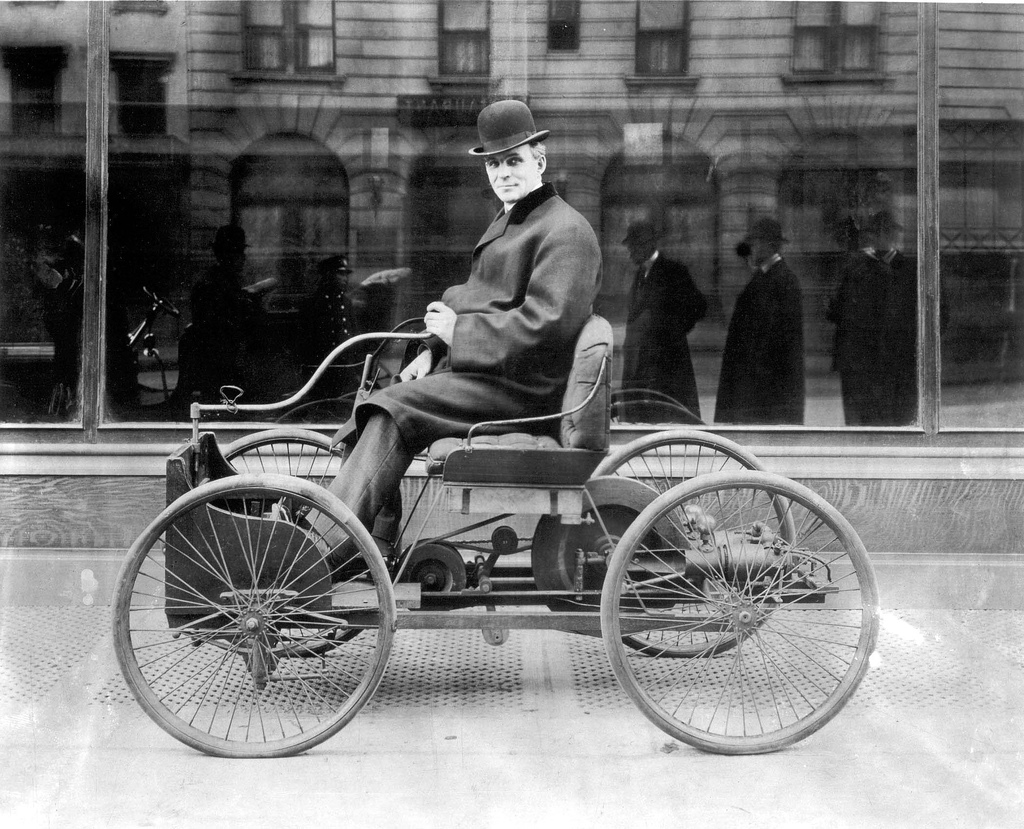
Henry Ford's Quadricycle ran on straight ethanol, for crying out loud. The Model T was Flex Fuel and was intended to run on ethanol, kerosene, or gasoline.
FordQuadricycle.jpg

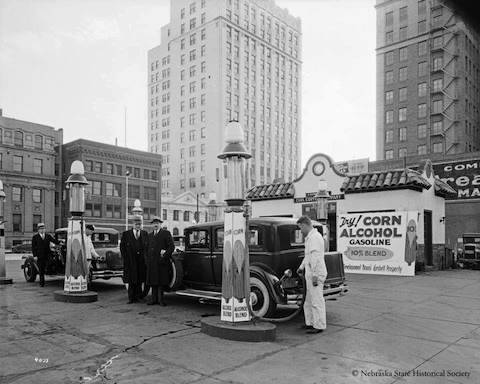
It was big in the 1930s/1940s.
Agrol.adjusted-20-22-18.gif
Mark-Daul-gas.png

And it was big again during the OPEC crisis in the late 1970's.
gasohol_zps76210d8d.jpg
 
Ethanol was the great savior when crude oil was in short supply. Then the corn lobby got involved and managed to get the government to mandate an amount of ethanol added to gasoline supplies to meet EPA clean air regulations. The EPA in their infinite wisdom keeps increasing the amount to be added to the point that the percentage will have to be increased, thus the "new" E-15. There are so many engines in the US that were not designed for ethanol and the E-10 is considered the upper limit before damage will take place. If an engine is designed for ethanol, it is a good fuel. But, with the corn subsidies, it has had an adverse effect on feed and food costs.
The environmental cost of ethanol is extremely high, it takes more fuel to produce the corn, which farmers have increased acreage, and more fertilizer that results in more air and water pollution.
Ethanol has added maintenance costs, especially to small engines and outboard engines. I spend about a $100 a year on my lawn care equipment above normal maintenance costs due to ethanol.

The US has got to make a decision at some point to switch to 100% ethanol or drop it off the screen.
 
Ethanol is subsidized twice.
Once on the corn end, once on the production end.
Not a fan
 

Latest Posts

Top Bottom