CK5
Register an account today to become a member! Once signed in, you'll be able to participate on this site by adding your own topics and posts, as well as connect with other members.

What kind of soldering iron do you use?

The one that I've been trying to use is a Weller 60W pen type, plug it in and its on. I'm only going up to 12ga so what am I doing wrong? Is it right that I have to melt the solder onto the wire?? I'm thinking of plumbing, you heat the pipe and touch the solder to it-and it absorbs. Doesn't it work that way with soldering wires? forgive my lack of knowledge, I've never done this :doah:

The correct way to solder is to heat the item up and then apply solder to the item not the iron.

12 guage you should be able solder with a 60 watt iron easily. But what I hate about those pencil irons is you do have to wait 10-15min before they are fully heated up. If you get the instant on style like I described, you only have to wait 15-30 seconds.

The other negative to those pencil irons is the cool down period. You have to wait 15-30 min for the iron to cool down before you can put it away. The instant on style you only need to wait maybe 3 min for cool down.

What type of solder are you using tin/lead or silver based?
 
its 50% lead based
What's the other 50%? That doesn't sound like a typical solder. Usually its 60/40 tin/lead.

What the solder is made out of controls the melting point of the solder.
 
The correct way to solder is to heat the item up and then apply solder to the item not the iron.

12 guage you should be able solder with a 60 watt iron easily. But what I hate about those pencil irons is you do have to wait 10-15min before they are fully heated up. If you get the instant on style like I described, you only have to wait 15-30 seconds.

The other negative to those pencil irons is the cool down period. You have to wait 15-30 min for the iron to cool down before you can put it away. The instant on style you only need to wait maybe 3 min for cool down.

What type of solder are you using tin/lead or silver based?

When you say pencil, do you mean the electric pencil style, or butane? Do they really stay hot that long?
 
These are what I use:

pencil, Weller, Wen, and for big stuff the big iron. That's .032 rosin core, SN60 alloy.

IMG_0895.jpg
 
What's the other 50%? That doesn't sound like a typical solder. Usually its 60/40 tin/lead.

What the solder is made out of controls the melting point of the solder.

I'm not sure, but it says 60/40 RCW .062 diameter made by New York Solder.

It also says "Standard Easy Flow Wire Solder" .... hmmmmm.... :doah: :rotfl:

When you say pencil, do you mean the electric pencil style, or butane? Do they really stay hot that long?

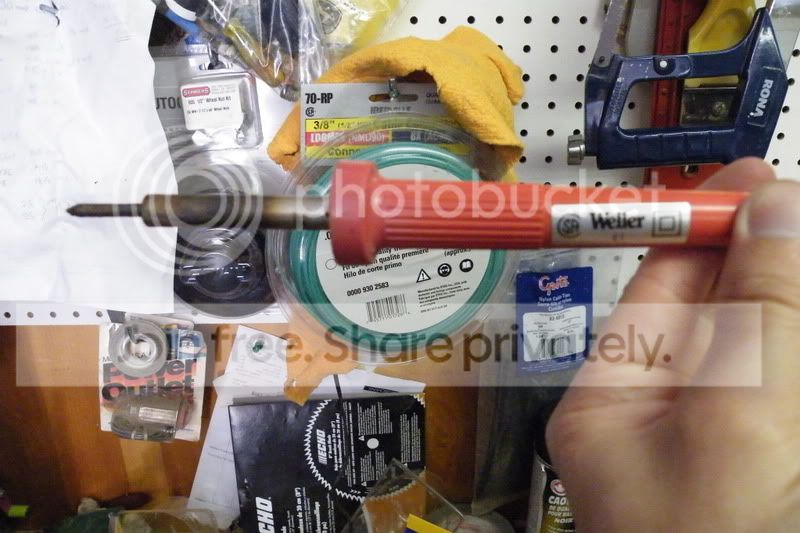
It looks like the light green one in the above pic /\ mine is red/orange Weller.
 
I'm not sure, but it says 60/40 RCW .062 diameter made by New York Solder.

It also says "Standard Easy Flow Wire Solder" .... hmmmmm.... :doah: :rotfl:

60/40 means 60% tin 40% lead. That solder does flow really well. You don't have enough heat.
 
What about flux, I spent my entire High School years working in a automotive Wire Harness shop tinning terminals. Those Weller 60W are perfect for even up to 10GA but you need flux, that rosin core stuff just doesnt cut imo. Flux cleans and helps to draw in the solder. My advise is let you iron heat up longer than you think it should take, use alot of flux, and heat the wire and keep the iron on the wire while you are applying the solder.
 
OK, dump the solder. 50/50 is plumbing solder. I hope its solid. If it has a flux core, and you have gotten some of the flux on the wire, cut that section off NOW.

Its acid core, and it will eat up the connection, and then slowly eat more of the wire under the insulation.

You say its a Weller pencil. Does it have the sleeve that unscrews down next to the handle and slides off the barrel?
If so, unscrew it, slide it off, pull the tip out, and see if it says 7 on the end.

If it does, then make sure its clean. Not shiny, just no crud on it, and put it back in.
DO NOT grind, file, or sand the tip of the tip.

Get some good 60/40 rosin core solder. Try Radio Shack. They will probably only have lead free, but it will work if its rosin core.

Wrap a small amount of the solder around the end of the tip, hold it over something wet, or that will not mind having hot solder dripped on it.
IOW, not the cat......

Plug in the iron, and wait for the smoke to clear.
Wipe where the solder melted off with a wet paper tower. Just a quick swipe.
It should be all shiny. If not, try melting some more solder on the dark spots to see if you can get the solder to stick to the end of the tip.

If you used the acid core with that tip, you really should replace it, but "wash" it a lot by melting a lot of solder on it and letting it drip off.
Then wipe it with the wet rag again.

When its nice and shiny, touch the solder to it to leave a very small blob.

Press that blob to the wire you are going to solder. Then briefly touch the solder to the point where the tip is touching the wire.

The wire must get hot enough to melt the solder its self, but by putting a tiny amount between it and the tip, you create a better heat transfer connection which lets the iron heat the wire up faster.

Then, when you touch the solder to the wire, it should melt. Watch it closely. If it just beads up, the wire has something on it that is preventing the solder to combine with it, or its not quite hot enough.
When its right, the solder will just soak into the wire and become part of it.


If you iron does not have the sleeve and the tip with the 7, but just has a thick wire looking thing that screws into the end of the element, unscrew it, clean the threads and tap any flakes out of the hole in the element.

If the end of the tip is crusty looking, take a file and sharpen it to a chisel point until you see clean copper.
Then screw it back in, wrap some solder around the copper part, and do like I said before.

Remember, if you have the tip that just sits in the end of the element, held in by the sleeve and a magnet, DO NOT file it. Its copper plated iron, and if you file off the copper, its a pain to make work again.
The screw in is solid copper and can be filed.

Hopefully you have the 7 one.
Here is why.
Most pencil irons take forever to heat up and cool down.
Not those Wellers.
With a regular iron, the heating element is sized so that when it gets up to about the operating temp, the heat output matches how fast the heat radiates away, so it holds at that temp.
But, that means that it heats up slowly.
The good Wellers have an oversize heating element that would burn up whatever you tried to solder.
But that tip has a special material on the end that goes into the element. It has a Curie temperature of the number stamped on the end times 100.
That 7 mean 700 degrees.

There is a magnet in the heating element hooked to a set of contacts. When you put the tip in, the magnet gets pulled to the end of it against a spring, and closes the contacts.
That turns on the element. Which heats up fast.

When the tip reaches 700 degrees, the material at the end becomes nonmagnetic, and the contacts open. When it cools down, it becomes magnetic again, and turns the element back on.

Thus, they use a big element that can crank out the heat, and heat up fast but its temp regulated.

They make different temp tips, but 700 is the most common, and works well.
But if yours has another number, like 6 or 8, its still the good one.
 
That was very helpful Fordum. Thank you. I'm now a soldering machine! I have completed one end of the harness and as soon as I get the truck back from the shop I can do the other end. Then I will hook up some relays and back to having power windows again!! :D :D :D
 
good job.. :waytogo:


90% of the soldering I end up doing these days ends up being radars up on sportfish towers...


tuna_tower.jpg


great, thanks, throw a ton of wind in the mix... :doah: :haha:
 
What about flux, I spent my entire High School years working in a automotive Wire Harness shop tinning terminals. Those Weller 60W are perfect for even up to 10GA but you need flux, that rosin core stuff just doesnt cut imo. Flux cleans and helps to draw in the solder. My advise is let you iron heat up longer than you think it should take, use alot of flux, and heat the wire and keep the iron on the wire while you are applying the solder.

Flux made a world of difference too

Here is the iron I have been using.. once it got good and hot things went much better:

DSCF5340.jpg
 
good job.. :waytogo:


90% of the soldering I end up doing these days ends up being radars up on sportfish towers...


tuna_tower.jpg


great, thanks, throw a ton of wind in the mix... :doah: :haha:

That would be fun! I bet you're a pro now with good gear to be able to tackle that job.

For a while there I was tempted to just use the torch and do it the same way as plumbing with copper... :doah: Would have heated up much faster! (And melted the wire..) I'm just glad I'm getting into the groove now :woot: after this is done I'll be much more confident in my wiring skills.
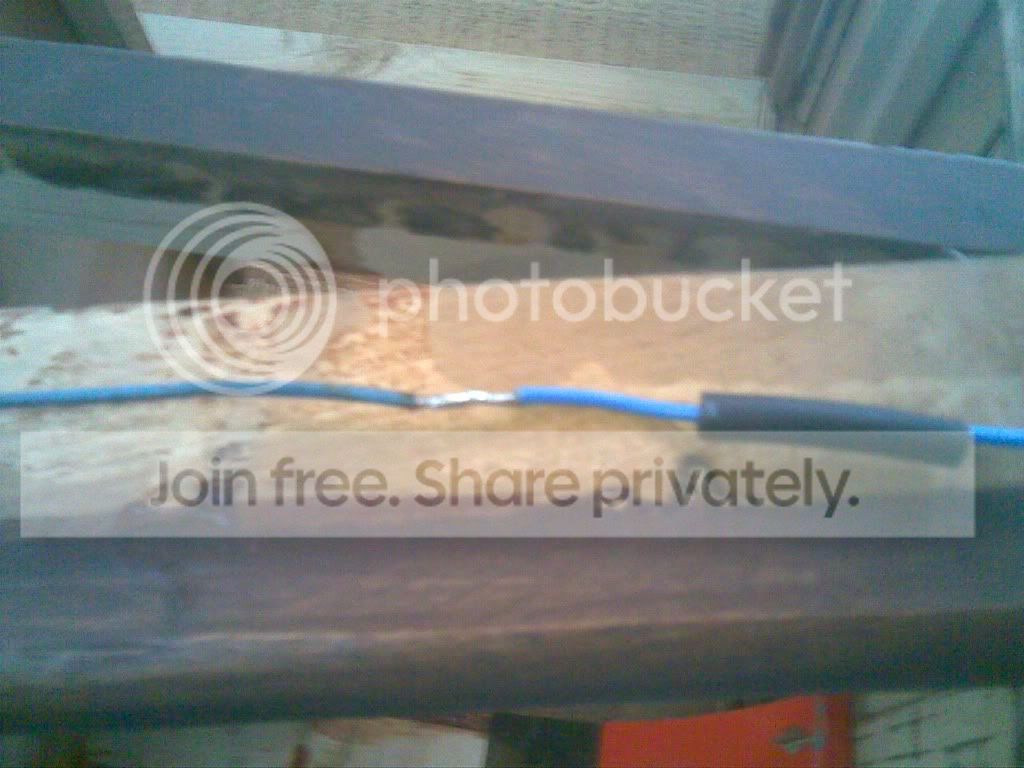
 
OK, that is the "cheap" Weller. Not temp regulated, so it will take a while to heat up. That rod tip should unscrew out of the bigger element.
It should also be solid copper, but they do change things around from time to time, so use a pocket knife or file to make a mark on it about half way down and see if its solid copper.
Most all the regulated tips are copper plated iron, and if you sand or grind them, you will wear off the copper, and ruin the tip. I want to be sure the one you have is solid copper before you grind or sand it.
But, it will help to unscrew it, clean the threads both in the element, and on the end of the tip.
The better contact, the faster it will heat up and the better it will solder.

If its copper, you can file the end down to clean metal and then re-tin it. The tip MUST be tinned before it will work.
After you have sanded or filed it down, put the resin core solder around the copper part and let it melt off as the tip heats up.
Plus, add some solder as soon as its hot enough to melt it. Gob it on just as it gets hot enough.
You will see the solder bond with the tip. Then, wipe it off with the wet cloth, and it should be nice and shiny silver.
Then, add a small amount of solder to it and start soldering.
The solder oxidizes as it stays on the tip and turns gray.
This oxide insulates the iron from the work, so every so often you have to put a little more solder on the tip and wipe it clean with the wet rag.

When I am through with the iron, I load up a little more solder on it and let it harden. This seals the tip from the air, and makes sure it is nice and tinned when I turn it back on.
I just wipe it and add a small amount when it gets hot again, and its ready to solder.

If you are using separate flux, be careful. Make sure it says its resin or made for electrical work.
They sell acid based solder for plumbing or sheet copper work, and it will screw up an electrical connection.
 
I was having the same issue with an old Weller soldering iron station so I went out and bought a new Hakko soldering iron station with variable adjustable temp and what a difference a new working soldering iron makes. :thumb:
 
Flux made a world of difference too

Here is the iron I have been using.. once it got good and hot things went much better:
The better you get at soldering the less flux you will need. Flux is bad its corrosive and you need alcohol to remove rosin core flux. When soldering wires its impossible to remove all the rosin flux because it wicks up under the jacket.

Take a wire apart that you soldered a couple years ago with rosin core flux. You would be surprised how far the corrosion travels up the wire. I prefer no-clean flux its less corrosive and easier to clean up. But it is also harder to use. Practice with rosin and when you start to understand what you are doing switch to a less corrosive flux.
 
It also helps to keep the iron or gun tip clean--get it warm and wipe it with a cloth and then melt a little solder on it to keep it tined , when it starts to look cruddy do it again.
I have also found that putting a blob of solder on the tip will help it to conduct the heat to what ever your soldering.Remember if the finished joint isn't shinny you may have a cold joint---heat it up again------------------Bill
 
Remember if the finished joint isn't shinny you may have a cold joint---heat it up again

Unfortunately, that is not as true as it used to be. If you are running 60/40, then it needs to be shiny when you are through, but if you are using a high silver content, or one of the newer nonlead solders, it may never get shiny.

I've got a roll of 2% silver 60/40, (actually, I think it is 62/36/2) that I use when soldering silver plated contacts, and for slightly stronger and more conductive joints, and it makes some of the worse looking joints you ever saw.....
 

Latest Posts

Top Bottom