CK5
Register an account today to become a member! Once signed in, you'll be able to participate on this site by adding your own topics and posts, as well as connect with other members.
2013.01.27 - UPDATE! - NOTHING HEROIC TO SEE HERE, FOLKS....

A few of us have been discussing that when it comes to garage days, there are really two types of progress... "Necessary Evil" days, and "Hero Days". Some days you just kill it and make some kind of huge step forward, other days you just slog through the more mundane tasks that need doing to move you forward. Both are important in their own way, but it can be hard to get psyched-up for a necessary evil day.

Today was a necessary evil day, with maybe a whiff of hero at the very end... :D

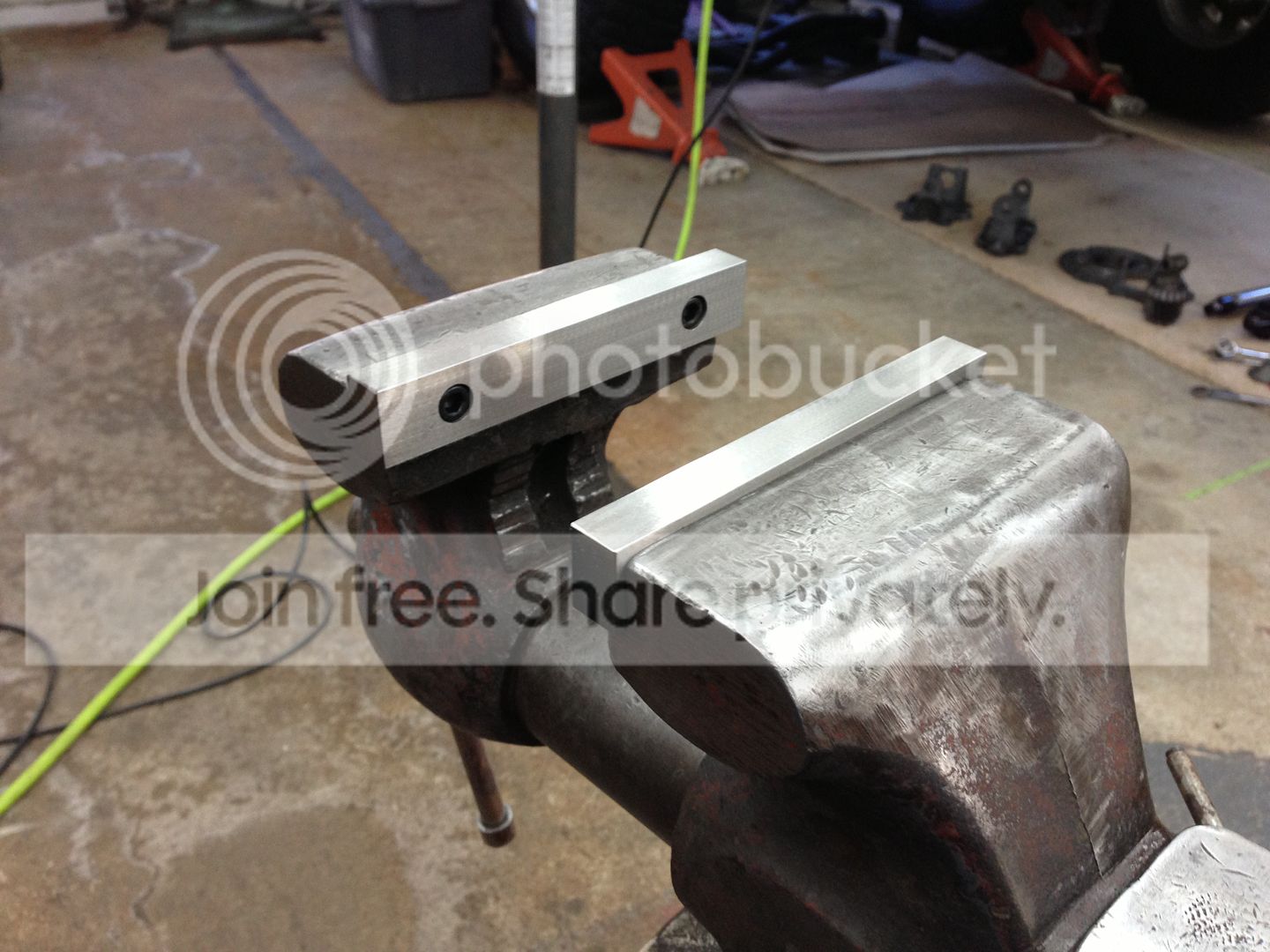
Started off by drilling and tapping a new set of 4" spaced holes (Wilton standard) to install a new set of replacement jaws. The end result was worth the effort.... I've been fumbling around with a set of ill-fitting, loose jaws for years.

null-74.jpg


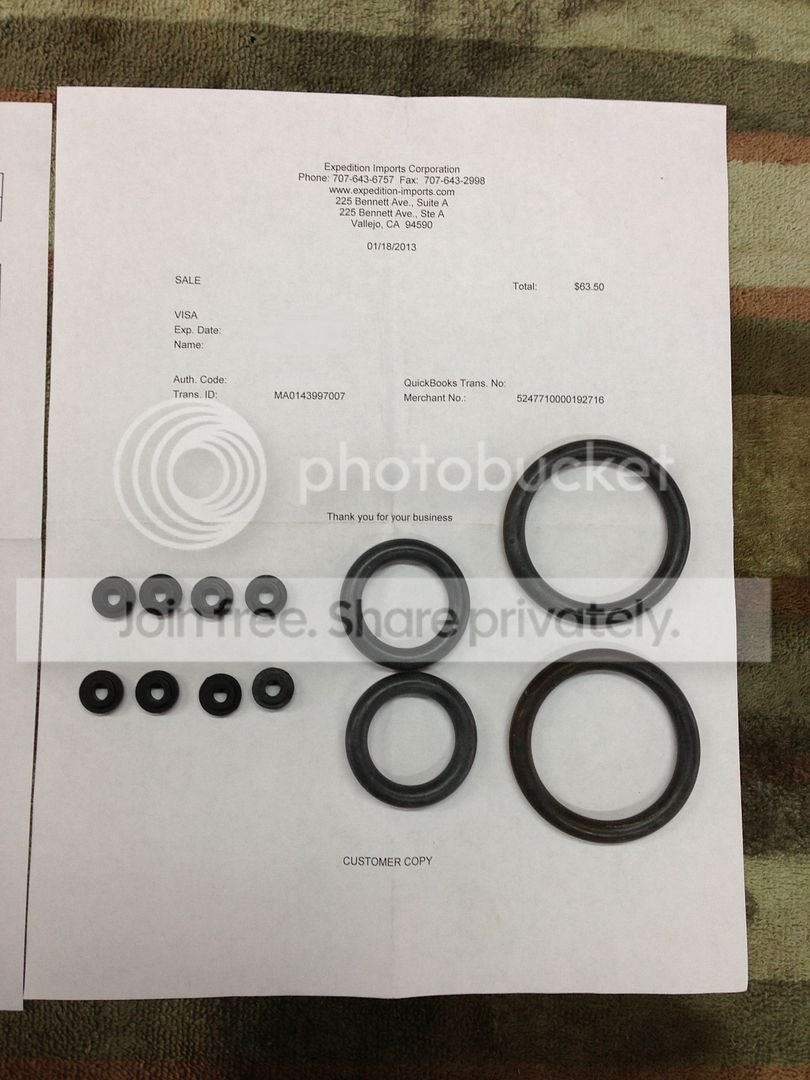
I was waiting on some replacement Unimog parts before I could reassemble the drivers side knuckle. Another $64 worth of German NOS rubber....

EISeals.jpg


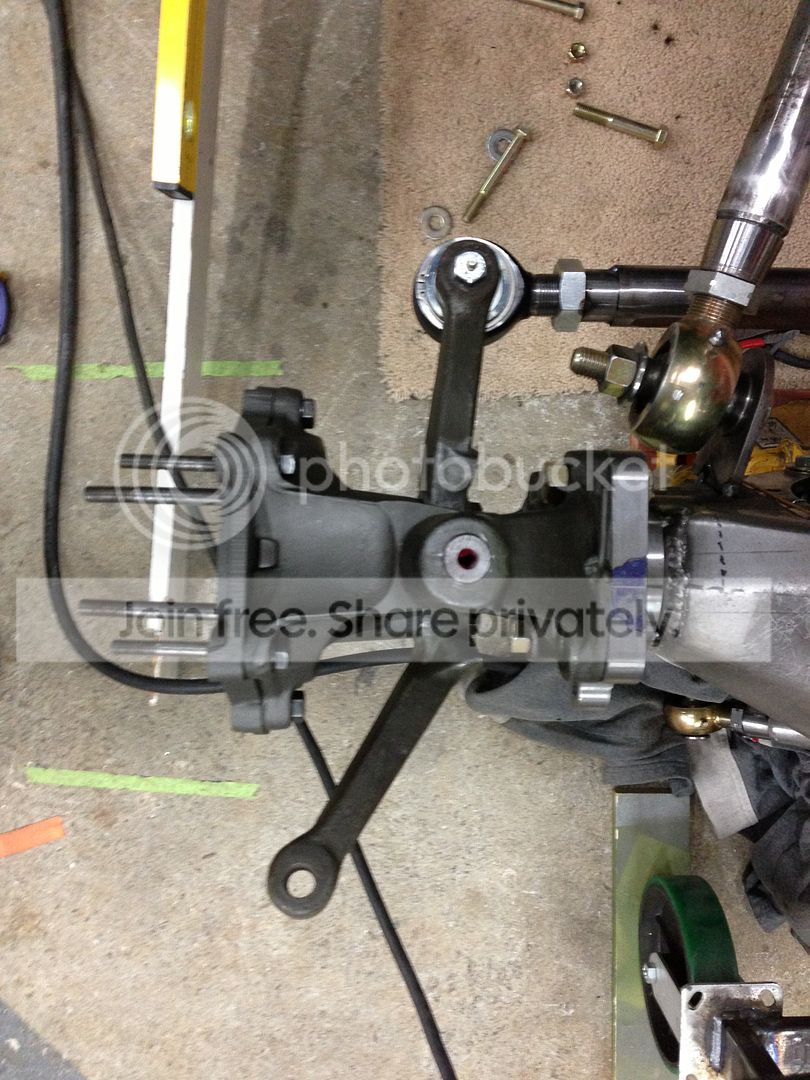
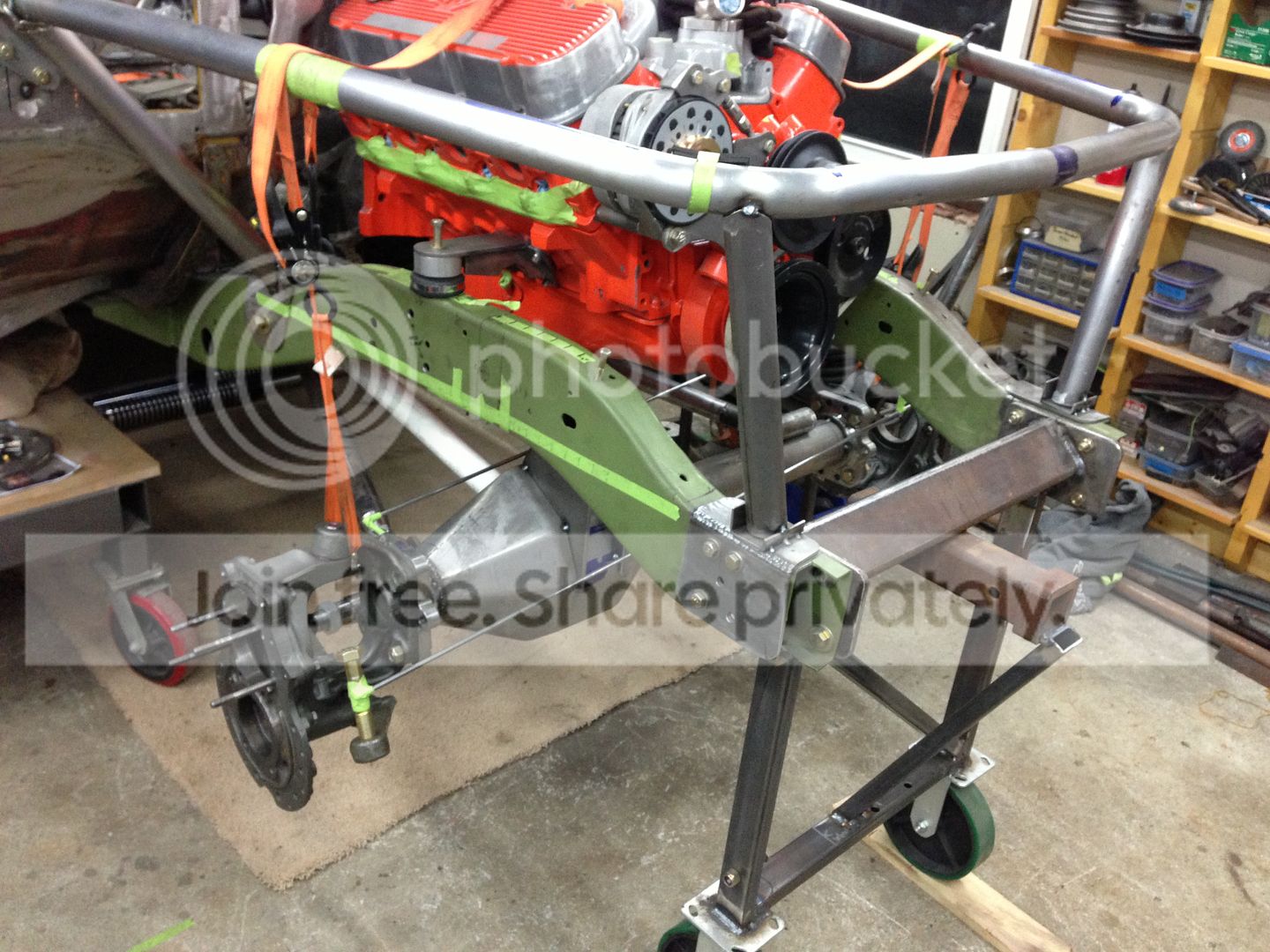
Once the knuckle was bolted back up, I decided to also mount the portal backing plates, and the original Unimog steering arms. The Unimog 404 had a wheelbase of 114" so I'm tempted to say "good enough" and use them as-is instead of building a set from scratch.

null-73.jpg


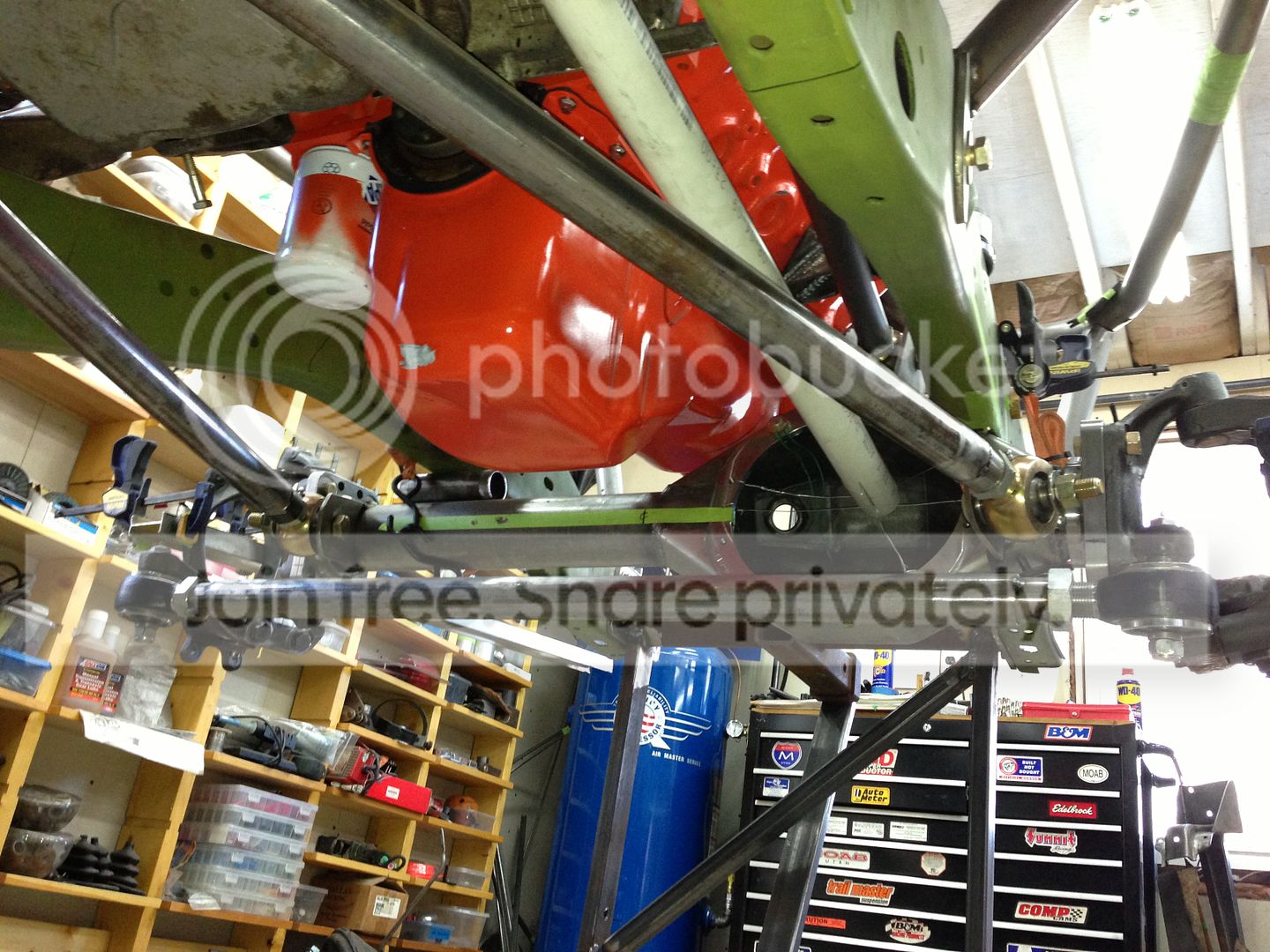
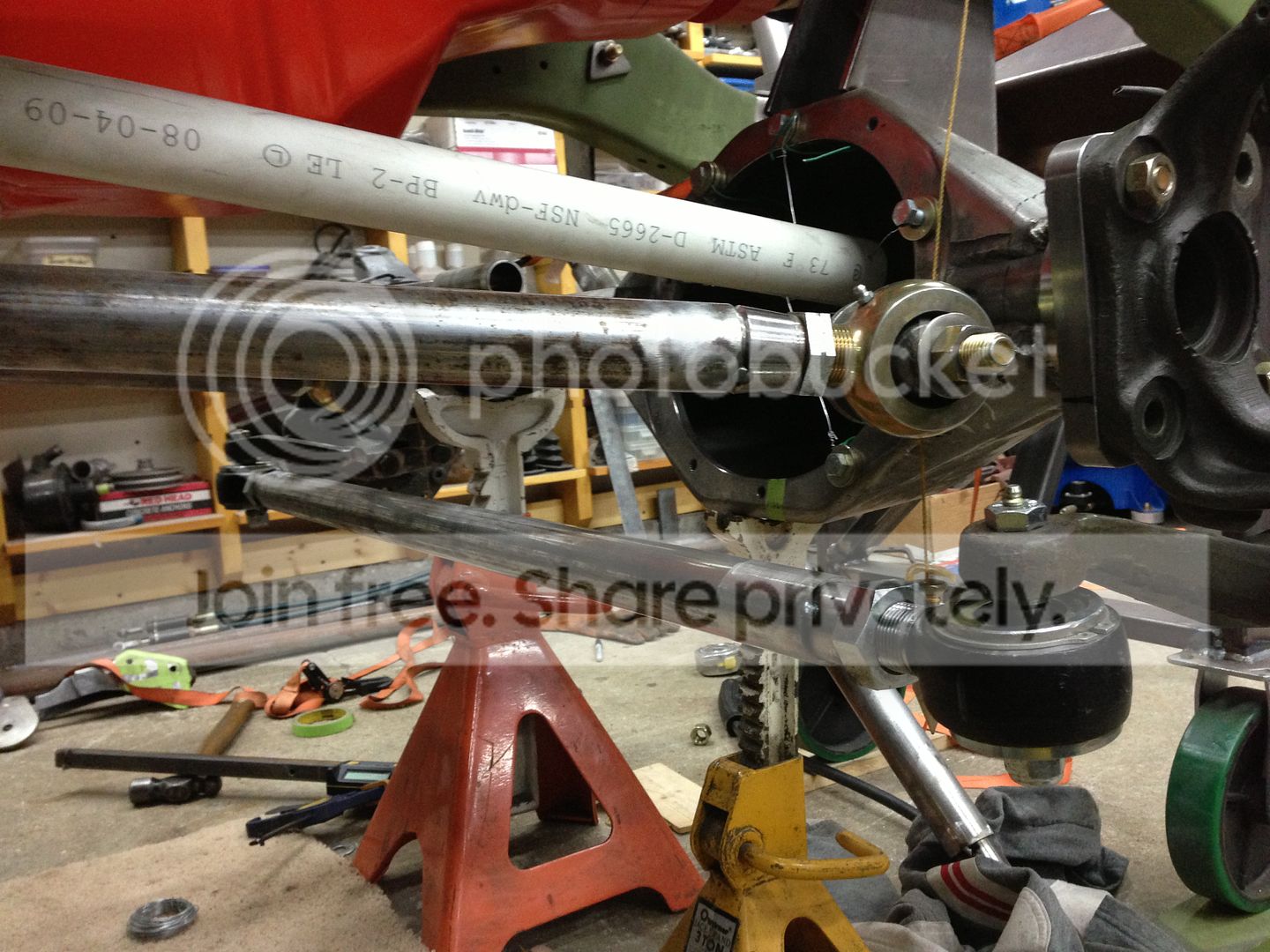
I didn't have any real TREs, so I used some heims that I had laying around... I have a feeling that I could get the tierod up and over the steering arms (for better clearance) with the correct TREs. It should still fit just under the lower links.

null-79.jpg


Another angle.... You can really see how getting the tie rod above the steering arms would be ideal if i can get it to fit there.

null-76.jpg


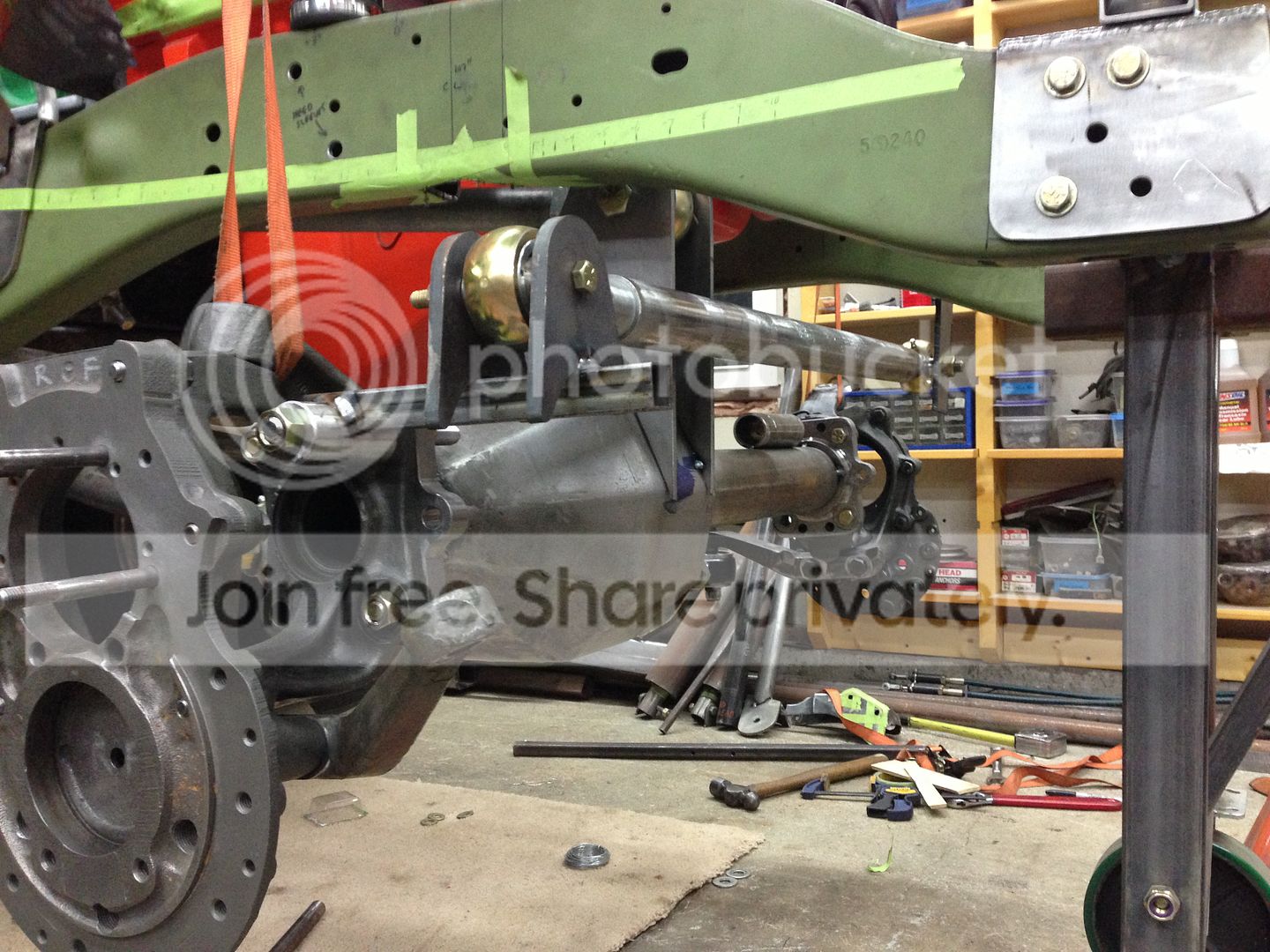
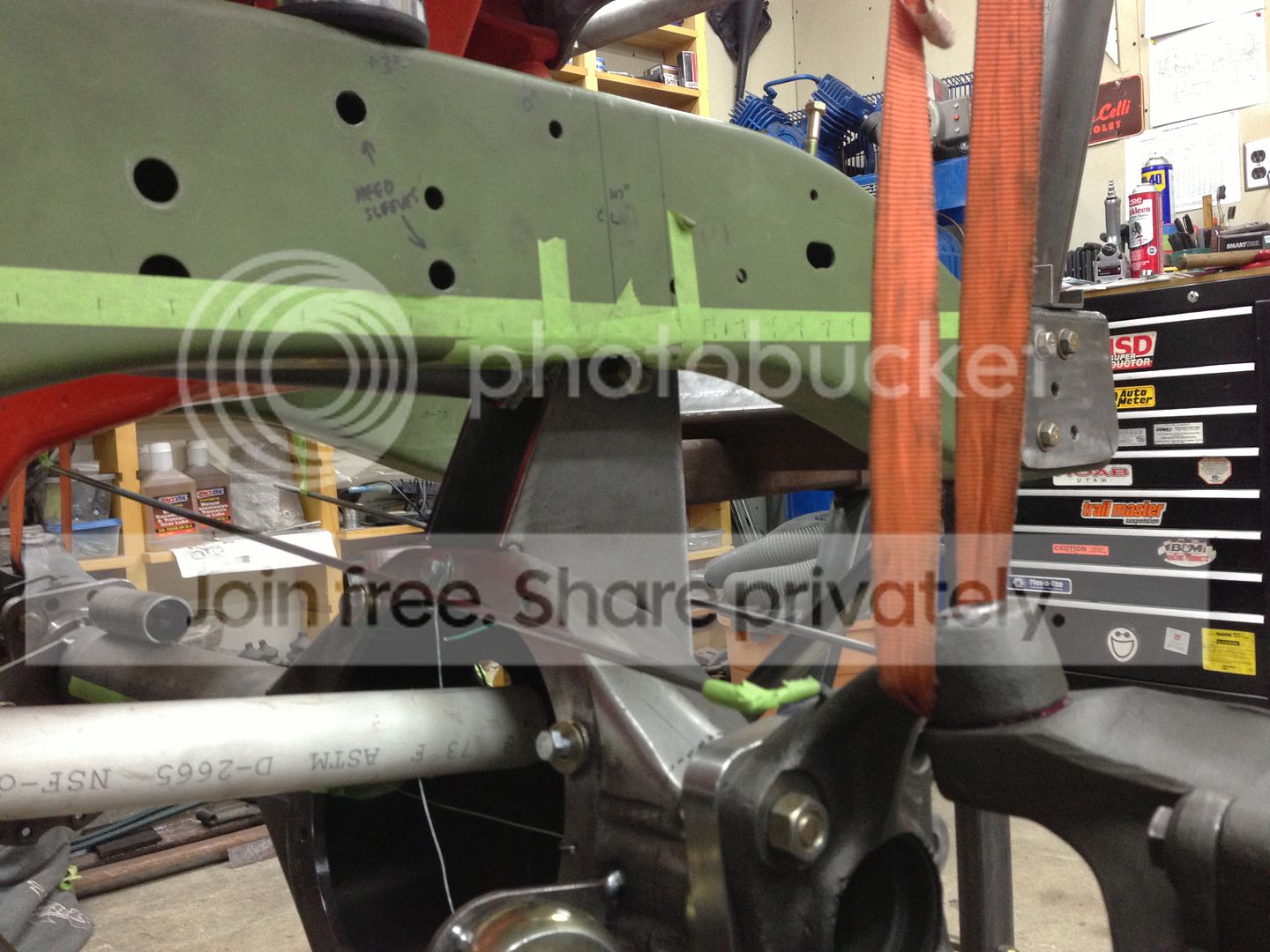
The panhard bar was next. I moved the axle down to ride height and measured 8-1/4" from the top of the axletube to the underside of the framerail. Splitting the height between the two puts the panhard at 4-1/8". Hoping that's the right two dimensions to use? (or was it axle centerline?) :dunno:

null-77.jpg


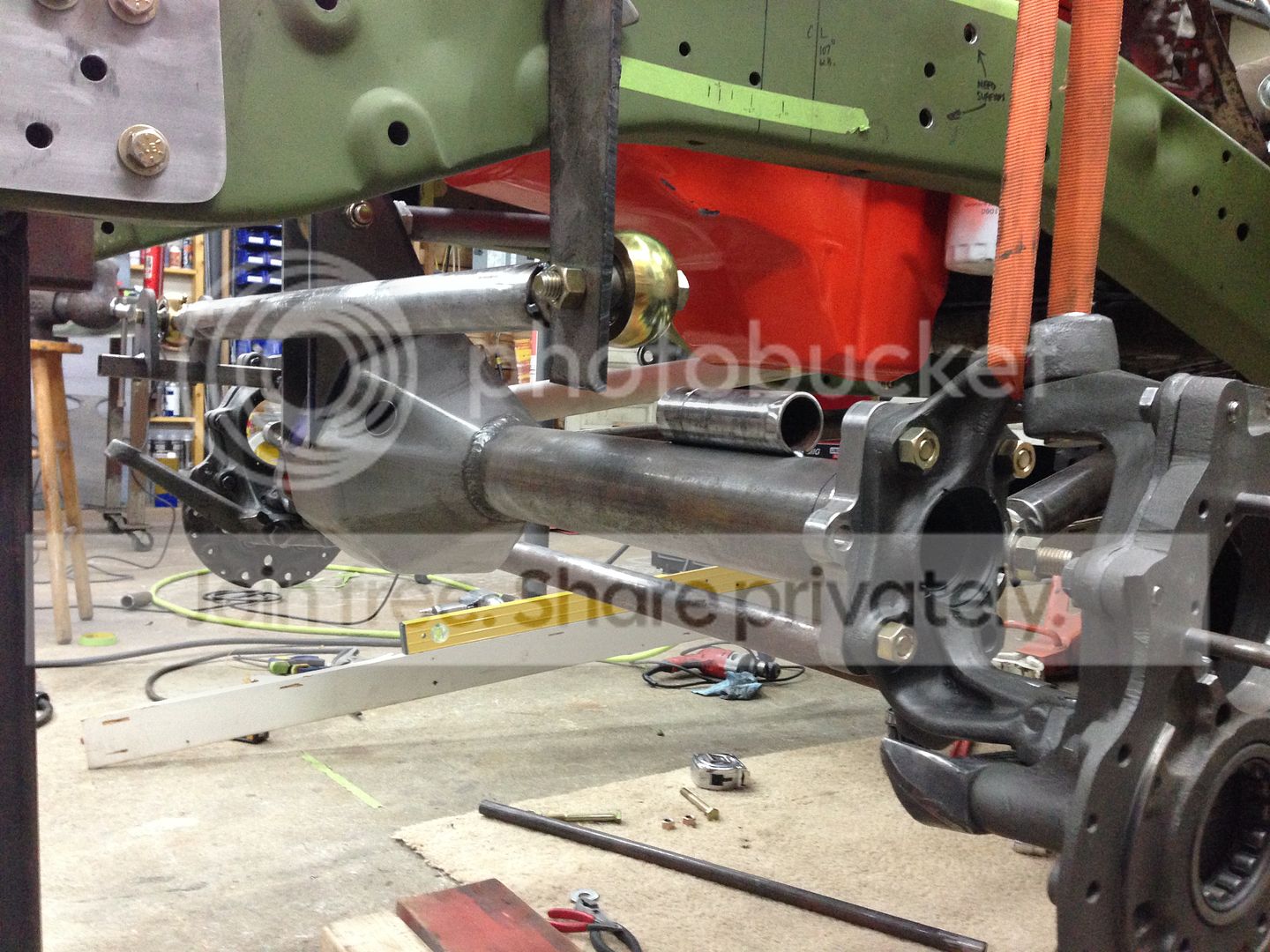
The issue I'm having now is that the bracketry for the upper link pushes the panhard about 8" ahead of the axle.... As you can see from this "cluster bracket" the axleside heim is hanging WAY off the knuckle. It's going to be a challenge to make this strong enough to actually work.

null-78.jpg


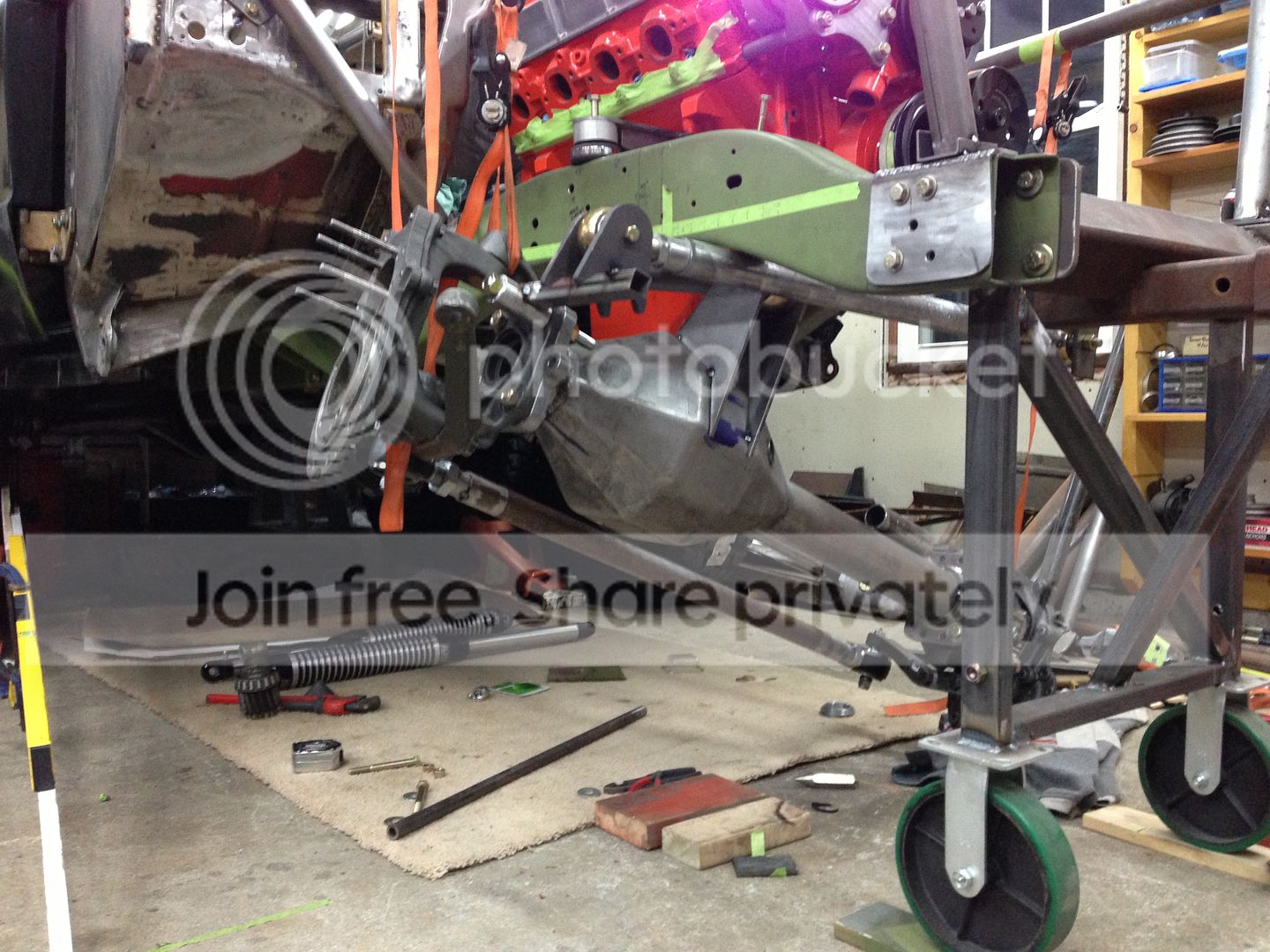
.....and just for fun, I cycled the suspension as much as I could until the panhard hit the frame.

null-72.jpg


....like I said, mostly boring stuff with just a touch of "hero" at the very end. :waytogo:


-G
 
Last edited:
So not to put more on your plate. However why keep the factory frame, seems like if you built something from the motor mounts forward you could get yourself a whole bunch more room.
 
The panhard bar was next. I moved the axle down to ride height and measured 8-1/4" from the top of the axletube to the underside of the framerail. Splitting the height between the two puts the panhard at 4-1/8". Hoping that's the right two dimensions to use? (or was it axle centerline?) :dunno:

-G

Splitting the dimension is a good guess, but you really need to get your draglink installed before you can know what angle your panhard bar needs to be. But this looks good and is showing you your contact points and limitations. I'm glad you dropped it back to ride height to set the panhard angle.

Also, is it just me, or is tha axle end of the panhard further forward than the frame end? If possible you need the panhard to be parrallel in both planes. In other words, if the draglink is an axis, make 2 planes that intersect that axis, one vertical, and one horizontal, then try and make the panhard parallel in both of those planes.

Nice work as always.
 
This almost sounds sacrilegious coming from you.

AJ, LOL.... it felt weird at the time when I was saying it too! :haha: I was feeling a bit of "CDO anxiety" (That's OCD with the letters in alphabetical order....as it really should be) with the thought of not doing perfect Ackerman steering arms.


Splitting the dimension is a good guess, but you really need to get your draglink installed before you can know what angle your panhard bar needs to be. But this looks good and is showing you your contact points and limitations. I'm glad you dropped it back to ride height to set the panhard angle.

Also, is it just me, or is tha axle end of the panhard further forward than the frame end? If possible you need the panhard to be parrallel in both planes. In other words, if the draglink is an axis, make 2 planes that intersect that axis, one vertical, and one horizontal, then try and make the panhard parallel in both of those planes.

Nice work as always.


Heath,

Thanks for checking in. I kind of figured that most of the suspension "dudes" would all be heading to KOH, and I wouldn't be getting any more advice until the middle of February! :D

The panhard setup was a really "quick and dirty" setup just to let me cycle the suspension before the end of the day. I boogered-together some scrap metal on each end just to hang the bar so it may not be 100% parallel to the axletube.

Looking at some photos online, it seems that guys seem to try really hard to get the panhard as long as possible. Often times the brackets on the frame side sweep outward of the framerails considerably.... probably to the maximum they can get before the inside of the tire would hit it when the tires are turned hard-right. On the passenger side, it seems like they try to line up the heim with the knuckle pivot.

I'm concerned about how far out-in-front the panhard is now (roughly 8" from the axle centerline, maybe more). Building a beefy axle-side bracket is really going to be a challenge.

So far I'm coming up empty on an old Scout-II steering box. I really dont want to spend a fortune buying a new one until I know for sure it is going to work right. Because of it's tall design, I should be able to stand it completely vertical so that the steering arm sweep is 100% level with the ground. My understanding is that the pitman arm is a side-to-side type motion (not a push-pull front to back like the stock Saginaw box). Hopefully that will make it a bit easier. :thinking: For now, I suppose I could just install a vertical piece of tubing that represents the steering box and build a fake pitman arm, so that I can get a draglink across to that PS Unimog steering arm.
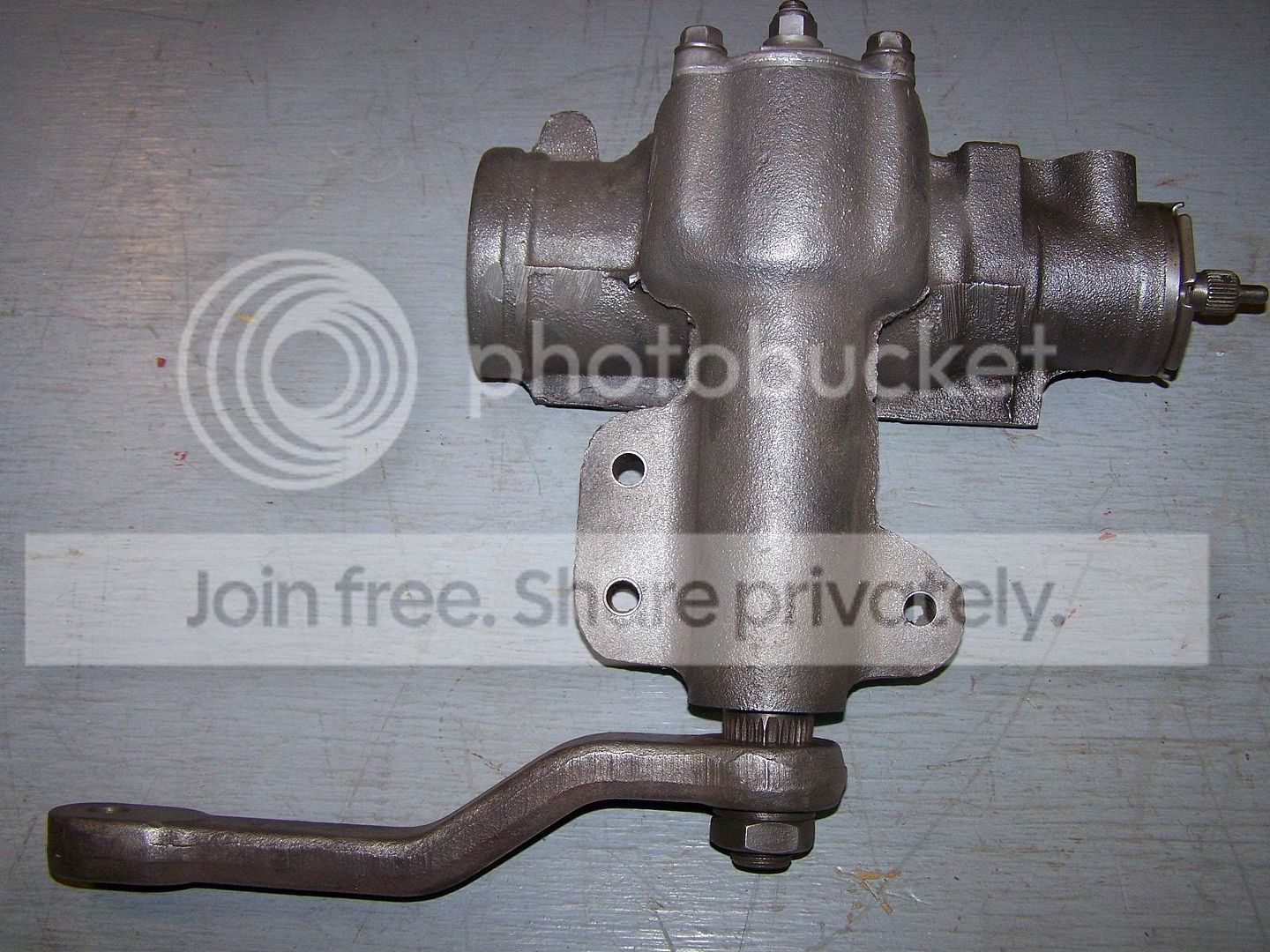
Reference photo of a Scout-II box.

ScoutIIbox.jpg


Obviously, the draglink already hits the underside of the frame so there will be some "customization" of the frame on the passenger side. I doubt it will be severe enough to justify chopping off the entire front end and tubing this thing out..... that's not exactly "effortless" either.

I'll try to find some more good "source photos" for the panhard / draglink and keep studying. In a way it's good that I get a few days off between shop days, it gives my brain time to process any setbacks and think of creative ways to tackle problems.


-G
 
Last edited:
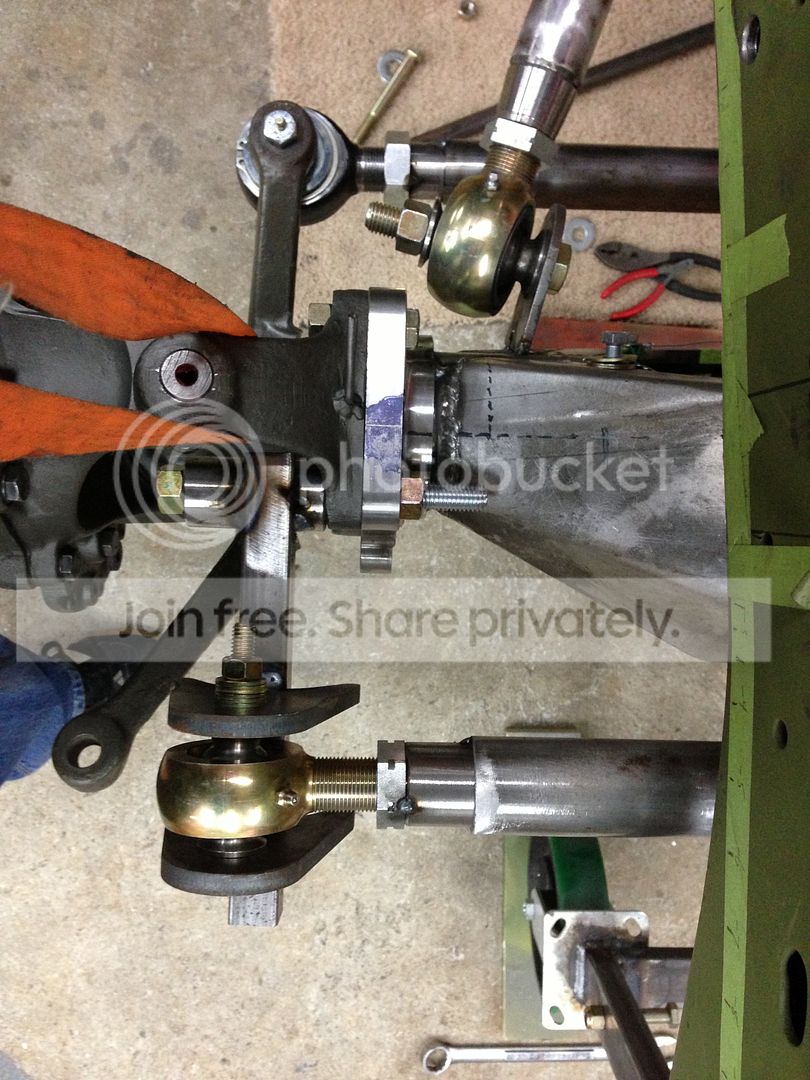
One more image....

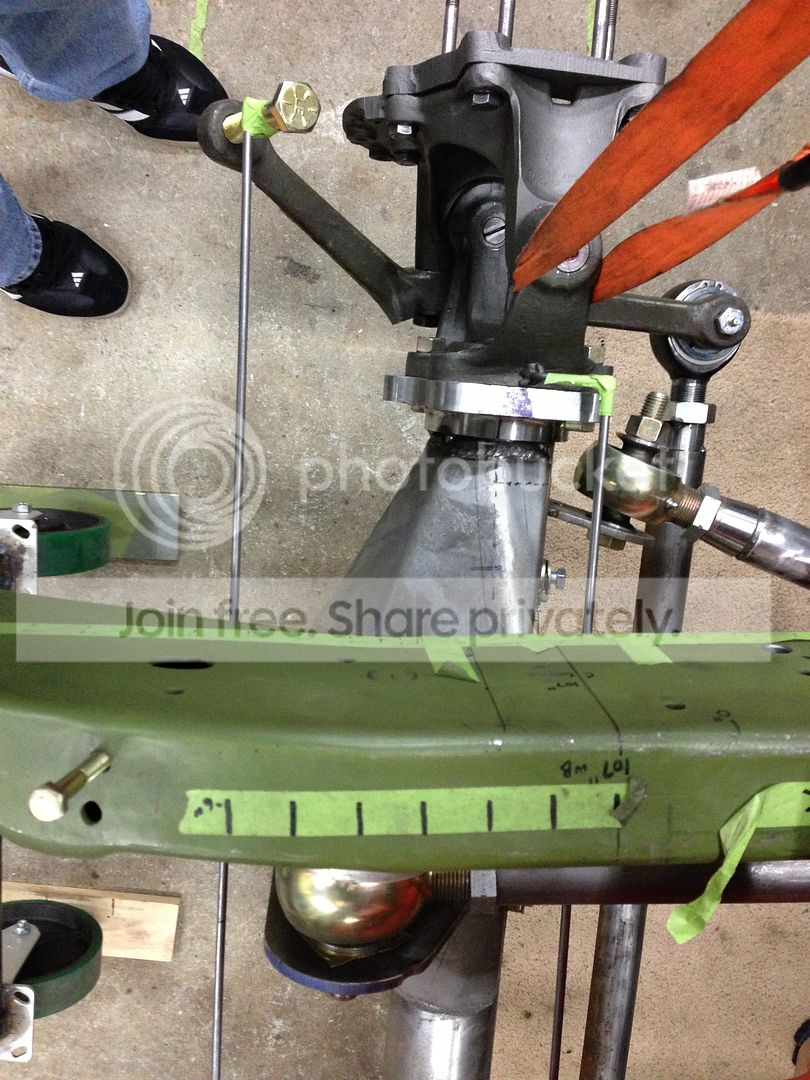
Here's a top-down view of the passenger side knuckle, draglink and panhard to show the overall layout.

IMG_4123.jpg


-G
 
Once you get the panhard and draglink in there you will really start to see where everything gets in the way, and then you add shocks and bumpstops.

I see why you are concerned how far foward the panhard is. That may be a significant problem because usually the draglink is behind that since the pitman arm swings from the front. If you could possibly mount your steering box so the pitman arm swings from the rear, that may help, but it may create other clearance issues with shocks and bumps, etc, since your box would then my much further back. Everything is a compromise. Remember the angle of the panhard is more important than the length when it comes to handling. Mine is several inches shorter than my draglink, and it still works very well.

I think you may have to redesign your upper link bracket unfortunately, but you'll see more once you get teh steering box in there so you can get your draglink in. That will be the basis for your panhard.

Also, you front/back vs side/side comment on the steering box. You are probably aware of this, but you do know if you get a 2WD steering box (or just the shaft), then you can put a pitman arm on it to rotate it 90 degrees and put it wherever you want it. You may have to take a file and cut some more grooves if there are any double teeth on your particular pitman arm.
 
Wow that tie rod hangs much lower than the axle tube, hopefully you don't drag or pay it on a rock or something. :doah:
 
Yeah I know.... I keep looking at that now.

There's no way to fit a behind-the-axle high steer in there without all sorts of driveshaft/link interference issues. So the only other option is to go highsteer up front, and see what the Ackerman looks like.... I have a feeling it might work OK, the portals move the tires pretty far outboard, so even though the distance between steering arms would need to be wider than the kingpin width (for correct Ackerman) there is probably going to be room in front to accomplish that.

Of course, that means a "clean sheet" design for the steering arms.... so much for saving myself a little bit of work, eh? :rolleyes:


-G
 
Greg,

I'm just wondering why you wouldn't put the upper link on the opposite side of the axle? It seems like there is a lot of other things happening on the passenger's side there, but you are "pretty" free and clear on the driver's side, (except for exhaust of course).

Is it a geometry issue? Something that I might have missed?

My thinking there is that if you may have to re-work the upper link bracket anyways, why not "mirror" it to the other side & push it back a bit so that it lines up more over the centerline of the axle tube. That give you more clearance for the drag link & the panhard.

Just curious,

Buddy
 
Only two things I can think of immediately.....

1. Height of Link mount from axletube becomes ENORMOUS when it's not being built off the pumpkin. The link loads are huge on that single upper link, and could easily tear right off the axletube without a LOT of extra structure to hold it.

2. Gas Pedal - With the necessary floor clearances for the upper link mount there's going to be a huge tunnel (front to back) blocking access to the gas pedal. I guess I could swap the pedals (gas on left, brake on right) to accomodate that? :D


In all seriousness, with the exception of the driveshaft (which doesn't appear to be an issue yet) it doesn't seem like I'd gain much.... I would have to move my PS pump and probably oil filter for a link on the DS side now that I think about it.

It will all fit in there somehow... I just haven't spent enough time struggling with it to "deserve" a design epiphany yet.


-G
 
that cycled suspension pic...I'm sure if Eric has looked at it, he's wiping the drool off his keyboard right now..:D

thats badass Greg.

A few thoughts:

The tierod down low, as you said would be so much better off if it was high steer, IMO moving it in front of the axle would be a better choice (can you swap the portals, side for side?) for it (barring any major equipment moves to make that happen) and what do you have planned for a skid for that pretty orange oil pan, and how is the mounting for that going to play into all this suspension planning.
 
Thanks Zim,

The steering arms just bolt to the knuckles, so theoretically I could swap sides if I wanted.

However, the more I mull this over the less likely it is that I will be able to use them after all. The length of the steering arm needs to match the pitman arm length (IIRC) and they are pretty long...probably TOO long to give me good leverage against the tires.

Definitely need skid plates... Later though. :D


-G
 
If possible you need the panhard to be parrallel in both planes. In other words, if the draglink is an axis, make 2 planes that intersect that axis, one vertical, and one horizontal, then try and make the panhard parallel in both of those planes.


I think I'm finally getting it.... :woot:

If I'm understanding your comment, there are two "views" where parallelism is important (draglink vs panhard bar)

#1- Top View: As viewed from directly above, the panhard bar and draglink should be parallel to each other (and presumably parallel to the axletube as well)

#2 - Front View: the view from directly in front of the truck should have the two bars (panhard and draglink) parallel to each other....

  • This can be hard to see in photos because they may be at the same z-height and angle, so only the bar in the foreground will be visible.
  • It may also not be true that these bars are parallel to the ground. They may slope downward from the steering box (frame side) to the knuckle side (axle mount point)


There is a natural tendency for the draglink to slope downwards from the steering box towards the PS steering arm (traditional crossover steering setup)... So instead of fighting to make the draglink parallel to the ground, all I really need to do is make the panhard bar follow the same downward slope? :dunno: :thinking:

I really hope this is correct. My mind is getting fried trying to reconcile all of these angles and dimensions. :eek1:

-G
 
I think I'm finally getting it.... :woot:

If I'm understanding your comment, there are two "views" where parallelism is important (draglink vs panhard bar)

#1- Top View: As viewed from directly above, the panhard bar and draglink should be parallel to each other (and presumably parallel to the axletube as well)

#2 - Front View: the view from directly in front of the truck should have the two bars (panhard and draglink) parallel to each other....

  • This can be hard to see in photos because they may be at the same z-height and angle, so only the bar in the foreground will be visible.
  • It may also not be true that these bars are parallel to the ground. They may slope downward from the steering box (frame side) to the knuckle side (axle mount point)

There is a natural tendency for the draglink to slope downwards from the steering box towards the PS steering arm (traditional crossover steering setup)... So instead of fighting to make the draglink parallel to the ground, all I really need to do is make the panhard bar follow the same downward slope? :dunno: :thinking:

I really hope this is correct. My mind is getting fried trying to reconcile all of these angles and dimensions. :eek1:

-G

You got it Greg.
 
Cool...

So how about something like this:

null-80.jpg


I moved the panhard behind the pumpkin, and let it angle down at around 7.5* toward the PS knuckle. The draglink ended up in front of the pumpkin but stayed parallel to the panhard both from the top view, as well as the front view (also slopes at around 7.5*)

null-82.jpg


Top view:

null-81.jpg


I'm not 100% sure the rear panhard will work without a bend in it, but structurally it seems MUCH easier to build. The draglink will require a custom set of steering arms, but I will also incorporate the tie rod in front of the axle (and as high as possible) to improve the clearance over that rear tierod setup in the last set of photos.


:thinking:


-G
 
LOL!

Well.... I suppose if I had a crystal ball 5 years ago and could have anticipated every setback and detail in advance, I would have given it some thought.

Realistically, a stock UniMog 404 would still not offer the kind of suspension travel we're talking about here.... it would have 7.56 gears and would require me to use 20" wheels to clear the massive drum brakes. It would have the fragile mechanical lockers and no CTIS either. It also uses torsion tubes as part of the suspension... I'm not sure how I'd have made those work. :thinking:

....I think when you enumerate all of the things that would still need attention, its clear that dropping a K5 body onto a UniMog chassis (and then swapping out the entire drivetrain) wouldn't really get me all the way there either...

Projects like this are great to watch from a distance. Once you see all the struggles and effort and the ideas that end up going nowhere (typical R&D type stuff that happens) you realize that the learning process is what burns up all the hours..... for sure, if I ever decided to build ANOTHER truck like this my process would be insanely fast compared to what is happening here. I'd know immediately how to cut up the body, how to prepare the frame for the suspension mods, and I wouldn't even bother buying complete 404 axles next time. I'd just buy the pieces I really need, since probably 90% ends up in the scrap heap anyway... :D

...and that's to say nothing of my own "personal development" during this process as well. Keep in mind, I'm no Steve Strope (PureVision Design) or Troy Trepanier (Rad Rides by Troy) with gobs of fabricating and car building experience to fall back on. This truck is my FIRST real automotive build, so every little thing that I need to know I'm learning as I go. It can be frustrating at times because I'm sure there are a million "little tricks" out there that could save me time, but my skill set is limited to what I figure out on my own, or stumble across on a message forum somewhere.


-G
my 69 camaro is still in the same shop I started my business out of 9 years ago. My building is 3 blocks from his. I remember driving past and seeing the cars out side of there every day, man that guy can build. keep up the good work on the K5
 
I think I'm finally getting it.... :woot:

If I'm understanding your comment, there are two "views" where parallelism is important (draglink vs panhard bar)

#1- Top View: As viewed from directly above, the panhard bar and draglink should be parallel to each other (and presumably parallel to the axletube as well)

#2 - Front View: the view from directly in front of the truck should have the two bars (panhard and draglink) parallel to each other....

  • This can be hard to see in photos because they may be at the same z-height and angle, so only the bar in the foreground will be visible.
  • It may also not be true that these bars are parallel to the ground. They may slope downward from the steering box (frame side) to the knuckle side (axle mount point)
There is a natural tendency for the draglink to slope downwards from the steering box towards the PS steering arm (traditional crossover steering setup)... So instead of fighting to make the draglink parallel to the ground, all I really need to do is make the panhard bar follow the same downward slope? :dunno: :thinking:

I really hope this is correct. My mind is getting fried trying to reconcile all of these angles and dimensions. :eek1:

-G

Yep, you got it, parallel to the ground only effects axle lateral motion at that ride height, but parallel to each other reduces bump steer, which is the most important. Also, parallel to the axle tube is not as important as parallel to each other. Although your draglink will most likely set both your angles and then you make the panhard match.

Cool...

So how about something like this:


I moved the panhard behind the pumpkin, and let it angle down at around 7.5* toward the PS knuckle. The draglink ended up in front of the pumpkin but stayed parallel to the panhard both from the top view, as well as the front view (also slopes at around 7.5*)

Top view:

I'm not 100% sure the rear panhard will work without a bend in it, but structurally it seems MUCH easier to build. The draglink will require a custom set of steering arms, but I will also incorporate the tie rod in front of the axle (and as high as possible) to improve the clearance over that rear tierod setup in the last set of photos.


:thinking:


-G

That could work, it will most likely require a bend or three in the panhard, but it could work well if it clears everything. Make sure you leave room for shock mounts and bump stops. I wouldn't finish weld everything until you get those in place as well.
 
Thanks!

The panhard constraint is going to be the high-pinion area on the front axle. It seems like it will clear at ride-height, but under compression it probably won't. I was thinking about a fabricated panhard bar with the necessary cutouts to clear everything.... maybe the frame-side mount could be more of a bushing-type mount (to prevent the PHB from rotating and flopping around too much). I'd still want a rigid material for it so that it wouldn't deform under load and give me "squishy" steering. I figure the axle end could be a standard heim, since there is probably more angularity at that end as the axle cycles.

Overall, I can probably reduce the angle down a bit more from the 7.5* that I measured during my quick mock-ups last night. A slightly lower frame-side mount for the PHB would take care of that.... and since I can mount the steering box pretty much wherever I want, I can either mount the entire thing a bit lower also, or just find a pitman arm with a little bit of drop built-in.

It's becoming obvious to me that I really don't want to increase the height of the axleside PHB mount any more than absolutely necessary.... all that does is create an interference point with the underside of the PS framerail, and potentially the oilpan.

I've read that the height of the PHB also affects roll center height, so higher is better. It seems that with the portal axles my mounting point is already quite good compared to a traditional axle, so I'm not sure how hard I should be fighting now to move it higher than it is in those latest mock-ups? .... :thinking: :dunno:


-G
 

Latest Posts

Top Bottom