CK5
Register an account today to become a member! Once signed in, you'll be able to participate on this site by adding your own topics and posts, as well as connect with other members.
Almost lost it at the comment about throwing away 95% of the original K5!

Having owned one, I do think that first gens are made of compressed rust, and they revert back to their natural state over time.

Keep cutting Greg!

Got to 97% rust-free tonight with plenty of new photos to share in the AM. :waytogo:


-G
 
NOW AT 97% RUST-FREE!!!!


Last night I exorcised another 2% of ferrous oxide from the project. :D

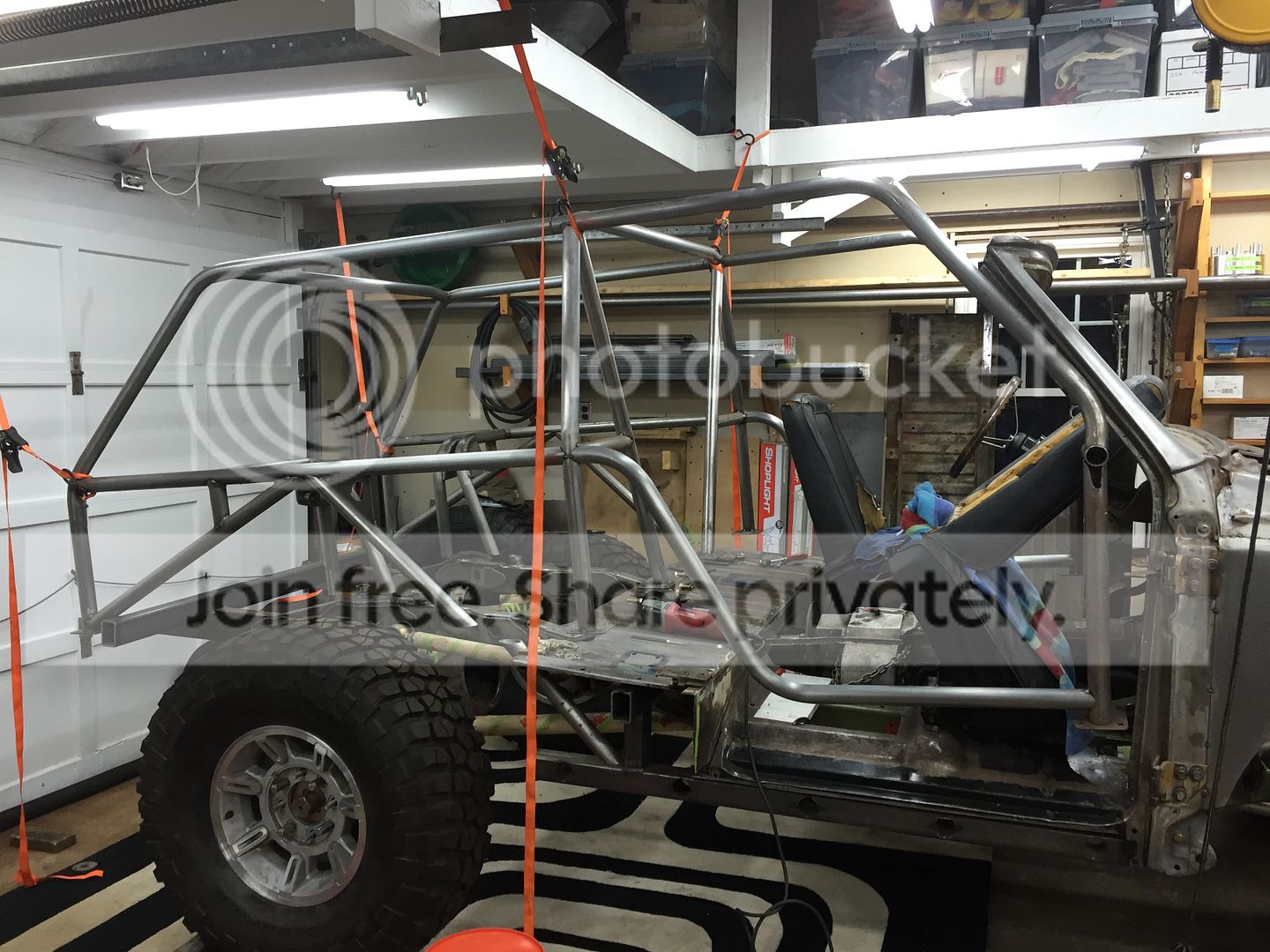
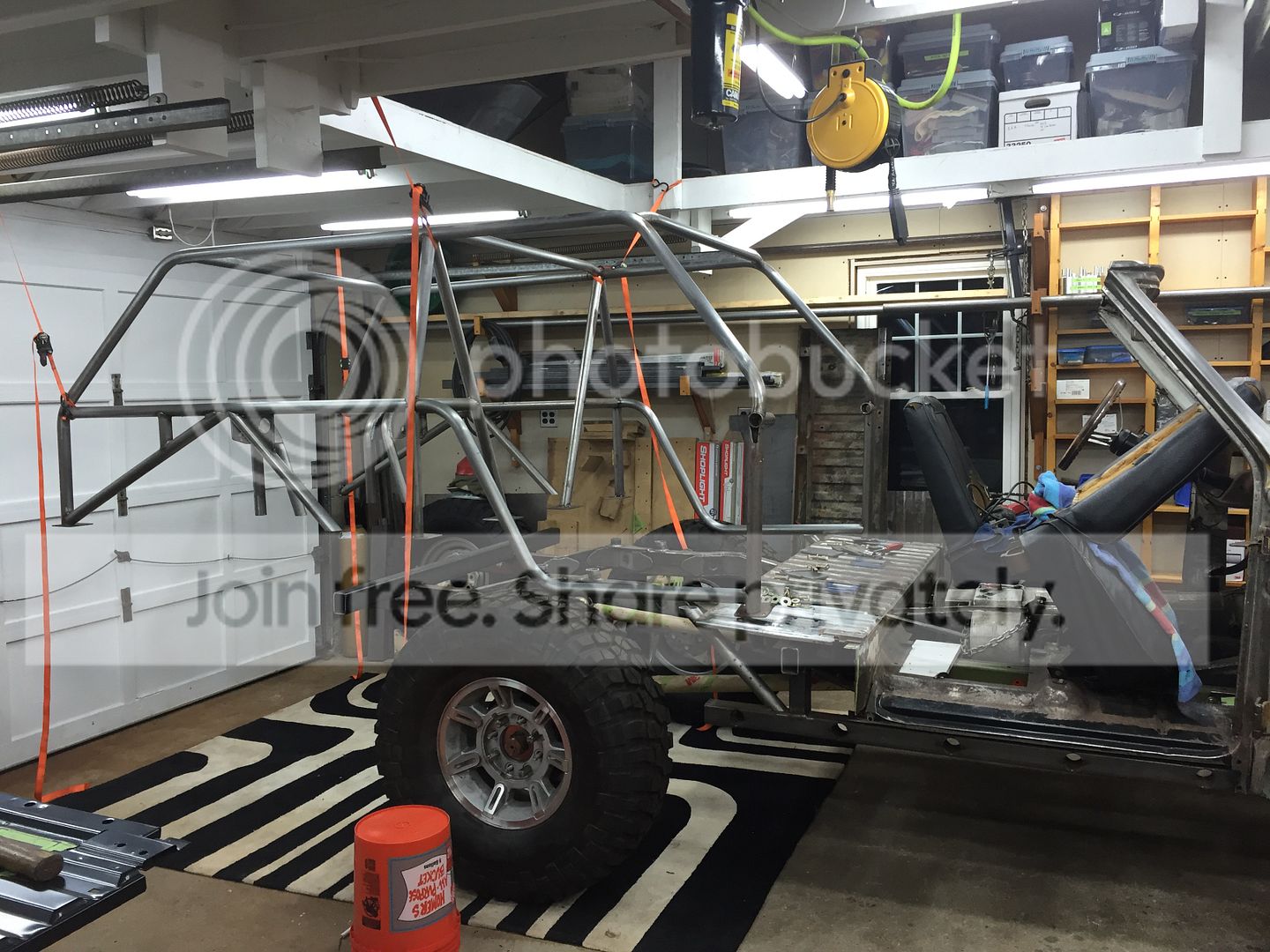
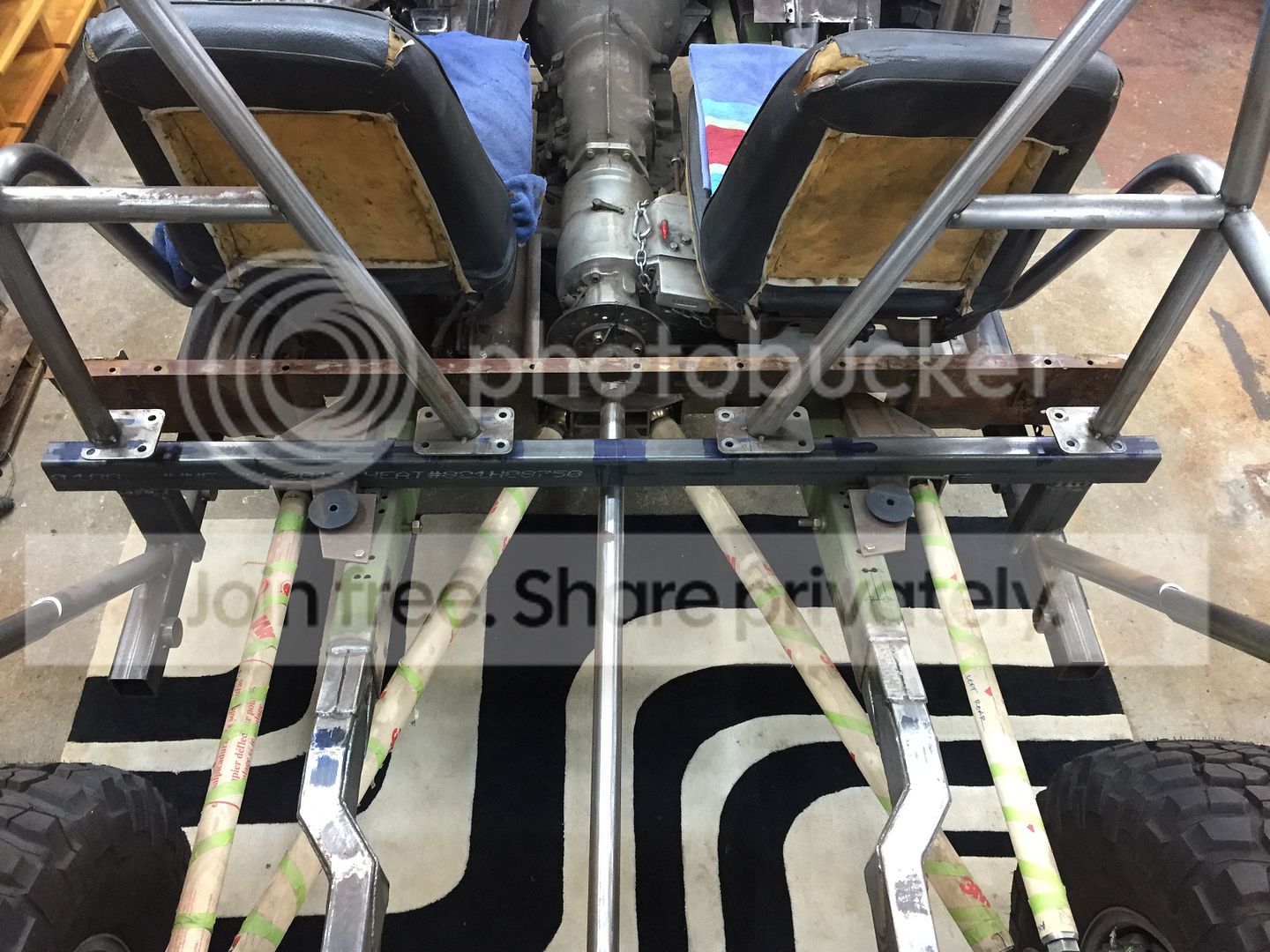
It all started with a test to see if I really COULD remove the cage from the body to get access:

IMG_9624.jpg


This is all OSHA-approved by the way.... it's OK to use frayed and worn-out ratchet straps as long as there are 4 of them for redundancy. :haha:

IMG_9637.jpg


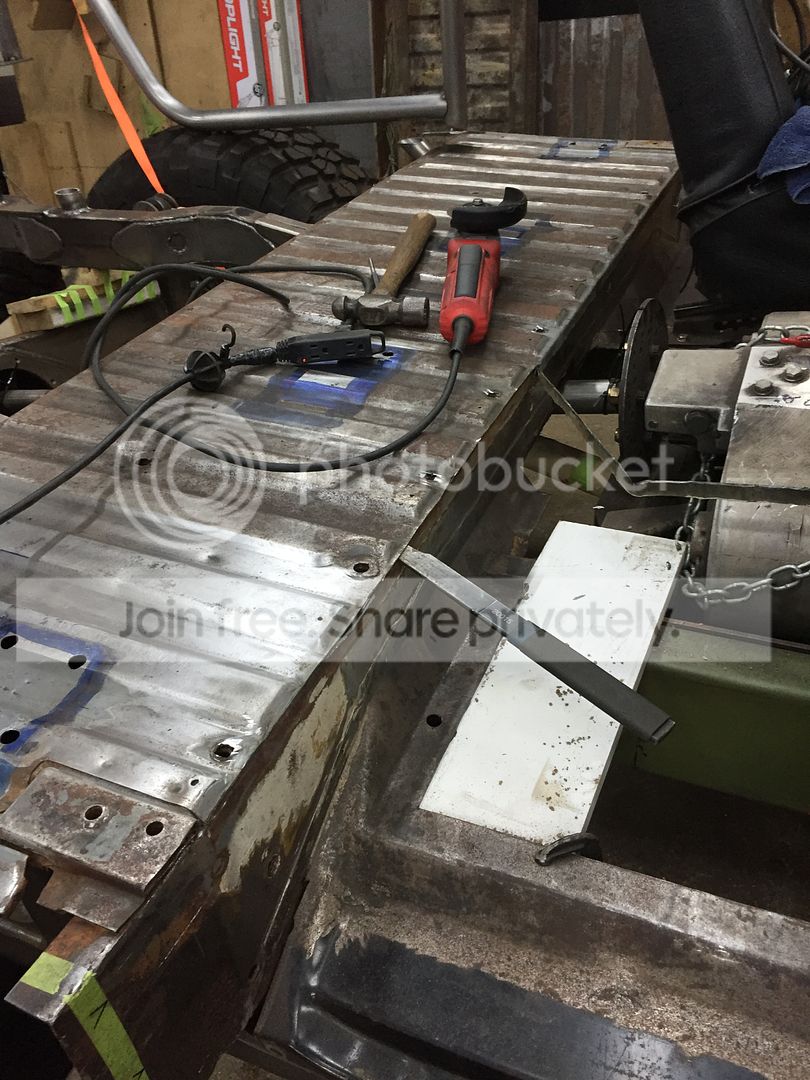
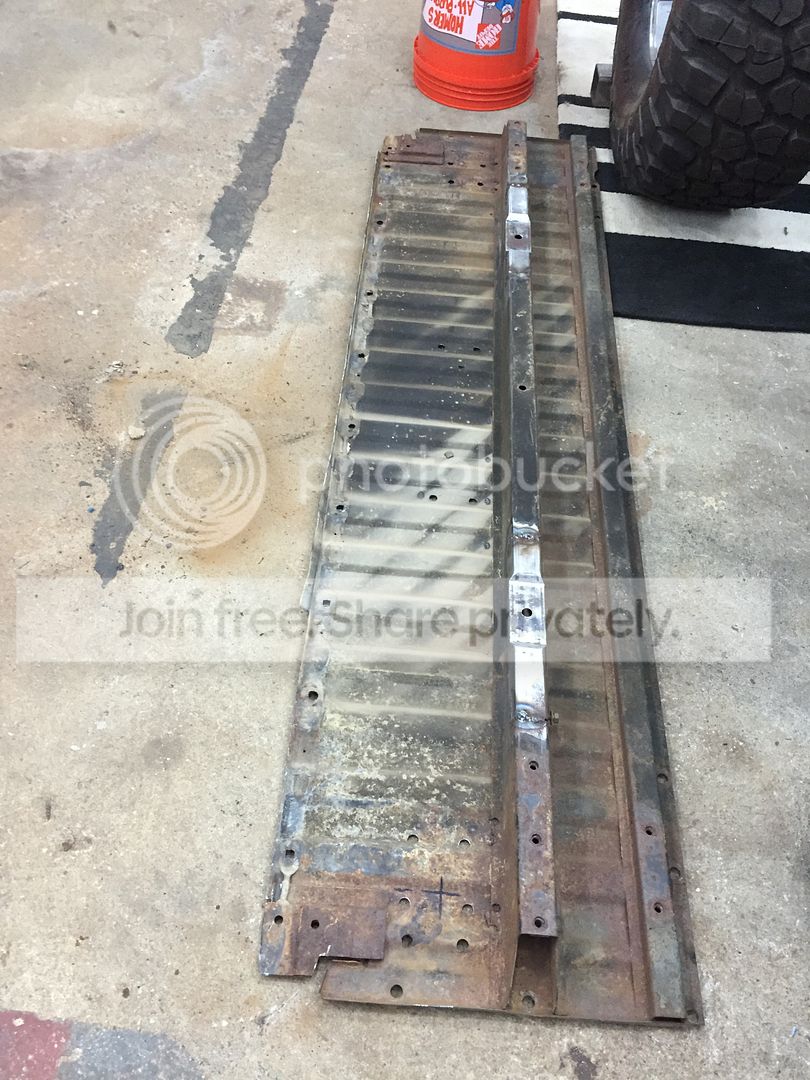
With the bedfloor exposed, I made a lateral cut along the flanged area to see if there were any spotwelds to deal with. As it turns out, the ONLY thing holding the bedfloor to that vertical step panel are the carriage bolts (about 7 of them) and a small bead of panel adhesive / weatherproofing goop. Once I realized that, I stopped cutting the flange and just worked on cutting bolt heads off so that I could drive them through with a punch.

IMG_9640.jpg


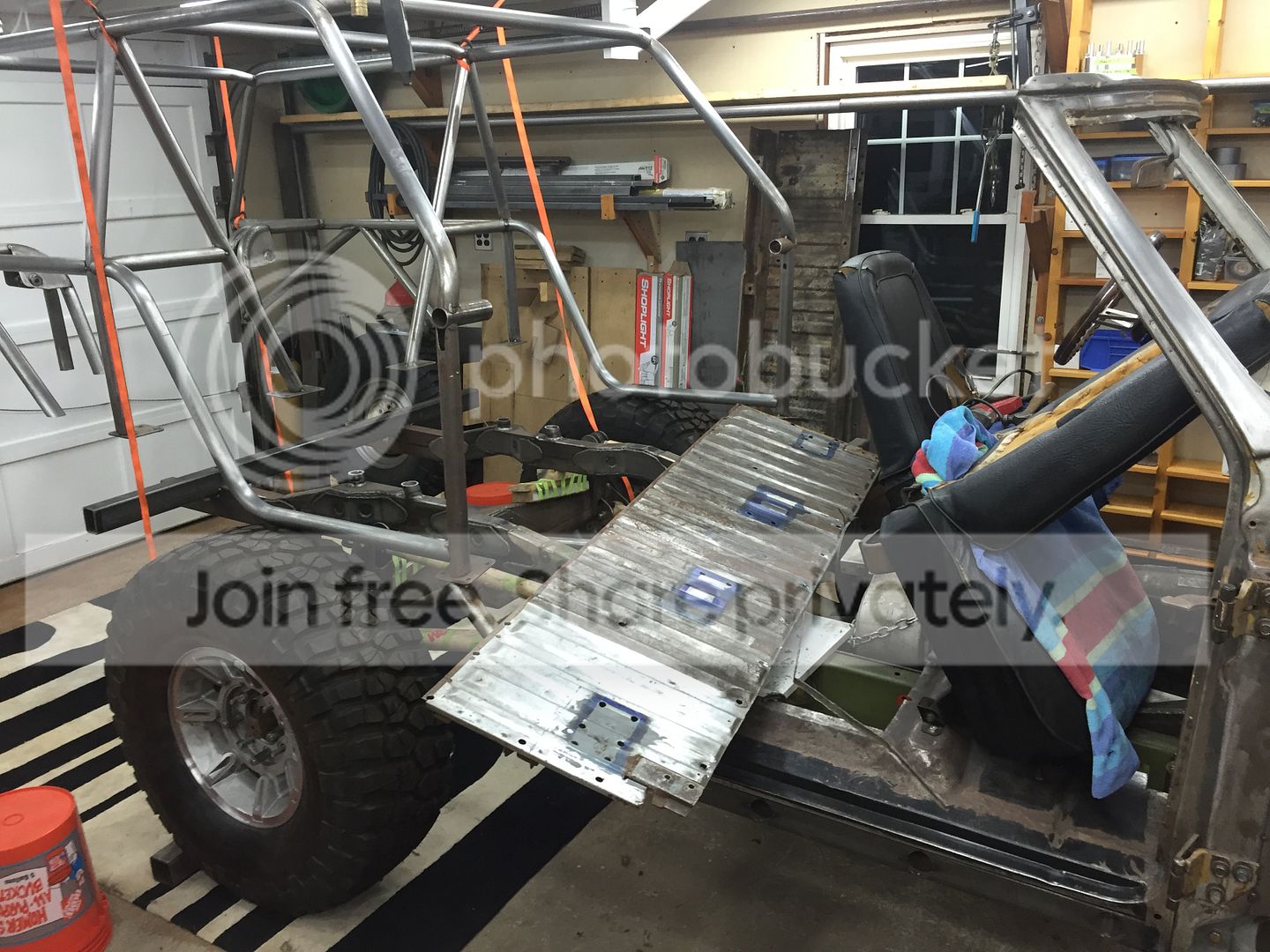
As usual, the work to get ready (moving the cage, etc) took the longest... and the actual removal of the floor was about a 15-minute job.

IMG_9646.jpg


BAM!!!..... When that panel came out of the truck I could hear the rattling and rushing sounds of TONS of sand an debris inside the cross-sills making it's way out of the panel and onto my floor!!!! There's a real scrapbook of memories there......Pismo Beach, Hollister Hills CA...... and a couple of Moab UT trips too!! :waytogo: It shouldn't be surprising to anyone that when your cross-sills are fill of sand and dirt.... they make a great sponge for holding water against the metal and encouraging rust formation. I'm not 100% sure how I'm going to seal up the cross-sills on the new bedfloor.... :dunno: Maybe I should go the "other way" and drill a few dozen SPEEDHOLES in them so that the water and sand has an easier way out???

IMG_9651.jpg


Everything was put back in place before I shut the project down for the night. I would NOT have enjoyed hearing the sounds of metal crashing to the floor in the middle of the night if/when one of those straps broke. Better safe than sorry....

IMG_9664.jpg


So... the vertical step panel is a pretty simple part that I'll be replacing next. The reproduction part is on national backorder, but since it's really nothing more than a straight metal plate with a 1.25" flange on the top I may just buy the metal locally and have them use their large sheetmetal brake to replicate that flange for me. Transfer the hole pattern for the bedfloor bolts... and I'm in business!!! :waytogo: Then, it's time to design a new floor.


-G
 
It's a testament to your tube notching and welding skills that the diagonal tube cuts looks like they like up almost perfectly when the cage was put back down and not even bolted down. Nice work!
 
It's a testament to your tube notching and welding skills that the diagonal tube cuts looks like they like up almost perfectly when the cage was put back down and not even bolted down. Nice work!

I was pretty pleased that the tubes didn't go haywire when I first cut them with the Sawzall over the weekend too.

They shifted maybe 1/8" due to some shrinkage and pulling from the welding but that's certainly something I can finesse back into alignment when the time comes.

This would be a really good time to figure out my fuel tank since I have such easy access to the area. Some remote battery locations should probably get figured out soon as well. :thinking:


-G
 
Question about the special cage plates that you are having made-
Are you going to machine plates for under the bed too?... At the bottom of the sammich down where your cage ties down into the support below.
 
Question about the special cage plates that you are having made-
Are you going to machine plates for under the bed too?... At the bottom of the sammich down where your cage ties down into the support below.

Yes. It's a convoluted sandwich of CNC'ed goodness, with a thin layer of sheetmetal in the middle. :D

-G
 
Would you be willing to have more made for other folks if the turn out the way you envisioned?
 
Would you be willing to have more made for other folks if the turn out the way you envisioned?


I think that would have to be individually customized deal as the deck flutes will not always be in the exact same location for every rig.
 
Would you be willing to have more made for other folks if the turn out the way you envisioned?

I think that would have to be individually customized deal as the deck flutes will not always be in the exact same location for every rig.


A couple of points:

1. The exact design of the plates is being optimized to my "reproduction" bedfloor which is slightly different from the OEM floor. The new stamping is a few thousandths "deeper" in the valleys and all the other dimensions are just a tad different. You really need to know pretty accurately what you're trying to match before you can build a decent "pair" of plates. As you might expect, the "upper" is not the same dimension as the "lower" either so it's a different program on the CNC

2. The bedfloor is a repeating pattern, but where you're actual tubes land on that pattern will determine where the center of the convoluted plate needs to go. Your tube might land on top of a "raised" rib....or it may end up over a "valley" area... if you don't plan ahead, you may end up with some locations where the cage tube is almost falling off the edge of the plate.


I'm making my "sammich plates" in a 6" x 6" size and the cage plates are only 4" x 4.25" each. That gives me a generous landing pad to work with and some flexibility with the design.

Ultimately, I'm into the project over $300 in material.... and that's not including any CNC time yet. I find it hard to believe that there are very many people out there who would actually be willing to spend money for a solution like this.... but I could be wrong. :dunno:


-G
 
I get what y'all are saying about the possibility of the pattern moving around and peaks / vallies being different. I really assumed it would always be the same since it's a mass produced panel. I can see the aftermarket floor being different.

I realize the tube can locate differently from cage to cage, I wasn't sure if the pattern could be "adjusted" since it's coming out of a CNC program.

As for the money, meh I'm too deep now to blink even if it's not a show piece. That's cool though, I'll figure it out.
 
It is also possible to fudge it fairly close by hand, as it were. I made a set from ~1/4" plate, with thinner flat stock (about the depth of the "valley") welded in place and then carefully (ha!) hit with the grinder. Is it remotely as nice as a CNC piece? Of course not. Will it hold? Yes.

(Will it gather crap, especially on the bottom, and cause more rust? Absolutely :haha: )

-- A
 
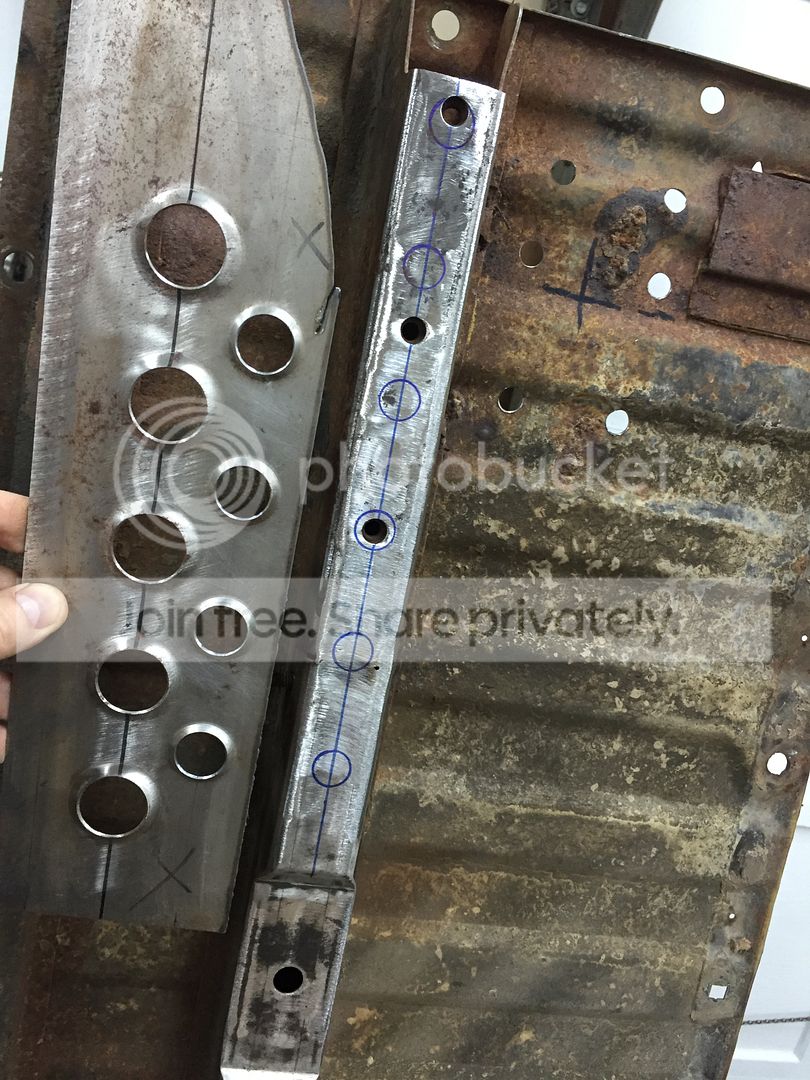
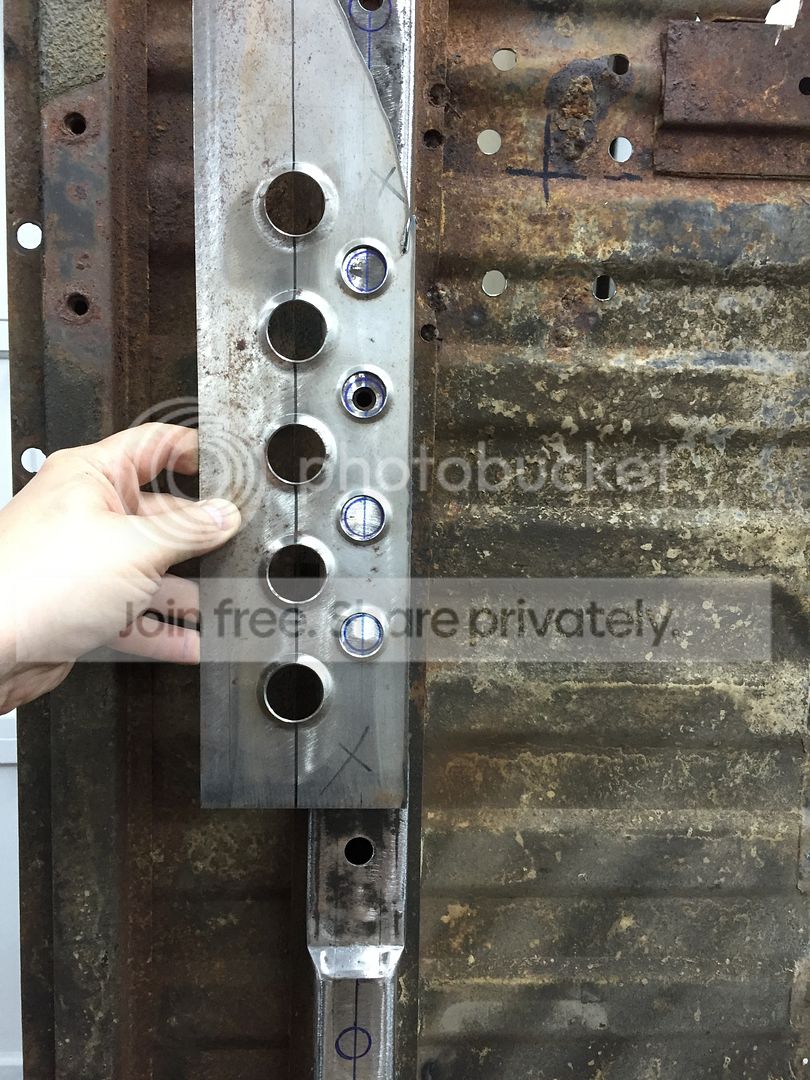
I'm thinking that instead of trying to come up with some way to complete seal up all those cross-sills on the new bedfloor (to keep out the dirt, dust and rust) it might make more sense to go the opposite way.....

....just make it SUPER-EASY for any dirt that gets in there to find it's way right back OUT!!!!


IMG_9672.jpg


IMG_9673.jpg


A nice long row of 3/4" flared holes along each cross sill might just do the trick!! :thinking:


-G
 
Sometimes it is by far the best idea to make ingress and egress of mud and dirt easiest. It's just not possible to seal most of it up. Besides much easier to paint the inside when making many holes
 
Top Bottom