CK5
Register an account today to become a member! Once signed in, you'll be able to participate on this site by adding your own topics and posts, as well as connect with other members.
As usual. Nice work:waytogo: Your welds are awesome. :bow: I need a new welder. :D
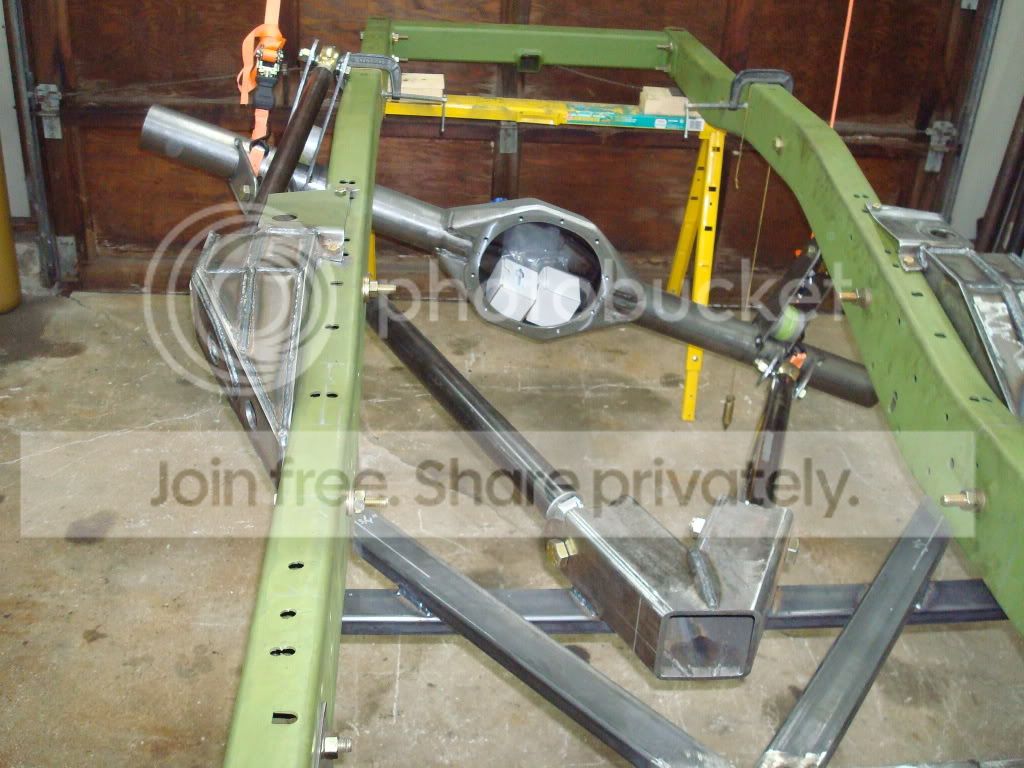
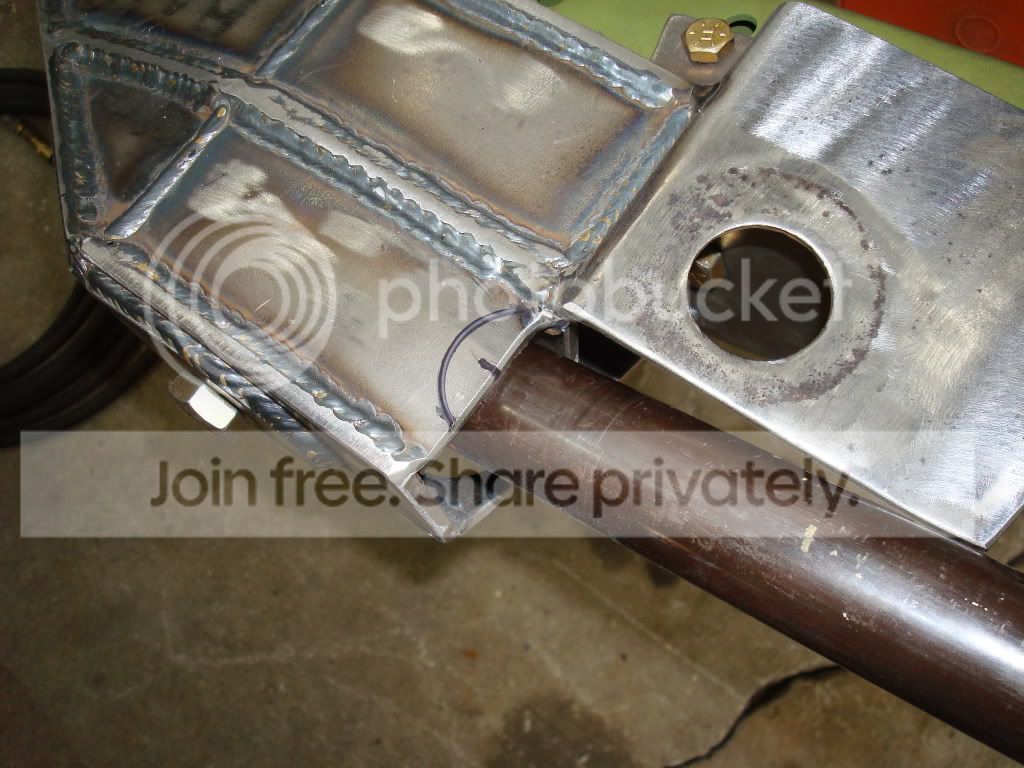
The bracket really seems to dwarf the frame. I know your frame is doubled, but are you going to be able to put some type of crossmember in there? Maybe near the top and still clear the arms
 
The loads from those upper arms are strictly longitudinal (front to back) there really isn't much value in a specific crossmember for them. For the coverged lower links there will need to be a massive crossmember to deal with all of those centrally-focused forces. My current idea is to build a large "X" shaped crossmember to triangulate better than the simple ladder-type factory crossmembers. The way it looks to be laying out the ends of the "X" will land on the inside of the frame almost directly beside that new mount. I think there are some earlier photos that hint at how that central crossmember might be designed.

Even though the frame is fully boxed, it's still only 1/8" thick. I will feel better knowing that all the suspension points are tied to each other using at least 1/4" plate, plus the thickness of the factory frame..... I only want to build this truck ONCE. :D


:usaflag:
 
Greg, this is coming together nicely. I wish you hadn't moved across the country and that I was there to help you on this project. :thumb:
 
Now take the grinder with a 36 grit disc on it and clean it up on the exterior. might as well keep things pretty. ;)

Looks really good so far Greg!!

Rene
 
2010.05.01 - UPDATE! - BLACK FLIES AND LINK BRACKETS...


The morning was spent getting my stored vehicles out of the winter mothballs and parked back at the house with me, so I only had a few hours this afternoon to work on bracketry. Despite the lack of hours, I still made some solid progress.


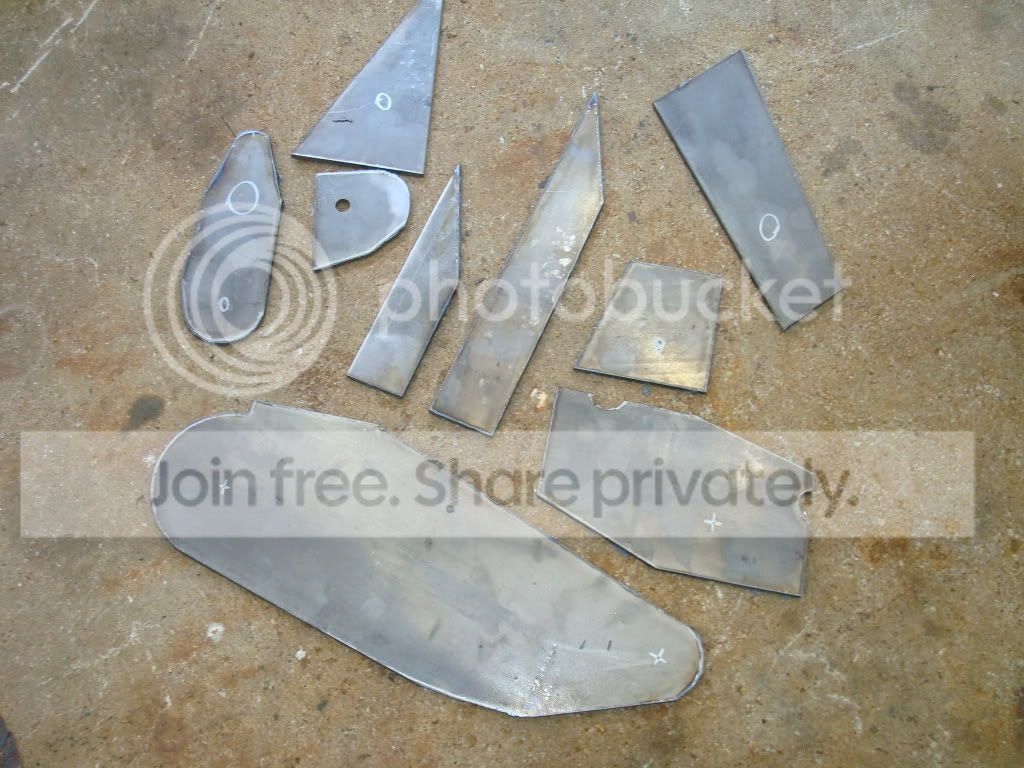
Plasma cut link mounts in raw form:

DSC03048.jpg


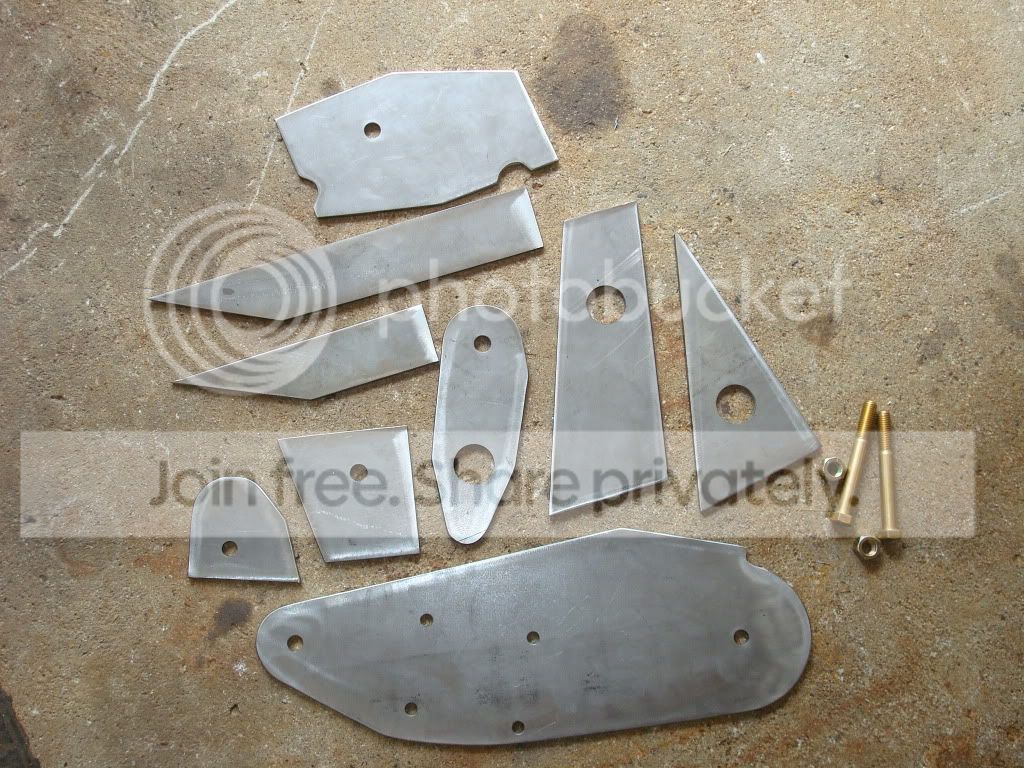
Link Mounts after a few hours of grinding and hole drilling:

DSC03050.jpg


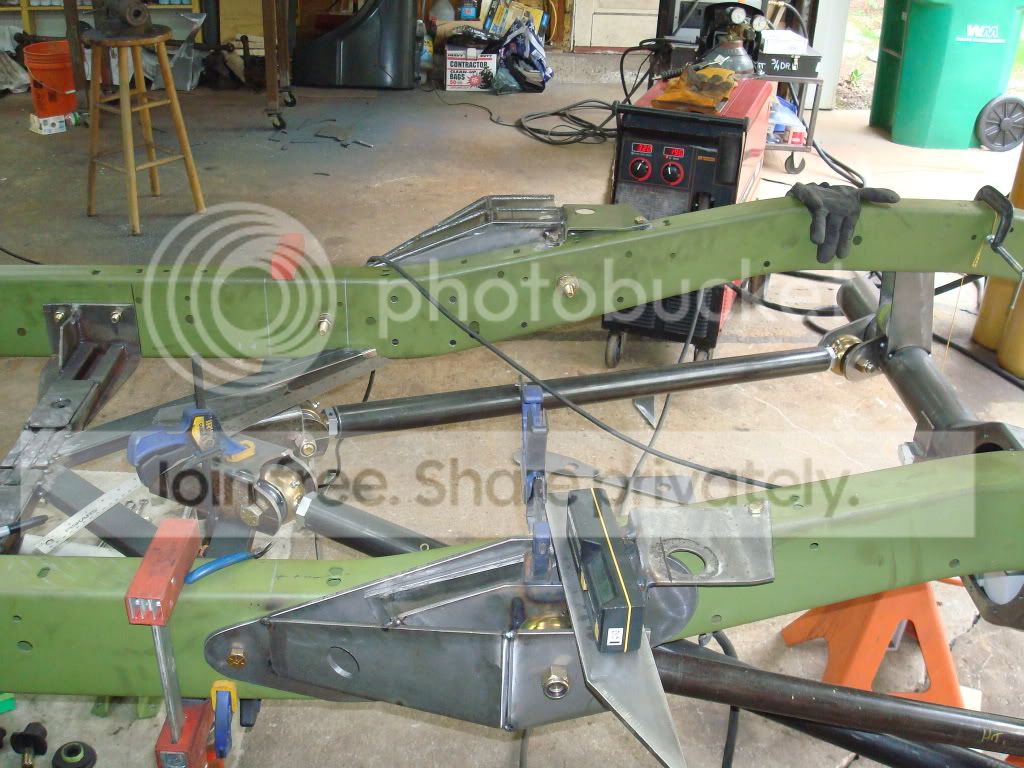
Fitting up the first few plates and getting everything squared, plumb and true...

DSC03054.jpg


The black flies are out in force now, but they still haven't really figured out that they're supposed to be biting yet. In the next week or so I may not be able to work with the doors rolled up anymore, at least until the really hot weather comes and wipes them out completely.


:usaflag:
 
Geez....even when you don't have time, you get more done than I do. Looking good Greg.
 
2010.05.04 - UPDATE! - FLEX....FLEX...FLEX...!!!

It's been a LONG time coming, but tonight I finally got all 4-links on the rear suspension hard-mounted.

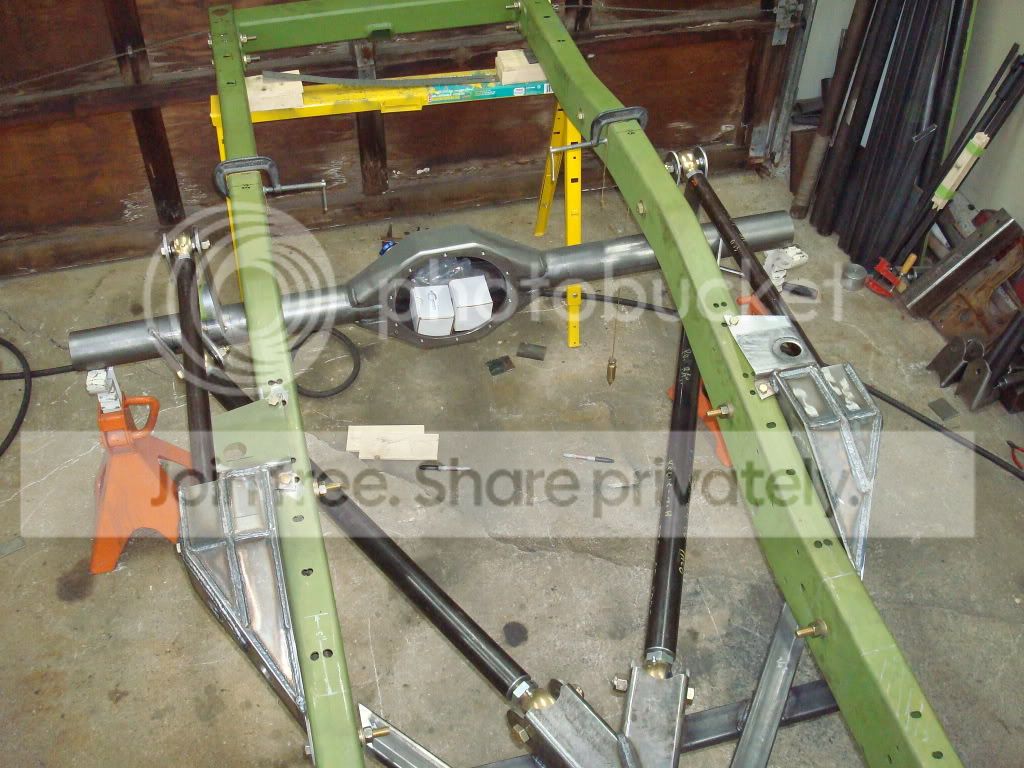
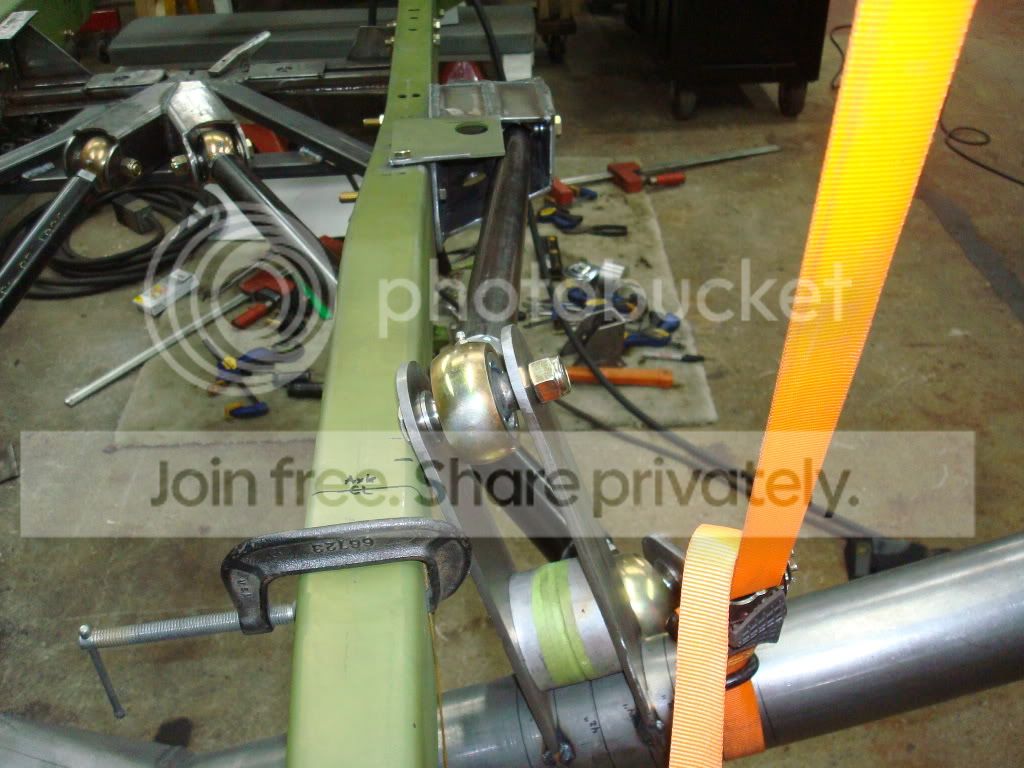
The second bracket for the upper link was a total cakewalk since I had good accurate templates from the first one. Tonight I did the fitup of the remaining 4 plates and was able to bolt it to the driver's side framerail. After that, I needed to quickly cut out the upper axle mount tower for that side as well since I'd never built the second set... no problem, it cost me about another hour but I knew that there was a serious milestone on the horizon tonight.

DSC03067.jpg


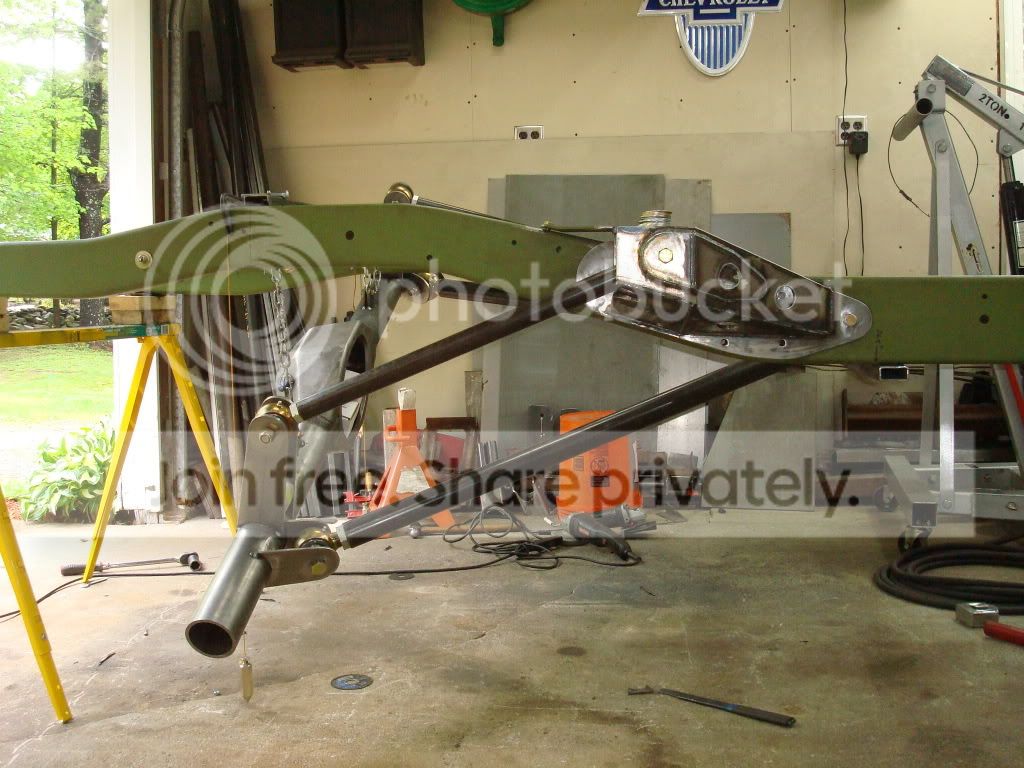
A few bolts....and a few quick turns of the links to get them all dialed-in and square and it was finally time to see how this suspension design would actually move and articulate! :saweet:

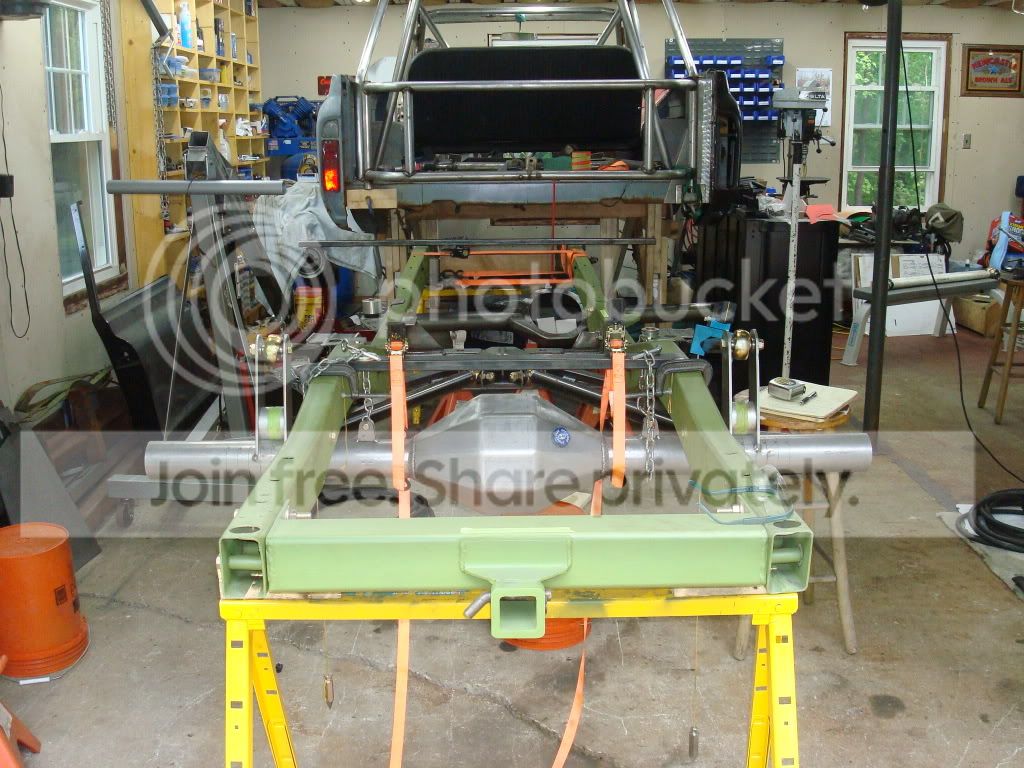
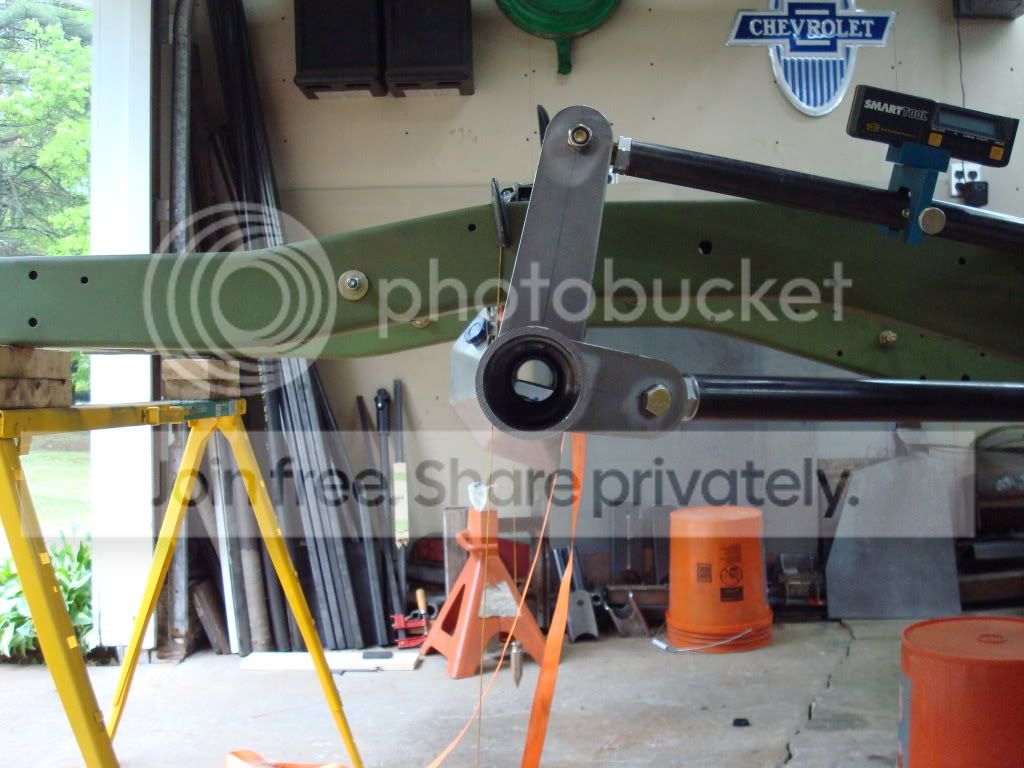
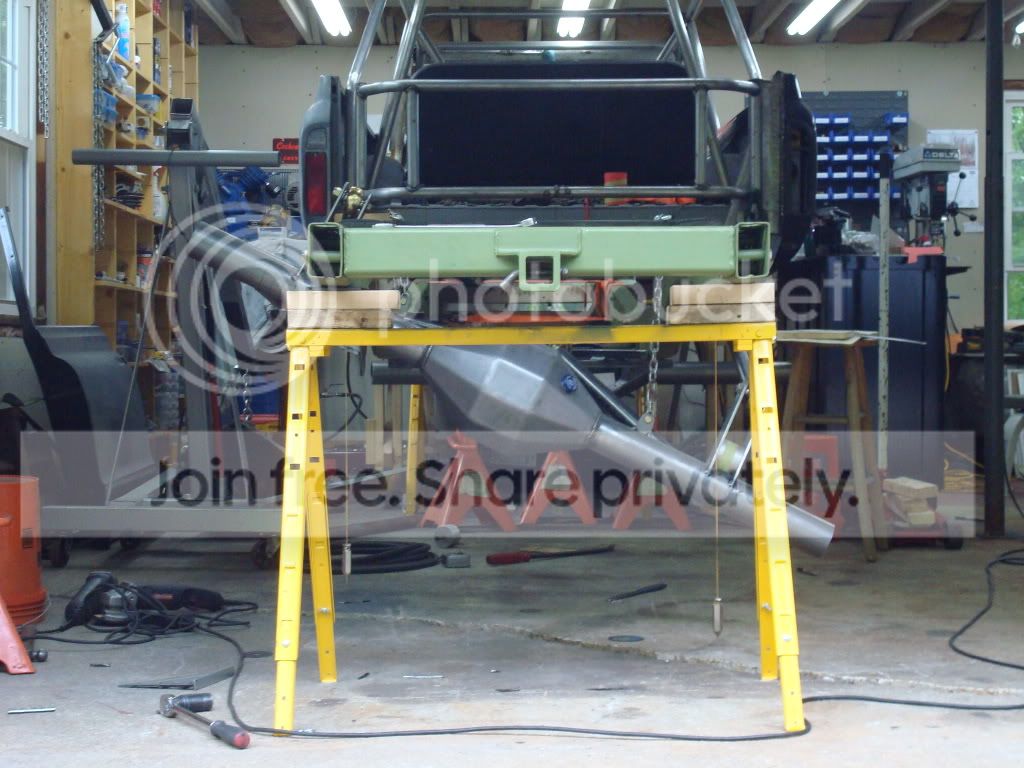
It didn't take long to realize that using jackstands underneath the axle was causing more hassles than they were worth. Every time I went to lift one side of the axle, the opposite jackstand would end up binding up and lifting the entire frame off the sawhorses. I decided to rig up some ratchet straps to suspend the axle from above and things got a lot easier.

DSC03075.jpg


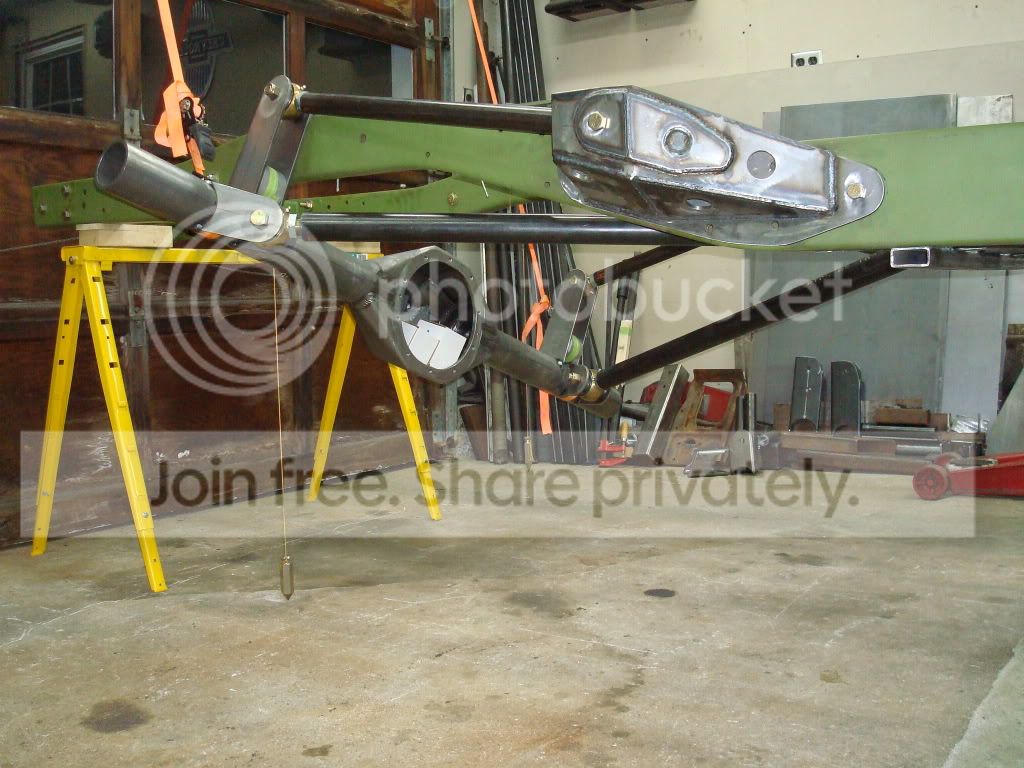
Oops! :crazy: Looks like I will need to do a little creative notching of the frame to clear the upper axle mount... Depending on the height of the axle on the opposite side this will sometimes clear, and sometimes it won't. I will need to go through systematically and run the axle at each of the 16 travel locations (10" droop -> 6" bump travel) then at each of those settings cycle the opposite side throughout the full 16" of travel to look for interferences. That should be fun!


DSC03074.jpg


These shots are just approximations of the suspension travel, and I doubt that this even represents the complete amount that I've designed for. In the coming days, I will need to carefully measure and set some kind of bumpstop to limit the uptravel to 6", and then maybe use a section of chain with an adjustable end bolt to precisely set my maximum droop. Once I have those in place it should be easier to do all the cycling simulations to look for issues.

At this point, I can already see a few minor tweaks that will be needed on body mount #3 (nip the corner for clearance) and the upper frame bracket will need some clearancing to allow the link to swing further down without hitting the horizontal plate underneath.

DSC03080.jpg


It feels good to get all those jackstands out from underneath the frame too. :waytogo:


:usaflag:
 
Last edited:
Looks SICK Greg, bad ass man, nice work as always. Makes me want to link mine.
 
Thanks everyone, I appreciate all the comments. :D

This is an exciting time to be sure... being able to cycle the suspension (even just a little) is a great motivation to push harder on this build.

One of the attributes about a linked suspension that I really like is that you can really control the amount of axle steer and movement of the axle (front-to-back) in the wheelwells. I haven't had a chance to take actual measurements yet, but with the two plumb lines that I've got hanging off the frame I can observe just how much the axle is moving away from the wheeltub centerline. On bump travel, the axle sweeps forward maybe 1/4" at most, on droop it cound be forward as much as 1". But, that is still a far cry from the traditional leaf & shackle setup that the factory gave us. On compression, the axle could easily go back 2 or 3 inches as the shackle flattened-out... and if it's only one wheel articulating, that's a massive amount of roll-steer (axle steer) working against you on the trails.

Believe it or not, a big part of the motivation to use a link suspension was to help save the factory sheetmetal. Previously I had to cut a rather large chunk of the wheelwells out to allow the tire to move up (and back) without munching the quarterpanel. Now, with more precise and predictable travel I should be able to save a LOT more of the original metal back there. Even though I'm using a 38" tire, the clearance should be quite good. Remember, as the tire articulates it also "angles" into the wheelwell, so the amount of space it actually needs to fit is a lot less than the 38" diameter of the tire. Up front it's a different story due to the fact that the tires could be turning hard left or right at the same time that they are articulating. However, the benefit of the link suspension still means that my wheel travel will be nice and predictable and I shouldn't have to do the massive fender hack near the footwell area to allow the axle/tire to move way back when it flexes. The axle simply won't be coming that far back on uptravel.... really it should be no more than about 1/4" from it's location at static ride height (just like the rear suspension). On droop, due to the amount of travel I'm allowing the arc of travel will be greater, so the axle will move backwards more (front axle) but since it will be dropping out of the fenderwell, I won't be worrying about clearance or body damage. And of course, the plan is to optimize the axle placement forward in the wheelwell by at least an inch over stock...which in a link suspension can be fine-tuned by simply turning a few threaded adjusters. :waytogo:

I'm getting really excited for this weekend so that I can do a more accurate set of measurements and really get the suspension flexed to it's design maximums. Once I do that it will be easy to measure from my plumblines to see what sort of axle movement I'm getting as well.

Unfortunately, it's common knowledge that the rear links are always easier to build than the front links are so I've got even MORE work ahead of me in the coming weeks.

:usaflag:
 
The difficulty of doing the front four link is why I decided to go with the Cage radius arms. The radius arms will be a ton easier to setup, I am not sure what the disadvantages will be though.
 
The difficulty of doing the front four link is why I decided to go with the Cage radius arms. The radius arms will be a ton easier to setup, I am not sure what the disadvantages will be though.


Radius arms will be hard on bushings when the axle articulates. There's a lot of twist trying to happen in the axletube itself as a result of two hardmounted brackets traveling in different arcs in 3D space.

Caster change throughout the suspension travel is tough to manage, and the axle will always spit-out sideways as it droops. This is a function of the panhard bar and the arc that it follows during travel.

I did a few mockups of panhard bar setups a long time ago and was really turned off by the lateral movement of the axle.


:usaflag:
 
2010.05.08 - UPDATE! - 15 INCHES OF ARTICULATION....SO CLOSE!

Yes, I know..... it's supposed to be 16" based on my previous comments. But at the start of today there were only about 6" of articulation happening before interferences stopped the rear suspension from doing it's thing.

I built a quick brace with some lengths of chain to hold the weight of the axle. (It's a "link" suspension after all :D)

Step 1: Fully raise the suspension on both sides to the desired 6" of bump travel.

DSC03101.jpg


Here's a direct side-profile shot of the suspension fully compressed to 6" of uptravel on both sides.

DSC03103.jpg


Step 2: Begin the tedious process of lowering the passenger side in small increments to locate all interferences.... then make the necessary changes so that the suspension can articulate downward on the passenger side.

Here's an example of the kind of thing that happens. There is plenty of clearance at static ride height, and at full-bump travel....but when only one tire is dropping, all of the clearances change.

DSC03105.jpg


After a LOT of cutting and tweaking, I was able to get +6" of bump on the driver's side AND 9" of droop on the passenger side at the same time. There is still just a little bit of binding at the upper frame side link mount that is keeping me from getting that final inch of droop.

DSC03118.jpg


Parting shot: That same 15" of articulated travel from the side view. Not bad....and the axle is only about 1" forward from static position even at this extreme position.

DSC03121.jpg


I need to go get some more supplies (cut off wheels, flap discs, Sharpie markers) so the progress will continue on Monday.


:usaflag:
 
It's depends a lot on the final track width of the axles, but my guess is that the factory tubs are going to get a bit wider and a bit taller. :thinking:


:usaflag:
 

Latest Posts

Top Bottom