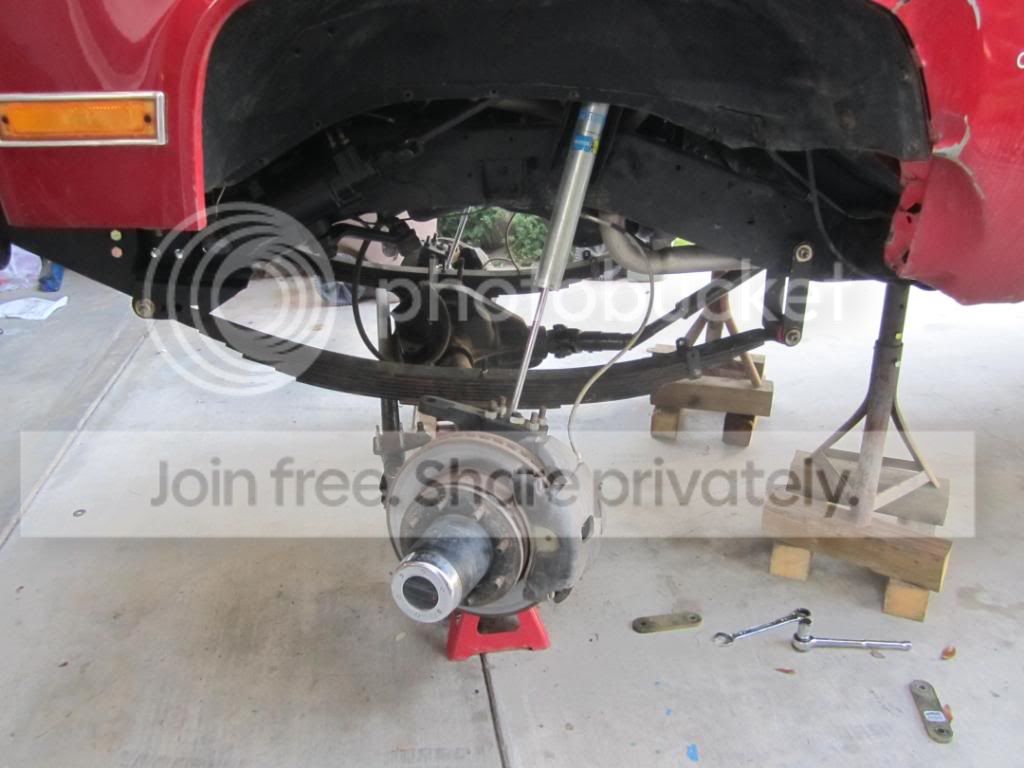
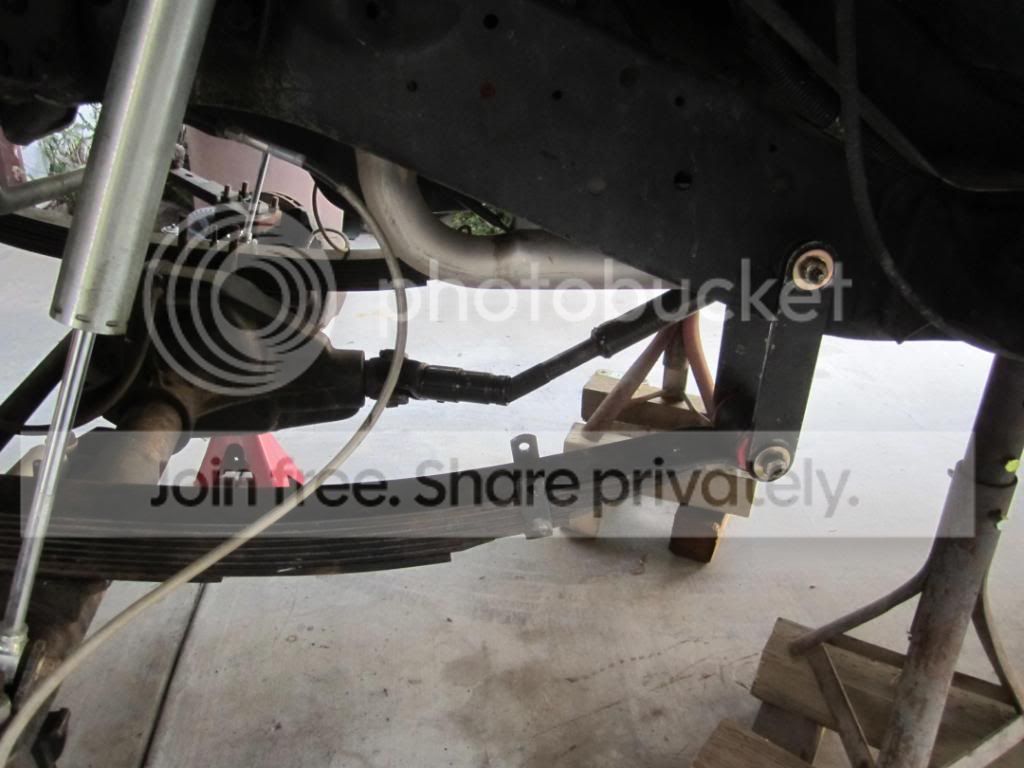
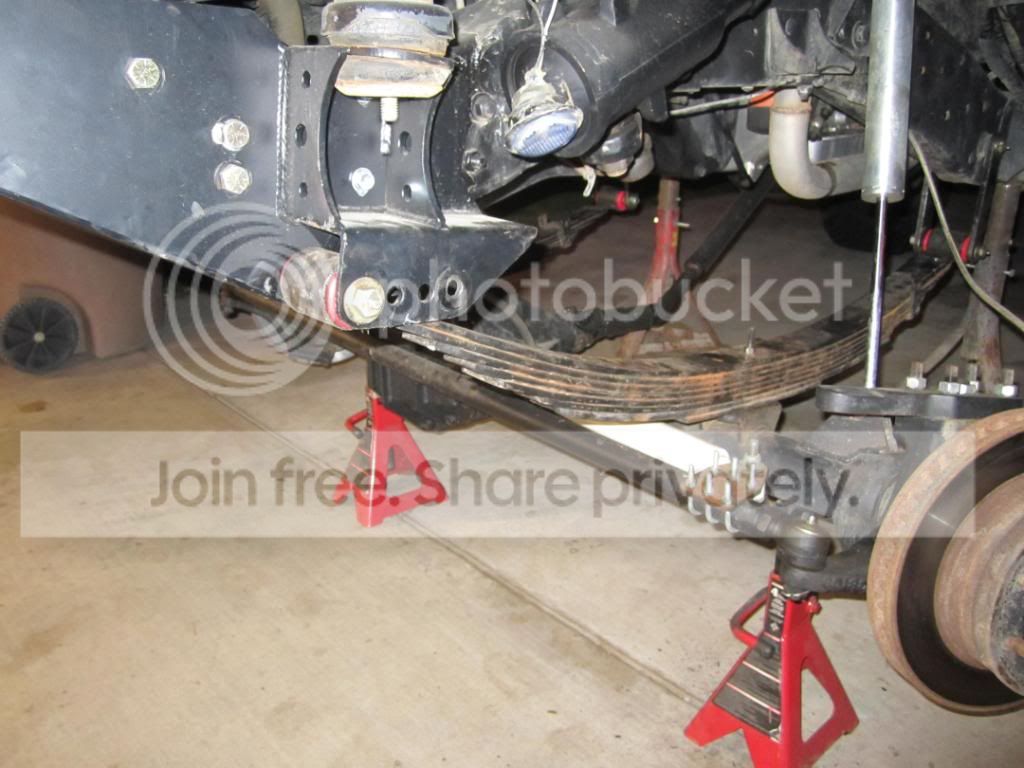
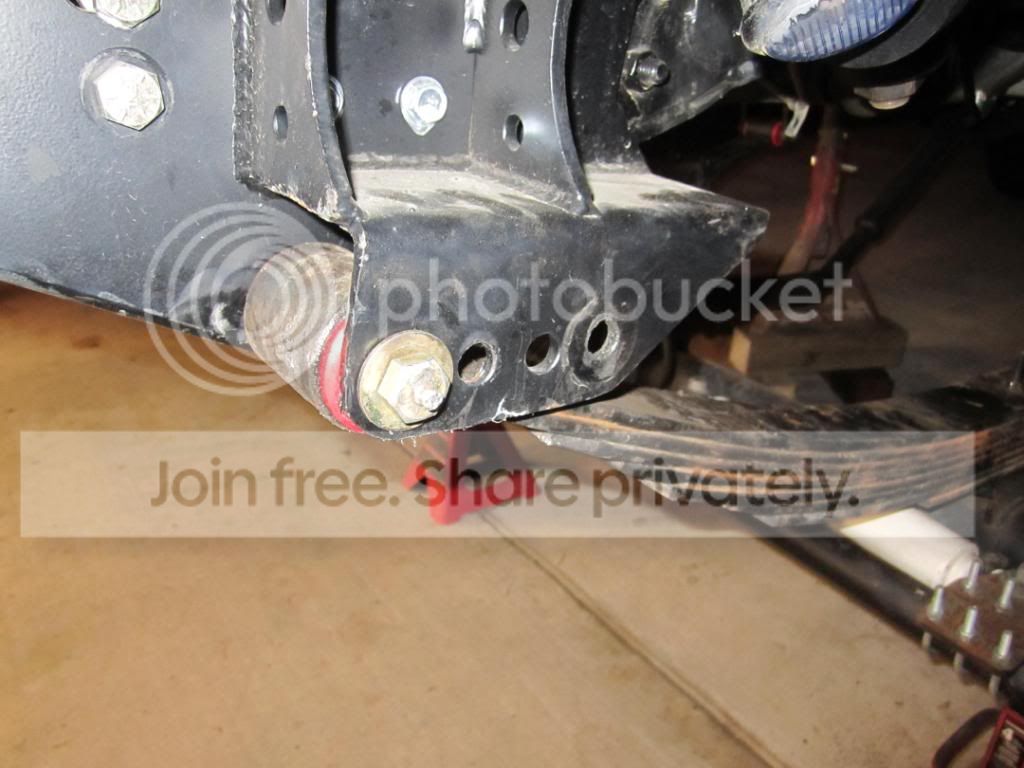
Contrary to popular belief on the internet, what many consider the "right" shackle angle actually makes the effective rate of the springs stiffer. A lot of the reason people angle the shackle is thinking they'll need it for tons of droop but 45 degree angles are way overkill.
At this point I'd put it together, set it on the ground and see how you like it before moving the frame side shackle hanger.
Chris I agree with you on the 45 deg overkill and putting it on the ground, but on the stiffer comment I'm curious to why you say this. Because I have read that before too in articles(or maybe it was a car chassis book, I don't remember), and thought about how it works and what forces are in effect, and in my opinion that comes from cars (or some trucks) that have flat springs (no arch left) at ride height. Because with a rear shackle angled forward and up on a flat spring, it will want to force the spring flat by putting the spring in tension because the bottom of the shackle is lower than the top, so as the spring pushes up on the shackle, the shackle pushes back on the spring, puts tension on the spring, causing more force necessary to bend the spring.
However, with a lift or arched spring, as the shackle pushes back on the spring to counteract the upward spring force, this tension will want to flatten the spring because it will lengthen it, since lengthening the spring will also compress it (or lower ride height), in this situation, I feel it would soften the spring rate.
So in my opinion, if the spring is flat at ride height, more shackle angle will stiffen it, if it is arched, then more shackle angle will soften the rate.
Does this make sense, and do you agree? Or is there something I am missing in my analysis of how it works? Because when I read something I have to know why, I just can't take it as fact without knowing how it works, so after I read that previously, this is what I had came up with. Now you mentioned it so it brought it back to me.