CK5
Register an account today to become a member! Once signed in, you'll be able to participate on this site by adding your own topics and posts, as well as connect with other members.

A/c refrigirant

In 91 they still used R-12. It is rarer than hens teeth and illegal to buy unless you have a license (if you can find it). You can use some of the r-12 substitutes or you can retrofit to r-134a which includes changing the hoses, o-rings and oil.
 
If you convert ideally you should also swap the condensor to one optimized to work with R134A, or you may not be happy with the cooling once converted.

There's a lot of r-12 subsitutes out there. Some people use liquid propane. Most of them are not DOT-approved, but may work very well.

http://autorefrigerants.com/co00033.htm
 
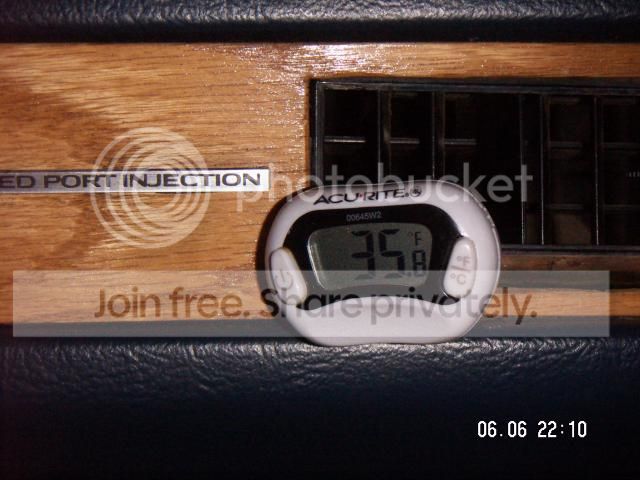
My 84 puts out 45 degree air with a stock condenser.
 
My 84 puts out 45 degree air with a stock condenser.

Sounds good! Quite a few people have had issues. R134 is not quite as efficient as R12, and often a larger condensor is sometimes required to achieve the same cooling performance.
 
Not being a dick just saying if it is in good condition might try it first.
 
My 84 puts out 45 degree air with a stock condenser.

Yeah, maybe while driving down the road, but you add in a little hotter climate and stop and go traffic to the mix, you'll be seeing 60-70 degree temps and overheated compressors. :D

Mine used to work REAL well while driving down the freeway, consistent air flow, but during traffic, the stock engine driven fan and even an after market electric fan just wasn't enough to cool the condenser down adequately.

By the time I finally got around to changing out the condenser, the compressor had just had enough of that hard, overworking, overheating. When I was refilling freon after swapping out the condenser, the compressor gave out and I gave up. :doah:
 
Sorry a 134 compliant condenser is not realy correct. They are all aluminum, the hoses and o-rings have to be 134a compliant because you will loose refrigant form some of the old r12 hoses. Mostly just need larger and more efficient condenser and some systems will require a different oriface tube (expansion valve). There are many websites that offer upgrade parts, you just need to root around to find the best deal.
 
The term is "parallel flow" - the old ones were a long serpentine tube with fins on it. More of the newly built ones are parallel flow, but they are not always advertised as such. The best ones may be the universal-fit dealies because you can get giant ones, but then you may need adapter fittings and such (+ they aint cheap). AC Delco sells new replacement ones, which are parallel flow and have the right fittings, but they are much smaller than the originals (as is the often suggested S-10 condensor). I don't know how the overall cooling compares between the two.

Here's mine:

PICT0449.jpg
 
Parallel FLow

I have done a lot of reading about this as I am converting over to R134a.

1. Parallel flow condensers are recommended for conversion. However, once installed the talk seems to be that you cannot flush a parallel flow to clean it. The holes are too small. So don't mess up. There are a lot more tubes in a parallel flow but they are much smaller than stock. Additional tubes mean more surface area to improve condensation of gas to liquid.

2. Since you cannot clean a parallel flow later make sure that you flush everything REALLY GOOD so no debris is left to worry about. Flush hoses, evaporator, condenser (if not replacing)

3. I forgot where I found it but read that GM does not recommend converting using the R4 compressor. For about $210.00 I got new compressor, orifice tube, and accumulator during a sale at Autozone.

4. I am adding an inline filter to my setup to catch any debris in the future.

There is a lot on this site and many a/c forums out there to help. read up before you decide..

Hope this helps.
 
conversion

Sorry not just yet.

That is step 45 on my remaining to do list for the rebuild my '88 K5. I have had a lot of issues. That thread is "WTF do I do now..."

But, when I get to that step I will let you know.
 
I just went several "rounds" with this very thing, and I highly suggest you stick with R12 for several reasons.

1.) You're system is already setup for R12, right? Locating a AC service shop that still sells R12 is a lot easier than "upgrading" to 134a. So what if R12 is a little more expensive these days... R12 is colder and easier to use in our older rigs. Many places still do carry it.

2.) "Upgrading" to R134a will require you to replace your condensor, and frankly you will not be happy with the temp at your dash. R134a just does not get as cold as R12. Everyone will confirm this.
 
Controversy 12 vs 134a it all about the condenser

I got this info from the following site: http://www.griffiths.com/achelp/achelp3.html

[FONT=Arial,SansSerif][SIZE=-1]Is R134a less efficient than R12 ?[/SIZE][/FONT]
[FONT=Arial,SansSerif][SIZE=-1]R134a is NOT less efficient than R12. Actually R134a is more efficient . Pound for pound R134a is a more efficient refrigerant than R12, however it runs at higher pressures in some aspects and therefore requires more effective condensing.

Whether R134a performs as well as R12 in any given a/c system depends upon system components and the amount of R134a used. Given two identical vehicles, each with the same weighted amount of refrigerant, the vehicle with the R134a has the "capability" to remove more heat (measured in btu's) from the vehicle than the same type of vehicle using the same amount of R12.

The most common influences which effect the capability of R134a to perform well are the condenser, in some cases the the superheat setting of the expansion valve or the amount of R134a. Condensers designed to release greater amounts of heat help to expel the greater amount of heat which R134a removes from the car's interior. And by "matching" the correct amount of R134a to use in a given vehicle, correcting the superheat of the expansion valve (if necessary), you can in some manner nearly balance or match the amount of heat drawn out by the evaporator and released by the condenser.

These efforts to "balance" the system can not be realized if there are problems within the a/c system, such as: poor performing compressor, dirty condenser or poor air flow through the condenser, malfunctioning expansion valve, water or air in the system, improperly operating fresh air or heat input in the climate-air mixing system.
The common problem when converting from R12 to R134a is lack of knowledge or equipment.

The typical scenario here is when the car owner buys an inexpensive "retro-fit" kit from the local autoparts store. These cheap kits usually have a few cans of R134a (either 12 ounce or 16 ounce), maybe an extra can of refrigerant oil, a few generic R134a charge port adapters and maybe some o-rings. And, unfortunately a small high side pressure gauge on a short hose. What is missing from the package? A vacuum pump, a refrigerant recover system, quality service gauge set with both low and high side gauges, and much more besides the lessons to learn what to do and what not to do. This is not to say that one of these small retro-fit kits can't be used, however to be used wisely.

My comment:

After reading this and many many other a/c forum sites is why I decided to replace EVERYTHING except for my hoses and evaporator. I figure I am replacing the gas might as well replace everything I cannot clean and I am replacing the condenser to gain the advantage of the extra capability of the parallel type.

I am close to working on the a/c system now, actually pulled the old compressor already. Will report back as soon as I am done.
[/SIZE]
[/FONT]
 
Efficiency is the wrong metric because the average user doesn't care about it. (Plus, who really cares about "pound for pound"? I care about the cost of the refrigerant, but not weight) Few will ever measure their MPG with different refrigerants and A/C setups. When it's 100 degrees and muggy, you might not even care if you drop 4MPG. What you care about is how well the interior of your vehicle is cooled and the system doing it is always going to be pretty close to the stock A/C system. In these cases R12 works better and requires less system modification. Given the price of ongoing maintenance, R134 may still be the better choice of the two. (probably not the best choice overall, but that's another topic)
 

Latest Posts

Top Bottom