CK5
Register an account today to become a member! Once signed in, you'll be able to participate on this site by adding your own topics and posts, as well as connect with other members.

Aluminum radiator choices,overall size vrs. tube size and rows?

broflow

Tinbanger
 Premium
Joined
Feb 13, 2010
Posts
344
Reaction score
162
Location
new glarus WI
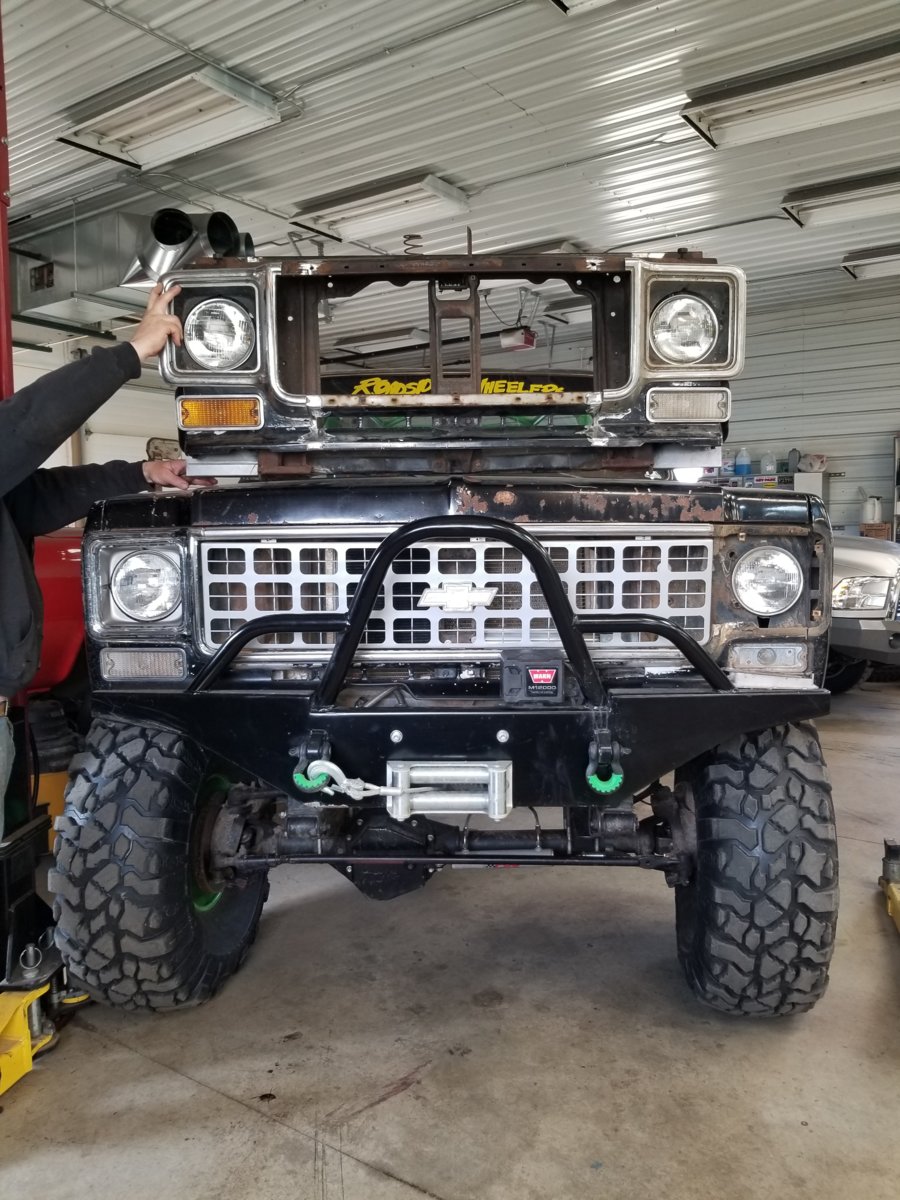
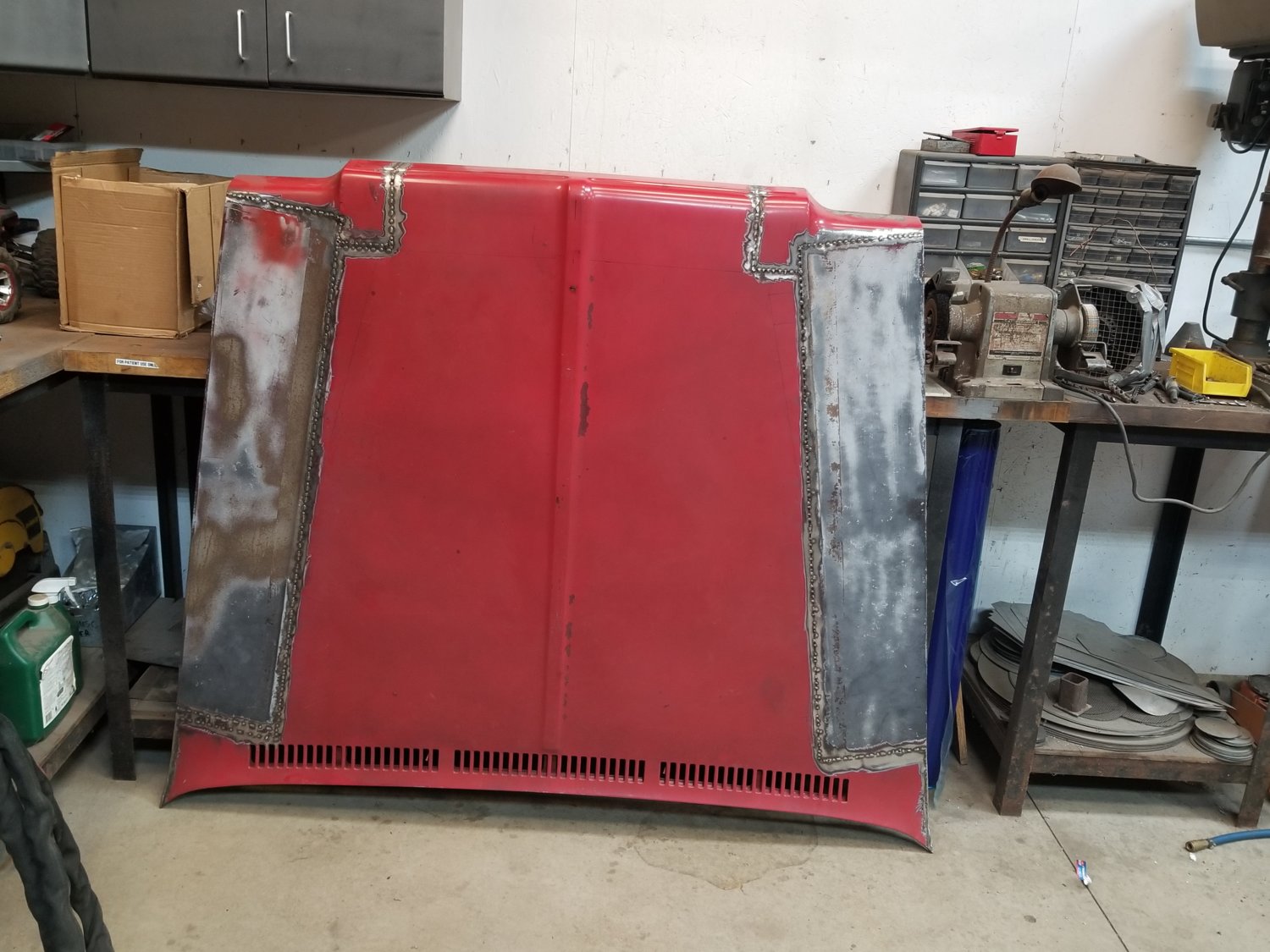
So Im in the process of tapering the front clip of my 78 k5.

And Im to the point where Im getting ready to swap over. Ive had some cooling issues in the past. Currently running a 20+ year old Griffin 3 row thats not as wide or tall as a stock radiator. Also running electric fans on a custom built shroud that's well sealed to the radiator. Ive already replaced water pump and tstat. It still doesnt keep up with extended high rpm thrashing. Trail riding its fine, 180*s on the gauge.
So anyways with the new front clip going on it would be the best time to replace the radiator and rework things. I dont have battery up front anymore so ive got plenty of room widthwise and Im not afraid to do a little cutting and sheetmetal work to the core if needed (already have).

So after a lot of searching and reading in this and other forums Im getting lots of different takes on radiators and I always like to see what CK5 community ideas are.
Do I go with a standard size to fit the core opening which is 28 wide x 18 tall roughly?
A lot of the newer aluminium radiator are touting bigger tube sizes like 1" or 1.25" and I think ive seen 1.375". These larger tube sizes are seemingly always 2 row. Ive also found some 3 and 4 core aluminums which are usually 1/2" or 5/8" tube sizes.

Ive found several companies making alum. replacement for the newer 96-early 2000s trucks which are much wider, I believe 34" cores that are also 19" tall. These are the 2 row variety with 1" tubes. I think that theres also a duramax option thats bigger yet. These also come with tranny and oil cooler options which were on the stock trucks.
I would definitely stay with an all welded aluminum and stay away from plastic/epoxy glued from what I read.

Anyways I know its a long post. Im just hoping to get some current feedback on what brands are good/bad and should I just go with a larger physical sized 2row or a direct replacement 4row or large tube 2row?
 
Generally speaking, the more cooling surface area the coolant is exposed to, the more heat transfer. But its tricky. A 4 inch piece of pipe 1 foot long has the same surface area as (4) 1 inch pieces of pipe 1 foot long.
But, more of the coolant is going to touch the metal in the 4 pieces.
So, the answer would seem to be to go with more, smaller, pieces of tubing. But then, you get into flow rates, and turbulent vs laminar flow, which I am not even going to go into. I had enough of that taking fluidics while in engineering studies at UCF.
In the end, there are only three ways to go. Either an educated guess, asking people who have used the various one is real world situations,which is why you are here, or see if any of the companies have posted actual heat transfer specs for their different models.
You can calculate the different transfer rates with computer models fairly easy these days, but it really needs to be backed up with real testing.
Most of the bigger companies do the work and have the numbers, but getting them to inform you might be difficult.
Haunt their websites, and see if they have the info posted. If not, try an e-mail. If you get the numbers, post them here, and we can give more accurate advice.
 
I personally will never buy another "Becool" radiator. Too much money for what turned out to be average quality and poor fitment.
I have a Northern one now which was better priced and fit better, but they are not a premium product either. I have used several of their replacement ones for the trucks at work, and have had some mixed results.
 
I haven't used them but tons of folks run Ron Davis radiators. Expensive but ifs it works. It's worth it.
 
I have a Northern in my Blazer, it keeps my BBC cool all the time regardless of activity. I have the Windstar fans on it. Works great.
 
If you have the inclination and ability, I'd try to run a reservoir.

I've tried very hard to find something like that for a few reasons, but I've not been successful. Maybe additional radiators if there is space? The stock "medium" size radiator doesn't hold much coolant. I want to say it's maybe a gallon, at most? But I guarantee the largest radiator GM used is easily double that.

I've tried to figure out what GM's thought process was on these trucks in regard to cooling, especially with the big blocks and diesels, and all I can come up with is that they were increasing fluid capacity as the main objective.

The cutouts in the core support will only flow so much air. At least on the 81-91 core supports, every radiator used had more surface area than the cutouts in the core support. Obviously the factory fan/shroud setup will "force" airflow, but that is nowhere near as effective as your radiator extends further to the sides, away from where the air is actually flowing. And as I recall, the space between core support sheet metal and radiator fins is not large...it's not like there is ample space for air to easily flow to those outer sides. Even if there was, at speed would be where you would see that benefit, not low speed/high RPM's.

First things first I suppose, what kind of fans are you running? Electric aftermarket fans are pretty poor IMO, the Windstar fans are a proven winner. As there is no CFM number to compare to with the stock mechanical fan setup (that I've ever seen) the CFM ratings of the aftermarket fans are worthless IMO. What may look like a "good" electric fan based on comparative CFM ratings to other fans, may still fall short of what even the mechanical fans were capable of moving.
 
As Fordum said, it gets really complicated in the real world. Something that factors in is also the temp gradient between the tube temp and the air temp. As the air flows deeper into the radiator (read more rows)it gets hotter and can offer less cooling to the tubes deeper in the radiator. I did a lot of research when buying my radiator, and it seemed to me that 1" tubes worked the best, no more than two rows. Brass is slightly better at cooling than aluminum, however the weight and price tend to make it not so attractive. I got some real numbers and some good technical advice from several different people at CG&J Heat Transfer in Alabama. Their automotive stuff is a company called Coolcraft. Both websites have a ton of good info, and they actually design, test and make their own products. US radiator is another company that will actually post their numbers and test their own products. They are both very knowledgeable and friendly on the phone if you want to ask questions and don't mind just selling one radiator...even though they make stuff to cool entire high-rise buildings and powerplants.
 
Other than the cost,a 6.2 diesel radiator may still be available in the oem brass construction and they will keep just about any engine you can stuff in a square body cool...you'll need the upper support and to move the lower mount pads to bolt one up..
 
If you have the inclination and ability, I'd try to run a reservoir.

I've tried very hard to find something like that for a few reasons, but I've not been successful. Maybe additional radiators if there is space? The stock "medium" size radiator doesn't hold much coolant. I want to say it's maybe a gallon, at most? But I guarantee the largest radiator GM used is easily double that.

I've tried to figure out what GM's thought process was on these trucks in regard to cooling, especially with the big blocks and diesels, and all I can come up with is that they were increasing fluid capacity as the main objective.

The cutouts in the core support will only flow so much air. At least on the 81-91 core supports, every radiator used had more surface area than the cutouts in the core support. Obviously the factory fan/shroud setup will "force" airflow, but that is nowhere near as effective as your radiator extends further to the sides, away from where the air is actually flowing. And as I recall, the space between core support sheet metal and radiator fins is not large...it's not like there is ample space for air to easily flow to those outer sides. Even if there was, at speed would be where you would see that benefit, not low speed/high RPM's.

First things first I suppose, what kind of fans are you running? Electric aftermarket fans are pretty poor IMO, the Windstar fans are a proven winner. As there is no CFM number to compare to with the stock mechanical fan setup (that I've ever seen) the CFM ratings of the aftermarket fans are worthless IMO. What may look like a "good" electric fan based on comparative CFM ratings to other fans, may still fall short of what even the mechanical fans were capable of moving.
Im thinking along the same lines as you are, regardless of the tube size or rows Ive been thinking that some kind of a extra wide radiator like the big block or diesel applications from the newer late 90s early 2000s? I need to look at my notes but I think the core width starts getting up to like 34 or maybe even more vrs. 28" like stock is. And if its an all aluminum "aftermarket performance" radiator wouldnt it cool better yet? I think I think Ive come across some for the performance duramax market?

As for fans Ive had 2 different configurations of aftermarket fans with the same results. Part of my problem is the narrow radiator that I currently have makes it hard to get 2 large electrics. I should just buy some new windstars for like $90 and try them on the new set up. Ive got more than 3 times that in the 4 different fans Ive already bought. I agree I dont think that any of the fan manufacturers advertised cfms are correct. I used to run a $20 plastic flex fan with a good full shroud when this truck was a mud runner and never had any issues.
 
As Fordum said, it gets really complicated in the real world. Something that factors in is also the temp gradient between the tube temp and the air temp. As the air flows deeper into the radiator (read more rows)it gets hotter and can offer less cooling to the tubes deeper in the radiator. I did a lot of research when buying my radiator, and it seemed to me that 1" tubes worked the best, no more than two rows. Brass is slightly better at cooling than aluminum, however the weight and price tend to make it not so attractive. I got some real numbers and some good technical advice from several different people at CG&J Heat Transfer in Alabama. Their automotive stuff is a company called Coolcraft. Both websites have a ton of good info, and they actually design, test and make their own products. US radiator is another company that will actually post their numbers and test their own products. They are both very knowledgeable and friendly on the phone if you want to ask questions and don't mind just selling one radiator...even though they make stuff to cool entire high-rise buildings and powerplants.
Thanks Anwat I will look into these companies
 
Since your primary issue is extended, higher rpm, You need to check one item. Make sure your lower hose has a spring in it to keep it from collapsing.
We do almost all High performance work at my place and it gets hot as hell in NC. If you need a radiator, and you are looking for something to fit custom, pm me and I'll give you some good info.
 
Anymore, I'm not sure going with high dollar radiators is a good idea. Especially if space is at a premium in terms of width. Too many people have had problems with the "premium" radiators of all types for what they pay, and copper/brass is insanely expensive anymore. There is a lot that goes into construction, I'm sure many companies are cutting corners that hurt the amount of cooling the radiator does. That's why I figure increasing fluid capacity and using a small-ish cheap radiator would be a worthwhile test. A one gallon reservoir even plumbed into the heater lines (if not running a heater shutoff) would suffice. I don't have a TIG, and I haven't found any affordable containers with just a 5/8 or 3/4" in/out fitting. I just don't see the huge radiators being efficient at dissipating heat through airflow, measuring the core support opening and the width of the large radiator (34" sounds right to me, but that should be just the core, not the tanks too) shows how disparate the setups were.

If you can fit some good OEM fans, I'd try those. My application is certainly mild compared to many (essentially stock Vortec engine with TPI, headers, manual trans) but I've been running LS1 fans in my truck for many years now, probably 10. Dual setup, but only one comes on until the engine temp gets up to 240*, which never happens. Except when I was messing around with relays and forgot to hook the primary up! They are in the stock LS1 shroud still, and spaced further back from the radiator than they should be, good 1" gap all the way around, yet even with a bad radiator, in 90* temps, at ~60MPH pulling a steep grade, I could watch the single fan drop the temperature from 212*, and hold it at 195* for the entire pull. I want to say the "mid" radiator size is 28x19, which is what I have. These fans are nothing special, I expect the Windstars to be much better, but as I understand, the LS1 fans are also a smaller package.

Been a few years now, but spending an hour in a local wrecking yard I found many smaller fan setups that I wouldn't hesitate to try, and would probably have cost me $20. Hardest part of using the modern OEM fans is that many of them don't use nut/bolt attachments, so fabbing up mounts just to test could be a pain.
 
I agree with the OEM fan idea...I fried my Windstar van when I left the ratchet extension on the tensioner after changing the belt. Replaced the burned out fan with the best ones
I could find which was 14" Maradyne 225 watt fans. It doesn't move near as much air, and it has a very annoying whine. The OEMs typically have much more robust and aggressive blades, and they have the shroud made to maximize airflow with the fan clearance and depth figured out by a lot of guys who do it for a living. For the price, you can't go wrong there!

As far as the aftermarket CFM ratings, remember most of those are done under optimal conditions, and without a radiator blocking the airflow right in front of the fan. Once you force that fan to pull air through something which creates resistance, the CFM numbers will plummet. Sure, a Prius will do 80, but try it going uphill into a headwind.
 
Last edited:
Top Bottom