CK5
Register an account today to become a member! Once signed in, you'll be able to participate on this site by adding your own topics and posts, as well as connect with other members.

Brake pedal pushes back??????

What calipers are you running in the rear?
The smaller piston 1/2" calipers

Are you sure you've got the correct line from the master cylinder going to the front/rear?
On my 1985 MC, the tiny resevior is in the back, which should be the rears. On the 1978 MC, the tiny resevior is in the front. I haven't tried this MC because they gave me a hydroboost one as Chris pointed out the rod hole in it. :(

I'll be honest, I've never had a good feeling pedal on a rig that didn't have factory brakes, but I have made them all stop properly.
I'd be ok with that too :)

The trick to getting it to stop was good pads, I run Porterfield R4S pads, but I have heard that the EBC Yellow pads are good too. But from reading your last post you have bigger problems then brake pads.
The rear calipers, pads, and such were bought as a kit from IIRC GLO. Ebay I believe. Since then I've ditched the caliper brackets and put Kert's on. I don't remember the brand of pads. I bought new pads for the front when I got re-manufactured calipers from the store.

Going to check my build thread for a picture. I think I remember seeing the boxes the pads come in
 
"On my 1985 MC, the tiny resevior is in the back, which should be the rears."

On my 72 with tons I have the k30 master cylinder and booster and proportioning valve. My front brakes are hooked to the rear smaller reservoir and the rears are hooked to the larger front. That is the way they were on the k30 I removed them from. Mine will lock all four up on pavement if I stab the pedal too hard.

You might want to try switching the lines just to eliminate that as a possibility also.
 
Is the brake pedalaassembly the original from the k5?you didn't by chance swap in an assembly from a Hydro boost truck did you?
 
Nope, original as far as I can tell. It stopped way better with the original master, prop valve, D44 and drum 14b.
 
Yeah, I've been thinking about this all night. This morning before work I looked at my blazer and it is identical to how we have Brents set up.......this really bugs me.

Like Brent said, 1 5/16" master, large reservoir to the front brakes, small to the back, (fittings are different, so I'm sure thats right.) Bled very well so no air. Brakes start to apply about 1 inch down from top, but no matter how hard you push the pedal the brakes won't hold the tires. It's like the pads were made out of wood. In 4hi holding the brakes, HARD, it'll pull through the brakes just off idle.

EDIT:
I've got the larger rear calipers.
 
The trick to getting it to stop was good pads, I run Porterfield R4S pads, but I have heard that the EBC Yellow pads are go too.

This was the only thing left I could think of. I'd just hate for him to to throw money at it without knowing for sure.
 
Put the drum brakes back on :whistle:

Wish I still had the stuff. Another problem though is the D60 calipers are massive, which may still cause a problem using stock 1/2 stuff. Dunno, why does my chit have to be so different than the other 75% of the trucks on this website. :( Ain't this a bitch
 
Sucks man :/

Even my 01 silverado had strange brakes that were always spongy, it was disk front and rear. Now I see my grandpas 09 has drums in the rear... Hmmm

I personally don't care for rear disks, I think half of it is the cool factor.

If you can't get it figured out. I'd try a stock 1 ton setup (unless you already have, I didn't read through all of the posts)
 
Wish I still had the stuff. Another problem though is the D60 calipers are massive, which may still cause a problem using stock 1/2 stuff. Dunno, why does my chit have to be so different than the other 75% of the trucks on this website. :( Ain't this a bitch


When I swapped to a 60 and 14 bolt I didn't do anything to the brakes. Unhooked the old brakes from the 12 bolt and installed the 60. I never even thought about changing anything. They work fine.


You will get this figured out!
 
Well, the parts store gave me a hydroboost master on accident (not one of the ones I've tried) so I'll need to return it. I guess I could trade it for a factory blazer master. Also, it would be tough spending money on new pads. The fronts are a brand I've used several times. The backs I've never used. So they are two different companies, purchased a year or more apart, so they would both have to suck if it was the pads :( I just don't know if pads would cause a bad peddle also.
 
rear rubber "stock" brake line?

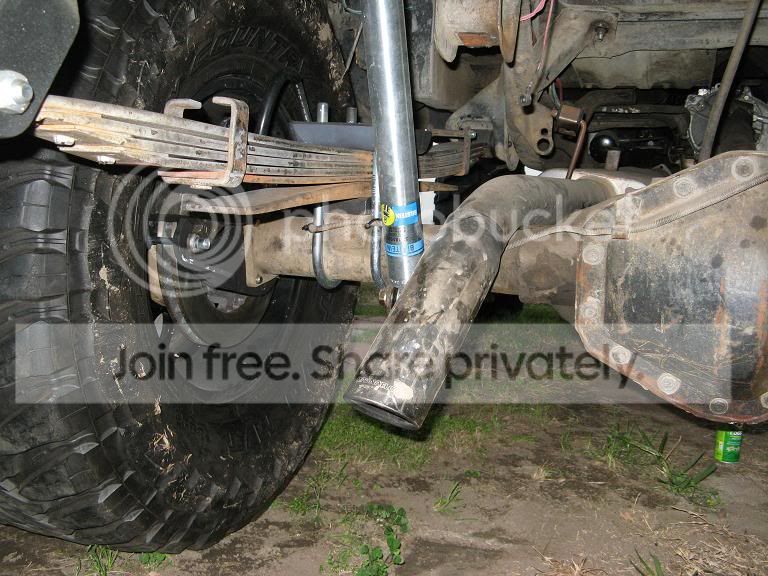
New rubber lines from the brand new axle hardlines to the calipers. Only original part of the brakes, with unknown mileage, is the hardlines attached to the frame. Which all look good. :dunno: (axle hardline was changed after this picture)


1160.jpg
 
so what happens if you pinch off the rear rubber at the axle? if you apply the brake, can you spin the fronts by hand( like you could before)?
 
Oh, Crap....
Do I see rubber lines running the length of the axle tubes?

If so, is there anyone else here that has that? If there is anyone else with that setup and good brakes, I'll change my mind, but there is no way I would run that.
You are dealing with two factors with brakes. Force and volume. Rubber defeats both.
Stainless steel, teflon lined, high dollar brake lines still stretch. There is a reason that 90% of all the brake lines on a vehicle are steel or some metal. And its not because they might rot.

When you first started talking about soft pedal to a point, then hard, I thought that you were bottoming out the MC.
But, then you said that the pedal would hit the floor when bleeding, so that eliminated that.
Instead, I think you are bottoming out the booster, and the hard pedal you feel is the actual load of the master cylinder with no boost.

Which tells me that you do not have enough volume in you system to work the brakes.
That fluid has got to be going somewhere. First thing to check, is pad position. Chock the wheels, ALWAYS chock the wheels. Then hit the brakes like you are doing a normal stop. Press good and hard.

Release them like you are going to drive off. Leave everything alone, and slide under and check the distance from the pad to the rotor on each wheel. The pad should be from touching to about the thickness of a piece of paper. If one or more is a 1/4 inch or so back, that has to be fixed.
I do NOT think you are going to find that though.

Instead, I think all of them are going to be fine. If so, I'm betting on rubber problems.

Oh man, I just went back and looked. Sure enough, you even have some rubber hoses from the MC to the Prop valve.
Dude, you cannot have that much expansion ability in a brake system unless you run massive dia. MCs.
And, if you do that, you will have to go to hydro because you will not have enough pressure ratio to stop.
I'm betting you could clip the plastic ties that are holding the rear flex lines to the axle tubes, stomp on the brakes, and the lines will jump like a shocked frog leg.
If Chris is still there, he could pinch the lines between his fingers, and I bet he would feel some expansion when you hit the brakes hard.

You need to either find some factory hard lines, or make some up for the rear, plus find some of the coils from the MC to the valve.

You might get away with either the ones at the MC, or the ones at the rear, but those together combined with the regular ones from the frame to the rear axle, frame to the front axle, plus the ones at the front calipers are just too much expansion.
When you are pressing the pedal, all your pressure is going to expand those lines. Each one is only expanding a tiny amount per inch, but there are a lot of inches.
 
Fordum is right about having too much rubber in the lines!...all your doing is basically blowing up a balloon,instead of the pressure getting to the calipers..

Also,I think all 1 tons have hydroboost,so if you ordered a 1 ton master cylinder,its the "correct" one for hydroboost--but it'll work as well on a vacuum booster too,provided the push rod depth and bolt pattern is the same,and I think we already determined that..I'd keep the master cylinder...

I noticed a firmer pedal in my truck when I replaced the old rubber brake line in the rear to a stainless braided style one...
 
Oh, Crap....
Do I see rubber lines running the length of the axle tubes?

If so, is there anyone else here that has that? If there is anyone else with that setup and good brakes, I'll change my mind, but there is no way I would run that.
You are dealing with two factors with brakes. Force and volume. Rubber defeats both.
Stainless steel, teflon lined, high dollar brake lines still stretch. There is a reason that 90% of all the brake lines on a vehicle are steel or some metal. And its not because they might rot.

When you first started talking about soft pedal to a point, then hard, I thought that you were bottoming out the MC.
But, then you said that the pedal would hit the floor when bleeding, so that eliminated that.
Instead, I think you are bottoming out the booster, and the hard pedal you feel is the actual load of the master cylinder with no boost.

Which tells me that you do not have enough volume in you system to work the brakes.
That fluid has got to be going somewhere. First thing to check, is pad position. Chock the wheels, ALWAYS chock the wheels. Then hit the brakes like you are doing a normal stop. Press good and hard.

Release them like you are going to drive off. Leave everything alone, and slide under and check the distance from the pad to the rotor on each wheel. The pad should be from touching to about the thickness of a piece of paper. If one or more is a 1/4 inch or so back, that has to be fixed.
I do NOT think you are going to find that though.

Instead, I think all of them are going to be fine. If so, I'm betting on rubber problems.

Oh man, I just went back and looked. Sure enough, you even have some rubber hoses from the MC to the Prop valve.
Dude, you cannot have that much expansion ability in a brake system unless you run massive dia. MCs.
And, if you do that, you will have to go to hydro because you will not have enough pressure ratio to stop.
I'm betting you could clip the plastic ties that are holding the rear flex lines to the axle tubes, stomp on the brakes, and the lines will jump like a shocked frog leg.
If Chris is still there, he could pinch the lines between his fingers, and I bet he would feel some expansion when you hit the brakes hard.

You need to either find some factory hard lines, or make some up for the rear, plus find some of the coils from the MC to the valve.

You might get away with either the ones at the MC, or the ones at the rear, but those together combined with the regular ones from the frame to the rear axle, frame to the front axle, plus the ones at the front calipers are just too much expansion.
When you are pressing the pedal, all your pressure is going to expand those lines. Each one is only expanding a tiny amount per inch, but there are a lot of inches.


J, we already removed the soft lines everywhere possible. The lines running down the axle tube are steel, the only rubber lines are the short ones from the steel tube to the caliper itself.I'm ppretty sure it's going to be the pads. I just read a thread on a Ford forum about some "counterfeit brake pads" that came out of china made from pressed wood and sawdust mixed with some metalic substances.:doah: the thread was about 1.5 years old and the people got them from several different sources. Their simptomes were close to the same as Brent's just not quite as extreme.
 
Its possible, but unless the darn things are spongy soft, I'm not convinced its the problem.
Since you got rid of the rubber, then the fluid has to be going somewhere.

In a "perfect" system with no rubber, and solid steel brake pads, the pedal would move down only far enough to take up the slack in the brake calipers.
Then, you would have a solid pedal.
As you pressed harder, the pads would tighten on the rotors by an amount that was a multiple of how hard you pressed.
If the pedal moved any farther, it would be the steel pads denting the rotors.

Hydraulic fluid is noncompressible by normal standards. When you are stopping with a normal braking system, and you press harder, the pedal moves slightly and the brakes apply harder.
That slight movement is the pads compressing, the rubber lines expanding, maybe even the caliper frames stretching.
But, at the same time, the pressure on the pads goes up enormously.

Solid Teflon pads should do better than what you are describing. And even they would give some pedal pressure.
Instead, it seems that the pedal just moves down with little increase in pressure at the pads.
Like I say, that fluid has got to be going somewhere. Its not building up pressure, so its moving.
Its either filling up the calipers, and taking up slack in them, compressing some hidden air, or leaking past the MC piston.

Since you have used different MCs, I doubt that all of them were leakers. So, unless the bleeders are on the bottom of the calipers, which you would have noticed by now, I have got to think there is some kind of massive mismatch between the volume of the calipers and the amount of fluid the MC is supplying them with.
I know that disk brakes usually require more volume than drum due to the size of the piston, so its possible that the rear is the problem and is caused by a "drum" port trying to supply a disk.
At this point, since I believe that the fronts are more or less stock, at least they were originally disk, could you find a flare plug and block off the rear port on the MC to see if you can lock up the fronts?

BTW, thinking about the apparent running out of stroke by the booster, is there any way with all the swapping, that you might have put a manual (deep dimple) MC on a power (shallow dimple) system?
 
J, we already removed the soft lines everywhere possible. The lines running down the axle tube are steel, the only rubber lines are the short ones from the steel tube to the caliper itself.I'm ppretty sure it's going to be the pads. I just read a thread on a Ford forum about some "counterfeit brake pads" that came out of china made from pressed wood and sawdust mixed with some metalic substances.:doah: the thread was about 1.5 years old and the people got them from several different sources. Their simptomes were close to the same as Brent's just not quite as extreme.

I always make sure to buy the softest pads available (which generally seem to be the cheapest as a plus) because they have a shorter life expectancy as they are soft and grab the rotor better. When you buy the fancy ceramic pads with lifetime warranties, all you get is a pad thats super hard that doesnt wear out or grab very well.

I know this because i installed such pads, then taken them off and put cheapies on and it was a world of difference.
 
I'll post with more words in a moment.

1985 CK30 master and hardlines


No prop valve, only straight line from the MC. Very very new ORD braided lines in front.


Brand new steel lines on axle and very very new ORD braided drop.


~3,000 mile old, CA weather rubber lines to rear 1/2 ton (small piston) calipers


Shot of my pedal and linkage. Not sure helpful this shot is but figured why not.


Latest Posts

Top Bottom