CK5
Register an account today to become a member! Once signed in, you'll be able to participate on this site by adding your own topics and posts, as well as connect with other members.

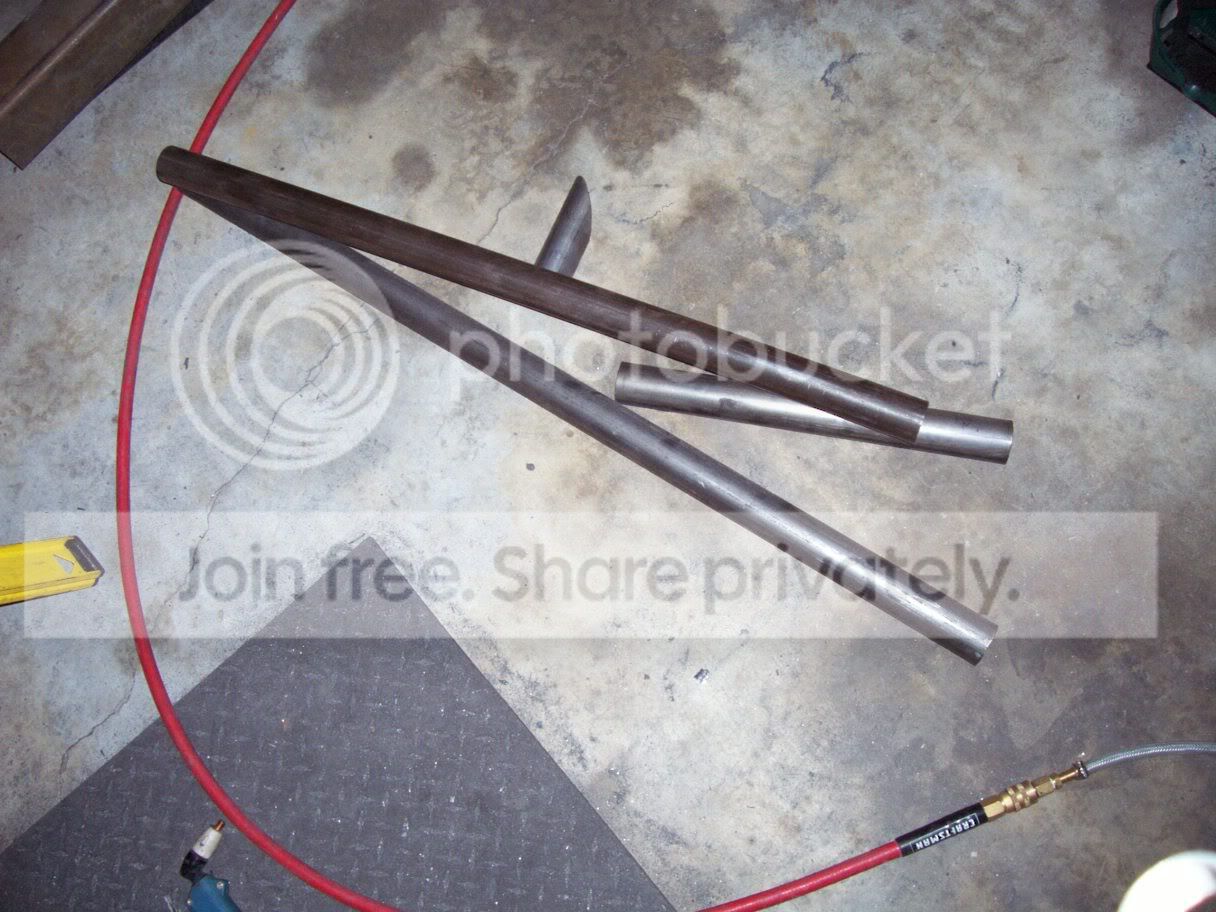
Build your own Anti-Wrap/Traction Bar---PICS

Same problem I ran into. I run short headers from Heddman. they were for a 350 setup in an S-10. The collector is right next to the starter. The driverside just shoots straigh out to the muffler, and the pass is tucked real close to the torque converter and then turns into the muffler. After I boxed the fram i had exactly no room on that pass side to run anything but fuel and brake lines.
 
I was wrong. 14 bolt center sections are cast iron. You can still weld the tubes to them but you have to pay a little extra attention and the weld probably won't be as strong as welding mild steel. Even given all that, I will be welding my tubes to the center section when I build an anti-wrap bar.
 
I'm familiar with the processes for welding, just didn't know what they diffs were made of. Thanks.
 
Here's an idea...

Check out Blue Torch in the vendor section
14BOLT.jpg
 
or you could go with the ruff stuff truss... I like its design and the price. If you can weld, it wouldn't be hard to tie it in with a DIY guardsman-type pinion guard and you'd be on your way.

j
 
even just tieing the two tubes together with the ruff-stuff setup would be a very good step.
 
38377k5 said:
I was wrong. 14 bolt center sections are cast iron. You can still weld the tubes to them but you have to pay a little extra attention and the weld probably won't be as strong as welding mild steel. Even given all that, I will be welding my tubes to the center section when I build an anti-wrap bar.

Won't be close to a mild steel hardwire weld as far as strenght goes... and when you start with thin material you automatically shorten your options for strength. You'll notice when you weld mild steel right the steel will rip before the weld goes so I'd be more concerned about the thin tube, a weld is only as strong as what its attached to.

Also when you weld cast iron use nickel wire for the strongest possible weld and be very careful not to get it too hot when preheating and get the machine adjusted right... could suck if you burn through that thing.

If it were me I'd put some bracing from the rear axle to where the two tubes meet(between the upper and lower link)... some of the same pipe or some thicker stuff; would be alot stiffer and hey what the hell, that is why they call it a ladder bar isn't it?
 
hey try this out so you don't have to re-do it....where the upper tube meets the lower just scab another piece on so it looks like a straight shot with a diagonal brace between them...this picture sucks but might give you an idea of a possible alternative...

100_0530.jpg
 
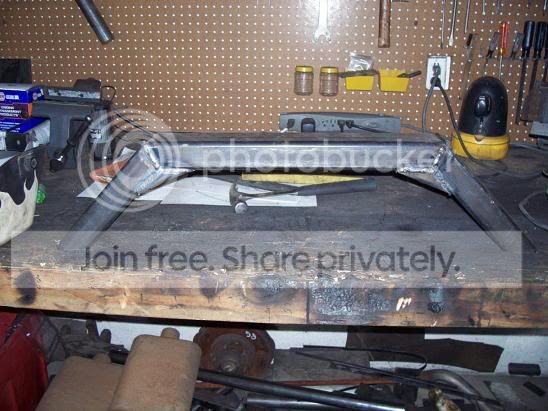
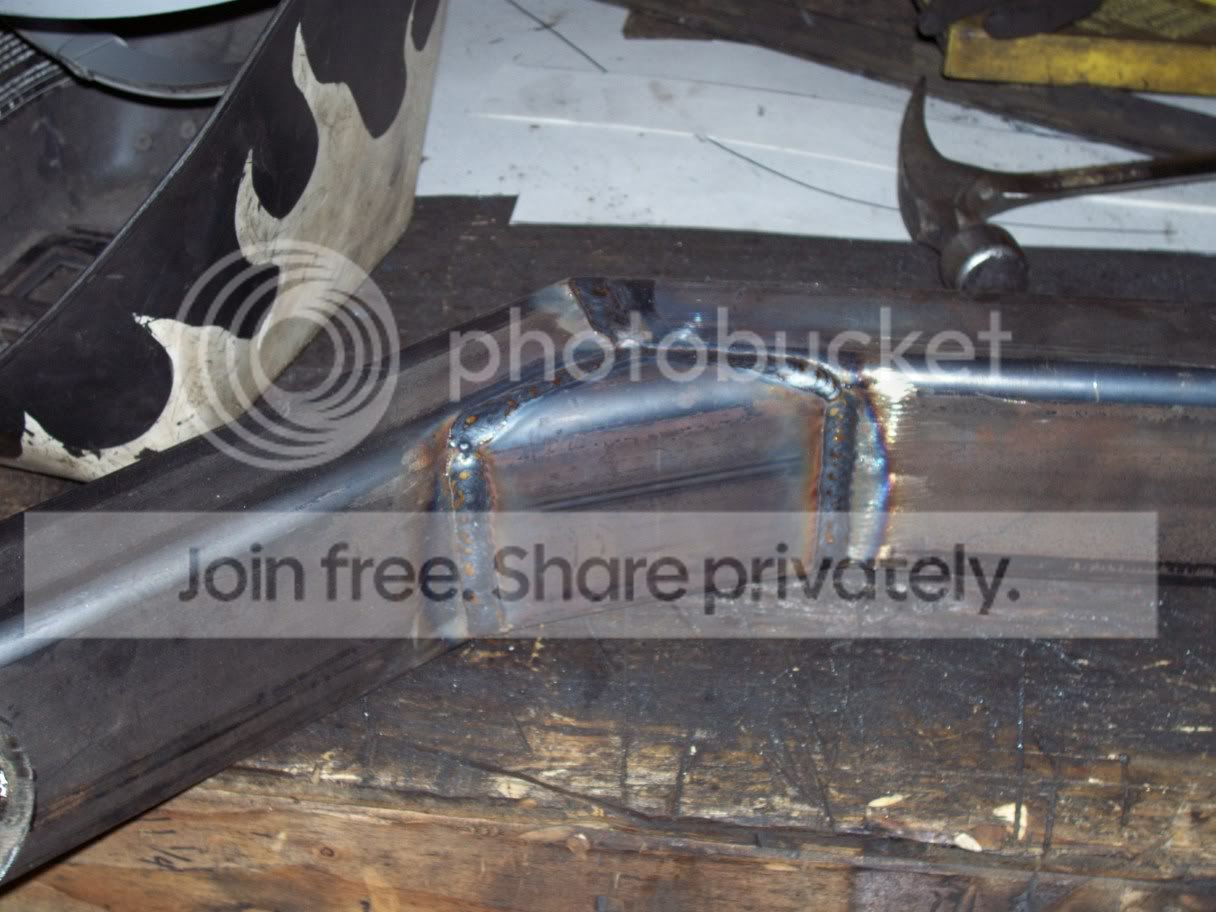
as for the brace, just build your own for 30 bucks....a couple miters and some beveling on some 2x3x.250 can get you this... with some time you can make some corner gussets too..

bridgeontable2.jpg

bridgegusset.jpg
 
Oh yeah don't run downhill when you weld any of this... downhill welds are the weakest weld. uphill vertical is strongest, horizontal is middle. Uphill is not something most people can do but If you "stack" your weld as you go up and turn the machine down so your welding slow it's pretty easy. Just takes practice. If you can uphill it then uphill it if not try to make it a horizontal weld but a downhill on cast iron is going to be VERY weak even if you use nickel wire.
 
sled_dog said:
diff is cast iron. You can weld to it, and it will help, but its not going to be the strongest thing ever. Pre and post heating will be necessary for a GOOD weld. Something like a truss tieing both tubes and the pinion support ogether would be THE way to go, but its expensive and seeing as you have that setup for the traction bar, there is no reason for it. I'd ask a bit how folks have welded around the tubes then do that. I can't speak on it, I've never done it.
I was going to say different, but:
38377k5 said:
I was wrong. 14 bolt center sections are cast iron. You can still weld the tubes to them but you have to pay a little extra attention and the weld probably won't be as strong as welding mild steel. Even given all that, I will be welding my tubes to the center section when I build an anti-wrap bar.

So, Source for this info plz. I remain unconvinced, but I'm willing to accept it pending a creditable source.
 
They might be cast steel....cast iron isn't very strong, kinda brittle. We've welded diffs at the shop. Border Patrol puts holes in 'em sumtimes.
 
i don't really understand that uphill, down hill, horizontal stuff.... Could you explain in a little more detail for less experienced welder? I would like to start welding sometime, but I mean this sounds very valuable.
 
Downhill or downhand(weakest type of weld) weld means that you welding vertically but starting at the top and ending at the bottom and vica versa with uphill(strongest type of weld) or uphand. Horizontal means.... well picture two pieces of flatbar laying on a table flat, slide those pieces of flatbar together and weld them together and that is horizontal(like drawing a line on a flat table would be a horizontal line).

Horizontal is in between the two and overhead welding is as strong as horizontal just harder and you get burnt.

That applies to all types of mig welders, aluminum, hardwire, dual shield, flux core etc. Pretty sure same goes for tig but I'm not too experience with tig(not for long tho).


Welding is not something you learn overnight... just pay attention relax and get comfortable when welding. Eventually it will be like breathing. You won't even need to think about it. Best thing you can do is practice. There is no way you can take everything in at once so just learn as you go... and if someone teaches you how to weld stick with what they tought you and what you know, don't change your style or the way you do it when someone tells you your doing it wrong etc etc because everydone has different techniques. Just practice practice practice and the most important thing is getting comfortable before and during the weld.
 
Last edited:
K10A'sBROinSLO said:
They might be cast steel....cast iron isn't very strong, kinda brittle. We've welded diffs at the shop. Border Patrol puts holes in 'em sumtimes.
I've welded all sorts of cast iron heads, blocks, & exhaust manifolds when I worked for a racing engine shop. The diff housings I've worked on didn't weld like that at all. From grinding & welding on them I'm inclined to think they are cast steel or semi-steel (low carbon iron).
 
What'd ya weld 'em with? I can't remember what we ended up using on those USBP diffs...
 
Very nice writeup.....

And I like the simplicity you did on the other end, no need to get complicated when you don't have to.

A little clarification, all of the Ruffstuff parts used, Antiwrap axle end section are all .25" thick at the minimum. The actual axle mount plates are 3/8" A50 Plate, the Stiffeners and the DOM are .25"......
 
ntsqd said:
I was going to say different, but:


So, Source for this info plz. I remain unconvinced, but I'm willing to accept it pending a creditable source.

The 14bolt center sections are cast iron,D-60s are nodular iron(more welder friendly)

If you look at the 14bolt bible on pirate its in there,also check out the steel strenght article too.You will need to read into some to get an better understanding of it all.

IMO on welding to cast iron I would not use it as main attachment point but more of a secondary one!
 
MEK5 said:
The 14bolt center sections are cast iron,D-60s are nodular iron(more welder friendly)

If you look at the 14bolt bible on pirate its in there,also check out the steel strenght article too.You will need to read into some to get an better understanding of it all.

IMO on welding to cast iron I would not use it as main attachment point but more of a secondary one!
I don't consider POoR the creditable source I was asking for, but if you'll link it (since I extremely rarely go there) I'll look to see what sources they might list.
 

Latest Posts

Top Bottom