I made some great progress this afternoon. The last two days have been a struggle getting the fuel pump to start drawing fuel. But today I took a step back and started checking basics. I pulled the line off between the pump and the frame. Interestingly enough, my Dad had a 6" braided steel line in this spot. I was expecting rubber. So with the line off at the pump I attempted to blow compressed air back to the tank. It just felt blocked. So I got underneath and pulled the other side of the line off so I could see if the inside was collapsed or not. It wasn't. So I attempted to blow back through the hardline again. Like before, it felt blocked still.
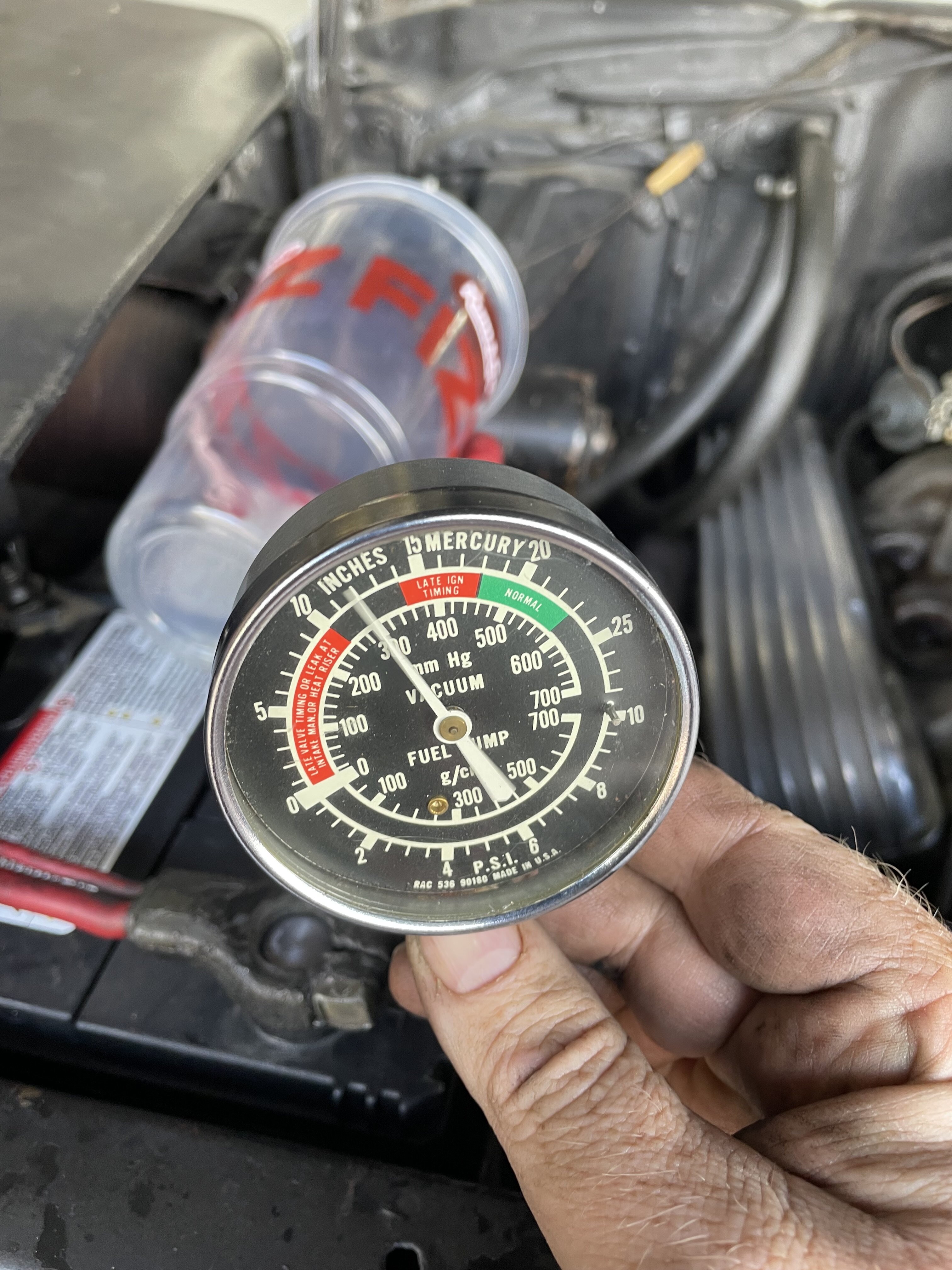
Before moving to the back I decided to validate that the pump indeed was working. I hooked up my gauge to the inlet side of the pump, primed the carb again and looked at the reading before it ran out of fuel. 10" on the button. Pump is ok.
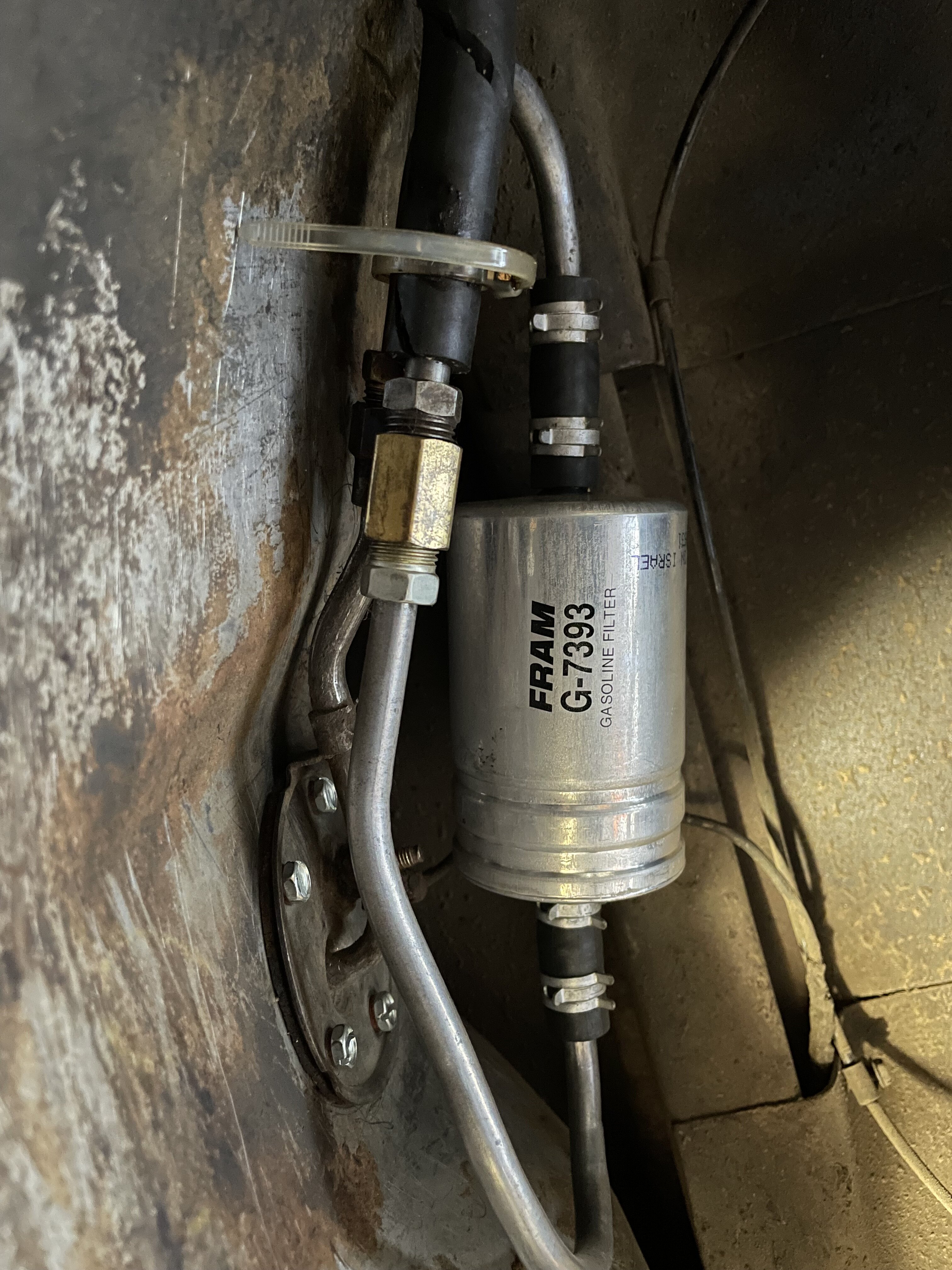
So I decided to go back to the tank and check on that end. To my surprise this is what I found.
Obviously, this isn't factory. I do recognize it though. Back after we had an incident with the white '57 on our way to a car show. Sediment from years of use of 104 octane boost finally broke free an started clogging up the fuel filter. That car has a glass bowl filter on the front carb and we could see the flakes floating around. We ended up flushing 5 gallons of fuel through the tank over and over again after straining the drained fuel until we got nothing but clean fuel. Then my Dad built the same style of fuel filter between the tank and the fuel line. My Dad had to put this in when he got the car out last in 1999. I didn't know he built one for this car.
I took the filter off and blew air forward through the line and finally I felt like it wasn't plugged up. So I attempted to blow back into the tank, no bueno. Clogged for sure. Lucky for me unlike the sedans and hardtops having the sending unit in the top center of the tank, the wagons have the sending unit at the front vertical wall that's really easy to access. Five screws and it's out with a little wiggle. I brought the unit back out from under the car and attempted to blow though it either way. Nada. No flow. I took a length of bailing wire and started to run it up the pickup tube and about 2" in I found the blockage. Slowly I soaked it with brake clean and kept running the wire in and was getting this gooey black tar out of the pipe. Looking at the pipe it sits horizontal (no sock at all) and then it makes a 90* turn verticle. Most of the horizontal section was plugged. I was able to keep working it in and out each time getting a little more out. I then came up with a little trick to chuck the wire up in the drill and let it roto-rooter its way up the pipe. Each time flushing it out with brake clean and air. After about 15 minutes of fiddling the air was flowing freely both ways.
Now one might think I'm nuts for even worrying about it. Most would have just got a tank and sending unit and call it a day. Which, I will do. But ultimately I want to make sure the car runs on it's own now. I had run my borescope into the empty tank and found no flakey business where the three gallons of fuel was. With the pickup pipe cleaned up and putting the filter back in where my Dad put it (air flowed freely through it) and the filter up front at the carb I feel ok running it this way until I replace the tank this winter.
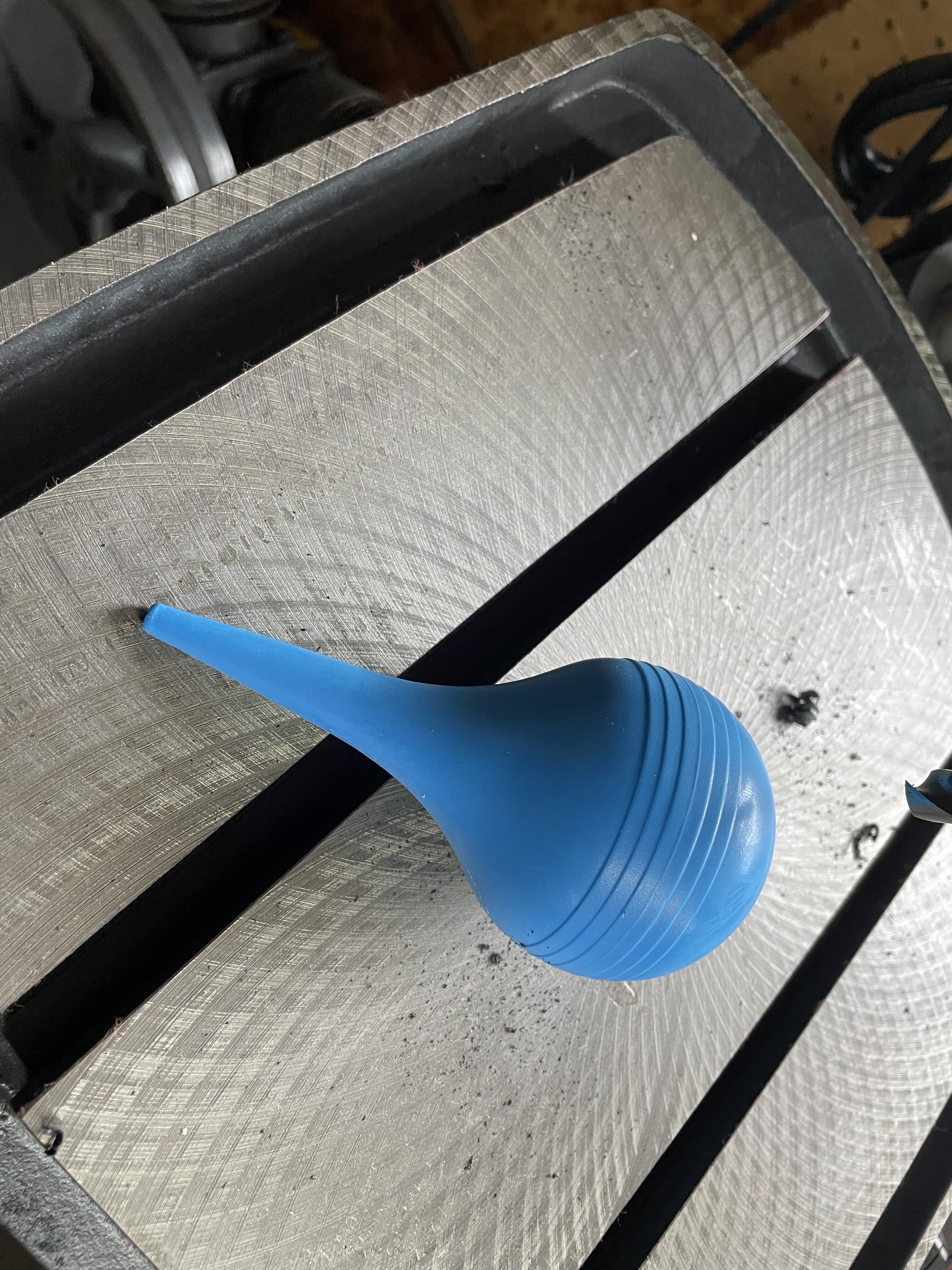
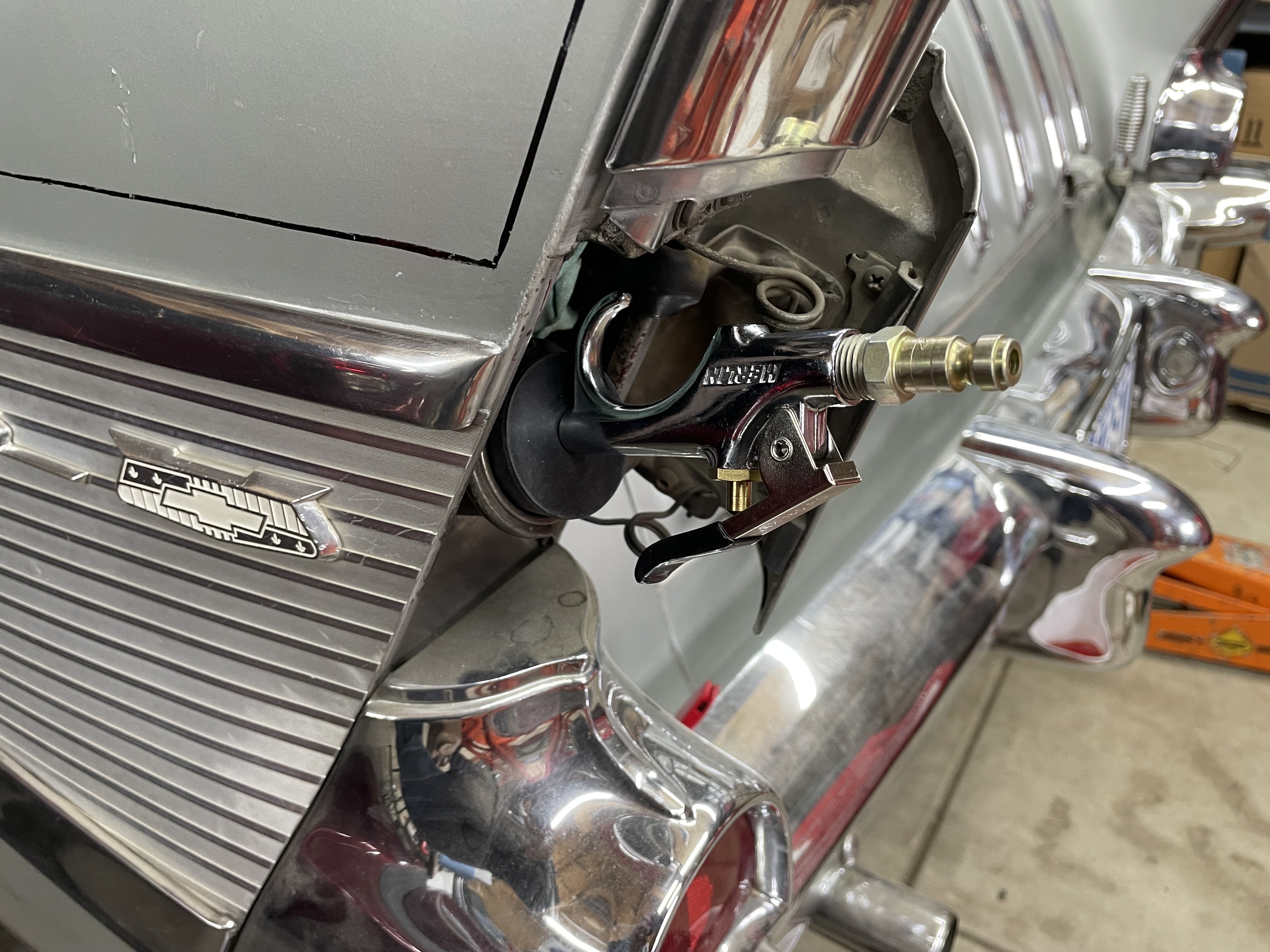
I went ahead and reinstalled the sender and buttoned up the line. Knowing the system should flow, I used my next tool I made to gently pressurize the tank and push fuel up the line.
It sure worked as I could hear it flowing out of the line up by the pump! Now I have to double time it to get the line threaded in. (slight tactical error on my part I should have hooked that up first) It's by far easier to reach that line from under the car than reaching down. The only problem was the fuel running down my arm at a serious rate. I just couldn't get it so I went back up top and threaded the line in from up there, even if I could only get an eighth of a turn on the wrench before hitting the upper control arm.
While I was under the car I figured out why the car was way louder than I remember too. Turned out when we loaded the car on the trailer the exhaust on the right side caught on something and pulled the inlet of the muffler out of the head pipe. I went ahead and slipped the pipe back in and locked it down with the clamp. Much better.
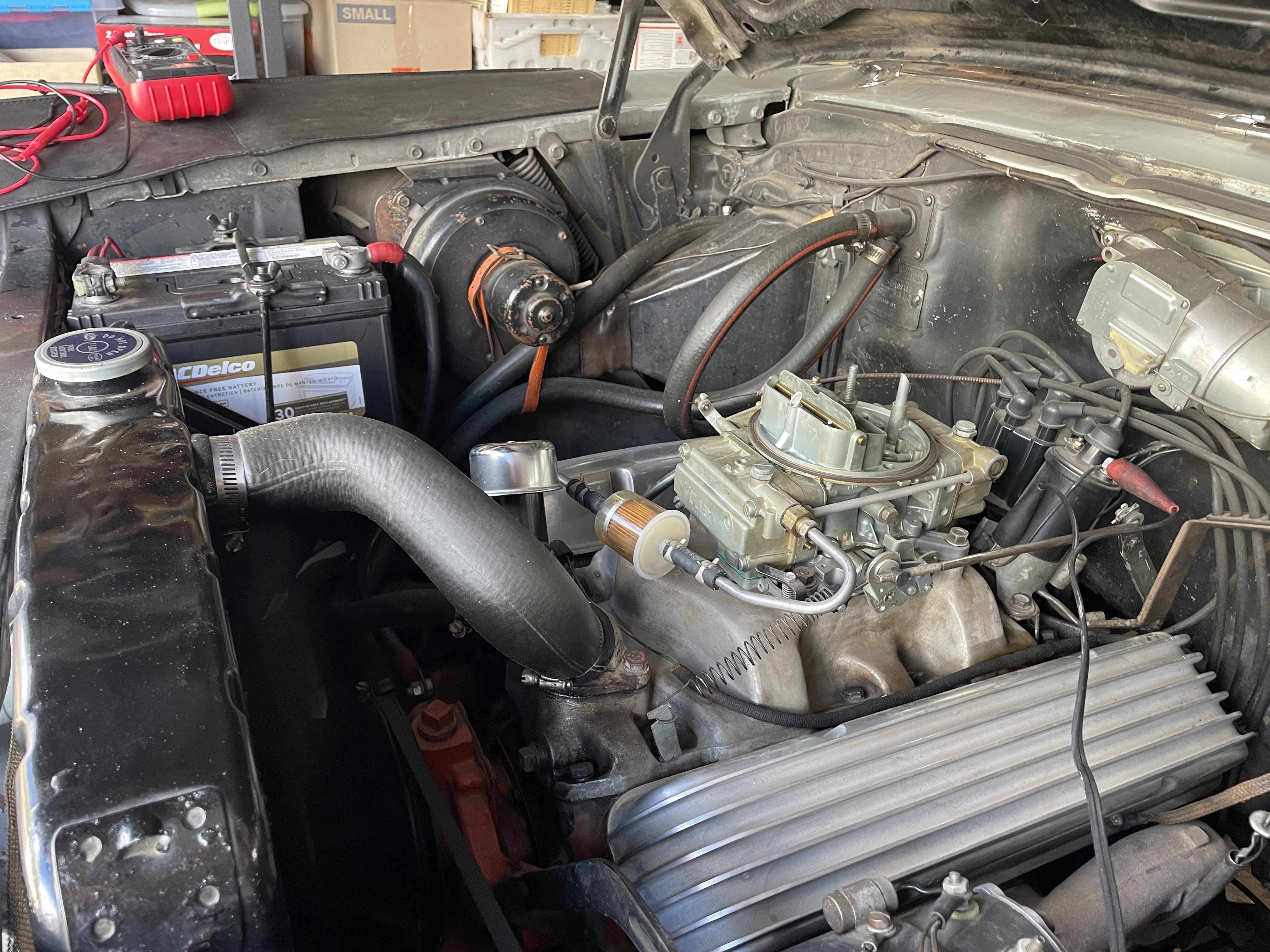
All done under the car I primed it one more time and twisted the key. Lit right off. With the choke on it built up some temp into the engine and after about ten minutes I could take the choke off. It settled into a lopey idle like I remember.
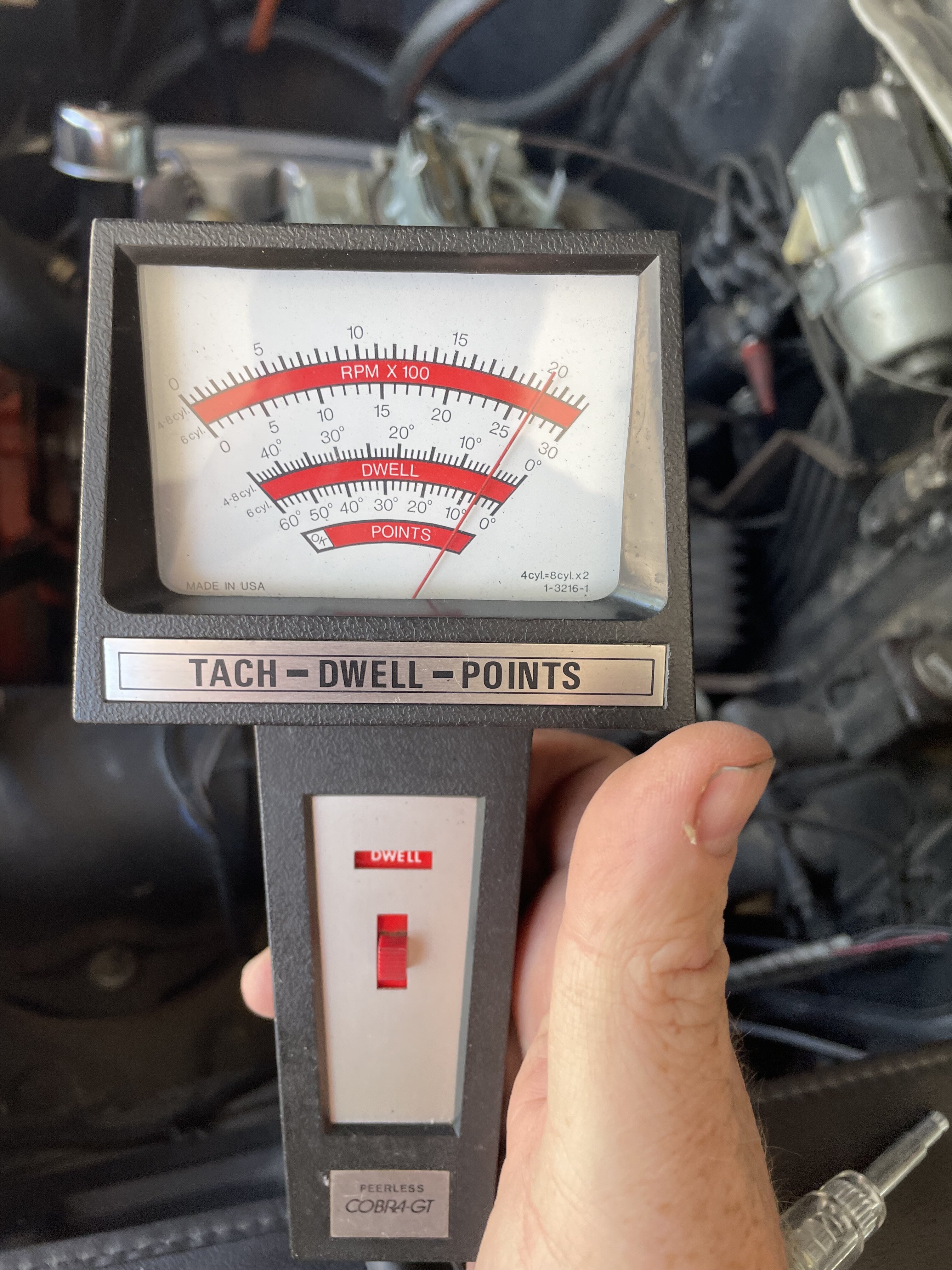
@Wes Harden While it was running, I tossed my dwell meter on it. 5 degrees at idle. I have no clue if that's good or bad.
But, when I switched it to the tach setting it's barely reading 200 rpm and I know damn well it wasn't actually running at that speed. So my dwell meter might be off.
The choke is still on here so it's running fat.
Choke off, at operating temp and idles nicely on its own. Once things warmed up the valvetrain clatter quieted, though it still has some which I expect.
I hopped in and with the tires off the ground I pushed in the clutch and clicked the Hurst into 1st gear. I slowly released the clutch and let the drivetrain spin slowly. No odd noises. I took it back out of gear and let it idle some more. The t-stat opened and it the idle mixture seems to be pretty close as it wasn't burning my eyes anymore. Oddly enough the carb didn't leak a drop today. The bowl screws were tight too. I still plan on getting a kit for it, but it was odd that it was clean and dry. Oh,
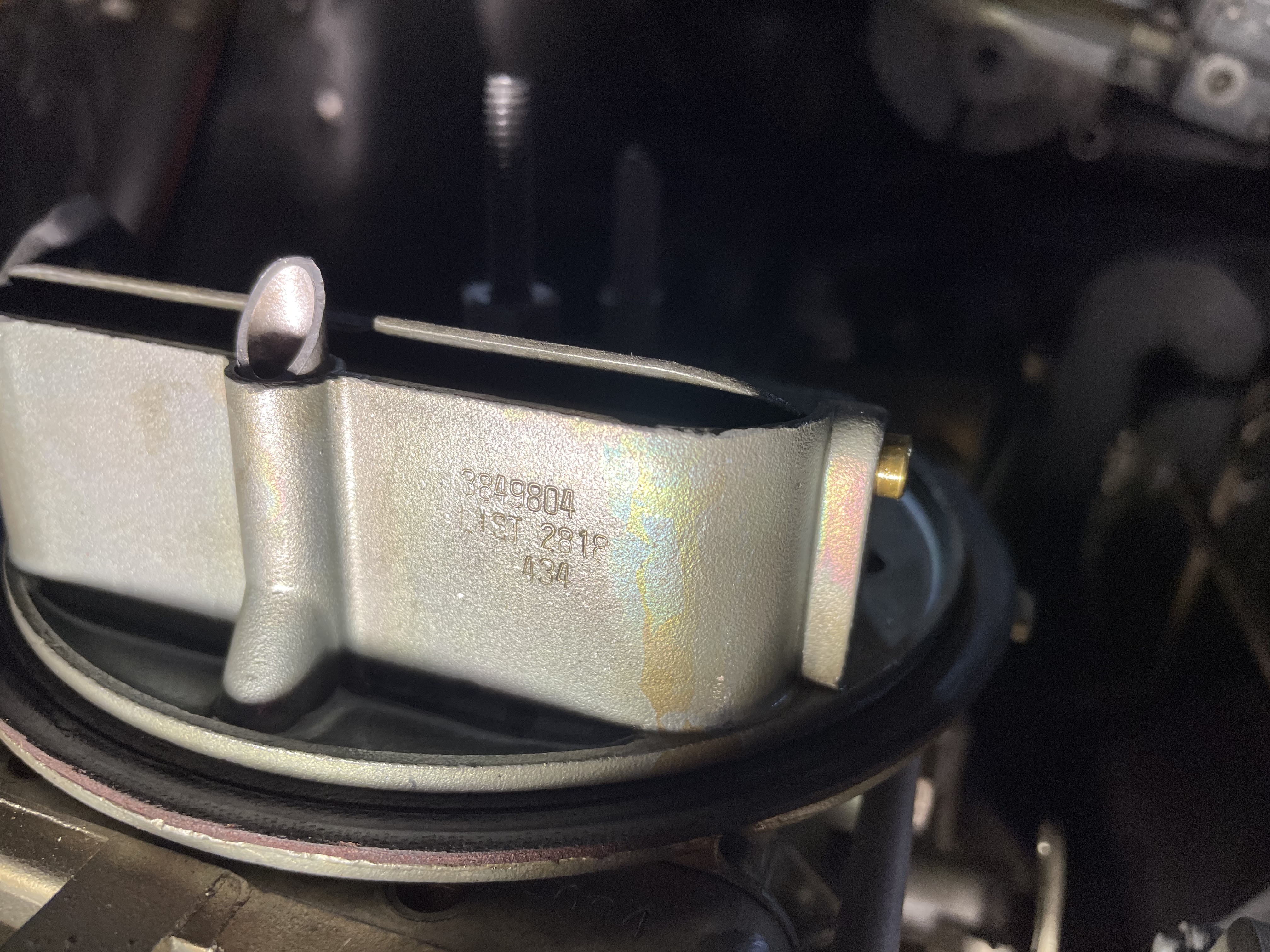
@76zimmer you'll like what the carb comes back to by the list number. 2818-1 which according to Holley was a GM factory carb for the 64/65 365hp 327 in a Corvette. The date code narrows it down to April 1964.
All in all, a very productive outcome to the day. Next up, full brake inspection, lube the suspension and check rear axle fluid.