
CK5
Register an account today to become a member! Once signed in, you'll be able to participate on this site by adding your own topics and posts, as well as connect with other members.

Effect Fuel Pressure Has on Performance

1-ton

3/4 ton status
GMOTM Winner
Joined
Apr 17, 2004
Posts
5,752
Reaction score
3,161
Location
Las Vegas, Nevada
I have a bored out TBI from Vic Morse machine, which has an adjustable fuel pressure regulator (FPR). The TBI was bored from (I think) 1-11/16" to 1-7/8" (1.855 thousands of inch) by Vic Morse Machine. I also had the stock aluminum intake manifold bored out to match the TBI.

With the FPR adjusted to barely seated against the spring the fuel pressure is roughly 9.5 PSI. I currently have the FPR adjusted to 13 PSI. I had to crank the FPR four turns in from seated to get to 13 PSI. My question is what effect does increased fuel pressure over stock pressure have on the performance of my engine?
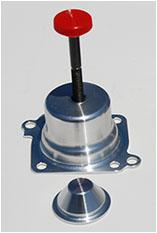
cfmtechadjregulator.1.jpg


full
 
It depends if your engine needs it.

As we all know, fuel injection is a system. There isn't one thing that can be changed/modified without affecting the way the rest of it performs.

In a nutshell, the major affect when changing fuel pressure is that you change the effective lb/hr rating of the injectors.

Injectors are rated at a specific PSI. Say the TBI ones are rated at 13PSI (I don't know, just throwing an educated guess out there). The ECM uses that "knowledge" (it's coded into the PROM) to calculate fuel delivery. The injector pulse width (PW, length of time fuel sprays) is changed to increase/decrease fuel supply based on engine requirements.

Under closed loop operation (feedback, the narrowband O2 sensor is "telling" the ECM if the exhaust is rich or lean and the ECM tries to bring the mixture to 14.7:1 by increasing/decreasing injector PW), the ECM can and will compensate fueling either rich or lean, *within it's capability*. Extreme case, you put an 80PSI pump and regulator in place of what is on your engine now, it will run very rich, because the ECM can only decrease the injector PW so much.

With small changes to fuel pressure, it's probably unlikely the ECM will be unable to compensate during closed loop operation. The problem comes during open loop. For TBI, some applications ALL idle is open loop, startup is open loop (probably governed by a timer and starting coolant temp), and most importantly IMO, under heavy throttle.

The way the injection system "gets around" being open loop under those conditions is to use preprogrammed values for injector PW. The base factor in the fuel calculations for open loop operation is lb/hr rating of the injector. As I stated much earlier, changing the pressure changes the effective lb/hr rating of the injector. Because open loop does not use the O2 sensor for feedback, the system is "assuming" the lb/hr is what the code says it is. Not going to do the math, but if the injector is rated at 100lb/hr at 13PSI, under the same conditions, if you bump the PSI up to 15PSI, you've changed the amount of fuel going into the engine, which the injection system has no idea of. The ONLY way to "fix" this is to change the programmed information in the PROM.

There is a lot more to it (the injector PW under open loop is dependent on engine load, temperature, etc) but generally the lb/hr change is why no one in their right mind recommends an AFPR on TBI/TPI without making sure that fueling is right under open loop conditions, unless the AFPR is used to dial it in to a particular PSI within GM's specs which were 9-13PSI. You'll note that even though 9PSI is "spec", people who have engines running at that will notice that it runs worse. 10PSI or less seems to cause issues.

Modern engines are all running wideband O2 sensors for this reason. Our narrowband sensors are inaccurate at anything other than 14.7:1, and as we know, 14.7:1 is not the AFR you use to make power.

Any modifications that can change the VE of the engine (which is pretty much everything not fuel related...cam, heads, intake, etc) are inherently likely to cause issues with fueling. Those changes are not linear to the way the engine performs. Just bumping up (or down) pressure after engine modifications may work to fix a problem at one particular point in engine RPM/load, but will cause problems elsewhere.

As a for instance I've cited many times, my dads basically stock 454 with stock TBI system, (small cam and headers), needed more than a 25% increase in fueling to keep it from going lean under heavy throttle. Even bumping pressure up to 14PSI was barely enough to get the injectors to flow what was needed to keep it rich under throttle. Obviously the 454 is going to tax the fuel pumps more than the 350's due to injector "size", but it gives you an idea of how much difference "minor" modifications make. And also makes one wonder, if it doesn't run any different after modifications, the modifications probably weren't effective. However, that doesn't always hold true under WOT, where going lean may not seem like a loss of power...but without knowing what "right" looks like, it's not a valid assumption.
 
Great reply.

The question of what is the ECM chips fuel pressure set for and the pulse width it delivers based on that assumption could be just that...an assumption by the ECM. I bet I could put two identical factory Orange colored fuel pressure springs into my TBI, and get two different fuel pressure PSI's out of it...disregarding the AFPR I have in it now.

I plan to do some data logging in the future, and I wonder if I would be able to see what the ECM chip fuel pressure is set at, and then set my AFPR to that exact fuel pressure, in order to get a perfect pulse width of fuel to my engine.? I did put a mild cam into this new GM Goodwrench engine of mine. It is a mild Comp Cams "Computer Control" cam. The specs for it are @ .50 Duration (201 int/206 exh.) and @ .50 Lift (.406) with (111 degree) LSA.

When I talked to Vic who modified this TBI he explained that the same fixed pulse width happens at 3/4 to full throttle as does during open loop, and this is where the performance in an AFPR kicks in. Since I am driving an 7000 pound crew cab I will not be doing a lot of driving like that so the 3/4 to full throttle concept does not do anything for me.
 
Last edited:
If you know what the BCC is of your PROM (it's printed on it if factory, usually can see it if you remove the chip cover on the ECM housing) you can just google that, chances are unless it's a really odd calibration, that the .bin is out there on the web. Then you can download Tunerpro RT, and you can see all the calibration data.

PSI (fuel pressure) is not set in the PROM. Only lb/hr. Whatever PSI GM rated the injectors at, is what was used for the lb/hr rating used in the PROM. You'd need to have the injectors flow tested to make sure they are at the rated flow, then set your PSI to whatever the testing spec is for the injectors.

I'm sure that GM says the 9-13PSI range is "acceptable" because of all the tolerances that could affect what the injector actually puts out, and erred on the side of caution in the programming. I'm certain this is why good tuners can always exceed the factory power by tuning it to tighter specs. GM doesn't have the time/money to invest on every vehicle that way. But looking at it this way, 9-13PSI is a 30% difference. If tolerances don't stack in your favor (fuel pump is at 9PSI, injectors are at the low end of the flow spec) you could run lean under heavy throttle. Making an engine perform better without changing the amount of fuel delivered by the injectors is just taking that margin of error out, which could result in problems.

I doubt the 3/4 to full throttle is a very precise statement. Cold engine op is one area that would be affected, but I believe acceleration enrichment and power enrichment are likely tied into PW, and that comes into play all tthroughout driving. Plus, you are talking a range for the TPS as well, it's not an on/off switch, although it may be something like "greater than 70% throttle". I just haven't looked into that enough to know for sure.

The "computer friendly" cams have always made me chuckle/cringe. Since lb/hr is hard coded, "computer friendly" is a lie. Imagine if fuel pressure was 9PSI and you put a cam in that required a bit more fuel than the factory cam. You are no longer "in spec" for fuel delivery.
 
If you know what the BCC is of your PROM (it's printed on it if factory, usually can see it if you remove the chip cover on the ECM housing) you can just google that, chances are unless it's a really odd calibration, that the .bin is out there on the web. Then you can download Tunerpro RT, and you can see all the calibration data.

PSI (fuel pressure) is not set in the PROM. Only lb/hr. Whatever PSI GM rated the injectors at, is what was used for the lb/hr rating used in the PROM. You'd need to have the injectors flow tested to make sure they are at the rated flow, then set your PSI to whatever the testing spec is for the injectors.

I'm sure that GM says the 9-13PSI range is "acceptable" because of all the tolerances that could affect what the injector actually puts out, and erred on the side of caution in the programming. I'm certain this is why good tuners can always exceed the factory power by tuning it to tighter specs. GM doesn't have the time/money to invest on every vehicle that way. But looking at it this way, 9-13PSI is a 30% difference. If tolerances don't stack in your favor (fuel pump is at 9PSI, injectors are at the low end of the flow spec) you could run lean under heavy throttle. Making an engine perform better without changing the amount of fuel delivered by the injectors is just taking that margin of error out, which could result in problems.

I doubt the 3/4 to full throttle is a very precise statement. Cold engine op is one area that would be affected, but I believe acceleration enrichment and power enrichment are likely tied into PW, and that comes into play all tthroughout driving. Plus, you are talking a range for the TPS as well, it's not an on/off switch, although it may be something like "greater than 70% throttle". I just haven't looked into that enough to know for sure.

The "computer friendly" cams have always made me chuckle/cringe. Since lb/hr is hard coded, "computer friendly" is a lie. Imagine if fuel pressure was 9PSI and you put a cam in that required a bit more fuel than the factory cam. You are no longer "in spec" for fuel delivery.
Will a 7747 computer be able to offer any performance increase using a wide band O2 ?
 
I think the computer friendly statement comes from the fact that the ecm has the ability to adjust fuel delivery based on learned long term and short term fuel trim.
 
PSI (fuel pressure) is not set in the PROM. Only lb/hr. Whatever PSI GM rated the injectors at, is what was used for the lb/hr rating used in the PROM. You'd need to have the injectors flow tested to make sure they are at the rated flow, then set your PSI to whatever the testing spec is for the injectors.

I did by a set of reman flow matched injectors from Vic Morse. Maybe I could call him and see if he used some kind of flow bench that is set at a certain flow rate for all the GM TBI injectors he rebuilds. I think that I vaguely remember that those injectors came with a piece of paper that had a graph and some data on it, and like a dummy I threw it away thinking I did not need it.

I think the computer friendly statement comes from the fact that the ecm has the ability to adjust fuel delivery based on learned long term and short term fuel trim.

The thing I see about computer control (i.e friendly) cams is that they are mostly single pattern cams, or they have a wider lobe separation, which causes less vacuum fluctuation so that the MAF/MAP can handle reading the manifold vacuum signals. Carbureted cams do not have to worry about vacuum fluctuation so they can use dual patterns to increase performance in engine that have known weaknesses in either the intake or exhaust side of that engine.
 
Last edited:
I did by a set of reman flow matched injectors from Vic Morse. Maybe I could call him and see if he used some kind of flow bench that is set at a certain flow rate for all the GM TBI injectors he rebuilds. I think that I vaguely remember that those injectors came with a piece of paper that had a graph and some data on it, and like a dummy I threw it away thinking I did not need it.

The thing I see about computer control (i.e friendly) cams is that they are mostly single pattern cams, or they have a wider lobe separation, which causes less vacuum fluctuation so that the MAF/MAP can handle reading the manifold vacuum signals. Carbureted cams do not have to worry about vacuum fluctuation so they can use dual patterns to increase performance in engine that have known weaknesses in either the intake or exhaust side of that engine.

I believe that any re-manufacturing of injectors normally includes flow testing/matching. I'm sure you could do it really cheaply and replace what is serviceable and push them out without testing/flow matching, but I doubt most reputable places do that.

I am under the impression short and long term trim are all about closed loop. Which would be no help when under heavy throttle. The lb-hr is never learned, it's assumed to be correct, any fueling calculation based on that will be wrong.

I ran a crane cam in the old motor that was a bit more aggressive, also dual pattern. But I realized I want/need low end torque, and the factory Vortec cam is better on the low end. Always a tradeoff. I haven't tuned the L31 engine yet, still running off the old tune, but other than some minor hiccups I never tuned out on hot and cold start, it seems to run fine. Of course "seems to" is not "does". :)

'7747 won't "accept" a WBO2 input as-is, so not really good for anything EXCEPT making sure your tune is correct under open loop conditions, in which case they are invaluable. They require the standalone controller since the ECM can't support it. I don't know if thinks like EBL or Megasquirt will support WBO2, they might. I "cheat" (do it wrong) and use the O2 data to make sure it stays rich when it should be. The O2 data is still there in open loop, assuming the sensor is warmed up (I use a heated O2, no issue), the ECM just ignores it at that time.

I highly recommend downloading tunerpro RT, the proper XDF ($42 for TBI?), and a TBI .bin (data from the factory PROM) that is close to yours. gearhead-efi.com has a pretty good library of .bins, I'd see if you can find a truck .bin that is correct for yours, or at least close, and check out what all this looks like.
 
I highly recommend downloading tunerpro RT, the proper XDF ($42 for TBI?), and a TBI .bin (data from the factory PROM) that is close to yours. gearhead-efi.com has a pretty good library of .bins, I'd see if you can find a truck .bin that is correct for yours, or at least close, and check out what all this looks like.

I actually have a 7060 ECM. I am going to register a user account on gear-head efi so I can download the .XDF files for my ECM. I want to get Tuner Pro RT, but I need to get a paypal account first because that is the only way to pay them for the software.
 
You don't have to pay for Tunerpro RT (do not use tunerpro, it's lacking functionality). Without paying, the only difference is the "nag screen" for 10 seconds or so when you first open the program.

I do recommend donating if you can, Mark is a great guy, had the pleasure of meeting him personally. I can't imagine how much work that software was/is to develop.
 
You don't have to pay for Tunerpro RT (do not use tunerpro, it's lacking functionality). Without paying, the only difference is the "nag screen" for 10 seconds or so when you first open the program.

I do recommend donating if you can, Mark is a great guy, had the pleasure of meeting him personally. I can't imagine how much work that software was/is to develop.

I thought I read somewhere that if you do not pay the registration fee for Tuner Pro RT that you get a limited 20 data logging uses only out of it. By the way, do you know if Tuner Pro RT runs on Windows 10?
 
it's never been pay to play. Mark could have charged i'm sure, but chose not to, apparently because tunerpro furthered his hobby. I downloaded rt a few weeks ago and same as before. Nag screen, thats it.

I bet windows 10 works fine. Forum at his website isn't real active, but there is probably commentary about it whether there or elsewhere on the site. I would think absolute worst case you'd right click the tunerpro .exe and open it in compatibility mode for xp or 7. I kind of expect that if it runs on 7 it will run on 10. Download and install it, see what happens!
 
it's never been pay to play. Mark could have charged i'm sure, but chose not to, apparently because tunerpro furthered his hobby. I downloaded rt a few weeks ago and same as before. Nag screen, thats it.

I bet windows 10 works fine. Forum at his website isn't real active, but there is probably commentary about it whether there or elsewhere on the site. I would think absolute worst case you'd right click the tunerpro .exe and open it in compatibility mode for xp or 7. I kind of expect that if it runs on 7 it will run on 10. Download and install it, see what happens!

I searched Marks web site to see if he had a list of compatible software, and a Google search as well, but could find nothing. Marks web site does not have the ADX or BIN files for a 7060 ECM/PCM, but I did find an old post on Gear Head EFI from both EagleMark (may he RIP) and a guy who goes by the screen name of Six_Shooter for the 7060 ECM $85 files. I looked at all those files, and have no clue what I am looking at, but I will figure it out after get my hands dirty on it and actually use all the stuff.
 
I searched Marks web site to see if he had a list of compatible software, and a Google search as well, but could find nothing. Marks web site does not have the ADX or BIN files for a 7060 ECM/PCM, but I did find an old post on Gear Head EFI from both EagleMark (may he RIP) and a guy who goes by the screen name of Six_Shooter for the 7060 ECM $85 files. I looked at all those files, and have no clue what I am looking at, but I will figure it out after get my hands dirty on it and actually use all the stuff.

ADX IIRC is the file that allows the software to "talk" to the ECM...if it's not that, it's the file that is designed to pull specific data from the data stream. The .bin is the image of the PROM.

If you REALLY get into it you can start modifying things like what data is shown in the data stream and what not, but for the beginner, download tunerpro rt, download a .bin, open tunerpro, select the bin (don't even need the ADX to look at the bin) and you are set. You'll need the ADX to pull data from the ECM as the vehicle is running, but that's not necessary just to look at the bin info.
 
ADX IIRC is the file that allows the software to "talk" to the ECM...if it's not that, it's the file that is designed to pull specific data from the data stream. The .bin is the image of the PROM.

If you REALLY get into it you can start modifying things like what data is shown in the data stream and what not, but for the beginner, download tunerpro rt, download a .bin, open tunerpro, select the bin (don't even need the ADX to look at the bin) and you are set. You'll need the ADX to pull data from the ECM as the vehicle is running, but that's not necessary just to look at the bin info.

I downloaded the Tuner Pro RT .EXE file, and I also did find the proper .ADX definition file for my 7060 ECM/PCM on Marks web site. I need to search through all the different .BIN files that I down loaded and import that too in to Tuner Pro. Now I just need to buy an ALDL cable from Red Devil River and I am set.
 
No importing necessary, you just choose the .bin you downloaded and want to use from the menu within tunerpro RT. The .bin isn't native to Tunerpro, it stays a standalone file. Tunerpro is simply the app that allows you to view the PROM and ECM data.

Not sure if it still does it, but Tunerpro used to automatically make a change log every time you modified the .bin. I'm not organized enough to use that, I just rename the bin with the date I made changes, and a number if multiple the same day.

Do you plan to burn your own .bins? If you are, I strongly advise against a standalone cable, and buy the APU1(?) from Moates.net. Being able to emulate and make changes in real time is easier than the alternative, which is removing the PROM from the ECM, burning it with a PROM burner of some sort, reinserting the burned PROM, repeat 5 million times. :)

I'm actually in the middle of trying to figure out why I can't burn PROM's from the new PC.
 
No importing necessary, you just choose the .bin you downloaded and want to use from the menu within tunerpro RT. The .bin isn't native to Tunerpro, it stays a standalone file. Tunerpro is simply the app that allows you to view the PROM and ECM data.

Not sure if it still does it, but Tunerpro used to automatically make a change log every time you modified the .bin. I'm not organized enough to use that, I just rename the bin with the date I made changes, and a number if multiple the same day.

Do you plan to burn your own .bins? If you are, I strongly advise against a standalone cable, and buy the APU1(?) from Moates.net. Being able to emulate and make changes in real time is easier than the alternative, which is removing the PROM from the ECM, burning it with a PROM burner of some sort, reinserting the burned PROM, repeat 5 million times. :)

I'm actually in the middle of trying to figure out why I can't burn PROM's from the new PC.

I may burn my own. After doing some data logging, if it is close enough to good, then I may leave it alone. I read that Tuner Pro RT needs to have the option "start from last known file selected" set so you do not have to choose the same files over again every time you start the program.
 
Probably true on the "start from last file", although I'm pretty sure mine came that way.

Definitely better to just leave well enough alone if it's pretty close. It starts to get expensive and involved as you start getting into burning.

How much are cables going for nowadays? One of the guys on gearhead-efi was making cables, I think to benefit the site, but I can't be certain of that.
 
Probably true on the "start from last file", although I'm pretty sure mine came that way.

Definitely better to just leave well enough alone if it's pretty close. It starts to get expensive and involved as you start getting into burning.

How much are cables going for nowadays? One of the guys on gearhead-efi was making cables, I think to benefit the site, but I can't be certain of that.

Red Devil River cable goes for $55, which includes shipping. I may have a question about what .bin file I need to use. I downloaded a bunch of them. and have no idea which one I need to use.
 
Did you see this thread? https://www.thirdgen.org/forums/tbi/557168-swap-7747-7060-a.html

Bunch of info about it.

Just did a cursory read over, sounds like the 7060 might be a bit of a redheaded step child? If that is the case, it may be better swapping to something better supported. At least if considering tuning, and if it's an easy swap.

This is what I have, I didn't remember it being that much. :( http://www.moates.net/apu1-autoprom-package-usb-version-p-54.html?cPath=95 I thought maybe the cable cost would cut that down a bit, but even at $55 it doesn't make a huge dent in that price.
 
Top Bottom