


I don't have one of these trucks with dual tanks anymore, but I used to, two different ones over the years. I think I replaced the valve on it a couple times. Seemed it was always kind of a problem area, that switching valve.
I recently bought this Pontiac 6000 STE AWD, and it has a very, very special fuel system on it.
Basically to make room for the rear D-shaft, they humped out the middle of the tank (along with making it wider and longer to retain the 16gal size). This was a limited production vehicle, only about 1800 total were made between 88,89,90 with the AWD on it. 1378 of them are '89's.
Anyway....As such, this tank has two "wells" in it on the lower half, the upper half is connected/common tank area.
My car would start cutting out after getting just below 1/2 tank.
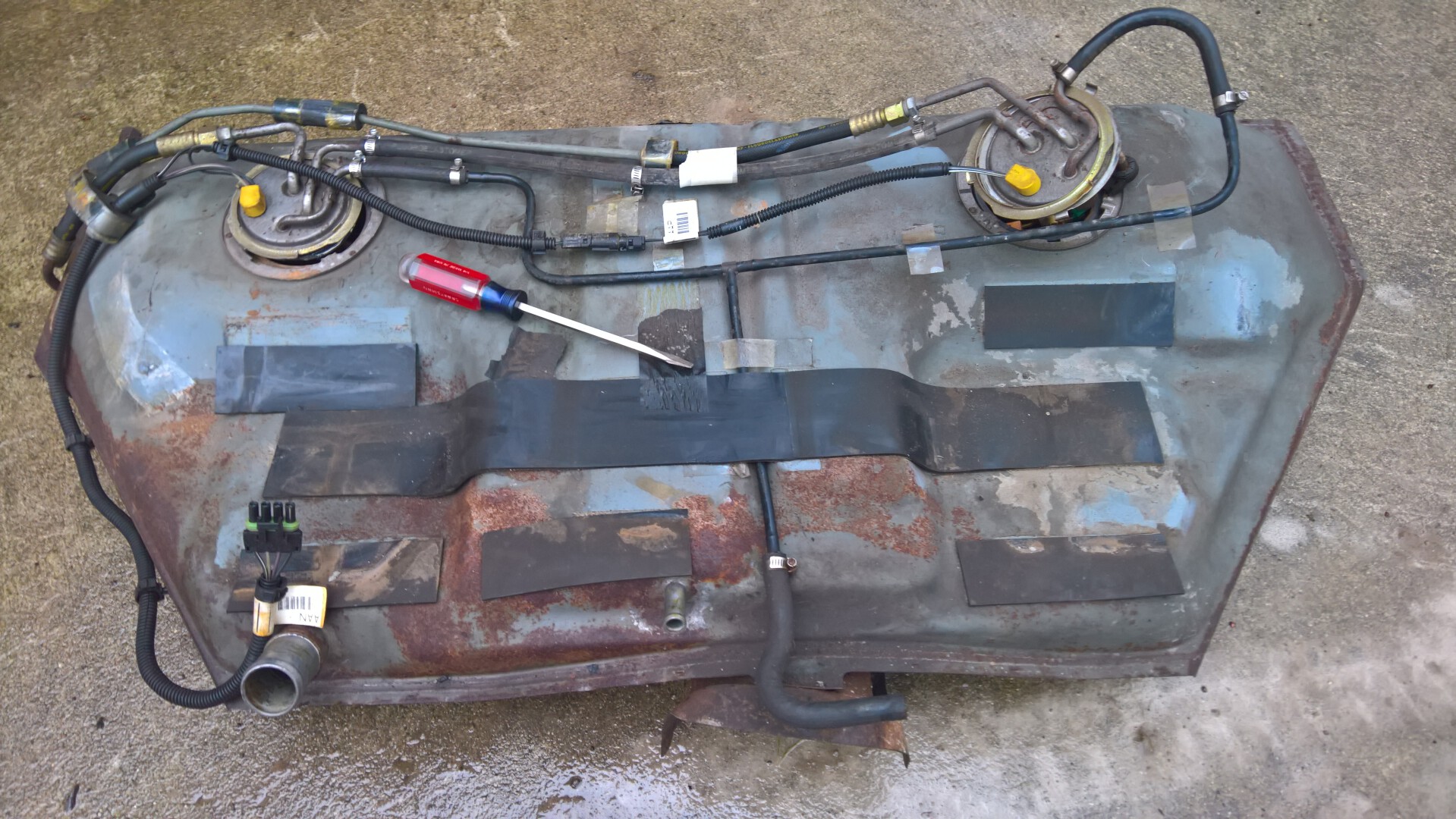
So I dropped this tank to find out what was happening, and this is the fuel plumbing system I find in it:
Basically there is one pump, it picks up from one "well" and feeds the engine rail. The return goes to the other "well" and basically looks like it does some sucking as it's not just dumped into that well, it pushed through a piece that has the return inlet, pickup sock and outlet to the other "well", as it moves on thru there it picks up some fuel from that "well" (kind of akin to a soap resevoir on a home power washer or something) and cross feeds to the other "well" which just dumps into the bottom of that one.
Mine happen to be missing the connector piece from the return to it's little sock/pickup pass thru thing. Looks like it rotted off or the clamp came loose and the rubber connector slid off or something. At least I found the cause of my issue.
Plumbed in this way, it seems to keeps fuel balanced between both sides so you don't have weird handling issues, uses a single pump and is able to feed the engine properly.
But I got to wondering, would this work to eliminate the switch valve if you plumbed up your dual tanks this way? The plumbing would be straight forward. Getting the fuel gauge to work right may be a different story, on this car there are two fuel level senders (one side has a pump on it) and both senders are 0-45ohms wired in series so making the std GM 0-90ohm range between the two senders.
Just an idea, if someone were so inclined. It may be a way to eliminate your switch and solenoid valve. I can't decide if it would be a good idea or not on a dual tank truck. My gut says no...but mabey it would work great?
The Tank with it's hump in the lower half

Top of tank plumbing look from rear to front of vehicle. Feed/pump sender is on left in this.
Here was my issue, on the secondary sender/pickup the return line is pointing at the nipple of the plastic horizontal piece (that has the sock on the bottom and the nipple on the left that is connected goes back up and out to the "well" on the other side with the pump in it ) and is missing the rubber connector piece. You can see the remnant of the hose still on the upper part of the hard line.

Here a NOS secondary sender I found. Notice the rubber connector with two plastic clamps

I recently bought this Pontiac 6000 STE AWD, and it has a very, very special fuel system on it.
Basically to make room for the rear D-shaft, they humped out the middle of the tank (along with making it wider and longer to retain the 16gal size). This was a limited production vehicle, only about 1800 total were made between 88,89,90 with the AWD on it. 1378 of them are '89's.
Anyway....As such, this tank has two "wells" in it on the lower half, the upper half is connected/common tank area.
My car would start cutting out after getting just below 1/2 tank.
So I dropped this tank to find out what was happening, and this is the fuel plumbing system I find in it:
Basically there is one pump, it picks up from one "well" and feeds the engine rail. The return goes to the other "well" and basically looks like it does some sucking as it's not just dumped into that well, it pushed through a piece that has the return inlet, pickup sock and outlet to the other "well", as it moves on thru there it picks up some fuel from that "well" (kind of akin to a soap resevoir on a home power washer or something) and cross feeds to the other "well" which just dumps into the bottom of that one.
Mine happen to be missing the connector piece from the return to it's little sock/pickup pass thru thing. Looks like it rotted off or the clamp came loose and the rubber connector slid off or something. At least I found the cause of my issue.
Plumbed in this way, it seems to keeps fuel balanced between both sides so you don't have weird handling issues, uses a single pump and is able to feed the engine properly.
But I got to wondering, would this work to eliminate the switch valve if you plumbed up your dual tanks this way? The plumbing would be straight forward. Getting the fuel gauge to work right may be a different story, on this car there are two fuel level senders (one side has a pump on it) and both senders are 0-45ohms wired in series so making the std GM 0-90ohm range between the two senders.
Just an idea, if someone were so inclined. It may be a way to eliminate your switch and solenoid valve. I can't decide if it would be a good idea or not on a dual tank truck. My gut says no...but mabey it would work great?
The Tank with it's hump in the lower half
Top of tank plumbing look from rear to front of vehicle. Feed/pump sender is on left in this.
Here was my issue, on the secondary sender/pickup the return line is pointing at the nipple of the plastic horizontal piece (that has the sock on the bottom and the nipple on the left that is connected goes back up and out to the "well" on the other side with the pump in it ) and is missing the rubber connector piece. You can see the remnant of the hose still on the upper part of the hard line.
Here a NOS secondary sender I found. Notice the rubber connector with two plastic clamps
Last edited:


