CK5
Register an account today to become a member! Once signed in, you'll be able to participate on this site by adding your own topics and posts, as well as connect with other members.

jack stand question

1982blazer

1/2 ton status
Joined
May 11, 2006
Posts
313
Reaction score
2
Location
Tyler Texas
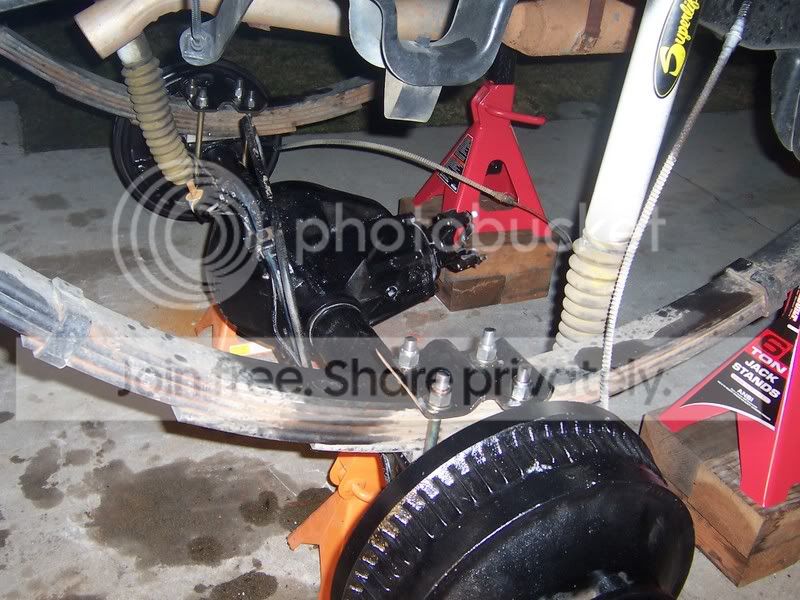
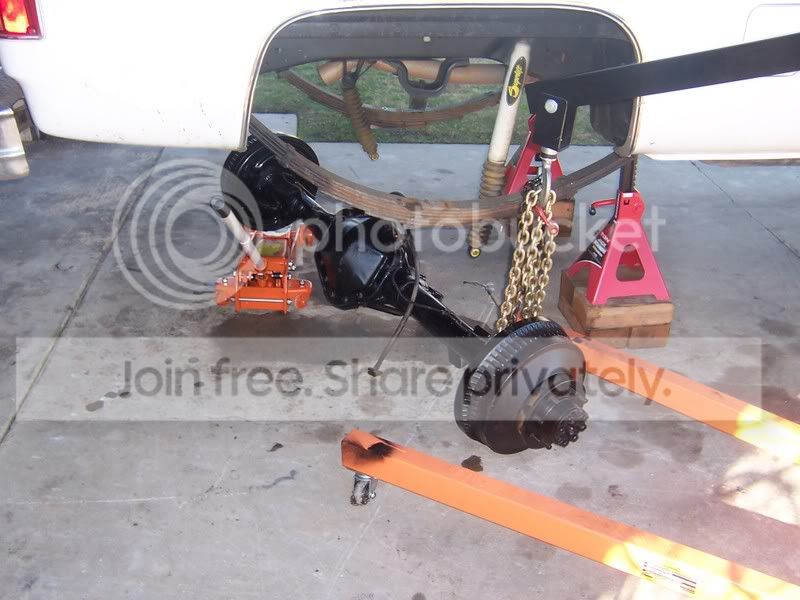
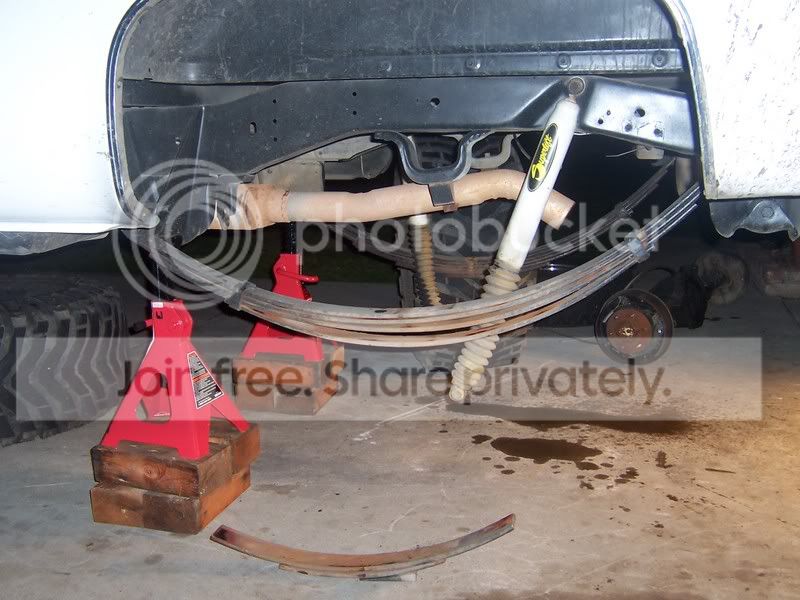
My blazer has a 6" lift and i have two 24" jack stands and they still dont reach high enough. What is the safest thing to put under them so they can reach? I did a search but didnt find much exepct to put wood under them which is what i will probably do.
 
that or a solid chunk of concrete (think cinderblock that has been filled with concrete) provided you dont shock load it, it will hold up to nearly anything
 
wood is best... As long as it's a stable platform...

It is also fine to put wood on top of QUALITY cement block... When I use block, I double stack, changing direction each layer and go right to the frame, no stands, just a big hunk of wood on top off the block.. DO NOT USE CINDER BLOCK! There is a huge difference...
 
ryoken said:
wood is best... As long as it's a stable platform...

It is also fine to put wood on top of QUALITY cement block... When I use block, I double stack, changing direction each layer and go right to the frame, no stands, just a big hunk of wood on top off the block.. DO NOT USE CINDER BLOCK! There is a huge difference...

What they said above; for the most part. Wood only, in my opinion. I am in sales in the construction industry and I'm on all types of jobsites all day everyday. I found several 3' long pieces of 4" x 14" wood header beams and cut them to about 24" lengths that the jack stands fit on nice and safely laying flat on the ground. :eek1: Do not use any type of cinder block, filled or not. No bricks and concrete can easily crack and crumble, plus they are heavy.:eek: Just my 2 pesos worth.
 
'nother vote for wood. I got a big ole stack of 6x6's for when I have to work on the truck lol.
 
The fact I block 70 ton boats on said concrete blocks tells me it's fine..

Common practice... Just because some redneck moron somewhere crushed himself with cinder doesn't mean there isn't a right way to do that...

Don't believe the hype...
 
here is what I use:

1. take a Home Depot cinder block...

2. use liquid nails to glue a piece of 3/4" plywood to one side, covering the holes.

3. flip it over and fill the holes with concrete... let it set.

you're done... when using it with stands, put the 'crete side down and the ply on top for the stands to set on. If the ground is uneven or has debris on it for some reason, I lay down another piece of 3/4" ply for the block to sit on.

These are heavy as all hell... but I've used them for years with no problems.

At some point I am going to fab some hella tall stands for my rig. Once the 44s go on... if I ever want to mess with the suspension I'm gonna need to be able to lift the frame up way high...

j
 
jekbrown said:
here is what I use:

1. take a Home Depot cinder block...

2. use liquid nails to glue a piece of 3/4" plywood to one side, covering the holes.

3. flip it over and fill the holes with concrete... let it set.

you're done... when using it with stands, put the 'crete side down and the ply on top for the stands to set on. If the ground is uneven or has debris on it for some reason, I lay down another piece of 3/4" ply for the block to sit on.

These are heavy as all hell... but I've used them for years with no problems.

j

you could have saved yourself some work by just buying cement filled cement block, they do sell such a thing... :o And it's way stronger...
 
already had the holy ones on-hand... ;) Not sure if the pre-fab is much stronger either... I've hefted plenty of cement blocks and none were near as heavy as mine are. I dunno, maybe I had the super 'crete or something. :dunno:

j
 
jekbrown said:
already had the holy ones on-hand... ;)

j

figured.... I was just being a smartass... :wink1:

I'll debate the he!! out of this one with anybody... It's another one where people hear a bit of info and then make blanket statements...

I've blocked down boats the size of apartment buildings on block without batting an eye...

Obviously tho, a killer set of fabbed stands is the best solution...
 
Yea those tall stands are pretty sweet. I've got a pair of tall stands that I bought at a local swap meet. They look pretty similar to those. Here you can see one at the far right of this pic
2186902_145_full.jpg
 
I just got some lumber from a big truss manufacturing plant/lumber supply place across the street from where I work...they worked out great...

picture037.jpg

picture028.jpg

picture006.jpg
 
where are you putting the jack stands?
I always just put them under the axles and my normal stands work just fine....

however I uses alot of stands... in addition I leave the jack under too...

years ago I had the truck fall on my head.. I should be dead but I placed a block near the truck and when it fell over... 1 of my 8 lugnuts cought the corner of the brick and held the truck up.... so I am now a SAFETY, SAFETY, SAFETY kinda guy...

I was 17 when that happened... now im 34 so whatever you do.. BE CAREFULL!!!!:crazy:
 
RootBreaker said:
where are you putting the jack stands?
I always just put them under the axles and my normal stands work just fine....

however I uses alot of stands... in addition I leave the jack under too...

years ago I had the truck fall on my head.. I should be dead but I placed a block near the truck and when it fell over... 1 of my 8 lugnuts cought the corner of the brick and held the truck up.... so I am now a SAFETY, SAFETY, SAFETY kinda guy...

I was 17 when that happened... now im 34 so whatever you do.. BE CAREFULL!!!!:crazy:
:eek1: you most of sh** ur pants wen that happend. :eek1:
 
Chrisblazzer89 said:
:eek1: you most of sh** ur pants wen that happend. :eek1:

yeah.. the leaf spring had my head pinned to the ground.... so tight that when I pulled my head out.. I had scratches on my right temple due to the leaf spring and scratches from the ground on the left side of my head.... :eek1:
 
When swapping out the rear blocks (ick!) for springs I used two sets of Jack stands. I had my short set under the axle and the tall set on concrete blocks. I twelve blocks(8"w x 4"t x 16"l) and stacked them. I ended up with a concrete 'stand' 12 inches high and 16 inches square and the jack stand on that. Having a large solid base under the stands made me feel much safer fighting stuck bolts.
 
Wood is good!.. :)

Having nearly been crushed under cars and trucks a few times in my younger days,I now wont go under anything without it being blocked up or supported by jack stands,or wood blocks--and I leave the jack up aganst the vehicle's frame too,in case it decides to fall sideways and off the stands..

I find any jack stand extended over 18" to be VERY unstable and tippy,and you risk having the vehicle fall on you when tightening things like U bolts by hand with a breaker bar..my first car,a VW Beetle,fell on me while I was pulling the last bolt from the bellhousing when I was pulling the motor out to replace the clutch!..:eek1:

Luckily it only pinned me down,it didn't crush me!...one block of wood I had it propped up on jammed between the brake drum and the asphalt,and my friend quickly jacked the car up off of me..face looked just like the bottom of the engine--I had FINS pressed into my skin,black eyes,bloody nose,and a LOT of pain!..it only takes ONE time for this to happen for you to vow to never let it happen again,but as you age you get lax,and take more chances than you should..it took 3 more close calls before I finally decided to use something better than just jacks and jack stands..

I wont go into detail on the cars that FELL off the forkloder at the boneyard,when we'd cut out rear ends and engines..:eek1: :eek1: ..more than once I nearly got squashed!..we used it for a "lift" to fix vehicles too,and though it did work out well,its scary as hell to be working under a vehicle while its inly held up by two forks and gravity,especially when your pulling a heavy part like a tranny out,that can upset the balance when its removed,and make the vehicle tip off the forks!..

What I've used when I need to support a vehicle higher than my jack stands will,is huge chunks of pine,cut from trees about 2' in diameter with my chain saw,with the "logs" cut as squarely as possible on each end,to reduce "wobble" when the vehicle is on them..

I've used them as high as two feet with no sign of unsteadiness,whereas jack stands would let the vehicle sway in a strong wind at that height!..the wider the base of the log the better,and hardwood would be better than pine if available..square cut timber works good too,and can be stacked like cribbing to support a vehicle up high,like when rolling a chassis out from under a body..easier to store and carry when its not one huge log too,but I feel the logs are the safest..

I've seen guys make huge "sawhorses" out of big timbers or channel iron too,to hold a vehicle high off the ground..they seem to work well too,very stable and safe..clumsy and heavy though,and hard to store..

I'd never trust any sort of concrete block or bricks to support something I'm going to be working under--those who have and gotten away with it are just plain LUCKY...not saying they wont work,they do--but they CAN shatter without warning when subjected to "point loads"--like when only a small portion is supporting lots of weight,like a bolt that happens to stick out and touch the blocks surface and has to support most of the weight on that one spot,can cause it to crack or shatter..on a boat this likely isn't a problem,you have a full flat surface for the blocks to rest on,so failure is less likely..but you wont see me crawling under one supported by cement blocks..no thanks!:crazy:
 
As far as "cinder" blocks go, if you purchase some that are actually structural, and not aesthetic, you should be ok as far as building a decent block setup when you fill the voids with quality concrete mixed in accordance with manufacturer's method. When doing this, you want some form of wood distributing the load to the block, however, as metal vs cementious material is not a good recipe for success.

Personally, I prefer wood as the fibers in wood will absorb more load and crush prior to actually failing whereas the material used in the concrete masonry units (cinder blocks) tends to take load rather well until it reaches its compressive limit when it simply fails catastrophically.

If you have anyone building any bridges around you, you can try and talk them out of some of their falsework pad scraps (tend to be 6"x16" or so) which will work nicely as blocking for anything you might want to put on it.

And, exactly what diesel4me said. Point loads vs any cementious material is just asking for a problem. But the good news is that you might not have to worry about it when you have 4000+ lbs sitting on you. Just everyone else would have to deal with it

One thing to remember is that you really want as wide a base as possible and definitely try to keep the height to width ratio at less than 2:1.

And yes, I am one of those "target designers" i.e., civil engineers. There are days that I wish I had chosen mechanical, but then I would REALLY be in trouble from overthinking some of things I do.
 
Top Bottom