CK5
Register an account today to become a member! Once signed in, you'll be able to participate on this site by adding your own topics and posts, as well as connect with other members.

Need opinions from Fabricators - Boxing frame related

How much more boxing the frame do I do?


  • Total voters
    8
  • Poll closed .

BoondocK5

Chevrolet Bone Collector
 Premium
Author
Joined
May 13, 2006
Posts
13,083
Reaction score
6,049
Location
Salt Lake City, Utah
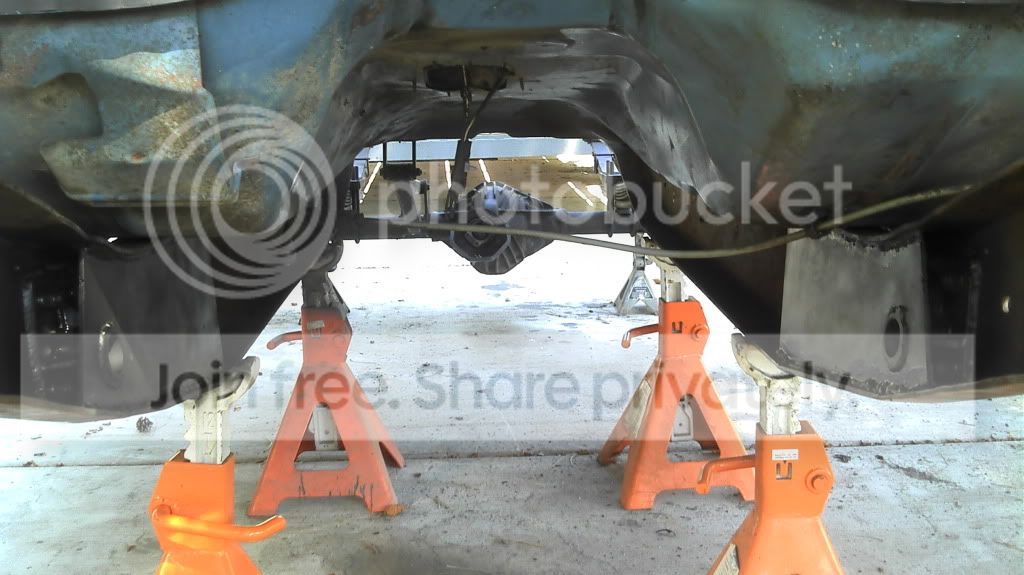
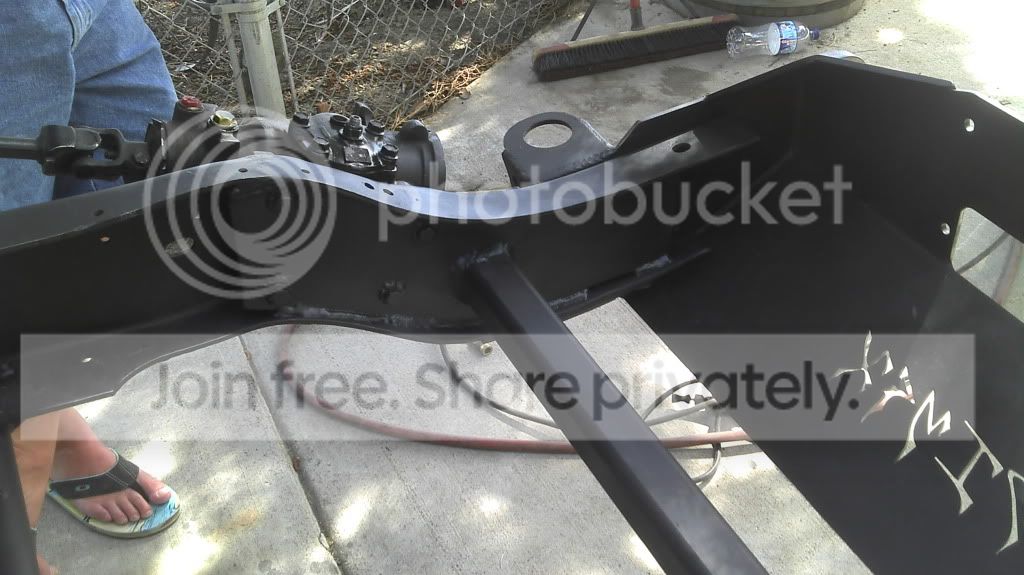
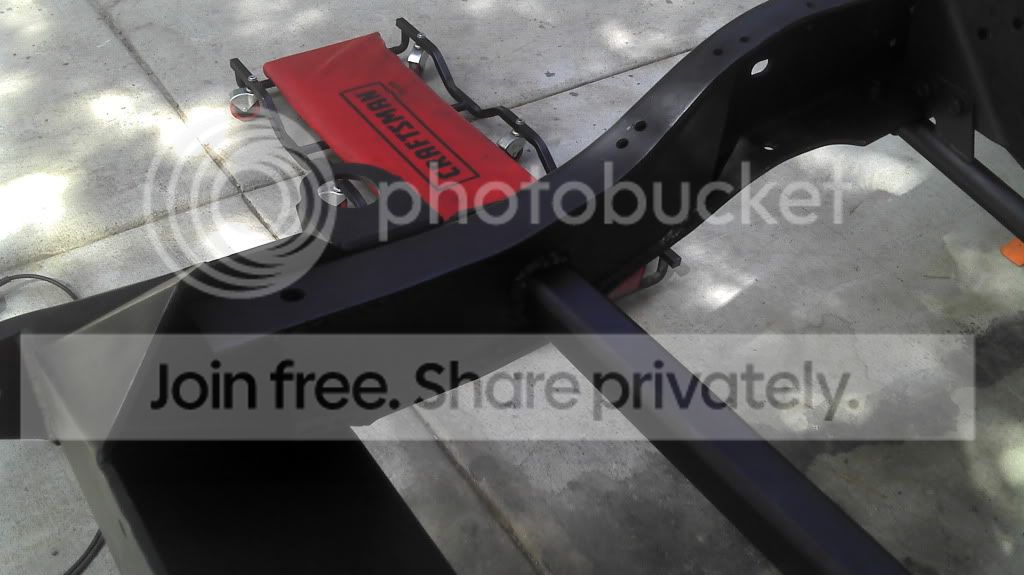
I am too the point in the frame modifications that I need to know how far to go as far as boxing the frame, OR just brace here and there between the C channel of the frame, or do nothing, except for what has all ready to be done.
fc5e86a7.jpg

78447419.jpg
f51e4da5.jpg


Its all a matter of "Where do you stop?"
What say the Brotherhood?:whistle:
 
from what ive heard about frame boxing, its best to all or nothing. the frame will crack at the end of the boxed sections due to added stress on the unboxed areas.
DIY says they're working on a suburban box kit, it's got me thinking. my frame is straight with no cracks right now, i might box it to keep it that way.
 
I've heard all or nothing too...

That being said you have a one ton frame there, thickest frame as well as the tallest frame GM ever slung under one of these trucks. It's almost double the thickness of a K5 frame already. I'd leave it as is, and look into tying cage bars to the frame. Ideally the areas you tie into will be nearest to the fronts and rears of the springs as this is where the highest forces will be when the truck begins to flex. Steering box area looks pretty good, i might have gone another 6-8" further to the rear but I think for reason's i already mentioned it'll be fine as is.

Rene
 
Well, when we box the front half of the my frame, I was to told to fish mouth the end of the boxing plate to help relive the stress of transition between the boxed and C frame.
I still have to put my blazer back together.
 
I have heard the cracking if you don't box the whole thing too. My frame is not cracked in any way shape or form and it is only boxed to the cab crossmember. Its not like I am easy on my truck.

In addition you have no idea how much the boatsides will stiffen up the frame. The term zero frame flex comes to mind. The cage out back will provide all the stiffness you need. With the already larger one ton frame, the cage and the boatsides plus the boxing you have done, the only thing boxing the rest of the frame will do is add weight and take a bunch of time. IMHO what you have done is just about perfect, strengthened the frame in an area in which it is hard to get that stiffness. At least with your plans

It is your truck though, thats just my opinion, I used to be of the box it all or nothing attitude. If it was a truck that the frame was not going to be connected to the boatsides or any kind of cage I am all for it, but the whole point is to add overall rigidity. That will be accomplished by means other than boxing of the frame.
 
I'm a box it all or nothing sort of guy. That being said, I think if you are going to do sections and not the whole thing, steeping it down with the fish mouth does work. Take a look at the mid 90's Chevy full size rigs.

78447419.jpg

78447419.jpg
 
This would be the fishmouth JD was speaking of...

framebox1.jpg


Rene
 
To throw another wrench in the works, how much does the weight penalty add up with boxing? I know it in and of itself is probably not too much. But I see guys making crossmembers out of .250 wall tube all the time. A crossmember that will never have an impact where in all reality a .095 wall tube would have probably worked nearly the same and been a 1/4 of the weight.

Really what I am getting at here is that a 9000 lb truck with 37s will probably break stuff as often as a 5000 lb truck on 44s. I know that logic is somewhat flawed. Our trucks are already fat pigs and its not too hard to end up with a simple blazer that weighs over 6k, take out a 1000 lbs and that rig will wheel like a completely new rig.

I know Horton is a completely different type of rig Matt but when I cut the cab off I lost ( this is a guesstimate) 500 lbs maybe a touch more. It was like wheeling a whole new rig, it didn't hit stuff as hard got tires up on stuff easier, I didn't jam up in holes that I used to jam up in.

Of course saying that I plan to box the frame on my Jimmy and the crew cab, neither of those trucks will ever have a cage attached to the frame, they will be floor plates. I also to plan to heavily modify the suspension on both of them. I am boxing because the frame will derive all of its strength and rigidity from only the frame, there will never be any added structure to it anywhere.

Boxing is certainly the strongest option when no additional structure is planned but you plan substantial additional structure.
 
.
Boxing is certainly the strongest option when no additional structure is planned but you plan substantial additional structure.

I totally agree with Eric, if you were not doing sliders and a cage and you had a 1/2 ton frame, that one day a diesel was going in, boxing is a good idea.

However look at all the trucks out there that wheel with a 1ton frame how many are boxed? Look at Scott's truck no cage, no body cutting at all, no boxing, has a Cummins. No frame twisting or bending or overly flexing the frame. Look at how many wheel with a 1/2 ton frame and are caged the frames on those are fine too.

As Eric said your truck your decision. I'll bet dollars to donuts it weighs more then 10,000 if you do box it all though. I am shooting for under 5,000 :woot:

The cracking frame if you don't box it all, comes from not having a cage and not having sliders and twisting the frame up is when it cracks.

As a side note I will not be boxing mine at all.
 
To throw another wrench in the works, how much does the weight penalty add up with boxing? I know it in and of itself is probably not too much. But I see guys making crossmembers out of .250 wall tube all the time. A crossmember that will never have an impact where in all reality a .095 wall tube would have probably worked nearly the same and been a 1/4 of the weight.

Really what I am getting at here is that a 9000 lb truck with 37s will probably break stuff as often as a 5000 lb truck on 44s. I know that logic is somewhat flawed. Our trucks are already fat pigs and its not too hard to end up with a simple blazer that weighs over 6k, take out a 1000 lbs and that rig will wheel like a completely new rig.

I know Horton is a completely different type of rig Matt but when I cut the cab off I lost ( this is a guesstimate) 500 lbs maybe a touch more. It was like wheeling a whole new rig, it didn't hit stuff as hard got tires up on stuff easier, I didn't jam up in holes that I used to jam up in.

Of course saying that I plan to box the frame on my Jimmy and the crew cab, neither of those trucks will ever have a cage attached to the frame, they will be floor plates. I also to plan to heavily modify the suspension on both of them. I am boxing because the frame will derive all of its strength and rigidity from only the frame, there will never be any added structure to it anywhere.

Boxing is certainly the strongest option when no additional structure is planned but you plan substantial additional structure.

I'm no genius, but I've been thinking of boxing my frame and using a holesaw to drill holes in the plate to save some weight while still adding rigidity...kind of glad I came across this thread. I'm used to the 2wd side of things, but figured that idea would translate....input?
 
To throw another wrench in the works...

I know Horton is a completely different type of rig Matt but when I cut the cab off I lost ( this is a guesstimate) 500 lbs maybe a touch more. It was like wheeling a whole new rig, it didn't hit stuff as hard got tires up on stuff easier, I didn't jam up in holes that I used to jam up in...

Way back when I went to BB in 2003 i experienced this first hand. When we got to the Slickrock I removed my doors, the hardtop, and the tailgate as well as all the extra tools and stuff. Close to 550 lbs all told. It felt way more nimble on the street, and it wheeled completely differently than before. With all that weight off the truck it was down around the 5200 lb mark...

Rene
 
I am just reading and digesting all the input here, so , keep it coming guys!:waytogo::popcorn:

Another thing to think about here Matt, boxing the frame helps mostly with bending forces and torsional forces on the frame. Well you do have two frame rails.

In alot of g cars ( old muscle cars built to actually turn) guys have found if you can do a large X crossmember it helps nearly as much as a frame boxing.

Its all about spreading the load out. Its alot like building a cage you have to take into consideration the forces that will be applied to the cage, you then try to put bars close to or around where that maximum load will be applied to spread the load out over several bars. Then one single bar doesn't have to contain the load.

Frame boxing is the same, no matter what you do the frame will see the same load. Its all about spreading that load out to several peices on the frame. A box is way stronger than C channel. But you could probably come close to the torsional resistance of a boxed frame with some really well placed crossmembers that were braced to all 3 legs on the C


Now a suggestion that I may make. Start looking at your cage as a crossmember. I know its a very large one but start thinking about the forces that will act on the frame and where they will transfer to the cage.

Think of the boatsides as an extra mini frame. Transferring load from the frame into the boatsides which will be made out of a thicker material because of the impact resistance that they need.

Also when you start looking at crossmembers under the frame look at spreading the mounting points out with gussets of some sort

For instance the square tube you put in the front. If you braced that with an upside down L type brace so that it basically used the boxing plate and the top of the frame and did the same thing on the bottom it would spread the load to all but one leg of the frame. Now I am not saying you did that x member wrong I have several like that. You say well it does that anyway, it actually doesn't, it spreads the load to the boxing plate which then spread the load the the top and bottom of the frame which then spread the load to the outside of the frame. It about the efficient transfer of loads
 
In alot of g cars ( old muscle cars built to actually turn) guys have found if you can do a large X crossmember it helps nearly as much as a frame boxing.

That is excatly what Iceman described to me one time and we will be doing that where we can plus I plan to do the same to my K5.
 

Latest Posts

Top Bottom