CK5
Register an account today to become a member! Once signed in, you'll be able to participate on this site by adding your own topics and posts, as well as connect with other members.

New Member, I finally got a K5...now with pics

SCK5Blazer

1/2 ton status
Joined
Jun 19, 2011
Posts
132
Reaction score
0
Location
South Carolina
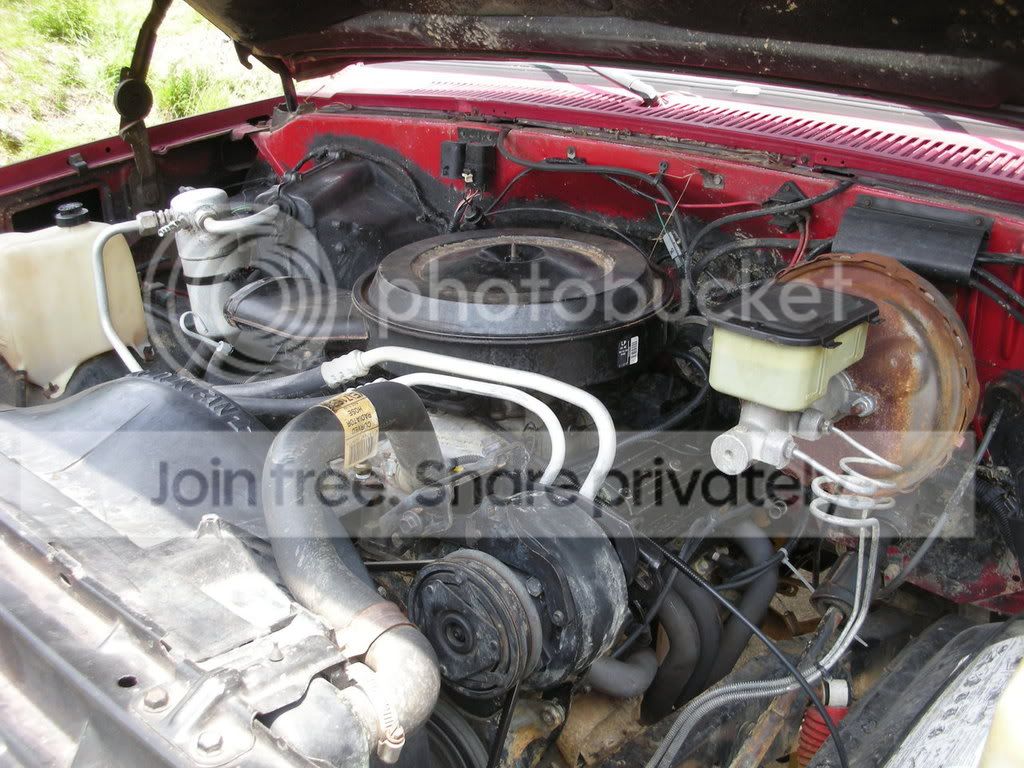
So I have wanted a k5 for a few years now, and after buying a Zr2 S-10 early last year I got bit by the 4wd bug. So I got rid of the S-10 a few months back and found an 87 with 85k original miles that had the 350 replaced by dealership in 1999 so it only has 25k on it. Body and interior are in pretty good shape, needs a fender and has a few other small dents....best part, I got it for $1300. It has some little tbi issues I haven't figured out yet, bogs when you get on the gas terrible like to the point of dying, but it doesn't...like it's running rich. Anyways, my plans were to throw a 454 in it, th400, np203/205 doubler, 1 tons, 52/56 spring swap, those are the basics. So in light of these little bugs with the fuel injection I think bbc power is now going to be my first priority, followed closely by ditching the 700r4 that is already a little sloppy. I may start a project thread later on, but progress will be slow and steady with this one and all the drivetrain taken care of before moving on to suspension.
 
Last edited:
DSCN0984.jpg


DSCN0983.jpg


DSCN0985.jpg
 
I wouldn't change a thing.Looks like a clean truck so your lucky that way.
 
Start with the simple and free things first. Pull any codes. Check for vacuum leaks, your stumbling description and that it seems like it's running rich sounds like the ECM is trying to keep this thing from dying on you. Common culprits on these things are the Throttle body base gaskets, intake manifold gaskets, and the EGR valve and the EGR solenoid. These are great setups when running right, but this truck is almost 25 years old now and could probably use some maintenance to the fuel injection system. Also keep in mind that if this thing is running rich to compensate, your wasting a ton of fuel... I had very similar issues with mine, and after I fixed everything I gained 5 mpg. I went from 11 to 12 mpg to 16 to 17 mpg. Do a search for my threads and you'll find a lot of info that took me a long time to figure out and may save you a lot of time and $$$$. Looks like a good start!!!
 
Check everything that Smier just said.

All that stuff was done just prior to me buyin' my rig.
All I needed to do was get the tranny/T-case rebuilt, and she drove like new.

Bowtie Overdrives is pure win, when it comes to transmissions.
Just sayin'...
 
I've went through a list of various little things it could be, the po had done a few things as well. It throws no codes and I can't see nickel and diming myself on any more small things that may or may not fix it when that money could be used for other things. Considering I was originally looking for one with no engine or one not running and I got this one for $300 more than a rougher non running 86 I looked at, it's not that big of a deal. So i'll either sell the 350 or have it for my other s10 project when I start it. Thanks for the tips though, I'm sure if I made a post and went over everything that's been done I'd probably get the advice that would eventually get it fixed, but the reward of a better running tbi 350 is not as great as the reward of just going ahead and swapping in a 454 to me...I mean this thing would never be a daily for me anyway, I'm perfectly fine driving my ugly civic getting 34mpg.:D
 
Check everything that Smier just said.

All that stuff was done just prior to me buyin' my rig.
All I needed to do was get the tranny/T-case rebuilt, and she drove like new.

Bowtie Overdrives is pure win, when it comes to transmissions.
Just sayin'...

I've never heard of them, but I will check them out...thanks
 
Make sure when you start your truck the check engine light comes on in the "dash light check" phase of startup. The bulb could be blown & you wouldn't be able to see if anything was wrong. Also check the pcv line on the front of the tb.
 
Why do you think its flooding out when it bogs?

Bogging at acceleration is often caused by leaning out, which is also often caused by a bad Throttle Position Sensor.
 
Why do you think its flooding out when it bogs?

Bogging at acceleration is often caused by leaning out, which is also often caused by a bad Throttle Position Sensor.

TPS was replaced by PO as well as a list of other things. Last week after I replaced the CTS it bogged so bad it wouldn't even pull itself up my driveway, slightly uphill. I say running rich because I got out pulled the lid from the air cleaner and I was able to give it more gas to get up the hill without completely bogging down.
 
TPS was replaced by PO as well as a list of other things. Last week after I replaced the CTS it bogged so bad it wouldn't even pull itself up my driveway, slightly uphill.

Was it acting like this before you replaced the CTS? There are 2, the CTS sensor is in the intake, and the coolant temperature sender is located in the cylinder head. A lot of guys get them confused. When you replaced it did you use any thread sealant other than what was installed on the CTS by the manufacturer? Does it have the stock 195* thermostat?
Also, has anyone messed with Idle Air Control (IAC)? If the previous owner touched it or replaced it, did he install and set it correctly? If a previous owner touched it, and couldn't fix it, I wouldn't trust a thing he did... More troubles have been created by the PO messing with things, and messing something else up. Don't forget to double check all the electrical connections and grounds. I still think there's a chance this might be fixed for little or no money... I'd love to have big block in mine, but I know I'd never be able to drive it as much as I do now, and let's face it, gas isn't ever going to be cheap again... You may possibly find that TBI 350 isn't as much of a dog as you think it is.
 
Was it acting like this before you replaced the CTS? There are 2, the CTS sensor is in the intake, and the coolant temperature sender is located in the cylinder head. A lot of guys get them confused. When you replaced it did you use any thread sealant other than what was installed on the CTS by the manufacturer? Does it have the stock 195* thermostat?
Also, has anyone messed with Idle Air Control (IAC)? If the previous owner touched it or replaced it, did he install and set it correctly? If a previous owner touched it, and couldn't fix it, I wouldn't trust a thing he did... More troubles have been created by the PO messing with things, and messing something else up. Don't forget to double check all the electrical connections and grounds. I still think there's a chance this might be fixed for little or no money... I'd love to have big block in mine, but I know I'd never be able to drive it as much as I do now, and let's face it, gas isn't ever going to be cheap again... You may possibly find that TBI 350 isn't as much of a dog as you think it is.

If I could get it running right it I'm sure it wouldn't be a total slouch, it does piss me off that the way it runs right now my little 1.6L dohc 4 banger has more power than it :rolleyes: I'd probably still end up going with a big block, but it would be nice to be able drive now and then while gathering up some parts instead of it just sitting there.

So here is what the PO told me he did to try and get it running right...rebuilt the throttle body, new tps, new thermostat(don't know if it's 195*), new fuel pump and filter, and I'm probably forgetting something. The IAC does look new, I don't remember him mentioning it, but I assume he replaced it when rebuilding the throttle body. He said he was to the point he was about to swap it over to carb, but decided to sell it. That's not even an option for me. I have replaced the o2 sensor, MAP sensor, pinched fuel return line coming from throttle body, CTS(on the intake, not the sender on the head), and didn't find any wiring or vacuum issues.

Now, before I replaced the CTS I unplugged it and it ran a little better still not great though and I tried to pull codes with the little paper clip method and only got the normal 12...i think it's 12, my mind isn't fully functioning right now. With the CTS unplugged I did get the code for it, 15 i think. After replacing the CTS I start it up, put it in reverse give it gas and it has power then doesn't want to stop becuase it's idling high so I pull back up and realize I left the pins jumped with the paper clip, it was like 95* and I think I had been in the sun too long :doah: Anyways, after I pull the paper clip out and start it back up it runs like crap still. If I could pinpoint what it is and fix it for no money or cheap I'm all for it. I could probably even get a crappy video of how it's acting if that would help...it has open headers on it right now so my nieghbors will hate me, but oh well I'm not too fond of them either.
 
I "borrowed" this from another site, lots of good info, similar to what I went thru on my old TPI Camaro...

How to adjust TPS and IAC on a Chevy TBI
Ok, this information was very handy when I first bought my truck and it was running like crap. After reading this info, I found that the Throttle Position Sensor (TPS) was bad and replaced it with a new adjustable one. The original author of this is Jay Vessels.

Tools needed:

* Torx bits or drivers (T-10, T-15, maybe more depending on the application)
* Voltmeter (digital is best, but a really accurate analog will work)
* Tachometer (the one in the vehicle will work fine if equipped)
* Wrenches and an awl (various sizes, only if the idle speed hasn’t ever been set)


Theory of Operation – (lengthy)

A common myth about fuel injected vehicles is that the idle speed is fixed and cannot be adjusted. This isn’t quite true; there is a setting. It's called minimum air, which is adjustable on TBI and MPFI vehicles. This setting sets the lowest-possible idle speed for the vehicle. The ECM uses the IAC (idle air controller) to raise the idle speed from this adjustment. So, while the exact idle speed isn’t really adjustable, the minimum idle speed is.

Why adjust the idle speed? Isn’t the ECM supposed to do that? Yes it does and it does do a good job, but has to have a starting point. That starting point is called minimum air, or the smallest amount of air allowed to enter the engine with the throttle closed. The ECM can only add air to that minimum setting. If that setting is too high, the ECM can’t slow the engine down to an acceptable idle. If the setting is too low, the ECM may not be able to keep the engine running under certain conditions.

Another reason to adjust minimum air is if there has been some repairs to the fuel system. If the throttle body has been removed (i.e. rebuilt or cleaned) or the TPS (throttle position sensor) has been replaced or otherwise disturbed (i.e. loosened the mounting screws unintentionally -- it happens) then minimum air should be adjusted. Any changes that could affect idle speed or idle quality, like performance upgrades or replacing leaking vacuum lines, should be followed by setting minimum air.

This adjustment, once learned, only takes a few minutes. It rarely has to be adjusted, but it takes so little time to check (and adjust, if needed) that there’s no reason not to do so.


Checking & Adjustment Instructions

To establish minimum air, the idle speed must be set first. The idle speed screw is sealed with a cap from the factory. This should be removed by removing the throttle body and using an awl to pry the plug off. If this seems scary, have it done. It’s not difficult but it’s not worth risking damage to the throttle body or human flesh to remove the plug. Once the plug has been removed, reinstall the throttle body.

Assuming the idle speed screw is accessible and the throttle body is installed, jumper pins A&B on the ALDL (Assembly Line Data Link) connector under the dash. Pins A&B are on the upper-right-hand side. These are the same two pins to jumper to read codes from the ECM. Now turn the key on (the Check Engine light should be lit) and leave the key on for at least 30 seconds. The computer will extend the IAC plunger all the way out to allow adjustment of the idle speed.

After the 30 second wait, unplug the IAC (square 4-pin connector on the throttle body) WHILE THE KEY IS STILL ON. This prevents the ECM from adjusting the idle speed while you make your adjustments.

Block the drive wheels, set the emergency brake, and start the engine. Set the idle speed by adjusting the idle speed screw. The engine should be at operating temperature for this. The exact setting is on the emissions label on the radiator shroud, but in general, the idle speed should be about 500 RPM in Drive, 700 in Park / Neutral, or if you have a manual transmission, somewhere between 600-800 RPM. Remember that the truck is running during this adjustment, so stay clear of the fan, and make sure it can’t roll or otherwise be put into gear while this is done.

Once the minimum idle speed is set, turn the engine off, reconnect the IAC, and remove the jumper from the ALDL connector. The TPS minimum voltage must now be set. Turning the idle-speed screw may have moved the TPS idle voltage away from the specification, so it should be adjusted next.

Connect a voltmeter between pins A (usually dark blue) and B (usually black, or black/pink) of the TPS, and turn the key on. Don’t start the engine. Loosen the two torx screws holding the TPS in place, but don’t remove them. Rotate the TPS until the voltmeter reads between 0.45 and 0.55 volts, with 0.50 being ideal. Tighten the mounting screws (carefully, they thread into soft aluminum) and re-check the voltage to make sure it’s still within range.

That’s it. After the procedure is done once, it’s easy to remember and do. I hope this helps.
 
I would start over and re-diagnose everything. Just because the PO replaced something, doesnt mean its installed, or working correctly.

Parts store stuff is junk, Ive had multiple engine sensors that ive had to re-replace becuase they fail with a month or two.
 
Make sure all your vacuum lines are hooked up and not dry rotted and make sure all your wires are good and have connections with where they are supposed to go
 
I "borrowed" this from another site, lots of good info, similar to what I went thru on my old TPI Camaro...

How to adjust TPS and IAC on a Chevy TBI
Ok, this information was very handy when I first bought my truck and it was running like crap. After reading this info, I found that the Throttle Position Sensor (TPS) was bad and replaced it with a new adjustable one. The original author of this is Jay Vessels.

Tools needed:

* Torx bits or drivers (T-10, T-15, maybe more depending on the application)
* Voltmeter (digital is best, but a really accurate analog will work)
* Tachometer (the one in the vehicle will work fine if equipped)
* Wrenches and an awl (various sizes, only if the idle speed hasn’t ever been set)


Theory of Operation – (lengthy)

A common myth about fuel injected vehicles is that the idle speed is fixed and cannot be adjusted. This isn’t quite true; there is a setting. It's called minimum air, which is adjustable on TBI and MPFI vehicles. This setting sets the lowest-possible idle speed for the vehicle. The ECM uses the IAC (idle air controller) to raise the idle speed from this adjustment. So, while the exact idle speed isn’t really adjustable, the minimum idle speed is.

Why adjust the idle speed? Isn’t the ECM supposed to do that? Yes it does and it does do a good job, but has to have a starting point. That starting point is called minimum air, or the smallest amount of air allowed to enter the engine with the throttle closed. The ECM can only add air to that minimum setting. If that setting is too high, the ECM can’t slow the engine down to an acceptable idle. If the setting is too low, the ECM may not be able to keep the engine running under certain conditions.

Another reason to adjust minimum air is if there has been some repairs to the fuel system. If the throttle body has been removed (i.e. rebuilt or cleaned) or the TPS (throttle position sensor) has been replaced or otherwise disturbed (i.e. loosened the mounting screws unintentionally -- it happens) then minimum air should be adjusted. Any changes that could affect idle speed or idle quality, like performance upgrades or replacing leaking vacuum lines, should be followed by setting minimum air.

This adjustment, once learned, only takes a few minutes. It rarely has to be adjusted, but it takes so little time to check (and adjust, if needed) that there’s no reason not to do so.


Checking & Adjustment Instructions

To establish minimum air, the idle speed must be set first. The idle speed screw is sealed with a cap from the factory. This should be removed by removing the throttle body and using an awl to pry the plug off. If this seems scary, have it done. It’s not difficult but it’s not worth risking damage to the throttle body or human flesh to remove the plug. Once the plug has been removed, reinstall the throttle body.

Assuming the idle speed screw is accessible and the throttle body is installed, jumper pins A&B on the ALDL (Assembly Line Data Link) connector under the dash. Pins A&B are on the upper-right-hand side. These are the same two pins to jumper to read codes from the ECM. Now turn the key on (the Check Engine light should be lit) and leave the key on for at least 30 seconds. The computer will extend the IAC plunger all the way out to allow adjustment of the idle speed.

After the 30 second wait, unplug the IAC (square 4-pin connector on the throttle body) WHILE THE KEY IS STILL ON. This prevents the ECM from adjusting the idle speed while you make your adjustments.

Block the drive wheels, set the emergency brake, and start the engine. Set the idle speed by adjusting the idle speed screw. The engine should be at operating temperature for this. The exact setting is on the emissions label on the radiator shroud, but in general, the idle speed should be about 500 RPM in Drive, 700 in Park / Neutral, or if you have a manual transmission, somewhere between 600-800 RPM. Remember that the truck is running during this adjustment, so stay clear of the fan, and make sure it can’t roll or otherwise be put into gear while this is done.

Once the minimum idle speed is set, turn the engine off, reconnect the IAC, and remove the jumper from the ALDL connector. The TPS minimum voltage must now be set. Turning the idle-speed screw may have moved the TPS idle voltage away from the specification, so it should be adjusted next.

Connect a voltmeter between pins A (usually dark blue) and B (usually black, or black/pink) of the TPS, and turn the key on. Don’t start the engine. Loosen the two torx screws holding the TPS in place, but don’t remove them. Rotate the TPS until the voltmeter reads between 0.45 and 0.55 volts, with 0.50 being ideal. Tighten the mounting screws (carefully, they thread into soft aluminum) and re-check the voltage to make sure it’s still within range.

That’s it. After the procedure is done once, it’s easy to remember and do. I hope this helps.

Thanks for posting that, I will try and check that sunday...taking the quads out tomorrow after lunch so i'll be gone all day and probably won't feel like messing with it in the am before we load up.
 
taking the quads out tomorrow after lunch so i'll be gone all day and probably won't feel like messing with it in the am before we load up.
Quads, wow, I'm surprised you have any money left over to work on a Blazer...................
Oh, Wait, I bet you meant Quad-runners, not quadruplets.........:D
 
Quads, wow, I'm surprised you have any money left over to work on a Blazer...................
Oh, Wait, I bet you meant Quad-runners, not quadruplets.........:D

:haha:thank goodness it's the 4 wheeled variety not 2 legged or I'd be screwed...my civic doesn't even have a rear seat and wouldn't fit 4 kids even if it did.
 

Latest Posts

Top Bottom