Guess I'll use same output flange and just push the seal in an 1/8" to run it on a section that isn't worn down.
I'll just have driveshaft fabricator use the same type of CV Joint
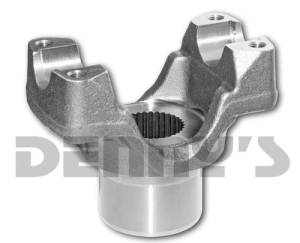
Get the speedi sleeve they recommended, it gives you a new seal surface on that yoke.
Since im not fully sure about the VSS, I ordered a new sensor and pigtail. Figure I may need it so get it now. My output shaft was already modified for the VSS sensor including the proper output shaft and tone ring.
I know the answer for Holley but not Edelbrock TCU, so I just downloaded the instructions, still didn't find the answer. Then I downloaded the app.
The app had the answer, you can use it either way.
You could use the VSS in the trans and ignore the one in the Tcase output, that would make your speedo off by almost 2X (1.96x) in low range but the trans should still shift ok because it does not know you are in low range. This is the way all pre electronic trans were, they didn't know there was a Tcase behind them or what range it was in, they just shifted based on their own output speed. You may need to lower the shift points a little in low range but that would still work in high range just fine. I had to do that when I was tuning my shift points with the governor weights in my TH400. A factory 4WD ECU this may not work because it knows you put it in 4WD, and it tries to compensate. Also, I don't know if the output teeth count is the same and there is no easy way to change that in the factory ECU that I am aware of, perhaps EFI Live or HP Tuners has a way. But factory it just easier to leave it the way it came from the factory.
However, I think the better solution with your parts is, the Edelbrock TC harness has a 4WD input wire. You hook your 4WD switch to that. Then you hook the VSS to the Tcase output. When you rebuild your Tcase, count the teeth on the VSS target wheel, you can input this number into the TCU. You can also input the Tcase ratio into the ECU, the TCU also has a speedo out signal if you want to run an autometer electric speedometer and it will always be correct even in low range. This is the method I would take with the parts you have.
No need for a GPS speedo and having it not work under trees or in tunnels, or having the antenna mounted, etc. The electronic speedos are work great and are easily programmable. I've had one in my truck for over 15 years, works flawlessly. You could also run a digital dash if you want the modern look and function, the individual gauges look more traditional.



 4xshaft.com


