camiswelding
1/2 ton status
I have been researching a cummins for k trucks for the last year and have some conversion questions
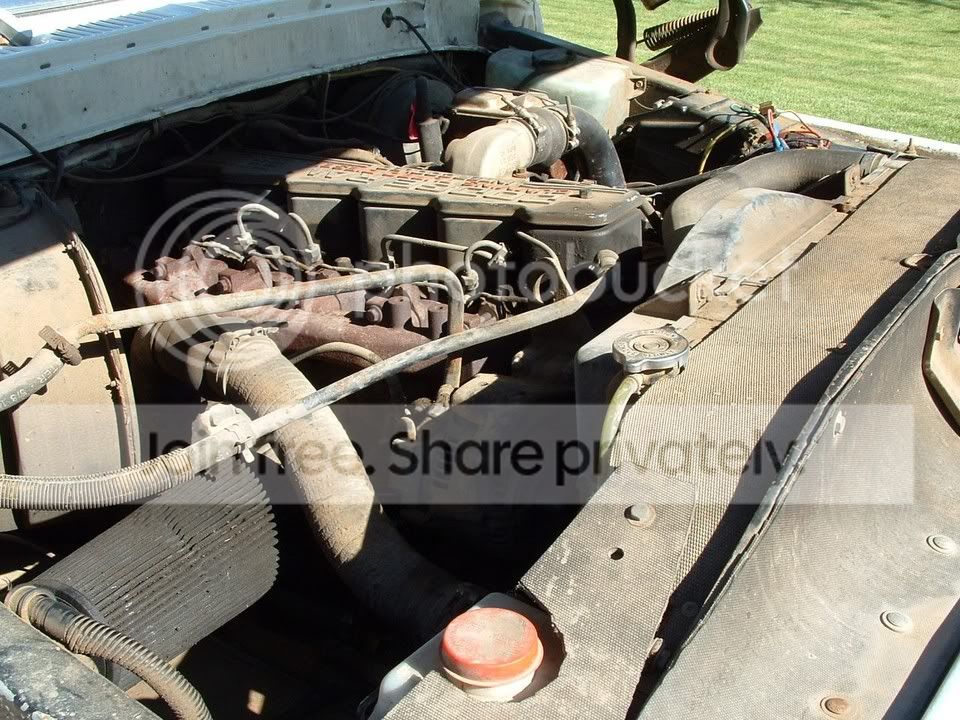
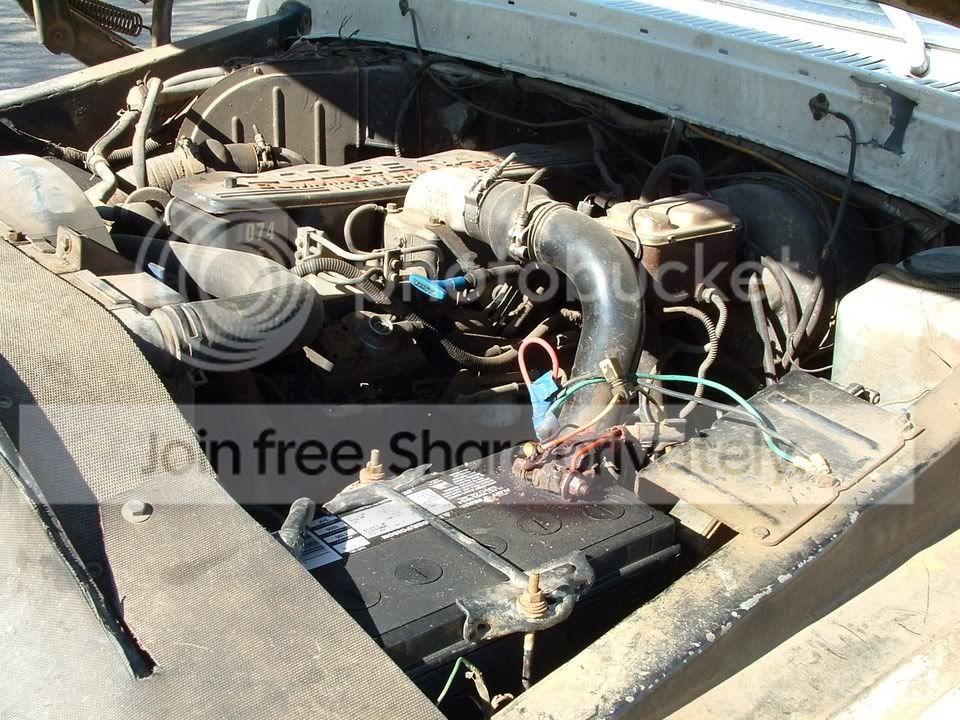
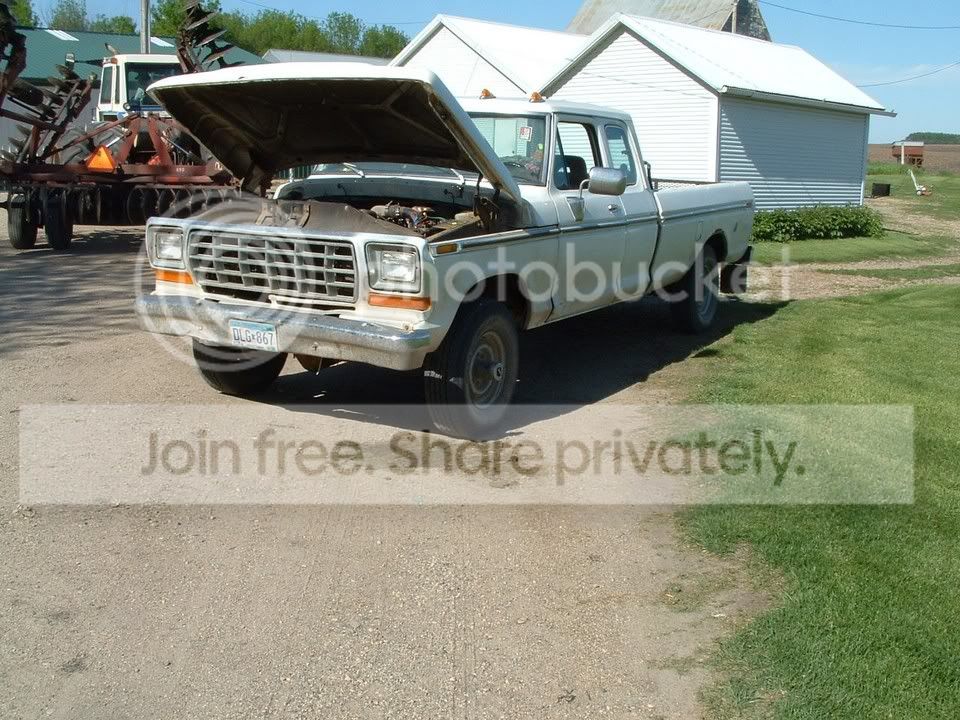
I have learned that there is several ways to go, please feel free to critque what I have learned. I have only seen one truck like mine done with a cummins and although it ran like it was on fire, the conversion was not sano and involved some backyard engineering... I am interested in doing it sano enough that someone would look at it and think... gm did it that way. This post is an attempt to build a how-to thread with good info, not what we think but what we know and what works and what doesnt. Theres no "how-to" manual out there for this conversion but my hope is generating enough response to figure out the right and wrong way to make this conversion, so that those that want to do it have solid direction.
Your comments will be incorporated into this thread so please visit from time to time for updates.
This is what I have learned...
1) Get the used cummins adapter,starter and misc pieces from a p30 step van that had the 3.9/th400 in them (such as what Jamie Avant from Diesel Depot, P.O. Box 228, Sandersville, Georgia 31082,(800) 553-8192, (email@[email protected]) sells his "kit" for about 400)
I have been told that this setup tilts the 5.9 in the engine compartment approx 10 degrees... I am also told this is not a problem, but is noticable... I also assume this "tilt" doesnt affect a standard transmission as much as an auto if you elect to tilt the tranny and not the motor?
I dont think the auto would like being tilted... the manual stick could be bent to make it come straight thru the floor and the gears would still receive full lubrication (I believe)
The reason for the tilt in the GM adapters is actually very simple. It was the only way that Cummins could repower P-30 step vans without major work like lowering motor mounts and dropping the tranny lower. The 10* tilt was deemed acceptable by Cummins, and with the lean would fit perfectly in the van's engine compartment. No GM P-30 step van left the factory with a Cummins in it, they were all repowered, most of them replaced 350's, 6.2 equipped bread vans were left alone for the most part.
2) buying a new and spendy adapter from cummins ( not the way to go so Im told)
3) custom machining my own adapter using outside machine shop help... why reinvent the wheel unless one has to.
4) Buying a universal kit from fordcummins (406) 755-8878 www.fordcummins.com) (they have yet to answer their phone or email, and their calif shop, which is close in distance to me, has yet to open) this one has universal motor mounts in it. Its about 400 as well but it does not include the tranny adapter. The kit has some general directions and some misc. brackets for the alternator and water necks to adapt to radiators other than dodge.
5) Going all dodge running gear OR getting an adapter to work with a chevy 205 from Advance adapters, www.advanceadapters.com , or the like... this means linkage work to adapt the dodge 727 or newer dodge tranny to the
chevy ..unless this is the only way to get the motor to sit level) Obviously if you have a stick you can go the nv4500 route and that makes the conversion easier.
It appears going all dodge might be the best way to go... use a 2nd gen cummins and a gen 1 dodge transfer case ,model 205 passenger drop, and a dodge tranny... perhaps for me a built torqueflite 727 since I have a gear vendors overdrive. This way the motor and adapters are all setup for each other and the 205 already fits the chevy transfer case crossmember.
First gens dodges received 727's from 89 to 91 with the 205 pass side drop.
First gens then received 518's non lockup convertors from 91.5 to 93 with the 205 pass side drop.
205's from auto's received a smaller input shaft then the ones that came from manual trucks.
Some people have put later model lockup/OD autos between a first gen engine and a 205.The lock-up and non lock up converter trannys take a different tranny adapter about 3/4 of an inch thicker for the lock up version
The 518 is a 727 with an OD unit. The od unit can be upgraded to handle a good running cummins. The 518 is a little longer because of the od unit. I would think it would be an expensive but wise upgrade to go to a lock up convertor. I have heard that some 727's had lock up covertors, but I have no idea what application those were in, and if they will bolt to a cummins or not.
I'm in favor of using the entire Dodge powertrain. Two basic phases; fabricate the mounts (including strengthening the frame if necessary), and do the mess around with wiring, hydraulic, and linkage. I'd use an overdrive/lockup converter, rather than an aftermarket overdrive.
People who have done diesel swaps report that in most cases allowing 1/4" of clearance to obstructions, is acceptable
I'd remove the front end, set the drivetrain more or less in the hole, and start cutting things to make it fit. Then remove the drivetrain and fix the firewall and frame. I would consider making mounts that bolt to the stock pads on both the engine and frame, as I felt that the pads had been engineered to take the loads.
Once the drivetrain is installed, then there is the task of hooking up all the little things. Just take one thing at a time By using the entire Dodge drivetrain, there will be a number of things to do, but each one is pretty basic. For instance, the ignition wire will need to be hooked to the injector rather than to the coil. You can use your alternator, but you might have to do the mess around with the mount (and belt if the Dodge has a serpentine system). The Cummins power steering pump can be plumbed into the Saginaw box and brakes, if they're hydraulic. The throttle will just be a longer cable. You will have to have hoses made to adapt the Dodge A/C compressor.
You'll need to do whatever it takes to get plenty of cooling.
If needed, I'd consider a water to air charge air cooler rather than skimping on a radiator.
You'll see very little (if any) performance increase with larger than a 3" system.
I'd suspect that the stock fuel pump would work nicely as a lift pump.
You'll probably need to work on sound deadening, as the early Cummins are quite noisy.
It's been my experience (half a dozen engine swaps) that it's far better to get the whole engine donor vehicle. Between the donor and recipient vehicles, there are usually all the parts needed. If you just get the engine, then there are many trips to purchase items, and the expense skyrockets. It's all the little things that kill you. Battery cables, driveshaft yokes, shift linkage, pulleys, air cleaners, throttle cables, exhaust pipes, diesel pre heat relay, vacuum pump, etc., etc., etc.
You'll probably have to double shock the front end and add a leaf or two. A nice thing about an inline engine is that there is not the usual clearance problems with steering, and exhaust manifolds.
Someone that has done some engine swaps will have to answer the engine adapter question. I believe there is a difference in the 24 valves to the old twelve valves. I understand that guys going to 6 speeds in an old truck need a different adapter, starter on the block. But I do not know if that applies to auto's or not.
after doing the above one should be to be ready to possibly....
a) Install up to a 3 inch bodylift, as the engine hits the firewall otherwise... perhaps a smaller lift and/or a cowl hood can be utilized. Not everyone has had to do a body lift to mount their 6bt's, it really depends on how the motor mounts are set up and how much axle clearance you have for the oil pan
b)run electric fans as there is insufficient space for an engine driven one ... it would be really great to use the stock dodge fan but everyone says clearance is an issue. You can't get enough cooling ability
c) make brackets for chevy hydroboost to fit the front of the cummins
d)ditto for gm alternator and a/c, or adapt dodge. p/s on the 6bt can be adapted to the chevy box
e) depending on what cummins selected prepare to do some wire surgery
as I understand it the earlier 12v 6BT motors are the easiest to install.. the full on electrically controlled ones... which require the computer(s) to work.. are much more difficult because of the lack of compatability to the chevy wiring
And again, all 6bt's are turbo'd. Thats what the "t" stands for. 12 valves are not computer controlled, 24 valves are. The early (think W-series Dodge) used the VE pumps, which are fine until you want to bomb the motor. Later 12 valves (think dodge 94-98.5) had the P-series pumps, which deleiver an insane ammount of fuel, and if you wanted to bomb the motor, this is the pump you would need. Installation of either a VE equipped 6bt or a P-pumped motor is going to be the same. No matter what you should run an intercooler, whether the donor motor came with one or not. Its not a "must" but is highly recomended. VE pumps are more than enough to run stock or do a mild build, but they do have their limitations
f)TBI chevy trucks 89-91 have electric fuel pumps in the tanks... which interface ok I assume?
g)trim a framerail where the starter hits? Perhaps the front crossmember as well? Maybe an entire new crossmember to prevent the crank or pulleys from hitting... Boxing may be needed for strength to prevent torque twist?
Anyone have info on this?
h)the cummins weighs in at 1100 pounds so the front suspension should be in good shape and perhaps need a leaf.
i)find a radiator that works well for the cummins... maybe a chevy diesel radiator or a high dollar BB "be cool" aluminum custom one
(Im not sure where the outlets need to be best suited to the cummins? anyone?)
j) custom exhaust.... while I have a 3 inch currently and this is what I saw on the converted truck one would have to assume the conversion could benefit from a 4 inch... hard to find a local shop to bend 4 inch unless they specialize in bigger truck exhausts. After some research it appears 3 inch is acceptable and the expense of trying to fit a 4 inch in an umbombed motor probably isnt worth it.
Pros for the conversion
1)Saves the chevy which is easy to work on and comes apart with a 9/16 wrench, and has a solid front axle
2)Your current truck paid for, is like new,or in good rebuildable shape
3)Satisfaction of having a nice and fairly unique piece of equipment if done sano
4) Here in California a conversion can use any diesel, post the year of the truck, be checked by a referree, and then be reregistered as a diesel and thus NO SMOG (currently... although smogging diesels in california will probably come to pass) (This info was gained directly from the California Air Resources Board (800) 242-4450 )
Cons to the conversion
1) Putting money into a 15 year old or older vehicles with no airbags, no hi tech,leaf spring suspension and which was at the end of its production lifespan with all the fit and finish problems that creates
2)Wont recoup the conversion cost at possible resale or totalling accident
3) the cost of the conversion... it could easily exceed 10k on a super sano job with new or reman'd parts. If the motor was bombed at all there could be powertrain issues with the rear end... and overdriving the brakes etc...
If your running gear was worn out and you could get a motor/running gear cheaply then the conversion might make financial sense. Remember to look at the payout... my big block avgs 7.7 mpg towing 10k pounds... if a ctd gets double the mileage then the payout would be a very long time... years... but then again this probably isnt the reason one is doing the swap... its more for the challenge of it.
So conversion gurus ,,, give me your thoughts...
many many thanks for the answers/questions that will come out of this thread
THIS THREAD WILL BE UPDATED AS INFO BECOMES AVAILABLE
cam
ps.. the following ck5 mmbers have CTD converted trucks
Ronniew4wd
laketex
stomper
crewcab59 (also makes custom cummins to chevy motor mounts)
I have learned that there is several ways to go, please feel free to critque what I have learned. I have only seen one truck like mine done with a cummins and although it ran like it was on fire, the conversion was not sano and involved some backyard engineering... I am interested in doing it sano enough that someone would look at it and think... gm did it that way. This post is an attempt to build a how-to thread with good info, not what we think but what we know and what works and what doesnt. Theres no "how-to" manual out there for this conversion but my hope is generating enough response to figure out the right and wrong way to make this conversion, so that those that want to do it have solid direction.
Your comments will be incorporated into this thread so please visit from time to time for updates.
This is what I have learned...
1) Get the used cummins adapter,starter and misc pieces from a p30 step van that had the 3.9/th400 in them (such as what Jamie Avant from Diesel Depot, P.O. Box 228, Sandersville, Georgia 31082,(800) 553-8192, (email@[email protected]) sells his "kit" for about 400)
I have been told that this setup tilts the 5.9 in the engine compartment approx 10 degrees... I am also told this is not a problem, but is noticable... I also assume this "tilt" doesnt affect a standard transmission as much as an auto if you elect to tilt the tranny and not the motor?
I dont think the auto would like being tilted... the manual stick could be bent to make it come straight thru the floor and the gears would still receive full lubrication (I believe)
The reason for the tilt in the GM adapters is actually very simple. It was the only way that Cummins could repower P-30 step vans without major work like lowering motor mounts and dropping the tranny lower. The 10* tilt was deemed acceptable by Cummins, and with the lean would fit perfectly in the van's engine compartment. No GM P-30 step van left the factory with a Cummins in it, they were all repowered, most of them replaced 350's, 6.2 equipped bread vans were left alone for the most part.
2) buying a new and spendy adapter from cummins ( not the way to go so Im told)
3) custom machining my own adapter using outside machine shop help... why reinvent the wheel unless one has to.
4) Buying a universal kit from fordcummins (406) 755-8878 www.fordcummins.com) (they have yet to answer their phone or email, and their calif shop, which is close in distance to me, has yet to open) this one has universal motor mounts in it. Its about 400 as well but it does not include the tranny adapter. The kit has some general directions and some misc. brackets for the alternator and water necks to adapt to radiators other than dodge.
5) Going all dodge running gear OR getting an adapter to work with a chevy 205 from Advance adapters, www.advanceadapters.com , or the like... this means linkage work to adapt the dodge 727 or newer dodge tranny to the
chevy ..unless this is the only way to get the motor to sit level) Obviously if you have a stick you can go the nv4500 route and that makes the conversion easier.
It appears going all dodge might be the best way to go... use a 2nd gen cummins and a gen 1 dodge transfer case ,model 205 passenger drop, and a dodge tranny... perhaps for me a built torqueflite 727 since I have a gear vendors overdrive. This way the motor and adapters are all setup for each other and the 205 already fits the chevy transfer case crossmember.
First gens dodges received 727's from 89 to 91 with the 205 pass side drop.
First gens then received 518's non lockup convertors from 91.5 to 93 with the 205 pass side drop.
205's from auto's received a smaller input shaft then the ones that came from manual trucks.
Some people have put later model lockup/OD autos between a first gen engine and a 205.The lock-up and non lock up converter trannys take a different tranny adapter about 3/4 of an inch thicker for the lock up version
The 518 is a 727 with an OD unit. The od unit can be upgraded to handle a good running cummins. The 518 is a little longer because of the od unit. I would think it would be an expensive but wise upgrade to go to a lock up convertor. I have heard that some 727's had lock up covertors, but I have no idea what application those were in, and if they will bolt to a cummins or not.
I'm in favor of using the entire Dodge powertrain. Two basic phases; fabricate the mounts (including strengthening the frame if necessary), and do the mess around with wiring, hydraulic, and linkage. I'd use an overdrive/lockup converter, rather than an aftermarket overdrive.
People who have done diesel swaps report that in most cases allowing 1/4" of clearance to obstructions, is acceptable
I'd remove the front end, set the drivetrain more or less in the hole, and start cutting things to make it fit. Then remove the drivetrain and fix the firewall and frame. I would consider making mounts that bolt to the stock pads on both the engine and frame, as I felt that the pads had been engineered to take the loads.
Once the drivetrain is installed, then there is the task of hooking up all the little things. Just take one thing at a time By using the entire Dodge drivetrain, there will be a number of things to do, but each one is pretty basic. For instance, the ignition wire will need to be hooked to the injector rather than to the coil. You can use your alternator, but you might have to do the mess around with the mount (and belt if the Dodge has a serpentine system). The Cummins power steering pump can be plumbed into the Saginaw box and brakes, if they're hydraulic. The throttle will just be a longer cable. You will have to have hoses made to adapt the Dodge A/C compressor.
You'll need to do whatever it takes to get plenty of cooling.
If needed, I'd consider a water to air charge air cooler rather than skimping on a radiator.
You'll see very little (if any) performance increase with larger than a 3" system.
I'd suspect that the stock fuel pump would work nicely as a lift pump.
You'll probably need to work on sound deadening, as the early Cummins are quite noisy.
It's been my experience (half a dozen engine swaps) that it's far better to get the whole engine donor vehicle. Between the donor and recipient vehicles, there are usually all the parts needed. If you just get the engine, then there are many trips to purchase items, and the expense skyrockets. It's all the little things that kill you. Battery cables, driveshaft yokes, shift linkage, pulleys, air cleaners, throttle cables, exhaust pipes, diesel pre heat relay, vacuum pump, etc., etc., etc.
You'll probably have to double shock the front end and add a leaf or two. A nice thing about an inline engine is that there is not the usual clearance problems with steering, and exhaust manifolds.
Someone that has done some engine swaps will have to answer the engine adapter question. I believe there is a difference in the 24 valves to the old twelve valves. I understand that guys going to 6 speeds in an old truck need a different adapter, starter on the block. But I do not know if that applies to auto's or not.
after doing the above one should be to be ready to possibly....
a) Install up to a 3 inch bodylift, as the engine hits the firewall otherwise... perhaps a smaller lift and/or a cowl hood can be utilized. Not everyone has had to do a body lift to mount their 6bt's, it really depends on how the motor mounts are set up and how much axle clearance you have for the oil pan
b)run electric fans as there is insufficient space for an engine driven one ... it would be really great to use the stock dodge fan but everyone says clearance is an issue. You can't get enough cooling ability
c) make brackets for chevy hydroboost to fit the front of the cummins
d)ditto for gm alternator and a/c, or adapt dodge. p/s on the 6bt can be adapted to the chevy box
e) depending on what cummins selected prepare to do some wire surgery
as I understand it the earlier 12v 6BT motors are the easiest to install.. the full on electrically controlled ones... which require the computer(s) to work.. are much more difficult because of the lack of compatability to the chevy wiring
And again, all 6bt's are turbo'd. Thats what the "t" stands for. 12 valves are not computer controlled, 24 valves are. The early (think W-series Dodge) used the VE pumps, which are fine until you want to bomb the motor. Later 12 valves (think dodge 94-98.5) had the P-series pumps, which deleiver an insane ammount of fuel, and if you wanted to bomb the motor, this is the pump you would need. Installation of either a VE equipped 6bt or a P-pumped motor is going to be the same. No matter what you should run an intercooler, whether the donor motor came with one or not. Its not a "must" but is highly recomended. VE pumps are more than enough to run stock or do a mild build, but they do have their limitations
f)TBI chevy trucks 89-91 have electric fuel pumps in the tanks... which interface ok I assume?
g)trim a framerail where the starter hits? Perhaps the front crossmember as well? Maybe an entire new crossmember to prevent the crank or pulleys from hitting... Boxing may be needed for strength to prevent torque twist?
Anyone have info on this?
h)the cummins weighs in at 1100 pounds so the front suspension should be in good shape and perhaps need a leaf.
i)find a radiator that works well for the cummins... maybe a chevy diesel radiator or a high dollar BB "be cool" aluminum custom one
(Im not sure where the outlets need to be best suited to the cummins? anyone?)
j) custom exhaust.... while I have a 3 inch currently and this is what I saw on the converted truck one would have to assume the conversion could benefit from a 4 inch... hard to find a local shop to bend 4 inch unless they specialize in bigger truck exhausts. After some research it appears 3 inch is acceptable and the expense of trying to fit a 4 inch in an umbombed motor probably isnt worth it.
Pros for the conversion
1)Saves the chevy which is easy to work on and comes apart with a 9/16 wrench, and has a solid front axle
2)Your current truck paid for, is like new,or in good rebuildable shape
3)Satisfaction of having a nice and fairly unique piece of equipment if done sano
4) Here in California a conversion can use any diesel, post the year of the truck, be checked by a referree, and then be reregistered as a diesel and thus NO SMOG (currently... although smogging diesels in california will probably come to pass) (This info was gained directly from the California Air Resources Board (800) 242-4450 )
Cons to the conversion
1) Putting money into a 15 year old or older vehicles with no airbags, no hi tech,leaf spring suspension and which was at the end of its production lifespan with all the fit and finish problems that creates
2)Wont recoup the conversion cost at possible resale or totalling accident
3) the cost of the conversion... it could easily exceed 10k on a super sano job with new or reman'd parts. If the motor was bombed at all there could be powertrain issues with the rear end... and overdriving the brakes etc...
If your running gear was worn out and you could get a motor/running gear cheaply then the conversion might make financial sense. Remember to look at the payout... my big block avgs 7.7 mpg towing 10k pounds... if a ctd gets double the mileage then the payout would be a very long time... years... but then again this probably isnt the reason one is doing the swap... its more for the challenge of it.
So conversion gurus ,,, give me your thoughts...
many many thanks for the answers/questions that will come out of this thread
THIS THREAD WILL BE UPDATED AS INFO BECOMES AVAILABLE
cam
ps.. the following ck5 mmbers have CTD converted trucks
Ronniew4wd
laketex
stomper
crewcab59 (also makes custom cummins to chevy motor mounts)
Last edited by a moderator:


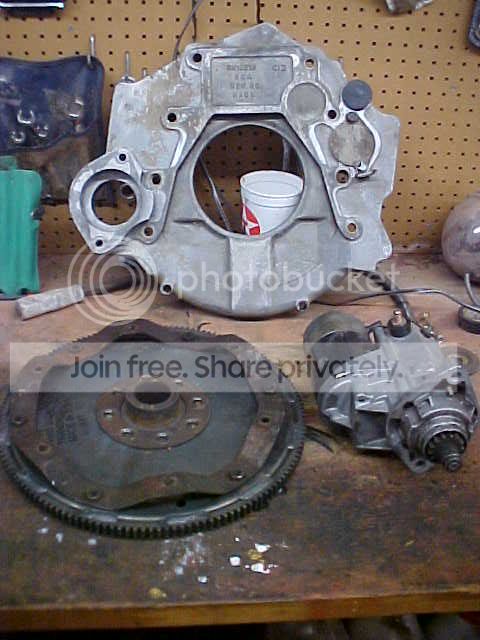
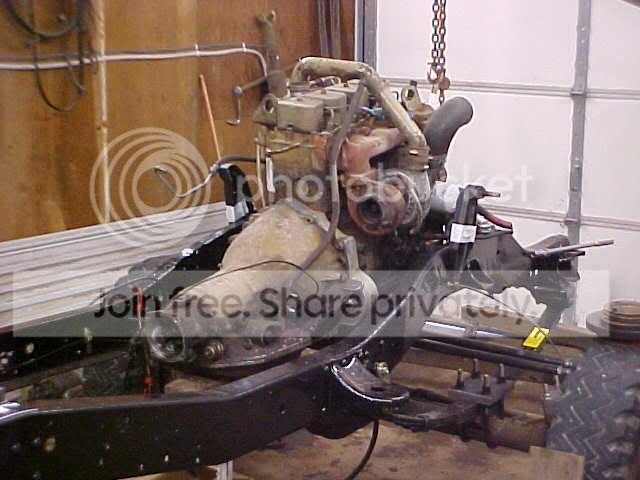
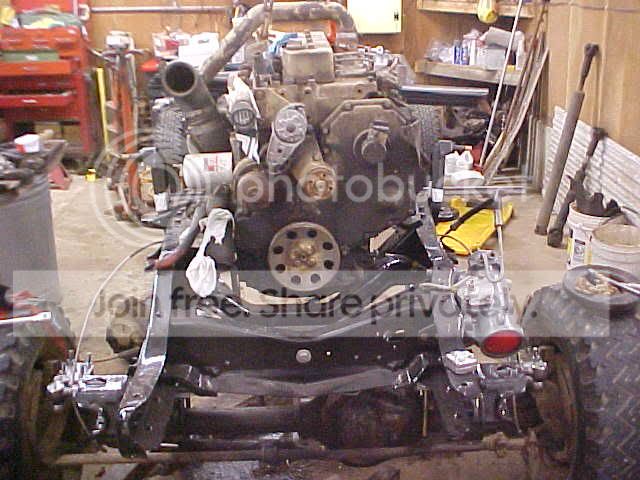
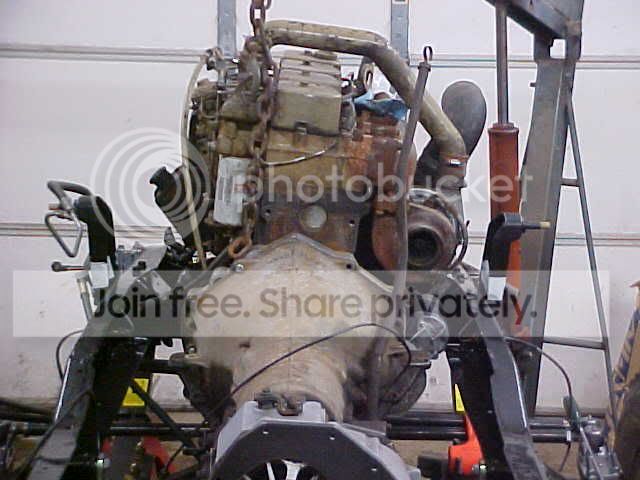
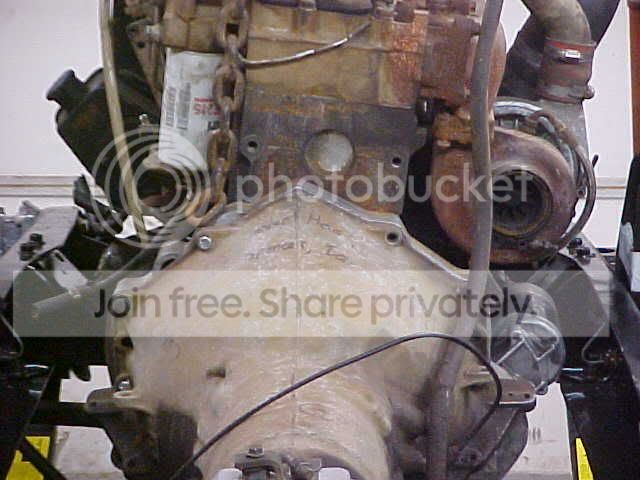
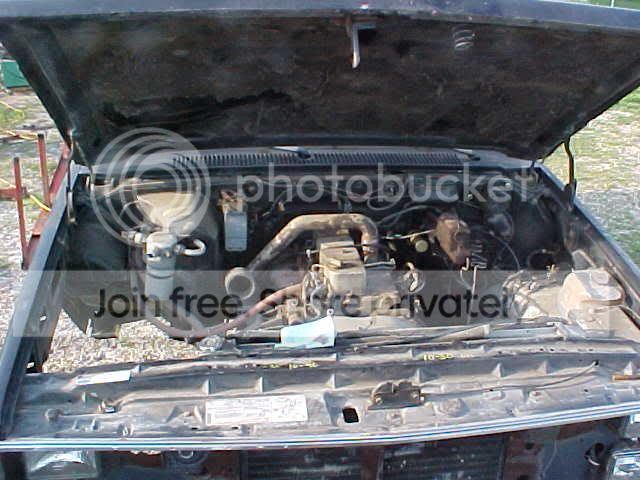


 Pictures are always welcome. This is turning into a great recource for the board.