CK5
Register an account today to become a member! Once signed in, you'll be able to participate on this site by adding your own topics and posts, as well as connect with other members.

The Great Smaug

After that the summer got busy enough that we didn't get out wheeling again. So the truck hasn't seen a lot of miles this year. The lifetime-warranty radiator from Advance Auto needs to be replaced, and Advance initially told me they can't get that radiator anymore. Eventually they called me back and said that they'd have a radiator for me...in 6-8 weeks. So the truck is still parked, even though camping season is within sight.
 
We woke up to this soggy soup of a morning. It's beautiful in its own way, but the lack of visibility isn't conducive to instagram pictures.

View attachment 410817

Camping out of the truck made packing up merely a matter of buckling up and turning the key. Super easy, except for the key-turning part. Yes, the failing starter refused to crank. No problem, we'll just coast down the hill, eh? No dice. I did not get enough speed built up to awaken this cold-blooded oil burner. It fired, but not...quite...enough to be useful. :rolleyes:

I thought about dropping the starter and rewiring it right then and there. But the truck came to rest in the middle of a puddle (that hadn't been there when we parked), and I opted for the dryer, lazier option. Endlessly cycling the starter until it finally engaged.

Once we got moving, the rest of the ride was uneventful. The water level had risen overnight, but not enough to cause any traction issues.

View attachment 410818

And before long we were back at highway elevation.

View attachment 410819

Tailed this neat Chevy on the way back to town.

View attachment 410820


View attachment 410821


The rest of the day was just hanging out with Luke & co, we didn't get out wheeling again. When it came time to head home, I had another round of cycling the starter. Once I got home I reconfigured the starter to eliminate the issue, so it shouldn't recur (and it hasn't).
What is this starter rewire you speak of? I might want to copy it. It seems I am always working on a starter.
 
What is this starter rewire you speak of? I might want to copy it. It seems I am always working on a starter.

<rant>
I have had endless issues with 6.2/6.5 starters. I don't remember exactly how many times I've needed to change one (it's documented on here if you do a bit of digging), but it's getting close to 20 times. They're a bit heavy, the driveshaft gets in the way, and the block brace is a minor annoyance. This truck now has two exhaust pipes boxing it in, and restricting access to the block brace. The exhaust pipes leave enough clearance to connect my battery lead, but it must be clocked juuuust right to avoid contact with the block or the pipes.

The crummy starter situation is hands-down my biggest headache with this truck, and has lead repeatedly to situations like this:

View media item 37573
In summary: If this truck weren't able to pop the clutch, it probably would have been abandoned in the woods by now. :doah: :rolleyes: :1zhelp:

</rant>
 
What is this starter rewire you speak of? I might want to copy it. It seems I am always working on a starter.

One of the repeated failure modes I've had is a slow-moving throwout arm causing arcing in the solenoid (which eventually fails). As this top-mounted solenoid is now inaccessible (due to the exhaust configuration), I installed a remote solenoid up on the core support. This allowed for easy hot-wiring if I were to encounter another solenoid failure. In order to keep the original solenoid from causing future problems, the remote solenoid fed power directly to the motor. I still needed the original solenoid to actuate the throwout arm, so it was wired in parallel to the motor. This mimics the configuration of an old recoil starter.

The problem, as you may have guessed by now, is that it acted like an old recoil starter. It worked well for the first year. But the solenoid action gradually got slower and slower. By the time this trip rolled around, the motor would consistently spin up before the solenoid could engage the throwout arm. So the starter gear would bounce off of the flywheel teeth, and the motor would not start. That is the issue I was fighting on this trip. It would spin but not engage the teeth (aside from an initial hideous crunching noise as it tried and failed to mesh). The field solution was to continue cranking it until I got lucky and it engaged the ring gear. Far from optimal, but it got me home.

The 'fix' that I applied once I got home was to return to the stock solenoid configuration (no more bypass). This solenoid is fed from a relay, like you'd find on an old Ford truck. The theory here, as Luke posted a few pages back, is that direct battery power, fed through heavier-gauge wire, will actuate the solenoid more quickly than feeding power through the dash switch and its tiny wiring. This should prevent the particular failure mode that I was aiming for with the remote solenoid.

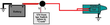
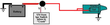
Here's a diagram of what I was speaking of in person. Prevents the spinning problem while providing strong starts and making the starter last. Just keep the factory wiring (or better) from battery to starter. Then add something like 8AWG from solenoid to S terminal.View attachment 379850

And, since I already had a remote solenoid installed, I opted to use that to feed power to both the solenoid and the motor. Yes, it's overkill. A Ford-style relay would have worked fine. But this way I have no hot wires loitering down there, which may be a good thing if that hot exhaust pipe ever succeeds in melting through my wire insulation.

If you have better ideas for getting these pigs started, let me know.

:sign29:
 
One of the repeated failure modes I've had is a slow-moving throwout arm causing arcing in the solenoid (which eventually fails). As this top-mounted solenoid is now inaccessible (due to the exhaust configuration), I installed a remote solenoid up on the core support. This allowed for easy hot-wiring if I were to encounter another solenoid failure. In order to keep the original solenoid from causing future problems, the remote solenoid fed power directly to the motor. I still needed the original solenoid to actuate the throwout arm, so it was wired in parallel to the motor. This mimics the configuration of an old recoil starter.

The problem, as you may have guessed by now, is that it acted like an old recoil starter. It worked well for the first year. But the solenoid action gradually got slower and slower. By the time this trip rolled around, the motor would consistently spin up before the solenoid could engage the throwout arm. So the starter gear would bounce off of the flywheel teeth, and the motor would not start. That is the issue I was fighting on this trip. It would spin but not engage the teeth (aside from an initial hideous crunching noise as it tried and failed to mesh). The field solution was to continue cranking it until I got lucky and it engaged the ring gear. Far from optimal, but it got me home.

The 'fix' that I applied once I got home was to return to the stock solenoid configuration (no more bypass). This solenoid is fed from a relay, like you'd find on an old Ford truck. The theory here, as Luke posted a few pages back, is that direct battery power, fed through heavier-gauge wire, will actuate the solenoid more quickly than feeding power through the dash switch and its tiny wiring. This should prevent the particular failure mode that I was aiming for with the remote solenoid.


And, since I already had a remote solenoid installed, I opted to use that to feed power to both the solenoid and the motor. Yes, it's overkill. A Ford-style relay would have worked fine. But this way I have no hot wires loitering down there, which may be a good thing if that hot exhaust pipe ever succeeds in melting through my wire insulation.

If you have better ideas for getting these pigs started, let me know.

:sign29:
Are you using the gear reduction starter or the original pig?
 
Are you using the gear reduction starter or the original pig?

I've used the original pig (27MT). I've used the gear reduction pig (28MT).
I've used the 24V pig. I've used the 24V gear reduction pig.
I've used open-nosed pigs. I've used at least one closed-nose pig. I've even ground off said pig's closed nose.

I've tried all sorts of 6.x starters, and all of them have sucked in various ways. :rolleyes:

But, to answer your question, this one is a stock-style gear-reduction 28MT starter. And it's still a pig.
 
I've used the original pig (27MT). I've used the gear reduction pig (28MT).
I've used the 24V pig. I've used the 24V gear reduction pig.
I've used open-nosed pigs. I've used at least one closed-nose pig. I've even ground off said pig's closed nose.

I've tried all sorts of 6.x starters, and all of them have sucked in various ways. :rolleyes:

But, to answer your question, this one is a stock-style gear-reduction 28MT starter. And it's still a pig.
Yeah I wouldn't use anything but the 28mt.
I can see part of your problem is having the exhaust too close and causing the drop in voltage.
Other than my block being messed up and having a helicoil in one of the threads which causes it to loosen up sometimes, I haven't had much trouble with mine
 
Yeah I wouldn't use anything but the 28mt.
I can see part of your problem is having the exhaust too close and causing the drop in voltage.
Other than my block being messed up and having a helicoil in one of the threads which causes it to loosen up sometimes, I haven't had much trouble with mine


I can see the lack of solenoid engagement causing a secondary issue on the ring gear on the flywheel. That spinning gear getting tossed at the flywheel is going to chew the hell out of the teeth on the ring gear. Which will just make the starter gear to ring gear engagement much less smooth down the road. Even with the gear kicking out at the right time chewed up teeth will make it tough to line up.


I had a problem on the 307 in my Nova killing starters in high school and college. You hear the starter drive kick out but it just hit the gear on the flex plate and wouldn’t mesh up. Sometimes the drive would get hung up and not retract.

Being an automatic I couldn’t just bump start like you can with a stick. Figured out I could keep the belt tight enough to grab it by hand and rock the crankshaft enough to get the drive to release. Went through many starters in the process. Shimmed them, added the back brace to the block, took the shims back out, hell I even sacrificed a file in an attempt to dress the edge of the ring gear while it was running. Nothing fixed it long term.

It did continue to put rough spots on the ring gear. Ended up pulling the he 307 to swap in a 350. Found the problem. Flex plate was cracked at the crank. Moved enough to not line up with the starter always.

Your flywheel wouldn’t crack like that but the teeth are getting just as chewed up. Might be worth putting an eye on the gear to look and see how bad it is.
 
And, since I already had a remote solenoid installed, I opted to use that to feed power to both the solenoid and the motor.
So, it's like this? Your concern about melting wires is the only reason I can think of to have the main starter current going through 2 sets of contacts in series.

starter_wrong.png
I can see the lack of solenoid engagement causing a secondary issue on the ring gear on the flywheel. That spinning gear getting tossed at the flywheel is going to chew the hell out of the teeth on the ring gear. Which will just make the starter gear to ring gear engagement much less smooth down the road. Even with the gear kicking out at the right time chewed up teeth will make it tough to line up.
But when the solenoid works as intended, the gear should be forward before the contacts touch. Grinding is a common problem if you bypass the starter-mounted solenoid, like this:
starter_wronger.png


View attachment FearfulSpanishHackee-mobile.mp4
 
Last edited:
So, it's like this? Your concern about melting wires is the only reason I can think of to have the main starter current going through 2 sets of contacts in series.

View attachment 413358

But when the solenoid works as intended, the gear should be forward before the contacts touch. Grinding is a common problem if you bypass the starter-mounted solenoid, like this:
View attachment 413359


View attachment 413360
The grinding it’s already done is what I’m concerned about. Chew up the ring gear and it can still keep the starter gear from meshing cleanly when it’s working right.
 
So, it's like this? Your concern about melting wires is the only reason I can think of to have the main starter current going through 2 sets of contacts in series.

View attachment 413358
Yes, it's like that. No, it's not ideal to run through 2 sets of contacts. Part of this is laziness. It was already wired that way, so I have left it. On the other hand, since the solenoids are in series, the remote one never will see significant arcing (since it's initially only passing the current for the solenoid). On the Other other hand, that defeats the entire point of having the remote solenoid, so it's pretty much useless.

This is an idea that turned into a dead end. Oh well.

It did make for an interesting Sunday morning alone on top of the cliff... :ignore:

:haha:
 
The crummy starter situation is hands-down my biggest headache with this truck, and has lead repeatedly to situations like this:

View media item 37573
I do remember pulling that thing a lot. Scared some tourists by that lighthouse when they heard a V8 roaring to get momentum in 6-7 tons on sand, headed in their direction.

It was nice to keep the group moving, though. "Let's roll out. Last rig here has to pull the Suburban" :pimp:
 
The grinding it’s already done is what I’m concerned about. Chew up the ring gear and it can still keep the starter gear from meshing cleanly when it’s working right.

A valid concern, and one that I also had. This is why I chose to bump-start it every chance I had during that trip. Because I wanted to minimize the damage. I did check the teeth when I pulled the starter, and the spot where it landed showed minor damage (but nothing overly serious). I rotated it by hand to another 90-degree spot and found the same thing. So, again, it's not ideal. But it's also not something I'm going to lose a lot of sleep over.
 
Grinding is a common problem if you bypass the starter-mounted solenoid, like this:
starter_wronger.png

That's exactly how I had it wired up at the beginning of this trip...
 
I do remember pulling that thing a lot. Scared some tourists by that lighthouse when they heard a V8 roaring to get momentum in 6-7 tons on sand, headed in their direction.

It was nice to keep the group moving, though. "Let's roll out. Last rig here has to pull the Suburban" :pimp:

Hahaha! Yes, that was a pretty good motivation. Nobody wanted to pull "3 tons of diesel-powered fury," as one guy described it. :haha: :rotfl:

As I recall, that tug was from your truck. Done backwards. In low range. :doah:

20190817_122118-jpg.321942


I don't remember why I parked nose-in. I don't remember why it was in low range. But I do remember halting your truck when I let up on the clutch. The Smaug just clawed right into the loose sand, and movement ceased. Then I shifted ranges and we tried again. Hence the roaring V8. Looking backwards, I couldn't see any tourists. But they must have gotten scared twice!

Oops. :rolleyes:

:rotfl:
 
So only help I can really be is to say change the positive cable to 1/0 or 2/0 to get the absolute max amperage and voltage to the starter and don't use dinky ford solenoids get a nice big boat solenoid around a hundred amps for the wire going to the starter solenoid and use as big of wire as you can that's like 4 gage and fine strand wire. GM way under sized the wires.
 
A solenoid designed to turn a starter motor is too small to engage a solenoid/bendix? Or are you warning of the dangers of cheap ones vs Motorcraft or whatever?

Good advice on the cables, especially for cold weather, but it doesn't sound like the starter has trouble turning the engine once it's actually connected.
 
Top Bottom