


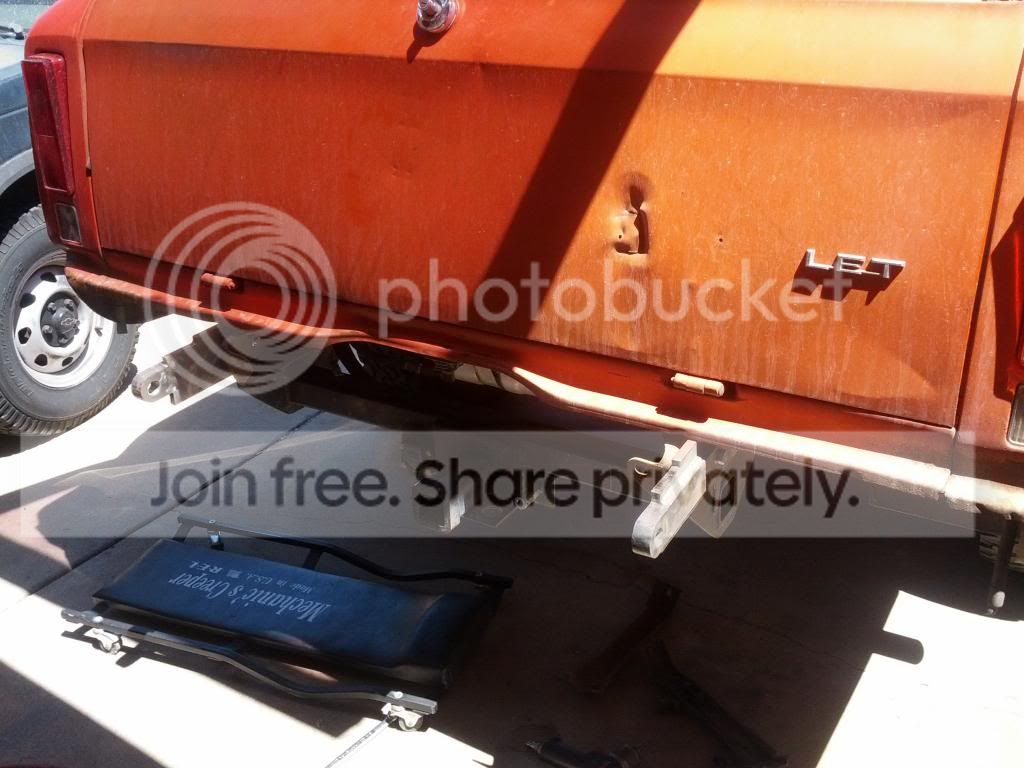
One of the things I learned last year on our trip was that the spare tire and water can/s were taking up way too much valuable interior space. I was looking at some swingout tire carrier designs and while many had some positive attributes, none seemed to be exactly what I wanted. Both Larry and Bill use double swingouts which have their benefits (light weight, easy to manufacture, loads per side are less than one single swingout), but having to unlatch two swingouts every time I needed to get in the back was not desirable. I had discussed their designs at some length with them and I think it was Bill who had run a single at one time and his biggest complaints were that the thing was heavy, hard to keep open and too long. I figured with a good pivot the heavy and keeping it open could be dealt with and I figured the length would not be such a problem. I started researching how I could do it. I contacted a couple well know pivot suppliers with my idea and they said their pivot spindles did not have the capacity I needed. They spoke from experience. They had failures with single swingouts with similar loads to what I was wanting to put on them. Hmm what to do?? I got an idea. The idea was nothing without a bumper to put it on so I started making a bumper.
I started with some 1/2" x 4" cold rolled flat stock to make the brackets. I flame cut it to the shape I needed with all the intricate notches and angles pre-figured into it. I then took a piece of 1/2" x 4" flat stock, cut it lengthwise so it was 2" wide and welded that to the main brackets. It extends forward to reach the first bolt hole in the frame. This would get me close to the 1.125" that a recovery shackle normally uses.
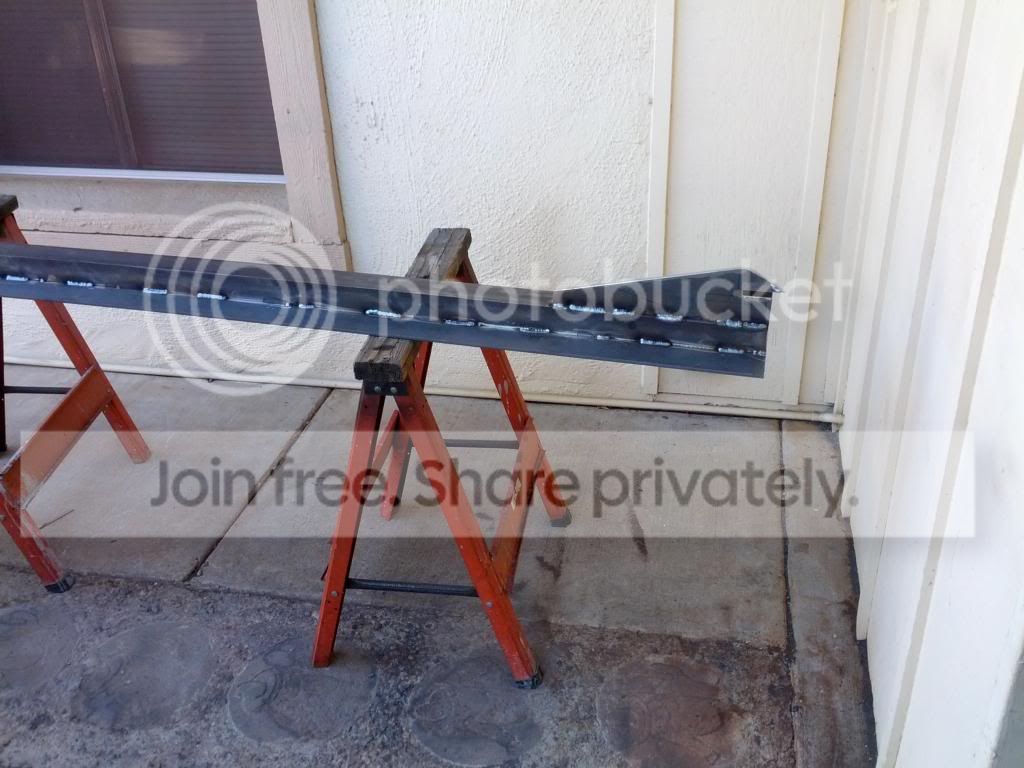
Then I took a piece of 2.5 x 2.5 angle and cut the vertical leg down to 2.25". I put a piece of 1/4" x 3" cold rolled on top of that and welded the length of it to the top of the angle, then make a mount for the pivot plate: (it's upside down in the pic)
Now, for the pivot, I decided to use a splined hub assembly off of a 10 bolt front axle. I took it to Russ to have him machine off everything that it had that wasn't a swingout pivot part. He removed the mounting flange where the spindle mounts to the knuckle and the flange from the hub that mounts the rotor and ultimately the wheel leaving me a splined "cylinder". He also machined a hole in a piece of 1/2" plate to fit the OD of the spindle into. That plate fits into the bracket on the bottom (top in the pic) of the bumper: (The plate is intentionally large so I can cut it down as I figure this out)
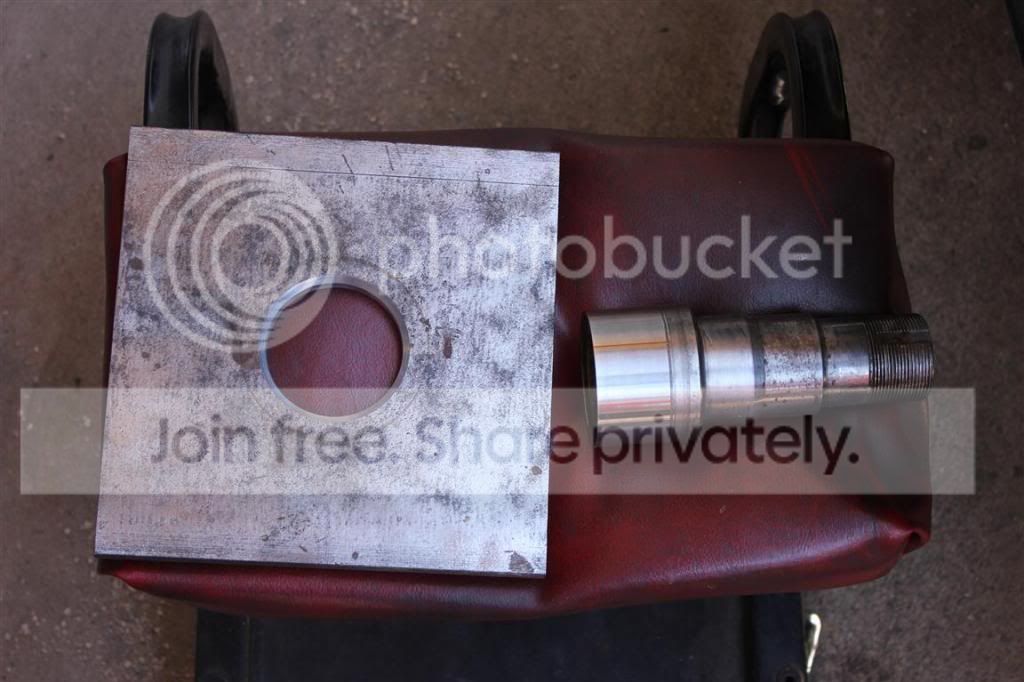
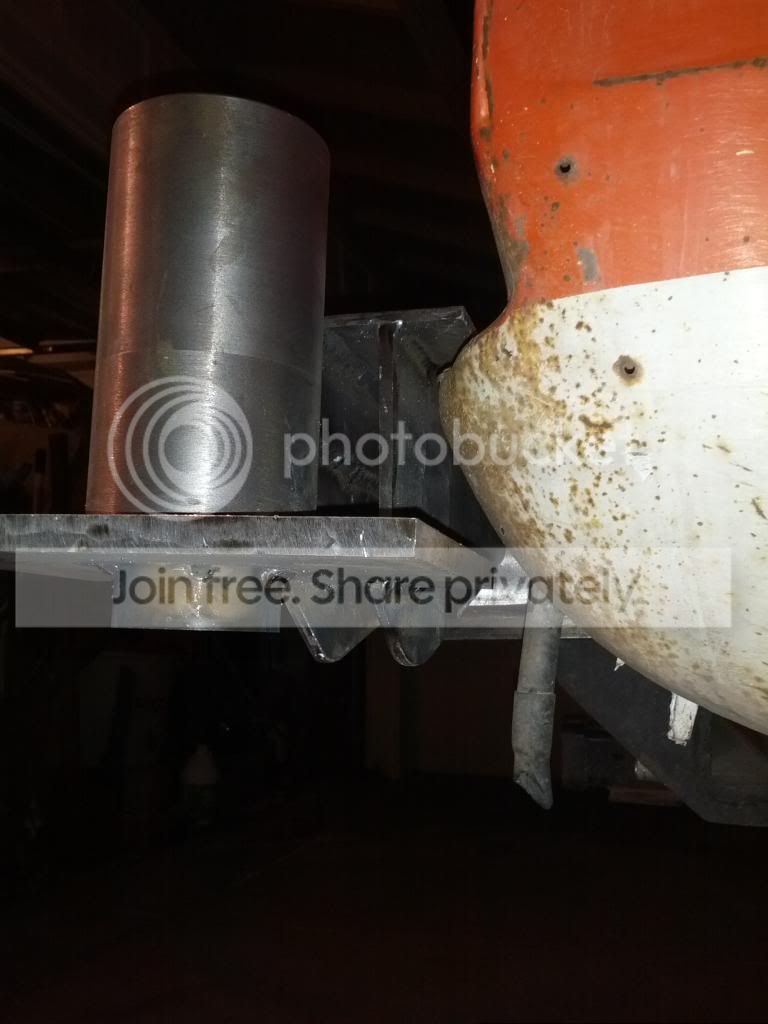
Plate tacked in with splined hub on it. Notice the second mounting bracket for the plate. It is the same as the first one, but taller to reach the upper plate of the bumper:
Swingout tube fitted to splined hub ready for welding:
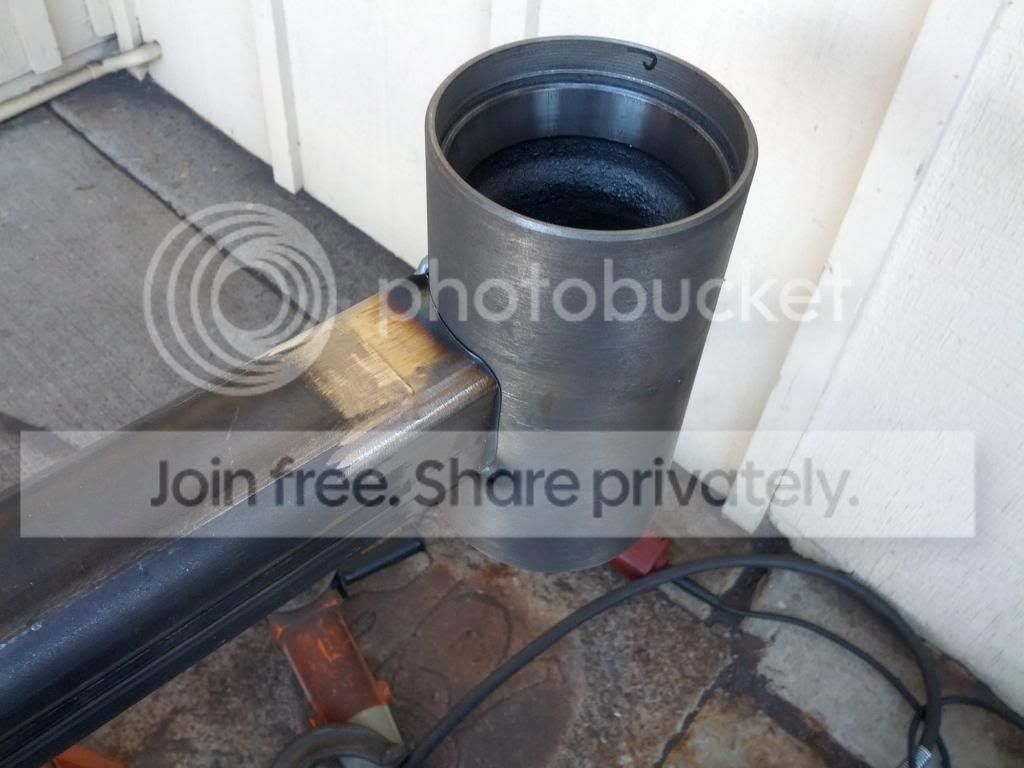
The splined hub acted like a dirty cast iron when it was machined so I got some Eutectic 680 rod to use as filler and TIG welded it to the swingout tube after preheating the hub and peening it with a needle scaler as I went. Necessary?? Not sure, but I know I don't want a failure of this connection.
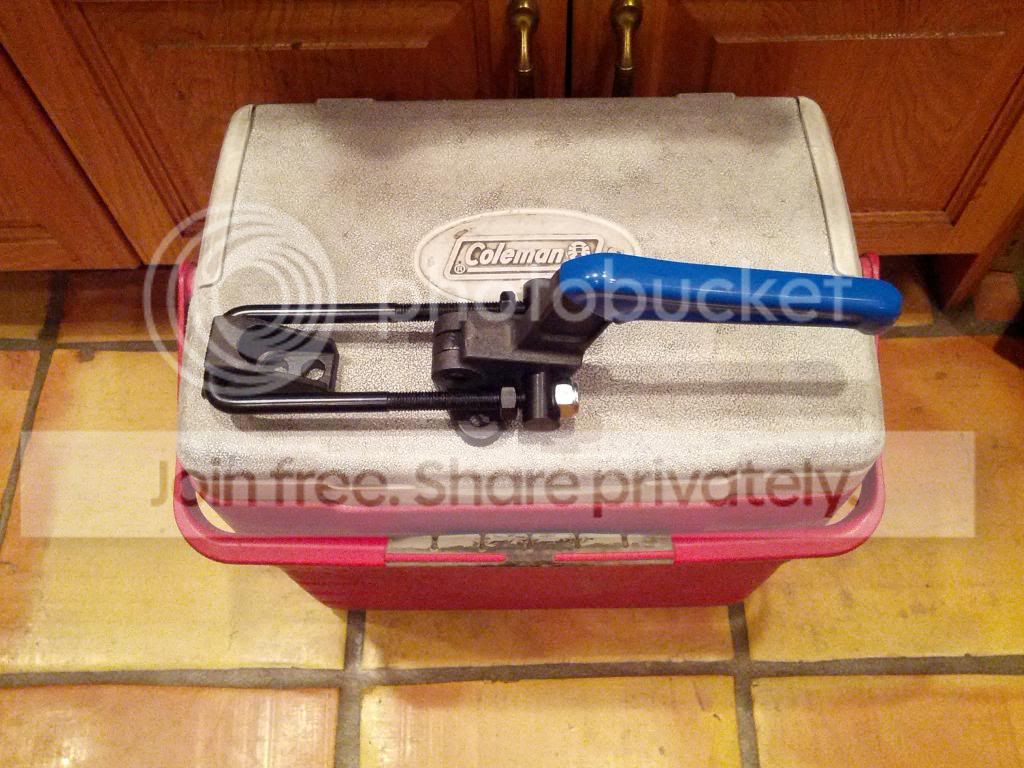
In along here somewhere I decided on a latch to secure the swingout tube to the fixed bumper. That is a standard cooler it is sitting on:
Figuring out the rear cover plate:
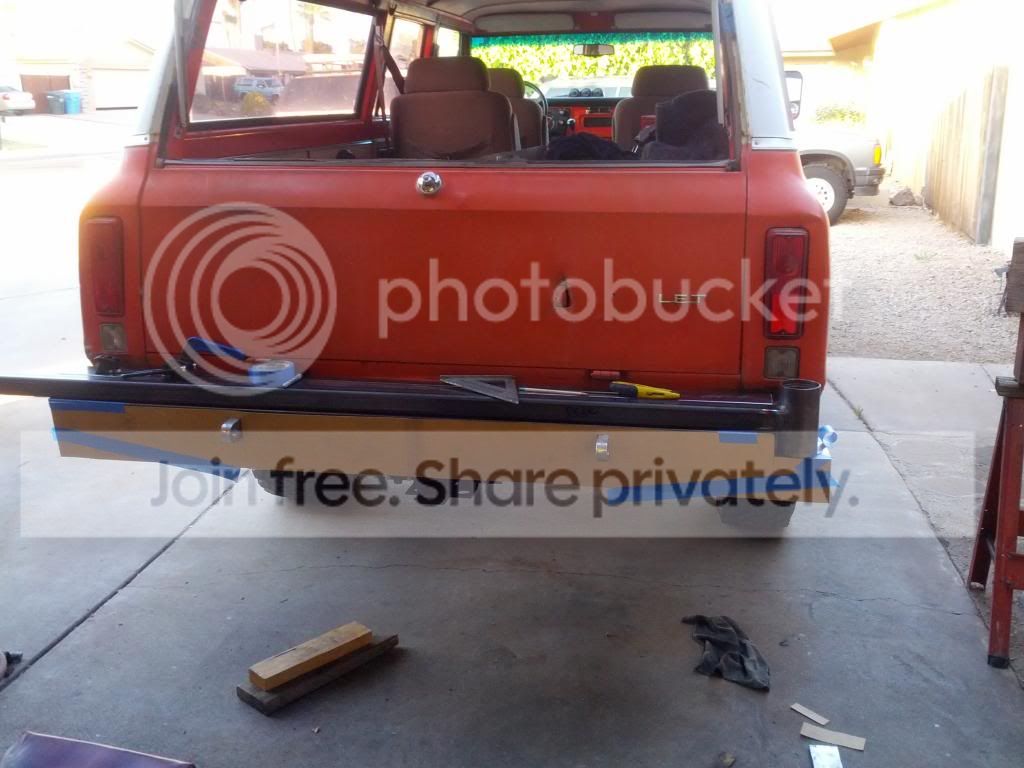
I used 1/8" cold rolled flat stock to make the filler plate out of and when I finished I added a piece of 1/8 x 1" flat stock welded at a 45* angle to enhance strength and aesthetics:
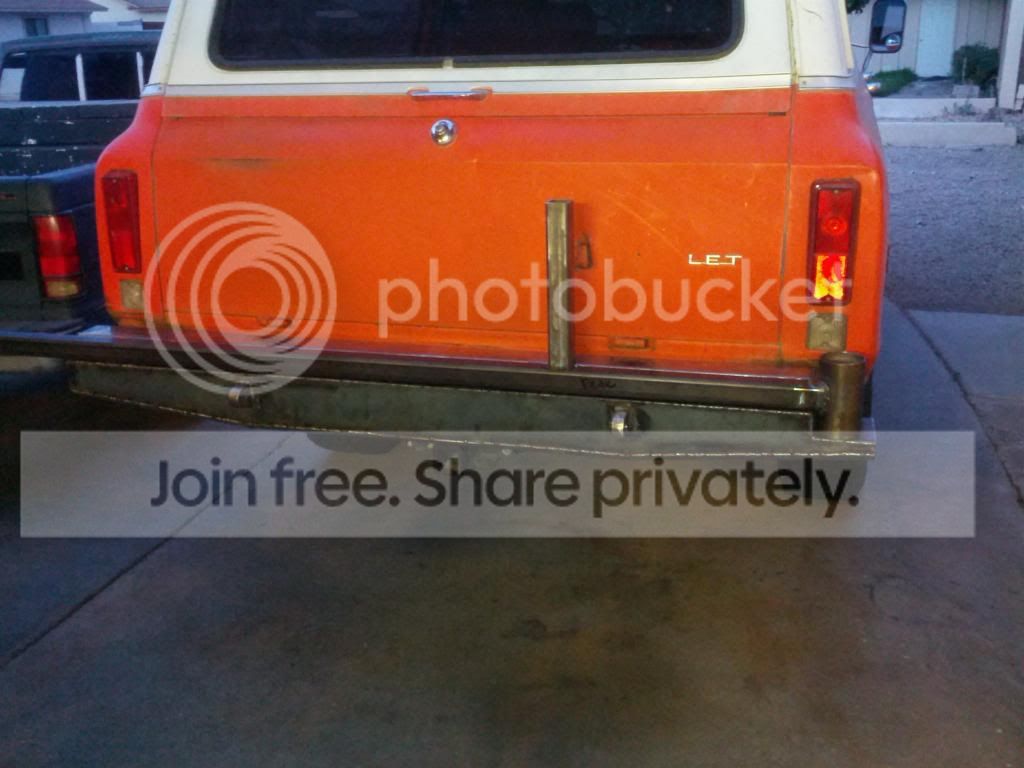
I used a standard receiver tube to mount the wheel flange on. The wheel flange is 3/8" plate. I cut the outside with the plasma cutter. I need more practice on the heavy stuff as I had a real challenge with it. 1/4" and less--no problem, but with the heavier stuff I need to figure out the settings a little better. That being the case I flame cut the square hole to fit over the receiver tube so that I would have no issues with that.
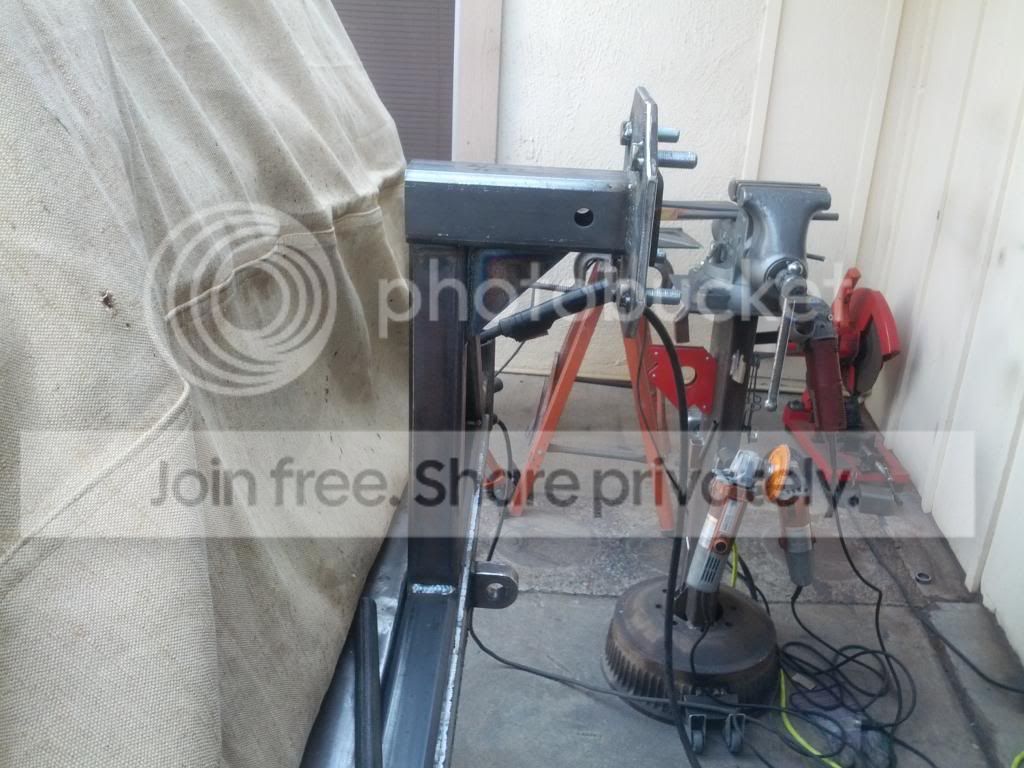
About this time I figured out that Bill and Larry had valid points about the length of a single swingout. It doesn't seem like much until you swing it out and it hits the welder in the garage. Something needs to be done here. I don't want two swingouts. Hmm.
Upper hoop installed:
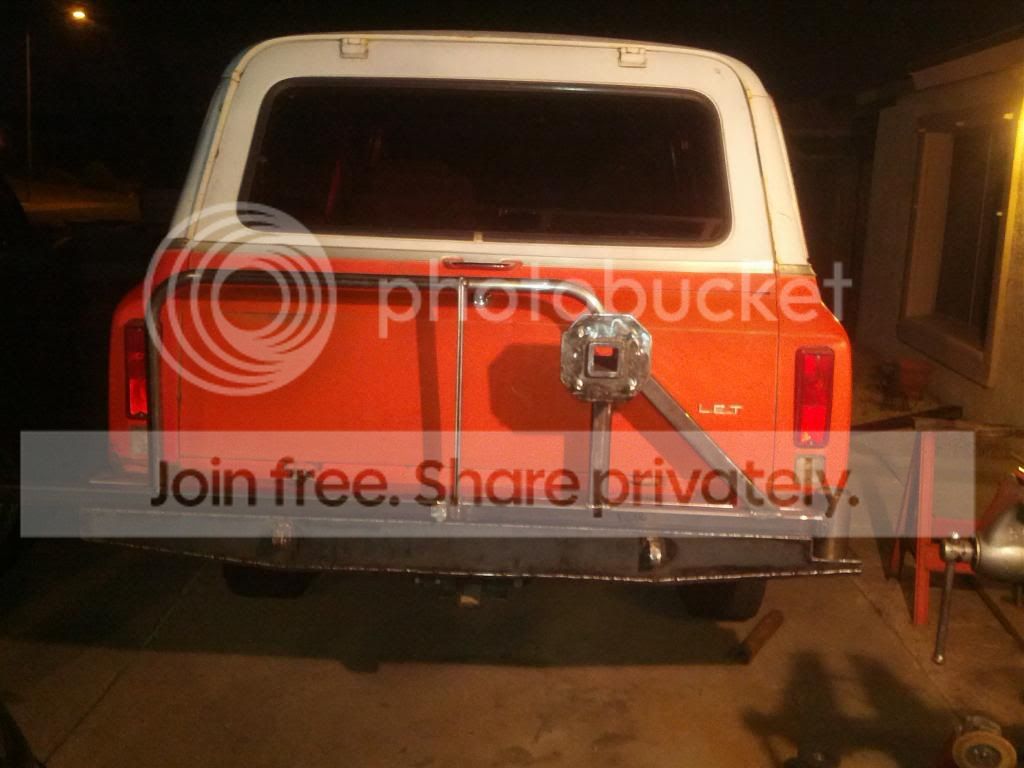
So, after quite a bit of butt scratching and endless staring at the situation I came up with a plan. I got another toggle clamp like the previous one pictured (but much smaller), made a coule hinges out of some DOM tubing and 5/8" bolt shanks for hinge pins, added it all together and came up with this:
Swing it out and realize it is going to hit whatever is behind it:
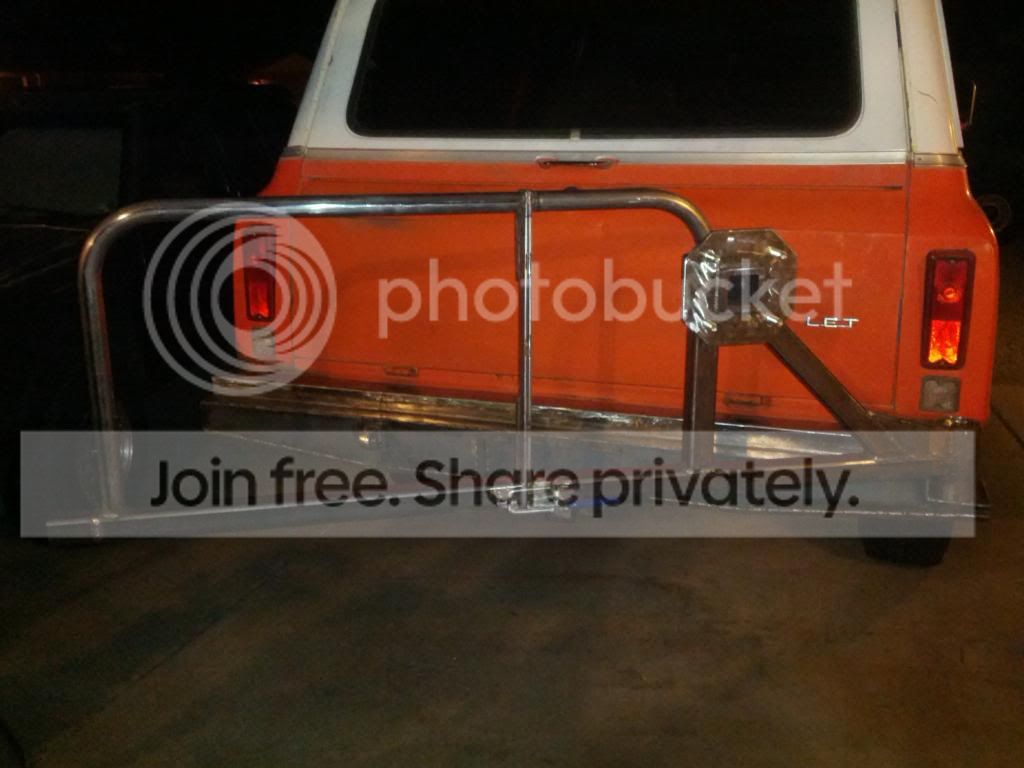
Throw the latch on the main tube and fold the tube inward:
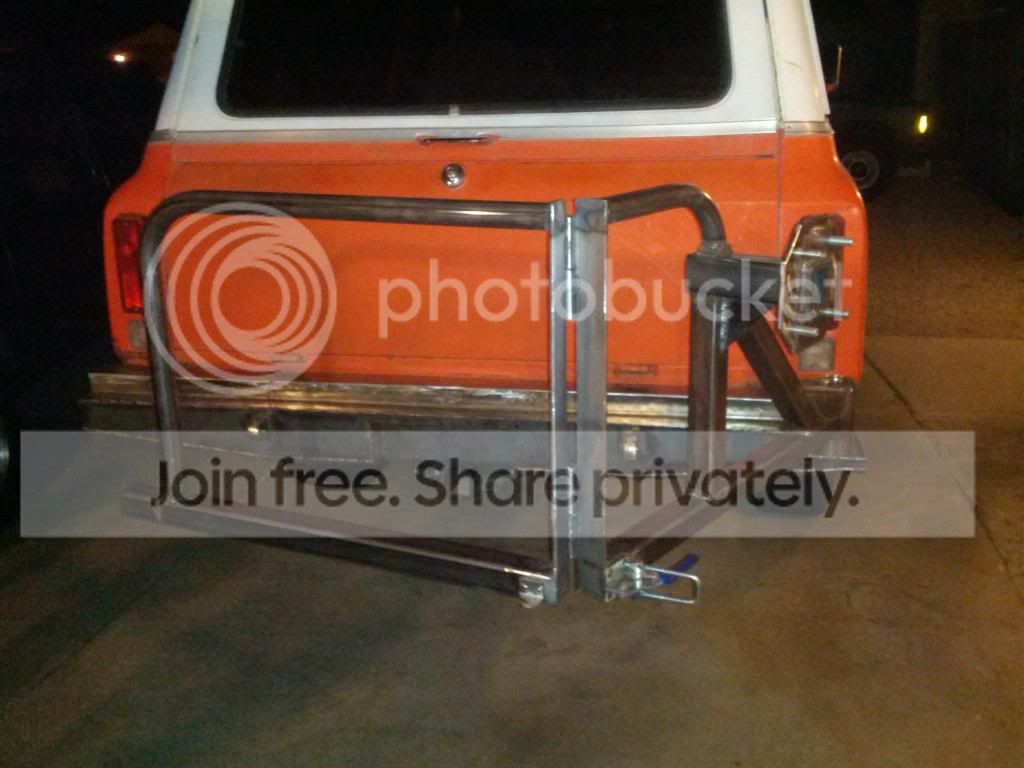
Keep going until it folds up into a nice wad over on the side of the vehicle--problem solved!! The simple functionality of a single swingout when clearance is not an issue, but the compactness of dual swingouts when space it tight:
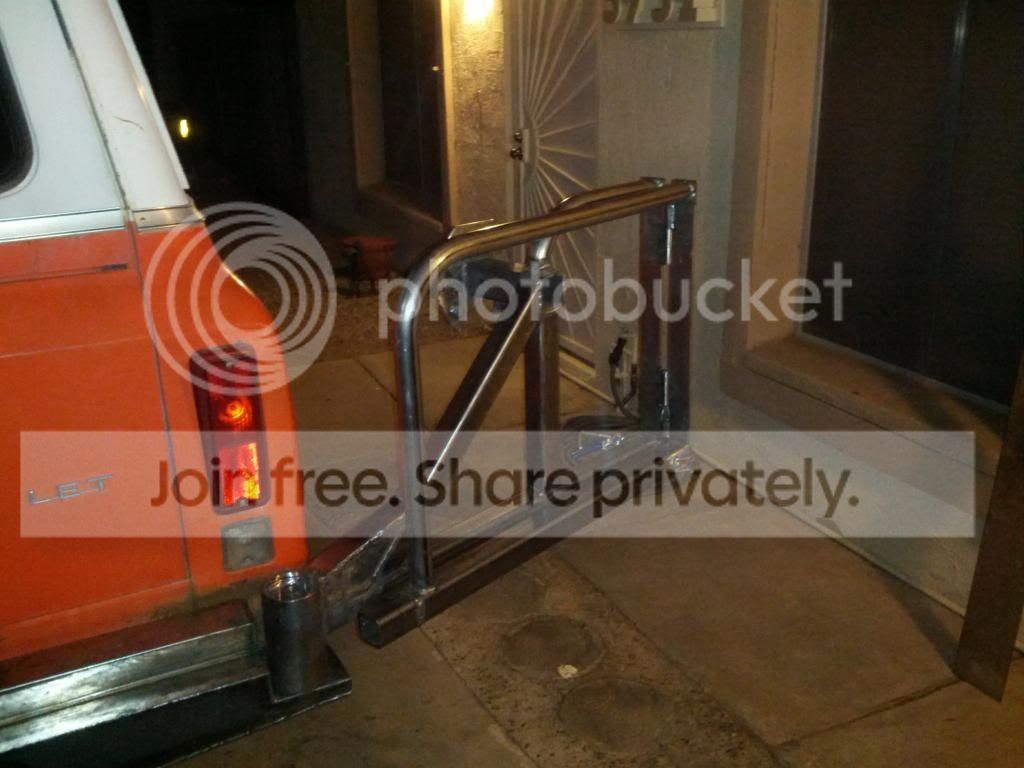
I wanted to reuse the original license plate mounting assembly from the original bumper, but of course that wouldn't fit....so, I had to make my own:
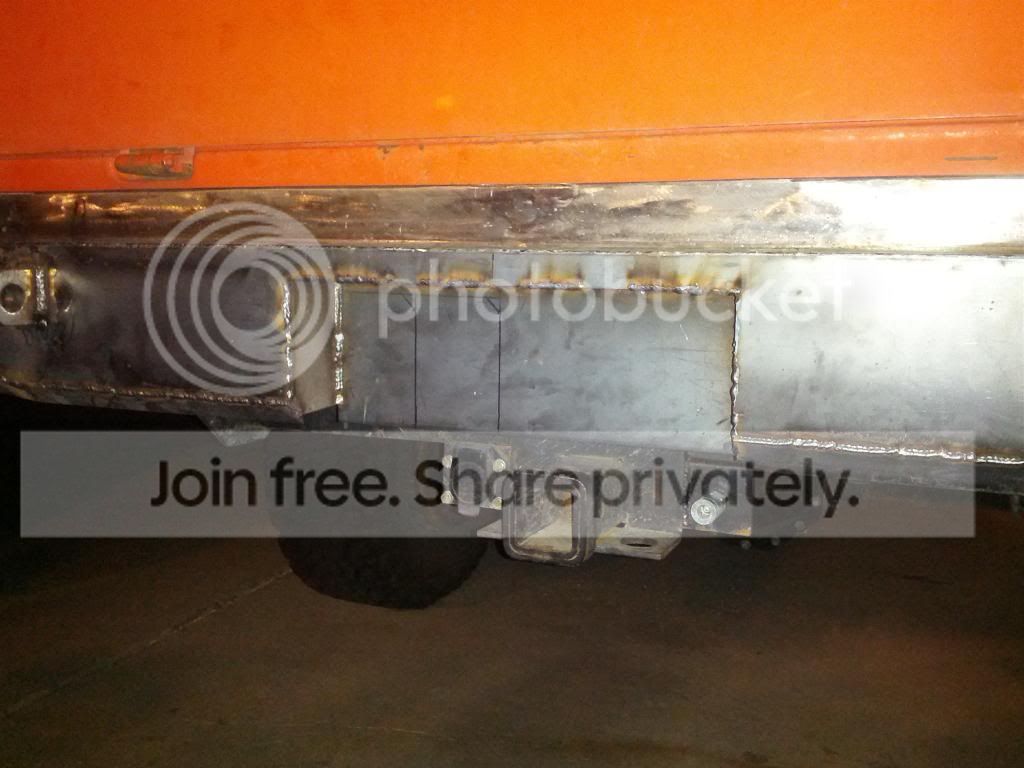
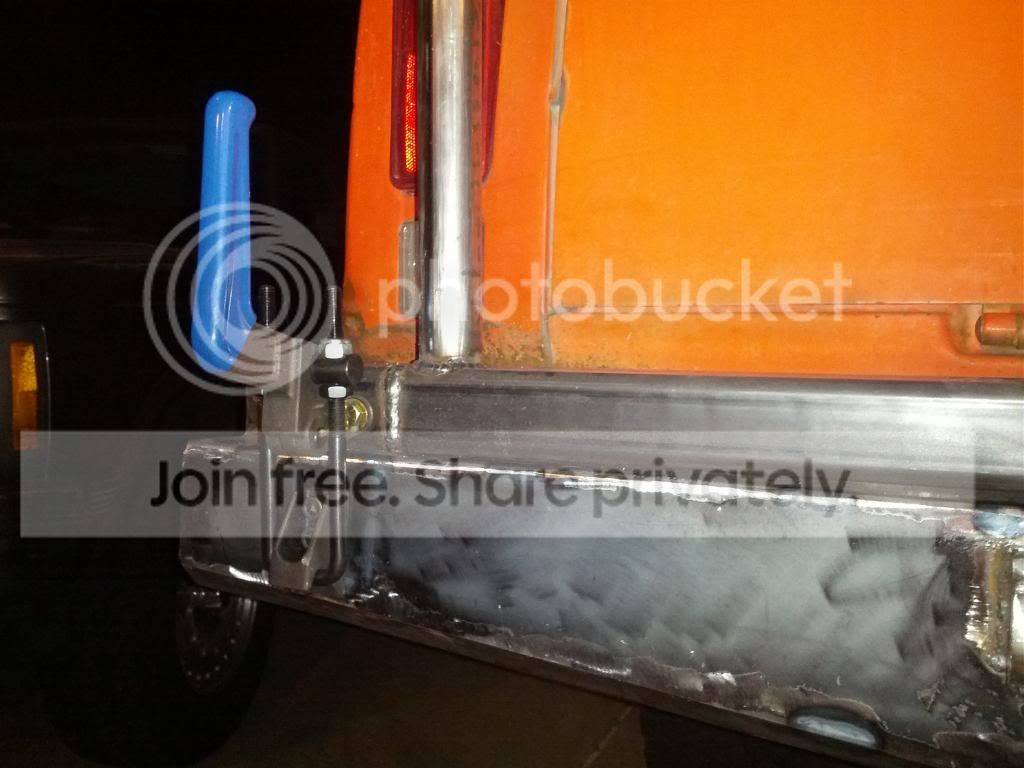
Main latch mounted. It has reinforcements behind the plate on the bottom and inside the tube on the top.
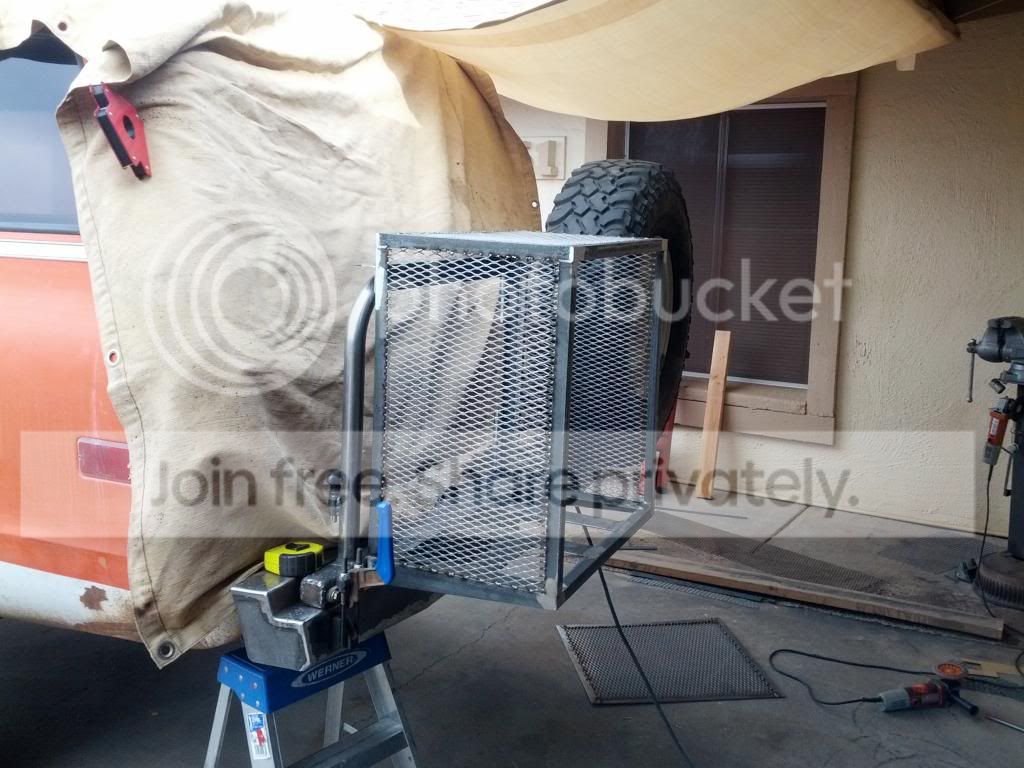
So now I have a tire mounted. What to do about the water cans and propane cylinder. I was talking with my friend Lance and he had a Sportsmobile van that had a box mounted on one of the swingouts. He loved it and it sounded like a great idea so I started searching one out. I found that they are tremendously expensive (for aluminum). Also, I was having a real difficult time finding one that was close to the dimensions that I needed. They were either a bit too small or way to big. I found one that was kind of close, but was too deep. I figured I could cut it down and weld it back together, but then I took a step back and thought about it and I was going to spend $500.00 on a box and cut it up?? Steel is cheaper, but twice the weight--not good. I started looking at the weight per square foot of material and I found that expanded steel is approximately the same weight as aluminum sheet metal. Obviously it is not as opaque, but I don't really care at this point (I'm getting close to the end of my available timeframe). Expanded metal it is. I fabbed up a framework using 2x2 x 1/8 angle for the bottom (sides taper to 1" at the back) and 1 x 1 x 1/8" angle for the rest of it, then cut the expanded metal to fit in the openings:
I made a jig for my plasma cutter so I could cut e-track holes at strategic points in the structure so I could use common e-track components to secure the contents easily.
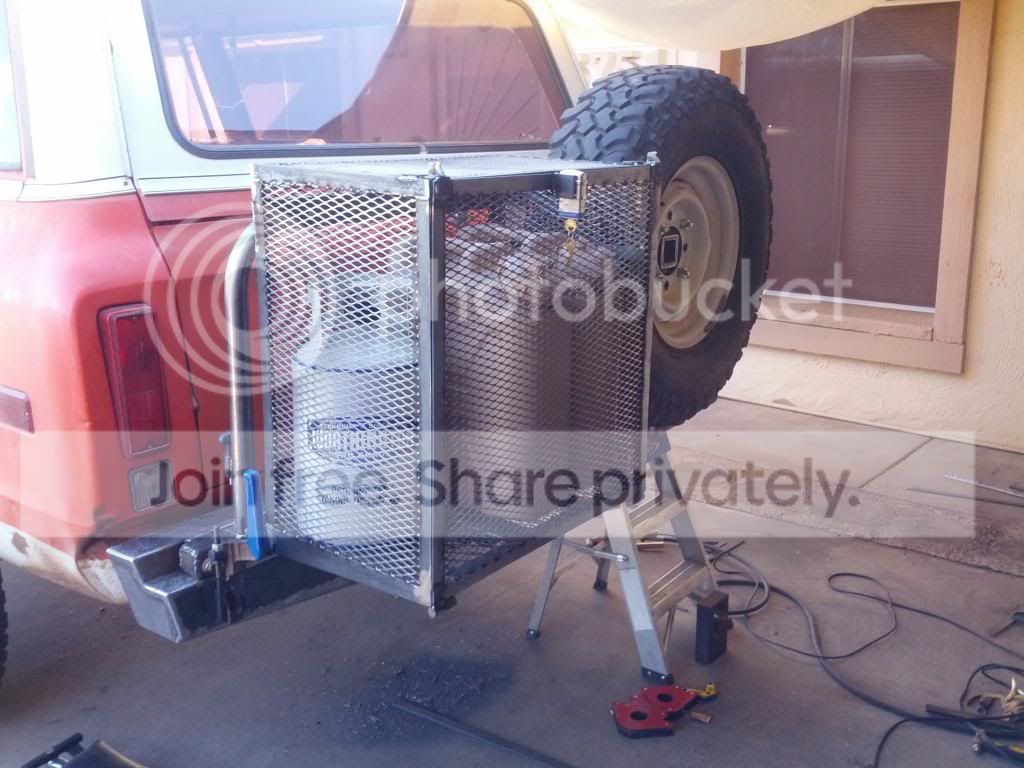
I'm not enamored with the aesthetics of the box, but it is secure and functional. I can deal with the aesthetics later. I tore it all down and had it powdercoated. I usually paint everything, but this is going to be in the line of fire for rocks and trail debris kicked up off the tires so I figured I'd give it a fighting chance of survival with some powdercoat.
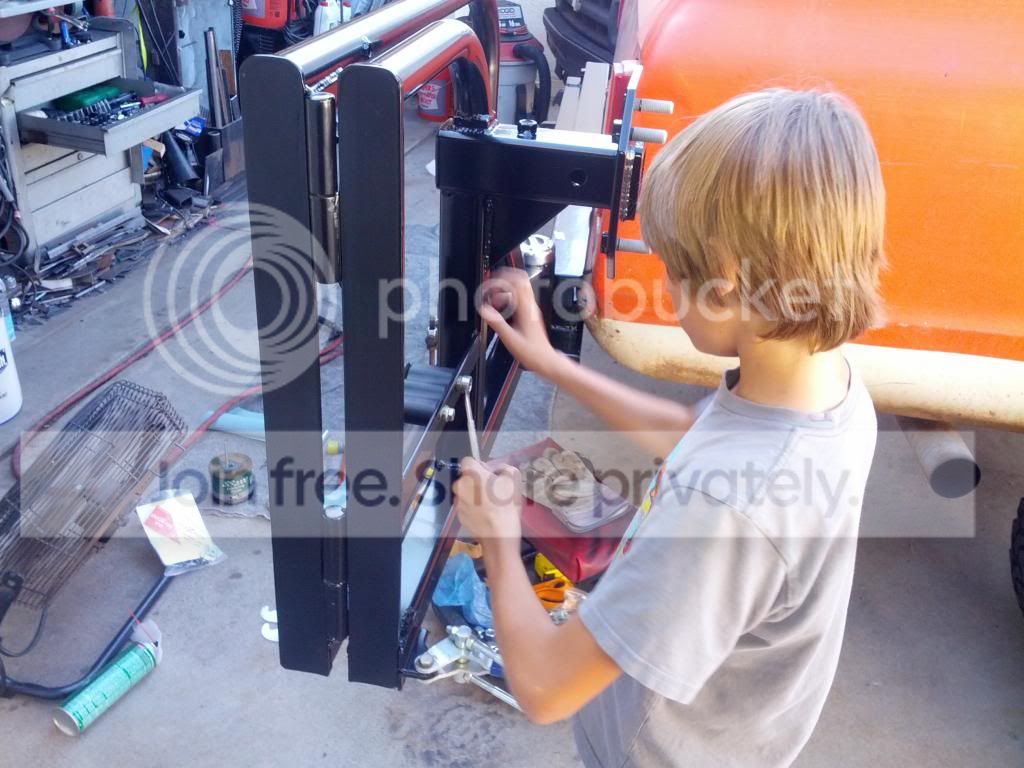
Reassembly. Got some work out of the boy: (Yes, he is installing a Rotopax mount)
Here is the finished product: (the gas can is for when we take a Honda Generator with us. It's rare, but I don't want to add it later....)
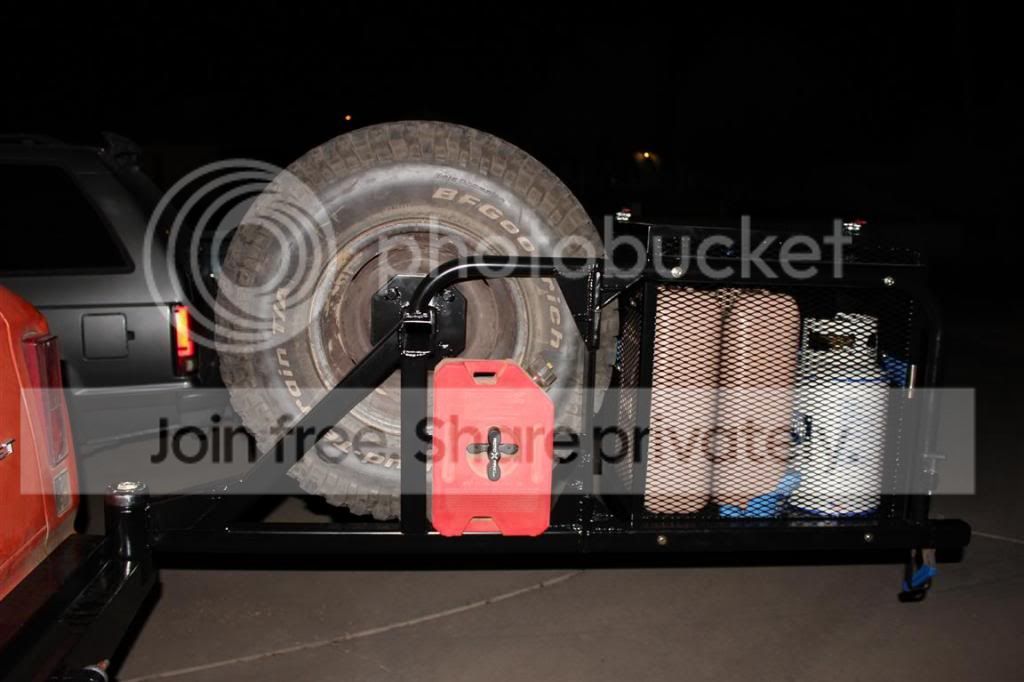
So there it is. One bumper that I would be completely and thoroughly embarrassed to admit to even 10% of the amount of time I have in fabricating it. Does it work?? Absolutely beautifully. I have not found anything I would have done differently--yet?? I am planning on doing something about the box and I have some ideas, but I have some other things that are taking precedence right now. We'll see what I come up with.
I started with some 1/2" x 4" cold rolled flat stock to make the brackets. I flame cut it to the shape I needed with all the intricate notches and angles pre-figured into it. I then took a piece of 1/2" x 4" flat stock, cut it lengthwise so it was 2" wide and welded that to the main brackets. It extends forward to reach the first bolt hole in the frame. This would get me close to the 1.125" that a recovery shackle normally uses.

Then I took a piece of 2.5 x 2.5 angle and cut the vertical leg down to 2.25". I put a piece of 1/4" x 3" cold rolled on top of that and welded the length of it to the top of the angle, then make a mount for the pivot plate: (it's upside down in the pic)

Now, for the pivot, I decided to use a splined hub assembly off of a 10 bolt front axle. I took it to Russ to have him machine off everything that it had that wasn't a swingout pivot part. He removed the mounting flange where the spindle mounts to the knuckle and the flange from the hub that mounts the rotor and ultimately the wheel leaving me a splined "cylinder". He also machined a hole in a piece of 1/2" plate to fit the OD of the spindle into. That plate fits into the bracket on the bottom (top in the pic) of the bumper: (The plate is intentionally large so I can cut it down as I figure this out)

Plate tacked in with splined hub on it. Notice the second mounting bracket for the plate. It is the same as the first one, but taller to reach the upper plate of the bumper:

Swingout tube fitted to splined hub ready for welding:

The splined hub acted like a dirty cast iron when it was machined so I got some Eutectic 680 rod to use as filler and TIG welded it to the swingout tube after preheating the hub and peening it with a needle scaler as I went. Necessary?? Not sure, but I know I don't want a failure of this connection.
In along here somewhere I decided on a latch to secure the swingout tube to the fixed bumper. That is a standard cooler it is sitting on:

Figuring out the rear cover plate:

I used 1/8" cold rolled flat stock to make the filler plate out of and when I finished I added a piece of 1/8 x 1" flat stock welded at a 45* angle to enhance strength and aesthetics:

I used a standard receiver tube to mount the wheel flange on. The wheel flange is 3/8" plate. I cut the outside with the plasma cutter. I need more practice on the heavy stuff as I had a real challenge with it. 1/4" and less--no problem, but with the heavier stuff I need to figure out the settings a little better. That being the case I flame cut the square hole to fit over the receiver tube so that I would have no issues with that.

About this time I figured out that Bill and Larry had valid points about the length of a single swingout. It doesn't seem like much until you swing it out and it hits the welder in the garage. Something needs to be done here. I don't want two swingouts. Hmm.
Upper hoop installed:

So, after quite a bit of butt scratching and endless staring at the situation I came up with a plan. I got another toggle clamp like the previous one pictured (but much smaller), made a coule hinges out of some DOM tubing and 5/8" bolt shanks for hinge pins, added it all together and came up with this:
Swing it out and realize it is going to hit whatever is behind it:

Throw the latch on the main tube and fold the tube inward:

Keep going until it folds up into a nice wad over on the side of the vehicle--problem solved!! The simple functionality of a single swingout when clearance is not an issue, but the compactness of dual swingouts when space it tight:

I wanted to reuse the original license plate mounting assembly from the original bumper, but of course that wouldn't fit....so, I had to make my own:

Main latch mounted. It has reinforcements behind the plate on the bottom and inside the tube on the top.

So now I have a tire mounted. What to do about the water cans and propane cylinder. I was talking with my friend Lance and he had a Sportsmobile van that had a box mounted on one of the swingouts. He loved it and it sounded like a great idea so I started searching one out. I found that they are tremendously expensive (for aluminum). Also, I was having a real difficult time finding one that was close to the dimensions that I needed. They were either a bit too small or way to big. I found one that was kind of close, but was too deep. I figured I could cut it down and weld it back together, but then I took a step back and thought about it and I was going to spend $500.00 on a box and cut it up?? Steel is cheaper, but twice the weight--not good. I started looking at the weight per square foot of material and I found that expanded steel is approximately the same weight as aluminum sheet metal. Obviously it is not as opaque, but I don't really care at this point (I'm getting close to the end of my available timeframe). Expanded metal it is. I fabbed up a framework using 2x2 x 1/8 angle for the bottom (sides taper to 1" at the back) and 1 x 1 x 1/8" angle for the rest of it, then cut the expanded metal to fit in the openings:

I made a jig for my plasma cutter so I could cut e-track holes at strategic points in the structure so I could use common e-track components to secure the contents easily.

I'm not enamored with the aesthetics of the box, but it is secure and functional. I can deal with the aesthetics later. I tore it all down and had it powdercoated. I usually paint everything, but this is going to be in the line of fire for rocks and trail debris kicked up off the tires so I figured I'd give it a fighting chance of survival with some powdercoat.
Reassembly. Got some work out of the boy: (Yes, he is installing a Rotopax mount)

Here is the finished product: (the gas can is for when we take a Honda Generator with us. It's rare, but I don't want to add it later....)

So there it is. One bumper that I would be completely and thoroughly embarrassed to admit to even 10% of the amount of time I have in fabricating it. Does it work?? Absolutely beautifully. I have not found anything I would have done differently--yet?? I am planning on doing something about the box and I have some ideas, but I have some other things that are taking precedence right now. We'll see what I come up with.

 Very nice work, but it might be worth considering adding a cooler mount to the box, just to give more interior space.
 Have you weighed your Burb recently? Starting to think you HAD to have the 1 tons/Cummins drivetrain!


 I shouldn't use peoples names in posts before 5 am


