CK5
Register an account today to become a member! Once signed in, you'll be able to participate on this site by adding your own topics and posts, as well as connect with other members.

The Story Of A Cummins Suburban (Lots Of Pics)

So one of the few recurring issues I have had over the years is warping the front brake rotors. It has happened a few times since I built it. It makes no sense as I know how to descend a grade without riding, or oftentimes even using the brakes. I have no issue going down a hill in a lower gear even if it is a bit slower than I would like to be running. If it keeps me off the brakes, I'm good with it. The rear brakes are fully functional and the auto adjusters work as well as being manually adjusted a couple times a year. So that, and the fact that I only use high quality components in the system really puzzles me. The rotors have not floated on any boat to arrive in this country. They are complete hub/rotor assemblies from GM and are from Budd, a longtime OE supplier. The caliper were also brand new units from GM, not some rebuilt rusted out cores. Brand new, zero mile units. The caliper brackets were some very nice pieces I found locally and installed after the first warping issue. The mounting hardware is new and cleaned/lubed any time the caliper is removed for any reason. The original caliper brackets that came on the 60 had a bit of wear in the area where the end nub of the pad rides. The replacement pieces had much less wear in that area and none where the caliper itself rides. I use Bendix Fleet/Metlock pads exclusively. They are a great compound that has a great coefficient of friction but also has great pad life and does not kill rotors. Win, win, win. I ditched the corroded rotor dust shields because they were pretty much junk and also all the cool kids do it. So with all of the money and brand new parts I've thrown at these brakes, I was getting very frustrated having to repeatedly deal with warped rotors. So what is the problem?? All of this good stuff should work in harmony making the pressing of the brake pedal nothing less than an experience full of unicorns and rainbows.
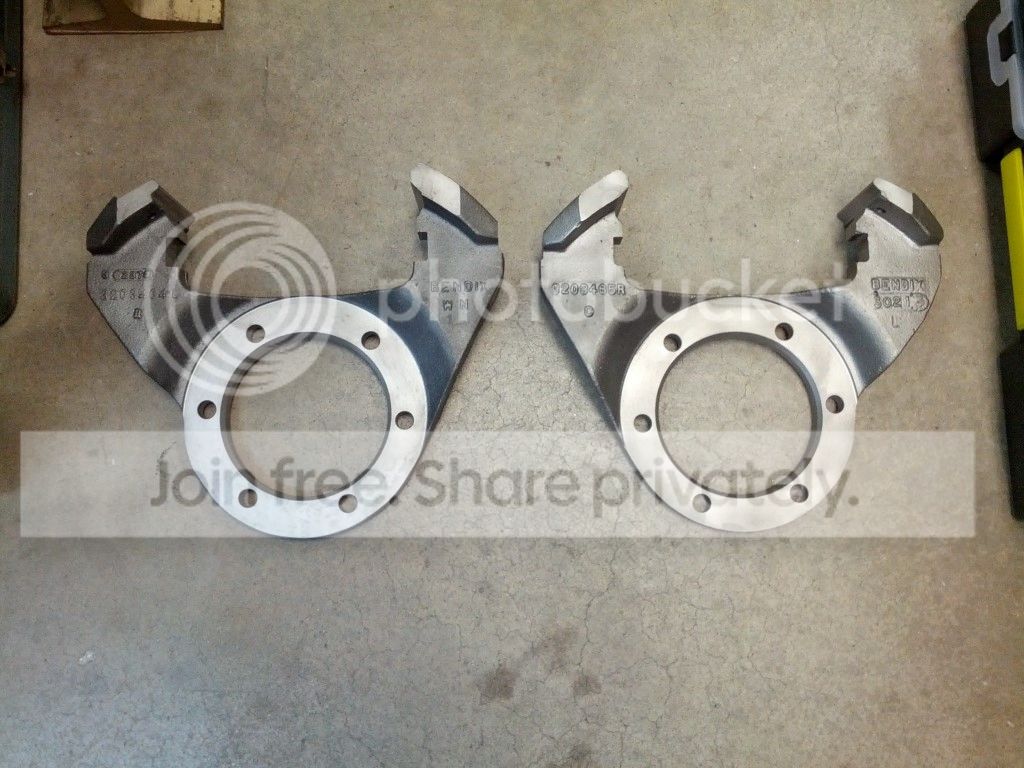
So I guess I have lost track of exactly when I decided to try again (about 1.5 years ago), but I eventually started acquiring MORE new parts. One possibility I could not discount was the area of the caliper bracket where the nub of the pad rides. Every bracket I have ever seen has some wear in this area, but they don't warp rotors like mine does. So I throw out the dragnet looking for caliper brackets and eventually I come up with two new ones (not at the same time mind you).

IMG_20150501_203353%20Medium_zpsedm4bgix.jpg


Yep, those are NOS caliper brackets. Not an easy thing to find, but I am really trying to eliminate any known possibilities here.
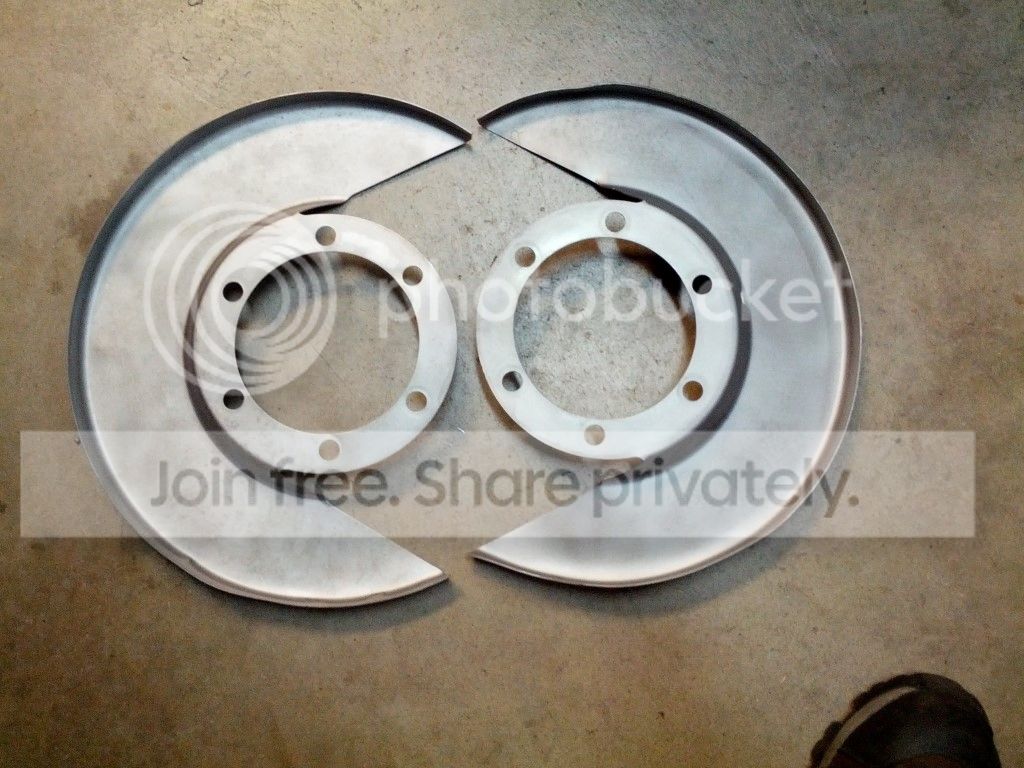
Another thing I decide to try is installing the rotor dust shields. I've heard the main reason the cool kids remove them to prevent rocks from getting caught between the dust shield and the rotor. While a viable possibility, I have never had it happen on any other vehicle I've driven on dirt, so that reason is out for me at this point, but looking at my situation from a different angle the shields can help a different situation--quenching/thermal shock from water. When running in the desert, the brakes run warm/hot and a small stream crossing or puddle will throw cold/cool water onto a hot rotor. Obviously the dust shields are not water tight, but they will keep small amounts of water from directly contacting the hot rotor. Will it solve the problem?? Who knows, but I'm going to try it. The only problem now is I have to find dust shields. I'm not exactly sure where these came from, but I think they came from my buddy Russ that does all of my precision machining. I could be wrong, but if I am, I'll still give him credit. I cleaned them up and ended up with dust shields that look like this:

IMG_20150501_203407%20Medium_zpsl0j98yau.jpg


Nice pieces.

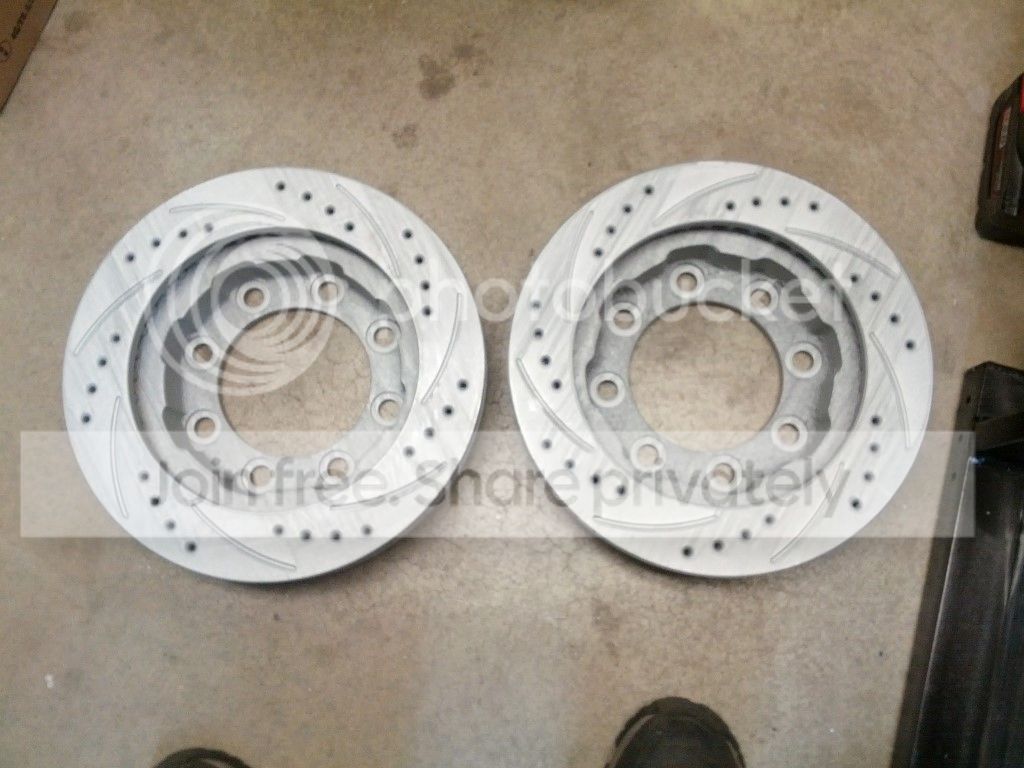
Now what?? Well, about the only thing left are the rotors themselves. Ugh, I paid a ton of money for these GM/Budd hub/rotor units that are made in the US, and I really don't want to condemn them, but they have been cut a few times, a couple of those were real deep cuts to get them straight. Are they permanently warped?? Do they have memory?? I don't know. One thing I have done for decades on vehicles that I use in a performance fashion is to machine cooling slots in the rotor faces. I never got into drilling cooling holes in the faces due to potential cracking issues and the fact that the slots have always been enough. Now I have an issue. Do I machine these possibly compromised rotors with cooling slots?? Do I buy new rotors and machine slots into them?? Can I even find domestic rotors anymore?? Well, I started researching rotors that are pre-machined with slots in them already. There are several companies out there that offer them. It seems that none of them use domestic iron for this vehicle application. I finally settle on Street Plus Performance units. They are slotted and drilled rotors. The holes in the face of the rotors are radius chamfered so stress risers are greatly reduced. They also warranty their rotors against cracking. I guess that is as good as I'm going to get, so I throw down another pile of cash for the new rotors:

IMG_20150501_211714%20Medium_zps25zczu8b.jpg


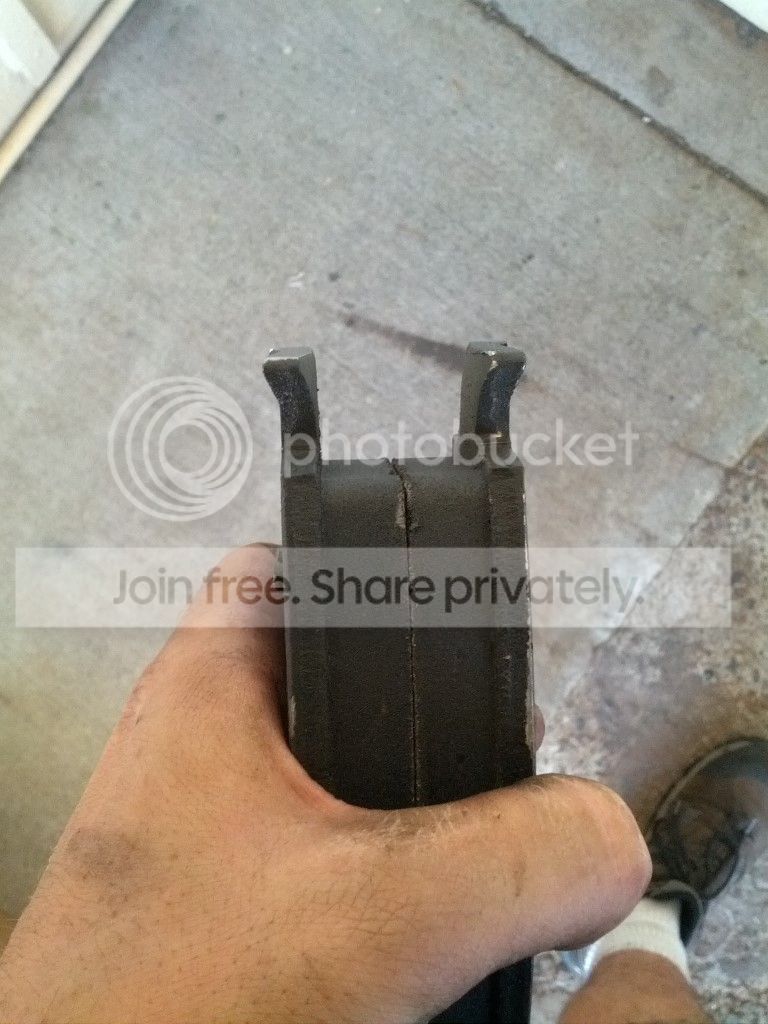
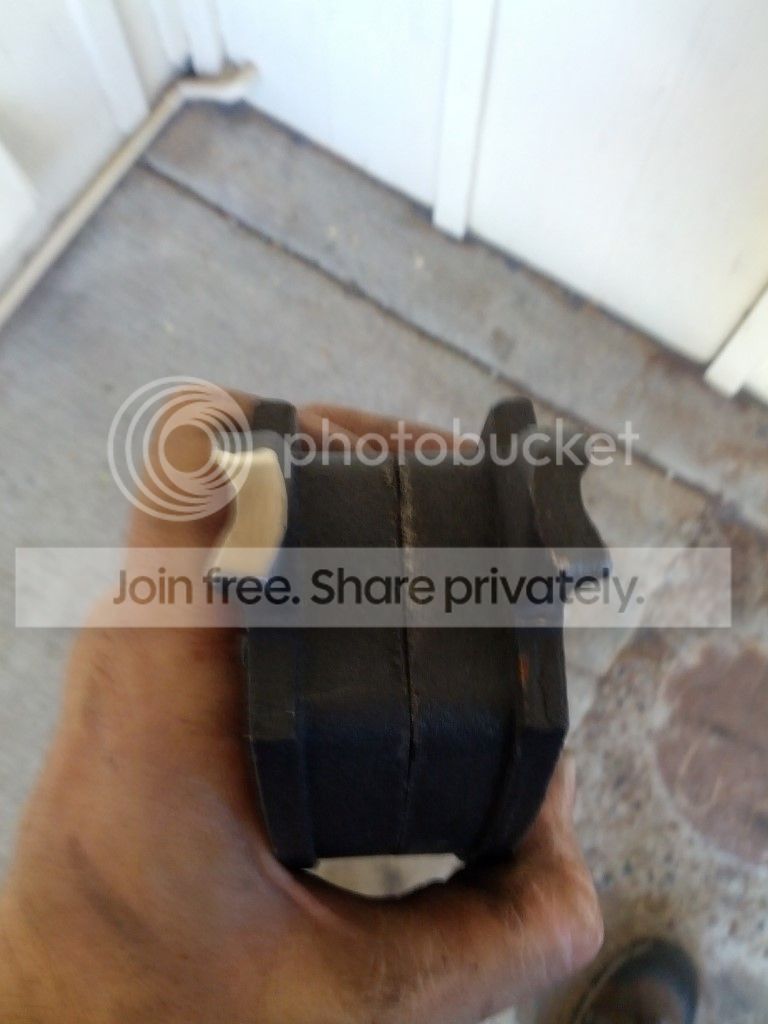
So we're ready to go now, right?? Well, not quite.... I can not bring myself to install all of these new , high dollar parts with the old brake pads. I grab another set of Bendix Fleet/Metlock pads and start inspecting them for issues. One thing I did not like was the way the end nub, that locates the pad in my brand new caliper brackets, is shaped. I decided to square up the end of the pad and then polish the end of the nub so no additional drag would occur in that area.
The picture is not so great, but the pad on the left is the one that got squared up and polished:

IMG_20150502_162410%20Medium_zps4xx3ir5c.jpg


A different angle that shows the end a little better:

IMG_20150502_162401%20Medium_zpsgbfa1foc.jpg


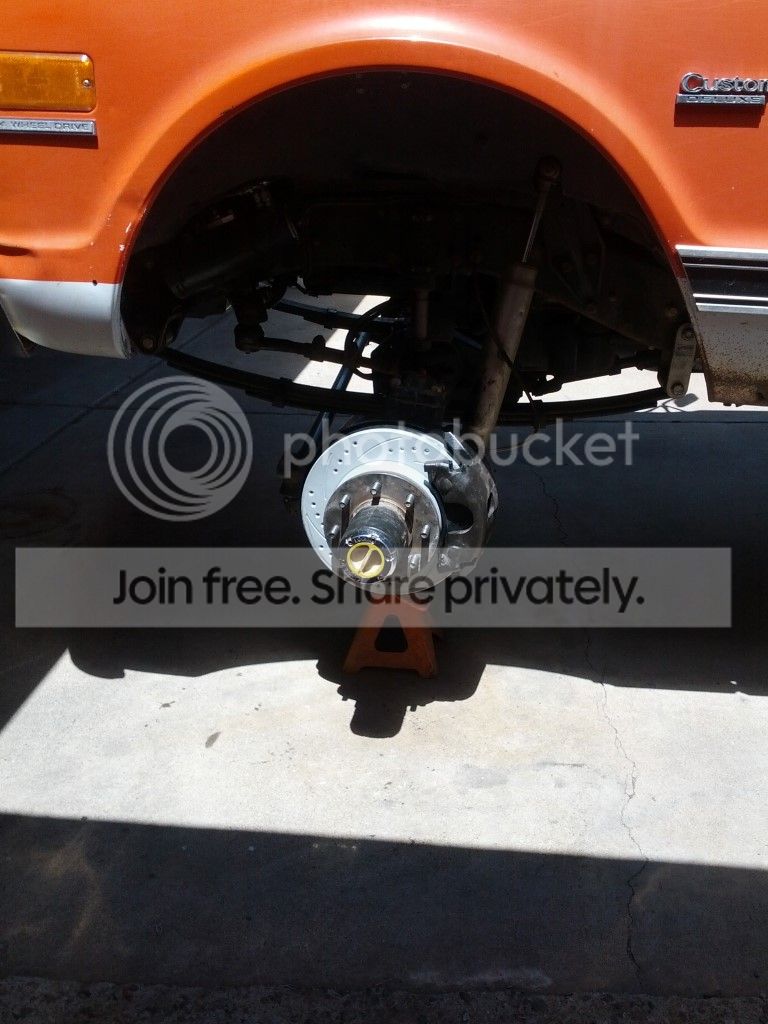
So I added it all together and threw it at the vehicle and this is what I came up with:

IMG_20150503_120050%20Medium_zps2rfosgie.jpg


Looks like every other time, except the rotor is drilled and slotted now. So, does it work?? I'd say the jury is still out, but so far, so good. The parts have been in there for about a year and a half now and have no indication of being warped at all. When I hubbed the rotors I measured the runout and it was a bit more than I wanted (I don't recall what the reading was, just that it was more than I wanted), but it has not been an issue at all. The braking performance seems about the same as it was before, but without the warpage it is so nice to drive. It has been on several trips since installation as well as two of our long summer trips with no problems so far. So hopefully, the problem is finally solved, but if not, I have at least had a couple years of no warpage. At this point I call it a win.
 
I had troubles with the stock brakes on my Yukon of the same kind you had, and I got tired of machining and replacing rotors, so I finally broke down and bought some slotted and drilled rotors and severe duty pads from Napa. Best money I spent on brakes. And like yours, everything else was in good shape, but I kept toasting the factory stuff. I was pretty hard on the new stuff sometimes (full force panic stop from 70 with a 5500 lb trailer in tow to avoid a moose) and they never even broke a sweat. In fact the hotter the fronts became, the better they worked it seemed.
 
Also, I installed new rotors and hardware on my Dana 60 when I installed it last year under the Yukon, and they barely lasted 6 months before warping, and just like you did here, it's so much work to try and machine them I'm going to just throw some good quality slotted and drilled ones on.
 
I had troubles with the stock brakes on my Yukon of the same kind you had, and I got tired of machining and replacing rotors, so I finally broke down and bought some slotted and drilled rotors and severe duty pads from Napa. Best money I spent on brakes. And like yours, everything else was in good shape, but I kept toasting the factory stuff. I was pretty hard on the new stuff sometimes (full force panic stop from 70 with a 5500 lb trailer in tow to avoid a moose) and they never even broke a sweat. In fact the hotter the fronts became, the better they worked it seemed.
Also, I installed new rotors and hardware on my Dana 60 when I installed it last year under the Yukon, and they barely lasted 6 months before warping, and just like you did here, it's so much work to try and machine them I'm going to just throw some good quality slotted and drilled ones on.

Sounds familiar... Do you recall what brand rotors you bought?? Just curious. I have been pleased with mine. Recent inspections have shown the pads have seated well and the rotors themselves had a fairly coarse cut on them when they were surface ground during manufacturing. Still a bit of remnants from that process showing. It was probably a rough finish cut to true the face as well as provide a non-directional surface for quicker pad seating. Some friction compositions will definitely work better with more temperature (to a point of course). The Bendix pads work well when cold, but work better after a couple stops in the morning.


I actually have one. It's a PacBrake unit that will require some adaptation to fit (already started that process some time ago). I have the 60lb exhaust springs in the motor from when I did the head gasket the first time, and I wired the shifter for a switch when I adapted the Eaton knob for ARB locker control. I also have a control solenoid from a Jake kit for it. Add it all together and I have most everything except the time to install it. Not having warped the rotors recently is kind of pushing it to a back-burner project at the moment.
 
Last edited:
But they sound so good. And are actually functional.

You may be thinking of a Jake Brake in the sound department. These exhaust brakes just sound like a corked exhaust system, not the cool brrrrrrrAAAAAAAAAAApppppp of an actual Jake Brake engine retarder. There is no Jake Brake made for the B series Cummins. Jacobs does make an exhaust brake for them, but not the brake that goes on the rack and makes the cool noise.

Jacobs has some cool information on its site. Ironically, the first tests of the finished production engine retarder unit were done on a 1955 Suburban that had been repowered with a JN6 Cummins engine. How cool is that??

Here is a link to the history page of their site, it's neat read:

http://www.jacobsvehiclesystems.com/about-us/history/

This is a video that shows how an actual Jake Brake engine retarder works:


An exhaust brake is merely a flapper valve in the exhaust that impedes flow, thus restricting the free movement of the engine. It provides the same effect to a diesel engine that closing throttle blades on a gas engine provides.

You may know this information (no insults intended), but I know for a fact the operation of a Jake Brake engine retarder is a mystery to many, so I used your post as an excuse to post up some info that I found interesting. History and theories of mechanical operation. You never know what you may find in this thread....
 
No worries. I actually do know the difference and I like the sound of an exhaust brake working almost as much as an actual engine brake.
 
My uncle had a Pac brake installed on his 05 Duramax They actually used his truck as a test mule to design it for the Manual trans Duramax's

He was one of the only guys around that had a standard at the time.... they installed tested it and gave it to him for free for the use of his truck!

It worked really well!

He sold the truck two years ago to a friend of mine
And ordered a brand new Duramax this time with a allison.
The old Duramax is still looking good and working great with the pac brake.
 
I am surprised they don't make an actual Jake brake for a 5.9 Cummins, with as many people as are running them.

Martin
 
So at some point, I get sold an idea that an awning would be a great addition to the truck. While I am not debating that, I am wondering how sane I was when I decided to act upon the process of adding an awning and its required equipment. Meh, enough whining, let's go already. (Not all of this is in chronological order)
I started by finding some brackets that look at home on the truck. Then I started a plan for a roof rack to support the awning:

IMG_20150308_132637%20Medium_zps21hnoz2d.jpg


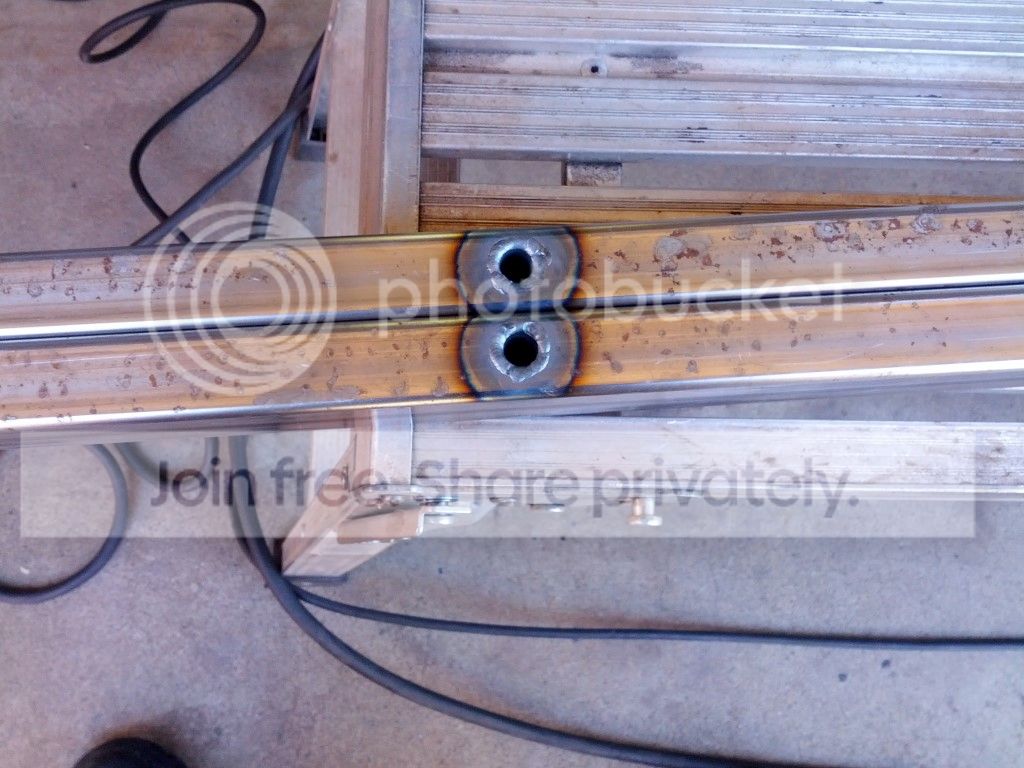
After I got a general idea, I could purchase a pile of steel and start laying out locations of components on the rack. For the side rails that mount the rack to the aluminum brackets I welded sleeves through the rails to provide a stout, crush resistant mounting for the rack, and eventually awning, as well as prevent rust streaks from an unsealed hole:

IMG_20150308_132646%20Medium_zpsq4aomjnv.jpg


Now I can lay out some crossmember locations:
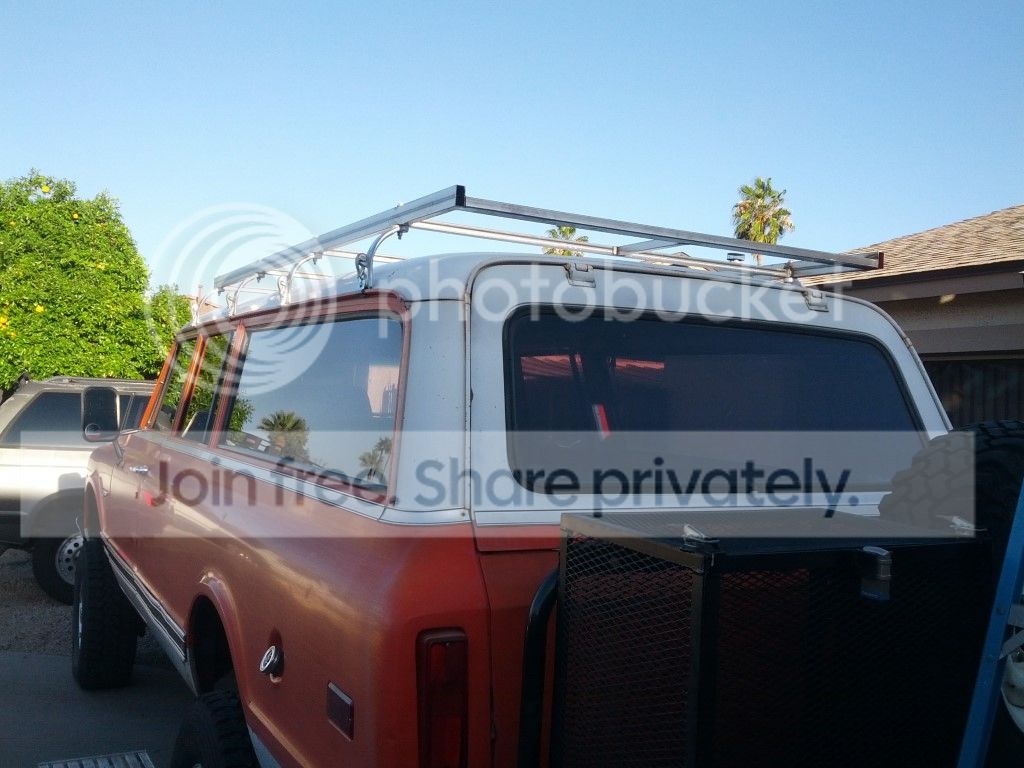
IMG_20150308_172855%20Medium_zps28nn2wv4.jpg


I decided that it would be a good idea to add some sort of provisions to tie things down to this rack. What to use?? There are a bazillion and one different types of commercially available mounting strips and tabs and tie down mounting systems. I looked at several and while many had some great attributes, they all had something working against them. One thing I did not like is most all of them are proprietary. If you need more mounting tabs you have to buy them from that company via a distributor etc. This brings a possibility of a company going out of business and leaving no support for your track system. Cost is another downfall. None of the commercial systems are even remotely close to cheap. Maybe they are worth every penny, but adding all this together and the limited vendors/availability, I kept looking. One thing I have noticed over several decades is the majority of commercial van trucks, freight trailers and moving trucks use what is called E-Track. This stuff has been around for almost ever, is very durable, very strong, available almost everywhere and, with a little effort, can be found for very reasonable prices. That's a whole bunch of win right there. It does have some cons. It is typically not as light as some of those other systems and it is typically a bit bulkier than the fancier setups (it doesn't look as cool either...). Cheap, durable, strong and available. Kind of fits the image of this entire build. I'll take it. I found a seller on fleabay that sold a decent sized assortment of rings and ring straps for about fifty bucks. I made a jig for my plasma cutter and started making E-Track holes in my roof rack:
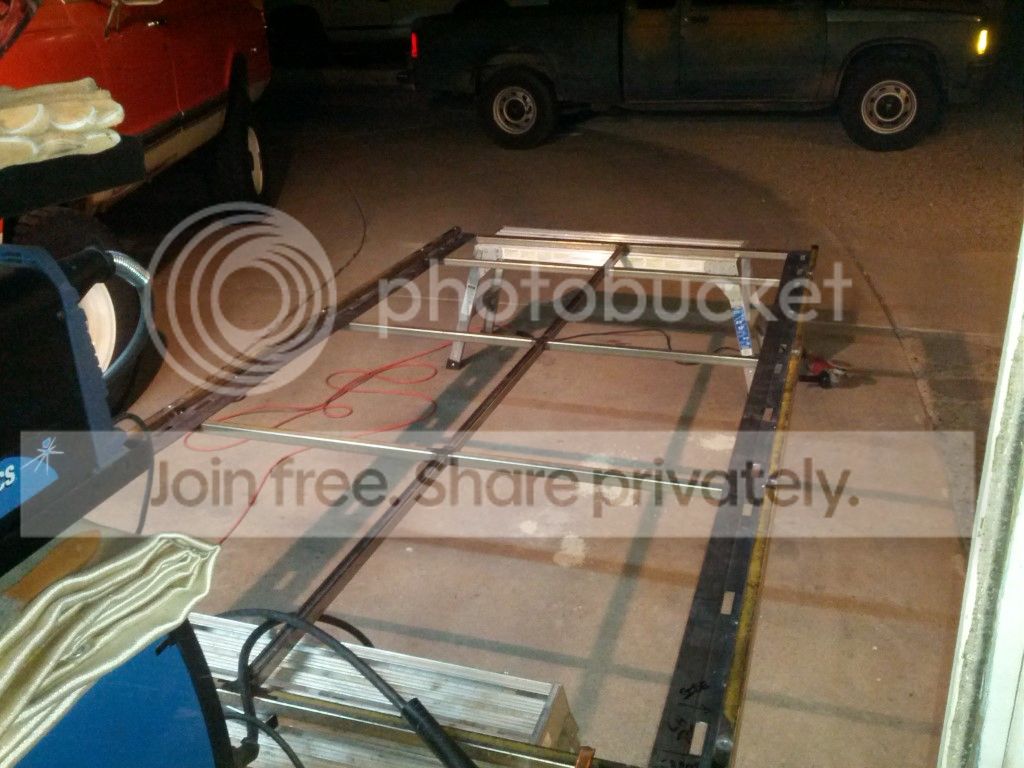
IMG_20150408_195347%20Medium_zpsgklqbutu.jpg


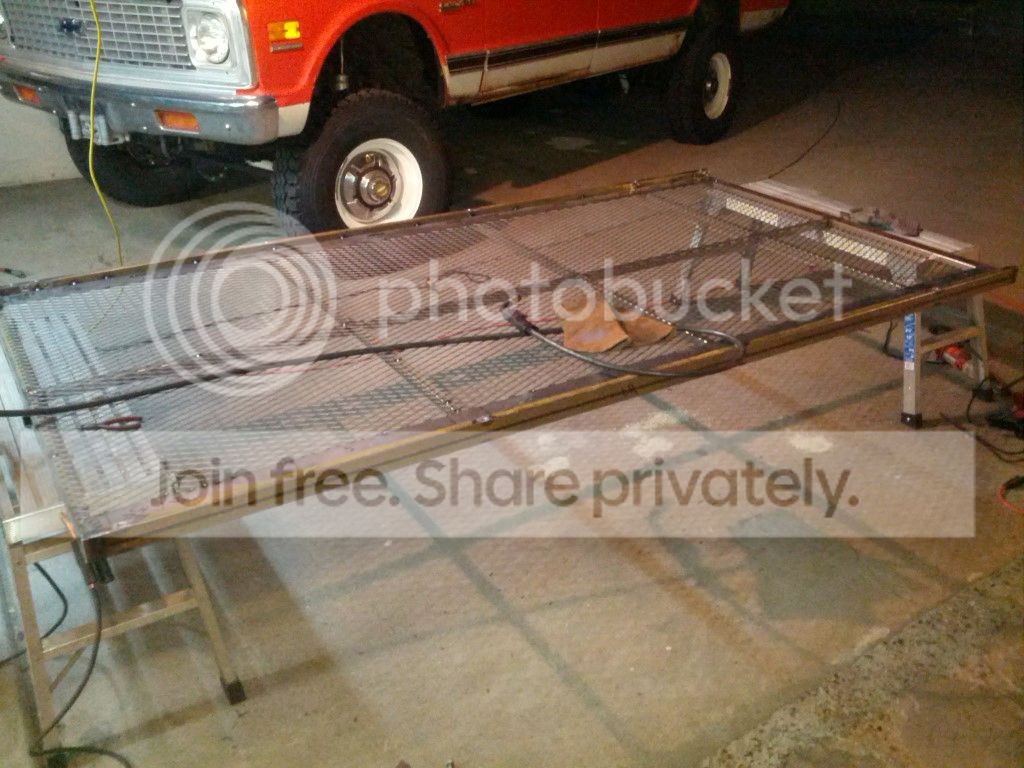
Then, after a bunch of research on weight per square foot, I added the expanded metal for "flooring"

IMG_20150408_202154%20Medium_zpsdedkx9qe.jpg

So I can start working on the awning support at this point. Like tie downs, there are a bunch of awning styles out there. The most common, and easiest/cheapest is a style that has support rods at the outer end and has support ropes to ground stakes that hold everything tight. This setup is fine, but I remember my tent camping days trying to pound stakes into ground that is more rock than soil. No thanks. I finally settle on a design like a buddy of mine has, but is too small. I take some Ideas from his and design out everything he doesn't like and enlarge it to a more appropriate size.
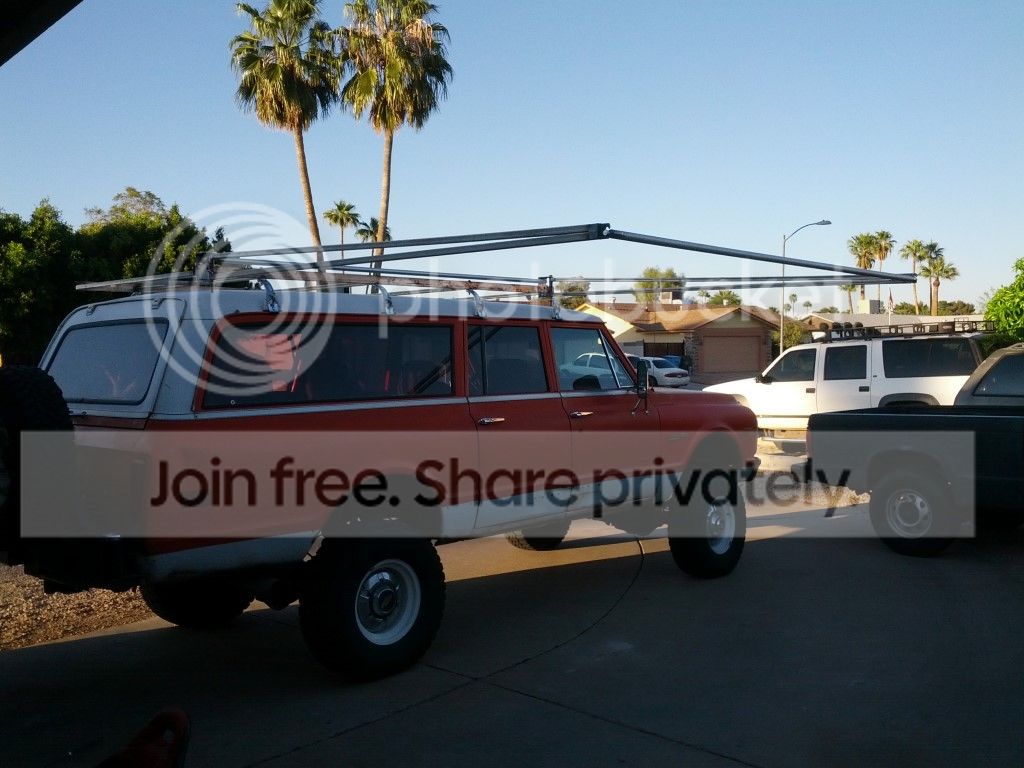
Arms and end supports:

IMG_20150328_180345%20Medium_zpsxtofeiz6.jpg


So at this point I pay a bunch of money for another crappy powder coat job (from a different place) and it comes back white, but with no surface prep done, so all of my notes written in Sharpie marker are still visible. Unfortunately, I installed this at night and didn't notice until the next day. They offered to redo it, but taking it back off and having someone transport it to and from the place and then reassemble the people to help reinstall it, I decided to just live with it. Those TV shows never show the stuff that goes on behind the scenes to get things right. Anyway, it is white now and the awning arms are black:
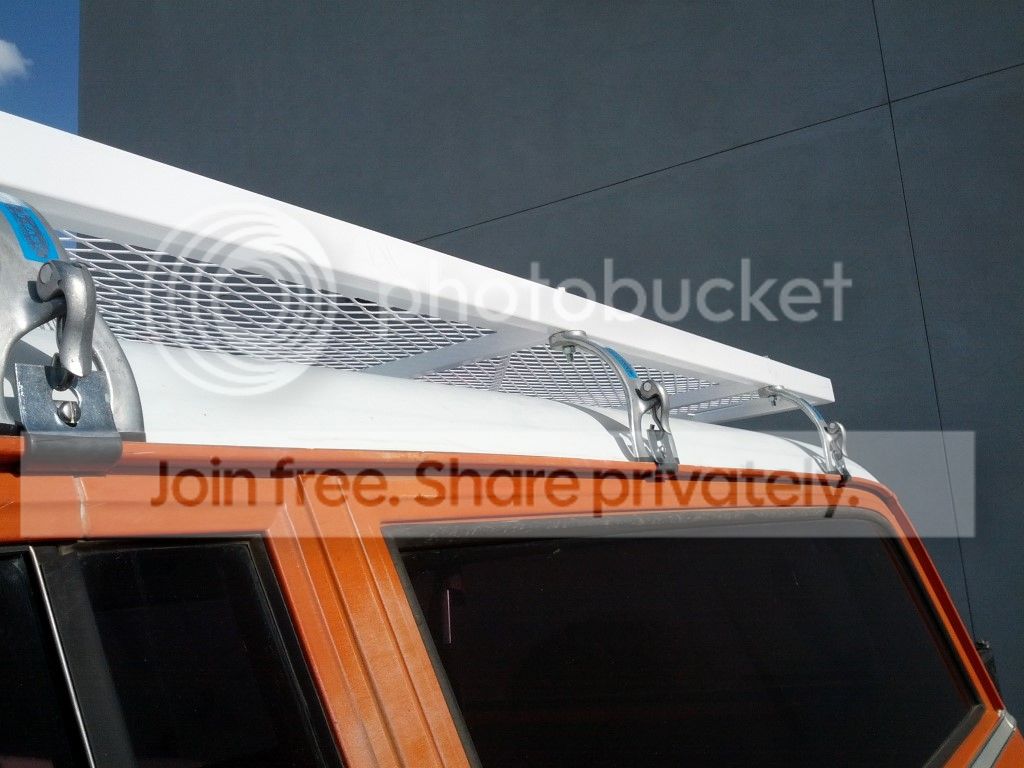
IMG_20150423_163517%20Medium_zpseslvsm1d.jpg


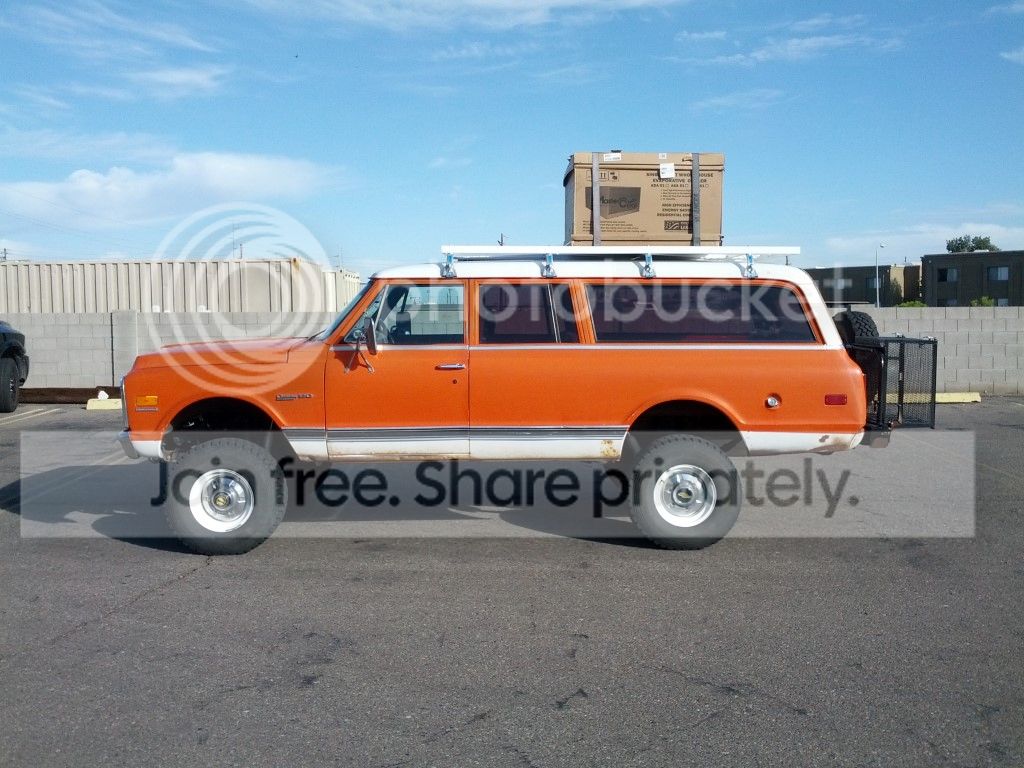
At this point it is ready for the canvas to be made and turn it into an awning. Unfortunately, this process was out of my control as it was being handled by a friend of a friend and scheduling work times was extremely challenging and much time elapsed without canvas on my awning (see recent post camping outside Bryce Canyon with a tarp on the arms). So, in the mean time, the truck still lives its normal life doing all of the "truck" things it always does. One night I woke up to the smell of hot electrical in my house. I determined it was my evaporative cooler and promptly shut it down. I was tempted to just junk the cooler and only use air conditioning instead, but I really like the evap cooling, so i decided to replace it. Enter new roof rack with tie down points:
IMG_20150506_074238%20Medium_zpsdbn6uwxu.jpg


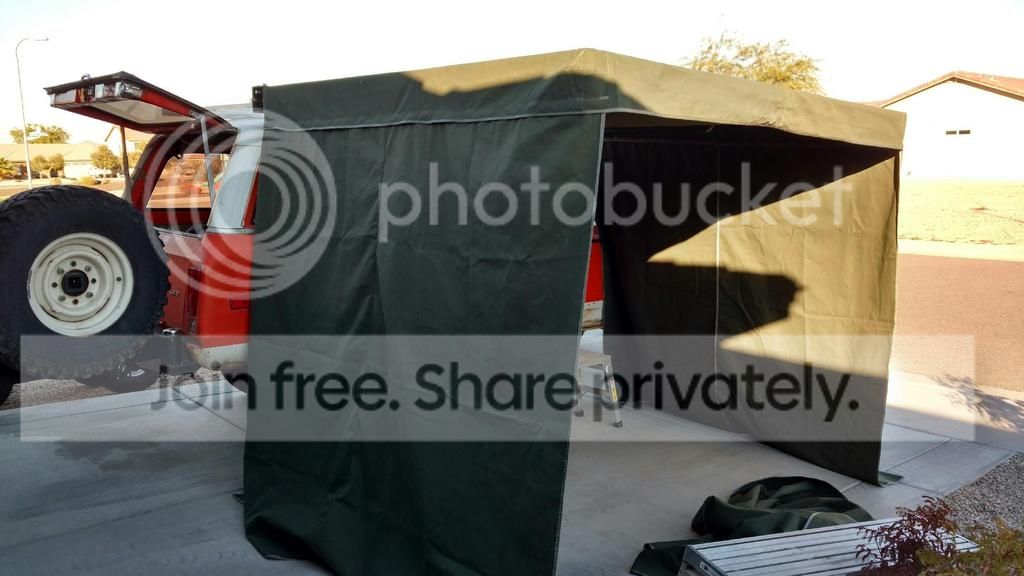
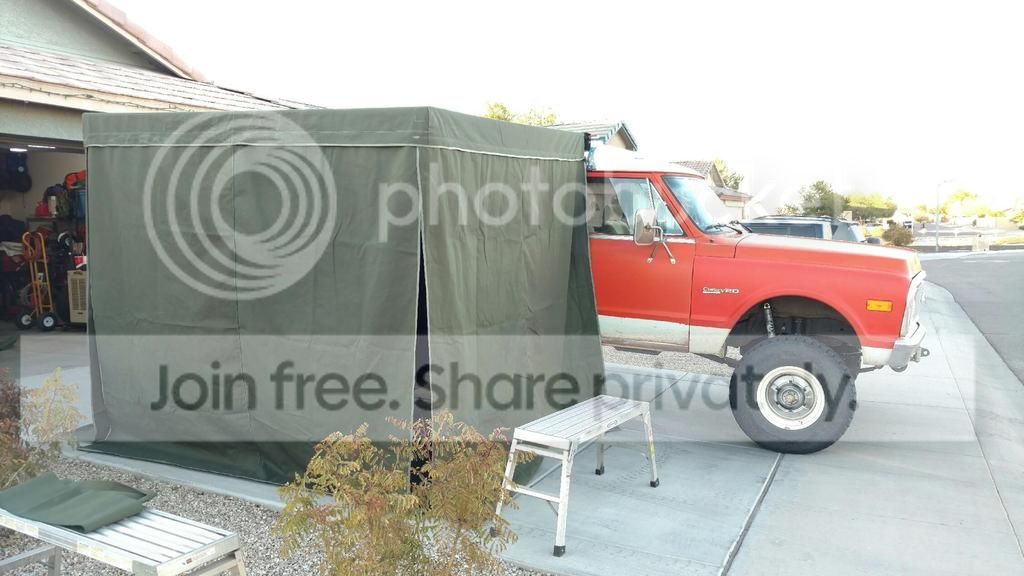
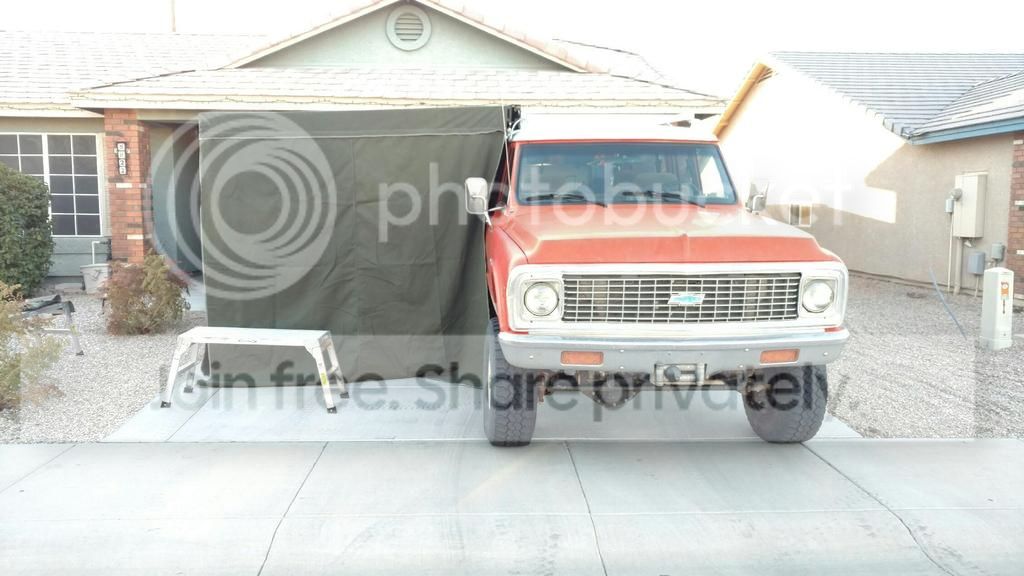
So, after much time and gnashing of teeth, the canvas work was finally in progress. We had a bit of a time finding the specific canvas the guy required. He would not use any of the synthetic/semi-synthetic materials like Sunbrella etc. He did not like the way the holes poked by the needle of the sewing machine weather in those materials so we had to find specific weight canvas for it. It was a bit of a challenge and we didn't find the color I wanted (tan), but that ended up not being a big deal in the end. The workmanship on the canvas was phenomenal. This is not what the guy does for a living, nor does he do anything like this normally, but he had great ideas and methods for doing things all over the awning and removable walls. All of the edges and seams are true and square and finished. No making a hem and zigzag it. Everything has the end welting on it. all of the seams are reinforced as are the corners and any other stress points. I will admit I was getting very impatient, but when all was said and done, I was VERY pleased with the results. Now I don't have any pics of it set up in use as I used it for the first time the other night in the dark and rain, but I have some pics from when it was being crafted.
The awning has three walls that attach under the outer edge flap with big lunky brass zippers. The awning can be used without walls or with any, or all, of the walls attached.

IMG_20160120_160632752_HDR_zpswkfkk8qy.jpg


IMG_20160120_17135260010_zpsycy98een.jpeg


Front shot:

IMG_20160120_171352600_zpsdk0mc4fj.jpg


One thing not pictured is a "consumable" travel bag that the awning fits into up on the roof rack and has another big lunky brass zipper on it. The green canvas of it has already faded to a tan-ish color and looks good. I spent a bunch of time researching waterproofing for the canvas which already has some water resistance properties by default and spent a bunch of time and money on this wonder liquid for the awning and transit bag. I can say it passed the test the other night by beading water off it like a freshly waxed paint job.
So all in all I am very pleased with the whole setup and so far haven't found anything I would have done differently.
It is easy to set up and take down (more challenging in the rain though).
 
That's pretty slick, how do the arms fold up for transit mode?
 
Wow, that's awesome!:waytogo:

Thanks man!!

Very neat design.

David

Thank you.

Looks awesome. What was the water proofing stuff you used?

I forget what it was. Let me see if I can find my leftover bottle here..... 303 Fabric Guard.

That's pretty slick, how do the arms fold up for transit mode?

Thanks. The top rolls up and sits right on the top of the rack in its transit bag and the arms swing in and hook to each other when parallel to the side of the rack, then a couple small straps hold it all together.

That's awesome, I love it!

Thanks!!
 
Top Bottom