CK5
Register an account today to become a member! Once signed in, you'll be able to participate on this site by adding your own topics and posts, as well as connect with other members.

To do list / motivation

Do you feel like the extra tubing at the b pillar really adds much strength with how close they are? I could see how that setup works great with the seat flipping forward too.]

It would definately be better if those inner legs were closer to the center of the truck. It's still noticably more rigid than not having anything. Those two legs are intended to help keep the cage from folding over if it tips over on it's side. I'm still planning on some more modifications for seats and better belts, but I like it otherwise.

I was also trying to construct something safe by efficiently using the tube to create a rigid structure without over triangulating everything.
 
New line of questioning...

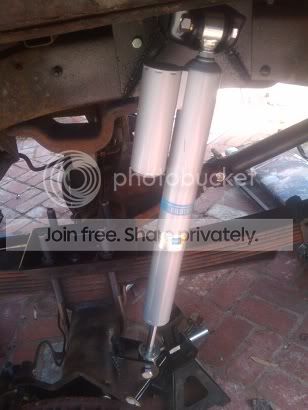
I am in the process of swapping the axles in. I have to weld on some shock tabs on the rear axle, so I have an opportunity to do whatever I want here. I happen to have some spare f*rd shock towers sitting around and some unused bilstein 5150's. The shocks have 14.5 inches of travel or so, and are 34.9 inches extended and 20.37 when compressed if the info on from this 4wheel parts link reflects the same shocks I have (linky

So here is what I am thinking, don't make fun if there are obvious problems. I am thinking I will mount the shocks outside of the leaf springs, bolt the shock towers to the frame (it seems they might have enough offset to clear the springs) and cut a hole in the bed for the shock towers to come up through. When I do the cage, I was thinking I could tie the shock towers together and possibly tie them to the cage too. My bed is somewhat rusty around the wheel wells anyways, so it isn't like I am butchering a perfect bed.

Any thoughts? What problems will I have? How could the plan be improved upon? You think this will interfere with the seating/cage plans mentioned earlier (I am strongly leaning toward buckets in the rear)? How do I calculate the ideal up and down travel at rest - as in how do I figure out the ideal or roughly ideal mounting heights relative to one another? Thanks for the help.
 
There is room to fit the shocks outside the leafs (barely)....I've done that before.

It takes some careful measuring to make sure that the shock body or shaft won't hit the springpack as the suspension cycles. The shock position moves in a pretty big arc so leave more room than you think you'll need.

The uptravel is limited by what your springs can do....when they're flat, you're out of uptravel. :D My guess is that if you're lucky you'll get maybe 4" of uptravel, so that's all the shaft you'll need to have showing at ride height... the rest will go to the "droop" side.

Be thoughtful about connecting the cage to the shock towers. Remember the cage is connected solid to the body, but the body is mounted on rubber mounts to the frame. If you tie the cage to the shocks you are in effect, "bypassing" or locking-out the function of the rubber mounts in that area by creating an immovable connection.

The simplest solution is to tie the shock towers to each other and do a little triangulation between them if possible. The forces on a shock mount are huge, and the leverage against the frame will tear the mounts off if you don't plan for it.


:usaflag:
 
As far as cages go, I thought a lot of guys tie their cage to the frame, thereby bypassing the bodymounts. With this assumption that this is just how it's done, I figured then tying shocks to the cage would be no big deal. So I guess my question becomes do I connect the cage to the frame or not. Dunno why but it seemed that in other photos cage, sliders, and frame are all tied to one another.

So in addition to supporting the towers in some fashion I have to support the frame it would seem. I am thinking I could just use a sort of backing plate to put on the inside of the frame to distribute the stress across a greater area - I could even use one on the front side of the frame too (er inside/outside depending on how you look at it).

Greg, I know you are setting the bar high and going with linked suspension on your project currently, but how did your previous setup work with the shocks outside the springs? Was it more of a hassle than it was worth? If you couldn't 4 link it, would you still be running the shock that way? I bet you have a photo, or a handy link to a photo :)

Heading back out to work on the front axle / crossover steering. Thanks for the help.
 
Last edited:
As far as cages go, I thought a lot of guys tie their cage to the frame, thereby bypassing the bodymounts. With this assumption that this is just how it's done, I figured then tying shocks to the cage would be no big deal. So I guess my question becomes do I connect the cage to the frame or not. Dunno why but it seemed that in other photos cage, sliders, and frame are all tied to one another.

So in addition to supporting the towers in some fashion I have to support the frame it would seem. I am thinking I could just use a sort of backing plate to put on the inside of the frame to distribute the stress across a greater area - I could even use one on the front side of the frame too (er inside/outside depending on how you look at it).

Greg, I you are setting the bar high and going with linked suspension on your project currently, but how did your previous setup work with the shocks outside the springs? Was it more of a hassle than it was worth? If you couldn't 4 link it, would you still be running the shock that way? I bet you have a photo, or a handy link to a photo :)

Heading back out to work on the front axle / crossover steering. Thanks for the help.


I get what you're saying now about the cage. Yes, a lot of guys will connect the cage to the frame either:

1. Hardmounting the entire thing and locking-out the rubber body mounts completely.
2. Adding a rubber or urethane mount to each cage/frame connection to allow for some movement like the factory body mounts

There's no perfect solution. If you go with option 1, you are going to get a lot more vibration into the truck and more noise. If you go with option 2, you are effectively "rubber mounting" your shocks by tying them to the cage with all those bushings everywhere. Ideally, you'd do more of a hard mount as Fishinutt suggested......a bracket straight off the frame with good bracing to prevent it from tearing a hole in the frame at the mounting point.

Here are some pics of how I did my shock mounts back in the leafspring days. Remember, I had a 2" body lift in these photos so I was able to "cheat" the upper mount a bit higher than normal....but if you're willing to cut a small hole in the floor you can get the same effective mounting setup even without a B.L.

The shocks are angled slightly IN, and also slightly FORWARD to get everything to fit. With holes in the floor you can probably mount them more vertical than I did (front-to-back).... You'll still want them to tip inwards a little or the tire will rub them as it articulates.

RS1.jpg


RS2.jpg


RS3.jpg


RS4.jpg


Ignore the "3rd shock" in some of those photos....IIRC, it was rusted to the factory mount and I hadn't figured out how to cut it out of there yet.


:usaflag:
 
Great pictures. Having done it, would you recommend a similar setup? Was it significantly better in function, or just significantly cooler? Just hoping for some real world feedback. Thanks for the pics.
 
I don't have much else to compare it to, but from a design perspective it is more "correct". The shock should always be as close to the wheel as possible to provide the best dampening. In an extreme example, imagine mounting your shocks at the center of the pumpkin....they would do almost nothing to help you.

This is because the shock piston would only travel about 1/4" even though the wheel/tire would be moving more like 6". You can't get effective dampening with numbers like that.

Even MORE importantly, buy a set of quality shocks (and no, I wouldn't consider those Ranchos to be a "quality" shock)... the softer you make your springs, the more critical the shocks become to the overall setup of the truck.

For my own purposes, there was no point in putting the shocks in a bad location once I realized it was possible to make them fit in an ideal spot.


:usaflag:
 
I have made some pretty good progress lately. To complete the axle swap I just need to mount the shocks. The swap itself has been pretty annoying because every little thing that could possibly go wrong, did. But as for shocks, I was going to virtually copy your setup there Greg, but I just didn't like how that lower bracket would have worked out. As I was mocking it up and trying to finalize how I would do it, something came to me...

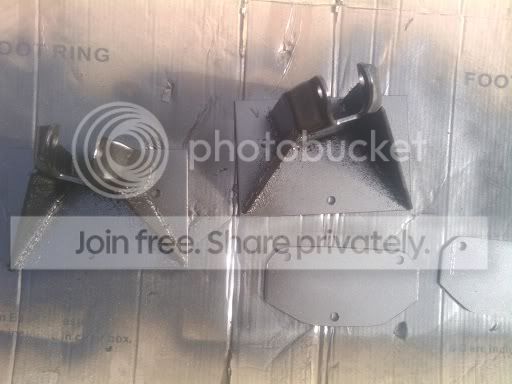
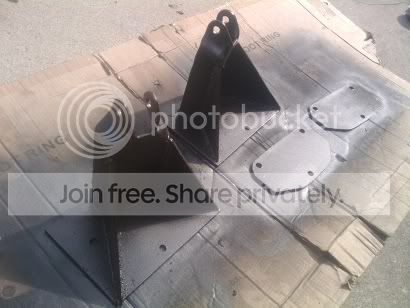
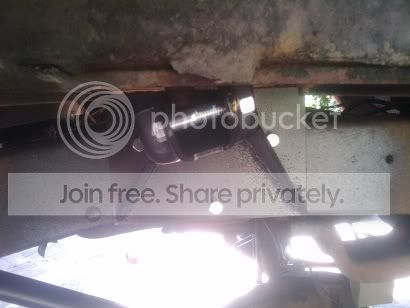
I think I can rotate the shock in the f*rd tower 270 degrees from how it is normally run. Then I can slide the bracket between the frame and the body. I then intend to take some plate to weld nearly perpendicular to the shock tower to run gussets from the tower to distribute the stress to the side of the frame (there will be little to no stress on the top of the frame). I think I will run three gussets, one in the middle with the two running at diagonals to distribute the stress over a greater footprint. I just want to weld it on for simplicity (I hate drilling holes through thick metal with a little hand drill), but I think I am going to bolt it to the frame with three bolts and a backing plate of some sort. I will update this post with some pictures today to better visualize what I am talking about.

Anyone foresee problems with this? It seems the shock orientation is as close to ideal as I can possible get, but it will place a ton of leverage on the frame. I am hoping that the bracket I make will make the stress manageable, but if anyone has ideas in that department, I am all ears. It should be a fun day.

Youtube linky
 
Last edited:
quick question, i've been lookin at D70's and 14 bolts for the rear as they are both pretty cheap in my area. I was wondering if you know of any advantages/disadvantages for the d70 over the 14 bolt as a rear axle.
 
quick question, i've been lookin at D70's and 14 bolts for the rear as they are both pretty cheap in my area. I was wondering if you know of any advantages/disadvantages for the d70 over the 14 bolt as a rear axle.

It's going to be a lot easier, and cheaper, to get parts for the 14FF.
 
i kinda figured that, but is there any strength difference in the D70 that makes it worth it

I've read the d70 might be a little more beefy, but the gearing, locker options, and parts availability for the 14b outweighs any minor difference. Plus the 14b is already so overkill for most situations anyway.
 
I've read the d70 might be a little more beefy, but the gearing, locker options, and parts availability for the 14b outweighs any minor difference. Plus the 14b is already so overkill for most situations anyway.

the D70 can actually gear higher than the 14 bolt maxing out at 5.13 gearing from what ive read. But i see what your saying, Im going to do my research on parts for both and see what my total budget is for either and see where i stand. Thanks for the info and sorry to hijack your thread :o.
 
From what I have read, the 70hd is substantially stronger than the 14 bolt, and you are right in that the 70 has way lower (numerically higher) gearing available than the 14 bolt. There is a lot more info out there for the 14 bolt. In my mind, the two biggest reasons to get a 14 bolt are the detroit locker for it is really cheap, and tons of people make aftermarket parts for it. I think you can get pretty much every part for the 70, but you just have fewer vendors to choose from (like 1-3 companies making disc brake brackets as opposed to 50).

The 70 came with the 60 I got, so I went with it. I have a locker in it and disc brakes, so those problems aren't insurmountable. The pumpkin is a bit smoother and can be ground quite a bit too, so it may be slightly less likely to hang up on rocks. I also feel the 70 has more "cool factor" cause it isn't as common as the 14 bolt.

If you don't need the gearing the 70 offers, the 14 bolt will probably be cheaper to get decked out the way you want.
 
What size tires are you planning on running again? How much HP and what kind of wheeling are you going to be doing?

Pretty sure that your goals will not require more than a 14b. With parts for it being available everywhere and the tons of tech knowledge on it being available everywhere, i would say its hard to beat a 14b. If someone really needed something stronger i would just say jump up to 2.5tons.
 
From what I have read, the 70hd is substantially stronger than the 14 bolt, and you are right in that the 70 has way lower (numerically higher) gearing available than the 14 bolt. There is a lot more info out there for the 14 bolt. In my mind, the two biggest reasons to get a 14 bolt are the detroit locker for it is really cheap, and tons of people make aftermarket parts for it. I think you can get pretty much every part for the 70, but you just have fewer vendors to choose from (like 1-3 companies making disc brake brackets as opposed to 50).

The 70 came with the 60 I got, so I went with it. I have a locker in it and disc brakes, so those problems aren't insurmountable. The pumpkin is a bit smoother and can be ground quite a bit too, so it may be slightly less likely to hang up on rocks. I also feel the 70 has more "cool factor" cause it isn't as common as the 14 bolt.

If you don't need the gearing the 70 offers, the 14 bolt will probably be cheaper to get decked out the way you want.

pretty much what i was thinkin unfortunately budget is a biiig issue for me right now im 18 and i havent even found my first real job yet :o. Was there any unique hurdles you had to overcome that were specific to a D70 as far as installation and rebuilding it (besides the cost of parts).

What size tires are you planning on running again? How much HP and what kind of wheeling are you going to be doing?

Pretty sure that your goals will not require more than a 14b. With parts for it being available everywhere and the tons of tech knowledge on it being available everywhere, i would say its hard to beat a 14b. If someone really needed something stronger i would just say jump up to 2.5tons.
well as i said earlier im extremely budget oriented right now but ''someday'' id like to run 40-42's with with 600ft lbs of torque or so which shouldnt be a challenge if i go to a diesel. Nothings set in stone yet im just collecting knowledge and brainstorming for the future.
 
Yeah, the 14 bolt would have been plenty for my application. I used discs brakes just like people do on the 14's, I used a conversion ujoint for the time being (just like you would have to do on a 14, unless you get 1 ton drive shafts), spring perches didn't have to be moved at all, I am in the process of figuring out how I am going to mount the shocks. The original shock mounts were torched off, but they wouldn't have worked anyways. I used the same wheel studs people use on the 14's.

It's all pretty similar as far as the actual swap goes.
 
Yeah, the 14 bolt would have been plenty for my application. I used discs brakes just like people do on the 14's, I used a conversion ujoint for the time being (just like you would have to do on a 14, unless you get 1 ton drive shafts), spring perches didn't have to be moved at all, I am in the process of figuring out how I am going to mount the shocks. The original shock mounts were torched off, but they wouldn't have worked anyways. I used the same wheel studs people use on the 14's.

It's all pretty similar as far as the actual swap goes.

well then its just a matter of budget and application. Thanks and sorry to hijack your thread so much :o
 
I just finished my shock mounts for the rear, which is the last piece to the axle swap puzzle. I forgot to take into account that not only does the spring pack flatten, but they also move upward as the shackle moves. I didn't account for the shackle movement, but I did give myself a little cushion for error. I am hoping it all works out fine, but only time will tell.

I'll post some pics tomorrow. I will definitely need some feedback as to whether or not I need to do more to support the frame. There's no way the bolts are ripping through, but ya...

I want to thank everyone for responding to this thread. It has definitely helped in the motivation department, just as it was intended. Greg, those shock pictures were especially helpful in helping me develop my setup.

As I look at using the F*rd shock towers in the front, I just can't see how to make them work. It seems like they would interfere with the steering column/shaft/thingy. I have a few threads bookmarked, but I am still uneasy about it. Is it possible to run these in the front with the stock lower shock mount, or is a new lower mount the key to making it all work? I would love to do the fronts, but I may not have time to do them right now. Anyone have ideas or pointers?

I will be driving it back to UT in the next day or two.
 
Pics as promise
2010-08-03102158.jpg


2010-08-03091905.jpg


2010-08-03091916.jpg


2010-08-03094103.jpg


2010-08-03094128.jpg


Some of the welds are pretty poopy, but there are definitely some that I am proud of.
 

Latest Posts

Top Bottom