CK5
Register an account today to become a member! Once signed in, you'll be able to participate on this site by adding your own topics and posts, as well as connect with other members.

350 SBC build--abnormal questions PICS!!

Wrench

1/2 ton status
Joined
Jul 19, 2007
Posts
727
Reaction score
0
Location
Stony Plain, Alberta
My next project is to build a new engine for my '83 C10, which is a nice street/cruising vehicle. The goal is first durability and efficiency, and as much torque as possible from a 350.

The pieces so far: nice std. bore 4-bolt main 207 block, GM forged crank, 062 Vortec heads, Edelbrock Performer vortec intake, and a Q-jet carb.

The plan: .030 over bore with all the machine work--align hone, equalise decks for height and squareness, torque plate hone. Match rod lengths, full race balance, blueprint everything. Heads reworked with stainless valves, double springs, full roller 1.6:1 rockers.

The weird part: A while back I bought a set of instructions on Ebay for converting an old style SBC to roller rockers using factory parts, not expecting much, but interested. I'm going to mock it up at least, run it if it looks good, and see what happens. So pictures will be forthcoming on that, and that will be where the abnormal questions come from . . .

First question--those who are running Vortec heads with Edelbrock intakes, has anyone ported to the gasket? The gasket ports are HUGE, and I'm not sure if there's enough meat on the heads or intake to match them. What's the likelihood of intake runner walls cracking if they're thin? What's too thin? Where will the stress be at that part of the head?

Also, any general advise is much appreciated, I've assembled a number of engines but never started right from scratch completely on my own.

Stay tuned for pics . . . .
 
Last edited:
Measure the ports of the heads and also the intake manifold then choose the intake gasket that most closely fits those port dimensions and go from there.
 
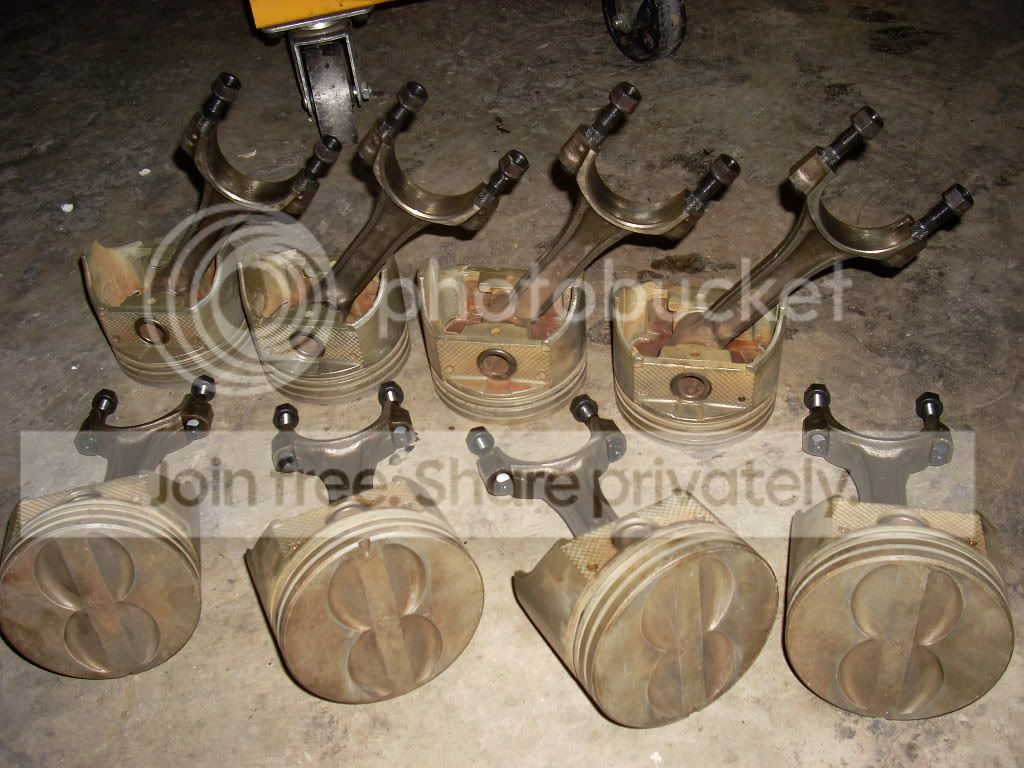
First job today was to pull my pistons from the donor block, an overbored 350 I pulled a while back at the wreckers, and clean them up. They are .030 flat tops, and once they were clean I installed ARP rod bolts.

DSCN1500.jpg


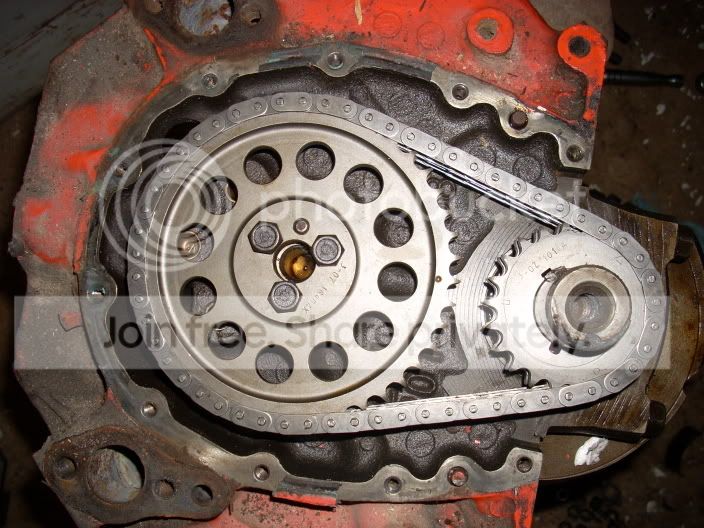
I then did a little experimenting with a roller cam in the old donor block. When I bought my timing set, I bought a Cloyes .250" double roller timing set for factory roller applications. I wasn't sure if the difference was in the block somehow, or just the cam, so . . . .

DSCN1494.jpg


It fits perfectly as far as timing chain length, so that's fine. The bolt circle on a factory roller cam is much smaller than on a stock FT cam, which is ok because it just means I have to buy a cam for factory roller application. That's a factory '95 LT1 cam in the block, and with the block upright it sits a little deep, the lobes are off-center on the lifter holes.

DSCN1498.jpg


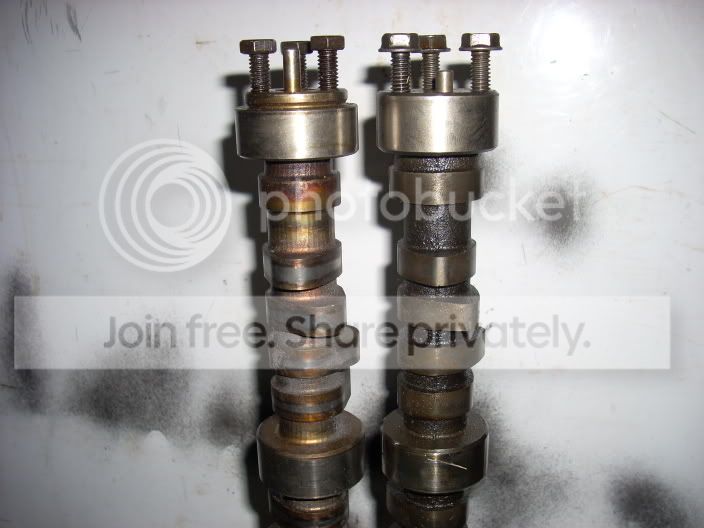
That's ok too, because there is a good 1/4 to 5/16 of space between the cam pin and the stock timing cover, and that's with the super long LT1 pin. If I can find a Torrington bearing that fits nicely, it'll hold the cam out where I want it, or I can just cut a brass bushing that centers on the head of the cam. Factory rollers are held in with a little plate, and they have a step machined in the front journal for it. That step, when the cam is where I want it, sticks out of the block just perfectly. LT1 cam on the left, FT cam on the right for illustration.

DSCN1493.jpg


Of course I also need to keep the cam from walking forward in the block, so I dropped the water pump back on top of the timing cover to see how much space I have. It's over half an inch, which is plenty of space to weld a support bar across where the cam button will go. I'm then planning to weld a tapered pin to the inside of the timing cover that will go into the hole in the front of the cam and keep it from coming too far forward. .

For those of you wondering about the cam, I'm not planning to use the LT1 cam--at least right now. I've been collecting various used cams for the purpose of mockup and comparison, so it happened to be the first roller cam I grabbed. I have an L31 cam (5.7Vortec), '94 and '95 LT1 cams, and an L05 cam (5.7TBI from a '93 Caprice). If I understand correctly, and I need to do more reading on this one, the LT1 cams have too much LSA to run really well with a carb'd engine. With the vortec heads and an intended 9.6:1 compression ratio, I'm thinking something around 218-224 duration @.050 and about a 110 LSA. Any cam experts are welcome to pipe up :D

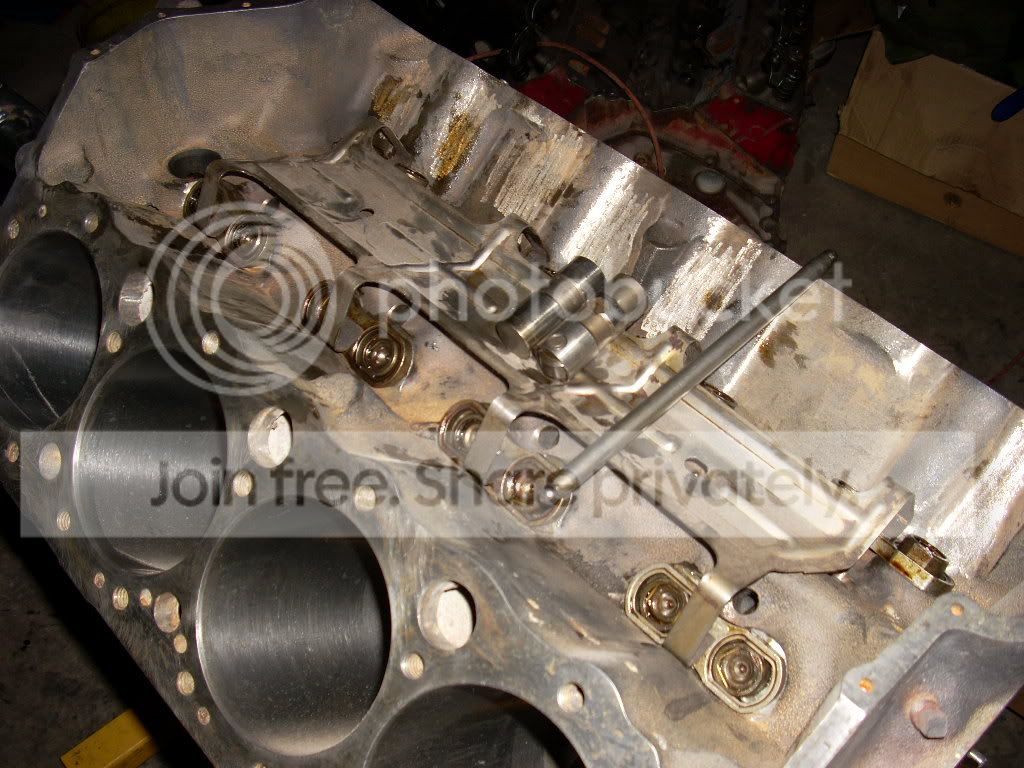
Next was to make sure the block is ready for machining. I wanted to do most of my 'work' first to minimise cleanup after I get it back, and most of it I'd done quite a while ago. Check out the lifter setup . . . .

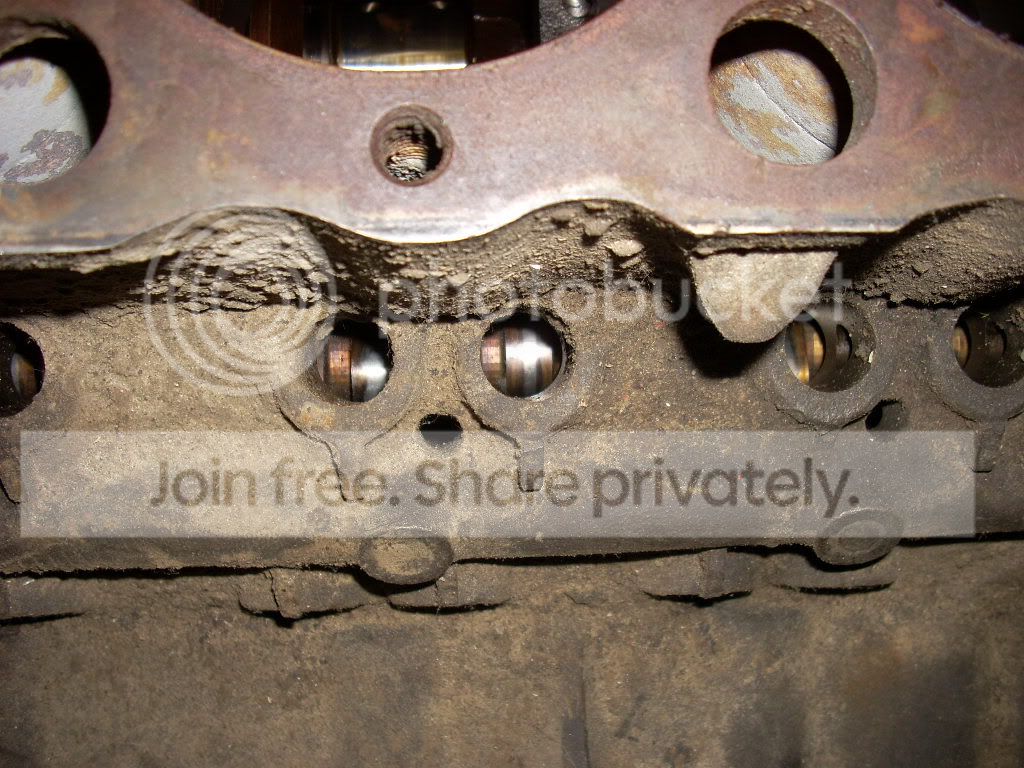
DSCN1499.jpg


The spider and dogbones from any 5.7L GM roller block will work, I got mine for $6 at the junkyard. The lifters come from a 3.1L V6, and as you can see are slightly taller than the stock FT lifters and the oil groove almost exactly the same difference from the bottom of the lifter. With the LT1 cam installed they drop to flush with the top of the dogbone at bottom and at max lift are about halfway up on the flat. Looks like there's room for a LOT more lift before worrying about anything binding there.

I had to grind the block a little to make flats for the dogbones, which was timeconsuming but not a big deal. Not much metal to remove, just had to be careful to get everything nice and flat and clearanced so that the lifters don't bind at all. Right now with no tension from up top nearly all of them drop back down under their own weight.

For the spider I simply drilled and tapped three holes above the oil gallery, I'll use loctited studs in those holes with a locknut against the block to keep them from moving. The spider goes on top of the nut and another nut on top of that.

I'll be taking the block in to the shop tomorrow for machining, and while I wait for that to be done I'll polish the rods up. I'm planning to have the rotating assembly ready for balancing by the time the block is ready to pick up.

Is there any issue with using Z28 double valve springs with a roller cam?
 
Couple things, why don't you just get a late model block already set-up for the roller cam? Would have been tons easier. Also IIRC you must use the cam thrust plate with the roller cam since that is where the back of the timing gear sits against and you cannot make an early block accept the thrust plate.

Secondly, if you do decide to continue you do realize that the pushrods are also shorter with a roller cam?
 
Couple things, why don't you just get a late model block already set-up for the roller cam? Would have been tons easier.

I know :doah:When I first started grinding the block to make it work, roller 5.7 blocks were still pretty rare in the wrecking yards here. Every engine I own I've paid $150 for the complete engine at my local wrecking yard, so I haven't really been motivated to look elsewhere. I had four good 350 blocks with four-bolt mains already in my basement and I already had the forged GM crank for 2-piece seal blocks. Considering my plans now, neither the 4bolt mains or the forged crank are really that important, but I'm already this far into it and I'm kind of a sucker for an engineering challenge.

Also IIRC you must use the cam thrust plate with the roller cam since that is where the back of the timing gear sits against and you cannot make an early block accept the thrust plate.

There is a machined surface around the cam hole, and with the cam thrust plate installed between the cam and gear the cam lobes are perfectly centered on the block. I won't be able to bolt the plate to the block, but it will hold the cam out the right distance and I'll just use a cam button to hold the cam in the block. I hadn't thought of using the original thrust plate that way until I read your post . . .. Do you think that'll work?

Secondly, if you do decide to continue you do realize that the pushrods are also shorter with a roller cam?

Yes, I do know that, I've found a factory length pushrod that I think will work, but not sure until I've mocked it up. Am I correct in believing that the primary concern with rocker arm geometry is sufficient oiling throughout the valve train?
 
Just FYI. All the later TBI 5.7 blocks are set up for a roller cam. Even the FT truck L05 engines come set up, drilled and tapped, for roller cam. All you need is a roller cam kit and everything bolts right in. Easy conversion.
 
The factory roller cam thrust plate cannot be made to work on the early block.

Also, the 3.1 V/6 lifters are different than the factory 350 roller lifter and will not work. I don't know what the difference is without have them both in my hand but the part numbers are different. My guess is either the oiling hole is in the wrong location or the lifter is the wrong length or both.
 
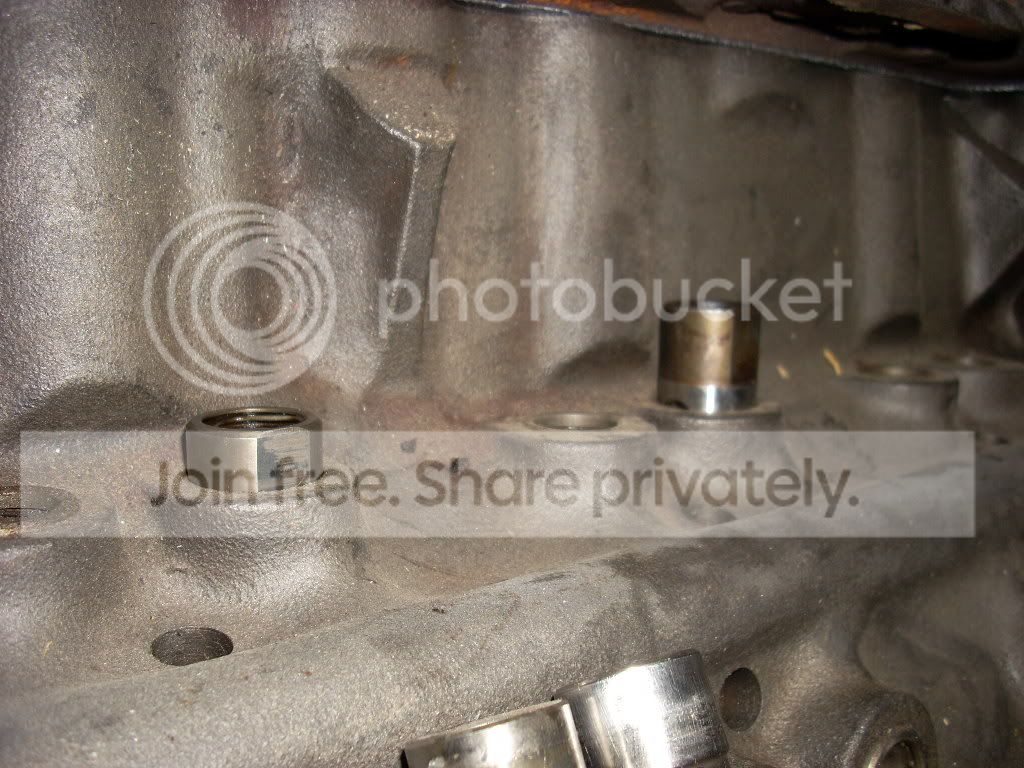
The factory 350 roller lifter is substantially longer than the old FT lifter and when installed in an old block the oil groove sticks up above the bore, which would cause it to loose oil pressure. The 3.1V6 lifter is the same diameter, but is very close to the same height as the FT lifter and the oiling passages all line up the same way.

Thunder--I know, but the 4-bolt mains are hard to find in roller blocks, and even more so 3 or 4 years ago when I bought most of the parts for this thing. Now I just want to put it together and see if it works.

I'll oil it up and run it on a stand without valve covers so I can monitor everything closely before installing the engine. Worst case scenario I end up buying a set of conversion roller rockers and pushrods, and just plugging the three tapped holes in the oil gallery :crazy:
 
Are you sure you have a 5.7 factory roller lifter you are comparing with? The oil galley in the block did not change locations between the early and late blocks so there will not be any difference other than the roller lifter body will be taller than the FT lifter and the lifter boss wasn't machined flat to accept the lifter bar links (you cured that problem already though).
 
Yeah, I pulled it out of a '97 5.7l truck at the wreckers. I think the difference is not in the oil gallery itself, but how high the lifter boss sticks up. With the roller blocks the bosses are a lot taller. Here's a picture of the 350 Vortec lifter in the old style block, as you can see on the side the oil passage sticks out. The nearer lifter that's up is the 3.1 lifter, both are at maximum lift.

DSCN1507.jpg
 
Bit more progress, the block is at the machine shop right now getting worked over so I've been working on the heads. Block is getting an align hone with ARP main studs installed, decks equalised for height and squareness and cut down for a finished quench height of .040", bored and torque plate honed to fit the new pistons, and finished for the moly rings. After that the entire rotating assembly gets balanced.

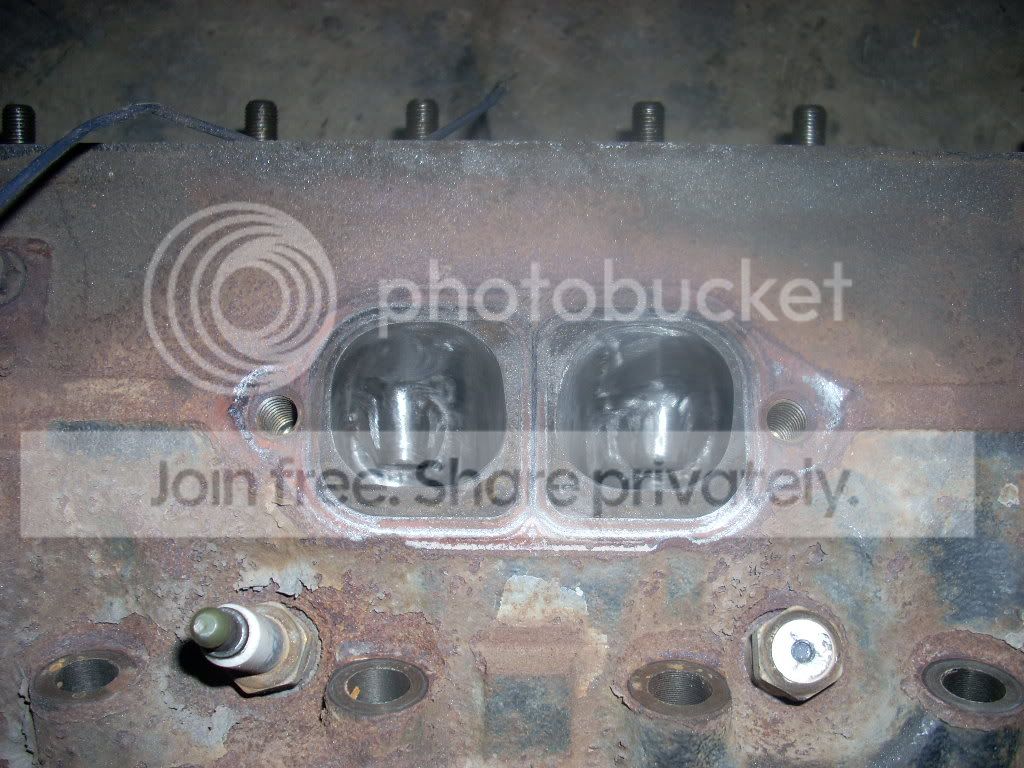
I was pretty conservative with the heads because they're Vortecs and because I'm looking for torque primarily I don't want to increase intake port volume.

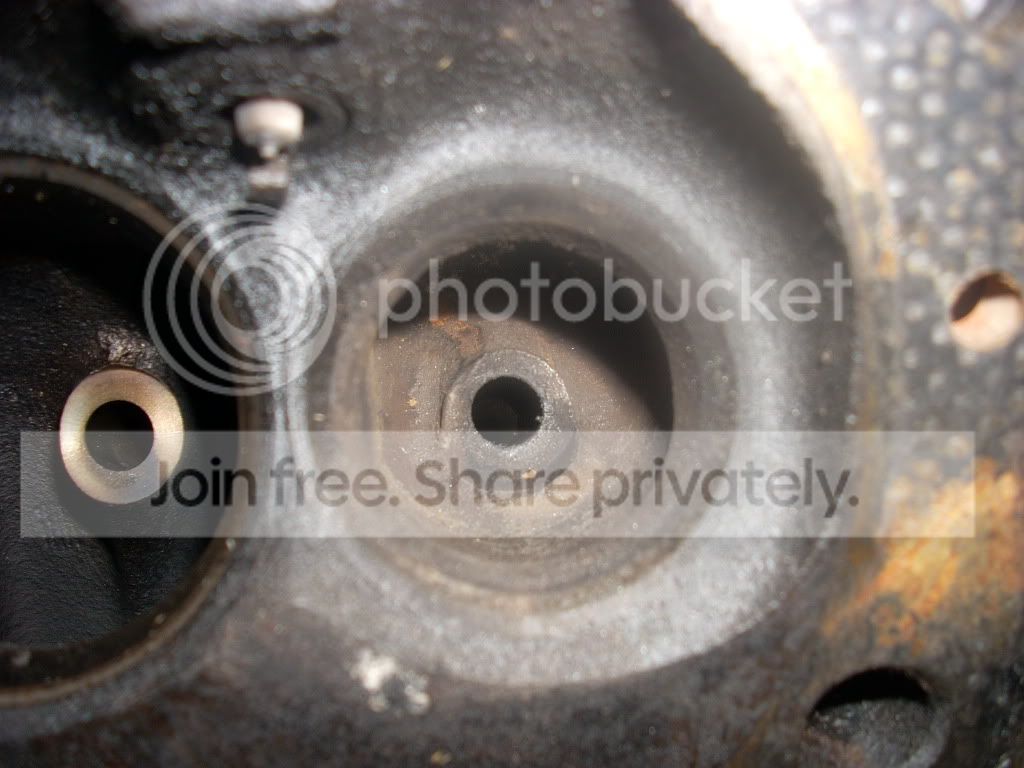
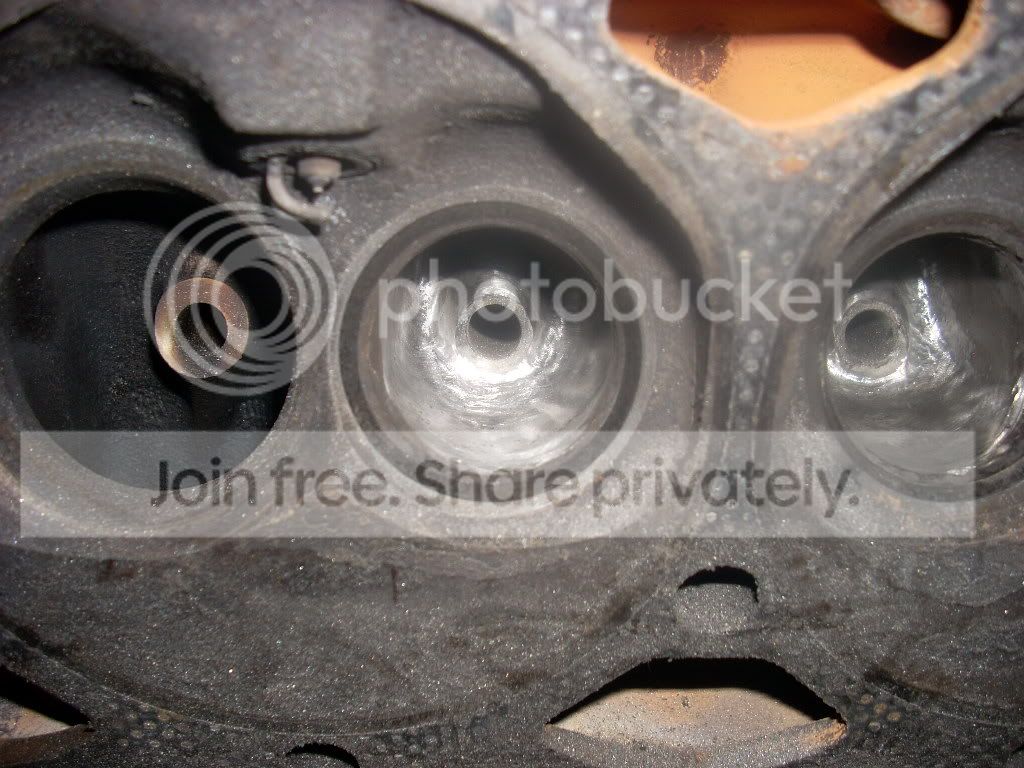
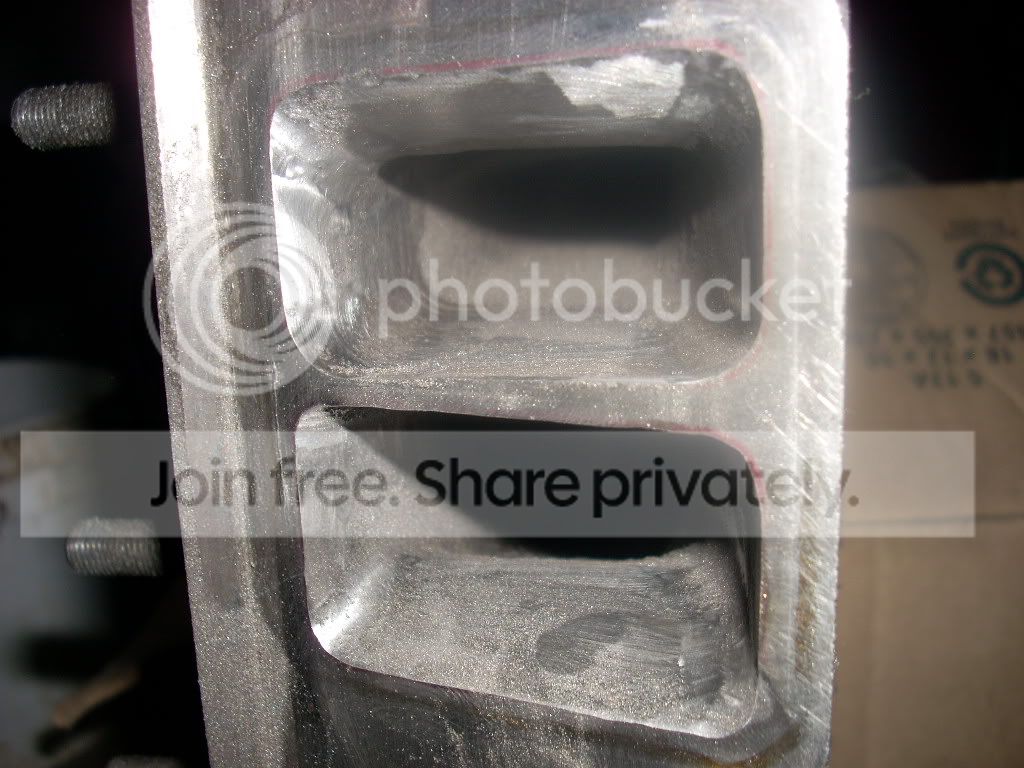
Exhaust ports I blended the valve guide boss in better and polished the entire port.

Original:
DSCN1528.jpg


Afterward:
DSCN1525.jpg


DSCN1519.jpg


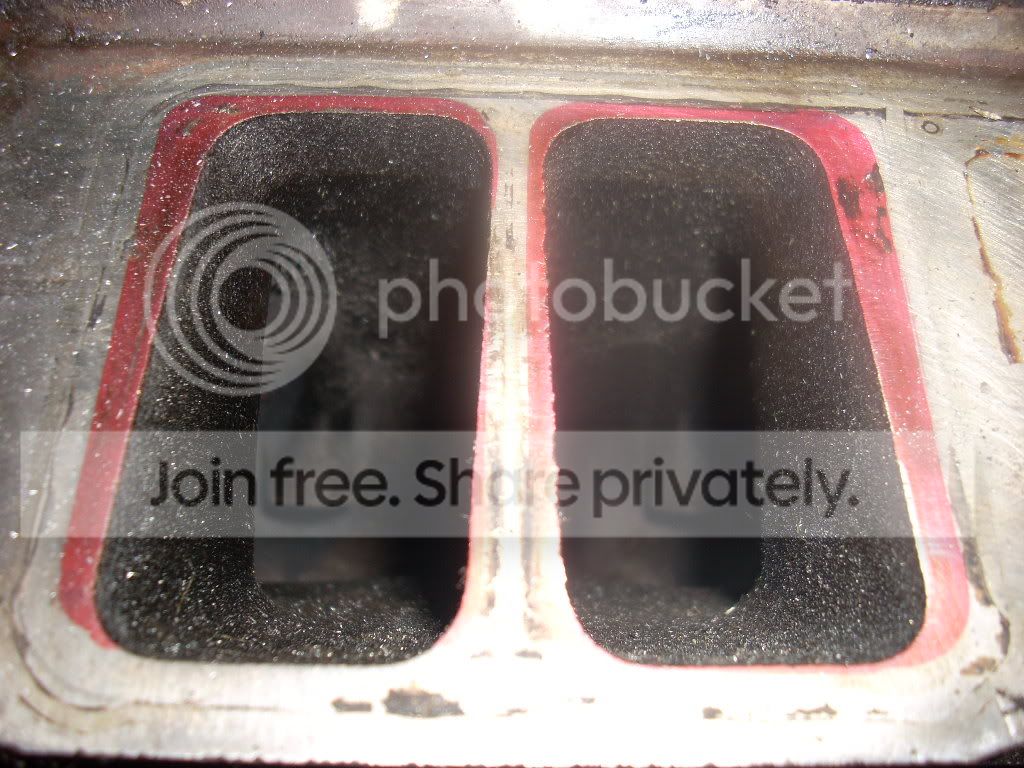
Intake ports just got matched to the gasket:
DSCN1533.jpg


DSCN1535.jpg


Took them into the shop today to have the seats cut, decks checked, cleaning, guides cut down for more lift clearance. The guy's got a REALLY nice machine for doing the heads. After that they're getting undercut stainless valves and screw-in studs.

Next up is the intake manifold, Edelbrock makes lousy castings . . .
 
Just a question but why go with a factory roller setup why not go with an aftermarket that fits the older block ?
 
I can answer that one!

Aftermarket is ridiculously expensive(or was). Mine were around $500.

They are more complex, which breeds failure. They use link bars riveted together.

They also state (they are comp cams BTW) that even though they are the "extreme duty" ones, you should NOT idle the motor with them... they must not oil very well. Stupid, but perhaps that's why the block/lifters were redesigned by GM for the roller setups.
 
Sounds like it's too late, but how come no polishing of the chamber?

That's a really good question, I've read mixed theories on it. The castings are pretty good to start with, no major flash or sharp edges to create hot spots, so that's not an issue I don't think. Air flow gets faster the farther it gets from the surface of the port/chamber, of course, and fast air flow is a good thing. I've read that polishing the surface too much can actually slow the air more because there is more friction surface, whereas with an evenly textured surface the air tends to kind of "ride the bumps" which means there is less for it to stick to.

The other theory is that the smoother you get it, the thinner the slow layer of air will be, even though that slow layer is slower than it would have been if the surface was textured.

I still may end up doing some polishing, but I'd be interested to hear thoughts and theories on it, because I'm planning to run some pretty high compression (64cc chambers, -11cc pistons, and .035 or .040 quench height, between 9.7 and 9.8 static compression).
 
Yeah it would be interesting to hear some theory on it, although there is probably precedent in how race heads are finished. What do the chambers look like on some high end AFR's?

To me it would seem that airflow wouldn't make a huge difference, which is probably true regardless, but one way or the other has to have been proven to be more efficient, and racers are probably the ones that have tested it. I would think that any protruding edges, microscopic or not, would tend to be a problem.

Mine is supposedly up around 9.6:1 (all off the shelf "standard" parts), but I didn't do the measuring you did...I was too excited to stop my progress and take some measurements. :(

Definitely has a proclivity to detonate with timing values based on "old" heads. I cobbled together a timing map based on stock Vortec motor tune, and compared to the timing map for non-fast burn heads, the timing values are extremely low, except at idle/very low load & RPM, which are about 2* higher at 23*. 32* is the highest in the Vortec tables, but I have no idea what base timing was on the Vortecs, and whether GM had another advance adder in the tune. 47* is the highest value from the 1989 Corvette .bin I have, although the spark limiter is apparently set to 41* from the factory.

Even though I originally knocked timing off the "upper" regions of the Corvette timing map by 2*, it liked to detonate under any sort of increase in throttle...steady cruise and a bit more pedal, slight pinging. Climbing a logging road, slight pinging. That's all gone now, but since I don't have a good tuning cable yet, I'm not just going to throw more timing at it. I think high base idle, with very conservative mechanical and conservative vacuum advance would serve well on a non-injected setup. I'd certainly want an adjustable vacuum advance can to "tune" cruise.

Oh, and after all that, I guess I was getting to the point that one of these setups would be pretty easy to test if polishing the chamber made a difference in it's detonation characteristics, but I suspect it would be minimal at best, and it would require tearing the heads off to get a real before/after test.

Another thought popped into my head, that's the coolant passages. Compared to the earlier GM castings I had laying around or have dealt with, the Vortec coolant passages were also much cleaner. The older stuff had massive amounts of flash in the coolant passages, so I always make it a habit to clean that out if present. You can't hurt flow by smoothing out the passages! :)
 
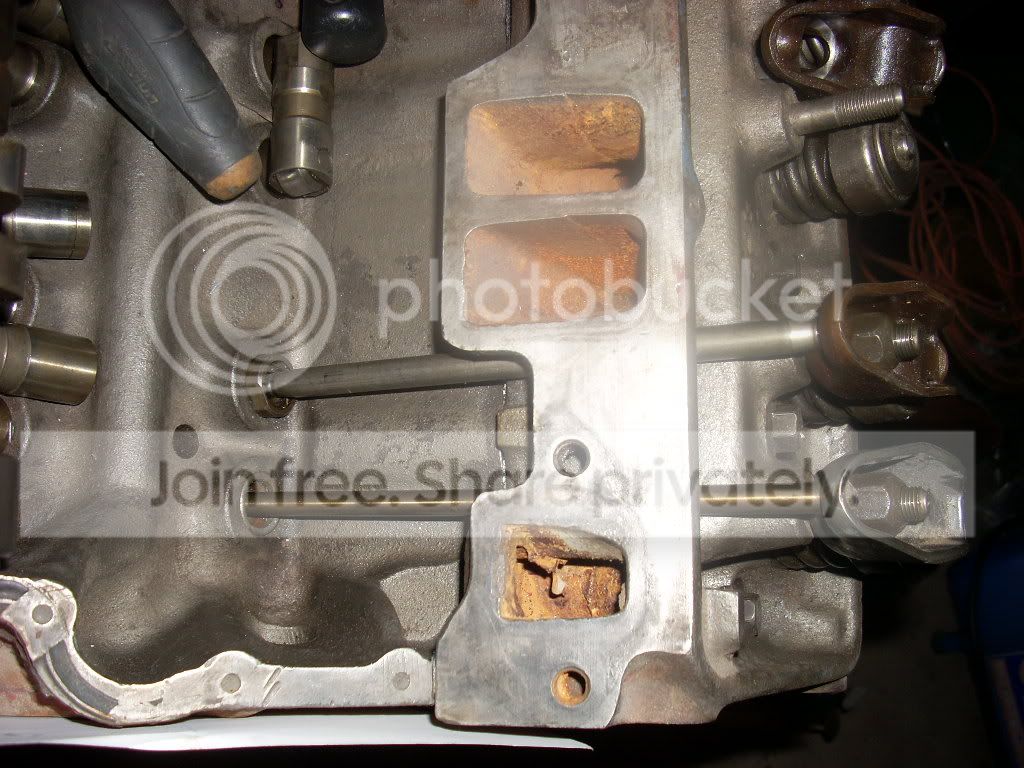
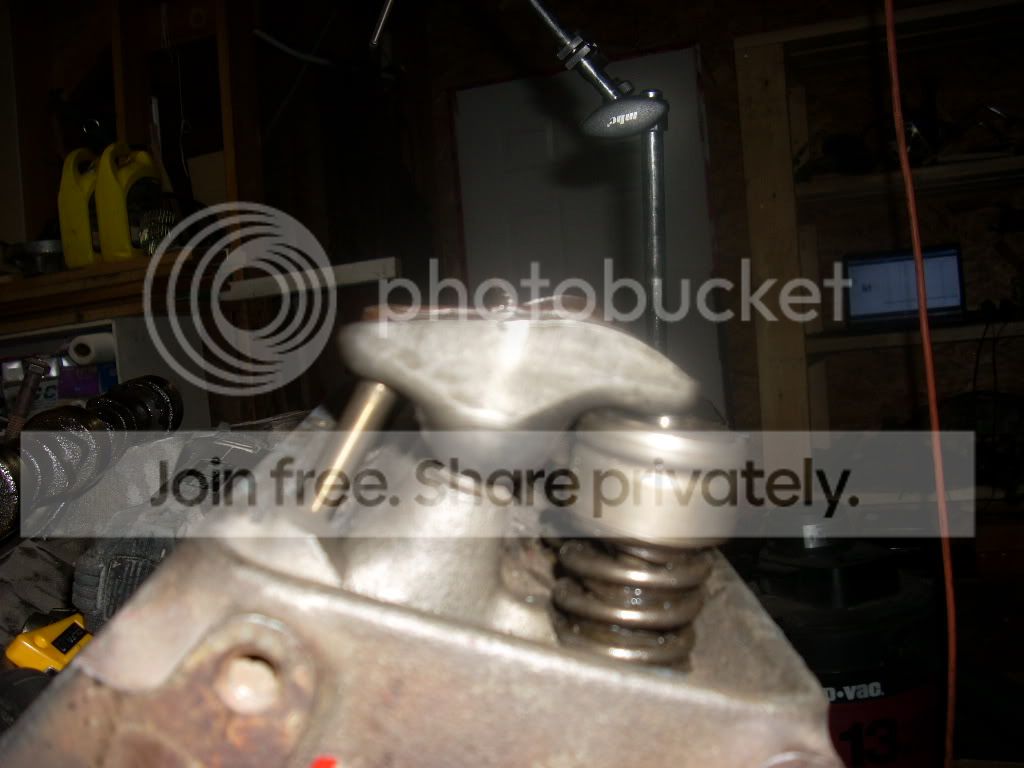
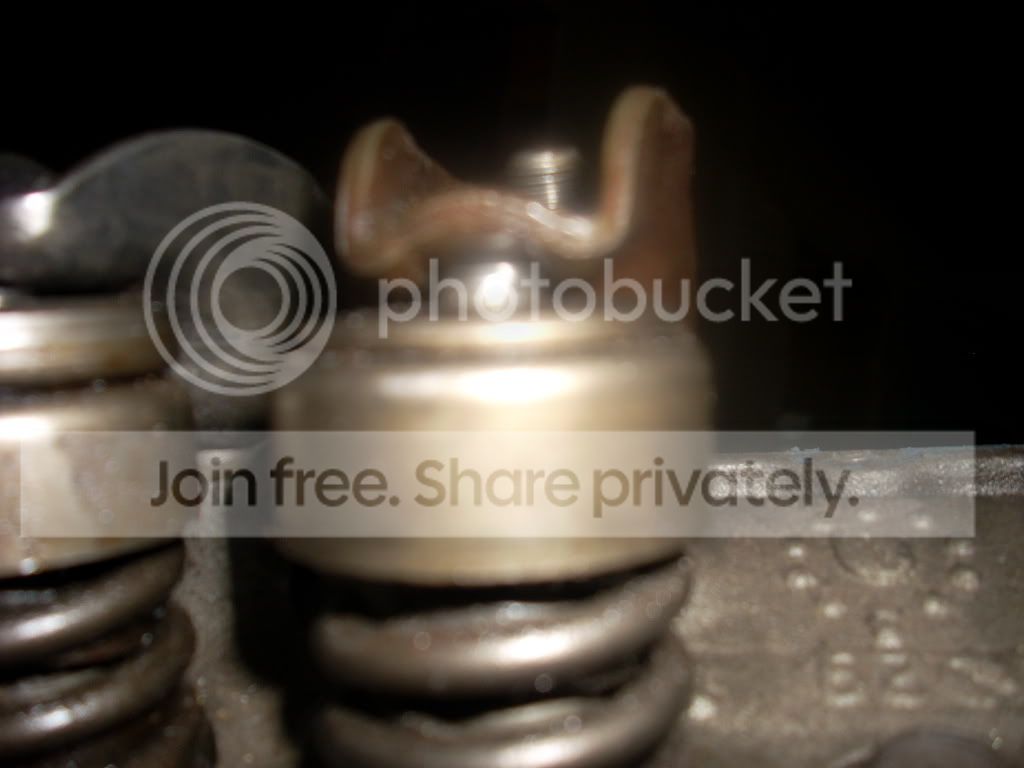
Spent this evening playing with the roller setup in a bare short block I have sitting on a stand here--rocker geometry is something I need schooling on. My understanding is that you have to look at where the rocker sits on the valve stem, as well as be sure that enough, but not too much, oil is coming through the rod end. I took a picture of the engine with a roller lifter/prototype pushrod/stock Vortec rocker setup beside a flat lifter/stock rod/stock rocker.

DSCN1539.jpg


I think the angles are pretty close to identical, and at zero lift the rocker tip sits toward the inside of the valve stem, rocking out to the outside by max lift. The hole in the rod is about 1/3 exposed through the hole in the rocker--I guess the issue would be how fast it closes off in the rocker cup so that the lifter stays pumped up through max lift and back down again.

Is that pretty much the extent of it, or is there more I need to figure out?
 
Couple more rocker pics . . . .

DSCN1540.jpg


DSCN1542.jpg


I have full roller rockers, but because the Vortec heads use self guided rockers the roller rockers are shaft mounted, and I can't clearance these heads enough for the pushrods to fit into the shaft rockers.
 

Latest Posts

Top Bottom