CK5
Register an account today to become a member! Once signed in, you'll be able to participate on this site by adding your own topics and posts, as well as connect with other members.
A photo is sometimes worth a thousand words....

One Photo:

DSC00988ps.jpg


:usaflag:
 
Last edited:
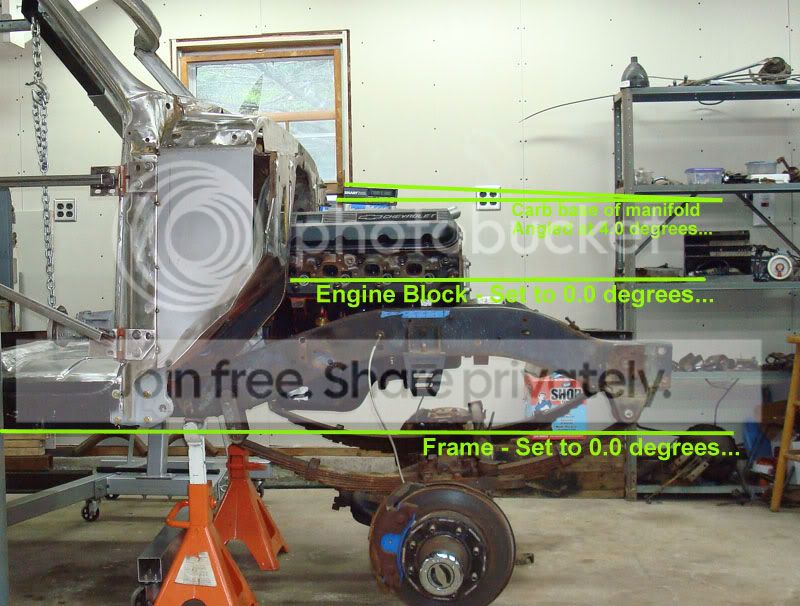
You should definately try to get some angle on that carb mounting even if it's not the 4 degrees. How about dropping the trans/t-case a little and raising the engine a little. Doing it this way will probably get you close without sacrificing too much clearance at either end.
 
I can easily get the manifold machined to be at 0.0 degrees.... that's a LOT less work than changing the motor mounts, or messing with the angularity of the driveline.

I still want to understand the engineering reasons behind angling the manifold. It sounds like in a drag car with 90/10 shocks up front you'd want to accomodate the "lift" from the front suspension (especially with a carb) but I don't see a valid reason to angle the manifold for an FI application. :dunno:
 
Keep in mind that your FI system is nothing more than an electronic carb. Like i said, if you were port injected then it wouldn't really matter. Also keep in mind that EVERY car and truck with a carb or TBI has the manifold angled so it's not just a race car thing.
 
It still makes NO sense to me why the manifold angle matters for fuel delivery.

With a carb at least, I can appreciate that it should sit level so that the fuel in the float bowls is level. But for ANY kind of fuel injection (MPFI, TBI, etc) the fuel is being metered by an injector and can't overflow or slosh fuel like carbs could.

Like I said, I'm interested to hear a scientific reason why the angle matters.

As far as I'm concerned, the "angled carb effect" we're talking about is NO different than when a car drives up a small hill (or down a small hill). :thinking:


:usaflag:
 
It has alot to do with runner length and velocity. Intake runners are not all the same length on any manifold except a tunnel ram. It has no concern about float level with a carb either. I guess you're going to set it up however you have planned so there really isn't any reason for me to keep explaining that EVERY vehicle ever built is this way and they didn't do it for the hell of it. I've already given you the reason why it's like that so now you decide if yours should be like that.
 
I really like the motor mounts you're using. How's your oil pan clearance? Great update!

Oil pan clearance ended up being pretty good...probably no worse than factory. I've got a minumum of about 1/2" between the crossmember and the pan in all dimensions.

The only concession I've made was to install small spacers between the rubber mount and the bottom of the motor mounts themselves. Once I am 100% convinced that everything is perfect, I will probably machine some nice steel spacers and weld them to the motor mounts permanently.

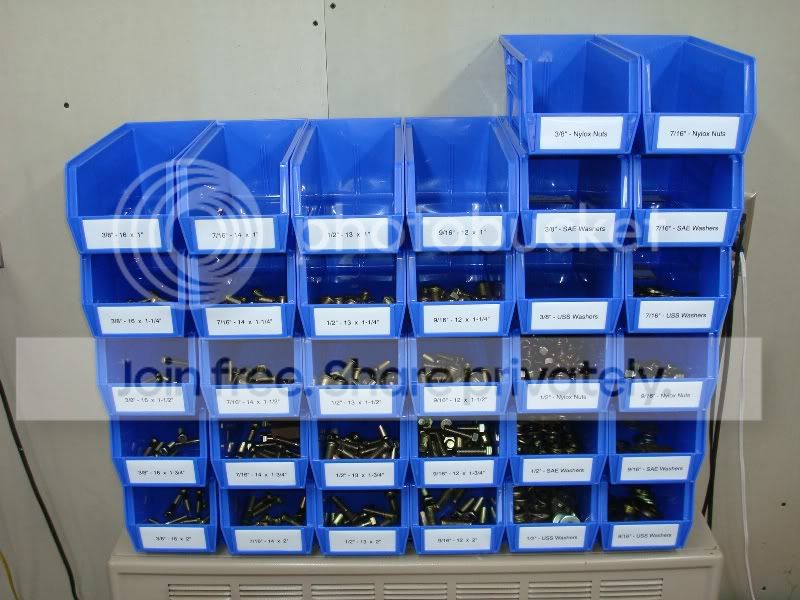
Today I received 36 new Akro bins for storing all those bolts/nuts/washers... It's going to feel good to have so much new hardware sorted within easy reach from now on. :saweet:


:usaflag:
 
2008.07.21 UPDATE! - SMALL VICTORIES ARE STILL VICTORIES...

This weekend I didn't get too much done, but it still felt good to be in the shop. On Saturday, I printed up a bunch of labels for my new fastener bins, and then got all of the hardware unboxed and into the correct bin stacks... I can't even begin to describe how awesome it feels to be able to reach into a bin and grab a fresh, correctly-sized fastener when I need one. It's a far cry from the old cardboard box full of greasy, rusty random fastners that I've put up with for YEARS!! :yikes:

So like the title says, even small victories like this feel really good.

DSC00990.jpg


On Sunday, I only had a few hours...so I spent some time thinking about the transmission crossmember and how I could build it in a way that would provide good support, strength and enough clearance for my future dual-exhaust to still run past it. I ended up doing a total of 4 cardboard templates for a mounting plate that utilizes the bolt flange on the intermediate transmission adapter. I'm satisfied with the final design, so I will need to transfer that one to a steel plate and then integrate it into the rest of the crossmember...hopefully that's something I can work on during the evenings this week. :thinking:


:usaflag:
 
Last edited:
2008.07.22 - UPDATE! CROSSMEMBER PROGRESS...

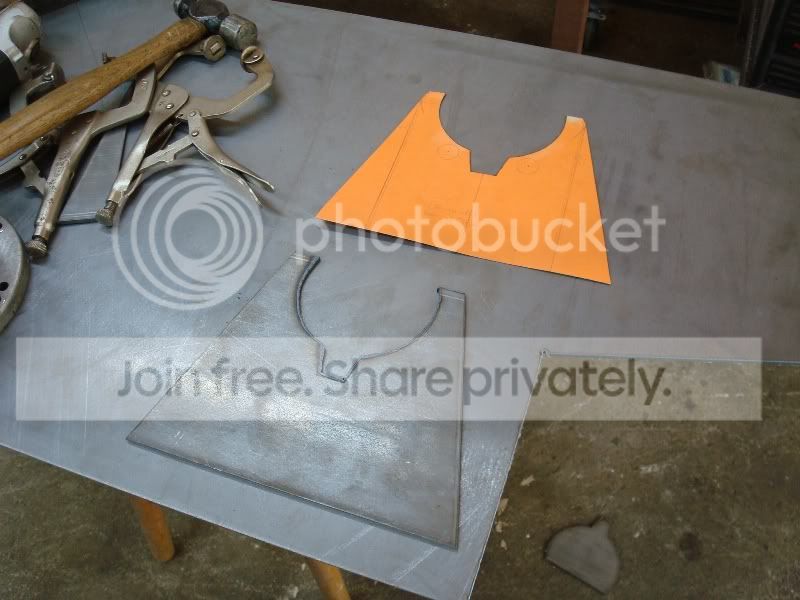
I finally got a template that I liked (it took me 5 attempts)...so I decided that it was time to cut it out of metal. It helps that I also picked up a 2' x 4' sheet of 3/16" plate steel that I needed from a local shop in town.

DSC00994.jpg


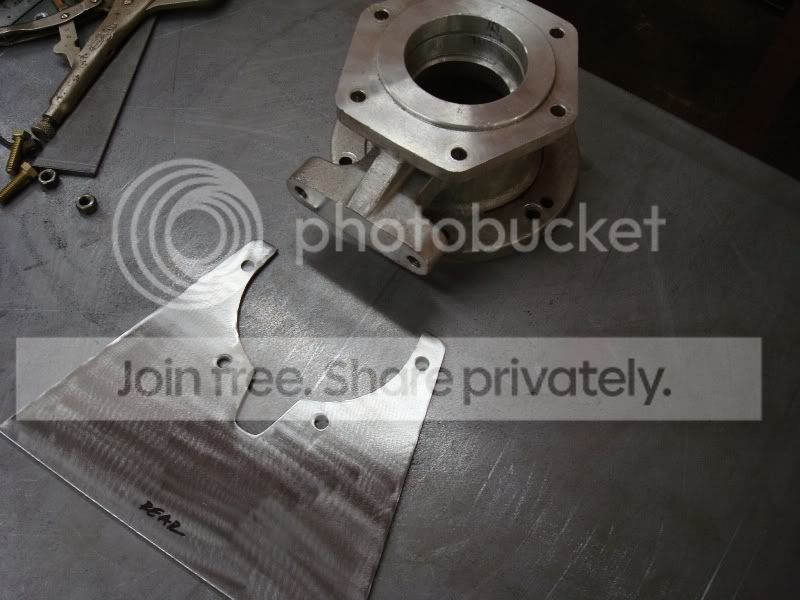
The plasma does such a nice job! Even freehanding the curves came out pretty cleanly. After a little cleanup and some transferpunch holes marked and drilled, it looked like this:

DSC00999.jpg


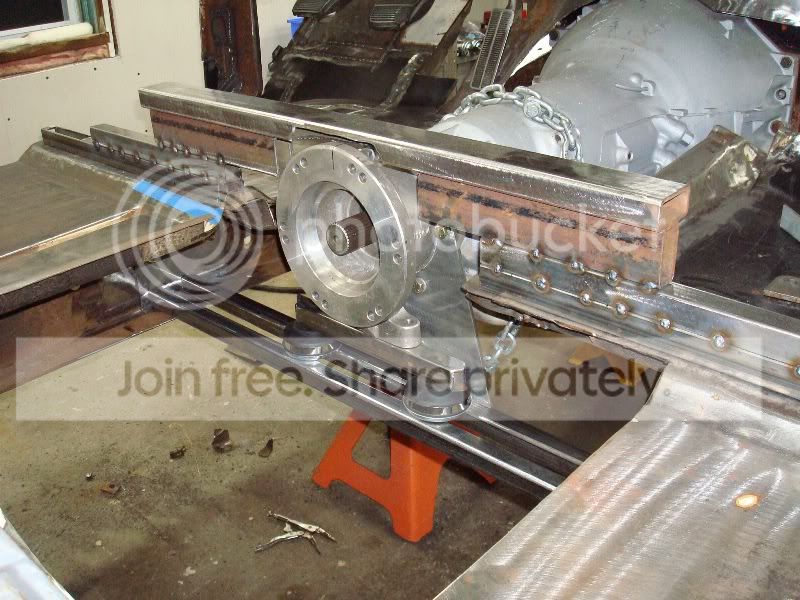
As you can probably tell, it is designed to bolt to the hexagonal side of the intermediate adapter and give me a larger base to attach to the upcoming crossmember. When I started building this part, I didn't think the regular "feet" on the adapter would even line up properly with the rest of the assembly.

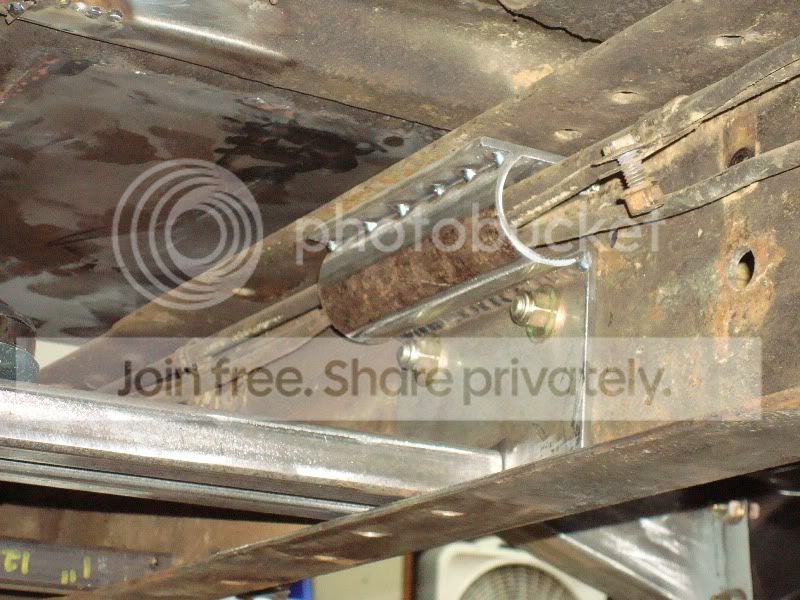
I built a couple of inserts for the frame using more of that 3/16" steel. On the passenger side there was an extra challenge because of the clearance needed for the brake lines and fuel lines. I sliced a small section of 2" DOM tubing and was able to create a cool conduit for them. The driver's side was a much simpler bracket to build.

DSC01008.jpg


I laid-up a couple of 1"x1" .125 wall tubes across the bottom to get a sense of where the crossmember would be relative to my fancy new mid-plate. It turns out, that I can use the original mount if I want (it lines up fine) or the new plate....or perhaps BOTH! I've seen those "ears" broken off adapters before...so it might make sense to beef up that mounting point.

DSC01009.jpg


You can see that I had to build a crazy stacked "bridge" over the top of the floor too. The diagonal bracing that I'd welded in to support the floor ended up directly in the way of where those side plates needed to go. I used the factory seat mounting holes to bolt down the bottommost tube on each side, then tacked the additional tubes up until I had the clearance over the adapter. It's strong, and gives me a lot better access to the areas below where I need to work.

This final shot is just a mock-up to show how the rubber mounts will end up being used. The final mount that they bolt to will be quite a bit longer than the one pictured....but you get the idea. :wink1:


:usaflag:
 
Last edited:
So how do you plan to ever remove the crossmember that sits between the frame rails? I doubt that you can get it to turn sideways to remove it?
 
You'll have to stay tuned for the next episode! :deal:


:usaflag:
 
Top Bottom