CK5
Register an account today to become a member! Once signed in, you'll be able to participate on this site by adding your own topics and posts, as well as connect with other members.
When/if you build one for yourself I'd recommend that you make the motor mounts removable as well so that it can serve other functions later on.
good call, if I build it I'll certainly do that.
that will be a HUGE adrenaline moment in the build, and I'm sure the video clip of that will put a smile on a lot of subsciber's faces.... :waytogo:
-G
YKI!
 
2014.07.21 - UPDATE! - THE WAITING IS THE HARDEST PART!!!!

Tom Petty was right.... :D

The rain and humidity have finally subsided, and the weather has been sunny and just about perfect for the last few days. I was hoping to have some new UPS boxes to open up and show you, but it was not meant to be.... however, inbound packages from EMF (Evolution Machine), Branik and ORD should be arriving today and tomorrow and things are about to get a LOT more finished-looking on this build. :waytogo::bow:

In the meantime, there is ALWAYS something that can be done while I'm waiting for parts so I spent some time yesterday getting to business.

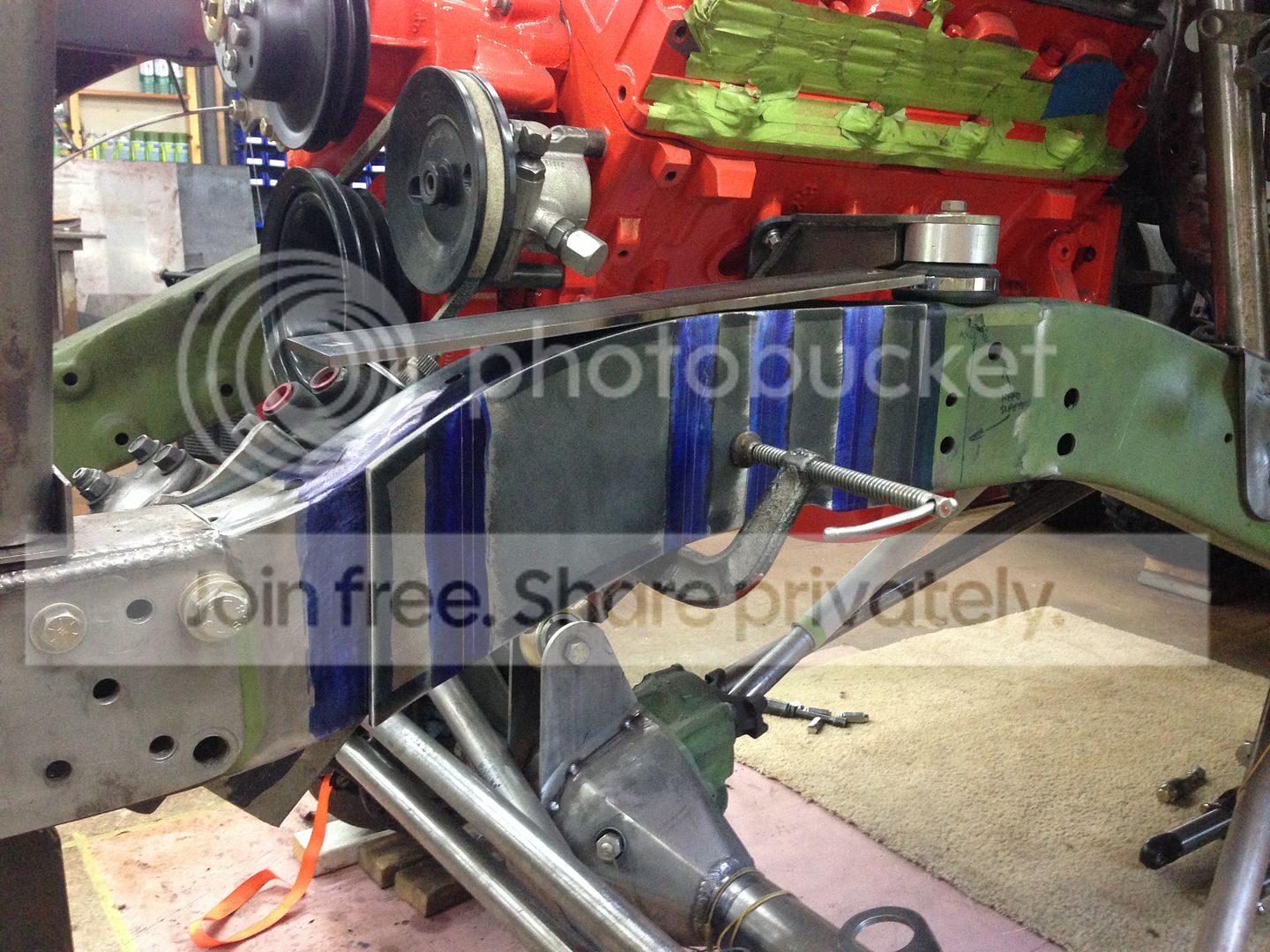
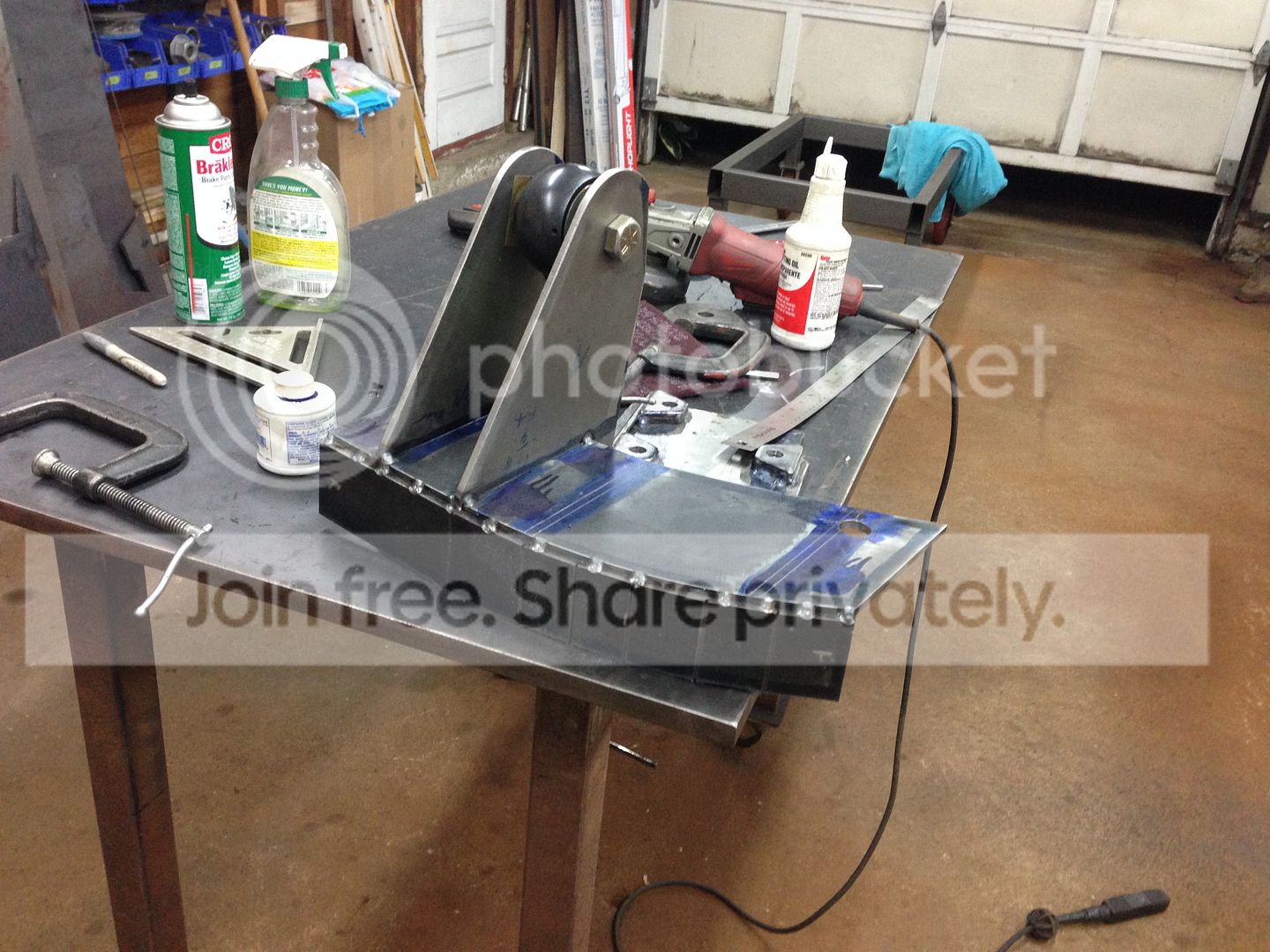
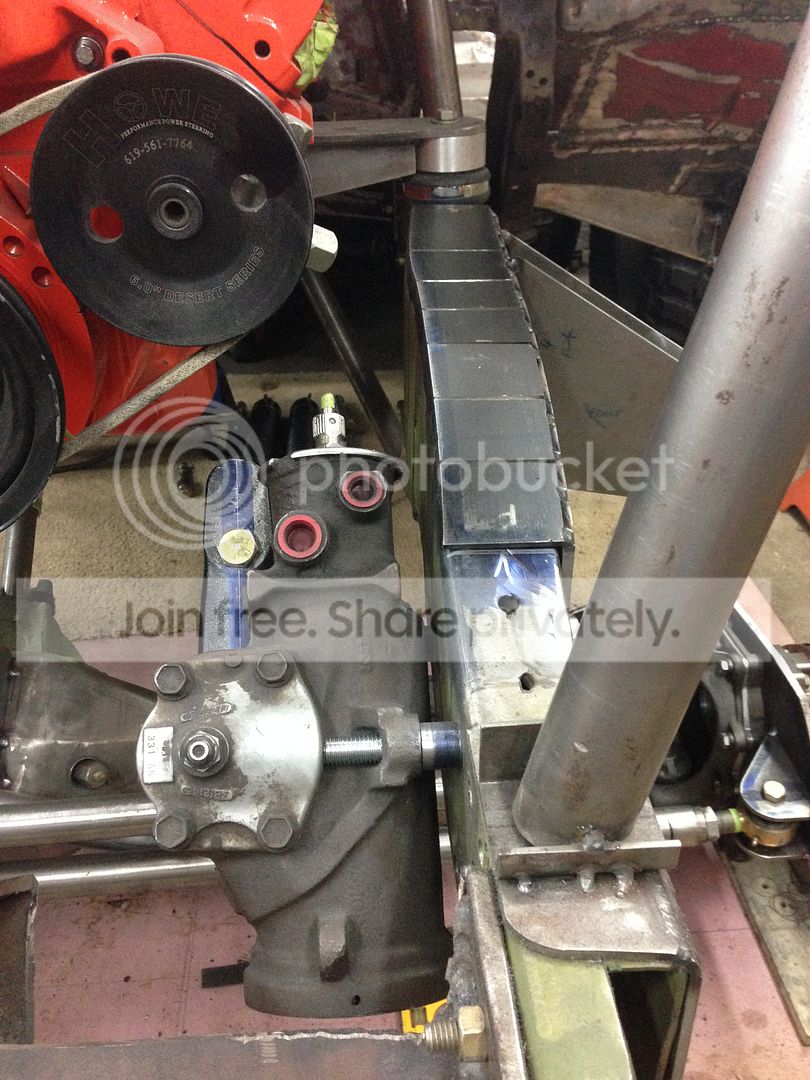
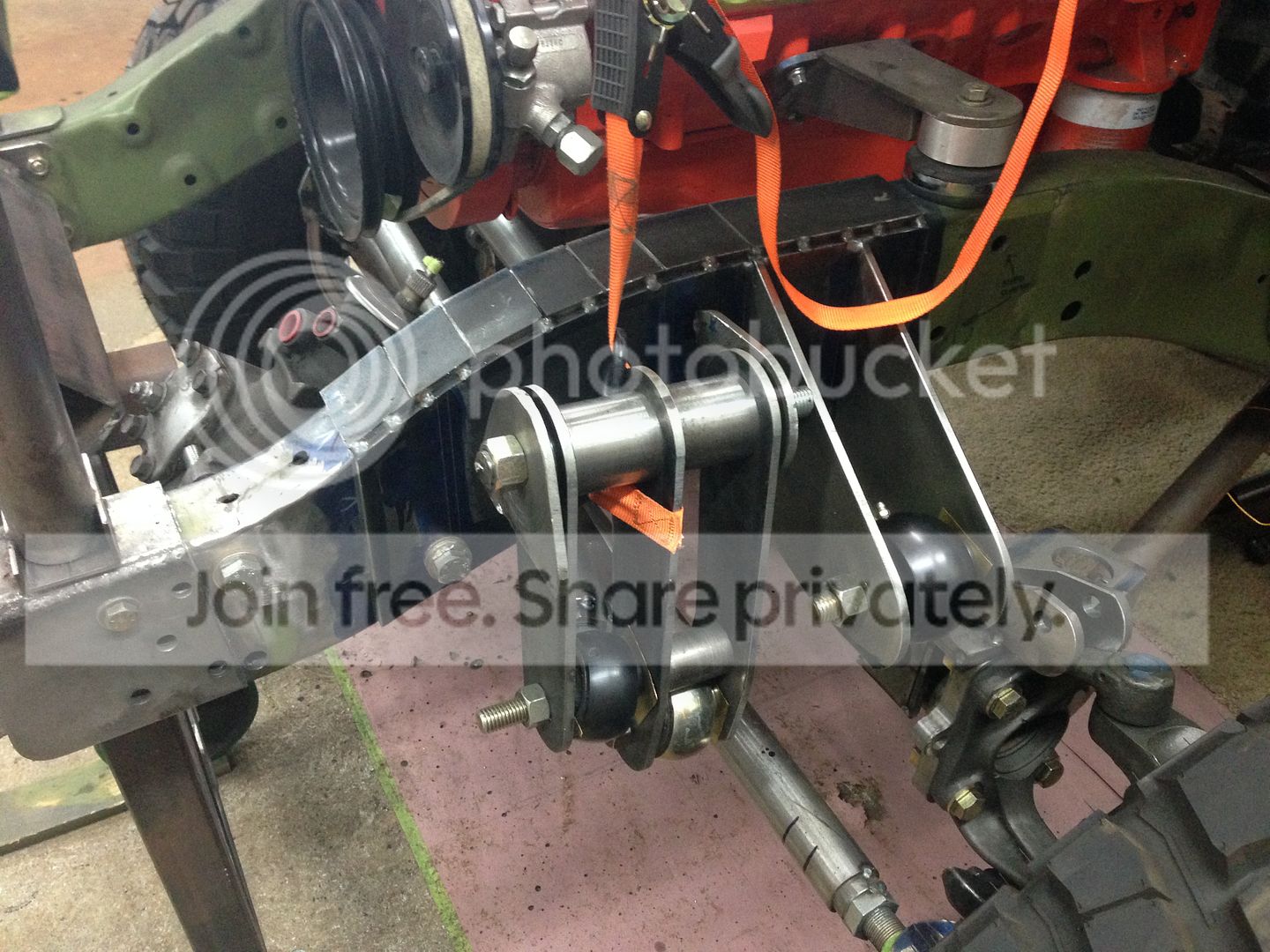
As mentioned in earlier posts, it made sense to me to try to incorporate the PHB and idler bracketry into a large single bolt-on plate for the DS framerail.... for a couple of reasons. First, it makes it simpler when the time comes to break this whole project down for paint/powdercoat to get things down to their simplest form, without having a bunch of large welded brackets hanging off one side of the frame. It also helps to insure that if I decide to make some "tweaks" to the design later on, I have the option to build a slightly different bracket and swap it over without having to take a cut-off wheel to my beautiful painted parts.... :eek1: Ultimately, building the entire bracket as a mini-monolith, should give it more strength as well since I can tie both items together with large unified bracing.

So.... here's the basic idea:

IMG_9583.jpg


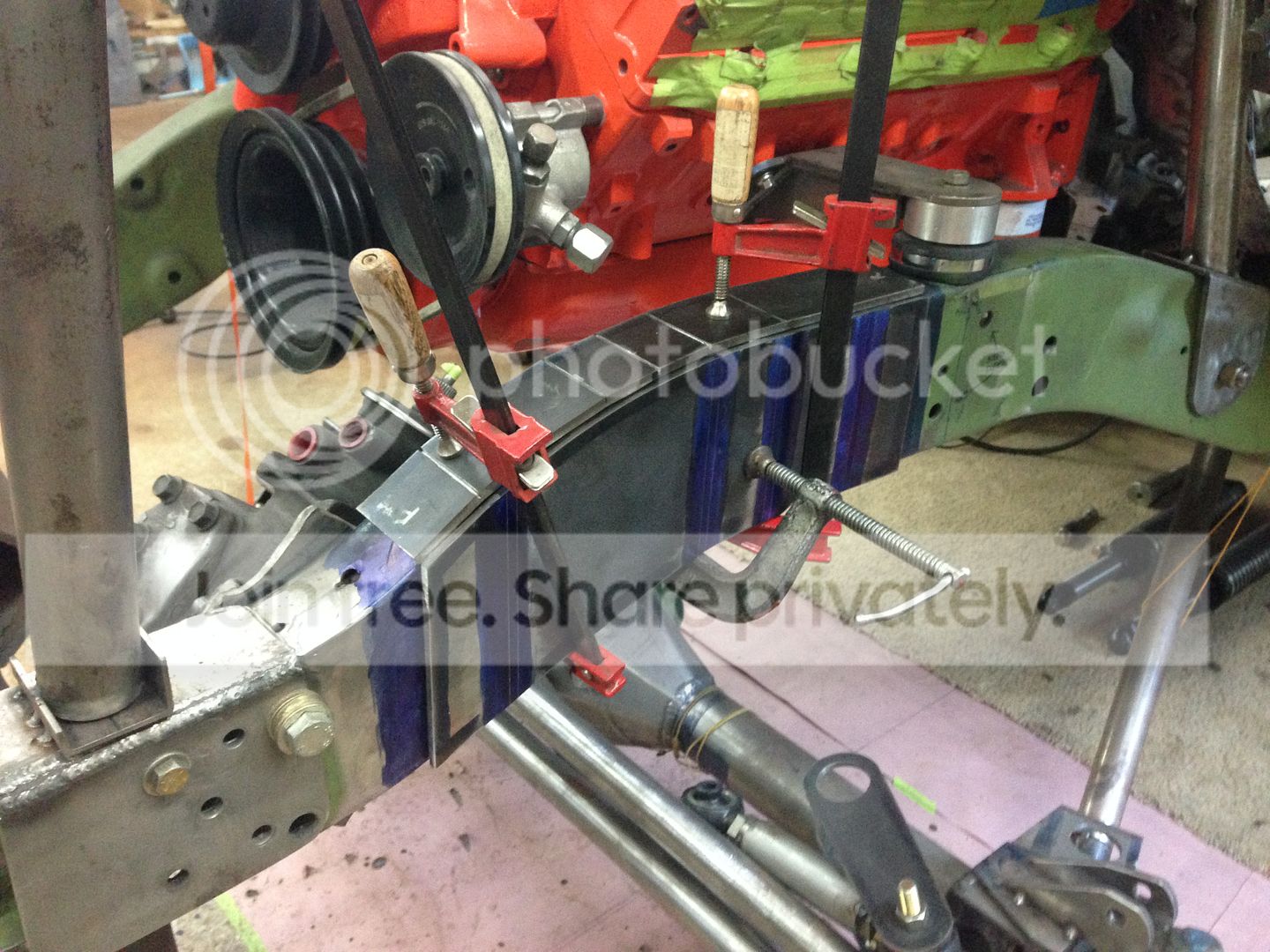
The side plate was easy. Just trace up the profile of the framerail onto some cardboard and then cut it out of 1/4" steel. The harder part was coming up with the top cap that I also want to have. Since it needs to follow a curvy shape, I needed to use one of my old tricks and make a few carefully positioned slices in the plate so that it would bend in the right spots.....

IMG_9584.jpg


With a few clamps and a few tweaks and mallet blows, I had the upper plate following the frame profile perfectly!

About this time, I also realized that this plate was going to overlap one of the 3 steering box mounting bolts, so I needed to spend some time figuring out the through-hole location precisely so that I could drill a 7/8" hole for the "through the frame" DOM bolt slug. Obviously, this plate is going to have a number of bolts that run through the frame so I'm going to be welding those DOM sleeves in several other spots as well.

For the time being, getting the hole in this mini-monolith ( far right area of the bracket in this photo) was enough to keep progress moving forward.


IMG_9593.jpg


After marking the hole location on both the inner and outer framerails the holes were drilled out to 7/8" for the two steering box bolts (the 3rd lower steering box bolt actually ends up completely underneath the frame... about 2" away from any metal down there, so it will require a custom bracket later on). If you remember, the steering box has an odd set of mounting feet that don't actually sit flat against the frame. A standoff is required to clear the steeringbox body so the DOM sleeves were left 3/4" long on the inside to allow the box to mount properly.

IMG_9597.jpg


IMG_9603.jpg


Ultimately, there is just enough room on the inside of the framrail to sneak another 1/4" plate under that steering box for some additional bracing and strength.... given the steering forces involved, it seems like cheap insurance and it's not worth risking a torn steering box mount just to save the weight of maybe 1 pound of steel plate. :waytogo:

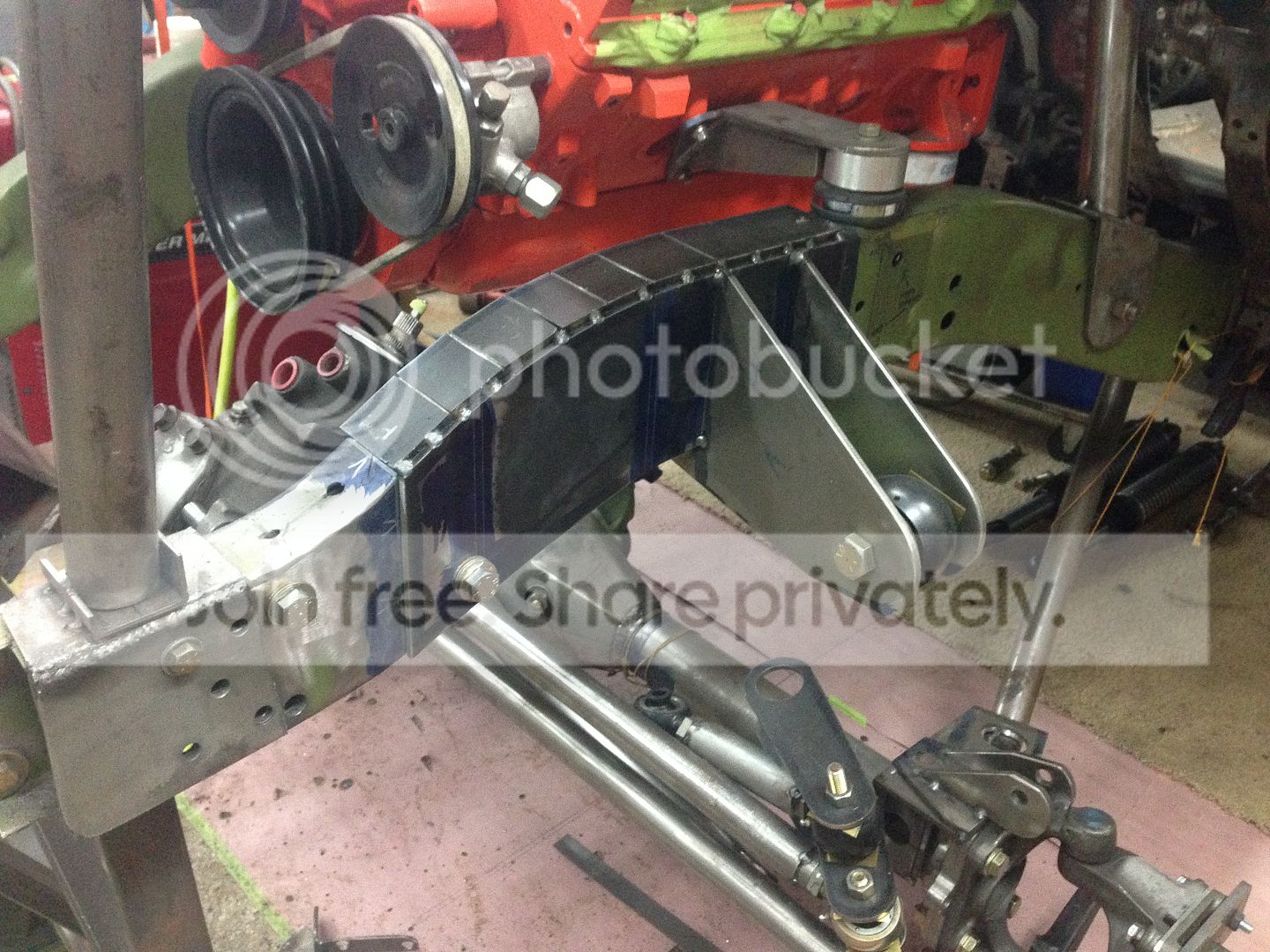
Final shot of the evening, Idler back close to it's correct position again, ready for a set of "nice" pivot bracketry:

IMG_9610.jpg


-G
 
Fantastic job Greg a d excellent craftsmanship, would you be willing to explain your trick for the careful slicing for the top plates? I want to do the same and curious.
 
Fantastic job Greg a d excellent craftsmanship, would you be willing to explain your trick for the careful slicing for the top plates? I want to do the same and curious.

Like most things, I'm sure it's hard to do until you get the "feel" for it....

Basically, I clamped the upper plate on the side closest to the firewall so that the very end of it was flat to the top of the frame. Get down at eye-level to the part so you can start to see the daylight between the upper plate and the curving area of the frame.... right where that sliver of daylight begins is the point where you want to make the first slice since that's where the flat plate is becoming divergent in it's profile from the target shape. Usually, I just put a small Sharpie dot on the part and then remove it to do the next steps.

Once it's on a workbench I make a careful line across the part. In this particular case I make sure that the straightedge runs perfect laterally (parallel to the firewall) and don't try to use the edge of the part for my speedsquare.... since the part has curves it will make the line go slightly diagonal and ultimately the finished part will end up looking weird.

The scoring of the part is nothing more than running a .040" cutoff wheel carefully across the line a few times. I start at the outside edge with VERY light pressure to initiate the cut.... you really need to develop a "feel" for the disc going into the material and then slowly allow it to pull itself across the remainder of the line. As it digs a trough in the metal it will guide itself along. If you rush, it will jump and skate and bounce all over the place and make a mess of the part. Be patient and let weight of the tool do the work.

Once the first shallow groove is established, you can more easily go back a second, third and forth time and run along that groove to make it deeper and deeper. On 1/4" plate, I generally go about 1/8" deep since that's a thickness that I know I can bend and shape easily with a mallet & vice (or by clamping to a solid workbench. Often times, I'll line up the cut to the edge of the workbench so that it's already clamped securely when it's time to give it a few whacks with the mallet. I usually try to bend it a little further than I think it needs to go... that way, when I take the part back to the frame to clamp it down again it will be slightly humped but with clamping pressure it forces the part down perfectly to the contour you want.

Get down to eye-level again, and look for the next sliver of daylight on the part... mark it, scribe it, groove it, hammer it, clamp it, test it...... repeat, repeat, repeat... :waytogo:

At the end of the process you'll have a part with a convincing profile that you can tack weld into place. Later on, you can heavily clamp the entire part (or use the through bolts that end up being part of the assembly) and then lay a hot bead down each of those grooves to fill them back in. Dress them down with a light touch using a 40-grit flap disc and you should be able to blend them in so convincingly that nobody would ever know that it wasn't a custom-formed part.

Simple, right? :D

-G
 
Wow with all the added steel (weight) you need to name your transformer rock crusher. Trails will never know what hit them. Good thing you live in the granite state.:rolleyes:
 
Wow with all the added steel (weight) you need to name your transformer rock crusher. Trails will never know what hit them. Good thing you live in the granite state.:rolleyes:

No no. Good thing he has 502 bbc :waytogo:
 
No no. Good thing he has 502 bbc :waytogo:


Dainty and broken K5 < Heavy and well-built K5


:D


There are plenty of heavy items that were removed during this build (leaf springs, hangers, crossmembers, factory hardtop, 1-Ton Axles, iron NP205, etc) and there are a few items that are going to get heavier than before.

A couple hundred extra pounds added to a 6000+ pound truck is pretty insignificant... jumping a K5 is easy if you don't care what it looks like after the landing. :haha: If the 502 can't get this pig moving.... I'll drop in a stroker crank and take it to 540!


-G
 
2012.07.22 - UPDATE! - THANKS ORD...!!!

I'm not sure if it was Chris, Brandon or Stephen.... Or someone else behind the scenes, but someone NAILED the specs on my pan hard bar!!! :waytogo::bow:

82D330C7-BC06-4B2E-9583-5D1E8852DC36.jpg


I've been careful to save the Sharpie drawing on my workbench of the PHB so that I could compare the final product to my original specs. I was happy to see that the ORD bar laid down as a perfect overlay to my drawing. Perfect overall length, perfect bend location and perfect 10.5* bend in the center! :woot:

Nice.


I checked my mailbox and had a small package from Canada in there too. EMF delivered the uber-TRE that I wanted for my small idler link / pitman arm combo.

932DCCBE-0765-4625-93A0-FA2FD75A1F53.jpg


I ordered up the reaming tool so that I can out the Chevy-style taper into the pitman arm...

Looking forward to my next free night in the shop. :waytogo:


-G
 
New landing pad for the brackets looks nice man. The waiting for brown Santa always sucks tho. :whistle:
 
New landing pad for the brackets looks nice man. The waiting for brown Santa always sucks tho. :whistle:

Yep.....

I've been hitting the refresh button on UPS.com all day..... there's 100Lbs of aluminum coming today, current status:


"OUT FOR DELIVERY"


:woot::waytogo:


-G
 
2012.07.22 - UPDATE! - THANKS ORD...!!!

I'm not sure if it was Chris, Brandon or Stephen.... Or someone else behind the scenes, but someone NAILED the specs on my pan hard bar!!! :waytogo::bow:

82D330C7-BC06-4B2E-9583-5D1E8852DC36.jpg


I've been careful to save the Sharpie drawing on my workbench of the PHB so that I could compare the final product to my original specs. I was happy to see that the ORD bar laid down as a perfect overlay to my drawing. Perfect overall length, perfect bend location and perfect 10.5* bend in the center! :woot:

Nice.


I checked my mailbox and had a small package from Canada in there too. EMF delivered the uber-TRE that I wanted for my small idler link / pitman arm combo.

932DCCBE-0765-4625-93A0-FA2FD75A1F53.jpg


I ordered up the reaming tool so that I can out the Chevy-style taper into the pitman arm...

Looking forward to my next free night in the shop. :waytogo:


-G

Wasn't this guy, I'm past my ass in Crocodiles on a big Condo renovation project in Aspen. I set foot in the shop for the first time in a few months last night and that was only to raid the beer from the fridge.

Probably a James, Casey, Jed thing man.
 
Like most things, I'm sure it's hard to do until you get the "feel" for it....

Basically, I clamped the upper plate on the side closest to the firewall so that the very end of it was flat to the top of the frame. Get down at eye-level to the part so you can start to see the daylight between the upper plate and the curving area of the frame.... right where that sliver of daylight begins is the point where you want to make the first slice since that's where the flat plate is becoming divergent in it's profile from the target shape. Usually, I just put a small Sharpie dot on the part and then remove it to do the next steps.

Once it's on a workbench I make a careful line across the part. In this particular case I make sure that the straightedge runs perfect laterally (parallel to the firewall) and don't try to use the edge of the part for my speedsquare.... since the part has curves it will make the line go slightly diagonal and ultimately the finished part will end up looking weird.

The scoring of the part is nothing more than running a .040" cutoff wheel carefully across the line a few times. I start at the outside edge with VERY light pressure to initiate the cut.... you really need to develop a "feel" for the disc going into the material and then slowly allow it to pull itself across the remainder of the line. As it digs a trough in the metal it will guide itself along. If you rush, it will jump and skate and bounce all over the place and make a mess of the part. Be patient and let weight of the tool do the work.

Once the first shallow groove is established, you can more easily go back a second, third and forth time and run along that groove to make it deeper and deeper. On 1/4" plate, I generally go about 1/8" deep since that's a thickness that I know I can bend and shape easily with a mallet & vice (or by clamping to a solid workbench. Often times, I'll line up the cut to the edge of the workbench so that it's already clamped securely when it's time to give it a few whacks with the mallet. I usually try to bend it a little further than I think it needs to go... that way, when I take the part back to the frame to clamp it down again it will be slightly humped but with clamping pressure it forces the part down perfectly to the contour you want.

Get down to eye-level again, and look for the next sliver of daylight on the part... mark it, scribe it, groove it, hammer it, clamp it, test it...... repeat, repeat, repeat... :waytogo:

At the end of the process you'll have a part with a convincing profile that you can tack weld into place. Later on, you can heavily clamp the entire part (or use the through bolts that end up being part of the assembly) and then lay a hot bead down each of those grooves to fill them back in. Dress them down with a light touch using a 40-grit flap disc and you should be able to blend them in so convincingly that nobody would ever know that it wasn't a custom-formed part.

Simple, right? :D

-G

so if you was to take that plate further on the framerail and IF the framerail started an upward swing (like you were filling in a valley) where do you start?
would it be better to have two separate pieces in that case?
 
so if you was to take that plate further on the framerail and IF the framerail started an upward swing (like you were filling in a valley) where do you start?
would it be better to have two separate pieces in that case?

Just take a tape measure, ruler, combination square, etc. and measure the length of the straight section from the downward bend to the upward bend. Lay it out and make your cut on the bottom of the plate instead of the top. If you use something rigid like the square or ruler, you can ride it down the length of the frame until the leading corner contacts the bend and lifts the middle letting light shine through.
 
Hmmmmm......

It's getting late here (past 11PM already), but I'm really tempted to unwrap these!!!

7E46D52F-5633-4A34-BA2C-E144BEB2C949.jpg


Should I...?

:dunno:


-G
 

Latest Posts

Top Bottom