CK5
Register an account today to become a member! Once signed in, you'll be able to participate on this site by adding your own topics and posts, as well as connect with other members.
Nicely done Greg! How are you planning on re-incorporating the fender "lip" along the edge? I imagine that'll be quite a lot of fabricating and hammer/dolly work.

Can't wait to see this thing on the wheels!!!


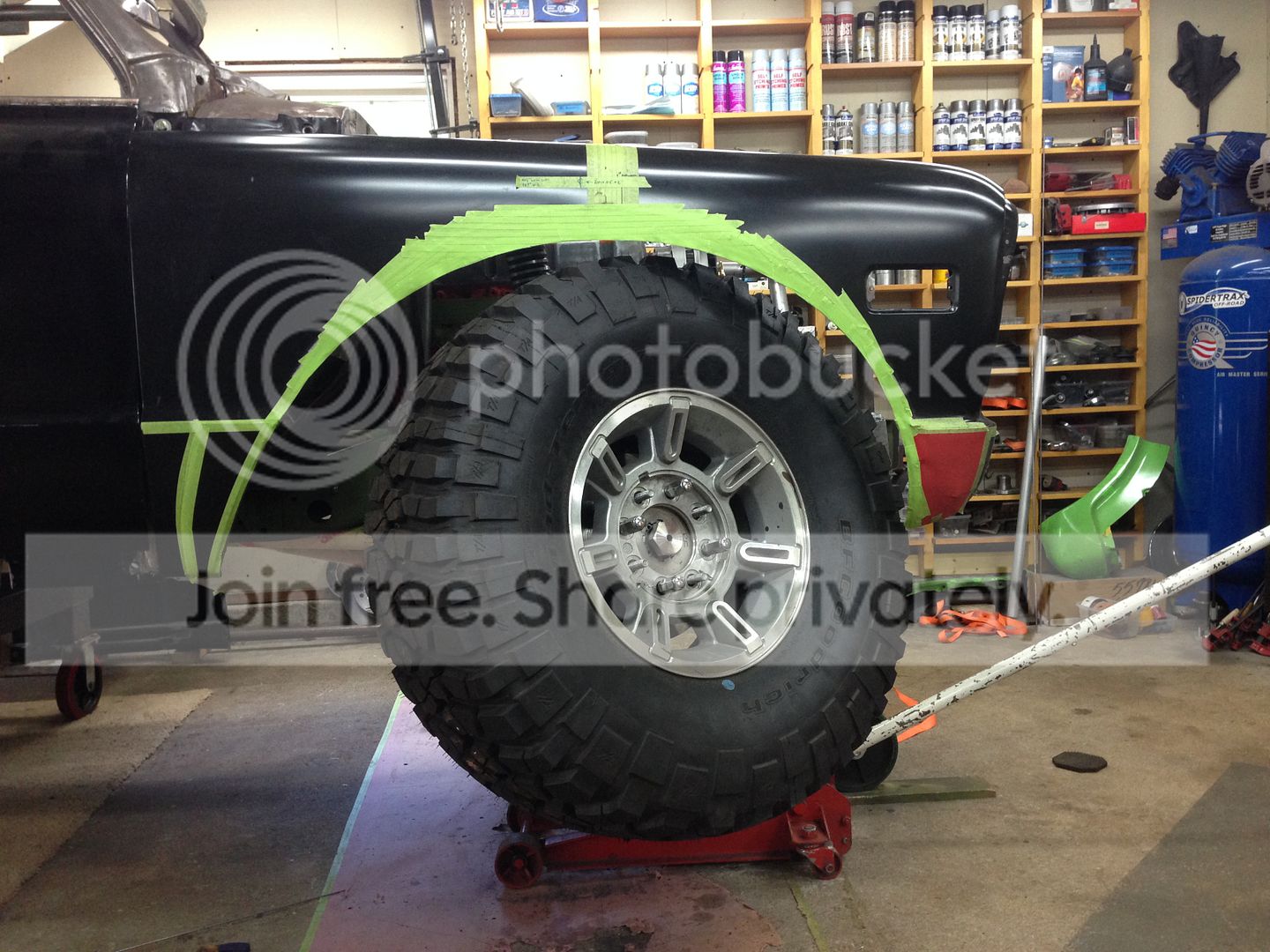
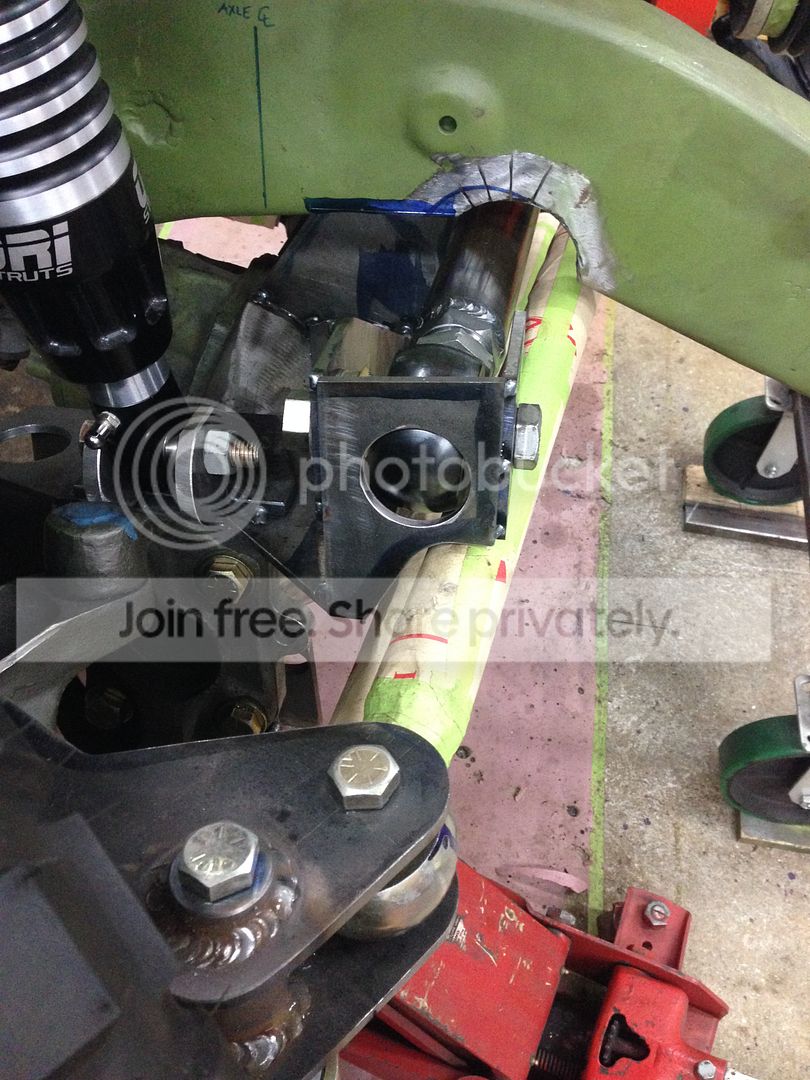
The green tape will end up becoming a template for that massive wooden fixture that I'd built several months back. Probably a LOT of wooden blocks will be glued together and attached to the board and the shape will be transferred over to the wood.... then slowly sanded and finessed down to the correct shape. Theoretically that will become the wooden "buck" for me to hammer against to slowly reintroduce the fenderlip sections that were cut off..... lots of pizza slicing of the fenderlip and slow tackwelding and hammering until the old fenderlip takes on the profile of the wooden buck it's resting on.

I'm not sure exactly how it's all going to work to be honest, but for now it's really not that important. The nice thing about front fenders is that they are 100% removable so it becomes a "standalone" project for whenever I feel like messing around with it. At this point, it's not preventing me from making forward progress so I can put it to the side for now.


-G
 
Last edited:
The green tape will end up becoming a template for that massive wooden fixture that I'd built several months back. Probably a LOT of wooden blocks will be glued together and attached to the board and the shape will be transferred over to the wood.... then slowly sanded and finessed down to the correct shape. Theoretically that will become the wooden "buck" for me to hammer against to slowly reintroduce the fenderlip sections that were cut off..... lots of pizza slicing of the fenderlip and slow tackwelding and hammering until the old fenderlip takes on the profile of the wooden buck it's resting on.

I'm not sure exactly how it's all going to work to be honest, but for not it's really not that important. The nice thing about front fenders is that they are 100% removable so it becomes a "standalone" project for whenever I feel like messing around with it. At this point, it's not preventing me from making forward progress so I can put it to the side for now.


-G

Old school. I like it.:waytogo::waytogo: I can't wait to redo my fenders the right way (whatever that means).
 
good work as usual Greg!

IMG_0285.jpg

Wow, those portal boxes really give it a funky look on hard turns! Can't wait to see it on some rocks. :thumb:
 
Ash,

Yeah, it's definitely a weird look. Heath was right.....I think it's due to the really large distance from the wheel mounting surface vs. the kingpin location.

Instead of the wheel turning in a nice tight radius around that kingpin the whole motion is exaggerated because of the WMS offset. It ends up doing a really crazy motion, and there is a LOT of front-to-back movement in the wheelwell in addition to the turning motion of the wheel itself.

I think the final wheelwell shapes really highlight that clearly. The bottoms of those fender openings are really WIIIIIDE. Ultimately, it's probably just as bad as the motion from leafs & shackles in terms of the amount of space that the tire actually needs. :dunno:

-G
 
Ash,

Ultimately, it's probably just as bad as the motion from leafs & shackles in terms of the amount of space that the tire actually needs. :dunno:

-G

:haha::haha::haha: surely you can be serious. ( serious face now)

Its still way better then leaf springs. Mogs turn really well I am sure that was necessary considering their original design. Something that could plow the field and take the goods to market.

Good progress I really hope this is showing anyone how time consuming a link suspension can be.

Its gonna be fast in the rough stuff too Greg I don't know if that was a design goal but it will soak up stuff dang good with the strut at 50/50 nearly
 
:haha::haha::haha: surely you can be serious. ( serious face now)

Its still way better then leaf springs. Mogs turn really well I am sure that was necessary considering their original design. Something that could plow the field and take the goods to market.

Good progress I really hope this is showing anyone how time consuming a link suspension can be.

Its gonna be fast in the rough stuff too Greg I don't know if that was a design goal but it will soak up stuff dang good with the strut at 50/50 nearly


Time consuming...??? :whistle:

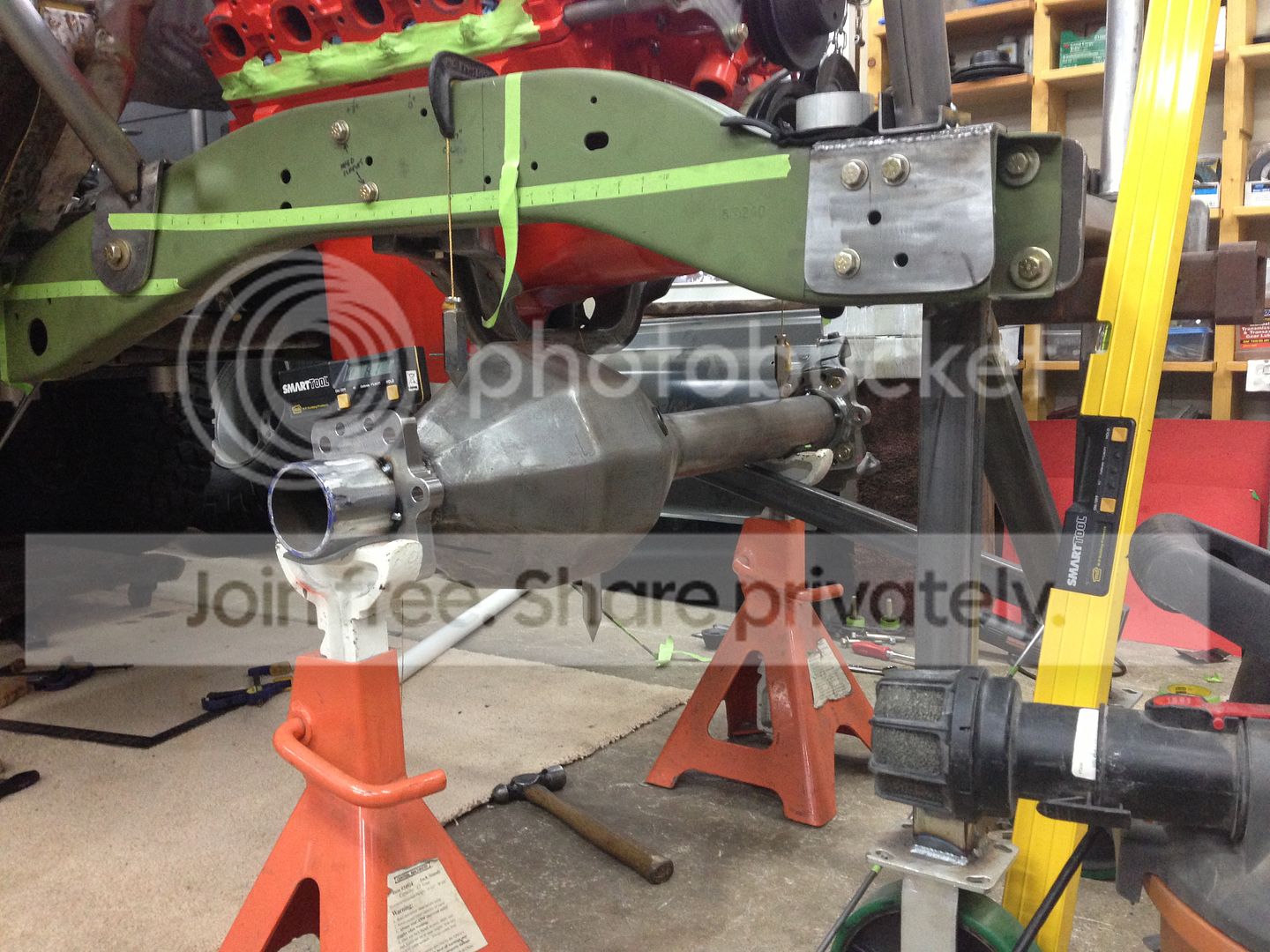
Here's a photo I just pulled from this thread originally posted back on December 11, 2012..... almost 21 MONTHS ago!!!! :eek1:

Just a bare housing sitting on a couple of jackstands, with my tape measure trying to figure out how much offset to put in the diff, and where I could possibly get some links attached.... :thinking:

null-30.jpg


Yes, it's been a LONG, LONG time since I started this front axle project. It's no joke...... if it's a first-time project, the hours involved can be daunting.

To be honest, I hadn't really thought much about high-speed desert type performance as a criteria initially, but I'd be lying if I said that it doesn't sound fun to go out bombing around the desert or across some dunes just to enjoy the payoff for all of this hard work. :waytogo:


-G
 
Nice fix Greg. :waytogo:


I think it's really cool that you are showing mistakes and solutions along the way. Sure we all make mistakes but it's how we handle them that defines our character.

It's still not too late. If you want to give up, I'll come pick it up. :rolleyes:(not serious face)
 
Raising the fender lip

On the 67-72 board, Scott's Hot Rods shows how they raised the fender lips. It might take a couple fenders worth of material, but "should" be easier than hammering a completely new fender lip. It's on pages 8-10, Goodguys 2015 Giveaway C 10 by Scott's Hotrods.

Hope this helps!
 
With all of that exceptional metal work that has been done, I expect no less than bare metal cleared coated as a finish. Body include.
 
On the 67-72 board, Scott's Hot Rods shows how they raised the fender lips. It might take a couple fenders worth of material, but "should" be easier than hammering a completely new fender lip. It's on pages 8-10, Goodguys 2015 Giveaway C 10 by Scott's Hotrods.

Hope this helps!

Found it.

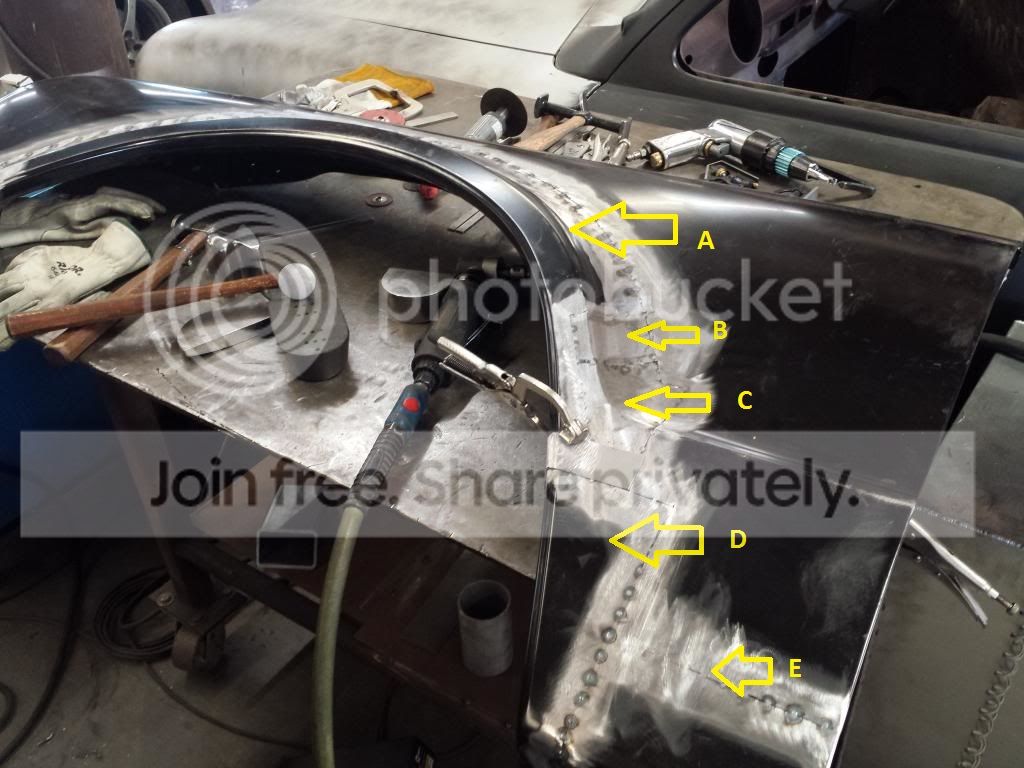
Yep, insane talent in that thread. :bow: I don't think their fender mod technique is going to work for this build though. I stole one of their images to study it and this is what I think is going on.....

FenderModAnnotated.jpg


The upper part of the curve is unchanged as you can see in this photo. There are no cut-lines or missing black primer. Section "A", "C" and "D" were originally all attached to each other on the original fender and were cut off as the first step of this mod.

Section "A" was raised a few inches and then tack welded to the fender....then the transition curve "C" was too high, so it was cut and dropped down to match the side body style line, leaving a gap "B" that was filled in with donor metal from another fender. Section "E" appears to be a lateral cut that was made to allow the truck to sit lower to the ground (not a priority on THIS build! :haha:)....and finally Section "D" was dropped down so that it would continue the newly developed fenderlip shape that gives them a much wider opening near the bottom of the fender. It also appears that they may have added a small strip of metal between "C" & "D" to help extend that fenderlip area between the two original sections when they were cut apart from each other.

Ultimately, the end result gives them a TALLER opening and a wider opening AT THE BOTTOM... but I'm not sure that it would really work right for me. One of the other tricks that the low-riding pickups use is that they severely narrow the front end to get the tires WAAAAY inboard... this helps avoid a lot of the interferences with the fender as the tire sweeps in and out for hard turns. In those situations the complete tire is still underneath the fenderlip and doesn't really ever stick out beyond the fender.

For this "MAW" build, as the photos today show.... the tire sticks out a LOT during turning and articulation. I need to open up the fenderwell a lot further up each side of the curve than this example does... and that means that the curve itself has to be modified or it's going to end up with a bunch of weird "glitches" as I try to transition from the stock curve to the new, larger ones. It doesn't take a trained eye to notice if a fender has a weird transition in it either..... it really catches the eye and becomes a huge distraction that breaks up the visual aesthetic of the truck.

I'll take some time (probably this winter) to build my templates and see if I can show you guys the process I intend to use.... hopefully it will work out the way I've imagined it. :dunno:


I feel like you will almost be lost when the front suspension work is done.

I think you're right. :haha: I'm already wondering what the next logical step should be to move this build along...... even with this part of the process coming to a close, it's still an awfully big elephant....and there are a lot of bites left!!!


-G
 
Greg, I haven't wheeled much, but when I do....oh wait a minute here...

How much minimum clearance exactly do you have in any particular position?
Seems like things will move a bit more in the real world of wheeling with your setup, and in the case of leaves, maybe a lot more in the real world!
Just wondered if you should allow a bit of "extra" clearance for such a situation.
 
'72 K5 - Greg's "Might As Well™" Build - !!! EMBRACE THE ICE-COLD SUCK...!!!

Some good skills on that thread, but they just raised the wheel well. Greg has to raise and widen it which i think is much more difficult. Greg, when you get to that point, I'd recommend the book "the guide to metal bumping". The title probably isn't exact and it's mostly related to repairs, but the author has some pretty useful info on reshaping metal panels. I learned a lot from it although I'm nowhere skilled enough.

Edit: you already figured it out. Looks like my browser needed refreshing.
 
Last edited:
I remember reading about it back in the tread somewhere but at this point it could have been a hundred pages back. You're going to have new wheels made. I know you plan on steel wheels trying to keep the original hub cap look but keep in mind while cycling the suspension if the rim width or back spacing changes on your new wheels vs you h2 wheel, you could have clearance issues again. That would be a bummer!
 
2014.08.26 - UPDATE! - HELLO ORI?? I'VE GOT THIS PROBLEM!!!....


I actually had a really good night last night. The cycling tests were a complete success and I was able to get to full bump/droop and full-lock steering alternating between the driver side and passenger side. There was one small interference with my new PHB outer bracket but by trimming it back by 1/8" it was all good again. :waytogo:

The only thing that's got me a little spooked is the ORIs themselves. Last night as I did all my incremental cycling tests (raising by 1" each time) I noticed that the struts don't actually give me 14" of travel..... I'm only seeing about 13.25" in total.

Here's how they typically look at "Full Bump"

A30F6457-43AF-4AA3-96B3-6EDFAD1A37CB.jpg


There is between 5/8" and 3/4" of chrome showing when the strut is fully compressed. From what I've read this is normal....and the strut can NOT travel up ANY further than that.

The problem is that under droop, I get exactly 14" of chrome showing which means that the total travel is only 13.25" and not the advertised 14". What concerns me is that I suspect there actually IS another 5/8 -> 3/4" of travel in that strut somewhere (either on the bump or droop side) that I am not seeing during my tests.

My best guess is that when I put the full weight of the truck on them, that 5/8" of chrome that shows under bump, will actually disappear (the internal bumpstop will fully compress).....and that is NOT a good thing. The suspension is set up with only about 1/4" of clearance between the axle and the underside of the frame/oilpan at full-bump. If the struts are going to allow as much as 5/8" of additional uptravel, I'm going to do a lot of damage.

There is a simple solution, and that is to raise the mounting holes on the lower strut mounts by 5/8" - 3/4". That will shorten the strut at ride height and would allow the strut to compress fully (hiding ALL the chrome) without the axle crashing the frame or oilpan.

I've got a message in to ORI, so hopefully they can give me some guidance about what I'm seeing and the best way to resolve it. :thinking:


-G
 
you will always have 5/8" chrome at full true bump, you are not getting full droop.
 
you will always have 5/8" chrome at full true bump, you are not getting full droop.

Interesting!

Maybe I can play some games with charging the strut (I forget if it's upper or lower?) to force the strut to extend-out all the way?? I kinda figured the weight of the axle housing and bracketry would be enough to pull it down fully....but I guess not. :dunno:


-G
 
If you only have a 1/4" clearance I'd be putting some kind of solid or small poly bump in there for a straight up hit. This was Brandon's suggestion to me and it saved my ass already. You're no feather weight buggy just like me. Come down hard and that 1/4" could disappear fast. Cheap insurance regardless.
 
Amazing work Greg! I´m surprised the mod you had to do to the firewall is not as bad as I thought. It looks like a minor change.

Can´t wait to see the finnished fenders. I´ll have to start working on mine and I´m sure it will take a long time to make then look stock!

You mentioned that the portals make the axle move front to back more during turning, maybe that´ll give me some room on mine since I only run 37" tires and a D60 without portals.

One thing I noticed on mine and you migt want to check that too is the bottom of the radiator support. At full lock and bump, on mine at least it looks like the tire would actually contact the radiatorsupport. So I´ll have to clearance that too. Have you checked on yours?
 
So..... setting the concerns about the strut lengths aside for now, here are a few shots of last night's progress.


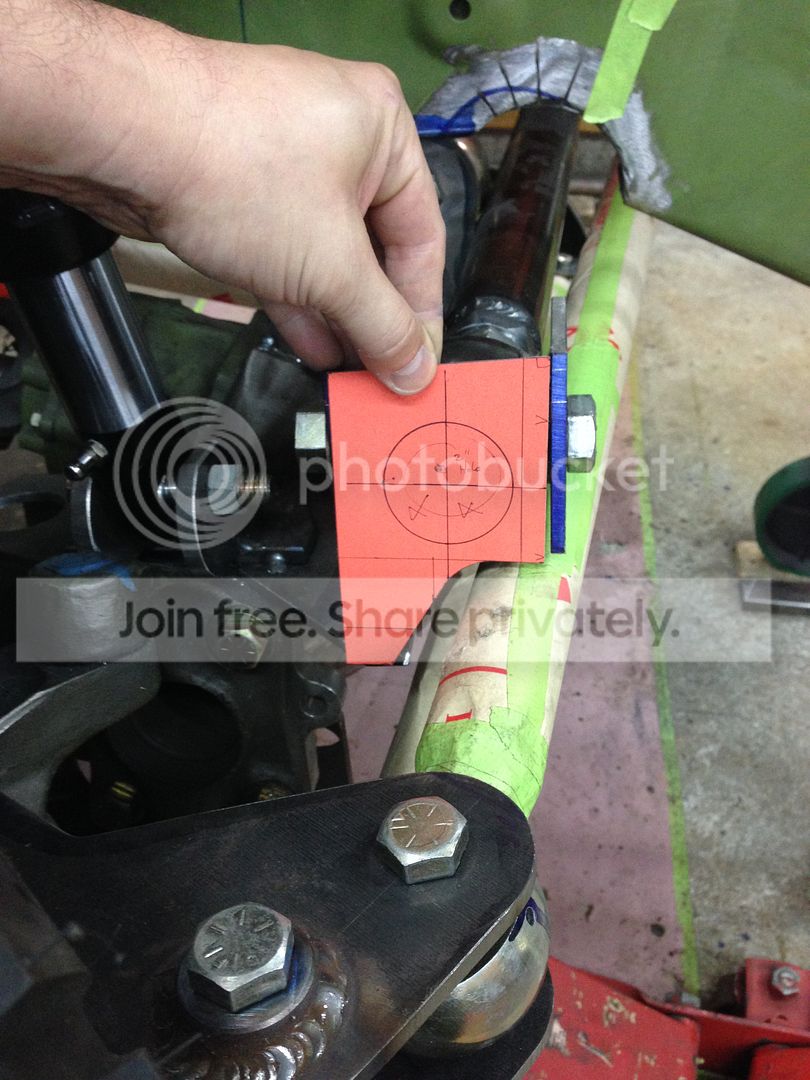
New end cap for the axle-side PHB mount:

First in cardboard....

IMG_0330.jpg


Then about 30 minutes later in 1/4" steel...

IMG_0333.jpg


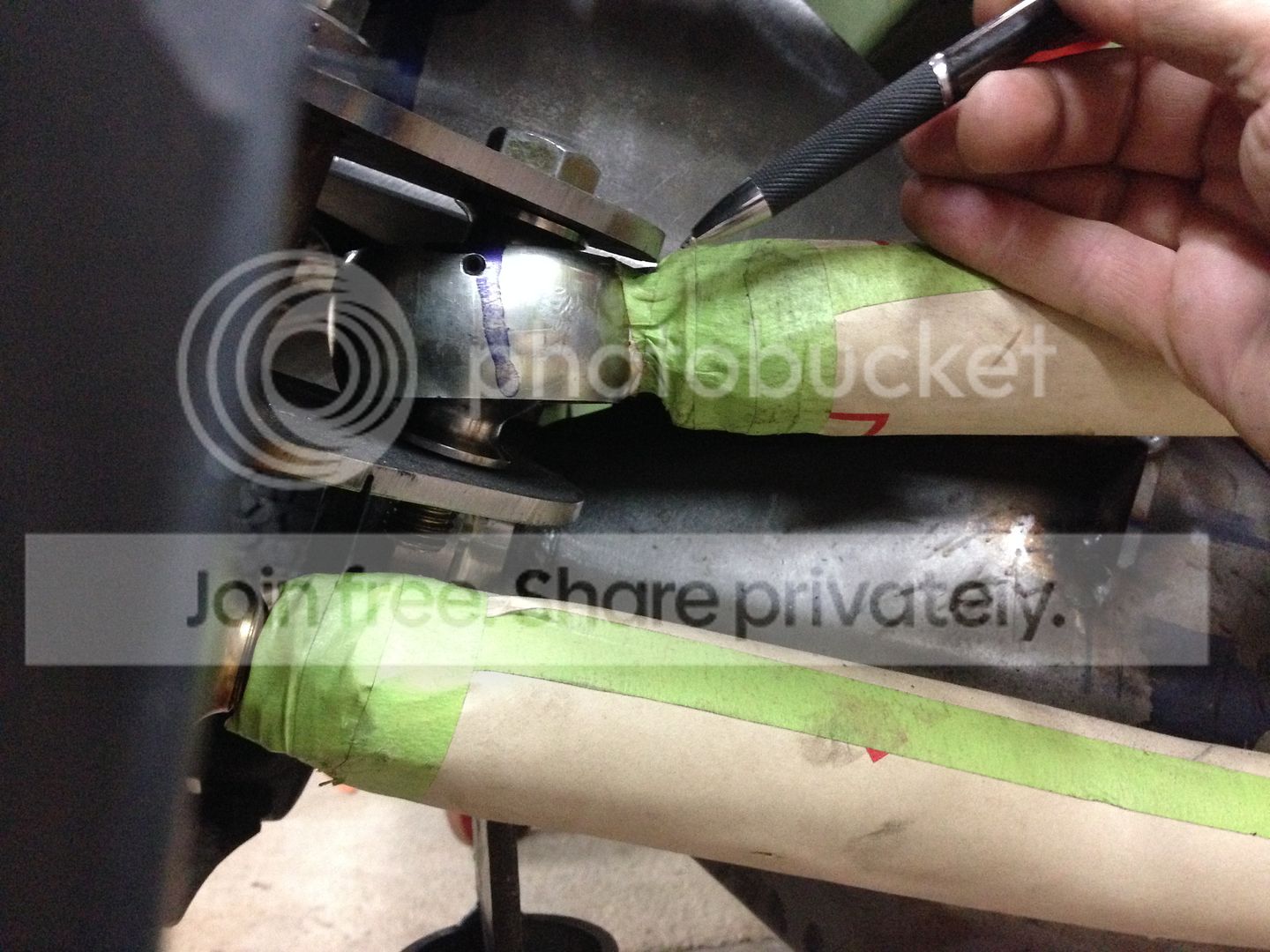
I pulled the wheel/tire off on the passenger side so that I could play around with various combinations of bump/droop from both the driver's and passenger's sides. There are some combinations that get pretty tight when it comes to the upper bracket that holds the draglink.... there is maybe 1/8" between the threads of the heim and the bracket. It clears every time but there's enough "meat" around that bolt that I'll probably trim it back a little anyway.

IMG_0339.jpg


My new bracket didn't survive "modification" for very long either.....


IMG_0340.jpg


At full-droop (when the draglink is at it's steepest angles) the gap between the outer bracket and the draglink went from about 1/4" clearance to just barely enough for a metal ruler to pass between..... and I still was only at about 4" of bump on the DS. (2" left to test). Fortunately, I only needed to remove about 1/8" across the bottom of that plate to make it work perfectly.

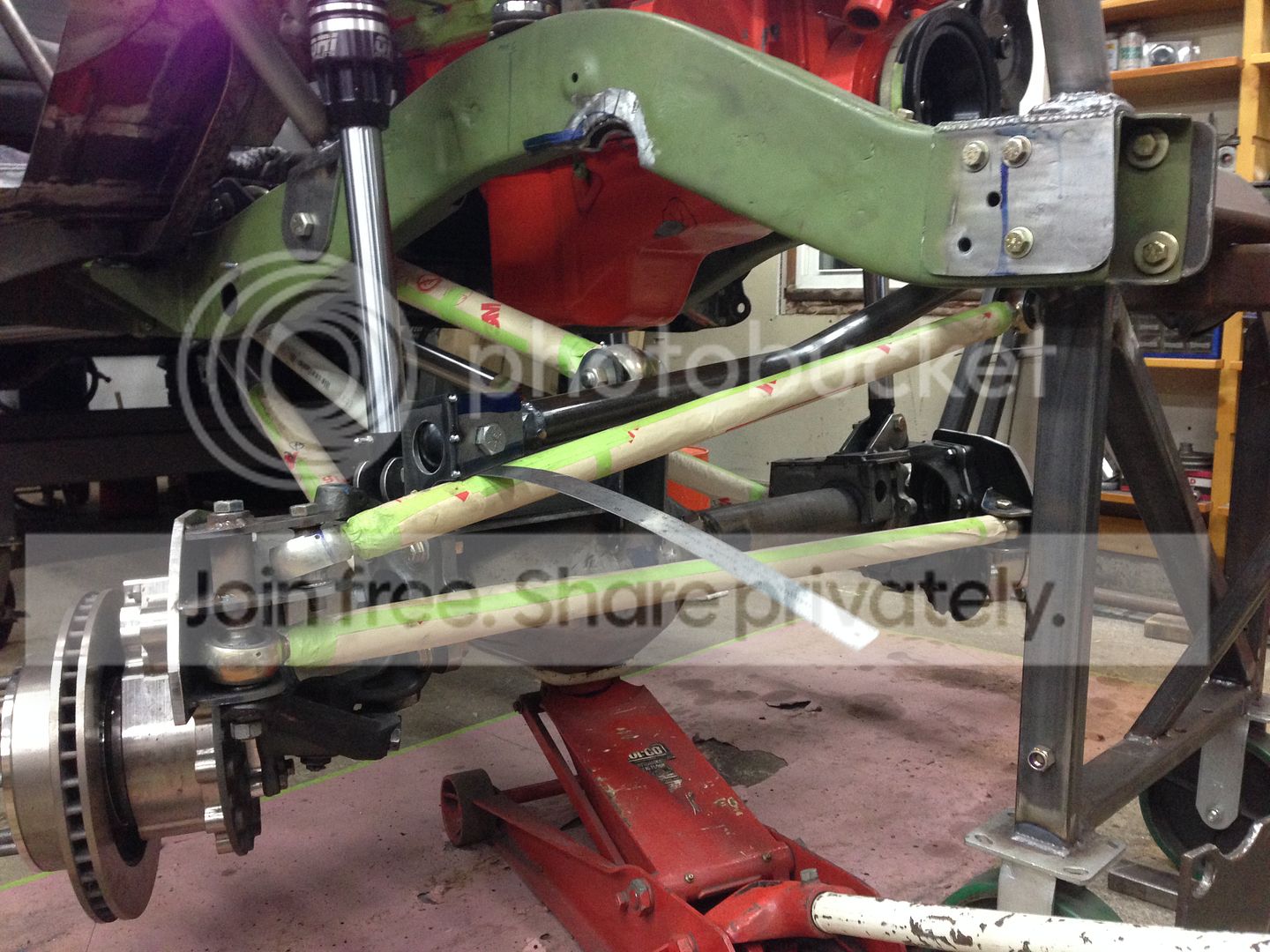
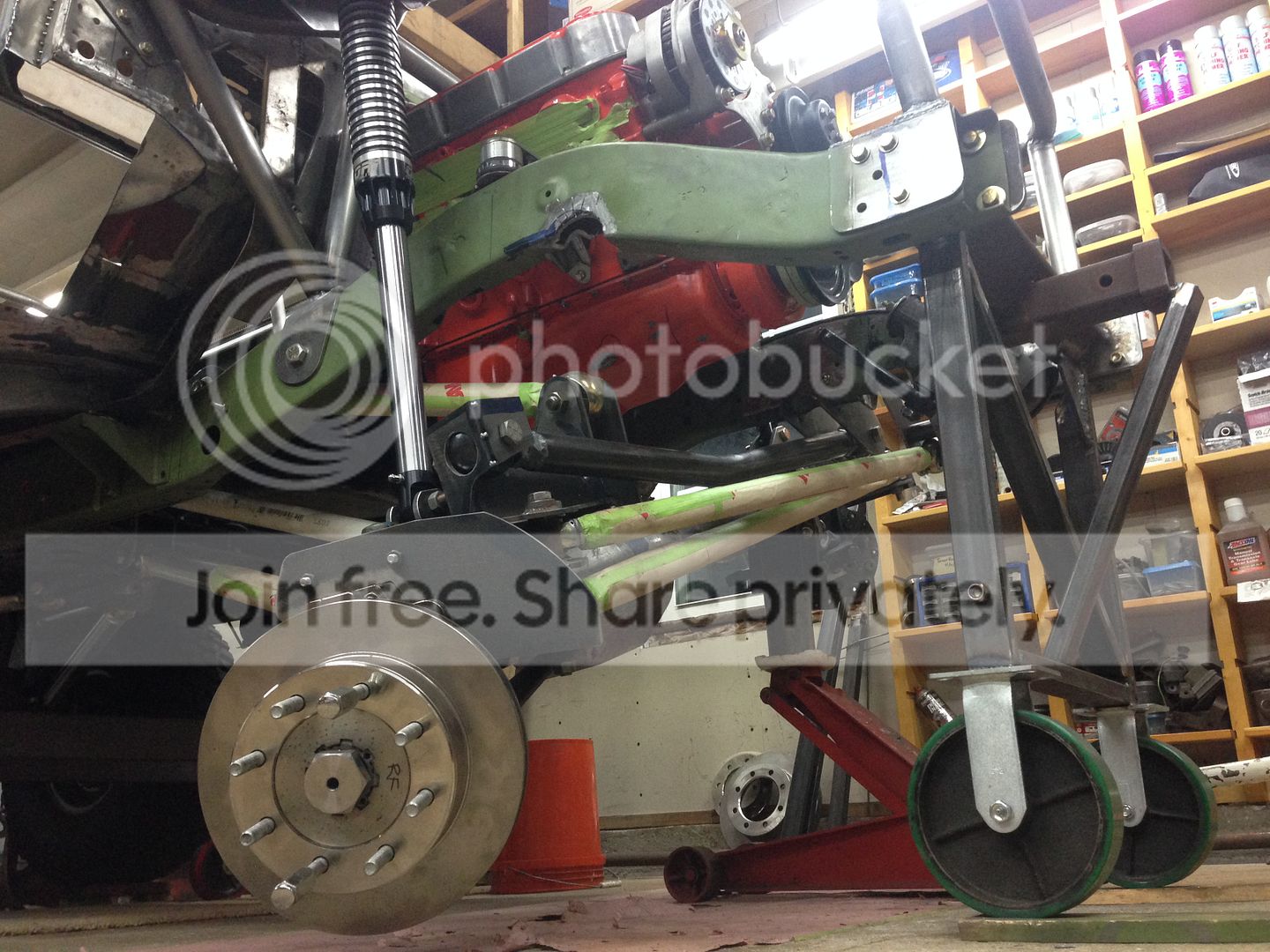
Here's a shot that I haven't done in a LONG time..... usually I do all my testing on the passenger side (because it's in the middle of the garage and easier to work around). This is with the PS fully drooped out and the DS fully-stuffed....

IMG_0346.jpg


Photos don't really do it justice.... to see it in person is really awesome, there is a lot going on with all the individual parts of this axle/suspension/steering system and it's REALLY cool to see it fully crossed-up like this. I can almost imagine it in some field of giant boulders carefully picking it's way across.... :D


-G
 
Top Bottom