CK5
Register an account today to become a member! Once signed in, you'll be able to participate on this site by adding your own topics and posts, as well as connect with other members.
Zim,

Yeah, these $10,000 Headers will go nicely with my $10,000 Crossmember that I built last year!!! :haha:

It's all a bit of an exaggeration of course, because it always takes a TON of time to learn a new skill and to go through the learning curve where you waste a lot of time and do a lot of head-scratching. After it's all over you've got some cool new skills, and a pocketful of cool shortcuts and techniques that you can use in the future. :waytogo:

At this point, building a set of conventional "inside the framerails" type headers would be a total cakewalk. The only thing I'd do differently is I'd start with tighter bends.... the 3" CLRs that I used for this one wouldn't turn quickly enough to hug the block the way they'd need to for a conventional header build.


-G
Cool stuff Greg
Right on about the learning curve
When I worked for Cadillac/Pontiac there was an intake manifold gasket leak recall
The first one took me almost 3 hours (364 ci 8-6-4 engine)
By the time I was on my 10th one it was down to just under an hour and it paid 2 hours
 
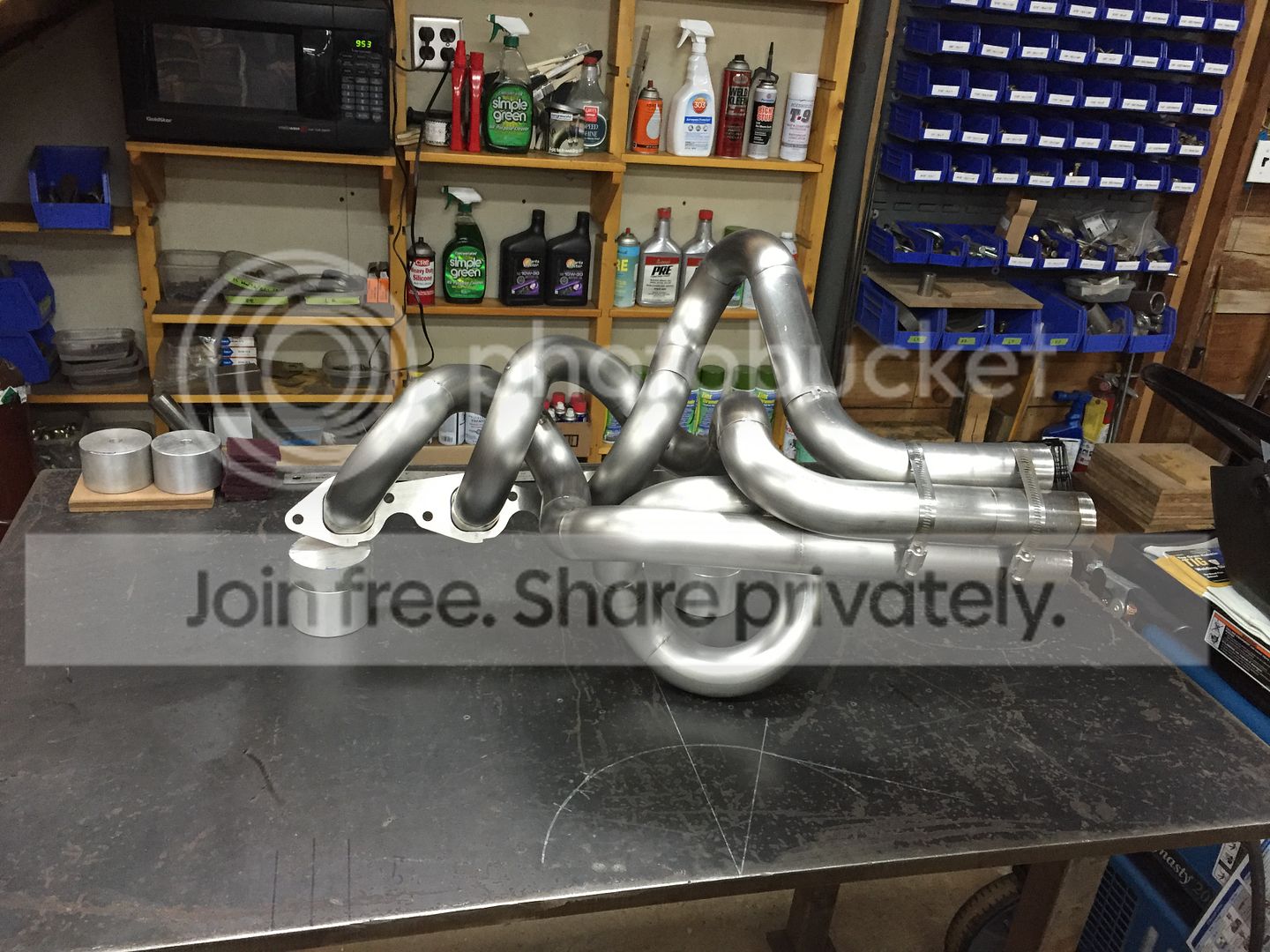
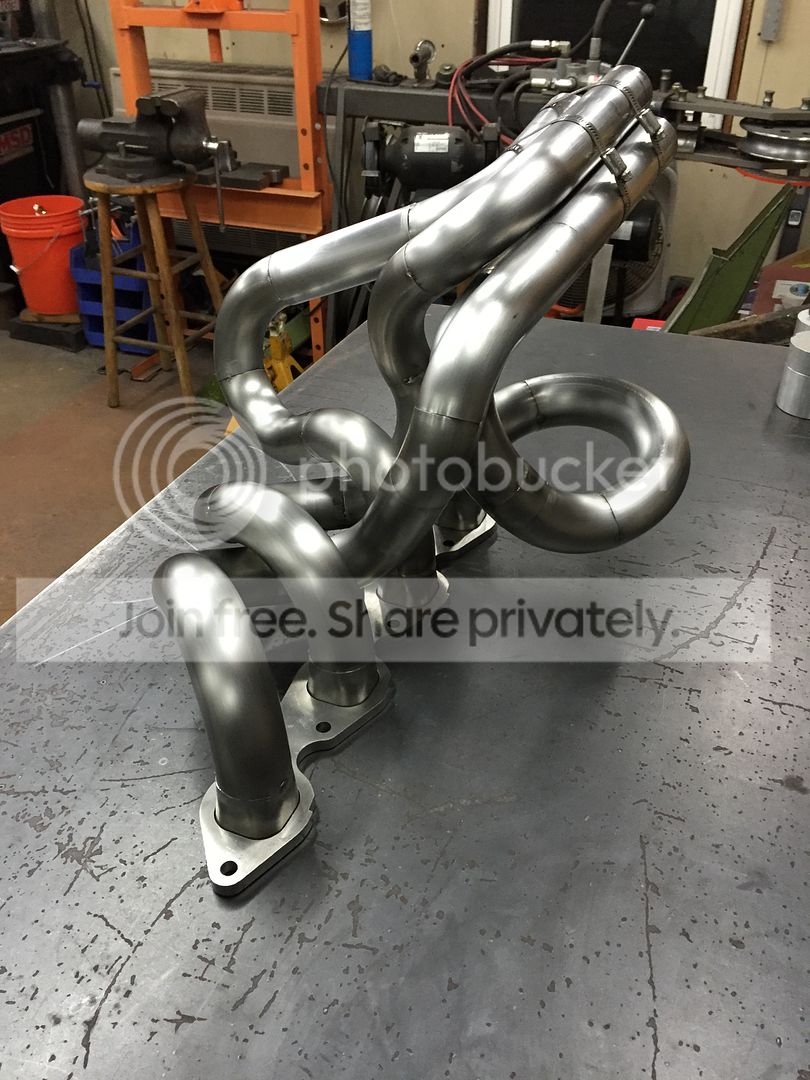
......And for your viewing pleasure.

THE FINAL DRIVER'S SIDE HEADER!!! :waytogo:


IMG_7551.jpg
IMG_7563.jpg


-G


MMMMMMMMMMMMMMMMMMMMMMMMMM big block Blazer porn MMMMMMMMMMMMMMMM the best kind.


Zim,

The only thing I'd do differently is I'd start with tighter bends.... the 3" CLRs that I used for this one wouldn't turn quickly enough to hug the block the way they'd need to for a conventional header build.


-G

But those 3" bends make some sexy looking parts. (still drooling)
 
MMMMMMMMMMMMMMMMMMMMMMMMMM big block Blazer porn MMMMMMMMMMMMMMMM the best kind.


But those 3" bends make some sexy looking parts. (still drooling)


You think THAT'S sexy?..... Folkenheath has been "fat shaming" me about my iron rectangular-port heads, and whispering in my ear that this project should really have aluminum heads instead!!! :haha:

Building a set of headers for Zim this winter is barely going to cover the remaining costs of getting this engine running! :D


-G
 
damn, those are bitchin lookin pipes.

I'll check back in another 10 pages or so :whistle:
 
You think THAT'S sexy?..... Folkenheath has been "fat shaming" me about my iron rectangular-port heads, and whispering in my ear that this project should really have aluminum heads instead!!! :haha:

Building a set of headers for Zim this winter is barely going to cover the remaining costs of getting this engine running! :D


-G

Fat shaming??? the weight savings of aluminum heads on a full tilt Blazer is like removing your belly button lint before a weigh in. Now the additional power and the better looks are a totally different story.
 
Fat shaming??? the weight savings of aluminum heads on a full tilt Blazer is like removing your belly button lint before a weigh in. Now the additional power and the better looks are a totally different story.

.....if my belly button lint weighed 80 Lbs!!!!! :haha:

But yes, it's all about the extra POWER!!! I picked a really wimpy cam originally too... :blush:


-G
 
.....if my belly button lint weighed 80 Lbs!!!!! :haha:

But yes, it's all about the extra POWER!!! I picked a really wimpy cam originally too... :blush:


-G
I really like my GMPP ZZ454 cam and heads on my 468.... Jegs price on the heads is the best price I could find on aluminum BBC heads too....:deal::sign11::whistle:
 
The myth of having to give up low end from a bigger cam on a well built (correctly matched parts) 454 (or bigger in your case) IMO is for naught. Unlike a SBC there is plenty of torque available right off idle and these engines love lift so dont be afraid to get into .550 -600 lift range.
My head guy picked out a solid flat tappet cam (my choice to go non roller) and I'm glad we did. Even after getting use to the power I'm still impressed with it.
 
......


Total Number of Individual Tubing Segments: 75


With the exception of a few small tweaks, the header project is basically DONE. Obviously, there is still a lot of finish TIG-welding to do but that's not really much of a concern.

75 segments, welded at each end @ about 6 inches per is about 75 FEET of bead to lay. You have given everyone a primer on why custom headers aren't cheap!!

Would be interesting for you to actually figure how much it would cost, ie what was the material cost, plus what you think it would take timewise now that you have moved a little up the learning curve times a reasonable hourly rate.

This is why I rarely do "friends" welding, because no one believes how much time and effort jobs like this actually take.

Just think how much more difficult it would be if you had no room.

On a completely different note, how much do they weigh?
 
I came up with a nicer looking routing for the #1 primary tube last night....

-G

It looks awesome Greg! Nice work. :saweet:

Fat shaming??? the weight savings of aluminum heads on a full tilt Blazer is like removing your belly button lint before a weigh in. Now the additional power and the better looks are a totally different story.

It's more about the torque and power, the weight and looks are just a side benefit. :thumb: Although 80 lbs off the heavy end of a rig is worth it too.

His current combo of large rectangular port heads and small cam is completely mismatched. By going to a more modern oval port with smaller ports that flow more than his rectangular ports (with faster velocity) it will help power and torque across his entire RPM range. Plus the slightly larger intake valve (2.25 vs 2.19 will fit his large bore 502 better). In addition, the available smaller chambers will bump his compression up to a more efficient number on top of all the other benefits.

The myth of having to give up low end from a bigger cam on a well built (correctly matched parts) 454 (or bigger in your case) IMO is for naught. Unlike a SBC there is plenty of torque available right off idle and these engines love lift so dont be afraid to get into .550 -600 lift range.
My head guy picked out a solid flat tappet cam (my choice to go non roller) and I'm glad we did. Even after getting use to the power I'm still impressed with it.

I agree Zim. Bumping up the cam to a more modern profile with faster opening rates and higher lift without going too far on the duration, it will better suit his application while maintaning the relatively smooth idle he wants without going too tight on the lobe seperation. Power and torque will be increased across the entire operating range, while increasing the redline as well. He already has hydraulic roller lifters in the Gen V block, so that's a no brainer.
 
75 segments, welded at each end @ about 6 inches per is about 75 FEET of bead to lay. You have given everyone a primer on why custom headers aren't cheap!!

Would be interesting for you to actually figure how much it would cost, ie what was the material cost, plus what you think it would take timewise now that you have moved a little up the learning curve times a reasonable hourly rate.

This is why I rarely do "friends" welding, because no one believes how much time and effort jobs like this actually take.

Just think how much more difficult it would be if you had no room.

On a completely different note, how much do they weigh?


AMEN!!!

If I was being reasonable, I would probably throw away 50 hours from my build time to account for the fact that I'd never worked with exhaust bends before, and didn't know any tricks to speed up the process. That still leaves about 50 "real" hours of build time just to get the headers tack-welded in final form. The time it will take to properly fixture, gas purge and TIG weld 75 FEET of tubing is going to use up a lot of hours as well, I'm sure.

It's interesting, last night I did get a few small "lightbulb" moments as I was practicing my TIG. With my hood down, I always have a hard time seeing the tungsten to get it into the correct position (distance) from the seam I am welding which is why I usually end up either VERY far away when I strike the arc, or I end up touching-down and sticking the tungsten into the part. (I've gotten a LOT of practice grinding tungstens!). I watched a video on WeldingTipsandTricks.com that showed a guy setting up for TIG and before he struck the arc he did a very subtle thing: He touched the tungsten to the part to establish where contact was, then it looked like he rolled his wrist so that the cup would gently lift the tungsten up off the surface by maybe 1/16" to set his distance for welding. The cup acted like a nice standoff and gave him a way to rest his hand and really focus on the puddle. I never did that before..... I would just try to "hover" over the part as best I could and the cup was never resting on anything for support. Last night, I rested the cup on the tube and got my tungsten gap REALLY tight to the part, and WOW..... what a difference!! :waytogo: I could work the arc better and get good wetting of the metal and with a gently sweeping motion I even was able to blend across the gap and move that molten metal across the gap to fill it in!!! The other nice side-effect is that the whole process happened a lot faster so I wasn't just heat-soaking the tube by spending 5 - 8 seconds trying to get a stupid tack-weld to happen. I have my pulser set to 1 second intervals, and with this new technique I can usually get the tack to wet and flow-out in about 3 pulses (3 seconds). The part stays cooler, and I don't blow-through the seams anymore!!!


-G
 
AMEN!!!

...With my hood down, I always have a hard time seeing the tungsten to get it into the correct position (distance) from the seam I am welding which is why I usually end up either VERY far away when I strike the arc, or I end up touching-down and sticking the tungsten into the part. (I've gotten a LOT of practice grinding tungstens!). I watched a video on WeldingTipsandTricks.com that showed a guy setting up for TIG and before he struck the arc he did a very subtle thing: He touched the tungsten to the part to establish where contact was, then it looked like he rolled his wrist so that the cup would gently lift the tungsten up off the surface by maybe 1/16" to set his distance for welding. The cup acted like a nice standoff and gave him a way to rest his hand and really focus on the puddle. I never did that before..... I would just try to "hover" over the part as best I could and the cup was never resting on anything for support. Last night, I rested the cup on the tube and got my tungsten gap REALLY tight to the part, and WOW..... what a difference!!

-G
Touching then raising is one of those things nobody ever told me either, but works well when you are out of position and can't see. Another thing to help is to focus a bright light on your work area, just slightly dimmer than it takes to activate the dimmer on your helmet.

Now that you are ready to start welding, tackle the easiest joints first, ie the ones with the perfect fitups. By the time you get to any with a gap you will breeze through them
 
Touching then raising is one of those things nobody ever told me either, but works well when you are out of position and can't see. Another thing to help is to focus a bright light on your work area, just slightly dimmer than it takes to activate the dimmer on your helmet.

Now that you are ready to start welding, tackle the easiest joints first, ie the ones with the perfect fitups. By the time you get to any with a gap you will breeze through them


Yep.... I definitely am on the verge of adding some kind of task light as well. I can totally "see" (pun intended) how that would make a huge difference for TIG.


-G
 
5 years old! Man time flies(and its not getting any slower), I thought the same thing as Deuling when I saw that picture, I bet you are so proud.
 
2015.11.06 - UPDATE! - THE TERMINATOR VS. THE DOMINATOR!!!!

Pull up a chair and a tasty beverage... this is going to take a while. :D


As the header build started winding-down a few days ago, I was already thinking about the next steps that I needed to take to get the engine running. I've been thinking about EFI forever... and when Scotty built this engine for me in 2007 (Yes, it's really has been EIGHT YEARS!!!) I did a lot of research on EFI systems and decided that I wanted to use the Holley Dominator EFI system. This was in about 2010.... back then there weren't nearly as many choices in EFI as there are now, and almost nobody offered a solution with timing control or the ability to integrate the TCU controls into a single unit. The total package price was somewhere in the $3500-range by the time you bought the wideband O2 sensor upgrades, and all the extra wiring harnesses and correct TBI and injectors..... and that price didn't even include the fuel pump, filters or regulator! :yikes:

Well time marches on..... technology evolves (and sometimes gets cheaper!) and so it goes with EFI design. Turns out, Holley released a system called "The Terminator" a few years ago that took all the best features of the piece-meal "Dominator" system and put it together as a package to simplify the whole process for consumers:
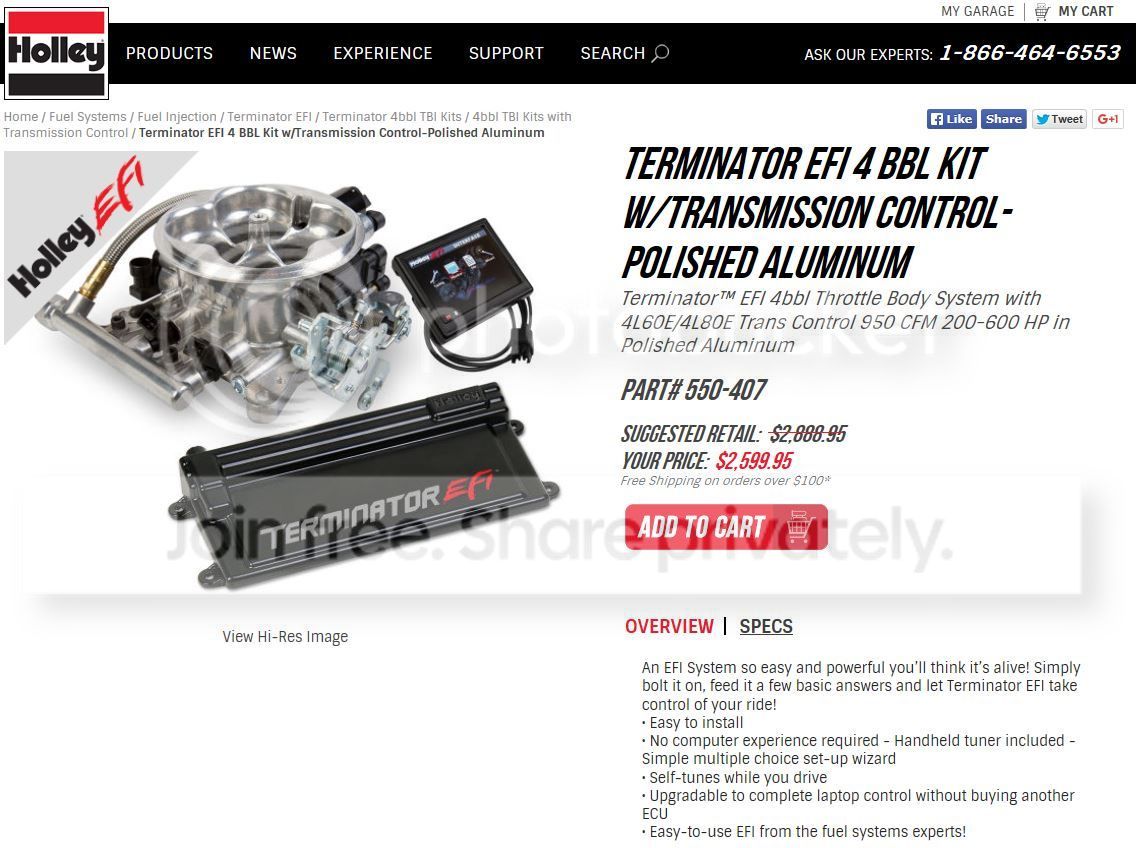
Holley%20Terminator.jpg


If you know much about the Dominator EFI system, it has a very distinctive (large) ECU housing to provide all of the EFI and Transmission Control functions. The new Terminator system uses the exact same ECU (literally the only difference according to the Holley rep is the sticker on the cover!) It also includes the 950CFM TBI unit with 80Lb injectors (good for 600HP) and a handheld touchscreen for programming and monitoring things. You can also plug in a "real" laptop and run their software if you really want to go above and beyond the "self learning" type stuff and tweak all the fuel and timing maps yourself. The systems all come with a wideband-O2 sensor now as standard which is good... and by adding a compatible distributor (like the MSD Pro-Billet EFI #8366) you can set up timing maps, advance curves and all sorts of fun stuff without ever opening up the dizzy to replace the advance springs, etc. :waytogo: From what I've read, you can pick up 1 or 2 highway MPGs when you have computer controlled timing. That might not seem like much, but for a vehicle that might only get 7 or 8 MPG in the first place.... it's a huge improvement!

So... the bottom line to that whole story is that Terminator is the "new" Dominator System.... It's the same exact hardware (ECU/TCU and Software) bundled with the TBI and Touchscreen at a cheaper price than the Dominator system ever was.

DONE DEAL. :deal:


Here's where things start to get REALLY expensive.... :yikes:

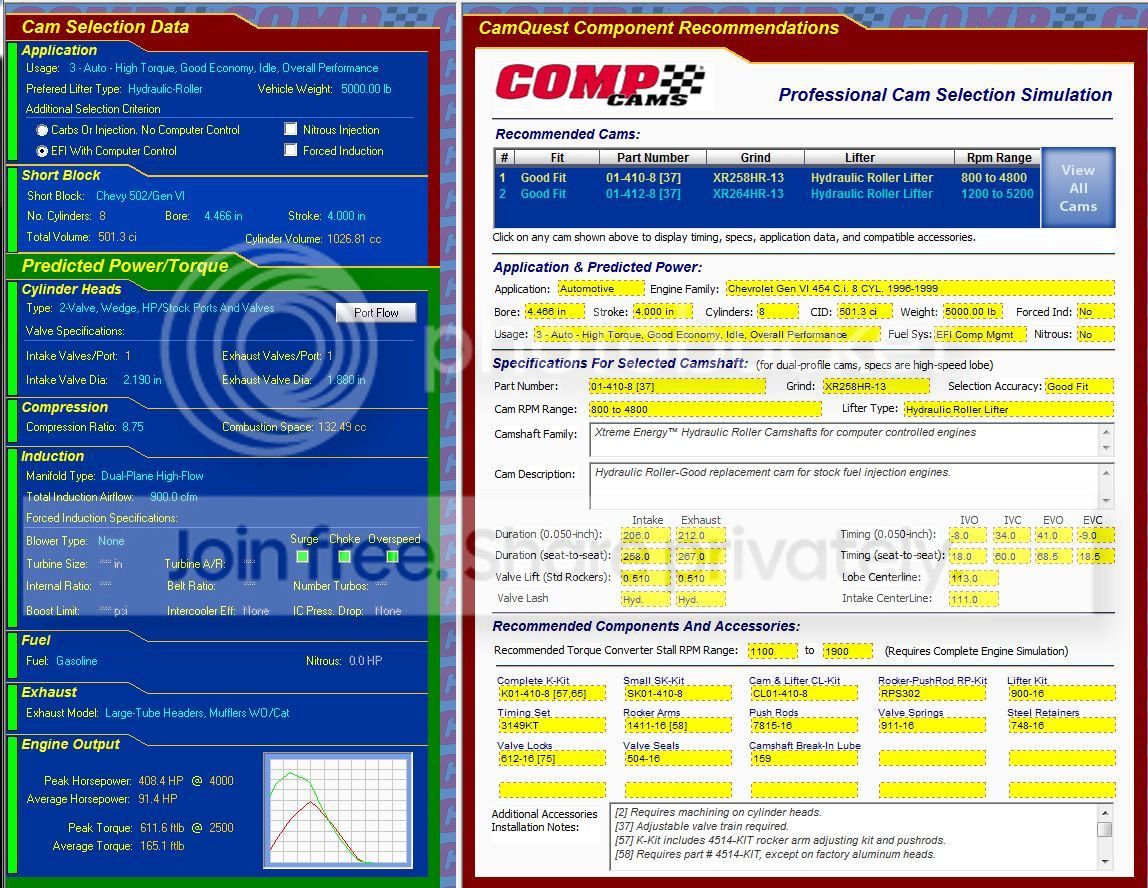
"Might As Wells" are starting to creep into the engine a bit more deeply too. The motor is a fully-rebuilt 1996+ (Gen-VI) GM 502HO. This is an engine that was rated at 450HP and 550TQ... it's a completely forged bottom end (Crank, Rods and Pistons) and is actually the same rotating assembly used in their higher performance ZZ502 motors (the only differences are the cam and heads). When I had Scotty rebuild the motor, I wanted to focus on torque more than horsepower and I wanted it to be EFI friendly. At that time, I used the Comp Cams software (CamQuest6) to choose a cam that would work and we ended up with a VERY mild one.... what we didn't know at the time was that "EFI Friendly" in that software meant something that would work with GM factory EFI systems....NOT aftermarket tunable systems!!!

So ultimately we ended up trading about 50HP (down) in exchange for about 50LB/FT of TQ... 409HP/611TQ vs. 450Hp/550TQ

XR258HR-13%20cam.jpg


This all seemed to make sense at the time because I was obsessed about maximizing TQ at very low RPMs... but what I really wasn't thinking much about was the effect that low axle gearing (5.26s) and a 4-speed ATLAS transfercase (5.44:1) were also going to have on TQ delivery. In retrospect, it seems like the plan was a little off-base. What I really should have done was to allow the gearing (axles and transfercase) to do the job of providing earth-moving TQ.... and build a motor that could breathe better across a larger RPM range, with a nice strong mid-range and flat TQ curve across a wider powerband. Now, in the year 2015....THIS is what I am really looking for! :D

So.... I'm about to add an EFI system to an engine that was built 8 years ago, and has never had a drop of fuel, oil or coolant in it. If I wanted to make a few small changes....now would be the time to do it. Everything is clean and new, and it won't even make a mess or lose any fluids if I start pulling things apart a little... :wink1:

The most obvious change to make is the cam. Obviously, the original selection was based on some bad assumptions and is SO mild that it really is giving away a lot of HP in an effort to pull good vacuum and keep factory EFI happy. Cams don't cost THAT much, so I can put in a new hydraulic roller cam with more lift and duration and still have a decent idle and pick up quite a bit of HP too. While I'm in there I can swap out the stamped steel rocker arms for a nicer set of steel roller rockers and pick up a little extra strength and get the clearance for the larger lift cam. Maybe a set of Magnum 1-piece pushrods too since it's unlikely that the originals will be the perfect length for a different combination of parts. :thinking:

It's all feeling pretty good... and I haven't really blown the budget by adding a few extra engine parts to the EFI installation. But the one thing that isn't quite right about the new combination are the enormous rectangular-port iron heads (GM #14097088). They keep the compression ratio down to 8.75:1 and are really better suited to a high-RPM application where all that extra port size can actually be of value.

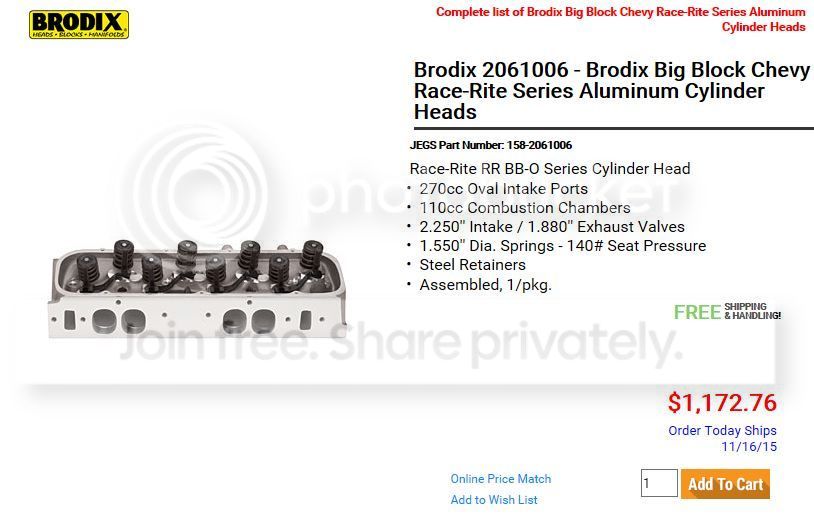
As before... time marches on..... technology evolves (and sometimes gets cheaper!) and so it goes with cylinder head design. For literally decades, the BBC crowd saw the rectangular-port heads as "the ultimate" design for power... but in 2015 things have changed. "Oval is the new Square"!!! :D Engineers have figured out that you can get much better flow and port velocity with an oval port head than you ever could with a rectangular ported one. We are not talking about the old "peanut port" designs though... not all oval port heads are created equal. There does seem to be one particular standout from the crowd which seems supremely well-matched to the relatively low-compression 502HO pistons that I've got, and its called the Brodix RaceRite Oval (RRO)
Brodix%20RRO.jpg


Normally, you'd want a much larger combustion chamber volume, but since the 502HO leaves a lot more room above the piston (relatively shallow dome)... going with a smaller chamber is actually helpful. It can bump the compression up into about the 9.5:1 range and even though the ports are smaller, they flow a LOT better than the current rectangle-port ones do....and have better velocity at lower RPMs too. That means that even though my new cam would typically add HP up high and start to make the bottom-end TQ a little soggy.... these heads would actually keep the air moving well on the bottom-end so I don't have to give up my desire for a big, fat and flat TQ curve from idle to redline. :saweet:

End Result?: The 502HO shortblock with the EFI, a new cam and these new Brodix heads should probably be in the 550HP/600TQ range...... that is a HUGE gain in HP (almost 150HP over the current setup) and the same TQ number, but probably spread out much flatter and a lot further up the RPM band than before.

It's all very tempting.... "Might As Wells" usually are. However, the decision to swap heads also creates some collateral damage:

1. I will need to buy a new intake manifold since mine is a rectangle port version, not oval.
2. My new headers were built with square-port flanges instead of oval, so I would have to throw them in the scrap pile and build a new set from scratch.
3. Just kidding.... I would only need to buy new flanges and redo the first 1.5" swaged segment on each primary tube to make it a "D" shape instead of square.... It's pretty straightforward since nothing is finish-welded yet.


So.....what should I do? :dunno:

Part of me wants to just go for it and completely blow my budget, and part of me wants to start a "Go Fund Me" site and let fate decide how much (or how little) to change!!! :haha:


-G
 
So.....what should I do? :dunno:

Part of me wants to just go for it and completely blow my budget, and part of me wants to start a "Go Fund Me" site and let fate decide how much (or how little) to change!!! :haha:

Hate to say it, but do you reeeeally see a question there? It's a certain amount of money, yes, but the regrets you'd have later far outweigh the cost. (Easy for me to say -- it's not my money :haha: ) Seriously, do the new heads, chalk up to learning experience the rewelding of the header flanges, and go for it. As Jeremy Clarkson says, "POWWWAAAAAAHHHHHHHHHH!"

Also, does it say something that you're talking about changing your motor, and the *delta* in horsepower is the same as my truck's total output? :doah:

-- A
 

Latest Posts

Top Bottom